Wine In India, Historically Intriguing

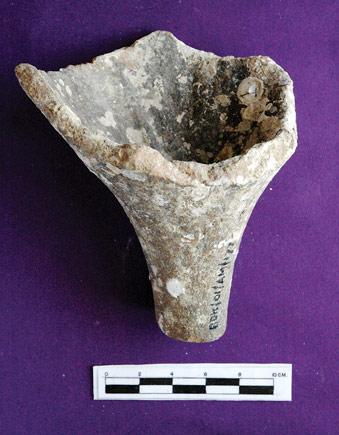
Amphora shards have been found all along India’s western coast. Courtesy National Institute Of Oceanography

Amphora shards have been found all along India’s western coast. Courtesy National Institute Of Oceanography

As Spice Harbour’s restaurant, 51, looks forward to the day when it might serve a glass of wine with an evening meal, we look back in time for a bit of inspiration, thanks to our friends at Caravan:

…In August, I spoke on the phone to A S Gaur, a marine archaeologist at India’s National Institute for Oceanography and co-author of  a paper on ancient wine imports. Speaking from Goa, Gaur said he had recently discovered amphora shards at what appears to be an ancient shipwreck near Bet Dwarka, an island off the coast of Gujarat. Amphorae were widely used in ancient times for transporting liquid goods, especially olive oil and wine. According to Gaur, the amphorae near Bet Dwarka most likely date from between the second and the fourth centuries CE. It is difficult to analyse the residues found on the shards for a conclusive answer, he said, but trying his “level best” Gaur surmised the amphorae once held wine. “Roman wine,” he said, “was very famous in India during that time.” Wrecks and shards from the same period have been found at many other sites too. All over South India, Gaur told me, “many museums have amphora shards.”
Continue reading

Why Study Classics?

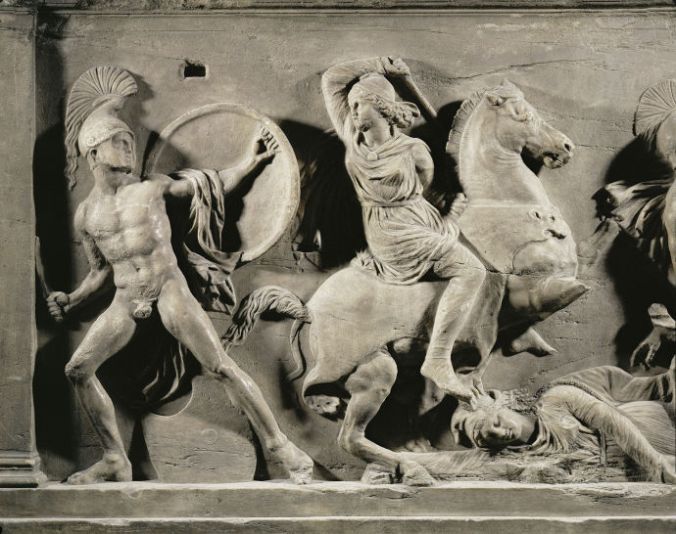
In some archaeological digs in Eurasia, as many as thirty-seven per cent of the graves contain the bones and weapons of horsewomen who fought alongside men. PHOTOGRAPH BY ERICH LESSING / ART RESOURCE

In some archaeological digs in Eurasia, as many as thirty-seven per cent of the graves contain the bones and weapons of horsewomen who fought alongside men. PHOTOGRAPH BY ERICH LESSING / ART RESOURCE

For every question why like this one, there must be many answers. We post enough on the topic to have some guesses. James, one day, may tell us his. For anyone who likes a good story, part of the answer must be simply that. But there may be more; for now let this post on the New Yorker‘s website speak for itself:

The Real Amazons

BY JOSHUA ROTHMAN

Here’s a story, told by Herodotus, about the fierce female warriors known as Amazons. Many thousands of years ago, a group of Greek raiders ventured into what is now northern Turkey. Travelling across the steppe, they came across a group of warrior women. The Greeks kidnapped them, locked them in the holds of their ships, and set sail for home. But the Amazons escaped. They recovered their weapons and killed their captors. Because they were horsewomen, and didn’t know how to sail, the ships drifted far off course. Eventually, though, they landed in the Crimea. The Amazons went ashore and stole some horses. They started marauding, gathering loot, and building up their strength. Continue reading

Hermes Appears, Again

Striking Mosaic Found In Greek Tomb Dates From 4th Century B.C. by BILL CHAPPELL

Striking Mosaic Found In Greek Tomb Dates From 4th Century B.C. by BILL CHAPPELL

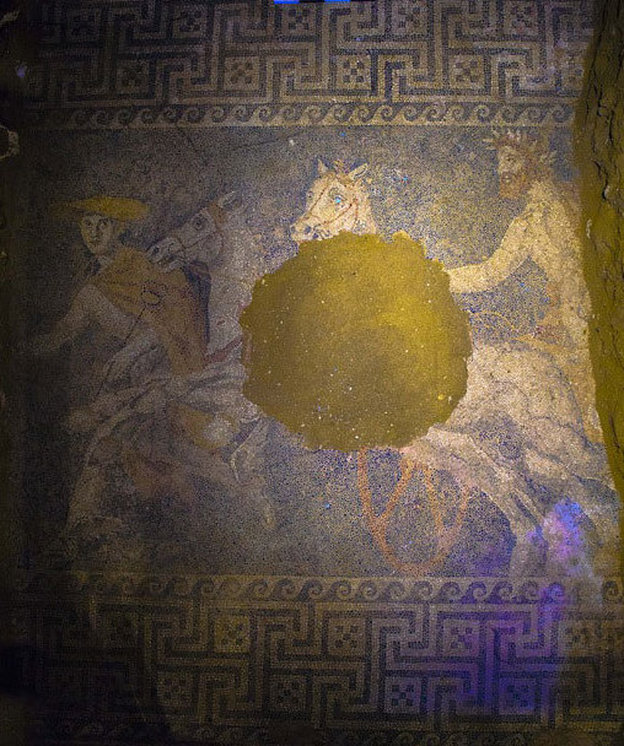
We are now in our second month without the classicist among our ranks, but we amateurs can still do our part to share stories of interest from the world of classics. Hermes was there all along of course, for about 2,400 years since the image above was created, but amazingly we are still finding new hiding places for a character mentioned in these pages more than once:

Archaeologists have uncovered an intricate and beautiful floor mosaic in a large tomb in northern Greece. Dating from the last quarter of the 4th century B.C., the mosaic covers a space of nearly 15 feet by 10 feet. It features two horses, a man and the god Hermes; it was found in a tomb that was discovered in August. Continue reading

Walter Isaacson On Geniuses Of The Digital Revolution

File photo by Kris Snibbe/Harvard Staff Photographer.  "We’re now in a phase in which the connection of creativity to technology is going to drive innovation," said Walter Isaacson ’74, a Harvard Overseer, biographer, and CEO of the Aspen Institute. "I do believe that it’s important for people to have an appreciation for the arts and humanities."

File photo by Kris Snibbe/Harvard Staff Photographer. “We’re now in a phase in which the connection of creativity to technology is going to drive innovation,” said Walter Isaacson ’74, a Harvard Overseer, biographer, and CEO of the Aspen Institute. “I do believe that it’s important for people to have an appreciation for the arts and humanities.”

Thanks to Christina Pazzanese and Harvard Gazette for this conversation with one of the more interesting biographers writing today:

Ghosts in the machines

The history of the Digital Revolution touches our hearts and heads, Isaacson says

In many ways, the entire Digital Era can rightly be laid at the courtly foot of Lord Byron’s rebellious daughter, Ada. Lady Lovelace was the poet’s only child born in wedlock, inheriting both her father’s headstrong, Romantic spirit and her mother’s practical respect for mathematics.

As the Industrial Revolution bloomed, her appreciation for the beauty of numbers and invention, an analytical approach she called “poetical science,” led her to write what is now regarded as the first algorithm and to help refine a machine that could be programmed to perform many different tasks, an idea that anticipated the modern computer by a century.

That’s where Walter Isaacson’s latest book, “The Innovators: How a Group of Hackers, Geniuses, and Geeks Created the Digital Revolution,” steps off.

Continue reading

Conquering Iceland’s Mountains: The Alpine Club (Part 3)

“Turquoise Falls, Bruarfoss” © Jerome Berbigier

Continued from Part 2.

As it turned out, it was a British law student, William Lord Watts, who became the first man to truly answer Longman’s call and embark on some serious exploring. In the introduction to his book Across the Vatna Jökull; or, Scenes in Iceland; Being a Description of Hitherto Unknown Regions, Watts started by taking issue with the concerned British subject at home who saw the exploration of wilderness as a waste of “money, time, and labour,” or “utter folly,” explaining that everyone had a mania for something or other, and his own “may be to wander amongst unknown or unfrequented corners of the earth.” Calling for “a truce to critical stay-at-homes,” Watts advanced to the meat of his trip itself.

In his descriptions of his several expeditions, Watts usually employed a calm, scientific and lawyerly tone that make his bursts of romantic and athletic enthusiasm in certain scenes all the more exciting and believable. Nodding to his biggest audience, he also used some of the Continue reading

Conquering Iceland’s Mountains: The Alpine Club (Part 2)

Continued from Part 1.

If Longman’s unorthodox address is interesting as a sign of Iceland’s attractiveness to the middle-class British authentic-seeking traveller, the responses to his suggestions are even more so. In a May 18 article The Critic wrote a review of the Longman’s address that effectively summed up the perceived position of Iceland in the global context of travel and exploration. The author suggested that any adventurous Briton who had already “used up Ireland and Scotland” and “[did] not care to ascend Mont Blanc for the dozenth time” might turn to Iceland for their future travels, as it had spectacular scenery equal to Switzerland and critics were growing tired of “oft-repeated tales” in countries they knew intimately through so many books. The contributor continued by explaining that:

Aerial view of Iceland © Sarah Martinet

We do not ask the good-natured traveller to kill gorillas in Africa after Mr. Du Chaillu’s fashion, or hunt bisons on the American prairies with Mr. Grantley Berkeley. Our request is much more reasonable. Iceland may be reached by the expenditure of a single five-pound note: and in that uncockneyfied land a solitary Englishman may pay all his daily travelling expenses, including those which will be entailed on him by a retinue of three horses and a guide, for twenty shillings.

Continue reading

Conquering Iceland’s Mountains: The Alpine Club (Part 1)

Aerial view of Iceland © Sarah Martinet

It has been months since I’ve mentioned Iceland on the blog, partly because I was exhausted with the subject after completing my thesis in mid-April, but also because I’ve been occupied with less academic matters over the summer. Another reason for revisiting the topic is that over the summer I had the honor of learning that my thesis was added to the Kroch Library Rare and Manuscript Collections–hopefully somebody will find it useful eventually! Now that the volcanic dust has settled and the borrowed library books have been returned, I feel there are a couple facets of nineteenth-century British travel to Iceland left to explore here.

I’ve written about some of the qualities exhibited by British travelers to Iceland before, but Continue reading

Conservation, Passenger Pigeons, History Of Extinction

Gérard DuBois

Gérard DuBois

My favorite doomsday journalist (and I mean that as the highest compliment) posted over the weekend an unamusing memo to remind us that this is an important centenary anniversary. It ups the ante on our commitment to the community of birdwatchers, casual and serious alike, who support important conservation of wildlife habitat all over the world.

It is not amusing to be reminded about various tragic commons, especially ones for which collective action would seem to have been achievable. We link to these stories in the hope that doomsday outcomes will become less likely if we remind ourselves often enough.

Yesterday the ever-better New York Times, newspaper of record that pays more and better attention to environmental issues than most other publications, saw fit to print this piece by the Executive Director of the Cornell Lab of Ornithology, for which we give our thanks and share with you in whole due to its value as a public service:

ITHACA, N.Y. — THE passenger pigeon is among the most famous of American birds, but not because of its beauty, or its 60-mile-an-hour flight speed. Nor is it a cherished symbol of our great country. No, we remember the passenger pigeon because of the largest-scale human-caused extinction in history.

Continue reading

Competitive Upright Bipedalism

We are in awe about how many things we find out, on a daily basis, we did not know.  And for the things that we realize we want to know more about, thank goodness for longform writers of the quality that the New Yorker staff has consistently fielded since its founding. One of the great essayists of our time reviews recent writings on a history we had not the slightest clue about:

Why people walk is a hard question that looks easy. Upright bipedalism seems such an obvious advantage from the viewpoint of those already upright that we rarely see its difficulty. In the famous diagram, Darwinian man unfolds himself from frightened crouch to strong surveyor of the ages, and it looks like a natural ascension: you start out bending over, knuckles dragging, timidly scouring the ground for grubs, then you slowly straighten up until there you are, staring at the skies and counting the stars and thinking up gods to rule them. But the advantages of walking have actually been tricky to calculate. One guess among the evolutionary biologists has been that a significant advantage may simply be that walking on two legs frees up your hands to throw rocks at what might become your food—or to throw rocks at other bipedal creatures who are throwing rocks at what might become their food. Although walking upright seems to have preceded throwing rocks, the rock throwing, the biologists point out, is rarer than the bipedalism alone, which we share with all the birds, including awkward penguins and ostriches, and with angry bears. Meanwhile, the certainty of human back pain, like the inevitability of labor pains, is evidence of the jury-rigged, best-solution-at-hand nature of evolution. Continue reading

Past, Present & Future Food

grid_2048

Top row: escargots, sardines, and fava beans (Crete); naan in salty yak-milk tea (Afghanistan); fried geranium leaves (Crete); boiled crab (Malaysia); raw beetroot and oranges (Crete); chapati, yak butter, and rock salt (Pakistan). Middle row: dried-apricot soup (Pakistan); boiled plantains (Bolivia); fried coral reef fish (Malaysia); bulgur, boiled eggs, and parsley (Tajikistan); stewed-seaweed salad (Malaysia); boiled ptarmigan (Greenland). Bottom row: grilled tuna (Malaysia); cooked potatoes, tomatoes, and fava beans in olive oil (Crete); rice with melted yak butter (Afghanistan); fried fish with tamarind (Malaysia); dried apricots (Pakistan); grilled impala (Tanzania; photographer’s utensils shown).

Thanks to National Geographic for this article:

The Evolution of Diet

Some experts say modern humans should eat from a Stone Age menu. What’s on it may surprise you.

It’s suppertime in the Amazon of lowland Bolivia, and Ana Cuata Maito is stirring a porridge of plantains and sweet manioc over a fire smoldering on the dirt floor of her thatched hut, listening for the voice of her husband as he returns from the forest with his scrawny hunting dog. Continue reading

Indian Independence Day at Spice Harbour

10355655_10201665725084704_4823049703076743324_oYesterday at Spice Harbour I got to participate for the first time in an Independence Day flag raising ceremony.

It’s a good time to tip our hats to history. On August 15, 1947, after centuries of British imperialism, India gained independence. I am no expert on the Indian Independence movement so I won’t speak to it too much, but I know there were many political organizations and philosophies behind it that were united by their desire to end British rule. Mohandas Gandhi’s nonviolent philosophy and civil disobedience is what led the final parts of the struggle for independence that prompted the eventual withdrawal of the British. Since we’re talking about colonial India, we can put Kerala and Spice Harbour into historical context. Continue reading

Brihadeeswarar Temple, Thanjavur – Tamil Nadu

Photo credits : Binu Kumar

Photo credits: Binu Kumar

Brihadeeswarar Temple was an imperial monument to Chola power and the greatest artistic accomplishments of the late Chola period. This Temple was the greatest single undertaking of the South Indian temple builders, taking almost 15 years to complete. Continue reading

Shakespeare, Crown Toady?

Shakespeare

In honor of the departure of James from Xandari, we send him off with a blast of relative modernity. Shakespeare is certainly classic, but tres nouveau in terms of a classicist.

Little did any of the liberal arts majors among Raxa Collective contributors know that the image we have of a witty, well-versed but ultimately populist entertainer is confounded by a consistent streak of conservatism. But we are thankful for the enlightenment, that far from being an equal opportunity observer and critic of all forms of foible, the Bard was so unwilling to bite the hand that fed:

Ira Glass recently admitted that he is not all that into Shakespeare, explaining that Shakespeare’s plays are “not relatable [and are] unemotional.” This caused a certain amount of incredulity and horror—but The Washington Post’s Alyssa Rosenberg took the opportunity to point out that Shakespeare reverence can be deadening. “It does greater honor to Shakespeare to recognize that he was a man rather than a god. We keep him [Shakespeare] alive best by debating his work and the work that others do with it rather than by locking him away to dusty, honored and ultimately doomed posterity,” she argued. Continue reading

Gol Gumbaz

Photo credits : Vijay Mampilly

Photo credits : Vijay Mampilly

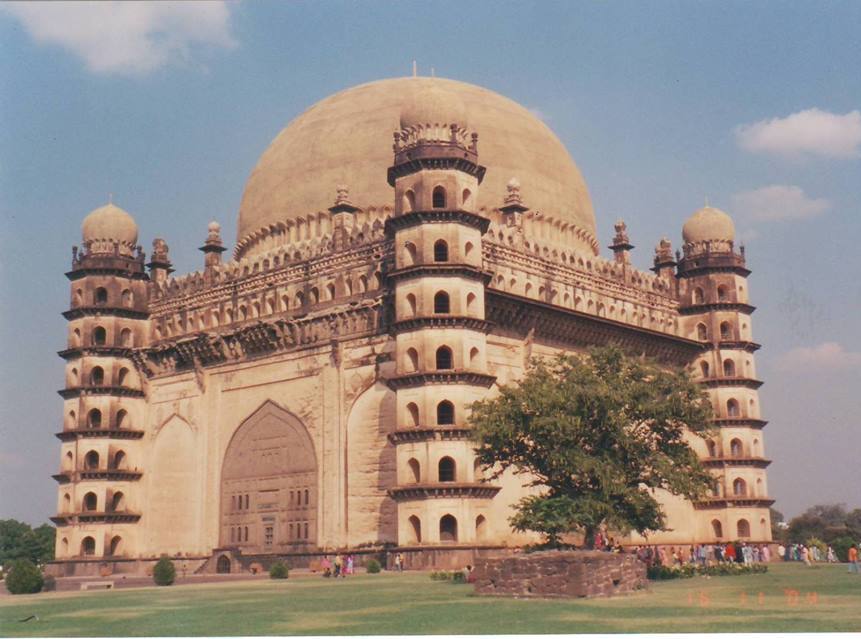
Gol Gumbaz is one of the largest and most famous monuments in India. Gol Gumbaz was constructed as a mausoleum for Sultan Mohammed Adil Shah, the seventh ruler of Adil Shah dynasty (1627- 57). Construction was completed in 1656. The monument’s central tomb remains a popular tourist attraction, but in fact the entire building, despite its simple design, stands as a masterpiece of Deccan-era architecture. Continue reading

Glory Of The Past – Allappuzha

Photo credits: Ramesh Kidangoor

Photo credits: Ramesh Kidangoor

Situated at the south-western tip of Lake Vembanad, Allappuzha had its heyday as a commercial hub in 1775-76 when Dewan Raja Keshavadas built it as a major port of the erstwhile Travancore state. Allapuzha had the dual advantage of cheap inland water transport on its eastern end and calm seas suitable for an all-weather port on the west. Continue reading

Edakkal Caves – Wayanad

Photo credits : Ramesh Kidangoor

Photo credits: Ramesh Kidangoor

Edakkal Caves  are situated in Wayanad district near Sulthan Bathery. This prehistoric rock shelter made up of natural rock formations includes a massive boulder wedged in between two huge vertical outcroppings, forming a large cave. Petroglyph writing inside the cave form inscriptions of human and animal figures with peculiar headdresses as well as drawings of wheels, bows, knives and trees. Continue reading

Humanity’s Diet Makes A Difference, Historically As Well As Futuristically

On the timescale of evolutionary history, paleo enthusiasts note, agriculture is a fad. Credit Illustration by Mike Ellis.

On the timescale of evolutionary history, paleo enthusiasts note, agriculture is a fad. Credit Illustration by Mike Ellis.

Since the early days of this blog we have been hungry consumers of environmental long form journalism, of which Elizabeth Kolbert’s New Yorker chronicles are best-in-category. They are also, frankly, almost always depressing.

Nonetheless, they put humanity into its natural context. This not-at-all-depressing chronicle demonstrates the value of that contextualization well:

The first day I put my family on a Paleolithic diet, I made my kids fried eggs and sausage for breakfast. If they were still hungry, I told them, they could help themselves to more sausage, but they were not allowed to grab a slice of bread, or toast an English muffin, or pour themselves a bowl of cereal.

Continue reading

If You Happen To Be In Florence, Alabama (USA)

Robert Rausch for The New York Times. Tom Hendrix at the Florence, Ala., memorial he built for his great-great grandmother, Te-lah-nay, a Yuchi Indian.

Robert Rausch for The New York Times. Tom Hendrix at the Florence, Ala., memorial he built for his great-great grandmother, Te-lah-nay, a Yuchi Indian.

Thanks to the New York Times for this coverage of a moving tribute to one man’s lineage and his peoples’ heritage:

Off Alabama’s Beaten Path, Tribute to a Native American’s Journey Home

Tom Hendrix has built a mile-long stone wall to memorialize his Native American great-great grandmother, who was displaced during the Trail of Tears.

Elephant Blessings

Photo Credits :Ramesh Kidangoor

Photo Credits: Ramesh Kidangoor

In Hinduism, the elephant represents one of the most important Gods: Lord Ganesh. Many Hindu temples in south India have elephants stationed outside the main door to give blessing to visitors. For a long time, elephants have been part of life in Kerala. People here consider this animal a harbinger of good fortune, a remover of obstacles and an inseparable part of religious and economic life. Continue reading

Meenakshi Temple Gopuram – Madurai

Photo credits : Remash Kidangoor

Photo credits: Remash Kidangoor

Madurai has a historical legacy over 2500 years, making it the oldest city in Tamil Nadu. On the banks of the river Vaigai, Meenakshi Temple dominates the city of Madurai, which evolved around it. The architecture in this temple is purely Dravidian, but the styles of many dynasties have influenced the decorations and construction of Meenakshi since it has changed hands over the centuries. Continue reading