Kamal Mahal – Hampi, Karnataka

Photo credit : Ramesh Kidangoor

Photo credit: Ramesh Kidangoor

Hampi is a World Heritage Site village located on the southern bank of the river Tungabhadra in Karnataka. Kamal Mahal is one of Hampi’s secular or non-religious structures  Its unusual design blends elements of Muslim and Hindu architecture. The building’s function is not exactly known but the quarters are believed to have been used by Hampi’s female guards.

Photography, History, Destiny

There is more than one photography-history-literary continuum buff out there for whom this link-post is intended. One is our erstwhile contributor of great photographic compositions and written reflections on his own photographs; as Milo heads west, he heads toward history. His family history, at minimum. His Inman predecessors first headed west centuries back when Kansas was the great frontier. But this guy is always looking forward while his brother puts some perspective on it all, taking a closer look through the rearview mirror.

Milo follows in the footsteps of several generations of painters, photographers and printmakers in his family who all headed west.  One of them, in San Francisco now, has even shown an affinity for Civil War era photography of the type reflected on in this article on the Atlantic‘s website, so we shout this one out to Milo, Seth and Paul in particular:

Let’s play a short, highly contrived game, called called “Smile or Grimace?”

Here’s Major General Samuel P. Heintzelman, an officer of the Federal Army, photographed during the war:

Library of Congress

Library of Congress

Continue reading

An Early Great, Revealed


This slideshow requires JavaScript.

At first glance, it might seem to be a group of photos from the box of one of those street vendors in Paris. Not so, as Luc Sante points out in the New York Review of Books:

Charles Marville is best known for his government commission to photograph the neighborhoods of Paris slated for demolition during Baron Haussmann’s reconfiguration of the city between 1853 and 1870. In fact, that is virtually all he has been known for, a matter the authors of Charles Marville: Photographer of Paris are eager to rectify. Continue reading

Historian Cross-overs

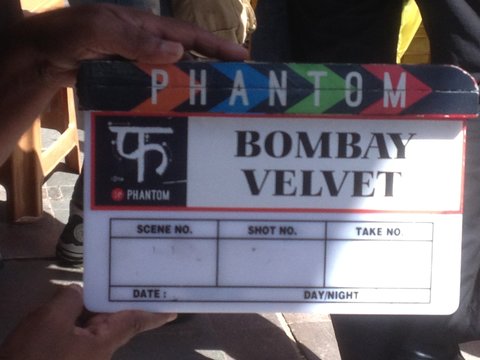
Photo: Gyan Prakash. A clapper board for the film “Bombay Velvet”.

For anyone who has been following Seth’s posts on this site over the last couple years, there has been a notably strong dose of history in many due to his decision to focus his undergraduate studies in environmental history. Summer 2013–an archival deep dive quite distinct from his previous summers in the present reality of Galapagos, Nicaragua, India, Jordan, Chile, Croatia, Costa Rica, France–was spent in Ithaca, his first summer there since the series of summers 1992-1995 (birth year through toddlerhood, when his father was engaged in history-based doctoral dissertation research). Is there a DNA tracer for history appreciation?

This comes to mind reading Gyan Prakash’s account of his experience mixing history and film.  For the many readers of university age who follow Seth’s writings the reasonable question might be what he plans to do with that degree once he graduates.  We expect that in the coming months as he approaches graduation this will start popping up as a theme in his posts. What good is history? Consult Mr. Prakash for inspiration:

On July 28, I flew to Colombo, the capital of Sri Lanka, to join the filmmaker Anurag Kashyap,  the actors Ranbir Kapoor and Anushka Sharma, and a massive crew making the movie “Bombay  Velvet.” In 2004, drawing on my research on the history of Mumbai, I had written the outline for a retro film noir  aimed at capturing the momentous transformation of Mumbai’s milieu of jazz clubs and industrial society in the 1960s. Continue reading

Herpetologist Confidential

This slideshow requires JavaScript.

Thanks to the scientific journal Nature, the history-biology continuum is alive and full of intrigue as the story below shows (click here for a podcast related to the same story):

Before leaving for the Philippines as an undergraduate in 1992, Rafe Brown scoured his supervisor’s bookshelf to learn as much as he could about the creatures he might encounter. He flipped through a photocopy of a 1922 monograph by the prolific herpetologist Edward Taylor, and became mesmerized by a particular lizard, Ptychozoon intermedium, the Philippine parachute gecko. With marbled skin, webs between its toes and aerodynamic flaps along its body that allow it to glide down from the treetops, it was just about the strangest animal that Brown had ever seen. Continue reading

Icelandic Hell-broth

Krafla, Iceland. Photo © Land & Colors

In the Middle Ages, Iceland’s Mount Hekla was commonly thought of as a mouth of Hell, from whence one could hear the cries of the damned and even see their spirits haunting the peak — if the raging flames of hellfire weren’t blocking your view, that is. A few hundred years later, describing imagery as infernal or unearthly was still popular in travel accounts, as we saw in the case Reverend Sabine Baring-Gould’s thoughts on Námarskarð. Given the image above and those from the mud pits in the linked post, it really isn’t too surprising, especially after you consider that to reach these chthonic scenes the travelers had been riding ponies over a “tortuous and wretched” landscape of lava.

Continue reading

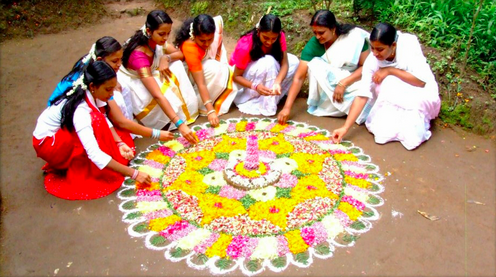
Athapookalam

Photo credits: Ramesh Kidangoor

Photo credits: Ramesh Kidangoor

The first day of the Onam celebrations starts on Atham day during the Malayalam month of Chingam, which this year falls today, 7th September 2013. The date is ten days before Thiruvonam. The creation of Athapookalam is an important part of every Onam festival. This special, circular arrangement of flowers  is one of the most iconic Onam traditions. Continue reading

Hermes, Circa 1969

As one of the contributors referred to in this post, and as the one who took the photographs in that post, it occurred to me that I should comment further on the reference.  And in doing so, perhaps I could add to the small collection of personal statements that have been gathering on this site since mid-2011.  I am 100% sure I took the photograph above during that same visit to Greece in 2008.  As I snapped this photo my mother was at my side and we both remembered having stood in the same spot in 1969. Continue reading

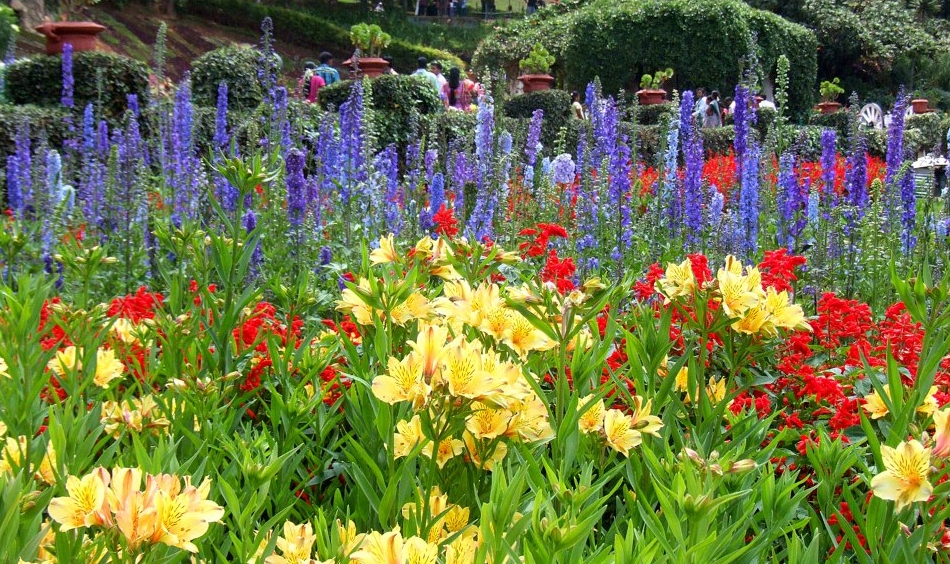
Botanical Garden – Ooty, Tamil Nadu

Photo credits : Renuka

Photo credits: Renuka

Ooty Botanical garden was designed in 1847.  One of the central features of the 55-acre property is a fossilized tree trunk believed to be 20 million years old. Other highlights include rare tree species, exotic and ornamental flowering bushes and plants, and a conservatory containing ferns and orchids. Continue reading

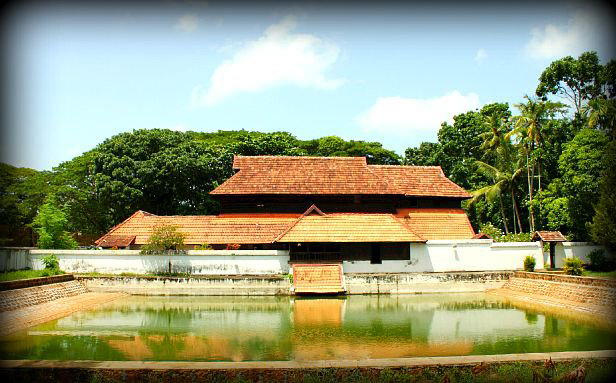
Krishnapuram Palace – Alappuzha, Kerala

Photo credits : R R Ranjith

Photo credits: R R Ranjith

Krishnapuram Palace is located in Kayamkulam, in the Alappuzha district of Kerala. The palace was built in the traditional Kerala style of architecture during the 18th century by King Anizham Thirunal Marthanda Varma. Continue reading

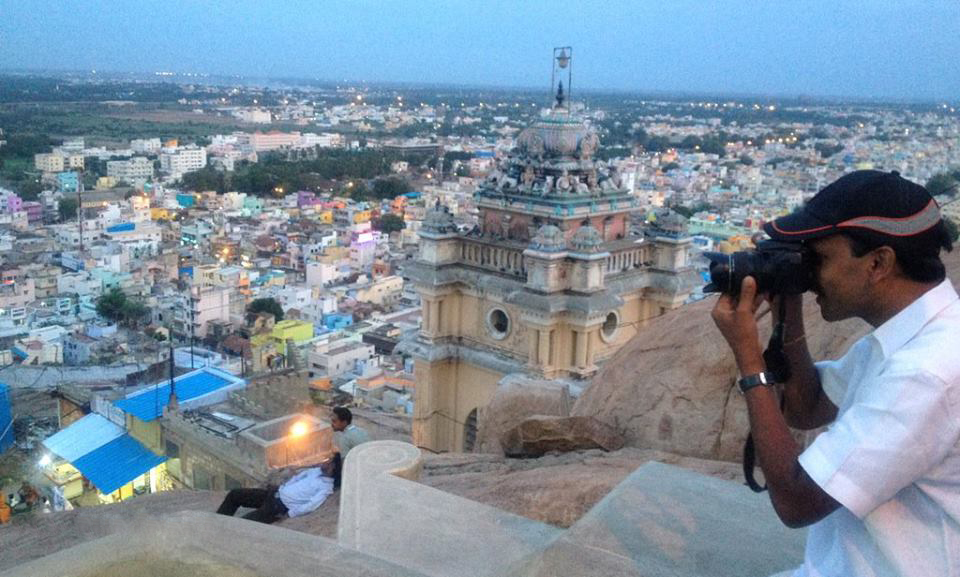
Uchipillaiyar Temple – Trichy, Tamil Nadu

Photo credits : Ramesh Kidangoor

Photo credits: Ramesh Kidangoor

The  Rock Fort at Trichy is a famous and fascinating architectural marvel that is built on an 83 meter high rock, rising above the plains of Tamil Nadu. At the top of the rock is the Uchipillaiyar Kovil Temple, dedicated to Lord Vinayaka. Continue reading

Iceland’s Fearful Agencies at Work

Námarskarð mud pits, Iceland © Navis Photography

Over the summer, several people have asked me, after I tell them what I’m researching, whether the books I’m looking at are actually enjoyable to read or just another dry primary source, as dreary and monotonous as many travelers found Iceland’s vistas during the eighteenth and nineteenth centuries. As with most things, the answer depends (largely on the book and certain chapters of each book), but for the most part I’ve flipped through hundreds of pages of travel literature with pleasure, not only because I know I’m being productive despite the beautiful day two floors above me outside Cornell’s Olin Library, but also because I find the Victorian British style of these authors–most of the works I’ve read so far were published between 1850 and 1880–quite engaging and fun to read.

Consider, for example, the following excerpts from Sabine Baring-Gould’s description of Námarskarð, an area full of hot mud springs in northern Iceland, in his 1863 book,  Continue reading

Chidambaram Natraja Temple – Tamil Nadu

Photo credits : Ramesh Kidangoor

Photo credits: Ramesh Kidangoor

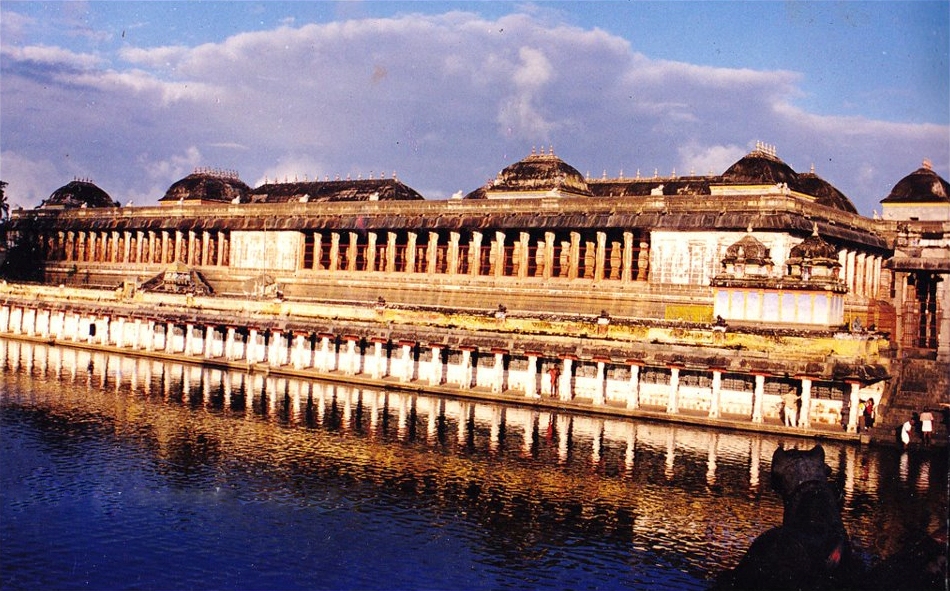
Chidambaram is uniquely interesting because it is the only temple complex to understood to be built primarily between the 12th and 13th centuries. This temple is dedicated to Lord Shiva. A huge Shiva Ganga tank is the one of the main attraction of this temple. Continue reading

Hoysaleswara Temple – Karkataka

Photo credits : Ramesh Kidangoor

Photo credits: Ramesh Kidangoor

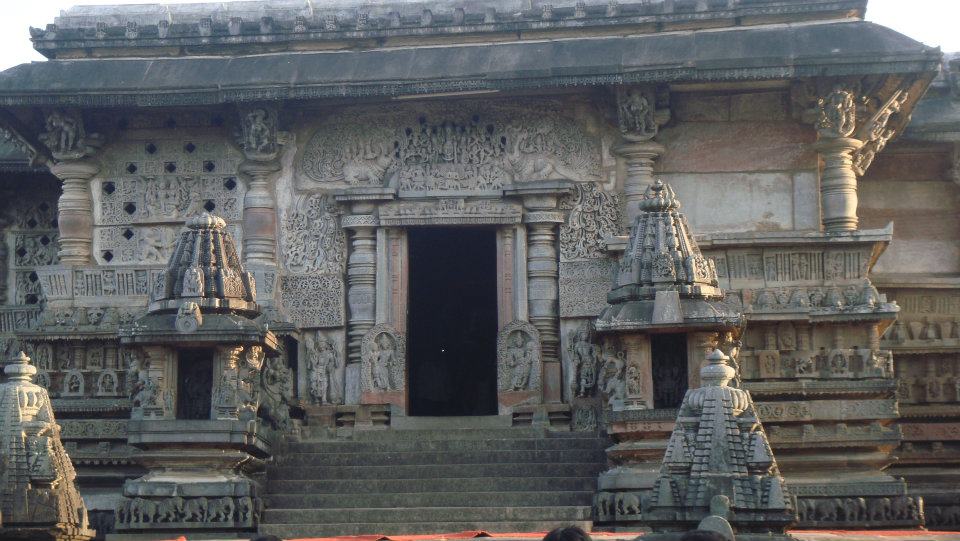
Hoysaleswara temple was built during 12th and 13th century Hoysala Empire by King Vishnuvardhana. Dedicated to Lord Shiva, the ground-plan of the temple is the characteristic star shape common to all the Hoysala temples. Hoysaleswara is actually formed by two temples joined by a common veranda. The temple of the north is known as the Shantaleshwara temple and is named after the beloved Queen Shantala Devi. Continue reading

Aihole Durga Temple – Karnataka

Photo credits : Ramesh Kidangoor

Photo credits: Ramesh Kidangoor

Located in the Bagalkot district of Karnataka Aihole (pronounced: eye-HO-lee) served as the capital of the Chalukyan Dynasty from the 4th to the 6th century A.D. The Durga temple was built between the 7th and 8th century during a rich architectural era. Continue reading

Thirumalai Nayak Palace – Madurai, Tamil Nadu

Photo credits: Ramesh Kidangoor

Photo credits: Ramesh Kidangoor

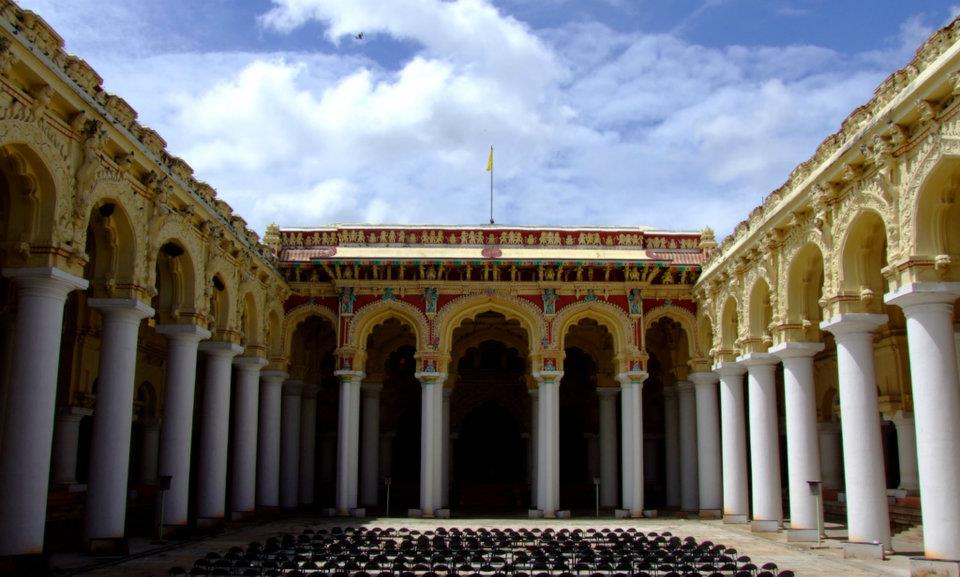
Thirumalai Nayak Palace was built by Thirumalai Nayak, one of the greatest of the Nayakkar Kings of Madurai, with the help of an Italian architect in 1636. The palace is a classic example of the Indo-Saracenic style of architecture. The main palace has a rectangular courtyard flanked by tall arcades each with their own distinct carvings.

Continue reading

If You Happen To Be In San Francisco

This slideshow requires JavaScript.

We have plenty of thoughts on Detroit’s current state of affairs, and an occasional post on one oddity or another connected to the city; but only one recent post, and a brief followup, with a direct reference to its cultural heritage. Thanks to Wired for bringing this exhibit to our attention:

…Many famous architects, such as Albert Kahn, helped the city become an architectural hub, and Jarmain’s title, American Beauty, is named after Kahn’s American Beauty Iron Building. Even though Detroit is shrinking and structures are being destroyed almost daily, it still has one of the country’s best collections of late 19th- and early 20th century buildings…

And thanks to the Meridian Gallery for this description of the upcoming exhibit in San Francisco: Continue reading

19th Century Modern

daguerrotype-004-580

Students in need of tuition money sometimes prove the saying that necessity is the mother of invention, as this New Yorker historical note indicates:

In 1843, a Dartmouth College freshman named Augustus Washington needed to earn some money for tuition. As a man of mixed-race—a black father, a South Asian mother—many professions were closed to him. But anyone could learn the new art of daguerreotype photography, which had been perfected and publicized a few years earlier by the French artist Louis-Jacques-Mandé Daguerre. After mastering the bulky camera, Washington opened a studio in Hartford, Connecticut, where he made a good living photographing middle-class families. Continue reading

Gangaikondacholapuram Temple – Thanjavur, Tamil Nadu

Photo credits: Ramesh Kidangoor

Photo credits: Ramesh Kidangoor

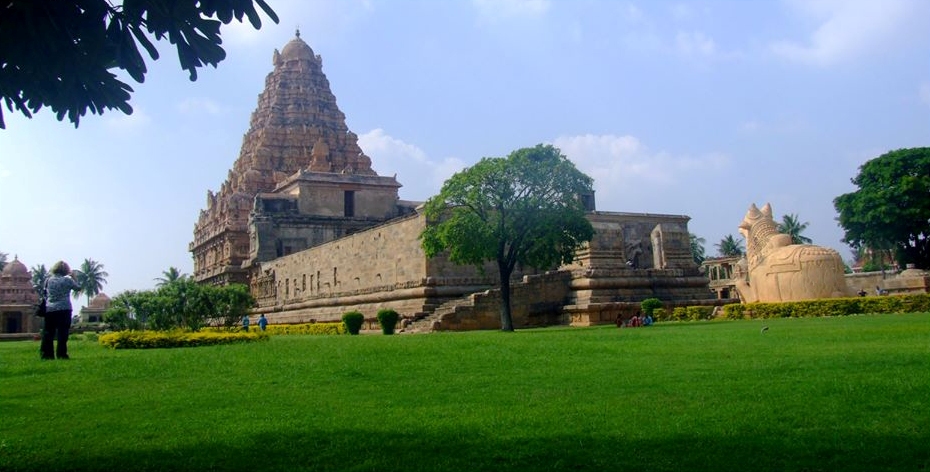
Dedicated to Lord Shive, Gangaikondacholapuram Temple was built by Chola Emperor Rajendra Ist between 1012 to 1044. The structure is a replica of the Brihadeeswara Temple at Thanjavur and was built in commemoration of Rajendra’s victory through the kingdoms of northern India to reach the Ganges. Continue reading

Urban Muse

This slideshow requires JavaScript.

It does not matter whether you are a farmer, a geneticist, or whatever you do with your time: you will almost certainly be affected in important, unexpected ways after time spent in Paris.   Continue reading