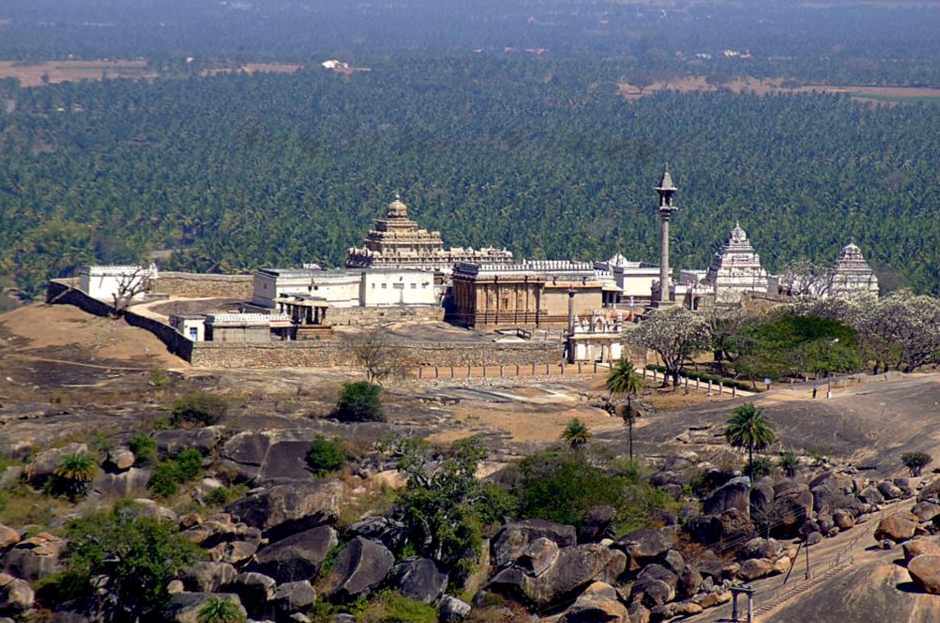
Chitradurga Fort – Karnataka

Photo credits : Dileep

Photo credits: Dileep

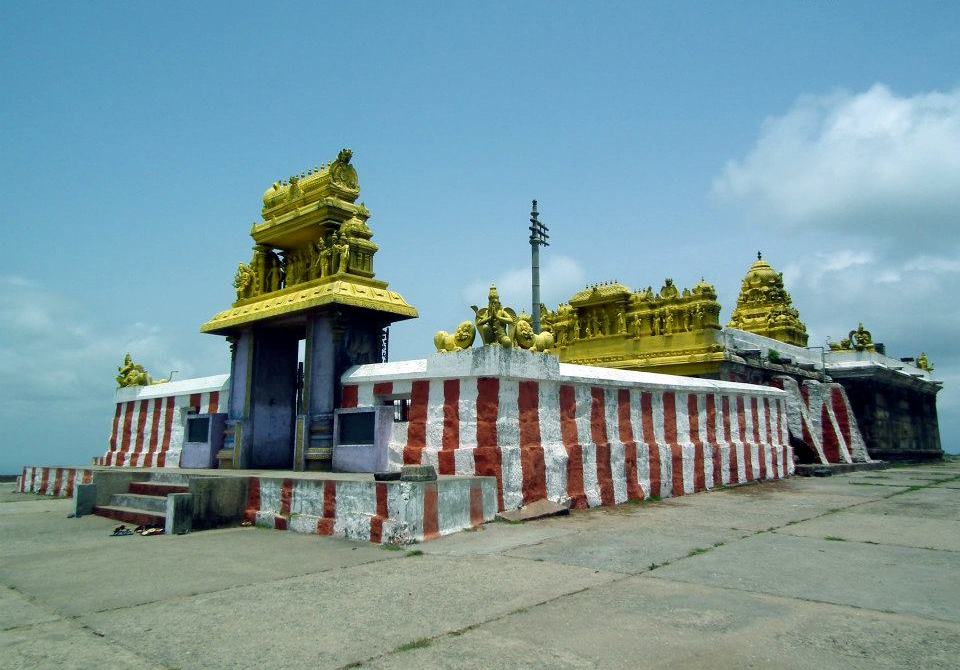
Chitradurga Fort is located near Bangalore in the Chitradurga district of the south indian state of Karnataka. Begun in the 10th century, the fort was built and expanded by different rulers such as Chalukyas, Hoysalas and Rashratrakutas, but its golden era was between the 14th and 18th centuries. During this period the fort was controlled by the Nayaks. Continue reading

Gopalaswamy Betta Temple

Photo Credits: Ramesh Kidangoor

Photo Credits: Ramesh Kidangoor

Gopalaswamy Betta Temple is located in the Chamarajanagar district of Karnataka. This temple is adjacent to Bandipur and Nagarhole National parks. Gopalaswamy is the other name of Lord Krishna. The temple was built by the King Cola Bellala during AD 1315. Continue reading

Worlds And Distant Times Apart, Bridged By Ideas (Or Ideology)

Future Shlock

The New Republic is not a magazine we scan often, because its focus rarely intersects with our focus; even its Must Reads are to us, not-often-must; but occasionally we stumble on something of interest.  Perhaps because the first link of today had a technology component, we got on a roll thinking about the relationship between technology, ideas, culture. This particular article is worth reading simply for the quality of both content and style:

The sewing machine was the smartphone of the nineteenth century. Just skim through the promotional materials of the leading sewing-machine manufacturers of that distant era and you will notice the many similarities with our own lofty, dizzy discourse. The catalog from Willcox & Gibbs, the Apple of its day, in 1864, includes glowing testimonials from a number of reverends thrilled by the civilizing powers of the new machine. Continue reading

“Shipwrecked pictures” from the Albert Khan museum : can our community help identify these photographs ?

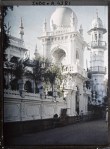
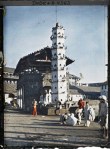
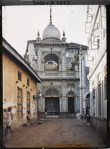
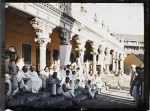
Back in 1912, french millionaire Albert Kahn hired Stéphane Passet to be a photographer for the monumental project Archives of the planet, an iconographic memory of societies, environments and lifestyles around the world. From 1909 to 1931, Albert Kahn  commissioned photographers and film cameramen to record life in over 50 countries. The Archives of the planet were a collection of 180,000 metres of b/w film and more than 72,000 autochrome plates, most of which are held at Museum Albert Kahn in Boulogne, close to Paris.

Autochrome was the first industrial process for true colour photography. When the Lumière brothers launched it commercially in June 1907, it was a photograhic revolution – black and white came to life in colour. Autochromes consist of fine layers of microscopic grains of potato starch – dyed either red-orange, green or violet blue – combined with black carbon particles, spread over a glass plate where it is combined with a black and white photographic emulsion. All colours can be reproduced from three primary colours. Some of the autochrome pictures available today are however unidentified, some happen to be of Bombay. Who among you in the Raxa Collective community can help locate these sites?

Continue reading

Captain Robert Scott’s South Pole Expedition, Exposed Again

This slideshow requires JavaScript.

People with an interest in exploration, expeditions, adventure have a higher likelihood of knowing who Captain Scott was.  Only an expedition photography geek, a historian, or otherwise quirky know-it-all is likely be familiar with the name Ponting. Thankfully, such people exist and they have brought Ponting back from the archival grave. Outside magazine’s website has this collection on display. The captions follow in order of the slideshow above:

1. A program for Herbert Ponting’s lectures on Captain Scott. Ponting’s lectures, which accompanied his silent films at the Philharmonic Hall in London, were a huge success, with over 100,000 people going in to hear him, including leading politicians and celebrities of the day. His films were a significant milestone in the history of the cinema. Continue reading

Lost Civilization, Collaborative Discovery

Seekers of past Honduran, Mexican civilizations to speak Wednesday at Meeting of Americas

We should not be surprised at the headline above or that the article we linked to here was a precursor to the pre-conference press release issued this week by the AGU:

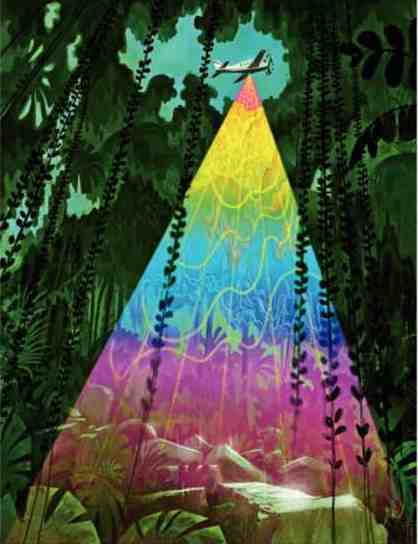
A high-tech archeological exploration team of scientists and a filmmaker, who announced a year ago that they had glimpsed remnants of what might be a fabled ancient city in the Honduran rain forests, plans to speak about the team’s discoveries here tomorrow (15 May) at the 2013 Meeting of the Americas, and to show previously undisclosed images of apparent archeological sites. Continue reading

At the tea factory

This slideshow requires JavaScript.

Tea in India tastes stronger, so I always ask for mine to be mild, just like I do for curry. As I learnt today during a visit at a tea plantation and factory this is due to the processing of tea mostly used here for the Indian market: CTC.  Continue reading

Keshava Temple- Belur, Karnataka

Photo credits :Dileep Kumar

Photo credits: Dileep Kumar

Keshava Temple of Belur is aptly referred to as the “Jewelry Box” of Hoysala architecture, such is the ornamentation and detail of the sculpted pieces. The Mohini Pillar in the Navaranga Mandapa is one of the finest specimens of the Hoysala pillar order. The pillar is placed vertically on a sixteen pointed star plan decorated with a narrow band of filigree work. Continue reading

Tipu Sulthan’s Summer Palace, Mysore

Photo Credits: Dileep Kumar

Photo Credits: Dileep Kumar

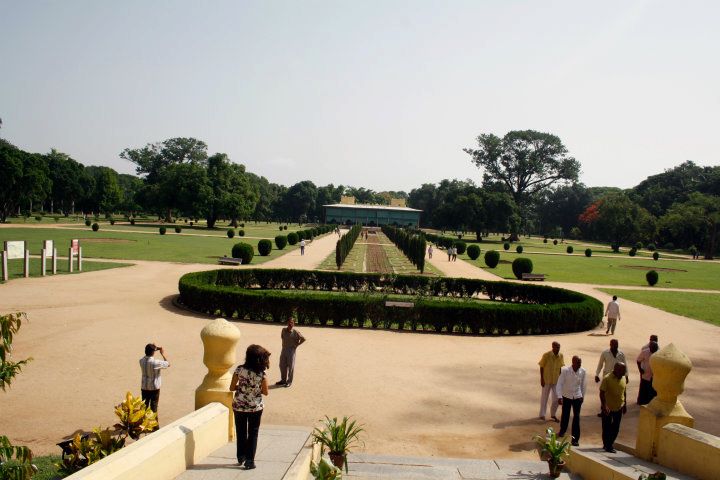
Known as the “Tiger of Mysore”, Tipu Sulthan was the ruler of the Mysore Kingdom from 1782 to 1799. The construction of the summer residence was started by his father Hyder Ali. Built with French rosewood and adorned with pillars, this beautiful palace is surrounded by ornamental trees and a beautiful garden.
Continue reading

Kuthira Malika, Trivandrum

Photo credits: Ramesh Kidangoor

Photo credits: Ramesh Kidangoor

The Kuthira Malika is a beautiful Kerala style, two story, 80 room palace with open verandas. Built by the Maharaja Swathi Thirunal in 1844, the name Kuthira Malika, which means Horse Palace, was chosen based on the many wooden horse figures carved along the entire length of the exterior lintel of the upper floors. The Palace has now been converted into a museum that houses very interesting and rare artifacts and paintings belonging to the previous Travancore Kings. Continue reading

Bolgatty Palace – Kochi

Photo Credits: Ramesh Kidangoor

Photo Credits: Ramesh Kidangoor

The Bolgatty Palace was built in 1744 by the Dutch and later taken over by the British. Today it is a hotel run by the Kerala Tourism Board. The palace is located on Bolgatty Island, one of the islands that form part of the city of Kochi. It is a two-storied building with well-laid verandas on both sides facing the seas. Set amidst lush, tropical greenery, this Dutch heritage building has the added advantage of a spectacular view of the backwaters.
Continue reading

Snake Worship

Photo Credits: Ramesh Kidngoor

Photo Credits: Ramesh Kidngoor

The origin of snake worship goes way back in history in many parts of India, but only in Kerala is it such a living tradition. In earlier times, in almost every Hindu household the southwest corner of the compound was set apart for a shrine called sarpakavu as the propitiation of the serpent god was considered essential to the wellbeing of the family. There are several legends associated with snake worship; it is believed that soon after Parasurama created Kerala the land with thick forests was inhabited by poisonous snakes. It is believed that people believed they could appease them through worship. Continue reading

Mahadeva Temple – Vaikom, Kerala

Photo Credits: Ramesh Kidangoor

Photo Credits: Ramesh Kidangoor

Vaikom Mahadeva Temple is one of the most famous and oldest Siva temple in Kerala. Legend has it that the Mahadeva Temple was constructed by Lord Parasurama, the 6th incarnation of Lord Vishnu and the mythological creator of Kerala. Continue reading

Lost City Of The Monkey God

Another great article (click the image to the left to go to the source), complementing this recent one from the New Yorker, about one special location within the region several members of Raxa Collective have called home for most of the last two decades:

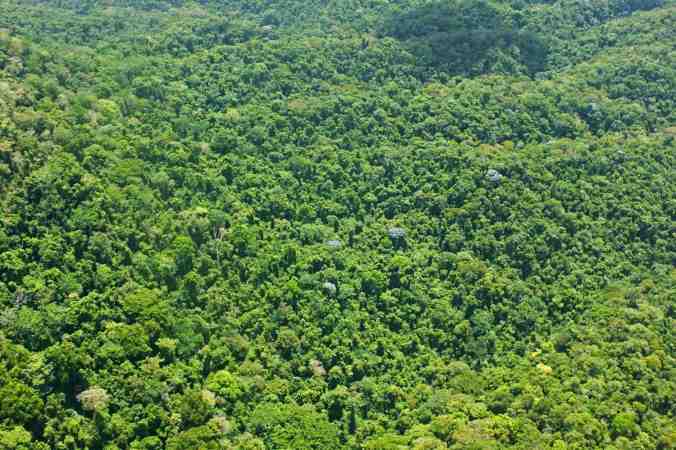
The rain forests of Mosquitia, which span more than thirty-two thousand square miles of Honduras and Nicaragua, are among the densest and most inhospitable in the world. “It’s mountainous,” Chris Begley, an archeologist and expert on Honduras, told me recently. “There’s white water. There are jumping vipers, coral snakes, fer-de-lance, stinging plants, and biting insects. And then there are the illnesses—malaria, dengue fever, leishmaniasis, Chagas’.” Nevertheless, for nearly a century, archeologists and adventurers have plunged into the region, in search of the ruins of an ancient city, built of white stone, called la Ciudad Blanca, the White City. Continue reading

Panchavadyam – Rhythms Of Kerala

Photo Credits: Ramesh Kidangoor

Photo Credits: Ramesh Kidangoor

Panchavadyam is an orchestra made up of five instruments, primarily percussion but one wind instrument – chenda, kombu, kuzhal, elathalam and maddalam. Kerala temple festivals are the ideal occasion to witness its entire range of traditional musical expertise. Originally this was the music that accompanied temple processions where caparisoned elephants carried the idol. A panchavadyam performance takes hours, with a pyramid-like rhythmic structure in which the instruments go through five musical stages, or peaks.
Continue reading

Gommateshvara Monolith Statue – Shravanbelagola , Karanataka

Photo Credits: Ramesh Kidangoor

Photo Credits: Ramesh Kidangoor

Shravanbelagola is a famous Jain pilgrimage centre that abounds in monoments. The 17-meter high, 1000-year-old monolithic statue of the Jain saint Gommateshvara, considered to be the world largest monolith stone statue, is situated here. Gommata was the Jain prince who renounced the world in his moment of supreme triumph and victory in war. Pilgrims travel to the site by the thousands to view the statue of this man of great moral strength and virtuous character. Continue reading

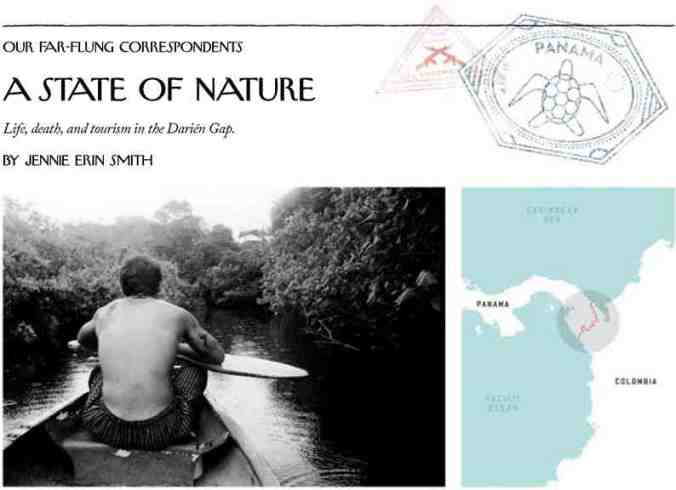
The Darien Gap, Panama

Darien


Remarkably, a second article in the same issue of the New Yorker devoted to one of our favorite topics–the wonders of nature. Click the image above to go to the source. The first one we linked to is by one of the magazine’s most distinguished writers, and we are pleased to encounter the author of the following for the first time:

The Pan-American Highway runs sixteen thousand miles, from Anchorage to Tierra del Fuego, with one significant interruption: an expanse of rain forest along the border of Colombia and Panama. The road ends abruptly on the Panama side, just north of a national park, and picks up again as a dirt path, sixty miles southeast, in Colombia, in the floodplain of the enormous Atrato River. The region in between, which spans two coasts with jungles and mountains and a confounding web of rivers, is known locally as the Tapón del Darién—the Darién Plug—for its seeming impassability. Continue reading

Shravanbelagola – Jain Temple, Karanataka

Photo Credits: Ramesh Kidangoor

Photo Credits: Ramesh Kidangoor

Located strategically between the two hills of Chandagire and Indragiri near Hassan, the picturesque hill town Shravanbelagola is a renowned site for Jain pilgrimages. This Jain temple was built in 983 AD by Chandragupta Maurya, the grandfather of the Great Ashoka. Continue reading

Mural Paintings – Kerala

Photo Credits:Best of Kerala

Photo Credits: Best of Kerala

Kerala is heralded as one of the leading states in India with a good collection of Murals. Dating back to the 8th century, the paintings are highly valued for their aesthetic composition and techniques. The temples and palaces of Kerala are custodians of many notable Mural works depicting Hindu Gods and Goddesses.
Continue reading

Malik Ibn Dinar Mosque – Kasaragod, Kerala

Photo Credit: Ramesh Kidangoor

Photo Credit: Ramesh Kidangoor

Malik Ibn Dinar Mosque is one of the oldest Mosques in Kerala. It was built by Malik Ibn Dinar, a missionary from Arabia who is credited with bringing Islam to the Malabar shores. The original mosque Dinar built in 648 AD was a small structure but with marble paving stones brought from Mecca. Continue reading