Ideas About Why To Hug A Tree

In several earlier posts Seth highlighted the evolution of environmental philosophy in readings for a course he was taking at Cornell University.  For those of us not lucky enough to be in a course like that, there is a magazine whose current issue covers some of the same terrain.  From one of the articles in that issue (click the image above to go directly to the source):

Leopold argued for the extension of what we see as worthy of our respect from the human community to include animals and the natural world, or what he referred to as ‘the biotic community’. His famous principle, briefly expressed, was, ‘A thing is right when it tends to preserve the integrity, stability and beauty of the biotic community. It is wrong when it tends otherwise’.

Continue reading

Positively Happy

My high school chemistry teacher always said, “Don’t be negative; be positive.  Multiply the love and divide the hate,” while she used her hands and fingers to represent each mathematical symbol.  This phrase would surface in my memory occasionally, but I must admit I rarely took it to heart.  However, I was preparing for a presentation about affirmations when I stumbled across a Ted Talk that affirmed this old saying.

I found this short speech relatable, funny, and surprisingly thought-provoking.

Continue reading

Confidence in Dreams

It has been a struggle to pick topics to write about for the past several weeks, and in my innate pursuit of perfectionism I became wrought with indecision.  I could write about sustainable facilities design; I could uncover the truth about many LEED-certified buildings; I could even write about the ecology-based dormitory where I am writing this now.  But among these various topics, I could not find one that I felt “good enough” to write about at this time.  So to dissolve some of my indecision, I chose to reveal some of my mind’s musings, many of which the perfectionist side of me deems crazy, but day-by-day I am learning to embrace.

Each morning, I wake to the sound of my alarm clock and the chime of my smartphone being flooded with emails.  A month ago I thought nothing of this activity, but lately I have found it unnerving.  The annoyance I am feeling developed over my winter break. Continue reading

Ecological Adventure Careers

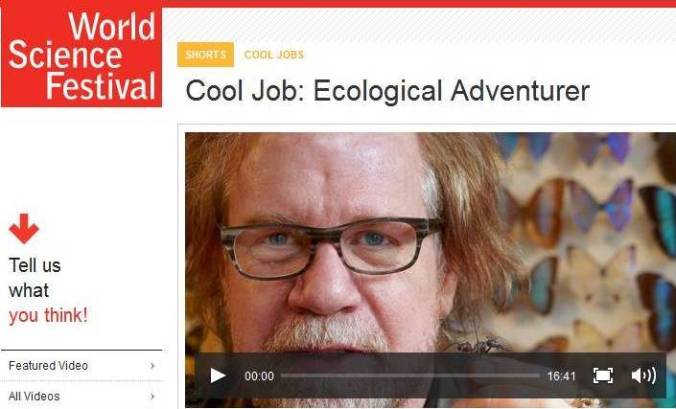
Click the image above to go to the location of this video featuring ecologist and explorer Mark Moffett who

has trekked across the globe to find his stories and capture them on film. Just like the creatures he photographs, Mark can be found crawling in the dirt or clinging to the tops of trees to get that perfect shot. Joined by a scaly friend, he shares his breathtaking work, urging all of us to go out and find stories of our own. Continue reading

Consumption Matters

Either take 63 seconds to view Mr. Clay’s ideas in video form, or read this summary:

Healthy information consumption habits are about more than productivity and efficiency. They’re about your personal health, and the health of society. Just as junk food can lead to obesity, junk information can lead to new forms of ignorance. The Information Diet provides a framework for consuming information in a healthy way, by showing you what to look for, what to avoid, and how to be selective. In the process, author Clay Johnson explains the role information has played throughout history, and why following his prescribed diet is essential in today’s information age.

Continue reading

While The Sun Shines

The festival has the kind of illustrious history that makes it interesting enough on its home turf in Wales; its more recent evolution is a sign of creativity in motion.  Take a look at this story from the most recent iteration of the festival in Kerala, and then after the jump see more on one of the festival’s participants in Colombia last week. Continue reading

The Cyberspace Jungle

Today, we are bombarded with information. Millions of bits–photos, text, video–stream by us every second we’re on the web. And we’re always on the web. Mobile devices on 3G (and now “4G”) and lightweight laptops able to access nearly ubiquitous WiFi hotspots mean that the modern age is certainly the information age. And the Internet continues to grow riotously; like a tropical rain forest, millions of unique niches exist, but they are inhabited here instead by users and data. And much like a natural ecosystem, the internet is also inextricably interlinked and interdependent: hyperlinks, reference pointers, and social media make the Internet a pseudo-organic entity that has its gaze turned not only outward (towards expansion) but also inward (towards connections). In its own way, the internet is an oddly beautiful thing. The freewheeling, ever-shifting topography of the web means that from second-to-second it’s never quite the same place.

But for all its seductive beauty and facile utility Continue reading

Margin Calls

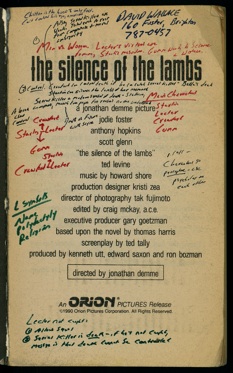
Click the image to the right for an explanation of what that image has to do with the remarkable world of marginalia, which begins:

“In getting my books,” Edgar Allan Poe wrote in 1844, “I have always been solicitous of an ample margin; this is not so much through any love of the thing in itself, however agreeable, as for the facility it affords me of penciling in suggested thoughts, agreements, and differences of opinion, or brief critical comments in general.”

A certain Mr. Wallace, of literary fame, apparently had reason to write in the spaces of whatever was at hand.  But that is a matter of quite trivial pursuit compared to Kerouac’s marginalia while reading Thoreau.

Continue reading

It Might Have Seemed Funny

If you thought you had heard all the most clever jokes in the English language about environmental activists (citizens, scientists and other types) you might want to stay up to date with The Onion.  Activists can say and do things that, on reflection, lead to laughter, wincing or worse.  Perhaps the tendency Raxa Collective is most sensitive to is preachiness: we avoid it at all costs, preferring humor to vinegary sourpuss judgement of others.

If you were to click from humor at The Onion directly onto the page where Merchants Of Despair (click the image to the left) is reviewed and promoted, you might think it is Oniony humor.  But no, it seems to be earnest, determined anti-environmentalism:

Combining riveting tales from history with powerful policy arguments, Merchants of Despair provides scientific refutations to antihumanism’s major pseudo-scientific claims, including its modern tirades against nuclear power, pesticides, population growth, biotech foods, resource depletion, industrial development, and, most recently, fear-mongering about global warming. Merchants of Despair exposes this dangerous agenda and makes the definitive scientific and moral case against it. Continue reading

Bright Ideas

Ingenuity can go a long way in meeting people’s essential needs with the simplest of materials.

The recipe: Start with students from the Massachusetts Institute of Technology (MIT), add basic materials destined for dumps and landfills around the world, mix with filtered water and bleach, install, expose to sunlight. And voilà!–a light that will last for 10 years!

The Solar Bottle Bulb is based on the principles of Appropriate Technologies – a concept that provides simple and easily replicable technologies that address basic needs in developing communities.

Continue reading

Perspective’s The Thing

The first day of the Chinese new year offered the opportunity to reflect on commitment and the second offers something randomly different from the same source.  Click the image to the left for the bio of Douglas Coupland, an artist whose work seems worth seeking out:

What’s both eerie and interesting to me about déja vus is that they occur almost like metronomes throughout our lives, about one every six months, a poetic timekeeping device that, at the very least, reminds us we are alive. I can safely assume that my thirteen year old niece, Stephen Hawking and someone working in a Beijing luggage-making factory each experience two déja vus a year. Not one. Not three. Two. Continue reading

Happy New Year, China

Today marks the start of another year of the dragon, according to Chinese tradition.  I was just about to go find out what that might mean, but decided better of it.  That decision was influenced by the man in the picture to the right (click it for his bio) and what he said in this brief but moving response to the Annual Question that Edge puts to very smart folks (his response is the second one, so scroll down to that).

It is a fundamental principle of economics that a person is always better off if they have more alternatives to choose from. But this principle is wrong. There are cases when I can make myself better off by restricting my future choices and commit myself to a specific course of action. Continue reading

You Value The Books You Turn To In Need

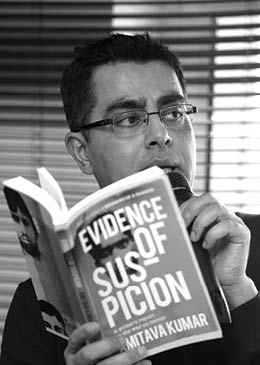
Click the image to the left for a trip to Jaipur via The Guardian and the fertile mind of Amitava Kumar:

When I was younger books were fetish objects. They sat in a small group on a bare shelf or a window sill, depending on whether I was at home or staying in my room at the college hostel. Now, with more money, I’m able to acquire the books more easily, and they have lost their ancient magic as objects. Now, they are treasured as friends. Or, more likely, as guilty reminders of money wasted — because I hardly have the time to read one-tenth of the books I buy.

Mr. Kumar is quoted here in a series called “Of Writers & Reading” in honor of the Jaipur Literature Fest. Continue reading

New Symphony Of Science

Although we are partial to the Carl Sagan & Cosmos origins of this series, John D Boswell’s latest gift may be his best yet.  Only a few minutes long each, the music-video-remix of scientific explanations is a novel approach to getting the hook in.  This one is about evolution.

Aesthetics are always a matter of taste, so the particular style of music, the fast-cutting images, the lighthearted transition from the speaking voice of a well-known scientist to a singsong dub-repeat-dub–all may have their detractors.  Continue reading

Library Lovers Unite

Someone at the Greene County Public Library had the bright idea, and creative ability, to put a fun spin on an erstwhile quiet, sometimes sleepy, and recently endangered institution.  The little library in Ohio that roared.

Continue reading

Clay Shirky Explains Why We Should Care About The Internet’s Integrity

There probably has not been a better summary of the issues involved in the recent legislation drafted, and under consideration for passage, by the Congress in the USA to regulate the Internet.  Our activities on the Internet are focused on sharing–ideas, images, video, links that we think are germane to our work in entrepreneurial conservation–and therefore directly threatened by SOPA.

Continue reading

USA Refresher

Before there was social media as we know it today, there was social media.  Social reformers and thinkers of all varieties have centuries of experience not just using the tools of social media, but utilizing them.  Leveraging them.  August 28, 1963 in Washington, D.C. was one of the days when the USA experienced a moment of truth, and when social media included word of mouth, television/radio simulcast and later replay.

This is the day when the man who spoke longest on that day is remembered officially.  One minute into the above video he begins speaking, but the memory is affected, no matter how many times one has seen, heard or read these words, most when that man talks about his hopes for the future of a country that had a history of injustice, but also a history of reform, change, improvement. Continue reading

Digging Your Own Well

We often talk about ‘imagination’ as if it’s a fixture of the human mind. Human beings, as common sense would have it, are inherently able to imagine what is different; we bring what is distant near only by thinking it so. In the middle of a blistering New England winter, for instance, we might picture ourselves on a sandy beach in Florida; in the mess of rapid and haphazard “development,” we might imagine pristine, virgin land.

But imagination—like all of our most transcendent capacities—exists not invariably, of course, but in degrees, in flux, in varying quantities and qualities, and sometimes—that is, in some minds—hardly at all. I was reminded of this last week following the death of North Korean dictator, Kim Jong-Il, which caused me to reflect upon (and imagine) the lives and minds that comprise a nation with only one permitted text upon which to project its fantasies—the doctrine of North Korean socialism.

And yet this extreme example serves only as a limiting case, one which indicates a more universal difficulty. We’re all always limited in our imaginings. We block their course, sometimes deliberately, but also sometimes mechanically, and often blindly. This is what makes routine possible, and what makes even our most arbitrary and destructive habits seem perfectly natural. We cling to what is readily available, forgetting the partial nature of our given sphere. While imagination brings what’s distant near, habit forgets the possibility of distance (and difference) at all.

Cultivating one’s imagination is a privilege, one which we ought to covet and guard with jealousy. I was granted this privilege this past summer, when I was able to stay in Kumily, Kerala for two months—Kumily, a place so unlike any of the other places I call home in custom and in ambience, in ethic and in landscape. I wrote previously about how the hills and depths of the Periyar moved me, and about how Raxa Collective’s work with the Forest Department and the Development Committees humbled and inspired me. But in that post I neglected to mention one of the more memorable moments of my stay at Cardamom County, one which broadened the horizons of my imagination even more than the occasional monkey-encounter or motorcycle ride through Tamil Nadu. Continue reading

Thank You, Wisconsin

When times are tough economically, all state-funded institutions have a tougher time convincing politicians and tax-payers of the value they deliver.  Educational institutions seem to bear the first brunt of many legislative and executive chopping block reflexes.  This graph (click the image above to go to the source.)  demonstrates the short time horizons they are seeing the world through. Continue reading