License To Obsess

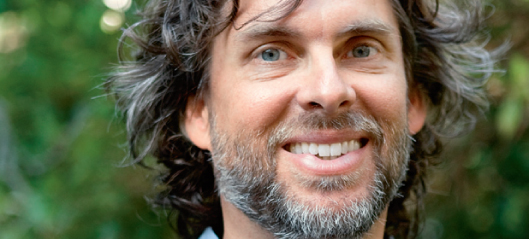
If your life has a certain soundtrack and you read American literary fiction, you may have already encountered the novels of Michael Chabon.  Click the image above for a snapshot interview with him.  When he announced at the beginning of this year that he was working on a new novel, it was seen by many in a blog post split over two days.  A turn of phrase in the middle of the second post resonates with the small group of people who form Raxa Collective:

…thanks to Wax Poetics, one unexpected but maybe not unforeseeable result of the decision to have some characters own a shop together selling battered old things that are beautiful and valuable only to a small number of randomly assorted Geeko-Americans has been the joyful return to my life of hip-hop…

Things that are beautiful and valuable only to a small number: those are the things we are focused on here.  See all of Salim’s recent posts for examples.  Milo’s too.  Chabon’s new novel may focus on the culture of hip-hop, which you will not likely encounter on our pages, but the underlying idea has both profound and light-hearted implications. Continue reading

Vive La Différence

One of our favorite phrases comes to mind upon seeing the news that Umberto Eco, whose book on experiential travel is as must-read as it is little-known, is curating an exhibition on lists at a museum.  Long live the difference: the man of letters, whose academic work on semiotics even many scholars are challenged by, can write trash-free page-turners as well as travel books and, why not, curate a museum exhibition.  Long live the difference: the museum that resists the trashy blockbusters can invite a man such as this to open his cabinet of curiosities. Continue reading

Fringe Physics

We have a soft spot for unusual geniuses, whether formally defined, or recognized in other ways, so it is with pleasure that we discovered this book (click the image to the left), its author, and a TED talk (after the jump) to boot.

For the past fifteen years, acclaimed science writer Margaret Wertheim has been collecting the works of “outsider physicists,” many without formal training and all convinced that they have found true alternative theories of the universe. Jim Carter, the Einstein of outsiders, has developed his own complete theory of matter and energy and gravity that he demonstrates with experiments in his backyard‚-with garbage cans and a disco fog machine he makes smoke rings to test his ideas about atoms. Captivated by the imaginative power of his theories and his resolutely DIY attitude, Wertheim has been following Carter’s progress for the past decade.

Click the picture to the right for a podcast that gives a nifty overview of the book. Click here for a review of the book from a great blog connected to Columbia University’s math department. Click here for an excellent review in a once great and occasionally still good newspaper’s website. And click here for a review from an always great magazine’s website.

Continue reading

Wordsmithing: Tribal

Western travelers to Kerala at first can be startled by the frequent use of this word, which has been replaced by the word indigenous in other parts of the world, but whose noun form has special mention in OED:

A member of a tribal community (usu. in pl.). Chiefly Indian English.

1958    New India: Progress through Democracy iii. vi. 378   Illiteracy is almost universal among tribal peoples.‥ Tribals are being trained as teachers.

1964    Economist 18 Apr. 261/1   More are arriving daily, among them Christian and Buddhist tribals.

1979    South China Morning Post (Hong Kong) 28 Dec. 3/1   Teams of mountain tribals are to join the search for three Singapore Air Force Skyhawks which disappeared over the northern Philippines eight days ago.

The word has no “tone” to it, at least not perceptible to foreigners living in Kerala.  Continue reading

How To Volunteer In Costa Rica

Ok, finally I will start from the beginning.

I study French and Spanish at the University of Edinburgh, and as such, I have to spend my Junior Honours year abroad: one semester in a Spanish-speaking country and one in a French-speaking country. Ever the romantic, I chose Costa Rica, with its rainforests and volcanoes, earthquakes and hurricanes, democracy and peace. There is no Costa Rican army. And they all say ‘Pura Vida’, all the time.

I'd say 'Pura Vida' all the time if I lived here too.

Continue reading

Water, Success, India

Those are three words that have a certain ring together.  But as per their tradition of seeking out news with a purpose, we appreciate this story in the Monitor, not least because it has to do with our neighbors to the north.  Click the image below to read the story at its source.

A laborer drinks water while taking a break from spreading paddy crop in a field on the outskirts of the western Indian city of Ahmedabad. In the tiny village of Wankute, water-management practices have eliminated the need to haul water to the village by truck, raised the water table, and widened the variety of crops that can be grown. Amit Dave/Reuters/File

Wankute, a tiny village located high in the Sahyadri mountain range of the Maharashtra state of India, was dry and near-barren in the 1990s. Agriculture was limited to crops that could withstand hot temperatures and little water, such as millet and certain legumes.

Continue reading

What Is India?

For any new resident of India, let alone its own citizens, the question is always interesting.

The following is the text of a speech delivered by Justice Markandey Katju, chairman of the Press Council of India, at Jawaharlal Nehru University on November 14, 2011.

Friends,

I am deeply honoured to be invited to speak before all of you. My time is limited, as I was told I should speak for 30 minutes and after that there will be a question answer session. As my main speech will be restricted to 30 minutes, I may come to the topic of discussion immediately, that is, What is India? …

…The difference between North America and India is that North America is a country of new immigrants, where people came mainly from Europe over the last four to five hundred years, India is a country of old immigrants where people have been coming in for 10 thousand years or so.

Continue reading

Wordsmithing: Zoo

It is one of the words that most children associate with wildlife. Does it qualify as a word?  OED shows the etymology of these three letters as:
c1847    Macaulay in Life & Lett. (1878) II. 216   We treated the Clifton Zoo much too contemptuously.
1886    C. E. Pascoe London of To-day (ed. 3) iv. 65   The ‘Zoo’ in time past was as favourite a fashionable resort as Rotten Row.

Thinking, Fast And Slow

Speaking of awesome intelligence it was intended to make a small point (pop culture is not as kind to intelligence as it is to glossy, gossipy stuff) and later highlight that intelligence itself.  While the accolades of scholars–those whose own work has been influenced by Kahneman–are interesting to read, so are those published by reviewers advising lay readers to read his most recent book.  For example, last month in FT:

There have been many good books on human rationality and irrationality, but only one masterpiece. That masterpiece is Daniel Kahneman’s Thinking, Fast and Slow. Continue reading

What More About Picasso?

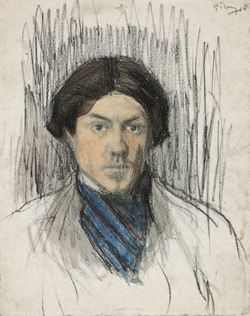
We had mentioned in an earlier post encountering this source of interesting observations, and now another from the same (click on the image for the full thought and information about the exhibition):

The idea of Picasso always precedes the experience of seeing Picasso’s art. Looking at drawings from the artist’s early years in the Frick Collection’s cramped basement, I wondered what we can say about Picasso that hasn’t already been said. I’ve previously encountered this question with artists whose reputations (and market value) are in such high esteem that it is almost impossible to see the work as separate from the artist’s image. Even in this small show, with works that look decidedly un-Picasso, I found it difficult to view the drawings as anything other than work of this great artist.

Continue reading

Popular Culture Celebrating Awesome Intelligence

Michael Lewis, a great journalist working for a glossy publication, popularized a smart baseball manager in a book and more recently a film adaptation of that book.  A great 2003 interview with him can be found in podcast form here.  Unique intelligence, it seems, is not as celebrated in popular culture as it should be (and is not, usually, in Vanity Fair or other glossy publications).  But credit where due: Lewis recently followed up his success with that book and film giving credit where he saw it due.  And celebrating an even grander unique intelligence in that very same glossy:

It didn’t take me long to figure out that, in a not so roundabout way, Kahneman and Tversky had made my baseball story possible. In a collaboration that lasted 15 years and involved an extraordinary number of strange and inventive experiments, they had demonstrated how essentially irrational human beings can be.

Continue reading

Mahatma Gandhi In Paris

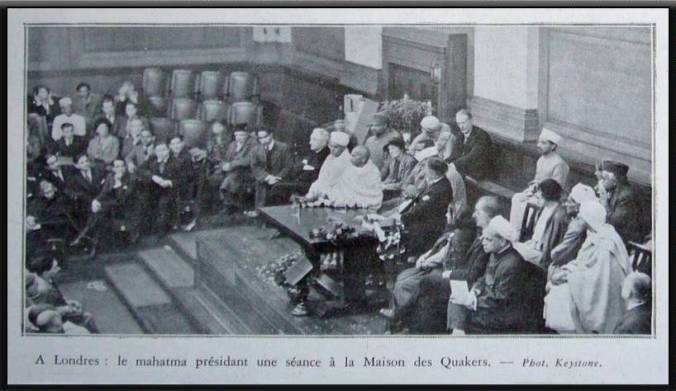
With a mission like this how could we not pay attention? The image above links to the story about two of our favorite subjects, brought together by The Caravan.  The image is from a French magazine, which covered the Mahatma’s visit to Paris (and elsewhere) with reverence.

Continue reading

3 Minute Wonders: You Get What You Pay For

It is easy to be skeptical about the relationship between buzz and art, where buzz is meant to be a synonym for meaningful discussion. At 2:23 in this clip one person eloquently suggests that this is art because it has generated discussion. But has it?

Continue reading

Wordsmithing: Authentic

We have been using this word for years as a shorthand for one of the core objectives of our entrepreneurial conservation work: collaborating with communities to assist in the retention of heritage that has meaning, and that those communities feel should remain essentially as it was.  It is therefore interesting to consult OED (finally) on exactly what this means.

Top of the list of entries:

a. Of authority, authoritative (properly as possessing original or inherent authority, but also as duly authorized); entitled to obedience or respect.

Continue reading

Amazing People From India

In a post a couple days back, mentioning two artists of Indian origin, there was no intent to create a new focus on the theme of Indians in the so-called new world, but this catches the attention on its own:

Sir Jagadish Chandra Bose, the aforementioned carrot vivisector, was a serious man of science. Born in what is today Bangladesh in 1858, Bose was a quintessential polymath: physicist, biologist, botanist, archaeologist. He was the first person from the Indian subcontinent to receive a U.S. patent, and is considered one of the fathers of radio science, alongside such notables as Tesla, Marconi, and Popov. He was elected Fellow of the Royal Society in 1920, becoming the first Indian to be honored by the Royal Society in the field of science. It’s clear that Sir Jagadish Chandra Bose was a scientist of some weight. And, like many scientists of weight, he has become popularly known for his more controversial pursuits — in Bose’s case, his experiments in plant physiology.

And the source of this information is new to us, but seems worth the visit. Continue reading

Sand Scripture

Not to be confused with sand sculpture, sand scripture is the graceful story a million grains of sand tell of the passing of time. Sand isn’t only found on the beach – riverbanks, empty fields, and desert dunes host the legion grains, akin in countlessness to the untold billions of stars in the universe.  The ocean’s tides tell stories, however, with the pliable mass of silica as the medium.

Continue reading

When It Rains, It Pours

We try not to favor any one source when we link out to interesting items, but sometimes a source seems to have a “hot hand”.  Just after noting one great, short item of enormous consequence we can recommend another longer item (click the image to the right) for anyone–especially parents of those most likely to read this series–for whom quality of writing in the English language is a concern.  Not to mention that yesterday we had a completely unrelated reason to mention visiting Oxford

Here is the shocking opening line that should get you reading this piece (and as always we encourage subscription to that publication, without which we would not get so much vivid, varied and valuable reportage):

At Oxford in the nineteen-forties, Professor John Ronald Reuel Tolkien was generally considered the most boring lecturer around, teaching the most boring subject known to man, Anglo-Saxon philology and literature, in the most boring way imaginable.

No one who had read, let alone seen placed on film, this man’s writing would have guessed that to be the case. Continue reading