Improving Governance For The Environment, One Citizen And One Pollinator At A Time

We have been noting increasing stories about loss of pollinators in the USA and Europe, and especially notice how seriously this problem is taken in the UK. Solutions? Not so obvious.  But we are on the lookout each day for innovations in both the public and private sectors. This UK governance procedure seems a promising mechanism for getting citizens aware of, then involved finding solutions for environmental challenges such as the alarming loss of pollinators nationwide:

A consultation on the National Pollinator Strategy: for bees and other pollinators in England

Overview

Defra is seeking views on a proposed national pollinator strategy for bees and other pollinators in England.  The strategy sets out proposals to safeguard these important insects given their role in pollinating many food crops and wild plants and their contribution to our food production and the diversity of our environment… Continue reading
A Musically Satisfied Cow Is A Productive Cow

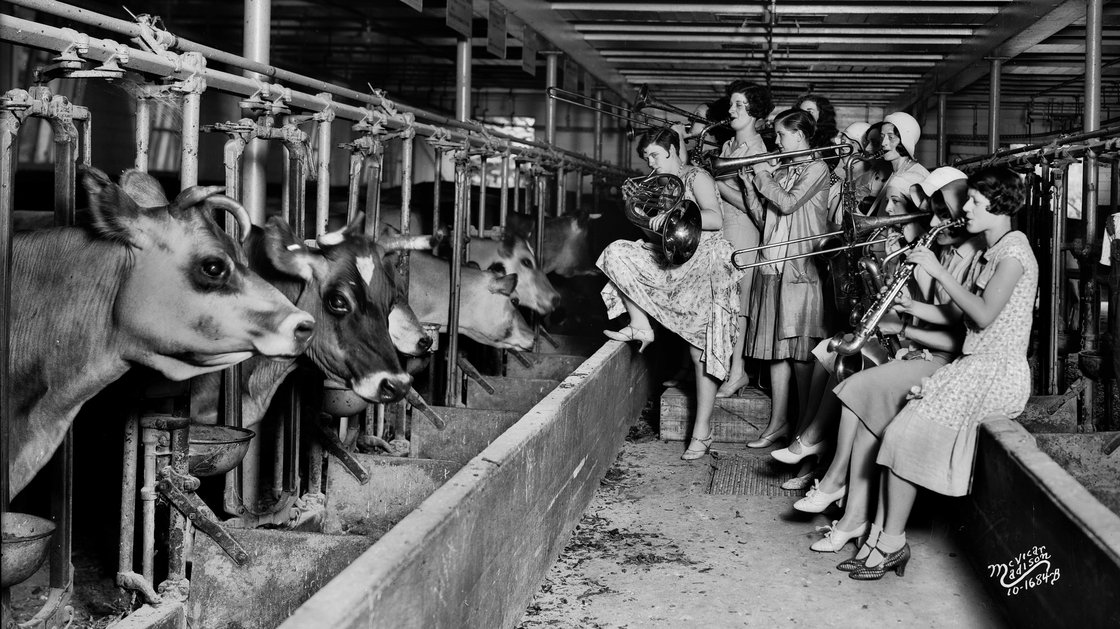
The Ingenues, an all-girl band and vaudeville act, serenade the cows in the University of Wisconsin, Madison's dairy barn in 1930. The show was apparently part of an experiment to see whether the soothing strains of music boosted the cows' milk production. Angus B. McVicar/Wisconsin Historical Society

The Ingenues, an all-girl band and vaudeville act, serenade the cows in the University of Wisconsin, Madison’s dairy barn in 1930. The show was apparently part of an experiment to see whether the soothing strains of music boosted the cows’ milk production. Angus B. McVicar/Wisconsin Historical Society

It is not difficult to believe, but it is funny. Thanks to National Public Radio (USA) for this story about the importance of animal happiness, an idea we can all, from carnivore to vegan all everyone in between, agree is good (the video below is at least as compelling as the scientific references):

When it’s time to buckle down and focus, plenty of office workers will put on headphones to help them drown out distractions and be more productive. But can music also help dairy cows get down to business?

Some dairy farmers have long suspected that’s the case. It’s not unheard of for farmers to play relaxing jams for their herds to boost milk production, as the folks at Modern Farmer recently reported.

A tantalizing 2001 study out of the University of Leicester in the U.K. appeared to lend credence to those claims. It found that milk production went up by as much as 3 percent when cows listened to slow tunes like R.E.M.’s “Everybody Hurts” and Simon & Garfunkel’s “Bridge over Troubled Water,” rather than faster songs. Continue reading

Leap Seconds Become Leap Years

One of our contributors is a leap year baby, so we take note at the passing of each February into March, without always remembering why on certain years there is an extra day. Today our office team celebrated that birthday, rather than doing so tomorrow, thinking it is better to be early than late.  Here is a secondary explanation from the Atlantic‘s Alexis Madrigal:

The mechanics of the leap year are well known: We add a day to February every four years to maintain the synchronization of our earthly calendar with the celestial reality of the Earth’s orbit.

Weeelllll, it turns out that a similar phenomenon plays out on a much smaller time scale. Along with the leap year, there is the leap second. Continue reading

One Birthday, Two Remarkable Men

lead

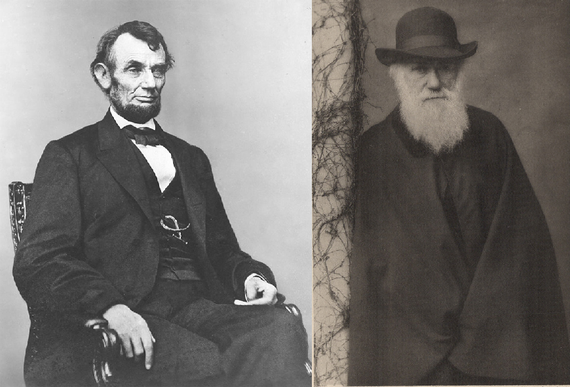
Birthdays do not really matter. But ideas do. And when big ones come along, we celebrate the men and women who shared them in various ways. One way, pedestrian as it may seem, is remembering them on their birthday. Artists and musicians, likewise. We had not remembered, when we posted this yesterday, of this coincidence, but the Gopnik essay mentioned below (we now recall) is worth reading and we thank the Atlantic‘s website for reminding us via this blog post by Alexis Madrigal:

February 12 was a big day in 1809. Abraham Lincoln was born in a wild Kentucky; Charles Darwin was born in a refined Shrewsbury, Shropshire. One man held together the Union. The other developed a theory that resonates through the sciences and beyond to this day. While it’s often difficult to unspool the impacts that individuals have on the world, it seems fair to say that these two minds did something consequential on this rock.

And in a 2009 essay, writer Adam Gopnik tried to get at the shared method of their influence. Continue reading

Mindfulness, Effectiveness And Health Benefits

Layout 1

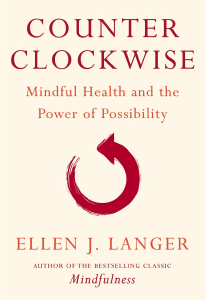
Take a brilliant, creative social scientist, without any respect for conventional wisdom and you get Ellen Langer. She is a fantastic storyteller, and Counterclockwise is a fascinating story about the unexpected ways in which our minds and bodies are connected. – Dan Ariely, Ph.D., author of Predictably Irrational

We are in constant search of better ways to focus our efforts and achieve more effective results. The work of Ellen Langer, whose new book (click the image above to go to her website) continues her “mindfulness” theme on into the realm of health, brought to our attention in a post on the New Yorker’s website today:

In the mid-nineteen-seventies, the cognitive psychologist Ellen Langer noticed that elderly people who envisioned themselves as younger versions of themselves often began to feel, and even think, like they had actually become younger. Men with trouble walking quickly were playing touch football. Memories were improving and blood pressure was dropping. The mind, Langer realized, could have a strong effect on the body. That realization led her to study the Buddhist principle of mindfulness, or awareness, which she characterizes as “a heightened state of involvement and wakefulness.”

But mindfulness is different from the hyperalert way you might feel after a great night’s sleep or a strong cup of coffee. Continue reading

Classics-R-Us

PRIVATE COLLECTION/KEN WELSH/THE BRIDGEMAN ART LIBRARY. Fourteenth-century Florentine poet Petrarch so loved the classical authors that he imagined conversations with them.

PRIVATE COLLECTION/KEN WELSH/THE BRIDGEMAN ART LIBRARY. Fourteenth-century Florentine poet Petrarch so loved the classical authors that he imagined conversations with them.

Among all the topics we survey, link to and write about on this site, the classics are if anything underrepresented relative to their importance in matters of community, collaboration and conservation. History is probably the most visible, thanks to Seth’s recent series on Iceland. Book reviews and shout outs to great professors are also visible with some frequency. Maybe enough, maybe not. Anyway, once more to the trenches, on the side of the humanities but not against practical considerations; the liberal arts matter to our future, not just to our past as this essay reaffirms, so let’s not lose them:

In 2011, the University of California at Los Angeles decimated its English major. Such a development may seem insignificant, compared with, say, the federal takeover of health care. It is not. What happened at UCLA is part of a momentous shift in our culture that bears on our relationship to the past—and to civilization itself. Continue reading

Self-Sufficiency Taken To The Outer Extremes

Before the lights go out on the last New Yorker issue of 2013, one more of several articles we found worth the read, and relevant to our common themes of interest–community-building, innovation, environmentalism, farming, etc.–on this blog, even if we tend to incremental change rather than the radicalism on display here:

Marcin Jakubowski, the owner of a small farm in northwestern Missouri, is an agrarian romantic for high-tech times. A forty-one-year-old Polish-American, he has spent the past five years building industrial machines from scratch, in a demonstration of radical self-sufficiency that he intends as a model for human society everywhere. He believes that freedom and prosperity lie within the reach of anyone willing to return to the land and make the tools necessary to erect civilization on top of it. His project, the Global Village Construction Set, has attracted a following, but among the obstacles he has faced is a dearth of skilled acolytes: the people who show up at his farm typically display more enthusiasm for his ideas than expertise with a lathe or a band saw. Continue reading

Then And There, Here And Now

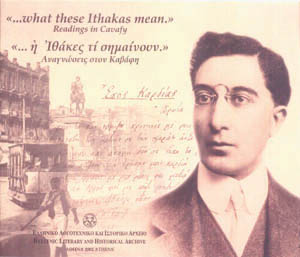
Orhan Pamuk says that “C. P. Cavafy makes no explicit reference to himself in his best and most stirring work; and yet, with every poem we read, we cannot help thinking of him.”

Does it take an Istanbulian to know one? Does it take a great writer to know one? You do not need to be a fan of poetry, nor of this particular poet, to appreciate the observations of one of the great observers of our time, with regard to living here and there but neither here nor there, and with regard to the idea of universality in art:

Cavafy was born in Alexandria, Egypt, in 1863, to a Greek family of wealthy drapers and cloth merchants. (The word kavaf, now forgotten even by Turks themselves, is Ottoman Turkish for a maker of  Continue reading

The Ocean Never Sleeps

Image Courtesy The Huffington Post

It’s no secret that icecaps are losing mass due to increased global warming; and one of the world’s safeguards against carbon emissions, the ocean, is working overtime trying to sequester anthropogenic gases.  The ocean as a carbon sink has been well known for quite some time, although recently it seems as though it has been on the back-burner for many governments, organizations, corporations, businesses, etc.

Continue reading

A Different Kind Of Travelogue

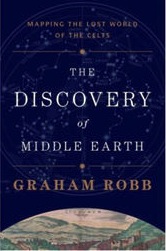
10-08discovery_full_380We are unabashedly in favor of reading, thinking and decision-making in advance of travel, during travel, and after travel. We are also in favor, when the fancy strikes, of just hitting the road without knowing why, where to, or for how long. On our pages you will find posts for either end of the spectrum from meticulously planned to wanderlust journeys.  It is about  discovery.  So this book caught our attention. Nothing to do with hobbits, as reviewed by the Monitor (click the book image to the left to go to the source) it sounds like the perfect prelude, accompaniment or postscript for travel in a part of the world we have not been covering in our pages as much as we maybe should:

…In “The Discovery of Middle Earth,” Robb sets out to establish the momentous contributions made to the arts of cartography and communication by the once-great Celtic peoples, who at various points in history spread all the way from modern-day Turkey to Ireland. In the process, he consults old documents, interviews experts, examines artifacts, and bicycles more than 26,000 kilometers across France, taking his readers along with him… Continue reading

Technology, Activism, Discontent & Keeping It Honest

Doug McLean

It was just recently when we started noticing it on the Atlantic‘s website, and needed some time to determine the fit with our blog:

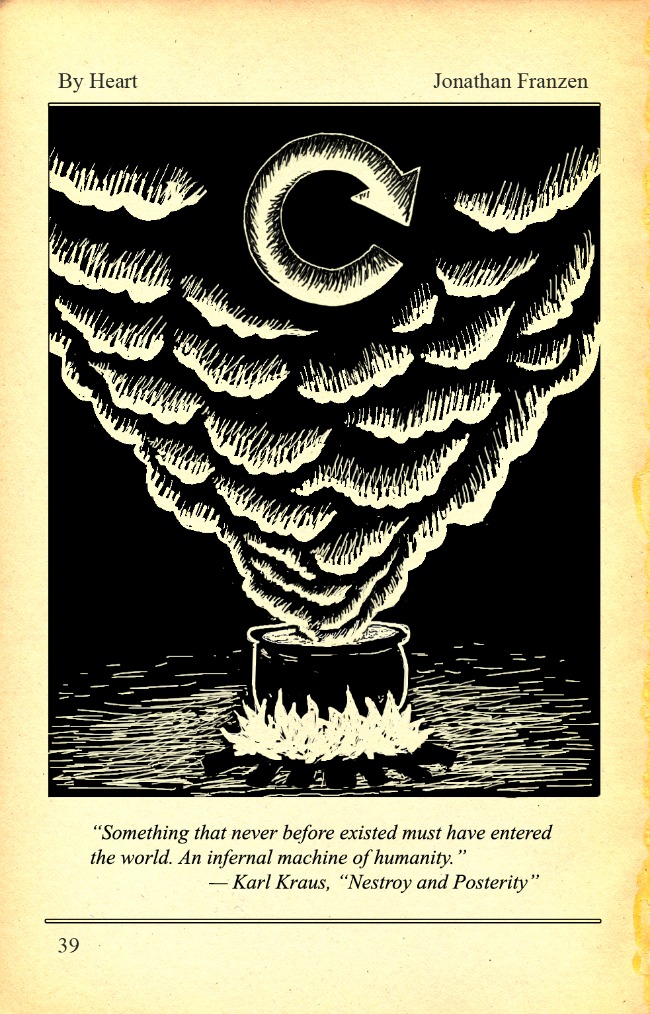
By Heart is a series in which authors share and discuss their all-time favorite passages in literature.

It took this one to make us realize the fit:

Jonathan Franzen on the 19th-Century Writer Behind His Internet Skepticism

His new book translates works by Karl Kraus, whose misgivings toward progress mirror Franzen’s belief that technology can be “very harmful” to artistic production.
 OCT 1 2013, 3:43 PM ET

We have several times linked to stories involving Franzen, and there is no question that it is in part because of his bird-loving devotions; but it is not only that.  We put ourselves in his corner a few months ago and there are plenty of paradoxes in this corner but read this to appreciate the depth of Franzen’s sense of purpose related to technology, starting with Joe Fassler’s excellent commentary:

Karl Kraus, the Austrian satirist, playwright, and critic of the mass media, was born in 1874 and ran the magazine Die Fackel (“The Torch”) from 1899 until his death. And according to novelist Jonathan Franzen, he was the first-ever iteration of what we might now call a media theorist. Continue reading

The New King

Image Courtesy: http://Magnuscarlsen.com

In textbook fashion (and I can’t stress this enough), 22-year-old chess juggernaut (and this is probably an understatement) Magnus Carlsen of Norway has just recently dethroned 5-time world champion Viswanathan Anand in such an epic clash that one could imagine a very, very dramatic film produced from the whole debacle.

Continue reading

Understanding India, Day By Interesting Day

Pawan Kumar/Reuters

Pawan Kumar/Reuters

Those of us living in India, who are not from India, are on a quest to understand our new home. We share these stories from time to time, taken from mainstream publications in India and elsewhere, about what we are learning. With a photo like this, we could not resist such an explanatory story, in the form of an editorial from this week’s Sunday Review section of the New York Times: Continue reading

Writer’s Routines

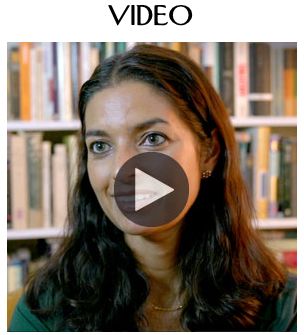
How Jhumpa Lahiri wrote “The Lowland.”

All contributors to this site can appreciate the concerns of a professional writer and her daily routines related to writing.  Our writing is always brief, and by definition for the format meant to be more casual, but it still requires discipline and effort.  Writers should write, yes, even when it is “just” a weblog like this one. But how? Routines matter.  It is worth hearing in her own words one great writer’s comments on this:

…During a visit to Lahiri’s house in Brooklyn (she currently lives full-time in Rome), we asked how she went about writing the book.  Continue reading

Igor Siwanowicz Photography

Igor 1

Prepare to have your mind completely blown by award-winning insect photographer Igor Siwanowicz.  No artist captures the details like Igor Siwanowicz does with his distinct form of microscopic photography.  Every little bump and crack is accentuated, and every color shines brighter in Siwanowicz’s pictures — Fittingly, this style seems catered to capturing the strange exotic insects that inhabit the world.  Siwanowicz is not limited to just insects though, his portfolio is complimented by equally as impressive stills of reptiles, mammals, and even people.  One should especially note how often symmetry comes to play in the photographs.

Continue reading

Wildlife Reigns at Cardamom County

Image

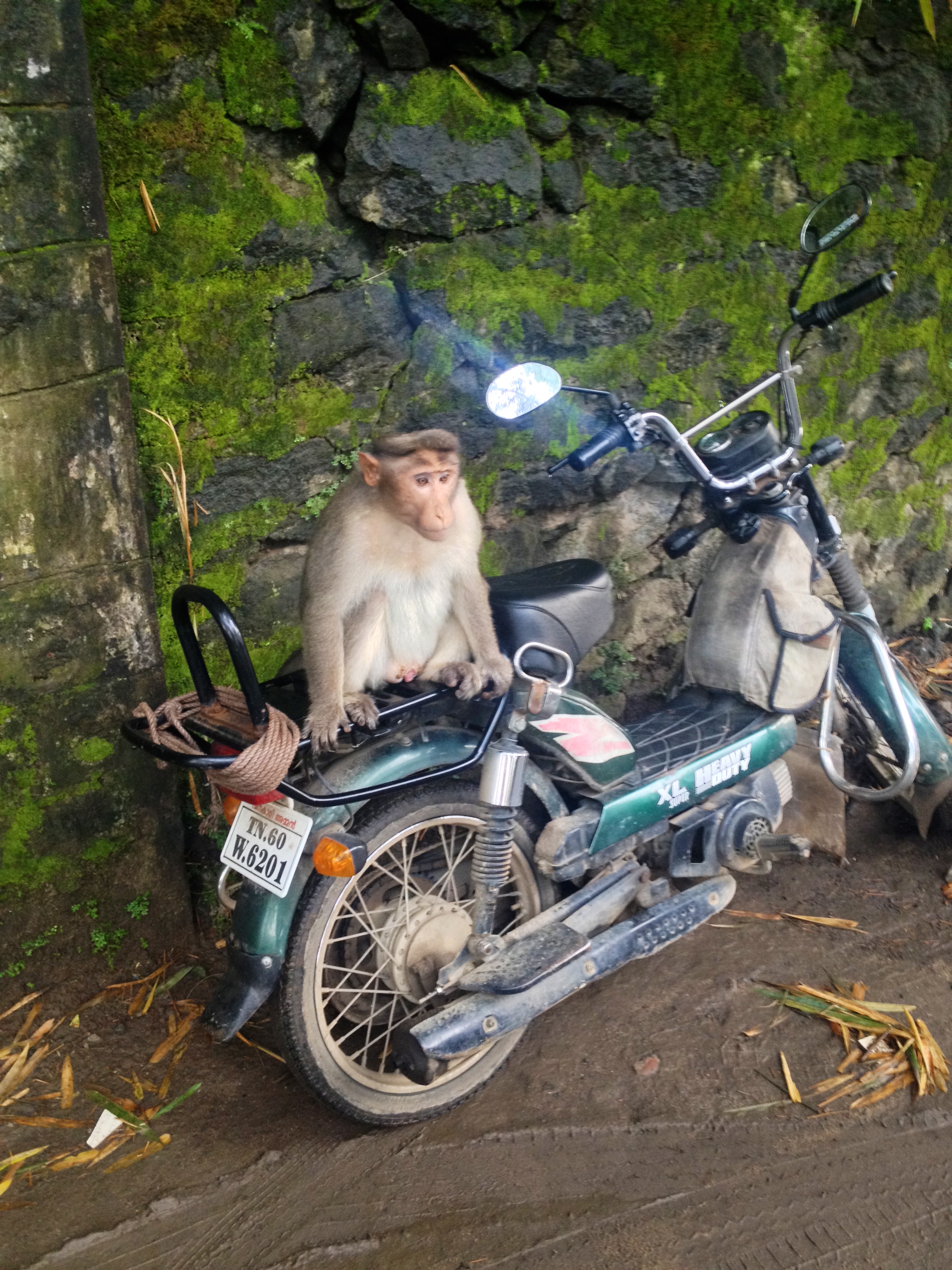
Even Macaques get lost in deep thought

It is no secret that the Periyar Tiger Reserve hosts a magnificently large collection of wildlife, that is what attracts tourists around the world — take a hike within the boundaries of the massive sanctuary and you are likely to see some amazing creatures. However, we cannot forget that the boundaries of the reserve are merely human constructs, designed by our minds to protect and preserve the organisms within. Animals abide by no such regulations, boundaries for them are constrained only by the habitats in which they may successfully occupy, thus, spillover is likely.

Continue reading

A Hint Of Evil, And Laughter May Be The Only Antidote

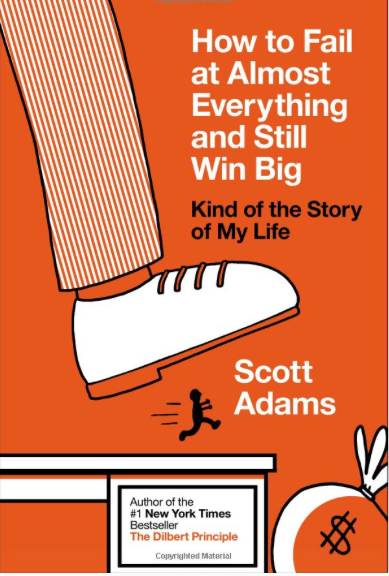
Thanks to this HBR Ideacast we had the opportunity to listen to the author of this book discuss its core message(s). Anyone who has looked at a few Dilbert cartoons can pretty well figure out that its author is not what you may think a typical MBA is. About 10 minutes into the podcast, the most remarkable statement, worthy of your attention, begins:

DAN MCGINN: So you’re saying management really doesn’t matter?

SCOTT ADAMS: I think it’s certainly something you can do wrong. So avoiding doing it wrong is the big thing. And I think if you’re a bit of a psychopath or sociopath, I don’t know the exact definitions of those, you know, if you push people to think that you being happier, and you as the manager making more money, and you as the company making more money is more important than the employees’ own personal life and their health, then you’re a great manager. And you absolutely can do great things. And you’ll probably be able to reproduce that wherever you go. Continue reading

Embracing Surfing

Photo Credit: Surfingindia.net

Oftentimes I find myself daydreaming of the saltwater breeze that accompanies the rolling bass of the heavy waves in the ocean — and I imagine those perfect waves… blue, crisp, clean and glassy, and the hollowest of tubes; peeling along the coastline in an epic demonstration of nature’s power.  This is a common dream for those who understand the absolutely humbling experience of surfing; it is a burning desire and need to envelope one’s self in the soothing serenity of the water.

Continue reading

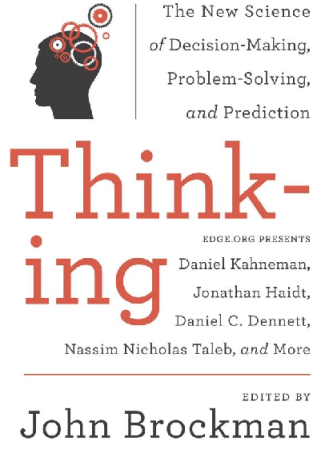
Thinking, Reviewed

If we had to stop scanning hundreds of news sources to support the habit we have of linking to stories that match our interests (we do not plan to stop) and read from only one source on the internet (preposterous to make a point), this site would be a good candidate. We rarely have the opportunity to link to it, because there is not much overlap with our themes of community, conservation or collaboration; but as a source of important ideas, and the occasional book review it is unbeatable:

“The confidence people have in their beliefs is not a measure of the quality of evidence but of the coherence of the story that the mind has managed to construct.” Continue reading

If You Happen To Be In London

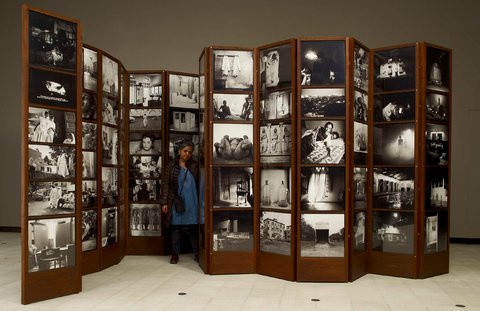
Stephen White. Dayanita Singh with her ‘Museum of Chance, 2013: Go Away Closer’ exhibition at Hayward Gallery in London, United Kingdom.

Stephen White. Dayanita Singh with her ‘Museum of Chance, 2013: Go Away Closer’ exhibition at Hayward Gallery in London, United Kingdom.

It looks like our kind of exhibition (thanks to India Ink for the reference):

During a recent visit to the Hayward Gallery in London, two vendors’ carts were parked against a wall, and a row of visitors stood with their backs to them as they read the introduction to “Go Away Closer,” unaware that the carts were part of the exhibition featuring the works of the photographer Dayanita Singh. Continue reading