Trametes versicolor is a fascinating mushroom on many fronts – as a specialized organism within an ecosystem, as a beautifully variable natural art piece, and as valuable medicine. Fungi are an untapped resource in many scientific fields, and are vastly underappreciated as an entire natural kingdom. Food, medicine and art can all be created from but a single species alone, and the Kingdom of Fungi is one inhabited by thousands upon thousands of unique species, each of which has its own human uses and limitations.
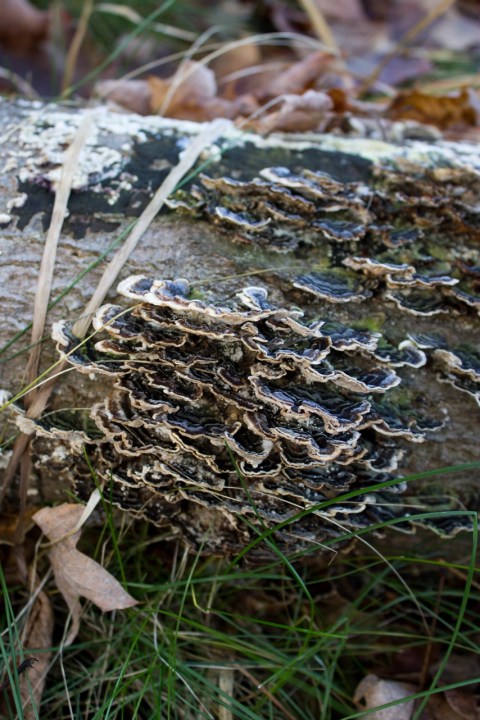
Human uses and limitations. Mushroom hunters (including myself) often inadvertently train themselves to ignore categories of fungi that don’t hold any immediate interest. Small, white polypores, for example, tend to be tough as bark, tasteless, or crumbly, so one simply doesn’t pick them. Little brown gilled mushrooms, on the other hand, are soggy and crumbly, and could be any of a million species. One usually does not pick these. However, human knowledge of fungi over the ages has waxed and waned – several ancient traditional medicines have made use of fungi with huge medicinal potential, but which modern scientists are unable to understand. That said, human industry has improved the lot of frustrated medical researchers by refining the process of mushroom cultivation to the point that almost any species is accessible for study.
Continue reading →




 Recent guests of Raxa Collective,
 Hemingway was, characteristically, brief and








 Organikos