Beauty is in the eye of the beholder. Turn the volume off (because beauty is in the ear of the beholder), go full screen, and click play. If all goes well for you, repeat with moderate volume.
Imagination
The Big Idea

You may or may not have attended university. Maybe you studied science. Or wish you had. Or will. Still, nothing prepares you for the big idea, presented with charisma that is as impressive as the idea. Click to the right (Krulwich wonders) to see this idea laid out courtesy of one of our favorite science communicators:
Here it is, in a nutshell: The logic of science boiled down to one, essential idea. It comes from Richard Feynman, one of the great scientists of the 20th century, who wrote it on the blackboard during a class at Cornell in 1964.
Report To Greco
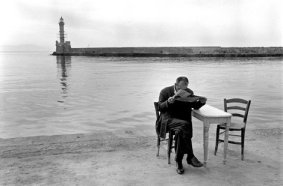
Man reading, Chania, Crete, 1962 (Costa Manos/Magnum Photos)
Click the photo to go to the recent post titled “Do We Need Stories?” in the blog site of the New York Review of Books. It starts out:
Let’s tackle one of the literary set’s favorite orthodoxies head on: that the world “needs stories.” There is an enormous need,” Jonathan Franzen declares in an interview with Corriere della Sera (there’s no escape these days), “for long, elaborate, complex stories, such as can only be written by an author concentrating alone, free from the deafening chatter of Twitter.”
Museum of Innocence: Written, Published, Built, Open
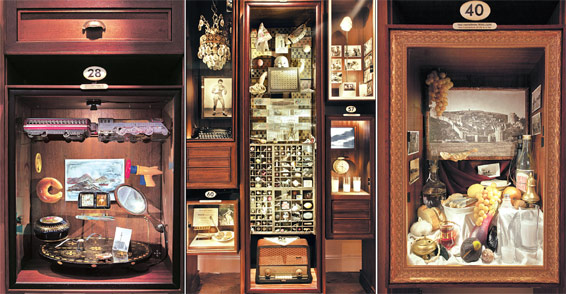
Click the image above to go to the article in Financial Times about a museum inspired by a book, and an author’s life experience:
In a dark-red Ottoman town house in Istanbul’s antiques district, a fast-gentrifying quarter where brassware spills on to steep, cobbled lanes, an idiosyncratic museum has been taking shape. Continue reading
Less Light, Please

Click the image to the right to go to the Guardian’s article in today’s paper about a campaign to reduce light pollution. We tend to like these stories, and that publication, and have been known to support pollution-reducing schemes in our own communities; but quoting our favorite cosmos guru ensures attention: Continue reading
Conducting, Captured
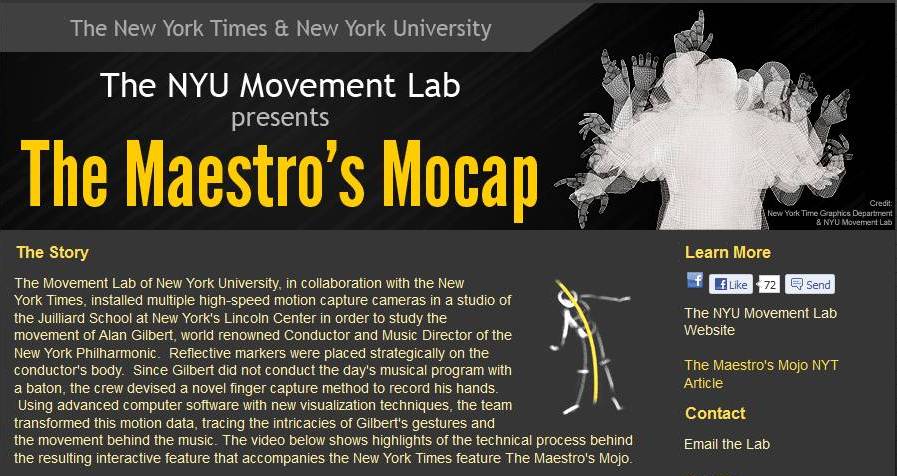
Since we began here last year, we have had some interns, volunteers and employees who graduated from some great programs at some great universities. But NYU’s Mocap program is unlike any of those programs at any of those universities. And we do not have anyone on our team who can do this.
Bird of the Day: Dodo (Mauritius, c.1681)

Photo by Harri Kallio
In the Shadow of Books

For centuries books have held a place of honor in our collective hearts and minds, whether housed in the great libraries of classical civilizations, the libraries of the “Great Houses” of Europe, or the wooden niche in a country home.
Whether related to their historical relevance or their long beloved history, books resonate with the stories they tell, the places they carry us to and the way they make us feel. Continue reading
Giving Wildlife a Hand

Creativity often breaks the boundaries of “Art” and flows unrestricted into the art of advertising, catching the eye and closing the deal. Using uncharacteristic restraint in avoiding all the obvious applause puns tugging at my imagination, I will just say “kudos to WWF” for using Guido Daniele’s inspired work to make their important point. Continue reading
Curiouser Than Fiction

Children examine the Automaton during a visit to The Franklin Institute.
About 5 years ago I brought home a curious book called The Invention of Hugo Cabret by Brian Selznick. Both of my sons had been avid readers and lovers of detailed illustrations since childhood and books like The Eleventh Hour by Graeme Base had been favorites for as long as I could remember, so the elaborate charcoal drawings and almost graphic novel design in this new book were intriguing.
The most fascinating moment came with poking around the history behind the story itself. Although placed within a work of fiction, both Georges Méliès and automatons are quite real. The Franklin Institute of Science and Technology has one in their collection with a history similar to the one in Selznick’s book:
In November of 1928, a truck pulled up to The Franklin Institute science museum in Philadelphia and unloaded the pieces of an interesting, complex, but totally ruined brass machine. Donated by the estate of John Penn Brock, a wealthy Philadelphian, the machine was studied and the museum began to realize the treasure it had been given. Continue reading
“You-er Than You!”
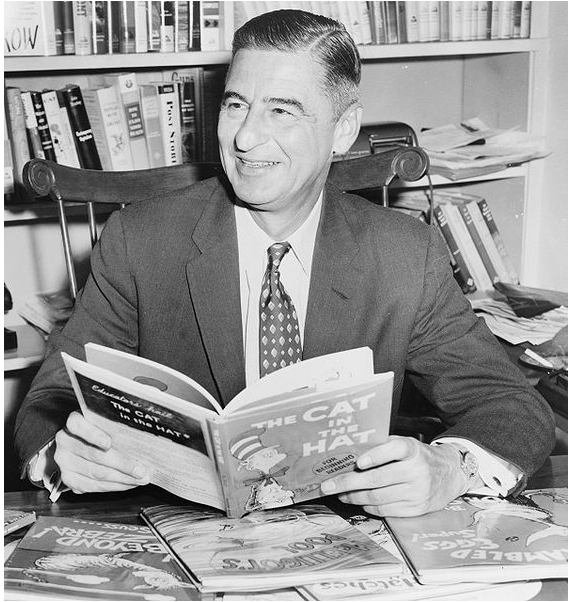
Photo: Library of Congress Prints and Photographs Division
A Dr. Seuss centennial had come upon me a few days ago in an “almost missed it moment”. In many ways the consumate “ad man” who became one of the most beloved children’s book authors never actually changed careers. Nearly each and every one of his books continues to reach the pinacle of salesmanship, but not for a product. With joy, wit and often irony, they sold the love of reading, imagination and exploration.
High Time
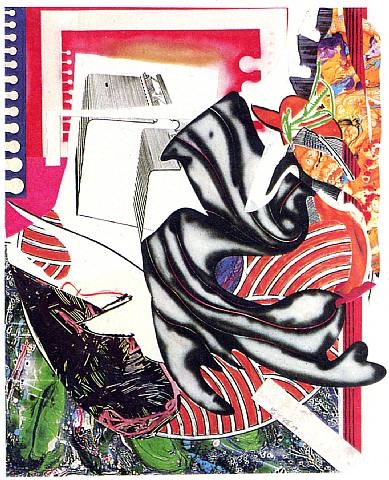
…Some years ago — never mind how long precisely — having little or no money in my purse, and nothing particular to interest me on shore, I thought I would sail about a little and see the watery part of the world. It is a way I have of driving off the spleen, and regulating the circulation. Whenever I find myself growing grim about the mouth; whenever it is a damp, drizzly November in my soul; whenever I find myself involuntarily pausing before coffin warehouses, and bringing up the rear of every funeral I meet; and especially whenever my hypos get such an upper hand of me, that it requires a strong moral principle to prevent me from deliberately stepping into the street, and methodically knocking people’s hats off — then, I account it high time to get to sea as soon as I can… Continue reading
Photographic Parlor Games
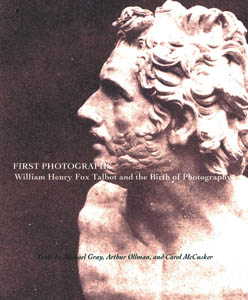 Perhaps to close a recent string of links to interesting items on photography, which began here, continued here and here, and then extended just a bit here, there is an item in the Photo Booth feature on The New Yorker‘s website that:
asked Lyle Rexer which five photography books he would want to be stranded on a desert island with. Lyle is a photo critic, curator, teacher, and author of numerous books about photography, so I had a feeling he would take the challenge seriously. My suspicions were confirmed when, after three hours in our library, he was still deliberating. Knowing Lyle’s selections and his reasons for making them, I would gladly trade one of my five desert island photo books for a volume of Lyle’s photo criticism.
Click the image to above to go to the International Center of Photography’s website; they carry one of the choices mentioned in Rexer’s response. Continue reading
Canopy Capture

Click the image above to go to a story covered in Wired about a novel approach to mapping threatened rainforest, using existing technology in an innovative manner:
A small, twin-propeller plane flies over the Amazon rainforest in eastern Peru. The scale of the vegetation is extraordinary. The tree canopy stretches as far as the eye can see — an endless array of broccoli florets bounded only by haze and horizon. Greg Asner, 43, has seen the rainforest from this vantage point many times before, but he still stares out of the window in rapt fascination.
Connecting The Madeleines
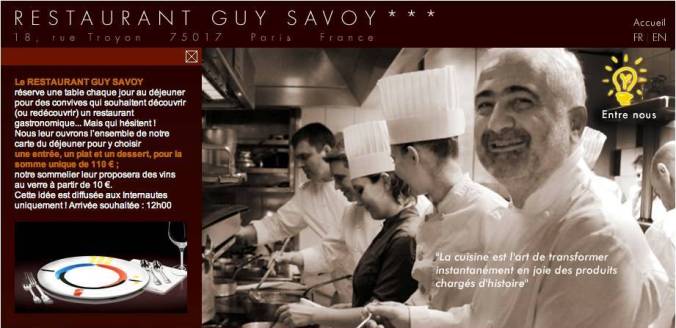
The young man working his way through the kitchen brought to mind a young man of about the same age, three decades earlier. I had the good fortune, in my early adulthood, to work in a restaurant owned and operated by a man who is one of the great chefs of his generation. I did not work in the kitchen, but in the dining room, from 1983-1985. It provided the most important education of my life, which is saying a lot because I eventually earned a Ph.D. and even that did not top the learning earned in Guy Savoy’s restaurant.
Photographer As Mystery
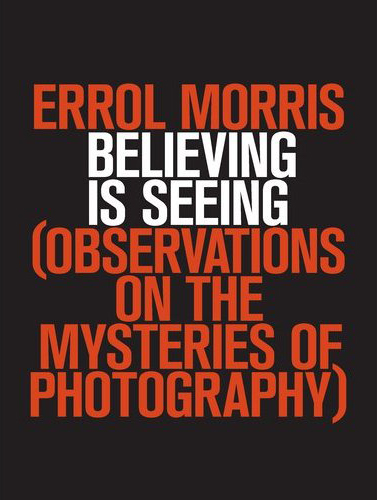 Errol Morris has been a hero at the vanguard of quirky approaches to justice (made a film that freed an innocent man on death row; followed that up with a film that led a famous statesman to be able to acknowledge his war crimes), but has never been noted as a hero within the wider popular culture.
Smithsonian has an article about Morris (click the image to the right to go to it) that will not likely change that, but it does have one of the most fascinating paragraphs you are likely to read about a film maker who writes extensively, especially about photography:
Born in suburban Long Island, Morris graduated from the University of Wisconsin. After a stint of cello study in France, he talked his way into the Princeton graduate philosophy seminar of Thomas Kuhn, an icon of postmodernism, the man who coined the term “paradigm shift.” It wasn’t exactly a meeting of the minds. In fact, it almost cracked Morris’ skull, which is what Kuhn seemed to be aiming to do at the climax of an argument when the esteemed philosopher threw an ashtray at Morris’ head.
Rock, Paper, Scissors
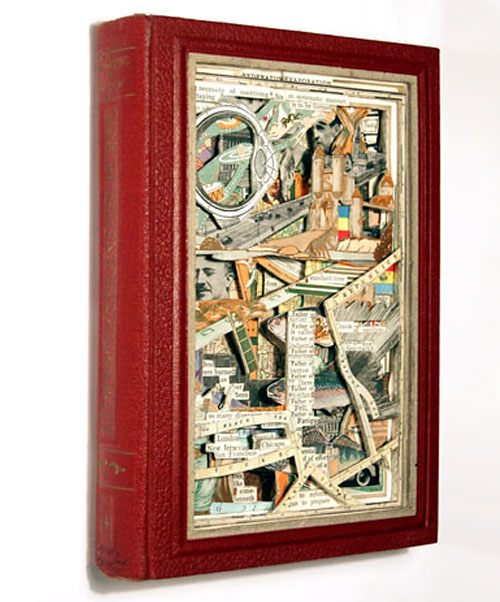 I grew up being taught that books are precious. Whether due to text, illustration or both, the best of them possess a piece of our living memories, passed down through generations, becoming dog-eared with loving use. In the age of eBooks and threatened libraries, the intangible qualities of a bound book are becoming even more precious.
But for many of the same factors (growth of internet research and eBooks) as well as due to progress itself, there are specific books that become obsolete almost as soon as they are moved from press to shelves. Encyclopedias, Road Atlases and Medical Journals are good examples. So what, then, is to become of those weighty tomes that a generation or two ago held pride of place in every household? Continue reading
Universities Pushing Boundaries
 The University of Minnesota has a website devoted to environmental issues, and we immediately enjoy its spirit and perspective. Click the image to the left to go to one brief article in a series titled “What would it take?”, in this case featuring an interview with Solomon Prakash. He is asked a series of questions around the specific theme “What would it take for social entrepreneurship to make inroads to poverty?” His answers conclude with:
I think the next 10 years will be the decade of social entrepreneurs. I see lots of talented people who want to solve social problems making serious career changes. Some mainstream design firms have actually set up a whole branch around social innovation. Consulting companies are looking at hybrid models of social change. Increasingly, companies are saying it’s no longer possible to look at customers just as consumers. More and more people understand that social change is no longer a marginal activity. The opportunity is huge to solve problems and to come up with interesting commercial models that can be sustainable.
Leading From Behind
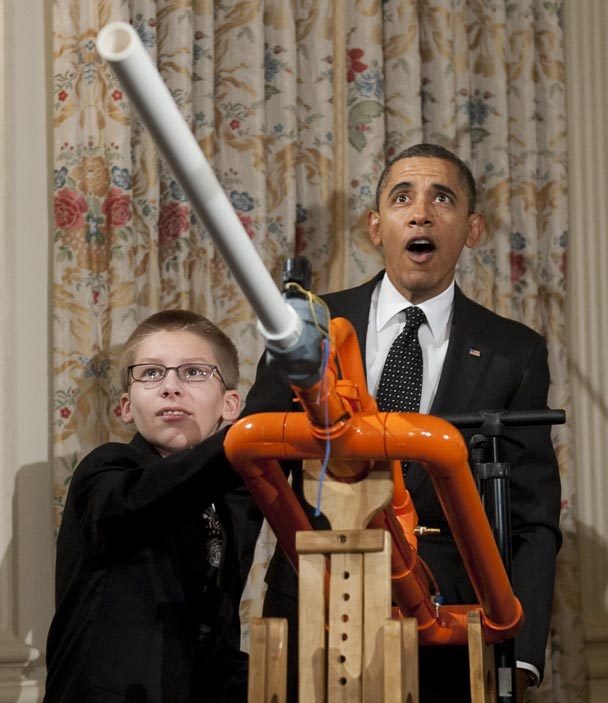
We avoid politics as a rule, and weapons even more so; but from time to time there are reasons for exceptions. The photo above represents one such occasion. Click it to go to the source, which captions the photo:
President Obama reacts as 14-year-old Joey Hudy of Phoenix launches a marshmallow from his “Extreme Marshmallow Cannon” during the White House Science Fair.
Confidence in Dreams
It has been a struggle to pick topics to write about for the past several weeks, and in my innate pursuit of perfectionism I became wrought with indecision. I could write about sustainable facilities design; I could uncover the truth about many LEED-certified buildings; I could even write about the ecology-based dormitory where I am writing this now. 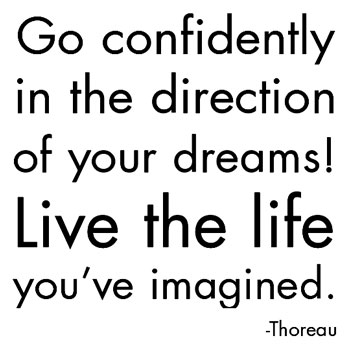 But among these various topics, I could not find one that I felt “good enough” to write about at this time. So to dissolve some of my indecision, I chose to reveal some of my mind’s musings, many of which the perfectionist side of me deems crazy, but day-by-day I am learning to embrace.
Each morning, I wake to the sound of my alarm clock and the chime of my smartphone being flooded with emails. A month ago I thought nothing of this activity, but lately I have found it unnerving. The annoyance I am feeling developed over my winter break. Continue reading
 Organikos