From the India Ink section of the New York Times website:
The city of Chennai, formerly Madras, may be the most famous of Tamil Nadu’s cities, but the historical and cultural heart of India’s southernmost state is arguably Madurai. Continue reading
From the India Ink section of the New York Times website:
The city of Chennai, formerly Madras, may be the most famous of Tamil Nadu’s cities, but the historical and cultural heart of India’s southernmost state is arguably Madurai. Continue reading
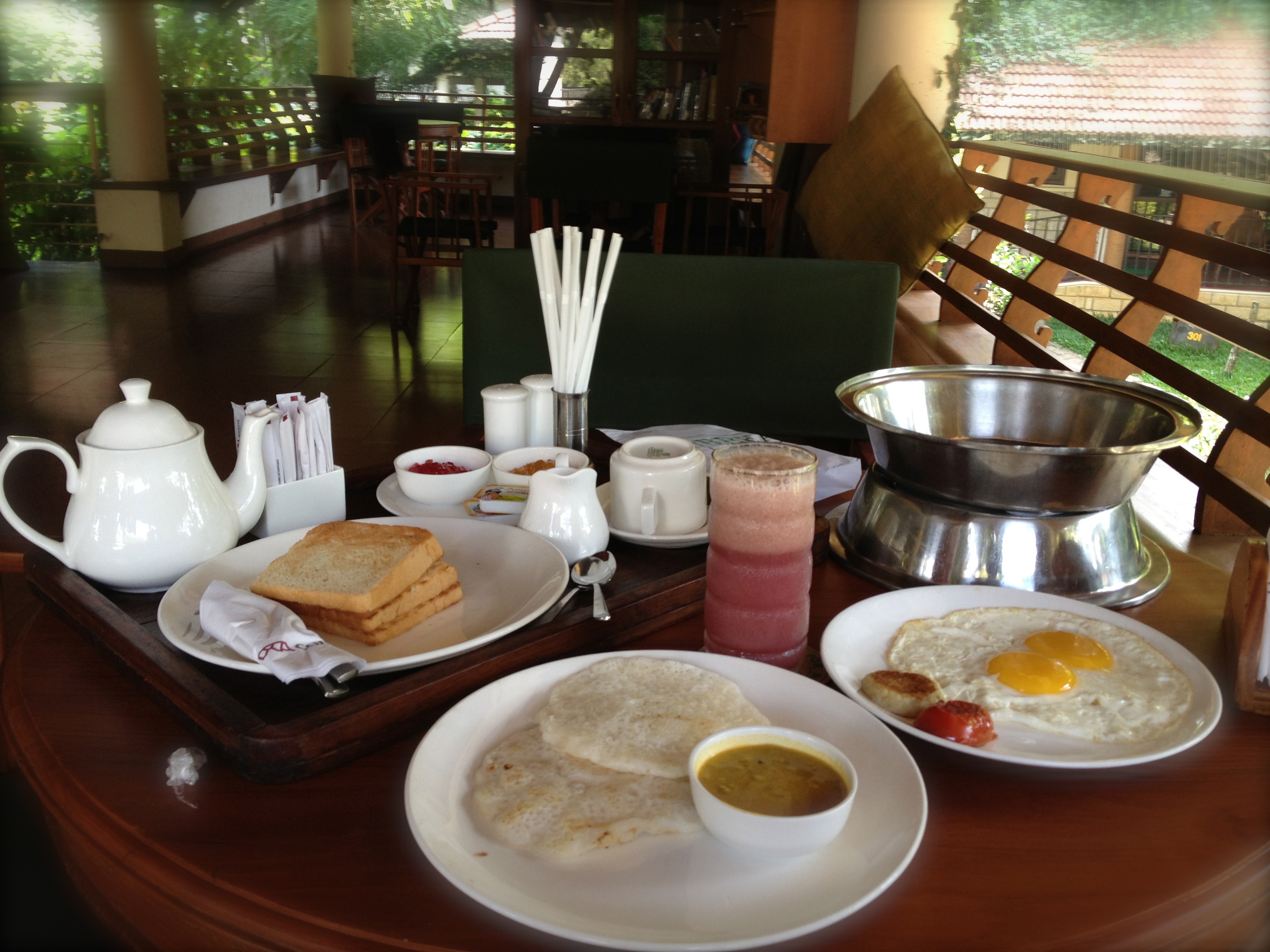
Sunday breakfast indian-style: a meal that just requires to be eaten with the hands
I was about to start my meal at the canteen with my colleagues yesterday when I decided it was time to take the dive and eat with my hands. Boy, was it an exercise, I mean a physical exercise.
As a first-timer I was quite slow: I’ve read it is most polite to use your thumb, pointer and middle finger, and to let only the first two joints of those fingers touch the food. I’m not sure that I did all that. Also you only eat with your right hand, even if you’re a lefty. The left hand will take care of menial things such as wiping your tears of eyes after a spicy curry. The whole meal activates so many muscles that it left me exhausted. It got me thinking about the lack of thought and the lack of physical effort me and my folks, in westernized countries, put into the act of eating. Eating with the hands is common in many areas of the world, including parts of Asia and much of Africa and the Middle East and it has plenty of health benefits. Continue reading

Photo Credits: Ramesh Kidangoor
Shravanbelagola is a famous Jain pilgrimage centre that abounds in monoments. The 17-meter high, 1000-year-old monolithic statue of the Jain saint Gommateshvara, considered to be the world largest monolith stone statue, is situated here. Gommata was the Jain prince who renounced the world in his moment of supreme triumph and victory in war. Pilgrims travel to the site by the thousands to view the statue of this man of great moral strength and virtuous character. Continue reading
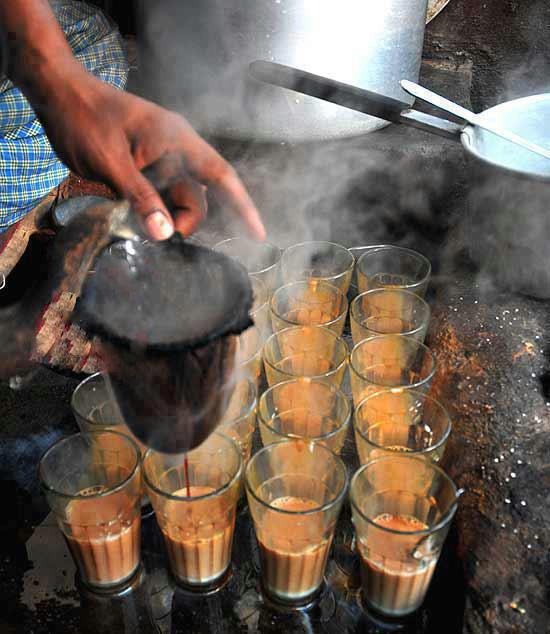
Photo credits: Ramesh Kidangoor
Milk Tea is a favorite beverage for people all over India. In addition to the tea shops commonly found throughout the country, it is also served as a welcome drink in most homes. Continue reading
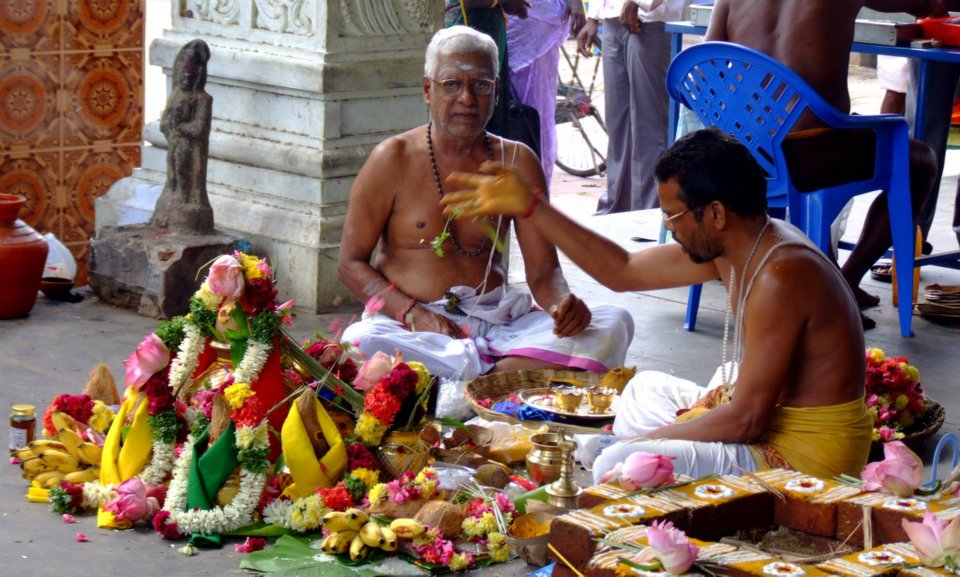
Photo Credits:Ramesh Kidangoor
The Hindu view of the universe is a cyclical one and the complex theme of Hindu mythology is dominated by the constant conflict between good and evil. Pooja is a ritualistic worship performed by Hindus as an offerings to various Gods and Goddess. It is an act of showing reverence through invocations, prayers, songs and rituals. Pooja can be performed in different ways like through meditation, chanting mantras, and offering flowers and fruits. Poojas are regularly performed in Hindu homes, irrespective of caste or status. Continue reading
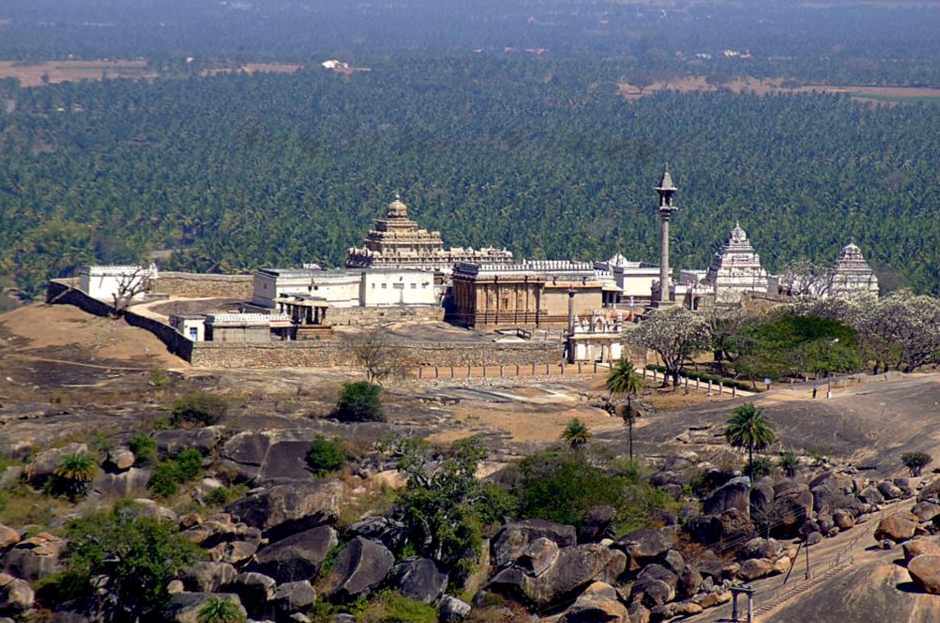
Photo Credits: Ramesh Kidangoor
Located strategically between the two hills of Chandagire and Indragiri near Hassan, the picturesque hill town Shravanbelagola is a renowned site for Jain pilgrimages. This Jain temple was built in 983 AD by Chandragupta Maurya, the grandfather of the Great Ashoka. Continue reading
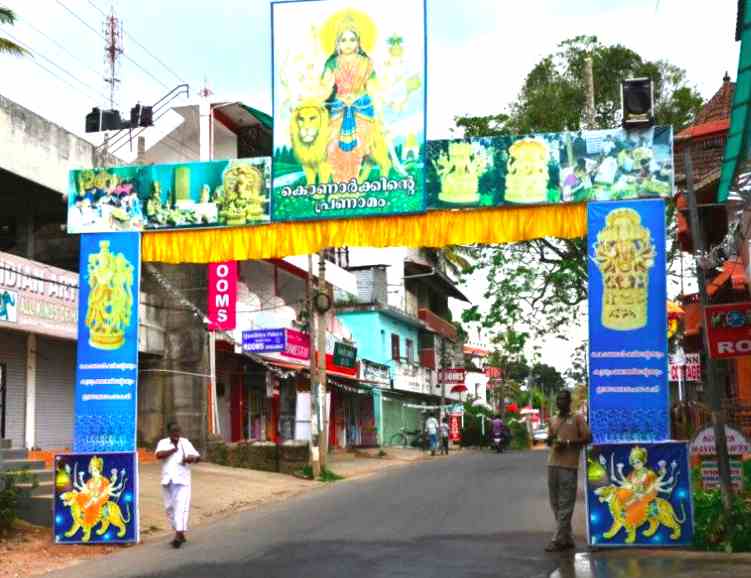
Photo Credits: Mr. Vijay Mampilly
It’s amazing how often dreams have become reality during my trip to India as a Raxa Collective Management trainee in Thekaddy! In Ghana I have seen religious tribal festivals and seen pictures of the Indian versions in magazines and movies. But it was incredible to have the firsthand experience of seeing devotees as more than masqueraders or people in carefree disguise.
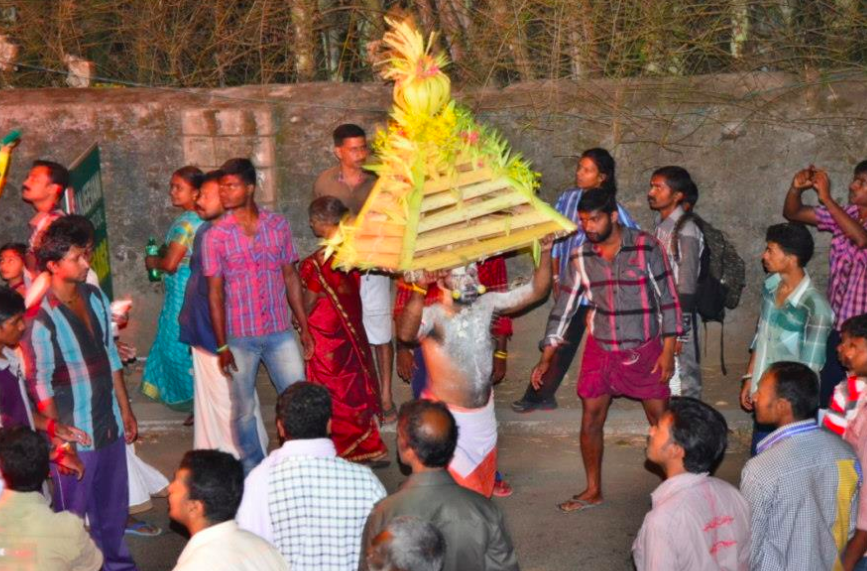
The Devi Temple festival procession–beautiful, colourful and sometimes slightly otherworldly–passed right in front of the Cardamom County entrance gate. I was thrilled to see hundreds of people dressed up in festive mood, joyfully drumming and dancing in convoy following the Devi Shrine toward the gates of the Periyar Tiger Reserve. Continue reading
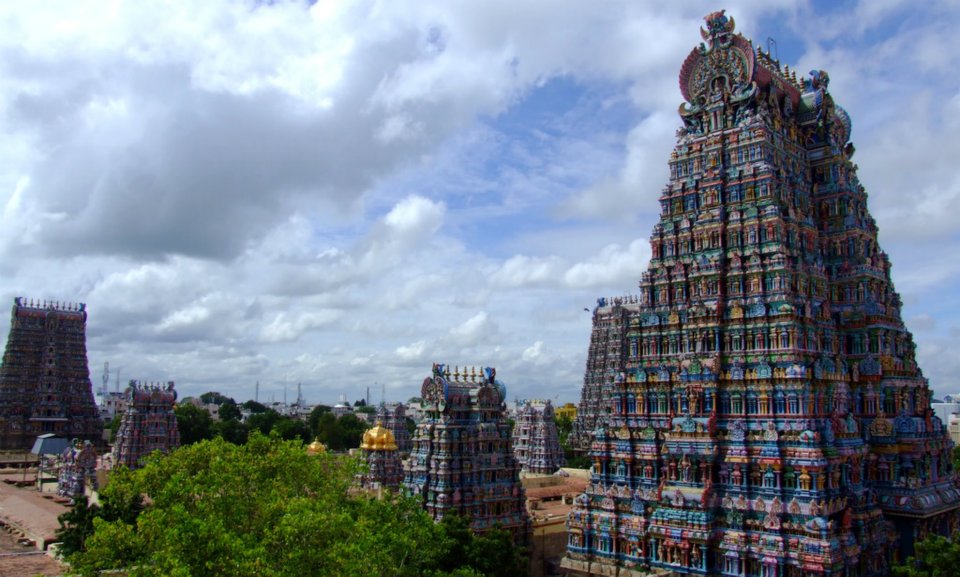
Photo credits: Ramesh Kidangoor
Located on the banks of the Vaigai River, Madurai is the oldest city in Tamil Nadu with an historical legacy over 2500 years old. The famous Meenakshi Temple dominates the city, which evolved around it. The architecture is purely Dravidian but there is an amalgam of many styles dictated by many dynasties as the temple changed hands many times. Continue reading

Photo Credits: Ramesh Kidangoor
Aihole was the capital of the Chalukyan Kings, who between the 4th and 6th century A.D began experimenting with the idea of constructing temples with stone blocks. Aihole has over 125 temples, all intricately carved and rich in detail. Durga temple has a semicircular apse and a sanctum, encircled by a richly carved colonnaded passageway. Durga temple is roofed in the usual flat Early Western Chalukyan manner. The niches in the circumambulatory passage around the sanctum are filled with statues; notable among them are splendid images of Durga and Shiva. Continue reading
For those of us non-Indians living in this colorful place, thanks to the Atlantic Monthly‘s decision to publish these photographs on its website. That way, when we write home to family and friends, they will not have to just take our word for it. The will see: India is incredible.

Photo Credits: Ramesh Kidangoor
Kailasanatha temple is the largest and most important of the temples built by Rajasimha, the last king of the first Pandyan empire. Dating from the 7th century, this is one of the oldest temples in Kanchipuram and is a rare example of the Dravidian style. A wall of fifty-eight small shrines further encloses the main shrine. Continue reading

For those of us living and working in Rising Asia, much in this book either rings true from experience or is eye-opening about things that may be lurking just around the corner, out of sight. Kerala is a long way from Lahore, in every sense. But at least the basic notion–that the world has only in the last year or so become one in which a majority of us are urban dwellers for the first time in human history, and not long from now it will be a super-majority–can be felt in Raxa Collective’s back yard. The great migration from paddy to city is noisily happening all around us each day. What of it?
Mr. Hamid has alot to say about that, good, bad and ugly. An interview he conducted to discuss the book can be heard in this podcast. The book is likely to anger some, but it has received positive reviews, even from often-tough critics:
“Mr. Hamid reaffirms his place as one of his generation’s most inventive and gifted writers.” –Michiko Kakutani, The New York Times
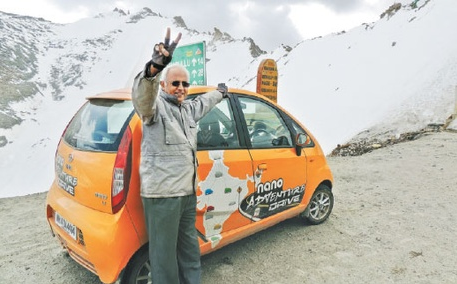
India is unique, says Thomas Chacko after his mega carathon
When Jules Verne wrote his novel Around the World In 80 Days 140 years ago the protagonist Phileas Fogg has to manage a circumnavigation of the globe by myriad types of transport, including by elephant during his crossing of India. He wouldn’t have dreamt of a tiny motorized vehicle like the one pictured above.
Author and motorcar enthusiast Thomas Chacko didn’t try to mange the world in 80 days, only India herself. Chacko, a Keralite, documented his journey in “real time” using the entertaining blog Mano et Nano, as well as a book, Atop the World, after the conclusion of his 26,500-km journey in a Nano car to all the state capitals, as well as the Union Territories, and the far corners of India. The journey, which began on May 3, 2012, concluded on July 20, last year.
In an interview with The New Indian Express Chacko commented:
Only one other country can compare with India, in terms of terrain, and that is the USA. We have beaches, mountains, hills, forests, deserts, swamps and canyons. You don’t have to go out of India to see and experience all this. Apart from that, no country has as many languages or communities. India is unique. Continue reading
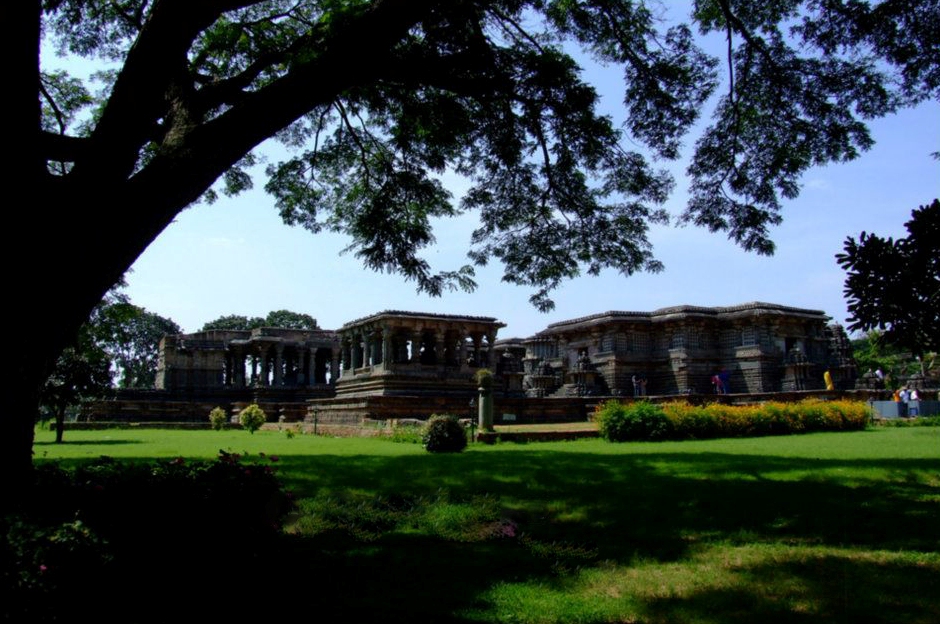
Hoysaleswara Temple
The Hoysaleswara Temple was built by “Kettumalla” one of the ministers of King Vishnuvardhana during 1121 A.D. It is believed that it took nearly a century to complete the temple, there are still some unfinished portions.The ground plan is the characteristic star shape common to all Hoysala Temples. Continue reading
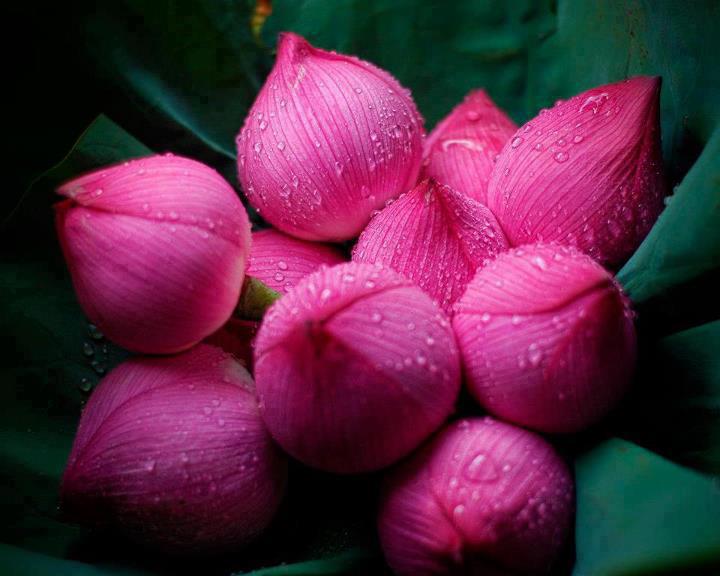
Photo Credits: Ramesh Kidangoor
Lotus, the national flower of India, symbolizes beauty, majesty, spirituality, purity, wealth, serenity and knowledge. It is an aquatic plant that belongs to the Nelumbonaceae species with broad floating leaves and bright aromatic flowers that grows in shallow waters. Its seeds, leaves, flowers and roots are all edible and used in a variety of medicines. Lotus is also a sacred flower for Hindus and Buddhists. Continue reading
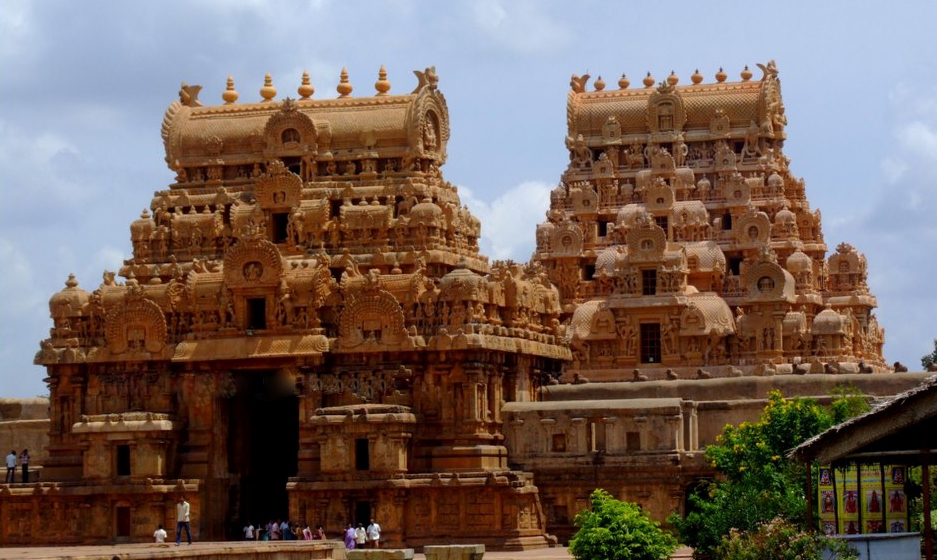
Photo credits: Ramesh Kidangoor
The temples and shrines at Thanjavur are amoung the finest examples of South Indian architecture of the late Chola period. Dedicated to Lord Shiva, the Breehadishwara Temple is considered the greatest single undertaking of its time, taking almost 15 years to complete the full structure. Continue reading
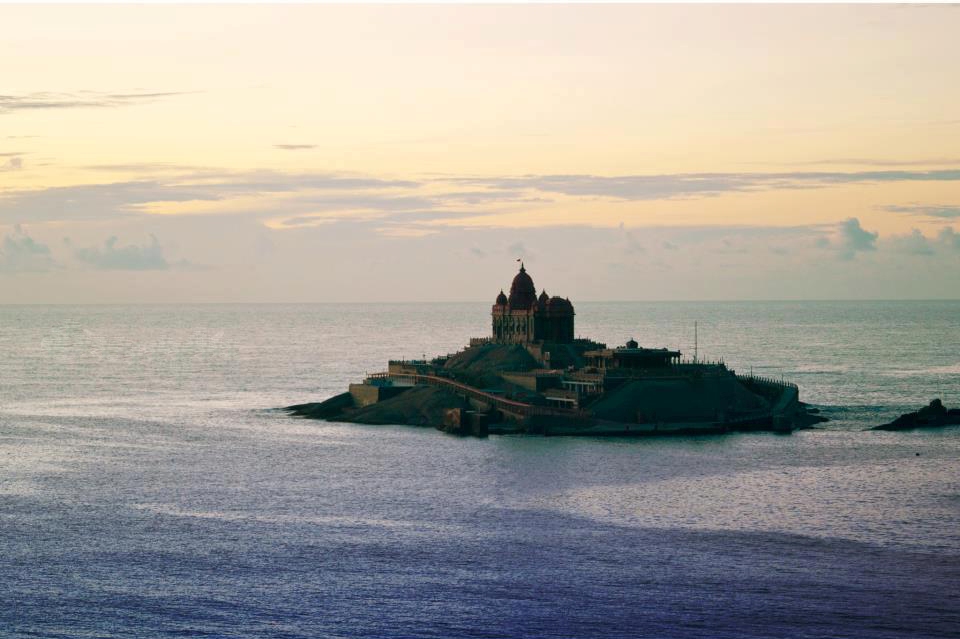
Photo credits: Prasanth
Kaniyakumari, also known as Cape Camorin, lies 90 km south of Trivandrum and is the southernmost tip of the mainland Indian sub-continent. The waters of the Indian Ocean, the Bay of Bengal, and the Arabian Sea converge here. The Vivekananda Memorial and recently erected statue of the great Tamil poet Thiruvallur are the main attraction of this place. A dip at the bathing ghat constructed at the confluence of the Seas is believed to cleanse and rejuvenate the pious.

Joan Nathan’s Cochin Coriander-Cumin Chicken for Passover, adapted from Queenie Hallegua and Ofera Elias – cooked and styled by Andrew Scrivani NYTCREDIT: Andrew Scrivani for The New York Times
We are always pleased to see Raxa Collective’s hometown in the news, but especially when the coverage focuses on cultural history in the part of town where we are developing a new property. Fort Kochi’s harbor area, including Bazaar Road where Spice Harbour (a waterfront hotel opening later this year, more on which in a future post) is located and where the spice trade is centered, completes the domestic route of the Malabar Coast’s spice trade. Spices are grown throughout the Western Ghats, they make their way down to sea level for transport in the coastal backwaters, and a large percentage end up on Bazaar Road where merchants, traders, godown (warehouse) keepers and others prepare them for shipment. This has been the way of the spices for millennia, though Fort Kochi’s harbor has played its role in the spice route only in recent centuries. The New York Times writer Joan Nathan describes a culinary-religious heritage motivation for her visit here (minutes from our office location):
KOCHI, India — Dreaming of spices described in the Book of Kings, I came to this southern port city built in the 14th century to learn about its longstanding but tiny Jewish presence and its food, which some believe dates back to the time of the Bible.
Continue reading
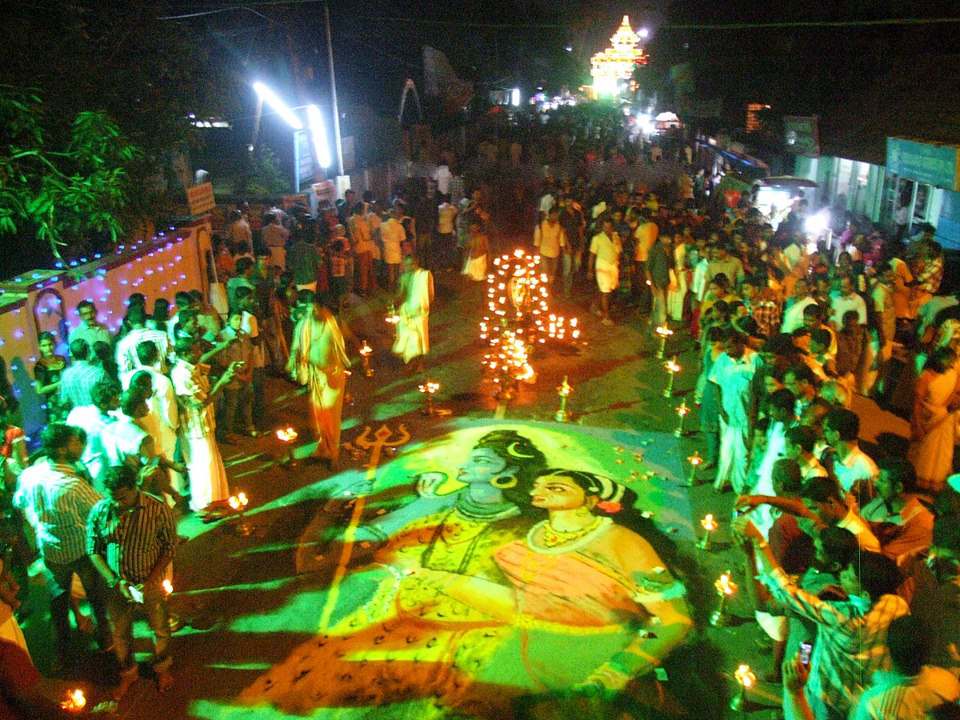
Photo credits: Ramesh Kidangoor
Maha Shivaratri means “the great night of Shiva”. Shiva- the name meaning auspicious- is one of the Hindu Trinity, comprised of Lord Brahma The Creator; Lord Vishnu The Preserver and Lord Shiva The Destroyer. This festival is said to commemorate the day on which Shiva protected the world by drinking a pot of poison that had the power to destroy the entire universe. Continue reading
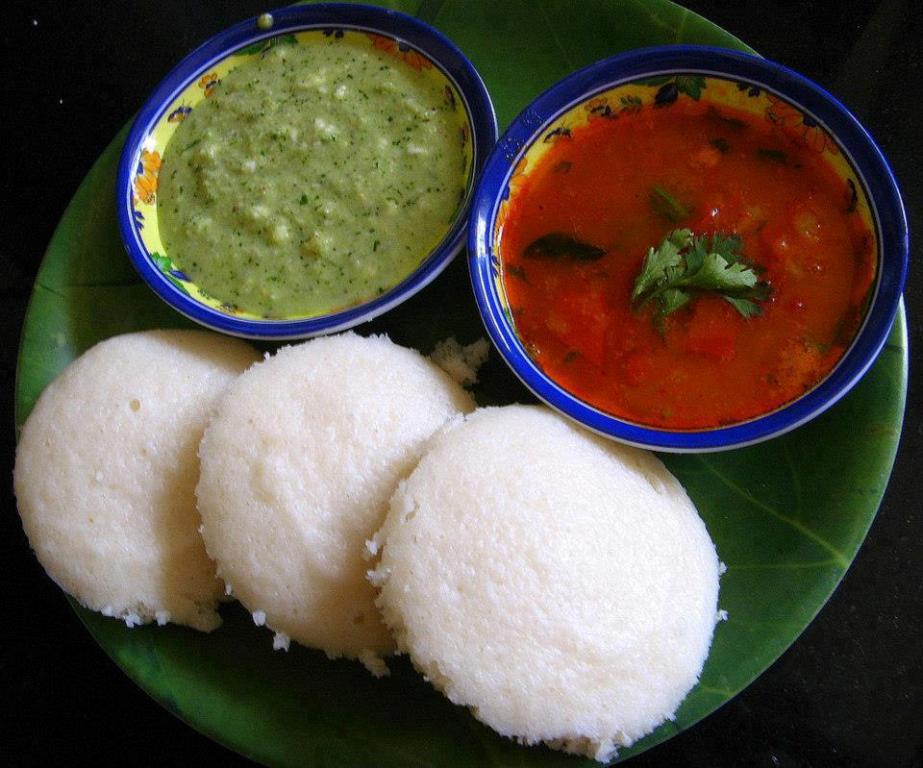
Photo credits: Ramesh Kidangoor
Idli is a South Indian savoury cake made by steaming a batter made with fermented rice powder, black gram dal and salt in a special pan with rounded indentations. Idlis are popular throughout India especially the southern part of the country. The dish is usually served with sambar and various chutneys, including tomato, coconut or coriander. Continue reading
 Organikos