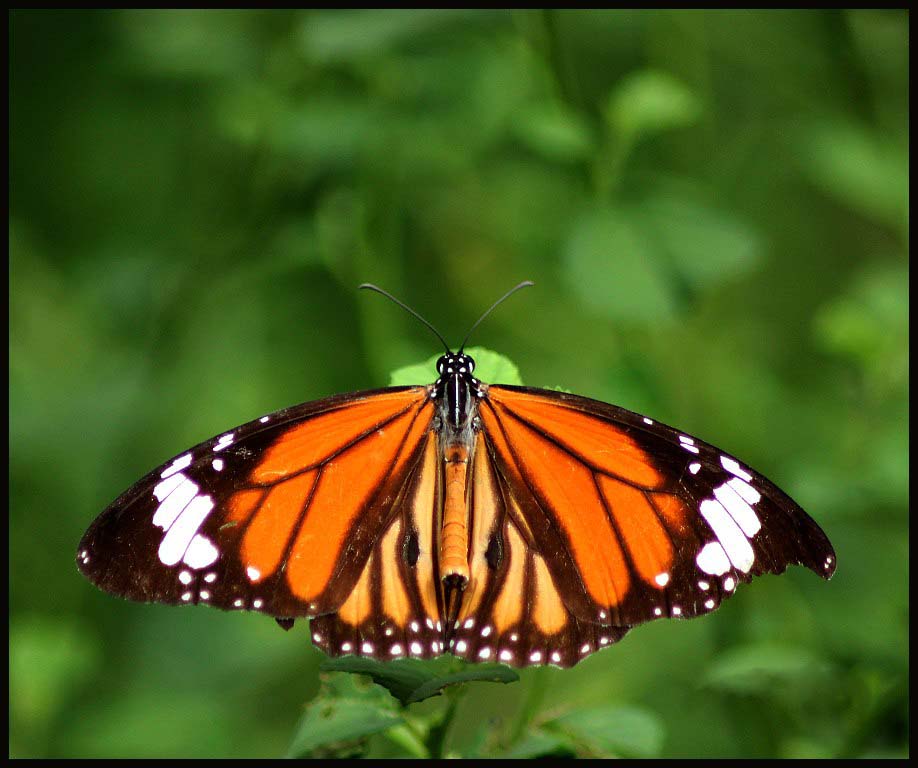
The Tamil Lacewing Butterfly (Scientific name: Cethosia nietneri) is endemic to the Western Ghats of India and Sri Lanka, where it commonly cuts through the breezes from the months of June to September. Frequent at the onset of monsoon season, the beautiful insect usually disappears by September or October. Catch it while you can! Continue reading
Insects
The Yamfly Butterfly
Yamfly butterflies are found across India and are commonly seen in the Western Ghats. They are especially numerous during the monsoon season in damp forest patches. This species has reddish orange bordered with black on the upper sides of the wings and a lighter yellow on the bottom. At the back of the wing, Continue reading
Peacock Pansy Butterfly
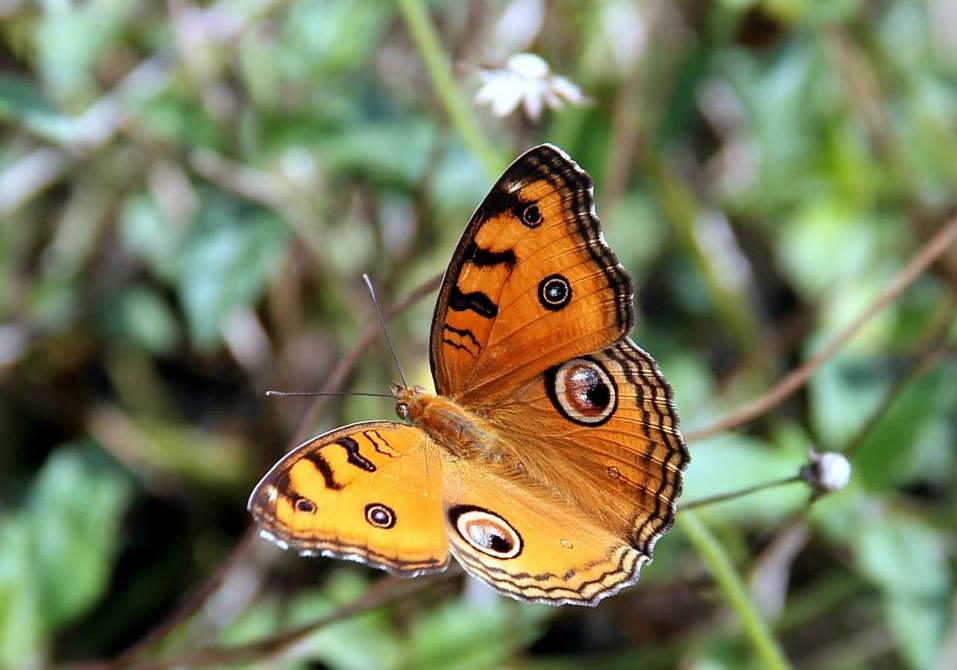
Peacock Pansy Butterflies are found across India up to 2000 meters throughout the year, prefering forest edges, waterside vegetation and gardens. These orangish butterfly with prominent peacock eye spots, to smaller eye spots on the upper forewing and larger on the hindwing are very common in the Periyar Tiger Reserve. Continue reading
Common Grass Yellow Butterfly
The Common Grass Yellow Butterfly lives up to its name. Found throughout all of India, this lepidopteran flies low and close to the ground in fields, and its wings are a pretty yellow with some subtle patterning. Their larvae feed on several different plants, but generally in the families of the spurges and legumes. Continue reading
Xandari’s Six-legged Friends
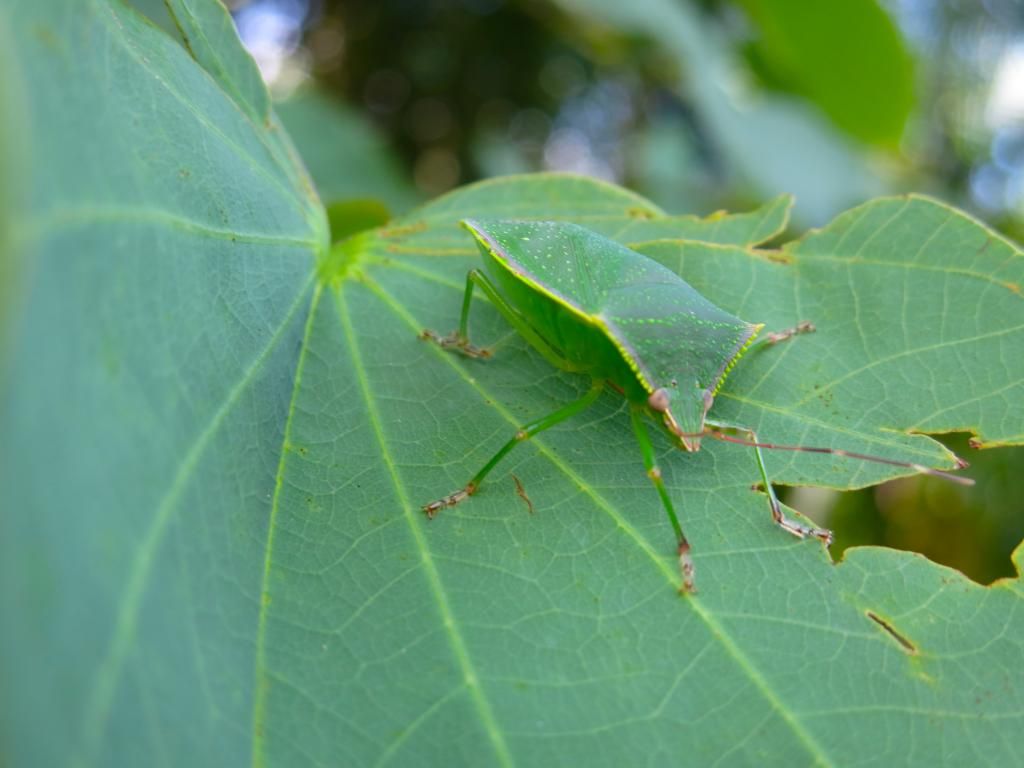
These guests aren’t a pushy bunch and don’t need any rooms here–they’re quite at home around (and on) the resort’s greenery and in the rich tropical forests. Following on Seth’s post on insects at Xandari, I thought I would add some photos snapped Continue reading
Throwback Thursday: IPM

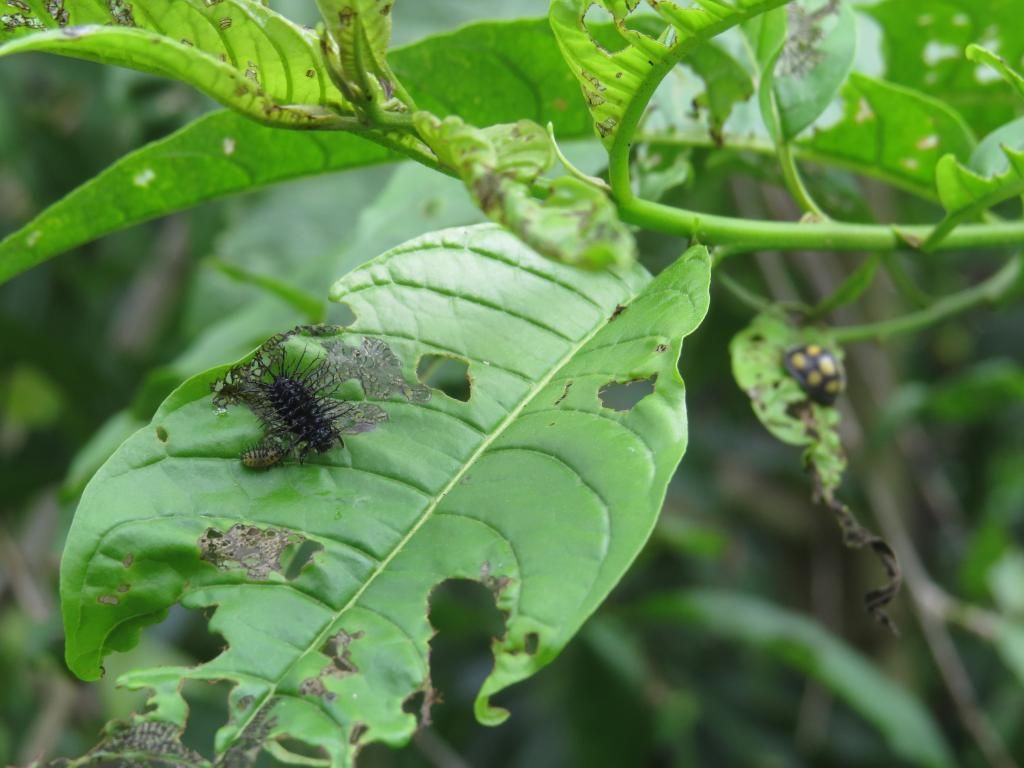
A ladybug relative nymph in the foreground and a mature individual in the background. The tiny thing next to the nymph might be a larvae.
Yesterday, as James and I were on one of our birding walks around Xandari, we ran into José Luis, who had a couple new things to show us about the gardens and orchard that he runs. At first, it looked like a ragged young tree, its leaves half-devoured and its trunk stained black. But we quickly learned Continue reading
A Note on Cicadas
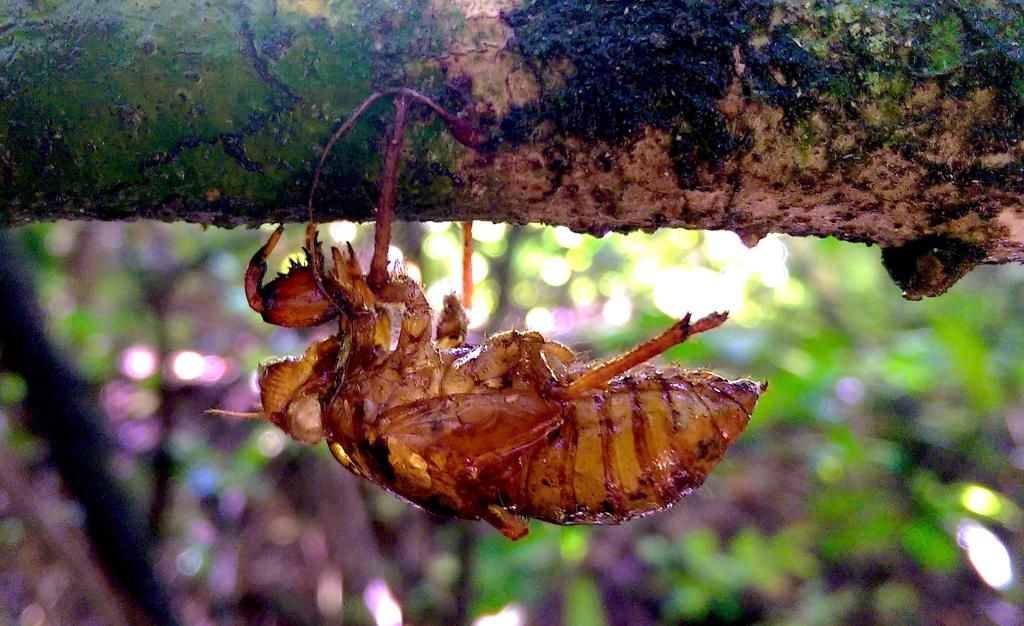
After finding the molted exoskeleton of the cicada above while wandering Xandari’s forest paths, I decided to do a little digging on the bug. The cicada is a common, but amazing, species of insect. A “true bug” (Hemipteran), the cicada is easily recognized by its Continue reading
Common Leopard Butterfly
Common leopard butterflies are found across the Western Ghats up to 2000 meters. These butterflies prefers forest edges, grasslands, damp patches and wild flowers. This butterfly has black spots and wavy lines with a-pinkish violet tinge underneath the hind wing. Continue reading
Common Tiger Butterfly
The Common Tiger Butterfly is found across the Kerala’s Western Ghats up to 2500 meters. These butterflies prefers open forest, flying close to the ground in wooded habitats and migrating to the higher hills during summer. Continue reading
Kerala Butterflies: Great Eggfly
Great Eggfly butterflies are very common and found all over India, flying throughout the year and preferring forest openings and edges, as well as bushes and gardens. The male has black wings with white patches surrounded by blue iridescence (not pictured here), and also has a row of white spots and crescents along the edge of the entire wing. Continue reading
Butterflies Of Kerala -Tawny Coster
The Tawny Coster (Acraea terpsicore) is a colorful butterfly distributed all over Kerala from the plains to the hill ranges up to 1500. They are primarily found close to and during monsoon season, prefering open grass land, forest edges and gardens. Continue reading
Kerala Butterflies – Blue Admiral
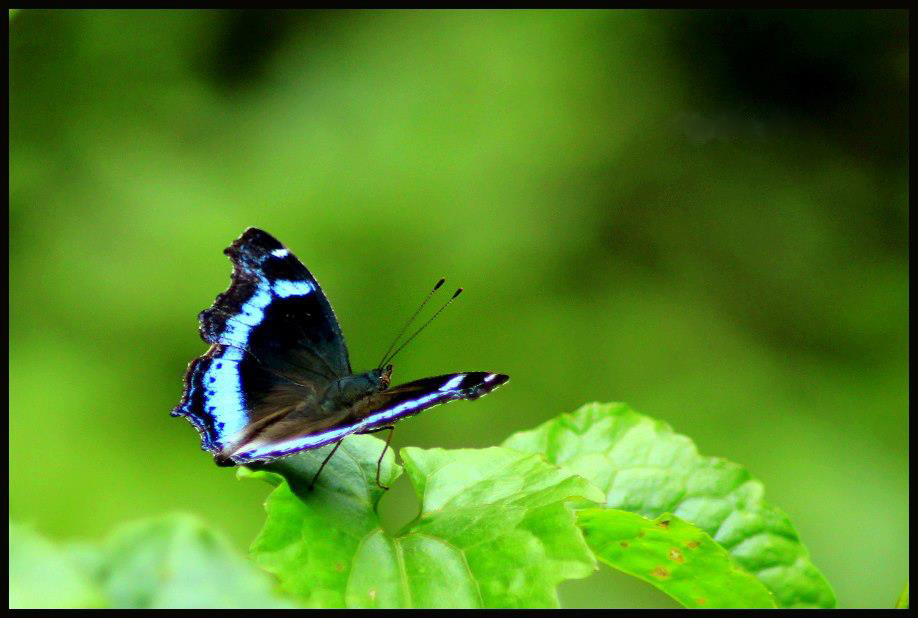
The Blue Admiral butterfly, Kaniska canace, is a colourful butterfly commonly found in the hills of Southern India up to 2500m above sea level. Usually solitary, this butterfly is blackish blue with shining silvery blue bands across the outer edge of the wings. These butterflies fly close to ground, preferring to be near water, forest openings and paths.
Delias Eucharis
Delias eucharis, also known as Common Jezebel, is a colorful butterfly with yellow background color on its under-hindwings intersected by black veins and red spots fanning outwards at wings’ edge. Continue reading
Butterflies of Kerala
Kerala’s butterflies are a richly diverse and scientifically interesting group of insects, which number around 330 species in the state. The largest butterfly in India, the Southern Birdwing, has a wingspan of about 25 centimeters, and the smallest, called the Grass Jewel (pictured below), has only a 1.5 to 2 centimeter wingspan. Can you name the species in the photo above? Continue reading
Mud-Puddling Butterflies
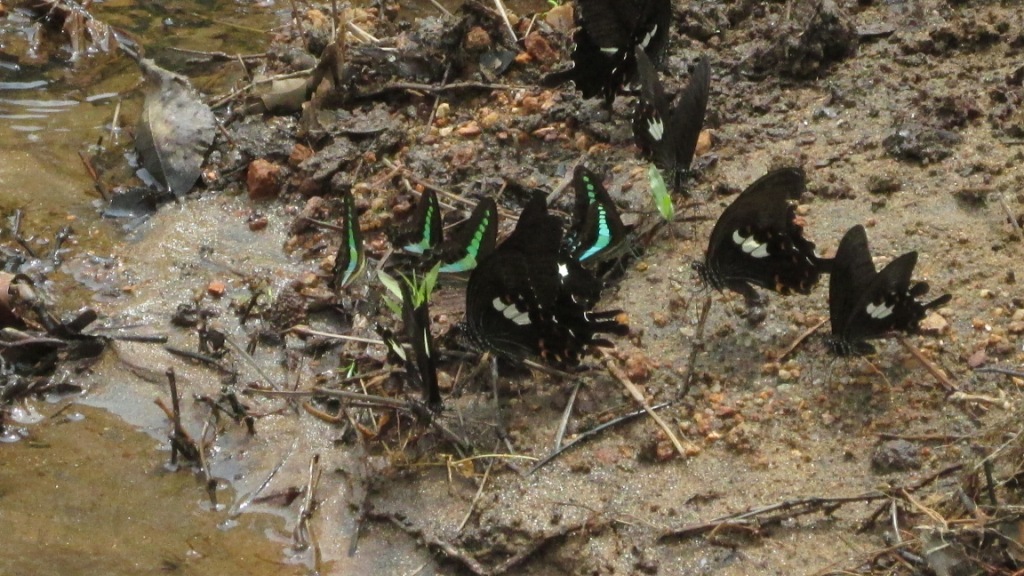
Periyar Tiger Reserve is home to an impressive species diversity of 160 butterflies, underscoring the crucial relationship between plants and animals. Butterflies mainly males need minerals for reproduction, so they are often found gathering together to take salt and minerals from the wet soil and plants in a behavior called mud-puddling. Continue reading
Cardamom County – Home For One And All
This entire week we have been talking about the rich fauna in the Periyar Reserve and how it overlaps into Cardamom County. Today we share with you a rare sighting of the Indian Luna Moth! We found this little guest taking shelter in our cardamom plantation waiting for night to arrive as they usually only fly in the night. Continue reading
Zombie Ants

African ant (Pachycondyla sp) attacked by an insect eating Fungus (Cordyceps sp) Guinea, West Africa. Photo © PIOTR NASKRECKI/ MINDEN PICTURES/National Geographic Creative
A few years ago I wrote about a curious and very specific relationship between some beetles and their wood-eating fungus symbiotic partner, and we’ve also shared other work on crazy parasitic creatures that can alter their hosts’ behavior, sometimes pretty radically (warning, creepy video). Believe it or not, the photo above isn’t some weirdly-antlered African ant–well, actually it is, but the antlers aren’t part of the ant’s body, they’re the spore-spreading apparatus of a parasitic fungus. Read on for more about the real-life World War Z that has been going on between ants (as well as other insects) and a family of zombifying fungi for millennia.
Earlier this week I went to a lecture hosted by Cornell’s Department of Neurobiology and Behavior titled “Zombie Ants: the precise manipulation of animal behavior by a fungal parasite.” The lecturer was David Hughes, Professor of Entomology at Penn State University, whose faculty webpage provides PDF links to most of the articles that he has contributed to if you’re interested in checking out the actual journal pieces on this topic. Continue reading
Common Acacia Blue Butterfly
Common Acacia Blue Butterflies are seen in and around the Periyar Tiger Reserve and are found across South India and North East India up to 1200 meters. The are active from March to November, primarily in deciduous hill forests . Continue reading
Photographic Wonder
We know that one day, hopefully not too far off, the wunderkind of La Paz Group’s photographic contributors will get his gear fired up and we will be displaying his latest wonders here again. We hear that his hiatus in Ithaca, NY since about one year ago has run its course, full of fascinations, back-looking reflections, photographic recapitulations, and even small distractions. Onward, westward, as ancestors of his did in previous centuries. More from Milo soon, we hope.
Meanwhile, on the topic of photography and wonders, Wired offers an interview to illuminate what might not otherwise be obvious at first glance:
For his book Photography Changes Everything, Marvin Heiferman spoke to experts in 3-D graphics, neurobiology, online dating, the commercial flower industry, global terrorism, giant pandas, and snowflake structure to understand the infinite ways imagery affects our everyday lives… Continue reading
Bee News, Weekly
Thanks to the Guardian‘s expanding coverage of an important topic with a series that routinely rounds up bee news (yes, it sounds funny, but try living without bees):
About this series
Concerned about the the worldwide bee crisis? Join us for Buzzfeeds, a weekly analysis featuring our resident bee expert Alison Benjamin Continue reading