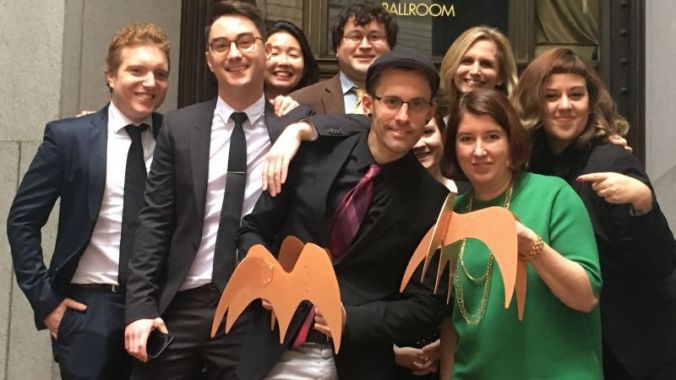
We are not normally watching awards shows, but this story catches our attention because of some notable winners in the world of magazines, some of which we monitor regularly for stories relevant to our purpose. And in particular at this moment, when we have been monitoring the news for examples of creative protest, we realize that we had neglected or avoided some of these publications because of their partisan positioning (there is enough of that without our joining in). But this magazine today joins our list of regularly monitored sources because they have been relentlessly pursuing important stories, for a long time: Continue reading
Inspiration
Model Mad, Museum

“K+L+32+H+4. Mon père et moi (My Father and I)” right, by Charles Hossein Zenderoudi, on display at the Museum of Modern Art in New York. Credit Sam Hodgson for The New York Times
When the two words model mad first occurred to us, it was simply to thank one of our favorite people for continuing to resist wrongness in new, clever manner, without losing his cool and thereby keeping it effective. Since then we have found a story almost every day that illustrates the fertile ground of protest created in recent times. And today, thanks to the New York Times, we see another one:
MoMA Takes a Stand: Art From Banned Countries Comes Center Stage
By
President Trump’s executive order banning travel and rescinding visas for citizens of seven majority-Muslim nations does not lack for opponents in New York — from Kennedy Airport, where striking taxi drivers joined thousands of demonstrators, to the United Nations, whose new secretary general, António Guterres, said the measures “violate our basic principles.”
Now the Museum of Modern Art — which in past decades has cultivated a templelike detachment — is making its voice heard as well. In one of the strongest protests yet by a major cultural institution, the museum has reconfigured its fifth-floor permanent-collection galleries — interrupting its narrative of Western Modernism, from Cézanne through World War II — to showcase contemporary art from Iran, Iraq and Sudan, whose citizens are subject to the ban. A Picasso came down. Matisse, down. Ensor, Boccioni, Picabia, Burri: They made way for artists who, if they are alive and abroad, cannot see their work in the museum’s most august galleries. (A work from a Syrian artist has been added to the film program. The other affected countries are Somalia, Yemen and Libya.) Continue reading
Model Mad, Alt

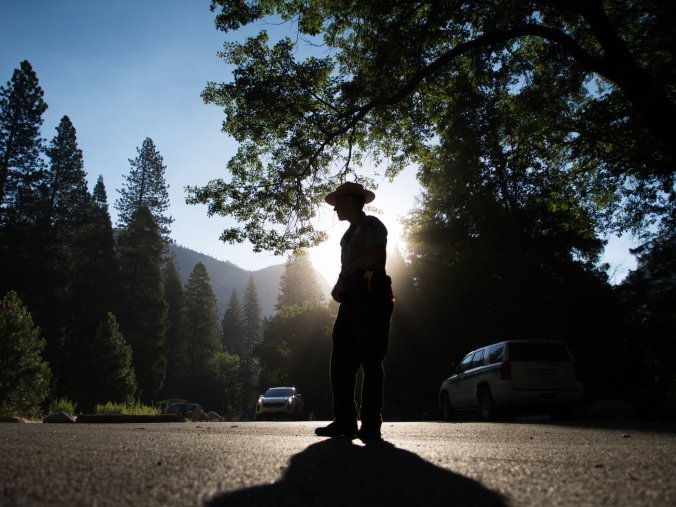
Multiple Twitter accounts claiming to be run by members of the National Park Service and other U.S. agencies have appeared since the Trump administration’s apparent gag order. The account owners are choosing to remain anonymous. David Calvert/Getty Images
Thanks to Wynne Davis at National Public Radio (USA) for It’s Not Just The Park Service: ‘Rogue’ Federal Twitter Accounts Multiply, another example of model mad:
“Rogue” accounts that have the look of those by real federal agencies are spreading like wildfire on Twitter.
The AltUSNatParkService Twitter account has gained more than 1 million followers and inspired the creation of many more “unofficial resistance” accounts for specific national parks and other entities, including accounts like Rogue NASA and AltUSForestService. Continue reading
Scientist, Illustrator, Forgotten Metamorphosist

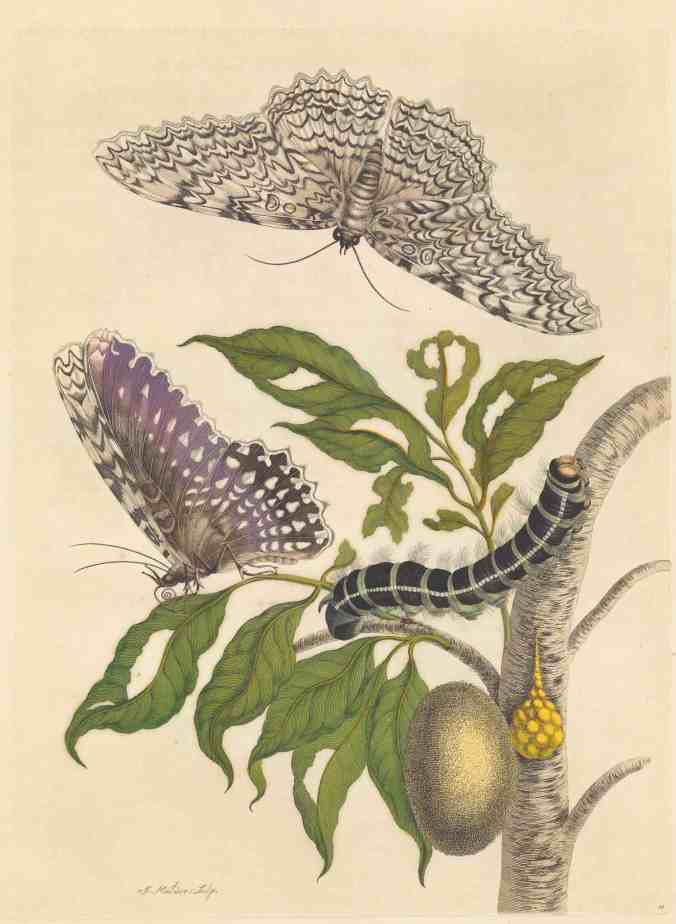
In some of Merian’s drawings, butterflies and caterpillars didn’t match. CREDIT MARIA SIBYLLA MERIAN, METAMORPHOSIS INSECTORUM SURINAMENSIUM, AMSTERDAM 1705, THE HAGUE, NATIONAL LIBRARY OF THE NETHERLANDS
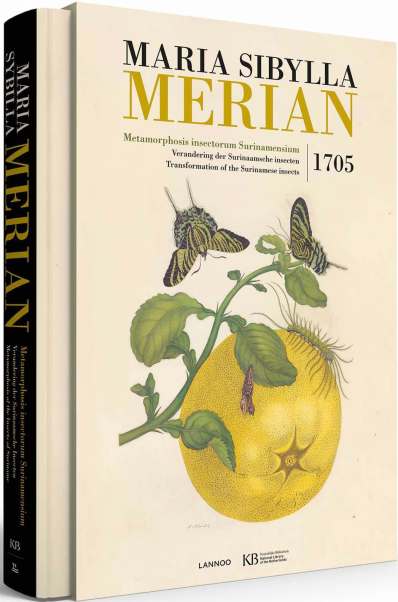
Any story with Metamorphosis in it is bound to get our attention, but a long-forgotten scientist getting her due is the intrigue that makes this story by JoAnna Klein–A Pioneering Woman of Science Re‑Emerges After 300 Years–coinciding with the republication of this book below, worthy of the read:
Maria Sibylla Merian, like many European women of the 17th century, stayed busy managing a household and rearing children. But on top of that, Merian, a German-born woman who lived in the Netherlands, also managed a successful career as an artist, botanist, naturalist and entomologist.:
“She was a scientist on the level with a lot of people we spend a lot of time talking about,” said Kay Etheridge, a biologist at Gettysburg College in Pennsylvania who has been studying the scientific history of Merian’s work. “She didn’t do as much to change biology as Darwin, but she was significant.” Continue reading
Model Mad, McKibben
Bill McKibben is the founder of 350.org and we have posted on him so many times in the past for his environmental and other forms of activism we sometimes forget that he also has a day job, as the Schumann Distinguished Scholar in environmental studies at Middlebury College. Today he posted in a manner that captures well what we meant when we used the word mad, and qualified our intent to remain madly determined:
…There’s not the slightest evidence that Americans want laxer environmental laws. A poll released last week showed that nearly two-thirds of Americans would prefer that the E.P.A.’s powers be preserved or strengthened. Solar power, meanwhile, polls somewhere in the neighborhood of ice cream among Democrats, Independents, and Republicans alike. Continue reading
Back To The Land, And A Future

Vincent Martin, right, made a living selling health club memberships in Paris until he left his job about five years ago. “Land is key,” he said. Credit Dmitry Kostyukov for The New York Times
We are going back to the land this year, in Belize, and can relate to the description and explanation these ex-urbanites give for their retreat to the rural, agricultural life of their forebears:
Life on the Farm Draws Some French Tired of Urban Rat Race
By
SAULX-LES-CHARTREUX, France — Two years ago, Elisabeth Lavarde decided to quit her office job in Paris and start a new life in Saulx-les-Chartreux, a small town with two butchers and one baker just south of the capital.
Ms. Lavarde, 39, is now an apprentice farmer at a 24-acre farm that grows organic vegetables, sold directly to local consumers. New farmers like Ms. Lavarde usually make what they see as a decent salary of about 1,500 euros, or about $1,600, a month, slightly above the French minimum wage.
“I wanted a job with more meaning,” she said. “I felt like I was tilting at windmills.” Continue reading
Visit Katinka Matson
We encountered Katinka Matson while reminding ourselves of the annual question presented at the start of 2016 over at Edge. So we went looking for more about her. We agree with all the sentiments expressed on this artist’s own website:
“Her floral pictures are so intense that looking at them, you almost get the feeling that you are able to peer around the flowers themselves.” — The New York Times Magazine Continue reading
The Upside of the Downside
We made a commitment in 2011 at the time we started this platform to search for and share as much positive news as we could find on entrepreneurial conservation, scientific and social innovations that improve life in developing countries, and such. We do not avoid “bad news” with pollyanna blinders on, but share more enlightening news that does not get enough attention. We occasionally share doomsday analysis; it is difficult to avoid some of the trends pressing down on us all. Thanks to the New York Times for digging this one out of the archives, which will relieve us a bit when we come across and process doom and gloom:
The Power of Negative Thinking
By
Editors’ note: We’re resurfacing this story from the archives because who wouldn’t want to master their emotions?
LAST month, in San Jose, Calif., 21 people were treated for burns after walking barefoot over hot coals as part of an event called Unleash the Power Within, starring the motivational speaker Tony Robbins. If you’re anything like me, a cynical retort might suggest itself: What, exactly, did they expect would happen? In fact, there’s a simple secret to “firewalking”: coal is a poor conductor of heat to surrounding surfaces, including human flesh, so with quick, light steps, you’ll usually be fine. Continue reading
Attenborough & Visionary Realism

Illustration by Jasu Hu
Another from the last issue of the year and part of a series that the New Yorker offers to help us reflect on the big picture (each in this series is a very short read with disproportionate impact):
DAVID ATTENBOROUGH’S EXPLORATION OF NATURE’S MARVELS AND BRUTALITY
His game-changing shows remind us that ours is an impermanent and fragile world.
By Téa Obreht
No trip to the American Museum of Natural History in New York is complete without a visit to the Milstein Hall of Ocean Life. It’s a blue-tinged room, booming with surf-roar and the cries of gulls and rimmed with marine dioramas: teeming kelp forests and coral reefs, a walrus lost in thought, dolphins and tuna fleeting through twilit seas. Continue reading
Bee-Keeping Aspirational
This note on How to Keep Bees by
…You’ll need a suit with gloves and a hood, as well as two boxes to house the hive. Flottum says bees aren’t fussy about their habitat — they could live on the side of your house or on your grill. “But you have to be able to inspect them,” he says. “I have to be able to take the cover off and lift up a comb of honey and have it inspected for disease by a government official.” The boxes can be made of plastic or wood; each kind has advantages and disadvantages, including cost and durability. Continue reading
Getting Our Thinking Right, When It Matters Most
An editorial that I read yesterday– Does Decision-Making Matter?–was a welcome “moving on” from all the other kinds of recent editorializing. Welcome because it tells us there is a new Michael Lewis book, and especially welcome because it shows that five years after we first heard him credit two scientists for their influential work he has now gone the last mile in documenting their greatness for a mass audience. We have had a couple nods to that same work in our pages in recent years.
This morning’s walk was accompanied by a podcast I had neglected for some months, with an interview that Chuck Klosterman–not mentioned in our pages before–gave to promote his new book. It is time to finally correct that oversight. I cannot explain why that is important as well as the interview can, so I suggest listening to it. If you do not have the 90 minutes required for that, a short synopsis version of his promotional interview can be heard and read on this NPR interview given at about the same time:
‘But What If We’re Wrong:’ A Look At How We Will Remember The Now, Later
…KELLY MCEVERS, HOST:
What if everything we think that’s important or interesting or relevant right now will be totally insignificant in the future? Or what if something we don’t really appreciate today will be considered great in 200 years, like how people didn’t think much of “Moby Dick” when it was written, but now we think it’s pretty great? These are the questions that critic Chuck Klosterman asks in his new book. In it, he tries to predict how we will remember the present when it is the past. And he’s not too worried about whether he’s right or not. Continue reading
Bookstores Are Just A Small Notch Below The Library In Our Pantheon Of Cultural Institutions, But They Are There
We liked it the first time around, and appreciate his extension:
DRAWING THE WORLD’S GREATEST BOOKSTORES
By Bob Eckstein
It was a little more than two years ago that I walked around New York, drawing pictures of the city’s endangered landmark bookstores. Continue reading
Birdsong – Making Visible the Invisible
We recently posted on artist Xavi Bou‘s creative use of chronophotography, a series of photos that capture the illusion of movement, to craft still portraits of birds in flight.
Australian artist Andy Thomas specializes in creating ‘audio life forms’: beautiful abstract shapes that react to sounds. These videos were created using computer program to activate particle effects from digitally captured bird sounds. Continue reading
Northern Lights, Iceland Edition

The northern lights over Iceland in February. The glowing orange area on the left side are the lights of the capital, Reykjavik. Jamie Cooper/SSPL via Getty Images
Thanks to National Public Radio (USA) for letting us know where they still take these things seriously:
Reykjavik Turns Off Street Lights To Turn Up The Northern Lights
Wednesday night’s aurora borealis forecast was particularly strong, so Icelandic officials tried to reduce light pollution to make the green glow more visible to people in the capital Continue reading
Being Human, Sharing Relevant Information, Building Community
In the first few years of our building this wordpress platform to communicate about things that concern us and especially about things that inspire us, we occasionally found something that Andrew Sullivan had posted that was relevant here (only rarely since his site was mainly dedicated to politics and other topics that do not belong on our platform).
So we know a bit about him and always admired his relentless pursuit of what he believed in. We also know he is an excellent writer, so almost always worth a read. The same relentlessness we admire is also one we vigilantly guard against in these pages, where we have tried to limit our daily contribution to just a few essentials. We want only to have some shared space with a community of readers who care about some of the issues that interest us the most. This article Mr. Sullivan just published is definitely worth a read:
Keeping Shakespeare in Mind
Quite a few of our team can attest to the power of a liberal arts education, especially when put in such a joyful context.
Scott L. Newstok’s convocation speech to the Rhodes College class of 2020 embraces this joy, adding the cheeky tweak of asking the incoming class to approach their college experience in the “spirit of the 16th century”.
Building a bridge to the 16th century must seem like a perverse prescription for today’s ills. I’m the first to admit that English Renaissance pedagogy was rigid and rightly mocked for its domineering pedants. Few of you would be eager to wake up before 6 a.m. to say mandatory prayers, or to be lashed for tardiness, much less translate Latin for hours on end every day of the week. Could there be a system more antithetical to our own contemporary ideals of student-centered, present-focused, and career-oriented education?
Yet this system somehow managed to nurture world-shifting thinkers, including those who launched the Scientific Revolution. This education fostered some of the very habits of mind endorsed by both the National Education Association and the Partnership for 21st Century Learning: critical thinking; clear communication; collaboration; and creativity. (To these “4Cs,” I would add “curiosity.”) Given that your own education has fallen far short of those laudable goals, I urge you to reconsider Shakespeare’s intellectual formation: that is, not what he purportedly thought — about law or love or leadership — but how he thought. An apparently rigid educational system could, paradoxically, induce liberated thinking.
“Take advantage of the autonomy and opportunities that college permits by approaching it in the spirit of the 16th century. You’ll become capable of a level of precision, inventiveness, and empathy worthy to be called Shakespearean.”So how can you think like Shakespeare?
If You Happen to be in Hong Kong
Milk tea is the liquid blend of East and West, and if you happen to be in Hong Kong, you will find yourself among a populace that covets this sweet, aromatic drink just as much as Americans crave their daily coffee. Milk tea is the equivalent fast and convenient to-go drink in Hong Kong, and the city gulps down about 2.5 million cups a day. The drink is a a local institution that has a a yearly Hong Kong milk tea contest and this year’s competition was steep, to put it mildly.
Milk tea is a blend of black teas, combined with a high proportion of either evaporated milk and sugar, or simply sweetened condensed milk. The use of concentrated milk products gives milk tea a very thick, creamy consistency, and a high sugar content makes the beverage a harder, stiffer, bolder drink than many Americans would associate with tea.
The specific methods and materials are closely kept secrets of individual diner-like cha chaang tengs, the primary drinking establishments for milk tea, but some of the basics remain the same.
You’ve Seen Bird Cams – How About a Salmon Cam?

Resolution is low, probably due to poor internet where the fish is and where I am, but you can see a coho, just like they say you might when watching the cam!
We’ve shared various of the “bird cam” projects here before: websites, often run by universities like Cornell’s Lab of Ornithology, that host a live-streaming video of a nest somewhere so that people around the world with internet can tune in to the parent or chicks’ activities at any time of day. In some circles, similar videos of cats are also available. Now, not necessarily for the first time but at least the first I’ve heard of personally, there’s a live-streaming site of a real-life stream owned by The Nature Conservancy (I’m surprised their blog writers didn’t pun their way into that one). Matt Miller and Chris Babcock write about the new Salmon Cam:
Welcome to Salmon Cam, where you can enjoy the underwater happenings of a California salmon river throughout the day, on your computer or device.
The Salmon Cam is located in a tributary creek on The Nature Conservancy’s Shasta Big Springs Ranch. The camera is powered on in daylight hours (currently between 7 am and 7 pm Pacific time). Throughout the season, it will provide a view of migrating Chinook and coho salmon and steelhead trout.
Kakaw Designs
Recently I was introduced to a small online business that sells handmade women’s boots and bags called Kakaw Designs. Seth met the company’s founder, Mari, before his work at the school they both taught at in the Galapagos four years ago and mentioned the ethical concept of her business.
The Sense Of A Place
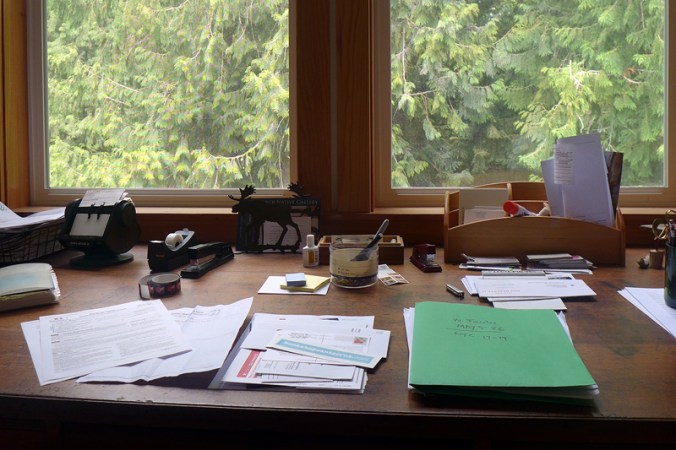
What Annie Proulx says about places she has lived–through her fiction especially but also in this interview below–rings a bell for us, considering the number of places we have chosen to live to do what we do. What the interview echoes specifically for me is the inherent improbability of accomplishing one of our key objectives: we want travelers to become as attached to places as we are, so that they will care about the conservation mission of our initiatives in each location as much as we do. It occurs to me that our guests spend about as much time with us in any given location as a reader spends on any given book by Proulx; also, books and our locations share in common the fact that they can be revisited an indefinite number of times.
That said, we want our guests to care more about these locations than even the most devoted reader cares about a Proulx character; not because we think less of her characters but because our conservation mission is about places in need of constant support. Improbability in this context refers to the question: how can our guests become intensely attached–as happens when a reader is gripped by a compelling character in a deeply human situation in an exquisitely described location–in a limited amount of time and continue to care intensely after they depart? That is our challenge, and we are constantly finding new ways of answering that question.
Another echo from reading what Annie Proulx says about the places she has lived, about belonging, feels strongly relevant. If we are a fraction as good at what we do as she is at what she does, belonging becomes irrelevant. What matters is how much sense we make of the place, and how much sensibility we harness in showcasing it to our guests. If you have read any of her books, you know how evocative place can be–like an additional character–and if that captures your attention you should read the interview that follows the introductory section excerpted below.
HOW THE WRITER RESEARCHES:
ANNIE PROULXJOHN FREEMAN INTERVIEWS THE PULITZER PRIZE WINNER IN HER SNOQUALMIE VALLEY HOME
Annie Proulx is 80 years old and still not sure where she belongs. Standing in the atrium of her home in the Snoqualmie Valley, the Pulitzer Prize-winning novelist eyes a photograph of the cottage she once occupied in Newfoundland, the setting of her 1993 novel, The Shipping News. “I fell in love with that landscape,” Proulx says, speaking in the tone of a woman describing an ex-lover. Continue reading