Those Who Make Chinese Restaurants In The USA What They Are

141013_r25586-690

Chinatown employment agencies can get immigrants kitchen jobs in a few hours. CREDIT PHOTOGRAPH BY ANNIE LING

When our interest in long form journalism intersects with our wide and deep interest in foodways, we could not be happier than to pass it along. Have a taste of this deeply reported story on cooks in the Chinese restaurant trade in the USA, as offered in this week’s New Yorker:

In a strip mall on a rural stretch of Maryland’s Indian Head Highway, a gaudy red façade shaped like a pagoda distinguishes a Chinese restaurant from a line of bland storefronts: a nail salon, a liquor store, and a laundromat. On a mild Friday morning this July, two customers walked into the dimly lit dining room. It was half an hour before the lunch service began, and, aside from a few fish swimming listlessly in a tank, the room was deserted.

In the back, steam was just starting to rise from pots of soup; two cooks were chopping ginger at a frenzied pace. Most of the lunch crowd comes in for the buffet, and it was nowhere near ready. “Customers are here already!” the restaurant’s owner, a wiry Chinese man in his fifties, barked. He dropped a heavy container onto the metal counter with a crash. “How can you possibly be moving this slowly?” Continue reading

Walter Isaacson On Geniuses Of The Digital Revolution

File photo by Kris Snibbe/Harvard Staff Photographer.  "We’re now in a phase in which the connection of creativity to technology is going to drive innovation," said Walter Isaacson ’74, a Harvard Overseer, biographer, and CEO of the Aspen Institute. "I do believe that it’s important for people to have an appreciation for the arts and humanities."

File photo by Kris Snibbe/Harvard Staff Photographer. “We’re now in a phase in which the connection of creativity to technology is going to drive innovation,” said Walter Isaacson ’74, a Harvard Overseer, biographer, and CEO of the Aspen Institute. “I do believe that it’s important for people to have an appreciation for the arts and humanities.”

Thanks to Christina Pazzanese and Harvard Gazette for this conversation with one of the more interesting biographers writing today:

Ghosts in the machines

The history of the Digital Revolution touches our hearts and heads, Isaacson says

In many ways, the entire Digital Era can rightly be laid at the courtly foot of Lord Byron’s rebellious daughter, Ada. Lady Lovelace was the poet’s only child born in wedlock, inheriting both her father’s headstrong, Romantic spirit and her mother’s practical respect for mathematics.

As the Industrial Revolution bloomed, her appreciation for the beauty of numbers and invention, an analytical approach she called “poetical science,” led her to write what is now regarded as the first algorithm and to help refine a machine that could be programmed to perform many different tasks, an idea that anticipated the modern computer by a century.

That’s where Walter Isaacson’s latest book, “The Innovators: How a Group of Hackers, Geniuses, and Geeks Created the Digital Revolution,” steps off.

Continue reading

Giraffes Deserve Science As Much We Need Good Science Writers

Julian Fennessy. Giraffes are the “forgotten megafauna,” said the  executive director of the Giraffe Conservation Foundation.

Julian Fennessy. Giraffes are the “forgotten megafauna,” said the executive director of the Giraffe Conservation Foundation.

We have been highlighting science writers since our outset as a blog, following a longstanding respect from our contributors for their particular talent, which has made us richer by reaching fruit that is sometimes too high on a tree to reach and bringing it where we can reach it.

From the current New York Times weekly section highlighting and explaining scientific matters of interest to us with one of the greatest writers in the genre, we now turn our attention to giraffes for the first time in our several years sharing (and as pointed out in the article we can only wonder why we have not paid more attention to such a creature prior to now):

SCIENCE TIMES: OCT. 7, 2014

Our Understanding of Giraffes Does Not Measure Up

By NATALIE ANGIER

Giraffes may be popular — a staple of zoos, corporate logos and the plush toy industry — but until recently almost nobody studied giraffes in the field so there is much we don’t know about them.

Humans of New York: The power of documentation

10575445_746153385458764_7383111873998406356_o

She said she’d let me take her photo if I bought some peanuts from her. Afterward, I asked if she could remember the saddest moment of her life. She laughed, and said: “You’re going to need to buy some more peanuts.” (Kasangulu, Democratic Republic of Congo) Photo Credit: Brandon Stanton

This article from the New York Times describes the recent social media phenomenon- Brandon Stanton’s Humans of New York site and facebook page. At first he was just making portraits of strangers in New York City after losing his job as a bond trader. Then it evolved into interviewing the people about their lives and using them as captions to the photos. Now, he has been commissioned by the United Nations to do a 50-day world tour doing the same thing, but in some of the areas of the world with “the most extreme headlines coming out” to document life on the streets there.  The purpose of the tour is to raise awareness for the UN Millenium Development Goals and to inspire a more global perspective.

I have been a part of the 9.2 million people following him on facebook and just watching the exponential rise in followers since this UN tour has been quite incredible. There has been overwhelming support for his work. Thousands of people writing extensive comments reflecting on how the portraits capture what’s happening in the world. I’ve noticed a lot of heartfelt dialogue inspired by his work in the comments. Continue reading

Bioluminescent Wonders

Stefan Siebert

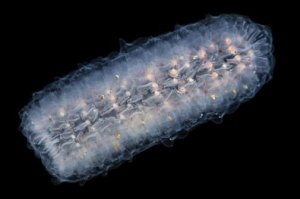
Stefan Siebert. A young colony of Pyrosoma atlanticum.

Sure, science can explain alot of things. And yes, we definitely want to understand. But the wonder can remain a wonder even after we read about the technical details. Bioluminescence is one of those wonders. Better in person, of course, to see and experience the wonder. But for now, written explanation of this photographed wonder will have to do. We will likely never tire of the sightings, in the Times Science section or wherever, no matter how many times, of these creatures:

Continue reading

Shakespeare, Crown Toady?

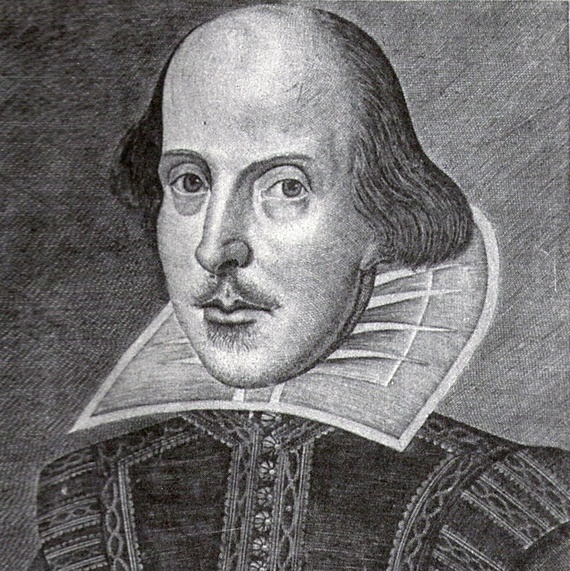
Shakespeare

In honor of the departure of James from Xandari, we send him off with a blast of relative modernity. Shakespeare is certainly classic, but tres nouveau in terms of a classicist.

Little did any of the liberal arts majors among Raxa Collective contributors know that the image we have of a witty, well-versed but ultimately populist entertainer is confounded by a consistent streak of conservatism. But we are thankful for the enlightenment, that far from being an equal opportunity observer and critic of all forms of foible, the Bard was so unwilling to bite the hand that fed:

Ira Glass recently admitted that he is not all that into Shakespeare, explaining that Shakespeare’s plays are “not relatable [and are] unemotional.” This caused a certain amount of incredulity and horror—but The Washington Post’s Alyssa Rosenberg took the opportunity to point out that Shakespeare reverence can be deadening. “It does greater honor to Shakespeare to recognize that he was a man rather than a god. We keep him [Shakespeare] alive best by debating his work and the work that others do with it rather than by locking him away to dusty, honored and ultimately doomed posterity,” she argued. Continue reading

A New Way Of Tasting

BN-DS230_2LYONS_DV_20140716073028Does the world really need a new lifestyle magazine at this moment in time? If the magazine is created by someone who revolutionized the way wine is evaluated, the answer may be yes:

CAN A WINE EVER be perfect? If so, who is qualified to pass that judgment? Is it the winemaker who is trained in viticulture or oenology? The merchant with a fabled palate who buys the wines year after year? Or is it the critic, with no formal training but a strong sense of smell, a notebook and an ability to taste 10,000 wines a year?

Continue reading

Welcome Back, Dot Earth

An illustration from a children’s book published in 1888.

An illustration from a children’s book published in 1888.

Out of nowhere, a few days back, Andrew Revkin and Dot Earth came back from who knows where. In our first year or two they were among our most consistent sources of excellent reportage on environmental issues. Then, nothing. Now, something, sneaking into view within the Opinion pages of the New York Times (really, we need their old excellent reporting more than we need opinion, but…):

dotearth_postENVIRONMENTAL POLICY

No Time to Waste: Students Pursue Environmental Progress Instead of Exam Grades

By ANDREW C. REVKIN APRIL 22, 2014, 12:13 PM

Continue reading

Long-Form Science Writer On Vacation In One Of Our Favorite Places

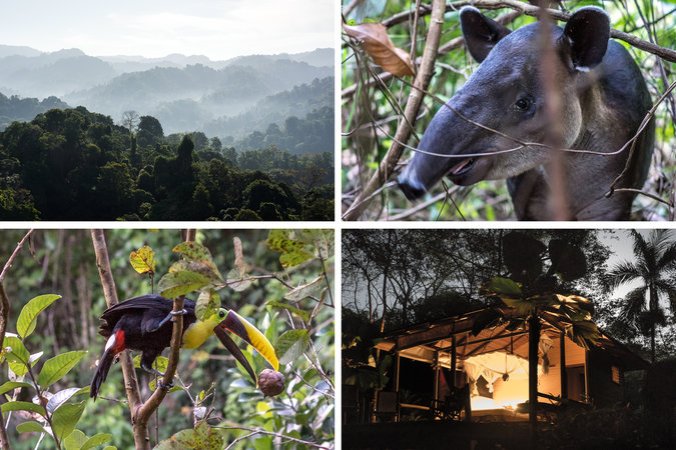
Clockwise from top left: Rain forest in Corcovado National Park; a tapir in the park; a cabin at Bosque del Cabo Rainforest Lodge; spying on a toucan at the lodge. Credit Scott Matthews for The New York Times

Clockwise from top left: Rain forest in Corcovado National Park; a tapir in the park; a cabin at Bosque del Cabo Rainforest Lodge; spying on a toucan at the lodge. Credit Scott Matthews for The New York Times

As might be guessed from many of the sources linked to here, several of us are fans of long-form narrative and some enough so that we listen to a podcast dedicated to interviewing long-form journalists. We love well-crafted descriptive wording. Our friends in Costa Rica generally, and the Osa Peninsula especially, must be delighted to have Amy Harmon‘s long-form knowhow working in their favor in this week’s Travel section of the New York Times.

BdCShirtBy almost unbelievable coincidence, while wearing the shirt to the left (selfie by yours truly, dear reader) I was listening to a podcast interview with Amy Harmon  at the moment this article–what first caught my eye was the title about travel to Costa Rica–came onto my screen. Then, seeing it was by Amy Harmon I had to read it immediately for another reason. We have a large collection of posts dedicated to science writers and their craft, but none yet dedicated to her work (this post is the first step of correcting that negligence). Below, excerpts of the description of the experience she had at Bosque del Cabo, a property where many of our guests who stay at Xandari also visit, and vice versa:

…Our first stop, Bosque del Cabo, was a 40-minute ride by taxi from Puerto Jiménez, the biggest town on the peninsula with a population of 1,780. I had chosen one of the two cabins at Bosque just steps from the rain forest, at the edge of a large clearing planted with native trees and plants. A half-mile away from the main lodge area, these “garden cabinas” are reached by a trail through the forest that crosses high above a river over a suspension bridge… Continue reading

Rock, Water, Science, News

A diamond from Juína, Brazil, containing a water-rich inclusion of the olivine mineral ringwoodite. Richard Siemens/University of Alberta

A diamond from Juína, Brazil, containing a water-rich inclusion of the olivine mineral ringwoodite. Richard Siemens/University of Alberta

What makes scientific information newsworthy? One possibility is when the information conveyed may have profound implications for life on earth. This Scientific American article about a rock is really about water, and about a kind of water that many of us had never been aware of:

…”It’s actually the confirmation that there is a very, very large amount of water that’s trapped in a really distinct layer in the deep Earth,” said Graham Pearson, lead study author and a geochemist at the University of Alberta in Canada. The findings were published today (March 12) in the journal Nature.

The worthless-looking diamond encloses a tiny piece of an olivine mineral called ringwoodite, and it’s the first time the mineral has been found on Earth’s surface in anything other than meteorites or laboratories. Ringwoodite only forms under extreme pressure, such as the crushing load about 320 miles (515 kilometers) deep in the mantle. Continue reading

New Energy Possibilities, Reported Long-Form

140303_r24681_p233

Commercial reactors modelled on ITER could generate power with no carbon, virtually no pollution, and scant radioactive waste. Illustration by Jacob Escobedo.

We pepper this blog with long-form journalism’s best contributions to our knowledge about environmental and cultural issues that seem relevant to community, conservation and collaboration. This week’s New Yorker has an article that stretches the boundaries of serious reporting on alternative energy, worth every moment of reading (it is about as long as long-form gets; click the image to the right to go to the source):

Years from now—maybe in a decade, maybe sooner—if all goes according to plan, the most complex machine ever built will be switched on in an Alpine forest in the South of France. The machine, called the International Thermonuclear Experimental Reactor, or iter, will stand a hundred feet tall, and it will weigh twenty-three thousand tons—more than twice the weight of the Eiffel Tower. At its core, densely packed high-precision equipment will encase a cavernous vacuum chamber, in which a super-hot cloud of heavy hydrogen will rotate faster than the speed of sound, twisting like a strand of DNA as it circulates. Continue reading

Get To Know The Baffler

This post is simply a link to a resource that we think furthers the case for the liberal arts tradition. In case you do not yet know it, get to know it here:

The epigraph stamped on The Baffler no. 1, from Arthur Rimbaud’s “Morning of Drunkenness,” introduced it as a punk literary magazine. It was the summer of 1988. The founders, Thomas Frank and Keith White, were recent graduates of the University of Virginia. They named their magazine as a joke on academic fads like undecidability, then in fashion. The Baffler was born to laugh at the baffling jargon of the academics and the commercial avant-garde, to explode their paralyzing agonies of abstraction and interpretation. Continue reading

Really, Syngenta?

Hayes has devoted the past fifteen years to studying atrazine, a widely used herbicide made by Syngenta. The company’s notes reveal that it struggled to make sense of him, and plotted ways to discredit him. Photograph by Dan Winters.

It has been many months since we last read something that a company did that made us think–Really?–in this manner that we have on several earlier occasions. We are sparing in these kinds of posts because we still believe most companies, most of the time, want to do the right thing.  But when they clearly do not, they must be called out.

This post is a reminder to all of us to support public funding of science and private funding of journalism–subscribe to the New Yorker! Thanks to Rachel Aviv’s reporting, we see the fire behind the smoke, and it is not good fire. Two paragraphs of her story are shared here, but spend the 30-60 minutes digesting the whole story on the New Yorker‘s website, where thankfully it is not behind the subscription wall, and be sure to share it widely:

…Three years earlier, Syngenta, one of the largest agribusinesses in the world, had asked Hayes to conduct experiments on the herbicide atrazine, which is applied to more than half the corn in the United States. Hayes was thirty-one, and he had already published twenty papers on the endocrinology of amphibians. Continue reading

A Science Writer’s Public Service

41EWvquSk3L_SL500_AA300_.5095659_std

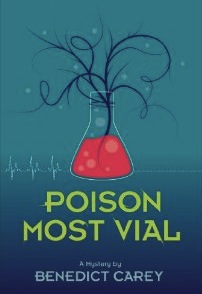
The famous forensic scientist Dr. Rama is dead – murdered – and suspicion has fallen on Ruby Rose’s father, the only family she has. Ruby is new to her school and is having enough trouble just making a friend; now she has far bigger problems. To save her father, she will have to solve the murder herself, relying for help on an elderly neighbor who used to be a toxicologist. But is this woman reliable? And is there enough time?

Benedict Carey is better known as a science reporter for the New York Times, but that is just his day job.  It certainly qualifies as public service, but in addition he moonlights on further public service. He explains his purpose:

Both books are adventures in which kids use science to save themselves and solve a mystery. It’s real science, accessible but not obvious, and builds understanding of some fairly advanced principles – transcendental numbers (among other things) in “Island of the Unknowns,” and mass chromatography in “Poison Most Vial.”

In a trailer park called Adjacent, next to the Folsom Energy Plant, people have started to vanish, and no one seems to care. At first Lady Di and her best friend, Tom Jones, barely notice the disappearances—until their beloved math tutor, Mrs. Clarke, is abducted, too. Mrs. Clarke has left them clues in the form of math equations that lead them and other kids all over the trailer park, through hidden tunnels under “Mount Trashmore,” and into the Folsom Energy Plant itself, where Lady Di and Tom Jones and a gang of other misfits uncover the sordid truth about what’s really happening there. That's Di on the left and Tom on the right.

In a trailer park called Adjacent, next to the Folsom Energy Plant, people have started to vanish, and no one seems to care. At first Lady Di and her best friend, Tom Jones, barely notice the disappearances—until their beloved math tutor, Mrs. Clarke, is abducted, too. Mrs. Clarke has left them clues in the form of math equations that lead them and other kids all over the trailer park, through hidden tunnels under “Mount Trashmore,” and into the Folsom Energy Plant itself, where Lady Di and Tom Jones and a gang of other misfits uncover the sordid truth about what’s really happening there. That’s Di on the left and Tom on the right.

Perfectly principled reality: if you had been restricted to Benedict Carey’s better known science reporting for the New York Times, that would be not such a bad thing. He also serves on the board of Edge, a non-profit which seeks to “arrive at the edge of the world’s knowledge, seek out the most complex and sophisticated minds, put them in a room together, and have them ask each other the questions they are asking themselves.” Again, not bad.

But we like in particular the effort to branch out further, reaching the next generation and aiding the mathematical and scientific efforts of educators who otherwise compete with entertainment of all sorts for the hearts and minds of youth.

That said, do not miss his reporting. He is a master at this trade, and improves the quality of conversation we are determined to engage in more often. His most recent article for the Times reviews the research into cognitive performance and aging and with humor and gravitas all at once he acknowledges why as we get older we tend not to be too interested in these findings: Continue reading

Science Writers Contribute To The Conversation

As we have more conversation in 2014 and beyond, it will definitely be improved with the science writers we have been following the last few years, and their successors who follow in their footsteps.

For example, we appreciate Virginia Hughes and the kind of writing that she publishes all over the place, and which National Geographic‘s Phenomena website collects, with this most recent example of hers:

An Old and Optimistic Take On Old Age

I’ve been reading and thinking a lot lately about the process of aging. Many scientists who study it argue — quite convincingly — that it’s the most important scientific topic of our time. In his 1997 bestseller Time of Our Lives, biological gerontologist Tom Kirkwood writes that the science of human aging is “one of the last great mysteries of the living world.” Continue reading

Jaipur Literature Festival’s Guest From The New Yorker

Courtesy of Sukruti Anah Staneley. Jonathan Shainin.

Courtesy of Sukruti Anah Staneley. Jonathan Shainin.We link to the New Yorker frequently and to The Caravan occasionally, so we are happy to share a link to a story that provides an intersection to both:

We link to the New Yorker frequently and to The Caravan occasionally, so we are happy to share a link to a story that provides an intersection to both:

A Conversation With: Jonathan Shainin, Newyorker.com News Editor

By MAX BEARAK

Jonathan Shainin was the senior editor at The Caravan, an English-language long-form journalism magazine, for three years before leaving India in October to become the news editor at The New Yorker’s website, where he commissions and edits both domestic and international news stories.

Continue reading

Glowing, Growing And Going

From sea horses that glow red to bright green eels, researchers have discovered 180 species of fish that fluoresce under blue light.

Green and bright. We get it. The future favors those who broadcast well, and these green eels qualify. As do the great science writers we tend to follow. From the excellent home for such writers, the Science section of the New York Times:

Fluorescence Is Widespread in Fish, Study Finds

By JAMES GORMAN

The findings, that at least 180 species and 16 orders of fish are biofluorescent, have implications for their evolution and behavior. (See the related  video, Fluorescing Fish) Continue reading

More Reasons To Spend Some Time In Mozambique

This pygmy chameleon is one of many such unique and new species discovered in the Mount Mabu forest of Mozambique. Photograph: Kew Gardens/Julian Bayliss

This pygmy chameleon is one of many such unique and new species discovered in the Mount Mabu forest of Mozambique. Photograph: Kew Gardens/Julian Bayliss

Bob Dylan, in 1976, released a song called Mozambique. It does not mention biodiversity as one of the reasons to visit the country, but it is better written than the following headline (something has happened to the Guardian‘s Environment section in recent months):

Protect the Mozambique forest found on Google Earth, scientists say

Mount Mabu rainforest teeming with new and unique species including pygmy chameleons and bronze-colour snakes

We will leave it to the grammar police and philosophers to parse those two sentences (commercial software should not be the focus of a headline justifying conservation; and these are certainly not new species but newly discovered); nonetheless we recommend reading the excellent information about this ecosystem: Continue reading

Adding Some Interesting Facts To The Conversation

  If we do have more conversation in 2014 and beyond, it will definitely be improved with the science writers we have been following the last few years, and the successors who follow in their footsteps. For example, we appreciate Virginia Hughes and the kind of writing that she publishes all over the place, and which National Geographic‘s Phenomena website collects under the name Only Human, with this most recent example here:

An Old and Optimistic Take On Old Age

I’ve been reading and thinking a lot lately about the process of aging. Many scientists who study it argue — quite convincingly — that it’s the most important scientific topic of our time. In his 1997 bestseller Time of Our Lives, biological gerontologist Tom Kirkwood writes that the science of human aging is “one of the last great mysteries  Continue reading

Gift-Giving Across Species

David Plunkert …Gift-giving has been seen in spiders, birds, mammals and the land snail, which shoots darts at its intended.

If you think humans are unique as gift-givers, think again, and read Natalie Angier’s current article in The New York Times:

…The drive to exchange presents is ancient, transcultural and by no means limited to Homo sapiens. Researchers have found striking examples of gift-giving across the phyletic landscape, in insects, spiders, mollusks, birds and mammals. Many of these donations fall under the rubric of nuptial gifts, items or services offered up during the elaborate haggle of animal courtship to Continue reading