Pagoda Flower

The Pagoda flower is a tropical garden plant with large, heart shaped evergreen leaves found in the Western Ghats of India. The small, orange-red flowers are funnel shaped with long tubes. It is the main food plant of the Southern Bird Wing– the largest butterfly of Southern India. Continue reading

Red Trumpet Lily

The Red Trumpet Lily is an ornamental plant commonly naturalized in the high ranges of India’s Western Ghats. The flower gets its name from its trumpet shaped blossom that begins to bloom in April and ends by June. Continue reading

Thrissur Pooram – Festival of Festivals

The Thrissur Pooram is the largest of all the festivals held in Kerala. It is a grand bonanza of colors and sound, native drums and horns plus magnifiicent elephant pageantry which cannot be missed. It normally falls between 15th April and 15th May. The festival takes place over two days and surrounding communities set out with their temple icons in all regalia on caparisoned elephants to the Pooram ground in front of Vadakkumnatha temple located in the city centre.

The festival is famous for the fireworks display that begins in the well past midnight into the second day and can last several hours. The Pakal Pooram (Daylight’s Pooram) staged the next morning is a recap of the main Pooram’s highlights. Continue reading

Railway Glory (Ipomoea cairica)

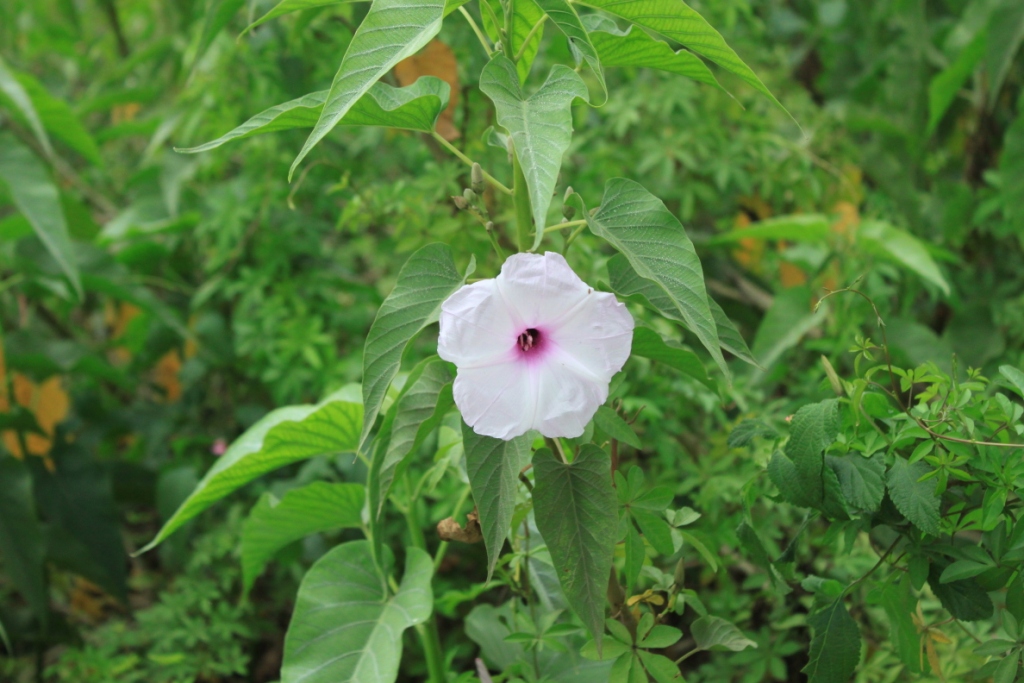
Railway Glory is a tropical, perennial climbing vine with tuberous roots, spreading extensively in the hills of India’s Western Ghats up to 1000m. The plant blooms throughout the year, growing aggressively over fences, shrubs and trees. The attractive flowers are purple, pink or rarely pinkish white. In Kerala it is commonly planted in gardens and around houses for insulation against the summer heat. It is also known by the names Cairo Morning Glory and Coastal Morning Glory. Continue reading

Velichappadu – Mediator between dieties and devotees

The Velichappadu or Komaram (oracle, or revealer of light) is an integral part of the rural life of Kerala. The Malayalam word Velichappadu literally means “the one who throws light on any problems”. Believed to be a representation of the deity in a temple, oracles often belong to a particular family. Dressed in red and adorned with heavy ritual ornaments and garlands, they often carry heavy hooked swords. The deity is believed to speak as the Velichappadu dances, delivering the frenzied forecasts. There are both male and female Velichappadus.

Continue reading

Chenille Plant (Acalypha hispida)

The chenille plant is a tropical flowering shrub naturalized in plenty in the Western Ghats of India. This tender perennials grows to a height of 8-10 ft and the soft hanging flowers resemble both the fabric chenille and the tail of a cat; hence it is also known as red hot cat’s tail. This ornamental flower is found in high range homes and spice gardens, made popular by its feathery long flower.

Continue reading

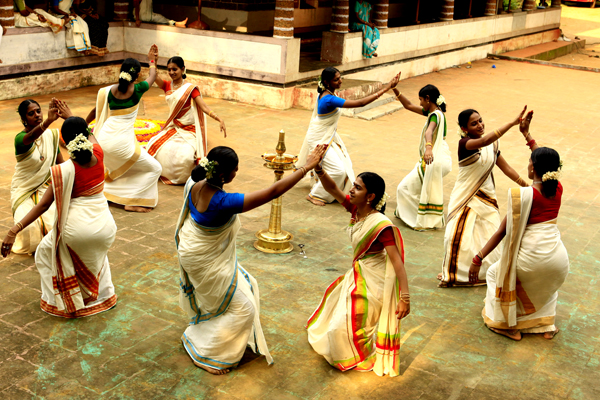
Thiruvathira Kali, Traditional Dance of Kerala

Since La Paz Group started working in Kerala last year, we have been in learning mode, especially with regard to cultural traditions. Dance is an essential part of Kerala’s cultural fabric. Thiruvathira kali is one of the typical dance forms here. This is a female group dance made up of simple, elegant steps. In  ancient times, women performed this dance in their homes during festivals and functions, giving it the Malayalam name aka Kaikottikali: aka-inside + kaikottikali-play claping hands. Lore has it that Thiruvathira Kali is remembering Lord Siva taking Parvathi as his wife. The group of women dress in typical Kerala style — mundu and neriyathu and the hair in a bun, adorned with jasmine garlands — and perform this dance during festival seasons. Kaikottikkali spreads the message of joy and also illustrates the emotions of a married woman towards her beloved and of the unmarried woman longing for one. Continue reading

Jasmine flower

Being native to tropical and subtropical regions, the many species of jasmine are either deciduous, evergreen, erect or climbing shrubs commonly found in India’s Western Ghats. It is widely cultivated throughout the world for its fragrant character.  Continue reading

Wild Periyar: May 27, 2012

This slideshow requires JavaScript.

Two days ago I camped with friends in the Periyar Tiger Reserve. We had wonderful sightings: a herd of elephants with a baby, a single bison grazing in the forest, and a bear (a very lucky sighting but from a long distance). It was nice to spot animals at a very close distance and to catch them on camera. I visit the reserve frequently as an official forest watcher, but it is a different experience for me every time.- Mr. Salim

Black Lily

The Black lily is an ornamental species of flowering plant found in the Western Ghats of India. It grows a cluster of beautiful blossoms from a taller, leafless flower stalk and are surrounded by broad bracts. The underground stem tubers of the plant are rich in starch. Continue reading

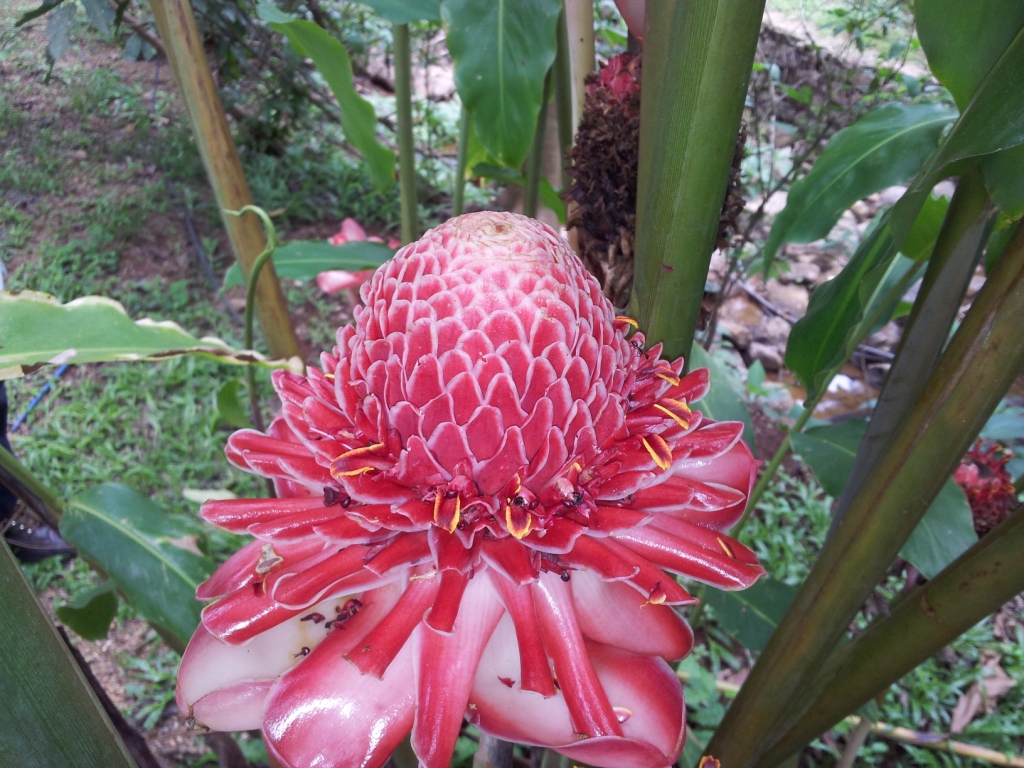
Red Torch Ginger (Pyramidosphaera)

Red torch ginger is a perennial tropical plant native to Malaysia and Indonesia but naturalized in the Western Ghats of India. The plant grows from rhizomes, bulbous root structures similar to culinary part of the ginger family. The main attraction of the plant is its sturdy cluster of bracts that vary from light pink to deep rose color and resemble a flaming torch, hence the name Red Torch Ginger. Continue reading

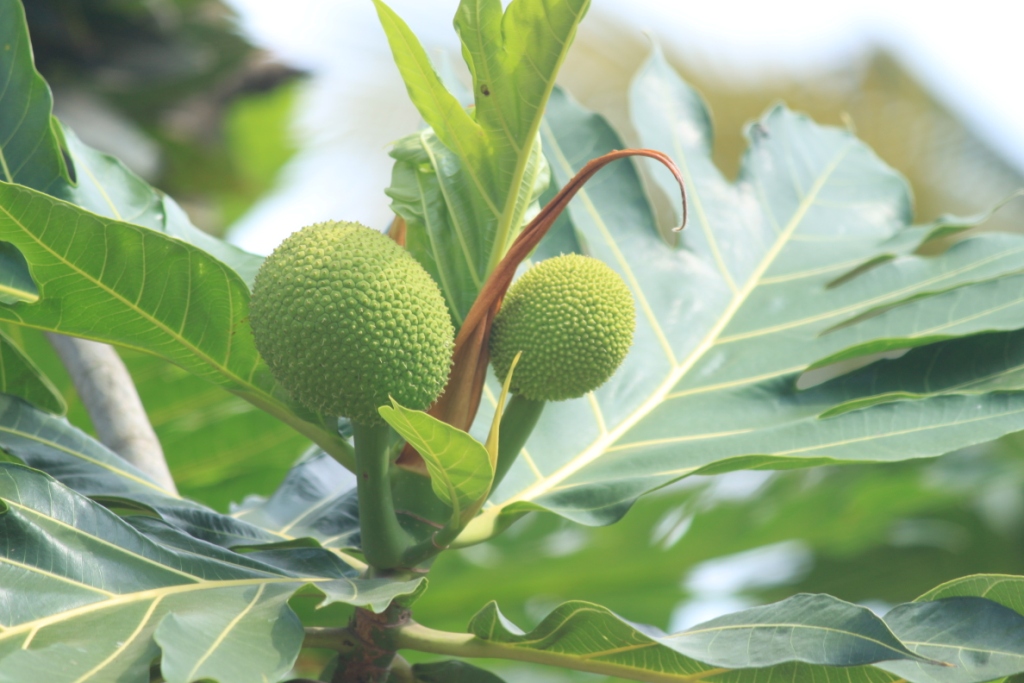
Breadfruit

Breadfruit is an equatorial tropical fruit species found at the elevation of 1500m in the Western Ghats of South India. The starchy, potato-like fruit has a taste and texture similar to freshly baked bread when cooked; and hence the name ‘Breadfruit’. The tree grows vigorously to a height of 25m and produce 120-200 fruits annually. Continue reading

Wild Periyar: May 22, 2012

This slideshow requires JavaScript.

Mr. & Mrs. Sutton staying at Cardamom County visited Periyar this morning and wanted to share their wonderful sightings with us.

While staying at Cardamom County we visited the Periyar Tiger Reserve and enjoyed a lot there. The first thing which attracted us was the Periyar’s naturally blessed landscape. Our kids were very excited and happy to spot elephants, wild dogs chasing sambar deer, bisons, wild boars with their piglets and some the birds too. We were so lucky to spot the elephants with the little one after a short period. This was a unique experience for us and our kids and we hope for the same in future. – Sutton Family

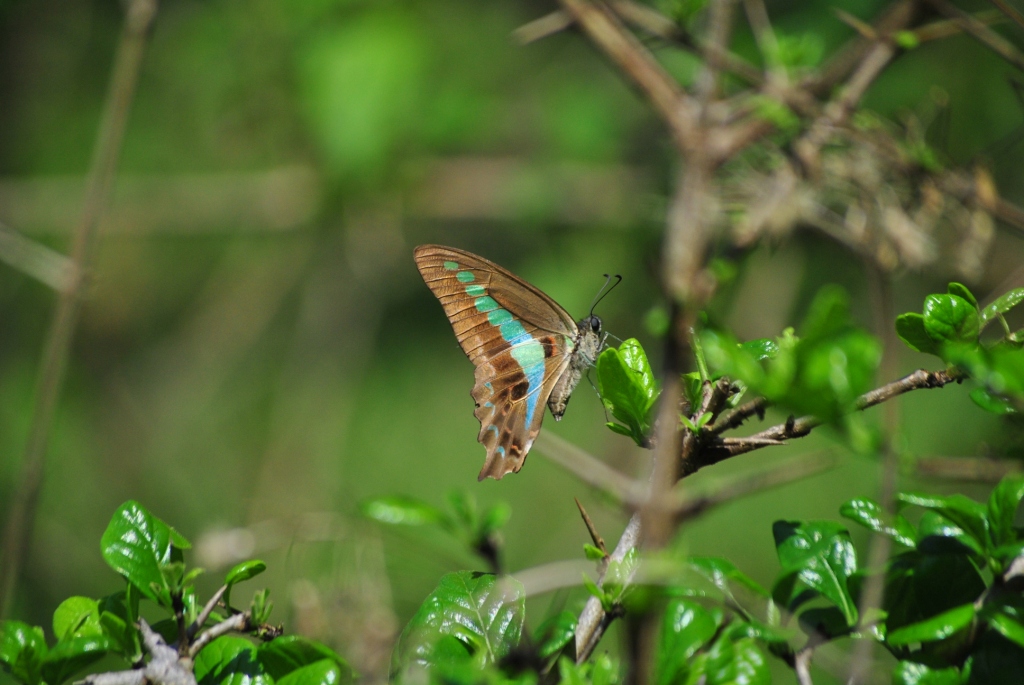
Common Bluebottle Butterfly (Graphium Sarpedon)

Common Bluebottle butterflies are frequently found in and around the wooded regions of the Western Ghats, especially in the Periyar Tiger Reserve. This handsome butterfly has a pale blue or greenish band running across the middle of its brown wings on the both sides. Continue reading

Periyar Sightings: May 20, 2012

A group from Flamingo Tours staying at Cardamom County has shared their experience of Periyar Tiger Reserve with us. Ms. Nirali Shah along with her group of 20 people visited Periyar and shared her photos and comments. Continue reading

Where Waters Meet


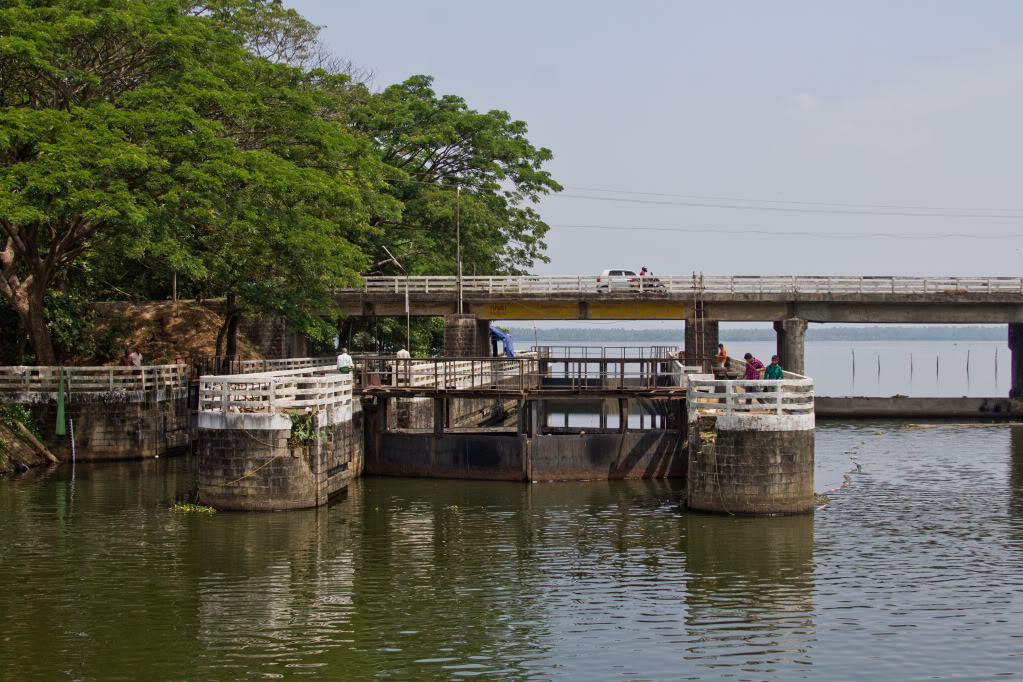
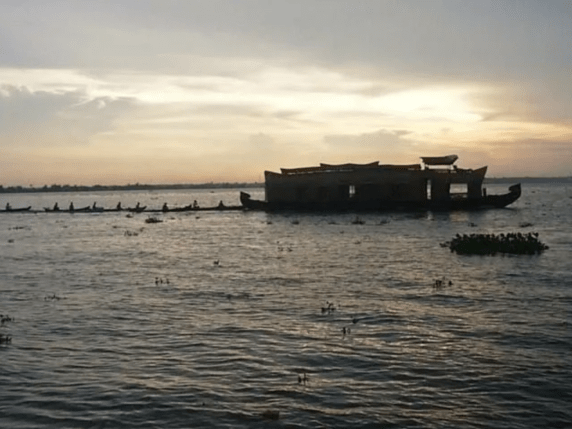
We were recently traveling by houseboat from Kumarakom across Lake Vembanad, the largest backwater in Kerala, toward Cochin and therefore the Arabian Sea.  This route requires passing through the Thannermukkom Bund, the largest mud regulator in India.

This barrier essentially divides Vembanad in half  – separating the brackish waters that flow from the Arabian Sea from the sweet river water that feeds into the lake.  For six months a year the dike is left open, particularly during the monsoon season, but historically the gates are closed on December 15th to assist agriculture in the Kuttanad District, where farming is done below sea level.

Like many areas of the world with significant geographical elements that effect both country and culture, the watery landscape is defined as either north of the bund or south of it. These discriptors are as elemental as global coordinates for people in the region.

We’d made this journey from North to South last year when the gates were still open, but this second, opposite journey required negotiating with the gatekeepers in order to continue our passage.

Even without understanding a word of Malayalam the process was fascinating. Continue reading

Marsh Glory (Ipomoea Acquatica)

Marsh Glory is a semi aquatic plant found commonly in marshy, water logged places of the India’s Western Ghats and hence the name ‘Marsh Glory’.  The plant grows in water as well as in moist soil with hollow stems and branching, bulbous roots. Continue reading

Rollin’ On The River

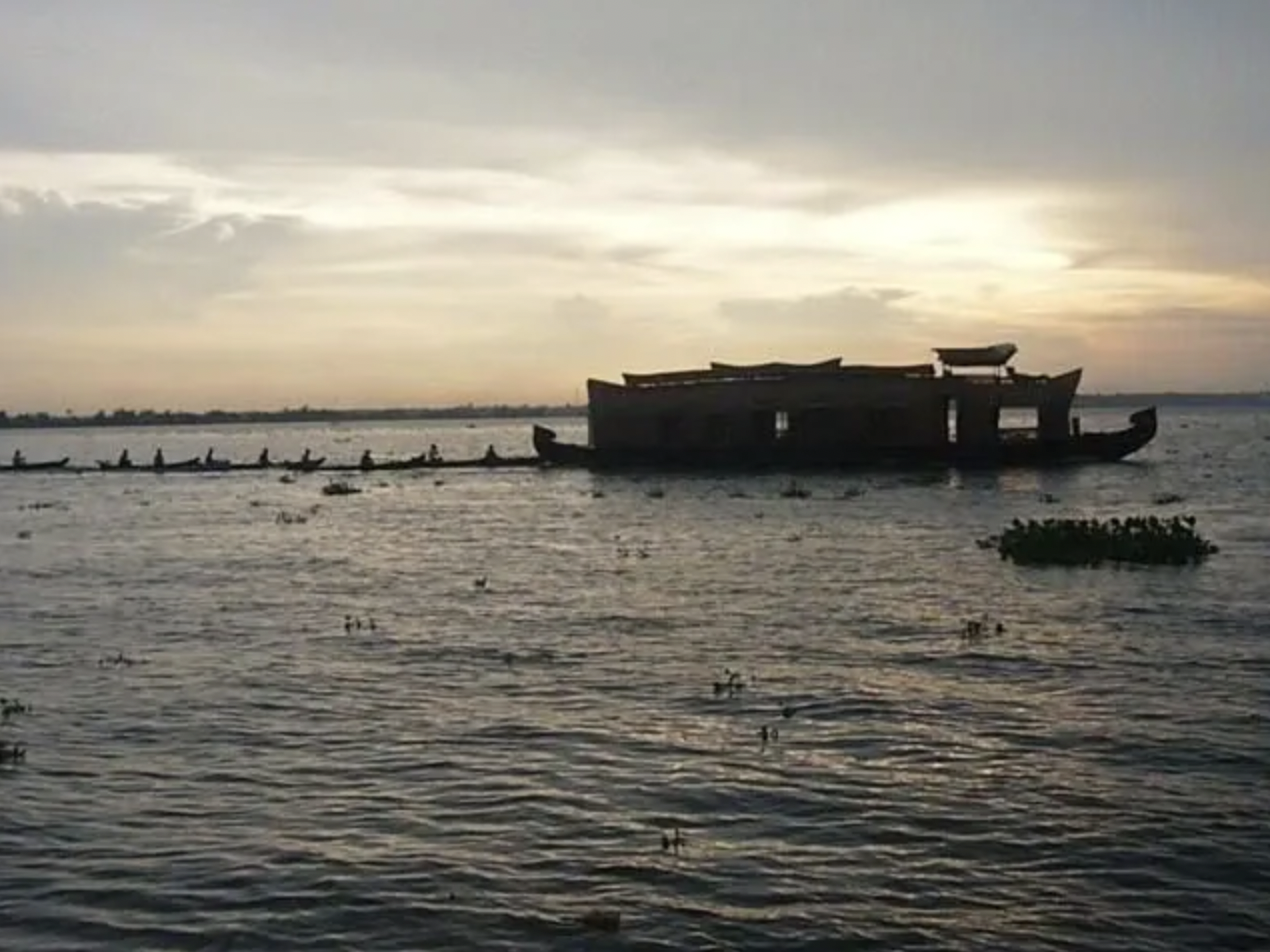
Our second excursion in India was heading from Fort Cochin to the backwater region of Kerala called Alleppey. (The actual Malayalam name is Alappuzha, the ‘zha’ letters forming the same sound as the Hungarian actress who I’m sure to date myself by mentioning.) Just the sound of these Indian names invoked a sense of the exotic and we weren’t disappointed. After a little adventure finding the River Escapes dock (a determined taxi driver made sure we arrived at the right location), we were welcomed with a refreshing drink of tender coconut and sipped away along with four other guests – a young Indian couple (honeymoon perhaps?) and an older English couple. As Dave and I began to settle in, we felt ourselves slipping into a lazy relaxation underlined with an excited sense of anticipation.  After a brief orientation, each group was escorted to the dock, where a row of beautifully maintained wooden houseboats waited for boarding.
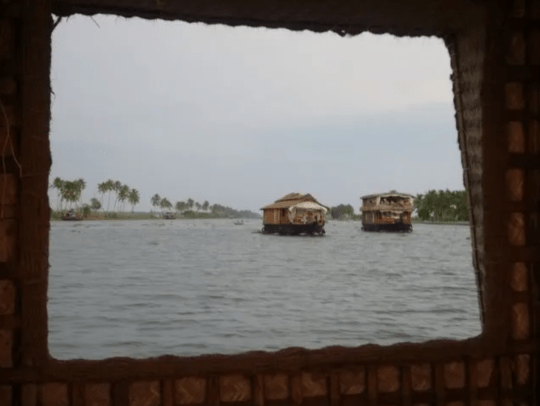
The houseboat held a casual elegance with spotless wooden floors, wide wicker chairs and large open-air windows. The dining table had a bowl of fresh fruit and before we even got our shoes off, the staff of three – the captain, first mate and chef introduced themselves, integrating a slight nod of the head, a typical Indian gesture indicating friendship or often agreement (depending upon the exchange at the moment).  With the captain comfortably seated at the helm, the steward pushed the houseboat away from the dock and the chef headed to the galley.

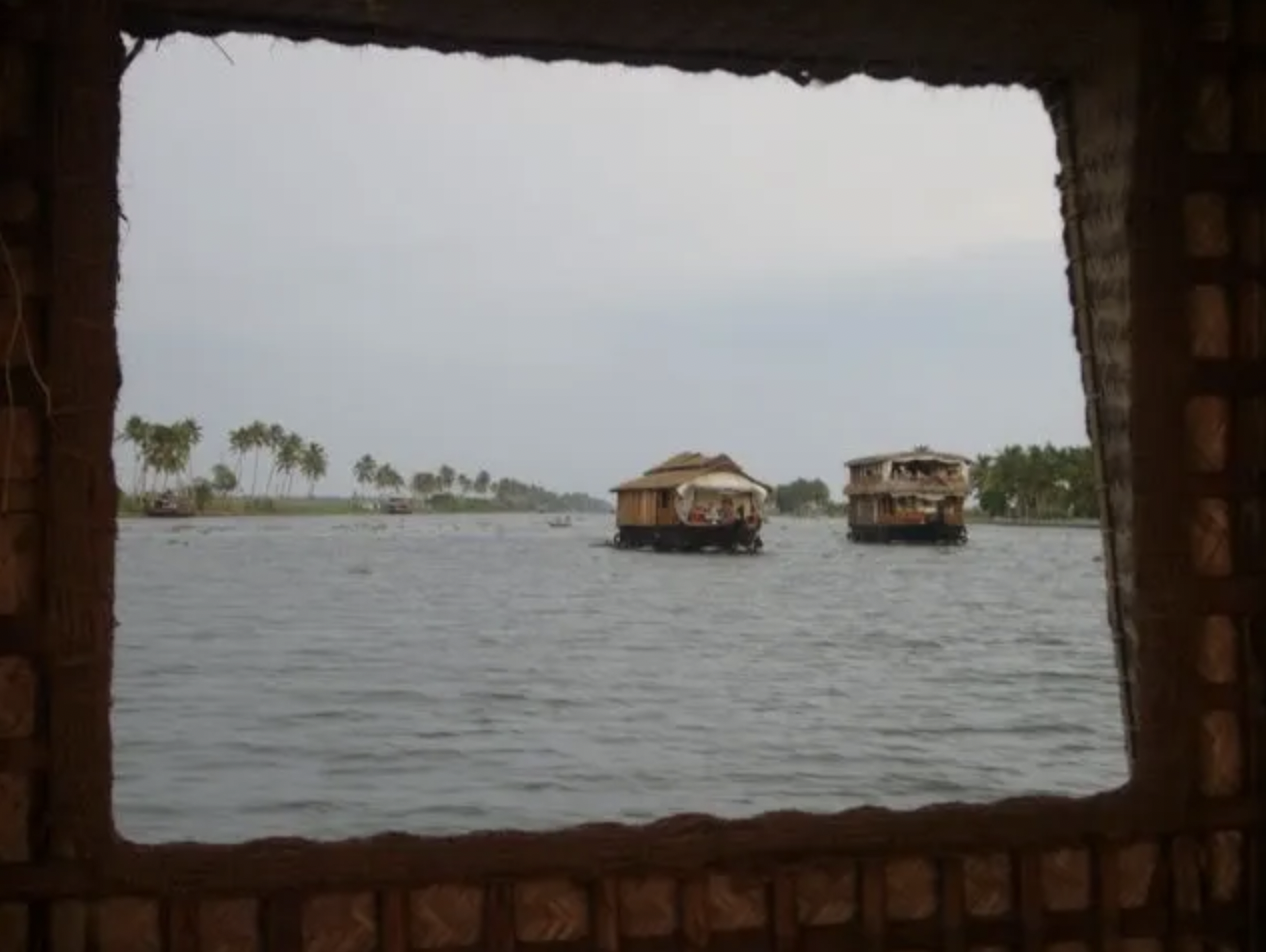
Having been a chef on the high seas myself, a highlight for me was following the chef to the galley as he prepared our lunch. (At the end of this blog, I’ve included some of the culinary tips I learned and have repeated, with great success, at home.)  The chef, a tall, slender man in a clean white chef’s coat and tall toque (making him all the more imposing in height) was shy but friendly, explaining his preparations as he skillfully cooked with a deliberateness that conveyed training and personal pride. Our fish, a favorite on the Kerala backwaters called Pearl Spot or Karimeen, was trippy looking, resembling more of a skeleton than an edible item, but it was delicious – crunchy and spicy. As the chef cooked, the captain remained attentive at the helm, navigating through the waterways that would eventually (for someone else) lead to the Arabian Sea. And we were not alone. There were dozens of other houseboats meandering their way down the river  – some had two levels with expansive balconies while others stood out with ornate window frames and decorative wood designs. And we all just moseyed along, with passengers waving to one another as we passed modest homes on the shore with clotheslines holding colorful saris. As the waterway became narrower, we found ourselves being led off the houseboat and into a long motorized canoe.  We had arrived at the backwaters. Continue reading

The Hill Mangoes of the High Range

These pictures were taken in the area of Periyar where one can find these hilly mangoes in plenty. Mangoes have grown for more than 4,000 years in India. Hilly mangoes are widely used in making pickles instead of being eaten as fruits. Mangoes require a tropical or subtropical, frost-free climate. Flowers Continue reading

Common Map Butterfly (Cyrestis thyodamas)

I have found this butterfly inside the core area of Periyar near Thannikudi-  a wireless station situated to the northern side of the reserve.  This butterfly is confined to the cool moist forests of the Western Ghats. It visits flowers as well as damp patches.  Continue reading