Look Away, But At Least Listen

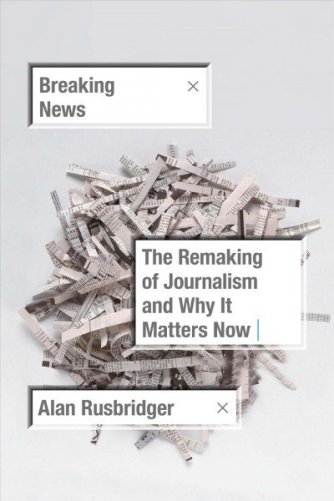
9780525576709.jpegWe have already linked to stories about life after warming enough that it borders on repetitive. No choice, as the book to the right makes very clear. This recent short video by the author will make you wince. There is something about visual cues on this topic that make it tougher to listen without being distracted. One of the better conversations with him is this one hour+, so if you only have that much time for him, make the best of it:

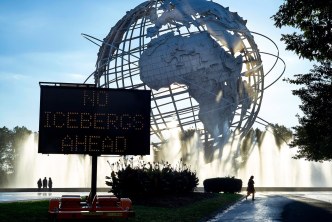
After years of hovering on the periphery of American politics, never quite the star of the show, it seems that climate change is having a moment. Continue reading

Stories Without End – The Grandmother Project

The Ogelthorpe University Museum of Art is one of the gems of the Atlanta area, for good reason. Not only does the museum have its own well curated collections, it receives visiting collections that are timely and powerful.

Tara Rice‘s Grandmother Project photographic series highlights the historically matriarchal influence within African cultures, coinciding with the project based in Senegal “promoting health, well-being and rights of women and children in developing countries through grandmother-inclusive and intergenerational programs that build on communities’ cultural values and resources.”

The photo series dovetails perfectly with the female centric collection of sculptures and masks in the sister exhibit, Stories Without an End.

Stories Without an End: Power, Beauty and Wisdom of Women in African Art of the Mehta Collection

January 18 – April 21, 2018

The exhibition Stories Without an End: Power, Beauty and Wisdom of Women in African Art of the Mehta Collection includes a selection of 50 classically carved wooden sculptures and masks drawn from the collection of Dileep and Martha Mehta.

The exhibition represents art from more than 25 ethnic groups spanning 12 countries. These objects are gathered into thematic groups including women in governance, maternity, idealized beauty, and female ancestors.

OUMA members Dileep and Martha Mehta are collectors of African and Asian arts. Their African art collection, including objects in this exhibit, has greatly benefited from diligent sourcing by and wise counsel of African Art dealers Tamba Kaba and Sanoussi Kalle.

This exhibition was developed by Elizabeth H. Peterson, OUMA director, and organized by Amanda Hellman, PhD, curator of African art, Michael C. Carlos Museum, Emory University.

Stories Without an End was inspired in part by the work of the Grandmother Project (GMP) an American 501(c)(3) nonprofit organization and a Senegalese NGO with representatives throughout the USA and abroad. GMP, with headquarters in Senegal, works with elders in West African villages to fight the maltreatment of young girls. This includes bettering maternal and child nutrition, reproductive health, and marriage standards. The exhibition title is inspired by the GMP initiative “stories without an ending,” which is a tool used to facilitate communication via the elders. For more about the Grandmother Project please visit www.grandmotherproject.org.

The Grandmother Project: Photographs by Tara Rice

January 18 – April 21, 2019

The Grandmother Project (GMP) develops community approaches that promote positive and sustained improvements in the lives of girls, children, women, and families by building on existing cultural and community values, roles and assets in southern Senegal. Continue reading

Green Is The New Black & Costa Rica Is Evergreen

merlin_151348896_9c4c515c-54c6-4612-a114-deaec4c35159-jumbo

Costa Rican wildlife was the theme of reception in February to formally introduce the government’s decarbonization strategy.

Somini Sengupta and her colleague Alexander Villegas published a story yesterday that resonates with the explanations Amie and I gave friends and family about our original decision to live in Costa Rica. It also resonates with the decision we made recently to return. In 2010 when we moved to Kerala it was not clear when, or even if, we would be back here. But our work in India was intertwined with Costa Rica’s evergreen pioneering role in the global conversation about conservation. So we are back. And the evergreen is appreciated, especially in the way Costa Rica’s president and his wife tell the story within a story.

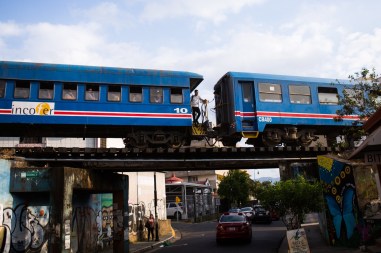
A diesel commuter train in San José. The government plans to replace older trains with electric models.

Despite it’s diminutive size, Costa Rica been at the forefront of the climate change conversation. While the country has only about 0.25% of the world’s landmass, it contains almost 5% of the world’s biodiversity. These statistics give both an added incentive to focus energies on shifting the juggernaut of climate change and the ecological soapbox from which to be heard.

Costa Rica has an infrastructural uphill climb, most specifically with transportation as is illustrated below, but the country has stood its ground successfully in the past. When we think of the country’s road network in the mid-1990s relative to the roads today, it gives one of many reasons to be optimistic:

Tiny Costa Rica Has a Green New Deal, Too. It Matters for the Whole Planet.

SAN JOSÉ, Costa Rica — It’s a green big deal for a tiny sliver of a country. Costa Rica, population 5 million, wants to wean itself from fossil fuels by 2050, and the chief evangelist of the idea is a 38-year-old urban planner named Claudia Dobles who also happens to be the first lady. Continue reading

15 Minutes Of Fame For A Good Cause

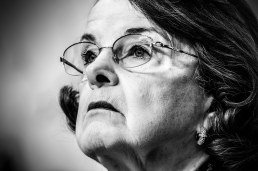
It takes the full 15 minutes of video above to fully appreciate what happened a few days ago. The soundbite 57 second version had me convinced that the senator was haughty and deserved to be schooled by these kids. But the full picture above, as often happens, provides better perspective, an attribute of little l liberalism. She was not quite the jerk I first thought.

McKibben-Dianne-Feinstein.jpg

In an exchange that went viral, the senator from California demonstrated why climate change exemplifies an issue on which older people should listen to the young. Photograph by Mark Peterson / Redux

There was a moment in time when a political slogan about something very important became a movement with potential; and then it seemed to disappear as quickly as it had appeared. That was my first exposure to political activism, and certainly not my last. But it provided an important lesson. Use the time you have on the stage wisely. I get reminded of this constantly in the last few years. This dispatch by Bill McKibben is what I take away from the moment these kids had in the spotlight:

Gaining Ground

Cleaning plastic waste from the oceans is an ever-present issue. We thank the UN News for sharing this example of collaborations that inspire present and future action.

Boat made of recycled plastic and flip-flops inspires fight for cleaner seas along African coast

After completing a historic 500km journey from the Kenyan island of Lamu to the Tanzanian island of Zanzibar, the world’s first ever traditional “dhow” sailing boat made entirely from recycled plastic, known as the Flipflopi, has successfully raised awareness of the need to overcome one of the world’s biggest environmental challenges: plastic pollution.

The Flipflopi Project was co-founded by Kenyan tour operator Ben Morison in 2016, and the ground-breaking dhow was built by master craftsmen Ali Skanda, and a team of volunteers using 10 tonnes of recycled plastic.

The boat gets its name from the 30,000 recycled flip-flops used to decorate its multi-coloured hull. Continue reading

Meat Where They Are

vegan-burger-1_custom-69b8aeff56bf284ed1349c739dc345cf0336364d-s1200-c85.jpg

Focusing less on the meat-free or health aspects of plant-based dishes, like this jackfruit burger — and more on their flavor, mouthfeel and provenance — could go a long way toward getting meat lovers to choose these options more often. That’s according to research by the World Resources Institute’s Better Buying Lab in conjunction with food chains, marketers and behavioral economists. Westend61/Getty Images

As much as I would like to dedicate another post to a shout out for Carolyn Kormann, since her latest posting is on a topic I am following closely, something else seems even more of the moment.

BWW-Pete_Buttigieg.jpg

Against the image of the millennial left, Pete Buttigieg appears to be a relatively prosaic Presidential candidate, but, in his own understated way, he is suggesting a sharp break with the past. Illustration by Tyler Comrie; Source Photograph by Alex Wong / Getty

Just after reading this brief profile of a remarkable person, I read something as seemingly different as could be in this story about changing food preferences by Maria Godoy. In the profile, this quote two thirds of the way through stood out:

…“So much of politics is about people’s relationships with themselves,” Buttigieg said. “You do better if you make people feel secure in who they are.”…

In the food story, just reading the caption in the image above you get the same message: meet people where they are. As sensible in politics as in changing food preferences. For all our attention to the important ecological reasons to reduce or even better to eliminate animal protein consumption, better to appeal to what most people most quickly respond to, namely their existing preferences. Meat where they are seems like the best option, so show how another option is tastier, healthier, or whatever is the most salient point for a particular type of consumer according to Godoy’s reporting:

…”The language for meat, and beef in particular, just sounds so much more delicious,” says Daniel Vennard. And labels like “meat-free,” “vegan,” and “vegetarian” tend to be turn offs for consumers. “People don’t create positive associations with how it’s going to taste and don’t feel it’s very indulgent.”

And that’s a real problem for Vennard: As head of the World Resources Institute’s Better Buying Lab, it’s his job to work with food companies, behavioral economists and marketing experts to find ways to get people to eat more sustainably. Or, as he puts it, to make “this party sound even better than the other party.”…

When Pictures Are Worth a Thousand Words

_105461276_mediaitem105461275

With none of the usual traffic clogging the capital, Sunday football devotees took to the streets.

I remember car free days in Paris with pleasure, sunny autumn weather topped by cyclists, pedestrians and skaters enjoying wide boulevards and narrow city lanes alike. New York City has a smaller scale version, with a 2 mile stretch of lower Broadway, plus a mile up in Washington Heights.

_105461998_mediaitem105461997

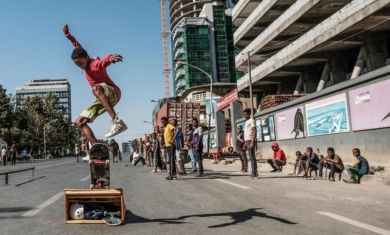
The event also allowed skateboarders to show off their skills.

No traffic days taking place in developing countries somehow feels all the more impactful, especially considering it’s a monthly event, rather than an annual one! Thanks to the BBC for bringing this to our attention with the story No traffic in Addis Ababa as Ethiopia marks Car Free Day:

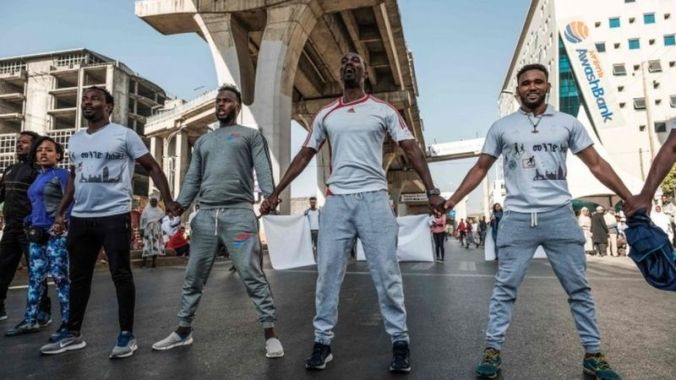
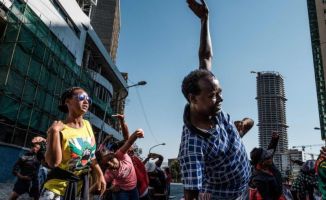
Thousands of people have marked Car Free Day in cities across Ethiopia by walking and exercising.

_105462371_052075291-1

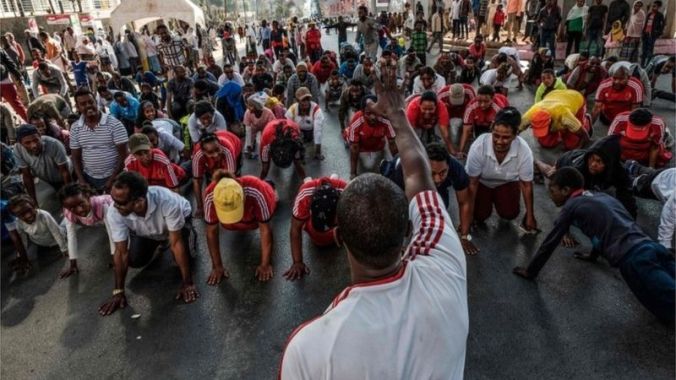
The measure was implemented by the government of Prime Minister Abiy Ahmed, who was came to office last April after his predecessor resigned.

Major roads were shut as Health Minister Amir Aman led the walk in the capital, Addis Ababa.

This was the first Car Free Day held in Ethiopia to promote healthy living, and to reduce pollution on roads usually clogged with traffic.

Tents were also set to offer free health checks to those who were walking and exercising.

_105461278_mediaitem105461277

All photos by Eduardo Soteras, AFP

Mr Amir is trying to change that and Car Free Day will be held on the last Sunday of each month, he adds. Continue reading

99% Success, A How-To Reminder


2438

The ban on chlorofluorocarbon (CFC) gases has been an incredible success story. Composite: Alamy/Guardian Design

Thanks to Jonathan Watts for this reminder:

How to stop the climate crisis: six lessons from the campaign that saved the ozone

Thirty years ago, all 197 countries got together to ban the gases damaging the Earth’s ozone layer. Now we need to unite to combat an even greater threat. What can we learn from 1989?

Amid the anti-globalist chest-thumping of Brexit, Donald Trump, and the Brazilian president, Jair Bolsonaro, it may sound like the stuff of folklore. But there was a time in the recent past when all the countries of the world moved quickly to discuss a common threat, agreed an ambitious plan of action and made it work.

The Montreal protocol, which came into effect 30 years ago, was drawn up to address the alarming thinning of the ozone layer in the Earth’s stratosphere. It was the first agreement in the history of the United Nations to be ratified by all 197 countries. Since it came into effect on 1 January 1989, more than 99% of the gases responsible for the problem have been eradicated and the “ozone hole” – which, in the late 80s, vied for headline space with the cold war, Diana, Princess of Wales, and Madonna – is receding in the sky and the memory. Continue reading

Liberalism, Leadership, & The Fourth Estate

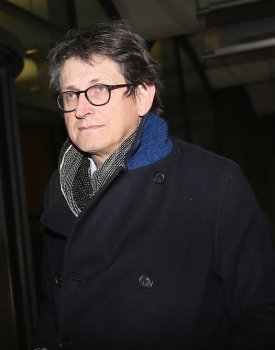
9780374279622_custom-5d7f03d8b126fd10509c68fad812ee37387aae6b-s600-c85When we started this platform in 2011 our primary interest in the Guardian was its excellent environmental reporting, and at least one opinion writer whose 2012 environmental views made him regularly welcome in our pages ever since. Today I can amplify how important this newspaper is based on an interview I just listened to with its former longtime editor, the author of this book to the right.

He mentions several points that I have been prone to believe over the last two decades, particularly about the poisoning of the well of public discourse by Rupert Murdoch’s approach to the business of media.

In the classic sense of liberal perspective that should make me think twice, so as not to lean into my own biases. He also helps me to understand the quite unique value of the Guardian, which I was also already prone to believe. Their endowment and general funding model, which I had only vaguely known about, is well explained in this interview and frankly, difficult as it is to be these days, inspiring. Careful as I may be about confirmation bias, I pass this suggestion along; listen to the interview here (just over half an hour), or read the summary below:

gettyimages-453300937_wide-6c2265f11615cc079ab72d2d1e0808c72ab720f4-s1200-c85

On Dec. 3, 2013, Guardian editor Alan Rusbridger faced questions from the British Parliament about his newspaper’s decision to publish material leaked by former NSA contractor Edward Snowden.
Oli Scarff/Getty Images

Alan Rusbridger knows a thing or two about high-stakes journalism.

During his 20-year tenure running the British newspaper The Guardian, he collaborated with NSA contractor Edward Snowden and WikiLeaks founder Julian Assange on blockbuster stories drawn from secret government documents. Though Rusbridger left The Guardian in 2015, he remembers the stress vividly.

“We were publishing every minute of the day around the world,” he says. “It’s a matter of deadlines and never enough information and people trying to sue you and generally harass you.” Continue reading

Graphics For Better Comprehension

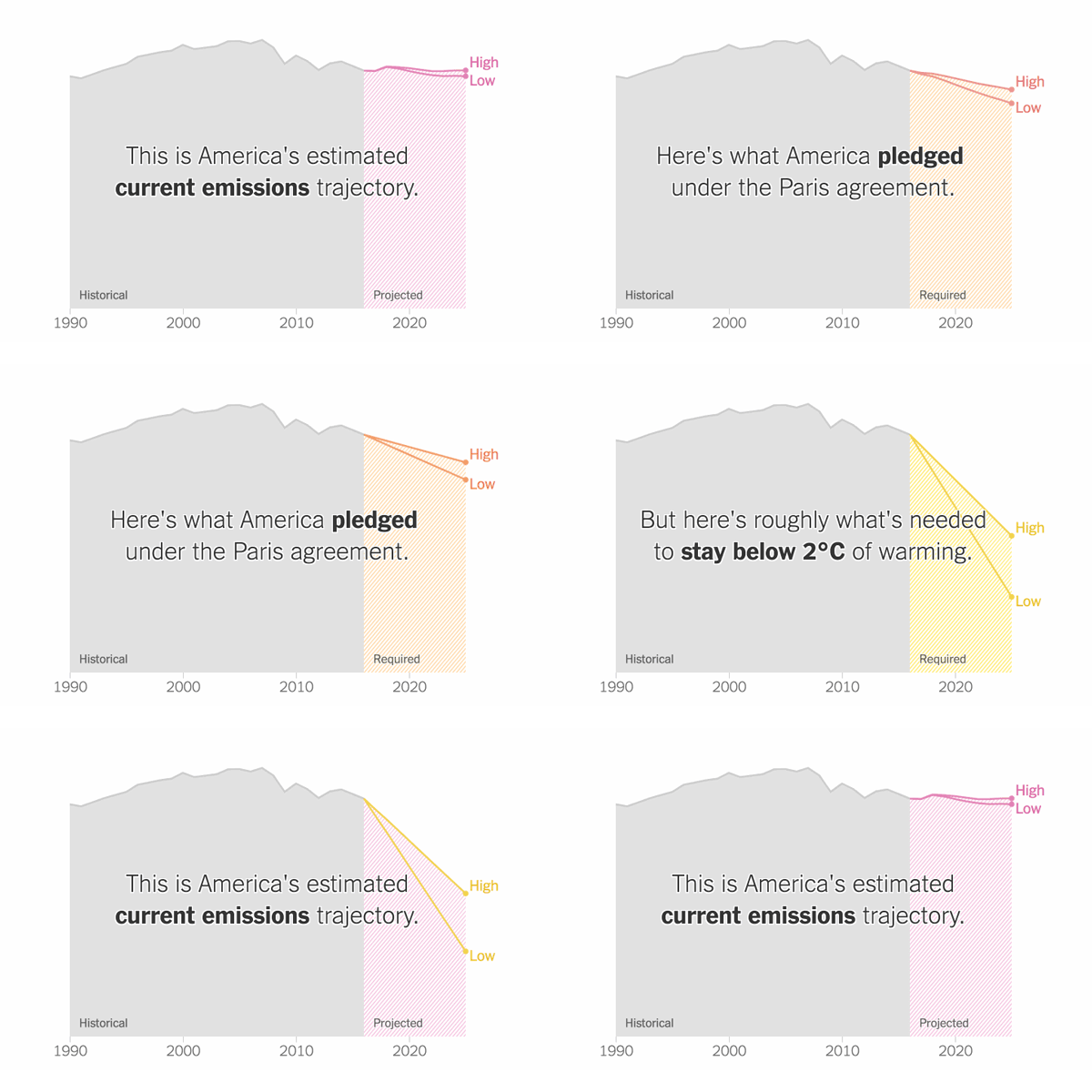
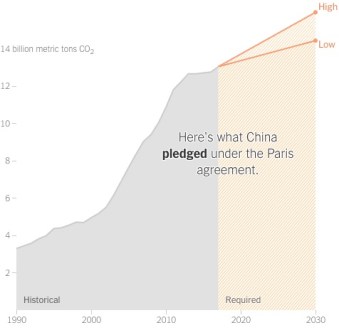
world-emissions-paris-goals-not-on-track-promo-1544191333747-threeByTwoSmallAt2X-v18.gif

Yesterday I was struck by a set of graphics that helped me see an old story in a new light. That was not a particularly important old story, as history of the planet goes; but it gave the manufacturing consent theme a new shine–in technicolor, black and white, and finer shades of gray. Today, on a story that is definitely of historic proportions related to the planet, my thanks again to Brad Plumer and his occasional writing partner Nadja Popovich, especially for its accompanying graphics:

The Climate Museum’s Climate Signals


My only wish is to have been able to share this earlier, during the exhibition’s run. But better late than never.

Kormann-Queens-Climate-Signals.jpg

The “Ask a Scientist” event gives curious passerby the chance to pose their climate-related questions to scientists stationed around New York City. Photograph by Justin Brice Guariglia

Thanks to Carolyn Kormann for another fresh dose of creative rational thinking, with her short piece Ask a Scientist: How to Deal with a Climate-Change Skeptic:

Consider The Little Free Library


merlin_145782510_153e132c-f7fb-49f0-a653-fb995e50eefb-jumbo.jpg

This Little Free Library in the McKinley neighborhood of Minneapolis appears to have a small reading loft, big enough for a city mouse.

merlin_145782399_fb9973eb-f313-455f-b5bd-bf309fe301e8-superJumbo

Father Time stands sentry at a Little Free Library in the rough-hewn Payne-Phalen neighborhood of St. Paul.

We made a decision early on, for reasons I do not recall clearly, to avoid linking out to obituaries–even for heroes whose lives have resonance in our pages. This one made me think twice about that decision.

In part it is because we have paid an enormous amount of attention to libraries over the years. Also, this man’s innovation (did we really never feature it in our pages before?) was clearly in the realm of what we call entrepreneurial conservation. And maybe, just a bit, I like the idea that the first little free library (the last one displayed below) was a tribute to the innovator’s mom.

Thanks to the New York Times for getting this story just right:

Libraries, Writ Small

merlin_145782294_bdbd9ee4-8a2e-44b1-bd0b-727c7302e59b-jumbo

This Little Free Library enjoys the open space of Triangle Park in Minneapolis.

Todd Bol’s Little Free Library boxes, which blend the form of folk art with the function of a community water cooler, have popped up in all 50 states and in 88 countries.

By Katharine Q. Seelye Photographs by Ethan Jones

merlin_145782540_8b4f0381-47bd-470d-9cbc-c1b34745c787-jumbo.jpg

This Minneapolis library is a classic of the genre, with its Plexiglass front and gable roof, supported on a sturdy post.

Todd Bol was simply paying homage to his mother, a schoolteacher and lover of books. He built a doll-sized schoolhouse, filled it with his mother’s books and put it out for his neighbors in Hudson, Wis., as a book exchange.

Today, just nine years later, more than 75,000 such “Little Free Libraries” dot the globe, from San Diego to Minneapolis, and from Australia to Siberia.

merlin_145782390_b76569b1-e928-4a57-b546-1162ae75ae3f-superJumbo.jpgWhy did they catch on? For starters, they promote a friendly, sharing economy. No one tracks who took what. There’s no due date. No fines. You might never return a book. You might leave another instead. And, they are inherently cute. As Mr. Bol recalled, his neighbors “talked to it like it was a little puppy.”

This week, many bore a white ribbon in tribute to Mr. Bol, who died Oct. 18, in Minnesota at the age of 62. Here, a photo-essay of some of the little libraries near his hometown.

See all the other photos here.

Reckoning With Doom

Kolbert.jpgWe have featured work by Elizabeth Kolbert since the earliest days of this platform, about twice a year. A year ago we linked to The Fate of Earth, which remains a favorite.

LongformShe has chosen to focus her work on the existential environmental challenges created by mankind, and unflinchingly reports on what we collectively are, and more often are not, doing about those challenges. The word doom always comes to mind when I see her name or think about her work. Today I am recommending this rare interview with her, in which she shares personal reflections on what it is like to do the work she does, and about 40 minutes in touches on how and why she persists with her work, even knowing that most people simply cannot bear to face the facts she is presenting:

Elizabeth Kolbert, author of Field Notes from a Catastrophe: Man, Nature, and Climate Change and The Sixth Extinction: An Unnatural History, is a staff writer at The New Yorker.

“I still nurse the idea in my heart of hearts that something you write, that there’s some key to this all. Continue reading

Carbon Insurance As Heritage Insurance

Kormann-YurokCarbonCredits-Primary.jpg

A carbon-offset project, the first of its kind in the United States, has become the Yurok’s main source of discretionary income, helping the tribe buy back thousands of acres of land. Photograph by Joel Redman

Carbon trading has featured, or at least been mentioned, only rarely on this platform, now that I stop to check. That seems impossible. But the scheme with so much promise has simply not taken off. Indigenous heritage, on the other hand, has featured in dozens of stories here since we started in 2011. Thanks to Carolyn Kormann for bringing this story to my attention, helped by two captivating photos and the fact that it highlights the approach of the Yurok Tribe (a community I had not heard of before):

Kormann-YurokCarbonCredits-Secondary2

“I think we did a good thing by saving the trees, but I’m not happy with it,” Jene McCovey, a tribal elder, said. “It’s not viable. It allows polluters to pollute.” Photograph by Joel Redman

How Carbon Trading Became a Way of Life for California’s Yurok Tribe

When Marty Lamebear is not fighting fires, he is starting them. In the past few years, as a member of the Yurok Tribe Forestry Program’s fire department, he has been helping revive the controversial practice of prescribed burns to protect and restore the coastal redwood forests of northern California. Lamebear is also a hunter, fisherman, and dancer. In his free time, he makes tribal regalia for ceremonial dances from parts of elk, deer, minks, and porcupines, which he shoots or finds already dead, and from frozen eagles that he orders from the U.S. Fish and Wildlife Service. A prescribed burn, what Lamebear calls a culture burn, creates prairies within the forest, which attract those animals. “At first, we couldn’t really tell its effects,” he said. “But, after about six years now, we can honestly start seeing the landscape open up, animals come around.” They also serve another purpose, he said. “It’s insurance for our carbon.” Continue reading

Trees, Cities & Happiness

merlin_144034221_4ee0b063-798b-4669-80dc-817bcbc10dfe-superJumbo.jpg

A tree in Riverfront Park competes for grandeur with Nashville’s iconic At&T building. Credit William DeShazer for The New York Times

PlantTreeCity.jpgI just learned of an urban tree-planting initiative on a day when the news shows purposeful indifference about climate change on the part of a powerful country’s elected leader, on the same day when the news also shows that an economist considered a pioneer of environmental economics is receiving a prestigious prize and what he said when he learned of his being awarded the prize:

“Once we start to try to reduce carbon emissions, we’ll be surprised that it wasn’t as hard as we anticipated. The danger with very alarming forecasts is that it will make people feel apathetic and hopeless.

“One problem today is that people think protecting the environment will be so costly and so hard that they want to ignore the problem and pretend it doesn’t exist. Humans are capable of amazing accomplishments if we set our minds to it.”
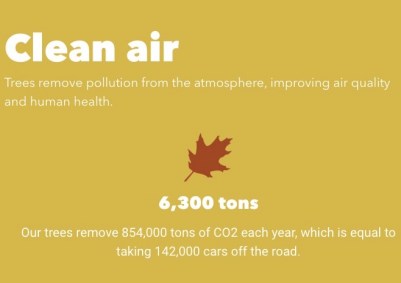
PlantTreesCity2Let’s decide together to do something, seems to be his message. I learned about this urban tree-planting initiative, news of a president’s abdication of responsibility, and this economist’s optimistic message on the same day I read about a 15-year old climate activist who has decided to do something where she sees her government failing to take action. She has decided at a very young age to do what she can regardless of the daunting odds. So thanks to Margaret Renkl a Nashville-based contributing opinion writer for The New York Times, for bringing this initiative to my attention, as a reminder to do something:

More Trees, Happier People

When cities grow, green space dies. Replanting it has been shown to lift the human spirit.
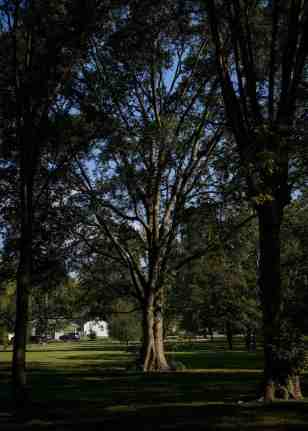
merlin_144034215_0e5eb0e9-e3ad-4046-b39b-a6189d715df7-superJumbo

A tale of two trees in Nashville. A mature tree in England Park, left, and a newly planted tree at Wright Middle School.

NASHVILLE — The scene in a tiny pocket park outside Plaza Mariachi here on Nolensville Pike last Wednesday was like a tableau from a Norman Rockwell painting, 21st-century style. Surrounded by signs advertising the Hispanic Family Foundation, Dubai Jewelry, the Dominican Barber Shop and restaurants offering Peruvian, Chinese, Mediterranean and Indian food — as well as a Game Stop franchise and H&R Block — was a small sign that read, “Today: Free trees.”

merlin_144034152_9a1c43d3-ccb7-42c0-bfd7-979917608536-superJumbo

Photographs by William DeShazer for The New York Times

The arrow on the sign pointed to a pop-up canopy where the Nashville Tree Foundation was hosting its fourth tree giveaway of October. A family standing under the canopy was posing for a photo with the sapling they had just adopted. Carolyn Sorenson, executive director of the foundation, was taking the picture: “Say ‘trees’!” she said.

The tree giveaway at Plaza Mariachi happened to fall on the very day that Nashville’s mayor, David Briley, announced a campaign to restore and enlarge the city’s tree canopy. The effort, called “Root Nashville,” will be overseen by the city and the Cumberland River Compact, an environmental nonprofit, and funded through a combination of public, corporate, foundation and private dollars. Together with several municipal departments and other nonprofit organizations, the initiative aims to plant 500,000 trees in Davidson County by 2050.

Many of these newly planted saplings will replace very large, very old trees that have been lost to Nashville’s meteoric growth — a population increase of more than 45 percent since 2000. As the city has grown, the city’s trees have fallen: deliberately felled by developers to make room for new construction or unintentionally killed as a side effect of nearby building. Just since 2008, the tree canopy in the urban core has dropped from 28 percent to 24 percent, a loss of roughly 9,000 trees a year. Continue reading

Analyzing Local Sources Of Big Carbon Footprints

lead_720_405.png

GOOGLE

What gets measured gets managed. In the realm of climate science, national governments have the scale and responsibility to be involved in measurement. But if a skeptic is in charge of the government apparatus, good luck with that. With the national government of one of the big carbon footprint countries abandoning science and dropping out of the fight to reduce climate change, one of that country’s biggest companies is stepping up to offer an alternative. It may be too little too late but under the circumstances we may have no choice but to cheer it on:

Google’s New Tool to Fight Climate Change

The company will begin estimating local carbon pollution from cities around the world.

In the next decade or so, more than 6,000 cities, states, and provinces around the world will try to do something that has eluded humanity for 25 years: reduce their emissions of greenhouse gases, which warm the atmosphere and cause climate change.

The city-level leaders overseeing this task won’t have the same tools available to their national peers. Most of them won’t have an Environmental Protection Agency (or its equivalent), a meteorological bureau, a team of military engineers, or nasa. So where will they start? Never mind how to reduce their city’s greenhouse-gas emissions; how will they know what’s spewing carbon dioxide in the first place?

Maybe Google will do it for them. Or, at least, do it with them.

Google has started estimating greenhouse-gas emissions for individual cities, part of what it recently described as an ambitious new plan to deploy its hoard of geographic information on the side of climate-concerned local leaders. Continue reading

The Most Important Infrastructure

New York Library Historic Rooms

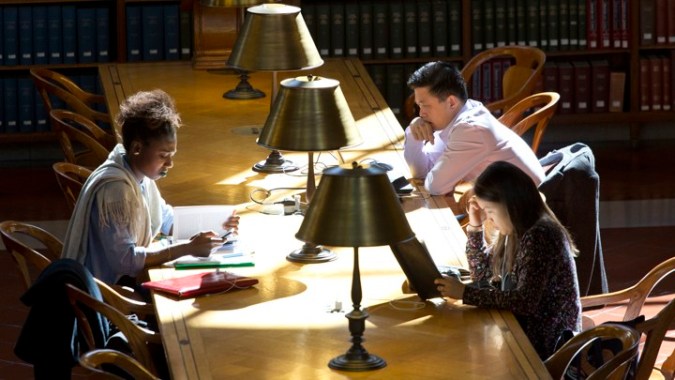
People read in the Rose Main Reading Room of the New York Public Library MARK LENNIHAN / AP

This podcast featuring Eric Klinenberg resonated with many of our readers, and this article he wrote for the Atlantic may be the next best step in advance of reading his book:

Worry Less About Crumbling Roads, More About Crumbling Libraries

America’s social infrastructure is falling apart, and it’s hurting democracy.

Every four years, the American Society for Civil Engineers issues grades for the nation’s infrastructure. In the most recent evaluation, released in 2017, America’s overall infrastructure score was a D+, the same as in 2013. Although seven systems, including hazardous waste and levees, received modestly better grades than in the previous assessment, transit and solid waste, among others, did worse. Aviation (D), roads (D), drinking water (D), and energy (D+), retained their miserably low scores. Continue reading

Riverford, A Model Of Organic Farming In The UK

We first heard the name of the farmer on a favored music-oriented podcast, and then the name of his farm. After listening to his story, and his musical tastes, we had to learn more:

guy-singh-watson-4.jpgSelf-confessed veg nerd, Guy Singh-Watson has over the last 30 years taken Riverford from one man and a wheelbarrow delivering homegrown organic veg to friends, to a national veg box scheme delivering to around 50,000 customers a week.

Guy is an inspirational, passionate, opinionated and admired figure in the world of organic farming, who still spends more time in the fields than in the boardroom. Continue reading

Teaching Lego To Play Well By Eliminating Plastic

merlin_137674503_7ad52e7b-462c-4daf-897b-9940119cd67b-jumbo.jpg

Tim Brooks, Lego’s vice president for environmental responsibility, says the company emits about a million tons of carbon dioxide each year. Credit Carsten Snejbjerg for The New York Times

For a company, and a product, that has been a part of so many lives for so long–and especially one whose name means to play well, it is still a shock to be reminded of their carbon footprint. And three years after first reading about their commitment, it is good to read details of their plan and progress:

Lego Wants to Completely Remake Its Toy Bricks (Without Anyone Noticing)

merlin_137674470_486eb273-ba3b-4808-857f-956b9cb7f533-jumbo.jpg

At Lego, petroleum-based plastics aren’t the packaging, they’re the product — and the bricks making up these dinosaurs have barely changed in more than 50 years. Credit Carsten Snejbjerg for The New York Times

BILLUND, Denmark — At the heart of this town lies a building that is a veritable temple to the area’s most famous creation, the humble Lego brick. It is filled with complex creations, from a 50-foot tree to a collection of multicolored dinosaurs, all of them built with a product that has barely changed in more than 50 years.

A short walk away in its research lab, though, Lego is trying to refashion the product it is best known for: It wants to eliminate its dependence on petroleum-based plastics, and build its toys entirely from plant-based or recycled materials by 2030. Continue reading

Vegetarianism For Footprint Reduction

3000 (2).jpg

Replacing 50% of meat consumption with a vegetarian diet would push back the overshoot date by five days. Photograph: Scott Olson/Getty

Our vegetarian diet ambitions are strengthening for all kinds of reasons. Footprint reduction among them. Thanks to our colleague Mathis Wackernagel for his regular reminders of the anything but regular footprint growth humanity imposes on the planet each year:

Earth’s resources consumed in ever greater destructive volumes

Study says the date by which we consume a year’s worth of resources is arriving faster

Humanity is devouring our planet’s resources in increasingly destructive volumes, according to a new study that reveals we have consumed a year’s worth of carbon, food, water, fibre, land and timber in a record 212 days.

As a result, the Earth Overshoot Day – which marks the point at which consumption exceeds the capacity of nature to regenerate – has moved forward two days to 1 August, the earliest date ever recorded.

Earth Overshoot Day falls on 1 August this year – marking the point at which consumption exceeds the capacity of nature to regenerate

OverShot.jpg

Guardian graphic. Source: Overshootday.org

To maintain our current appetite for resources, we would need the equivalent of 1.7 Earths, according to Global Footprint Network, an international research organisation that makes an annual assessment of how far humankind is falling into ecological debt. Continue reading