Butterflies, The Ultimate Muse

2064_f8bf09f5fceaea80e1f864a1b48938bf

Mary Ellen Hannibal, author of The Spine of the Continent, and winner of Stanford’s Knight-Risser Prize in Western Environmental Literature, sheds light on the importance of butterflies to one of the previous century’s great writers:

The life and work of the novelist Vladimir Nabokov referenced many symbols, none so much as the butterfly. Butterflies prompted Nabokov’s travels across the United States, exposing him to the culture and physical environment that he would transform into his best-known novel, Lolita. Butterflies motivated his parallel career in science, culminating in a then-ignored evolutionary hypothesis, which would be vindicated 34 years after his death using the tools of modern genetic analysis. And it was the butterfly around which some of Nabokov’s fondest childhood memories revolved. Continue reading


The Rich Life Of Samuel Beckett

This slideshow requires JavaScript.

For those of us (and there is more than one of us among Raxa Collective contributors to this blog) who took advanced literature courses during high school in the 1970s, when Samuel Beckett was still writing and directing, this post on the New Yorker‘s website is a thrill.  Beckett was taught in a manner that made him seem to a teenager like a contemporary Shakespeare.  We had no images of him to know how amazing his face was, nor any details of his life until a biography that came out after his passing.  So, we appreciate this:

In this week’s issue of the magazine, Hilton Als reviews the current production of Samuel Beckett’s “Waiting for Godot,” directed by Sean Mathias, at the Cort Theatre.

In contrast to the minimalism of his plays, Beckett himself led a rich life. An Irishman in Paris, he met James Joyce in the nineteen-twenties, and the author took Beckett under his wing as a research assistant for a book that eventually became “Finnegans Wake.”

Continue reading

Jack London & Literature’s Role In Environmental History

Caleb Crain‘s book review of this biography will no doubt be of interest to any of our readers who follow Seth’s work on the history of environmentalism.  Subscription to the New Yorker is required, and worth it, but here is the blurb available to all prior to passing the pay wall:

Jack London never felt that he got enough meat. When he was seven, he stole a piece from a girl’s basket—an incident that he called “an epitome of my whole life.” Although his mother claimed that “he didn’t go hungry in our house!” and a childhood friend recalled being served steak during a visit, London insisted that he had been deprived. “It has been hunger,  Continue reading

Reading, Libraries & Good Citizenship

'We have an obligation to imagine' … Neil Gaiman gives The Reading Agency annual lecture on the future of reading and libraries. Photograph: Robin Mayes

‘We have an obligation to imagine’ … Neil Gaiman gives The Reading Agency annual lecture on the future of reading and libraries. Photograph: Robin Mayes

Libraries still have enough friends that we do not yet count them out, but the challenges they face are undeniable. Thanks to the Guardian‘s coverage of one prominent writer’s address on this important topic:

Neil Gaiman: Why our future depends on libraries, reading and daydreaming

A lecture explaining why using our imaginations, and providing for others to use theirs, is an obligation for all citizens

It’s important for people to tell you what side they are on and why, and whether they might be biased. A declaration of members’ interests, of a sort. So, I am going to be talking to you about reading. I’m going to tell you that libraries are important. I’m going to suggest that reading fiction, that reading for pleasure, is one of the most important things one can do. I’m going to make an impassioned plea for people to understand what libraries and librarians are, and to preserve both of these things. Continue reading

Journey to the Center of the Earth, Via Iceland

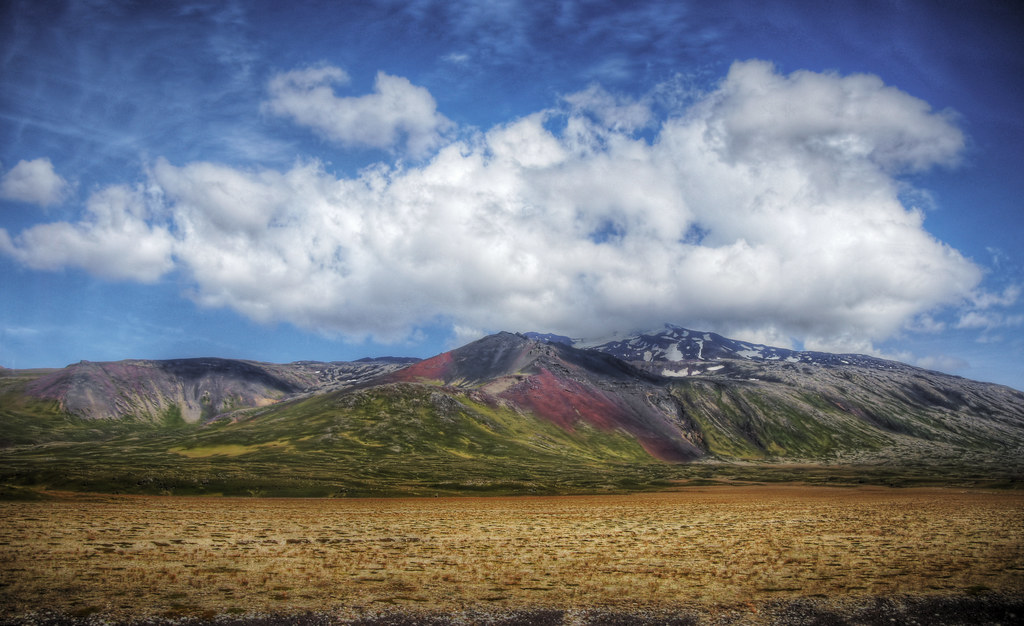
Snæfellsjökull, Iceland. Photo © Mariusz Kluzniak

When I explain my honors thesis subject to those who ask about it, not a few of them ask if I plan on looking at Jules Verne’s classic science fiction novel, since the volcanic entrance to the cavernous depths of the world in his story is ‘Snäfell,’ in western Iceland. For some , Journey to the Center of the Earth might be their only popular source of information on the country, since it is perceived as so remote, and, in many American minds at least, the Nordic countries can all get mixed up in a Scandinavian mélange of fjörds and vikings and skyr.

Snæfellsjökull, Iceland. Photo © Manny on BiteMyTrip.com

To Verne’s credit, therefore, he has put Iceland on the map for many people over the past century and a half (his book was first published in France in 1864, and was translated by 1871). To his discredit, however, he never visited Iceland himself, and instead relied primarily on two French works on Iceland written about scientific expeditions made there in the late 1830s. Continue reading

Icelandic Hell-broth

Krafla, Iceland. Photo © Land & Colors

In the Middle Ages, Iceland’s Mount Hekla was commonly thought of as a mouth of Hell, from whence one could hear the cries of the damned and even see their spirits haunting the peak — if the raging flames of hellfire weren’t blocking your view, that is. A few hundred years later, describing imagery as infernal or unearthly was still popular in travel accounts, as we saw in the case Reverend Sabine Baring-Gould’s thoughts on Námarskarð. Given the image above and those from the mud pits in the linked post, it really isn’t too surprising, especially after you consider that to reach these chthonic scenes the travelers had been riding ponies over a “tortuous and wretched” landscape of lava.

Continue reading

Hermes, Circa 1969

As one of the contributors referred to in this post, and as the one who took the photographs in that post, it occurred to me that I should comment further on the reference.  And in doing so, perhaps I could add to the small collection of personal statements that have been gathering on this site since mid-2011.  I am 100% sure I took the photograph above during that same visit to Greece in 2008.  As I snapped this photo my mother was at my side and we both remembered having stood in the same spot in 1969. Continue reading

Thinking, Communicating, Doing

From even just one brief interaction with students and faculty at Brown University, I might have predicted that a leader of that university would be so well suited to make this argument:

…we should embrace the debate about the value of the humanities. Let’s hear the criticisms that are often leveled, and do what we can to address them. Let’s make sure we give value to our students, and that we educate them for a variety of possible outcomes. Let’s do more to encourage cross-pollination between the sciences and the humanities for the benefit of each. Let’s educate all of our students in every discipline to use the best humanistic tools we have acquired over a millennium of university teaching—to engage in a civilized discourse about all of the great issues of our time. A grounding in the humanities will sharpen our answers to the toughest questions we are facing… Continue reading

Iceland’s Fearful Agencies at Work

Námarskarð mud pits, Iceland © Navis Photography

Over the summer, several people have asked me, after I tell them what I’m researching, whether the books I’m looking at are actually enjoyable to read or just another dry primary source, as dreary and monotonous as many travelers found Iceland’s vistas during the eighteenth and nineteenth centuries. As with most things, the answer depends (largely on the book and certain chapters of each book), but for the most part I’ve flipped through hundreds of pages of travel literature with pleasure, not only because I know I’m being productive despite the beautiful day two floors above me outside Cornell’s Olin Library, but also because I find the Victorian British style of these authors–most of the works I’ve read so far were published between 1850 and 1880–quite engaging and fun to read.

Consider, for example, the following excerpts from Sabine Baring-Gould’s description of Námarskarð, an area full of hot mud springs in northern Iceland, in his 1863 book,  Continue reading

An Appreciation Of Words Well Used, And Masters Of The Same

Anthony Lane, film critic for the New Yorker, wrote an appreciation for Elmore Leonard that is now posted on their website.  When important literary figures pass away, that magazine’s editors and writers share personal stories that serve to celebrate the lives of those who will write no more. On this site, we have studiously avoided obituaries but occasionally shared links to celebrate contributions of the recently departed.

Here, a slightly different purpose for linking to Lane. Yes, read this and better appreciate the prolific author’s contributions, which helps ease remorse at his passing because the contributions keep on giving (if you choose to see it that way). But more to the point here, celebrate the critic’s appreciation.  It takes guts, and mastery of words, to pit pulp fiction against high art (this act of critical bravery is after the jump):

…“The Switch” was published in 1978. Leonard (or Dutch, as his friends called him) had been writing about cowboys since the start of the nineteen-fifties, but he moved on to modern gunslingers with “The Big Bounce,” in 1969, and by the late seventies he was in full spate. The fullness required no enrichment of the style, let alone beautification; incapable of primping, Leonard chose to plane and pare until he ended up with folks like Melanie and Frank. As for their conversation, swatted back and forth like Ping-Pong, the phrasing as dry as a scoreline: if you wanted that brand of comic beat, with all the frills torn off, where did you go before Leonard came along? Early Evelyn Waugh. Continue reading

If You Happen To Want To Live in Felpham, West Sussex

This slideshow requires JavaScript.

We are not brokers, but in the spirit of entrepreneurial conservation, and a price tag so seemingly reasonable, we are obliged to bring this to your attention:

Guide Price Of £650,000 Continue reading

Charm City

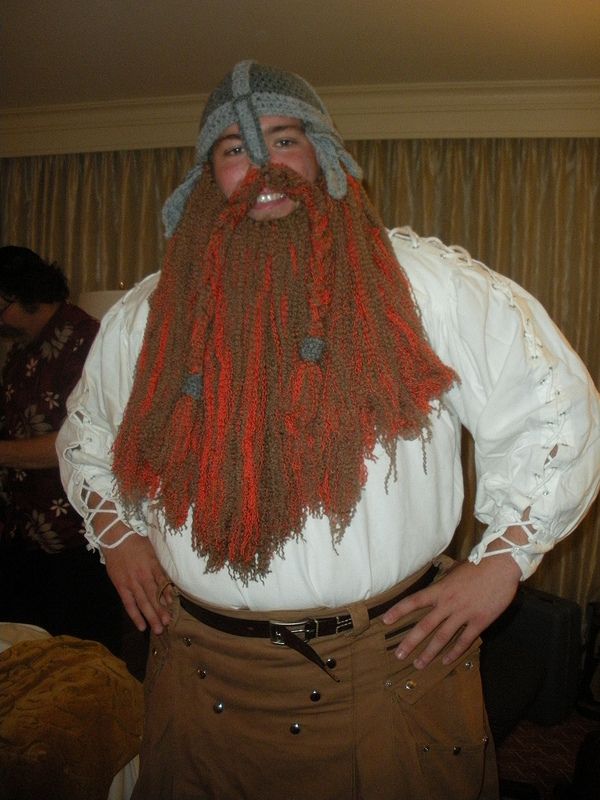
A fan sporting a dwarf beard and helmet woven from yarn. Both photos of convention by Flickr user Caliopeva.

My brother Milo and I spent the July 4th long weekend with some family friends in Baltimore, which neither of us had visited before. We were all there primarily for the North American Discworld Convention of 2013, a gathering of fan(atic) readers of Sir Terry Pratchett’s Discworld series at the Baltimore Waterfront Marriott, where the Church of God in Christ also had an event over the weekend (Marriott’s booking office has a sense of humor, it seems). We all had a great time attending various interesting panels and amusing activities, and seeing the diverse array of costumes that readers created and brought to display, and look forward to the next convention in 2015! If you haven’t read any of Pratchett’s work, he specializes in British satire and is often compared to P.G. Wodehouse and Douglas Adams. I like recommending Men at Arms or Night Watch to those interested in reading any of his Discworld series (soon over 40 books total), but he also wrote a book with Neil Gaiman called Good Omens that is one of my all-time favorites.

Speaking of books, if you’re ever in Baltimore on a weekend, you should most definitely check out the Book Thing and revel in the strange feeling of walking out of a building with bags full of books that you haven’t paid for: Continue reading

Sourcing Icelandic Wilderness

Þórsmörk. Glacier descending from Eyjafjallajökull. Collodion print by Frederick W. W. Howell ca 1900. Bequest of Daniel Willard Fiske; compilation by Halldór Hermannsson; Cornell University Library Rare & Manuscript Collections.

How Icelanders themselves saw the inner regions of their country, and the differences in perspective between the more and less educated segments of the population, can give valuable insight to the environmental practices of Iceland today, as well as portray the influence of European teaching on the more erudite Icelanders.

Although my focus is on the eighteenth and nineteenth centuries, it will be useful for me to explore the roots of Icelandic and European thought on unused open land and Nature, especially since much of the rural Icelanders’ perceptions were tinted by folklore and legend. Therefore, at least a cursory background of Icelandic folklore as it relates to my research topic is necessary, so I will consult the multitude of translated Icelandic myths, folk stories, and sagas, as well as the vast literature on wilderness and Nature in European thought, that Cornell Library owns in its Icelandic collection. Continue reading

Icelandic Writings

The two first edition volumes of Captain Richard F. Burton’s “Ultima Thule; or, a Summer in Iceland,” 1875. Photo by Bauman Rare Books.

I’ve mentioned before that throughout the literature from the 18th and 19th centuries in Iceland I’ve found a conflict between traditional and modern conceptions of the land’s nature, but I want to clarify that this was likely not limited to a simple farmer-or-scientist dichotomy. My aim is to more closely examine any relationships between the writings of Icelanders and Europeans that were meant for a European audience (in the case of the former this involves contemporary translations) and tease out the nuances between them. I believe these scientists, travelers and explorers from various cultures sought the same thrill of setting foot on ground that had never been touched by “civilized” man before; they traveled untrodden lands whose exploration allowed them to feel a sense of discovery and lonely grandiosity while experiencing wilderness; and in some cases they desired the satisfaction of improving scientific knowledge of a natural area.

When I talk about looking at ‘writings’, I mean primary sources like Continue reading

Kathakali: non-speaking communication as an art form

My colleagues pressed me to arrive at Kathakali half an hour early : “You cannot miss the make-up session”, they insisted. Kathakali is non-speaking theatre you see. So the performance starts early on, before the show even starts. Continue reading

An Old Fashioned Art And A Lesson In Craft

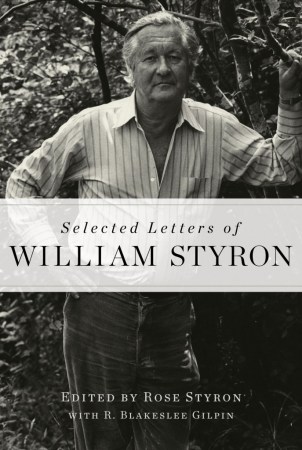
You do not need to be a fan of William Styron to appreciate the letters in this book; you only need to care about the art and craft of writing; so we thank the author’s friends at Paris Review for making these samples available (see below):

“A great book should leave you with many experiences, and slightly exhausted at the end,” explained William Styron in his 1954 Art of Fiction interview. “You live several lives while reading it. Its writer should, too.” Such is the experience in reading Styron’s Selected Letters, edited by Rose Styron and published this week. Alongside major cultural and political events of the latter half of the twentieth century are intimate accounts of family life, depression, writing, frustrations, and friendships.

Continue reading

Caleb Crain & Collaborations (Literary, Historical, Cetaceous) That Feed The Mind

Several of us at this site have been fans of the historically-inclined long form journalism of Caleb Crain since reading this book review several years back.  It started there with whales (for us), but certainly did not end there (for him).  Click the image above to go to the reading of Moby Dick Chapter 4, or here to read more about the concept of this collaborative “program” that he is participating in:

In the spring of 2011, artist Angela Cockayne and writer Philip Hoare convened and curated a unique whale symposium and exhibition at Peninsula Arts, the dedicated contemporary art space at Plymouth University, under the title, Dominion. Inspired by their mutual obsession with Moby-Dick Continue reading

Humans Read Stories For Perspective

We are anchored, as an organization, around experiential learning and action, not only for our interns but also in/for the communities we are part of.  But this bias itself is informed by the opportunities many of us have had, through education, living in cultures other than those we were born into, access to libraries, or work experience early in life, to read our way to better understanding.  We have plenty of diverse posts on this topic. In a couple of minutes, the video above sheds light on why this post, and a few follow-ups by one of our first contributors, set the bar for what we see on a good day: with the aid of good literary perspective, we can describe our experiences in a way that benefits others.

Writers Should Write

Thanks to one of Atlantic Monthly’s most talented writers, who mostly writes on topics unrelated to our site, we came across the above.  For many of us it is the first time hearing Hemingway’s spoken voice–we know only his written voice(s).  The last line says it all.

Franzen On Birds

On this site we have a commitment to, bordering on an obsession with, birds.  Every day you can find at least one post featuring a bird that a member of our team (employee, internstaff photographer, or staff photographer’s brother) or a member of our extended network of birders.  Recently, we have run several posts featuring the bird-loving writer featured in this video.  We will continue this thread until we run out of material.  Promise.