Chenda

Photo credits : Shymon

Photo credits: Shymon

The Chenda is a musical instrument commonly used in Kerala. This two-sided drum is famous for its rigid and  loud sound. The Chenda melam is  an integral part of all Kerala festivals, mainly played in Hindu temples. It is also the percussion choice for almost all Kerala’s classical art forms such as Kathakali, Panchavadyam, and TheyyamThe cylindrical wooden drum has stretched animal skin on both the sides that the drummers play using two sticks.

Continue reading

“It’s Like A Travel Book”

Music forms a type of universal memory the crosses cultures and continents, and Yo-Yo Ma’s Silk Road Ensemble that brings together musicians and composers from more than 20 countries is a lyrical example of what we hold dear at RAXA Collective. The 2,000 year old history of the Silk Road also coincides with the Spice Road, which is also a subject we take very personally.

The extent of exchange of art, ideas and innovations between cultural groups trading on the routes is illustrated by the eighth-century Shôsôin collection of artifacts. Culled by a Japanese emperor, it contains luxury goods from the Mediterranean, Persia, India, Central Asia, China, Korea and Japan…

Continue reading

Become Ocean Is The Water Music Of Our Times

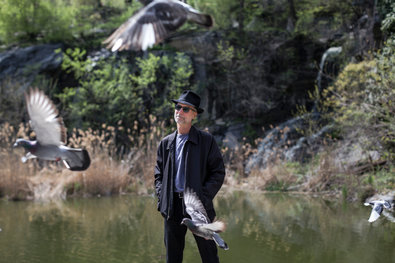
Chad Batka for The New York Times. “It’s impossible for us to separate who we are from where we are”: John Luther Adams, the composer of “Become Ocean,” in Morningside Park in Manhattan.

Chad Batka for The New York Times. “It’s impossible for us to separate who we are from where we are”: John Luther Adams, the composer of “Become Ocean,” in Morningside Park in Manhattan.

Thanks to Corinna da Fonseca-Wollheim for A Composer Attuned to the Earth’s Swirling Motion, in which John Luther Adams discusses “Become Ocean,” which will be performed on Tuesday at Carnegie Hall, and his other environmentally themed works. Their discussion rings true to us. Where we are is a large part of who we are.

That resonates with La Paz Group’s ethos. If we are not sensitive to where we are, who are we? We wonder that every day, so we recommend the article in today’s New York Times Arts section that offers a well-deserved review and praise of the work of an environmentally-inspired/concerned composer who we first heard about last July when the New Yorker‘s music critic wrote the following:

The hundredth anniversary of Stravinsky’s formerly scandalous Rite of Spring, on May 29th, raised the question of whether a twenty-first-century composer can produce a comparable shock. Perhaps not: the twentieth century elicited such a numbing array of shocks, both in art and in reality, that the game of “Astonish me”—Diaghilev’s famous command to Cocteau—may be temporarily played out. Still, astonishment comes in many forms. There are shocks of beauty, shocks of feeling, shocks of insight. Such were the virtues of John Luther Adams’s Become Ocean, a forty-two-minute piece for large orchestra, which had its première at the Seattle Symphony on June 20th. Like the sea at dawn, it presents a gorgeous surface, yet its heaving motion conveys overwhelming force. Whether orchestras will be playing it a century hence is impossible to say, but I went away reeling. Continue reading

Another Million Reasons To Listen

We have had a thing for India/USA crossover, for various reasons, since the outset of this blog. Today, a new landmark. Bollywood’s music man, for what seems like a million films here in India, meets Hollywood. Again. The Wall Street Journal review of this new film focuses on the topic we can most relate to, which is the continued crossover of India’s most important film scorer, who is noted for that Slumdog movie but not as much for Inside Man, which used perhaps his most obsessively loved (for good reason, we think) film music:

‘Slumdog’ Composer Steps Up to Bat for ‘Million Dollar Arm’

Disney Baseball Movie Will Feature Rahman’s Original Compositions

By CHRISTOPHER JOHN FARLEY  May 4, 2014 10:56 p.m. ET

Continue reading

Add Cello To The Trinity Of C-Words


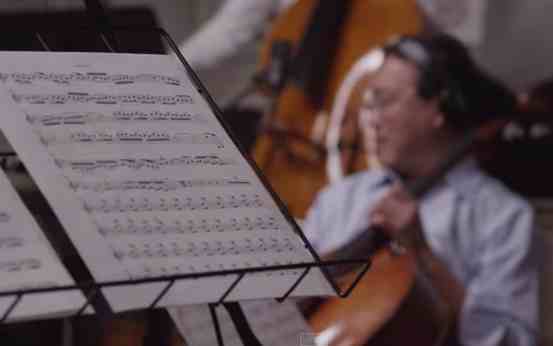
Welcome To Yo-Yo’s Playhouse…Watch the superstar cellist Yo-Yo Ma and many of his close friends from all over the world in action at a theatrical props warehouse in Brooklyn.

Ever on the lookout for stories that have one or more connections to our primary interests–community, collaboration, conservation–we are particularly fond of bifectas and trifectas, double-dips and triple plays. Versatility and eclecticism are signatures of Yo-Yo Ma, so no surprise that today we see a bit of all our interests combined in this story on the National Public Radio (a USA radio network funded by listeners, corporate/foundation donors, and taxpayers) website:

by ANASTASIA TSIOULCAS

When you’re lucky enough to have cellist Yo-Yo Ma and members of the Silk Road Ensemble, some of the world’s premiere instrumentalists and composers, gather for an afternoon of offstage music making, you’ve got to think long and hard about where to put them. And we decided that the perfect match would be ACME Studio, a theatrical props warehouse in Brooklyn.

Continue reading

Music That Never Ceases To Please, Inspire

00017089

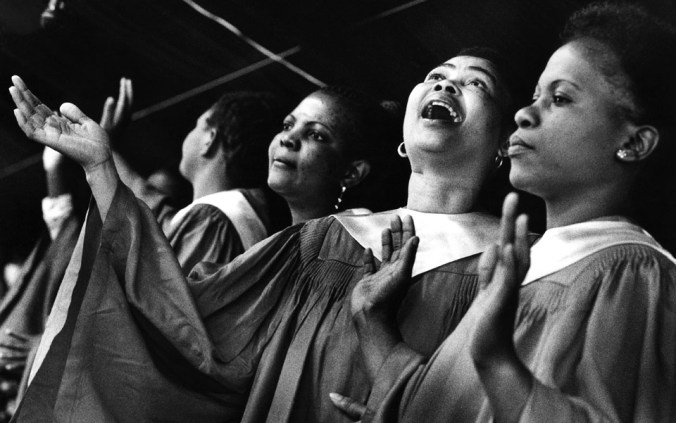
A gospel choir leads the congregation in song during a Sunday service at the National Pentecostal Church, Johannesburg, South Africa. Photo by Dieter Telemans/Panos


Some music inspires, and a smaller subset inspires over and over and over again.  Thanks to Aeon for this article about, possibly, why:

What is music? There’s no end to the parade of philosophers who have wondered about this, but most of us feel confident saying: ‘I know it when I hear it.’ Still, judgments of musicality are notoriously malleable. That new club tune, obnoxious at first, might become toe-tappingly likeable after a few hearings. Put the most music-apathetic individual in a household where someone is rehearsing for a contemporary music recital and they will leave whistling Ligeti. The simple act of repetition can serve as a quasi-magical agent of musicalisation. Instead of asking: ‘What is music?’ we might have an easier time asking: ‘What do we hear as music?’ And a remarkably large part of the answer appears to be: ‘I know it when I hear it again.’ Continue reading

When In Doubt, Musical Theater

Greek vocal icon Marinella, center, sings "Children of Greece," a song once sung to Greek soldiers as Italian and German forces invaded the country. As they endure hard times today, Greeks are turning to theater that shows triumphs over adversity in the last century.

Greek vocal icon Marinella, center, sings “Children of Greece,” a song once sung to Greek soldiers as Italian and German forces invaded the country. As they endure hard times today, Greeks are turning to theater that shows triumphs over adversity in the last century.

Thanks to National Public Radio for this story from Athens, where several Raxa Collective members have family and friends who attest to the tough times there. The story is interesting because it is counterintuititve to us, with no offense to those who appreciate musicals, that this form of theater has proven so popular at such a time as this. It is not what we might have first thought up as an antidote for tough times, but who are we to argue with effective salves:

It’s a full house at the 2,000-seat Badminton Theater in Athens. On stage is a musical about the singer Sofia Vembo, whose warm contralto voice comforted Greeks during World War II.

The song that is bringing the audience, mostly Greeks in their 60s and 70s, to tears and applause is called “Paida Tis Ellados, Paidia,” or “Children of Greece.” Sofia Vembo sang it to Greek soldiers as Italian and German forces invaded the country.

On this evening, it’s sung by 75-year-old Marinella, the platinum-haired icon of modern Greek music. She’s joined by a young cast in 1940s dresses and military garb.

In the audience, a young, green-eyed dermatologist named Fiori Kousta is passionately singing along.

“This song gives me hope,” she says, “because it reminds me that Greeks have been through much worse than what we’re going through today. Continue reading

If You Happen To Be In Boston (Tea Party)

This slideshow requires JavaScript.

For many people “The Boston Tea Party” refers to an historical event that formed the tipping point for the American Revolution. But two centuries later (give or take) the name relates to a completely different, but no less iconic, moment in time. In the late 1960’s and early 70’s the #53 Berkeley Street Boston Tea Party was a legendary live-music venue featuring musicians from local bands to the Blues, Rock and Pop icons of day.

Music wasn’t the only dimension to a Boston Tea Party experience. Filmmaker Ken Brown cut his “creative teeth” as part of the team creating the venue’s light shows and visual effects.

We actually have one of the coveted DVDs of this work, but those not lucky enough to have one or to have been in Boston 40 years ago have the opportunity to make up for it now …

On Sunday at 7 p.m. at [Boston’s] Institute of Contemporary Art, Brown will screen “Psychedelic Cinema,” a 55-minute compilation of his Tea Party work, and answer questions afterward. The silent film will be accompanied by a live performance by Ken Winokur of Alloy Orchestra, Beth Custer of Club Foot Orchestra, and Jonathan LaMaster of Cul de Sac. Brown’s Tea Party work screened at the Coolidge Corner Theater in 2008, one of only a handful of public showings. We spoke by phone this week. Continue reading

Vegetarian Music

This slideshow requires JavaScript.

While we complete our design and planning for the menu and the musical accompaniment at 51, the restaurant at Spice Harbour, we seem to have hit two birds with one stone in our research today. We tend more and more to the preferences of vegetarian travelers, and to the tendency of many non-vegetarian guests generally to reduce consumption of animal protein. And everyone loves good music. So this caught our attention, thanks to a slideshow on the Reuters newsfeed; this orchestra’s website tells the story (with a great video here):

Worldwide one of a kind, the Vegetable Orchestra performs on instruments made of fresh vegetables. The utilization of various ever refined vegetable instruments creates a musically and aesthetically unique sound universe.

The Vegetable Orchestra was founded in 1998. Based in Vienna, the Vegetable Orchestra plays concerts in all over the world. Continue reading

Spicing Things Up

We normally don’t post advertisements on this blog, but the video above by the folks at Machine Shop, in collaboration with MJ Cole for the spice flavoring company Schwartz, is too cool and creative to ignore when we have such a deep connection to spices in Kerala, both historically and for visitors todayContinue reading

Trance Around the World

A Goa Sunset. Image Courtesy: http://howanxious.wordpress.com

As a young, avid and ferocious consumer of music dabbling in amateur production, this post has been a long time coming.  No doubt everybody has their individual preferences when it comes to music, and I don’t want to be that person with the single-minded elitist views on what someone should or should not listen to (for the record my favorite band is The Doors), because I’m not.  I love trance music, it’s melodic, it’s uplifting, it’s beautiful, it makes people dance, it has great history, and when it’s done right it can be very emotional.

Continue reading

Collaboration For Impact

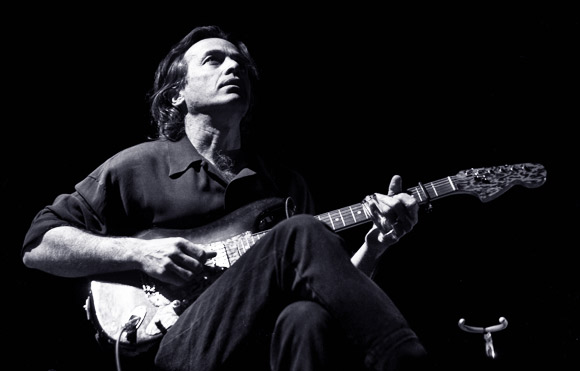
Photograph: Robert Knight Archive/Redferns/Getty.

You need not be a fan of his guitar style, which is unique; nor his producer credentials, which are significant. You do not even have to like the Rolling Stones to appreciate the following:

(It is worth noting, perhaps, that before Keith Richards encountered Cooder, he was essentially a strummer. After their encounters, during which, Richards has written, he took Cooder for all he was worth, the modern Rolling Stones, with the two guitars attempting to manage rhythmically and harmonically what Cooder accomplished with one, were born.) Continue reading

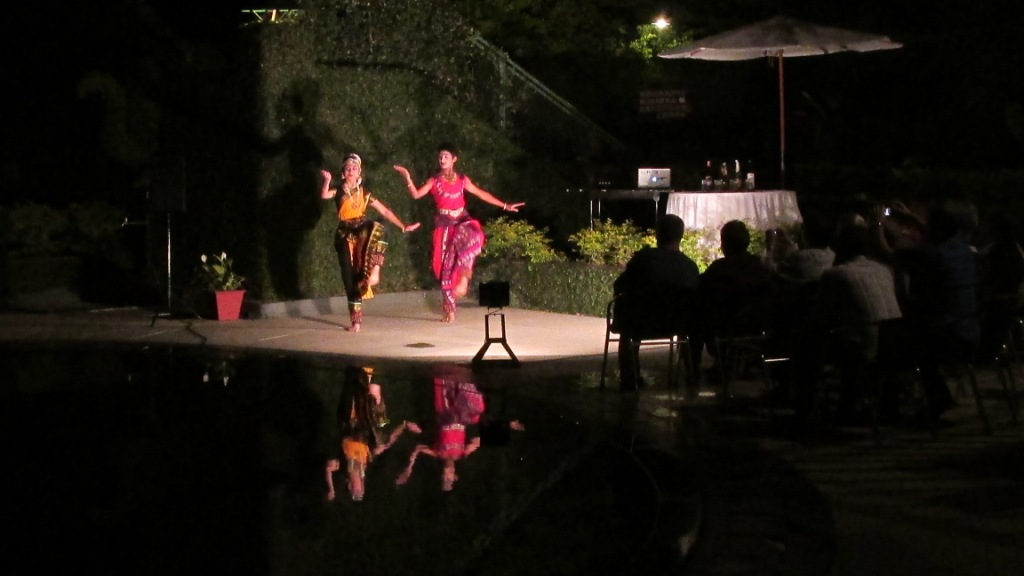
Music and Dance at the Water’s Edge

South Indian Classical Dance

South Indian Classical Dance

Guests at Cardamom County are usually out and about enjoying the Periyar Tiger Reserve, the town or the spice plantations during the day, but in the evening there’s a lot of excitement at Cardamom County, especially as we head in to the holiday season. Continue reading

Woody@101

Credit: Michael Ochs Archives/Getty

Last year we were a bit “off calendar” in honoring one of our favorite American Masters, this year less so. The good news is that his music and his relentless work on behalf of less fortunate people and the communities they were part of is so vast that, luckily for us, it will take some time to exhaust the full measure of his recordings.

For decades, we’ve had the Smithsonian recordings (with the help of Alan Lomax and Moe Asch) to thank for preserving both the musical and oral history of the nation. In honor of this less symmetrical birthday Rounder Records has released additional works from the archives, this time focusing on the part of Guthrie’s canon that was written for the American government.

In the Library of Congress recordings, the young musicologist and historian Alan Lomax made recordings of songs and stories in the 1940s of many of the country’s most colorful and important musicians, including Guthrie.

Along with John Steinbeck’s “The Grapes of Wrath,” it is one of the single greatest resources for understanding Depression-era Oklahoma: how the pioneer spirit reacted when confronted with crushing poverty. Continue reading

Algal Jazz

The radio show Living on Earth, produced by Public Radio International (thanks to their contributors and sponsors!), first carried this story about a biologist who intuited an interplay between marine microbes and jazz music.  The interview with that biologist is here, both as podcast and transcript. Thanks to the University of Washington’s Conservation magazine for bringing it back to our attention before it floated off on the horizon:

Music in the key of algae

In the age of Big Data, making sense of the information deluge is no small feat. But biologist and jazz-music fan Peter Larsen of Argonne National Lab thinks he has a powerful way to capture the complex interplay between microbial life and the physical environment: bebop music.

Larsen’s data-driven compositions are generated by observations collected at the L4 marine monitoring station, a data buoy operated by the U.K.’s Plymouth Marine Laboratory and Marine Biological Association. The buoy records weekly measurements of temperature, salinity, nutrient levels, and other parameters. In addition, researchers classify and measure the abundance of zooplankton and phytoplankton from samples collected at the site. Continue reading

Community, Alive And Well, Downtown NYC


Among the more interesting revelations, during his tenure as Editor of the New Yorker magazine, is that he is a big fan of The Boss.  He has posted on the magazine’s website several times following his profile of Bruce Springsteen in the magazine last year.  We normally shy away from posts about music on this site, for the same reason we shy away from cute kitten videos: you do not need more of that.  But David Remnick’s writing is different.  It is about community as much as it is about music.  And his post today about this event in New York is not only about community, but about keeping heritage alive by infusing it with innovation–that is, entrepreneurial conservation:

When it comes to “Inside Llewyn Davis,” the new Coen brothers movie, I’ll respectfully leave the critical work to my colleagues Anthony Lane and David Denby, except to say that the movie’s appreciation of its great subject—the folk-music scene in Greenwich Village in the period just before Bob Dylan’s arrival—is wry, but full and soulful. Inspired by Dave Van Ronk’s wonderful memoir, “The Mayor of MacDougal Street,” and many other sources, the Coens have their fun about the scene, but their love for the music—the depth and variety of it—could not be more evident. Continue reading

Boy Makes Good In The World, Comes Home, Commands Attention With A Wand

Brian Harkin for The New York Times. Conductor Zubin Mehta, right, leading the Israel Philharmonic Orchestra at Carnegie Hall in New York, on Feb. 22, 2011.

Brian Harkin for The New York Times. Conductor Zubin Mehta, right, leading the Israel Philharmonic Orchestra at Carnegie Hall in New York, on Feb. 22, 2011.

Thanks to India Ink for this notice:

Beethoven Comes to Kashmir

By VISHNU VARMA

NEW DELHI— Zubin Mehta, the renowned Mumbai-born conductor of Western classical music, is going to perform in Srinagar, the summer capital Continue reading

Music From And Between Other Worlds

tumblr_mr9rgx8ipO1qd9dz2o1_500

Photo via last.fm. Mr. Ondar was a superstar in Tuva. He’s often known for his prominent role in the 1999 documentary “Genghis Blues” about throat singing. He collaborated with Frank Zappa, Willie Nelson, Bela Fleck, among many others.

Whenever you first heard his music, you can probably remember who introduced you, or where you were. It does not sound like any other natural sound, musical or otherwise.  Sometimes it does not sound natural. The interview we link to below is the finest he ever gave (that we know of) because Ralph Leighton lucidly and intelligently explains his own experience working with and producing an album for Mr. Ondar, whose music will live on:

The technique known as throat singing is an ancient style still practiced in Tuva, a small republic between Siberia and Mongolia’s Gobi desert. Traditionally, it was practiced by herders.

In 1995, Kongar-Ol Ondar won a U.N.-sponsored international festival of throat stinging, and was honored by his nation with the title People’s Throat Singer of Tuva. He performed around the world and collaborated with Ry CooderThe Chieftains, Mickey Hart, Willie Nelson, Randy Scruggs and others. He was also featured in the 1999 film Genghis Blues... Continue reading

Accordion’s Life Line, Alex

This slideshow requires JavaScript.

This is another in the series, on the New Yorker‘s website, providing short glimpses into the craft work of New York City. Click here to go to the video and source of this text:

For forty-five years, Alex Carozza has run a small accordion shop near Times Square. It’s one of the last fixtures of the old Music Row on Forty-eighth Street, and Carozza, after a lifetime of repairing musical instruments, still works six days a week while teaching some younger apprentices the skills of the trade. Continue reading

Music, Duets, And Inspiration For Other Forms Of Collaboration

Collaboration has been central to music since the beginning of time. Most of our posts about collaboration intend to point out more unusual, but much needed, forms of collaboration related to communities and their surrounding ecosystems. Something about this album captures our intent with this word better than most news items usually do.  Credit for our finding our way to this musical collaboration goes to the interview the duet gave some time back:

Emmylou Harris and Rodney Crowell were featured on today’s episode of NPR’s Fresh Air. The two spoke with host Terry Gross about their long friendship and their new album, Old Yellow Moon, a new 12-track duets album featuring song by Crowell and others that marks the first official collaboration from the duo since Crowell joined Harris’ Hot Band as guitarist and harmony singer in 1975. The two also discuss a few of their musical Continue reading