Bear Ears Monuments, Cheering & Detraction

cedar-mesa_custom-427276f5586a9f7a0a22192760db944d7196cb73-s2500-c85.jpg

Photo by Josh Ewing/Bears Ears Inter-Tribal Coalition

The Food & Environment Reporting Network updates our understanding of the added significance of Bear Ears Monument, and its detractors:

Bears Ears Monument Is A Win For Tribal Food Sovereignty. Will Trump Undo It?

By Kristina Johnson

Seven years ago, the Navajo tribal council in southeastern Utah started mapping the secret sites where medicine men and women forage for healing plants and native people source wild foods. They wanted to make a case for protecting the landscape known as Bears Ears, a place not only sacred to their tribe, but to many other tribes in the region, going back thousands of years. In one of his final acts in office, President Obama late last month created the 1.35-million-acre Bears Ears Monument, in a move that proponents say will safeguard the area’s ecology and guarantee food sovereignty for the region’s Native Americans.: Continue reading

Droning Over Wetlands

Thanks to The Nature Conservancy’s Cool Green Science team for helping us realize we almost missed this story:

Flight Over the Bas-Ogooué: Using Drones to Map Gabon’s Wetlands

BY JUSTINE E. HAUSHEER

How do you map a nearly inaccessible 9,000-square-kilometer African wetland that is home to hippos, forest elephants, crocodiles, and the notorious Gaboon viper?

Enter the drones.

Nature Conservancy scientists are using unmanned aerial vehicles to create the first-ever detailed wetlands habitat map of coastal Gabon, in collaboration with scientists from NASA, and other conservation groups working in Gabon. Continue reading

National Park of the Week: Cairngorms National Park, Scotland

Photo via cairngorms.co.uk

Photo via cairngorms.co.uk

Comprising most of the United Kingdom’s high-altitude terrain, Cairngorms National Park in northern Scotland is the largest park in the British Isles, and an example of successful sustainable development and conservation working together. Home to several endangered or rare animal and plant species, many types of ecosystem, and 18,000 human residents, a lot of careful management has to take place for business and the natural environment to both thrive.

Unlike some of the other parks featured in this weekly post, Cairngorms (4528 sq km) is what you might call a “mixed use” park, where agriculture and other natural resource extraction such as logging, fishing, and hunting all take place. While in many national parks around the world, people are not allowed to live within park boundaries, here that is not the case, and in fact, according to the Cairngorms official website, 75% of land ownership is private, 15% belongs to charities, and 10% public bodies. All of which makes the park an impressive display of cooperation among community members to make the area successful in its multi-faceted mission.

Continue reading

National Park of the Week: Gir Forest National Park, Gujurat, India

Photo via paradisejungletrip.com

The endangered Asiatic Lion. Photo via paradisejungletrip.com

The Gir Forest National Park and Wildlife Sanctuary covers about 1,400 square kilometers in the southwestern region of Gujurat, India’s westernmost state that borders Pakistan and the Arabian Sea. Unlike many of the national parks profiled so far, Gir Forest National Park is not open to hiking on trails, mostly to protect travelers and the wildlife that the Park was founded to preserve, particularly the Asiatic lion, an endangered species found only in this protected area.

lion-gir-forest.blogspot.com

Photo via lion-gir-forest.blogspot.com

The main attraction of the Park is this large cat population, which numbers in the hundreds. But leopards, deer, the four-horned antelope, and many interesting bird species can be found here, along with the vulnerable marsh crocodile and the endangered pangolin. Since walking within the Park on foot is not allowed, jeep safaris are the only way to get around and spot wildlife with the help of a guide. With such a high number of threatened species – whether avian, mammalian, or reptilian – Gir Forest seems a place worth visiting before it is too late to spot some of these majestic and beautiful creatures in the wild. Despite only 83 checklists on eBird, the number of species recorded in the Park is 231, with many of the species only just being reported for the hotspot this year!

The endangered Indian Vulture. Photo via thepetitionsite.com

The endangered Indian Vulture. Photo via thepetitionsite.com

The Park closes from mid-June to September for the monsoon season, and the most comfortable temperatures for visiting are during December-March. For the purposes of wildlife sightings, however, April and May are great despite the extreme heat, since this hot and dry period makes many of the animals more predictable in their search for water. While in the region, consider visiting the Somnath Temple to the southwest or Mount Girnar to the northwest.

National Park of the Week: Canaima National Park, Venezuela

Photo by Brad Wilson

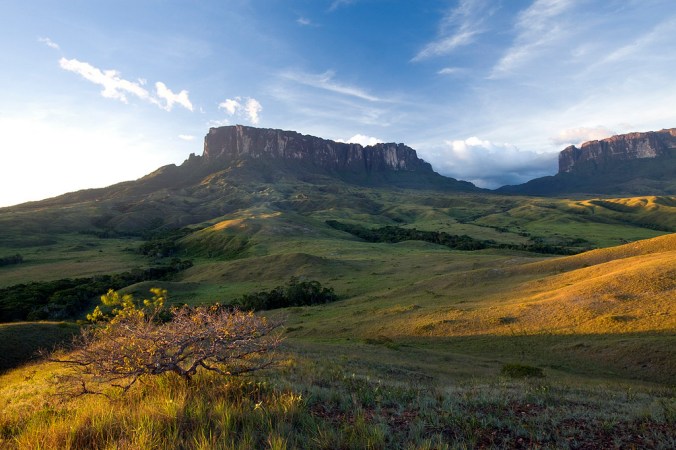
Best known for its characteristic flat-topped mountain formations known as “tepuis,” Canaima National Park is a geologic marvel that astounds the most experienced geologists and intrepid travelers alike. Between the table-top mountains, grassy savannah blankets the valleys and the perimeters of the tepuis, which cover about 65% of the park. The park is the sixth largest park in the world, measuring  three million (yes, million) hectares, and is located in Venezuela close to the border between Brazil and Guyana.

Continue reading

National Park of the Week: Göreme National Park & Rock Sites of Cappadocia, Turkey

Image from 4gress.com

Image from 4gress.com

Found in a remarkable landscape entirely sculpted by erosion, Göreme National Park in Turkey is characterized by a rocky landscape honeycombed with networks of ancient underground settlements and outstanding examples of Byzantine art. Located on the central Anatolia plateau, the unique rock structures of Göreme not only create a distinctive terrain of mountain ridges, valleys and pinnacles known as “fairy chimneys” or hoodoos, but also reveal one of the most striking and largest cave-dwellings complexes in the world.

Continue reading

National Park of the Week: Manú National Park and Biosphere Reserve, Peru

46

Source: andeanamazonexpeditions.com

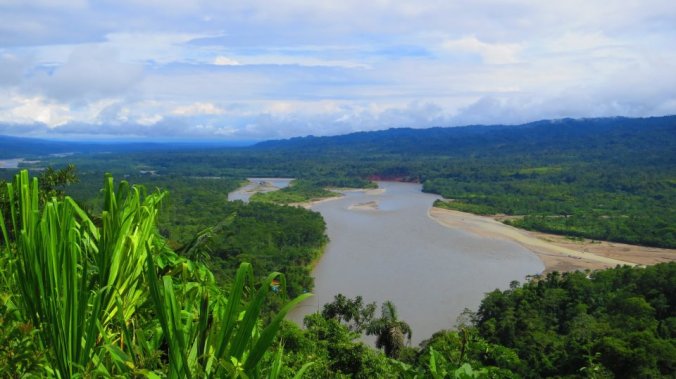
Containing much of the Peruvian Amazon’s  greatest flora and fauna, Manú National Park is one of the largest protected areas in the world and allows for once-in-a-lifetime sightings of rare and exotic animals.  The park is Peru’s biggest and consists of three parts: the “Cultural or Buffer zone,” where native communities live and tourists can enter unaccompanied, the “Reserved zone,” an area set aside for controlled scientific research and ecotourism, and the “Intangible zone,” the largest section that is strictly for flora and fauna preservation. Declared a UNESCO World Heritage Site and UNESCO Biosphere Reserve, Manú offers adventurous travelers lush, untouched Amazon to explore and discover the unmatched beauty of virgin environments and unrestricted wildlife.

Continue reading

A Further Note On Death Valley National Park

ross-deathvalleyalsofeelstheshadowoftrump-1200

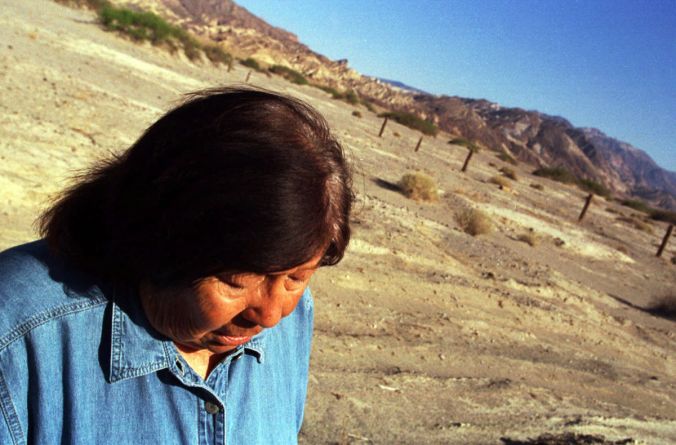
The Timbisha Shoshone elder Pauline Esteves in 1999. In 1933, when Esteves was eight, her tribe’s homeland was declared Death Valley National Monument. PHOTOGRAPH BY LAURA RAUCH / AP

We had already published several posts mentioning one of the earth’s more remarkable deserts. But the spectacle that desert displayed this year brought it back to our attention, for several important reasons. Click here (or on the image above) to go to Alex Ross’s update of the epic article he published on Death Valley recently, which we linked to here:

“In the desert, you see, there is everything and there is nothing,” Balzac wrote. “It is God without mankind.” The sensation of sublime emptiness, of a sacred void, explains the enduring romantic appeal of a place like Death Valley,: Continue reading

National Park of the Week: Sarek National Park, Sweden

sarek-national-park-original-2531

Image from thousandwonders.net

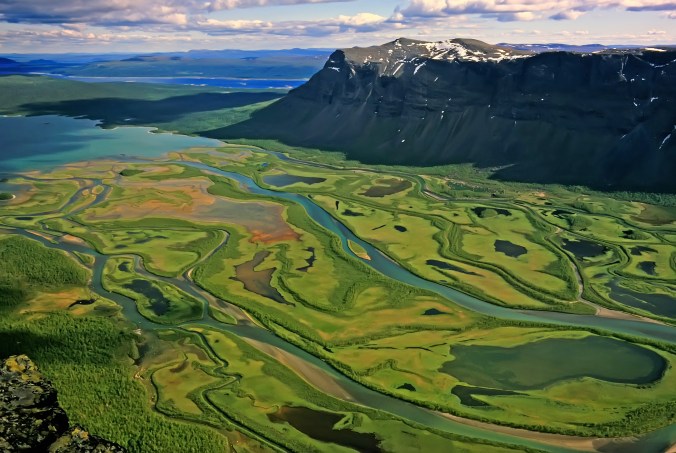
Described as “Europe’s last wilderness,” Sarek National Park is a dream destination for hikers, mountaineers, and adventure fanatics who are looking for untamed and challenging terrain. The park is in the province of Norrbotten in northern Sweden and located north of the Arctic Circle (burrrr!). The park has precipitous mountains that reach heights greater than 2000 meters and has almost 100 glaciers. In addition, long, deep, narrow valleys and wild, turbulent waters wind between the mountain chains, creating a sensational sight of unrestricted wilderness. Continue reading

Millennial Weather Effects In A Unique Spot

161114_r29005-862x1200-1478209573.jpg

In the spring, the valley shimmered with myriad points of color, as if Georges Seurat had touched up a Georgia O’Keeffe. PHOTOGRAPH BY JIM MANGAN

This is one of the longest articles in recent memory, but worth every word on every page. Wishing only that there were more photos or that we could have been there to see it:

DEATH VALLEY IS ALIVE

This year, a historic deluge created a Superbloom of wildflowers in one of the hottest places on Earth.

By Alex Ross

Death Valley, the majestically desolate national park on the eastern edge of California, is a rain-shadow desert, meaning that nearby mountain ranges drain moisture from incoming weather systems and stop rain from reaching the other side. Eighty miles to the west is the Sierra Nevada range, the highest in the contiguous forty-eight states, rising to fourteen thousand five hundred feet. Continue reading

National Park of the Week: Kamikochi National Park, Japan


dsc_0593

Photo from emilyerratic.blogspot.com

Within of the northern range of the Japanese Alps lies Kamikochi National Park, an area comprised of a plateau surrounded by vertical peaks, reflective lakes and virgin forests. Kamikochi is considered part of Chubu Sangaku National Park (also known as the Japan Alps National Park) and was extensively used by the logging industry until the mid 19th century when British missionary Rev. Walter Weston (1861-1940) lobbied to preserve the area. There is a plaque commemorating him and on the first Sunday of every June, the Weston festival is held to celebrate the opening of mountain-climbing season.

Continue reading

Northeastern USA Will Remain Greener, Longer, Thanks To New Protection In Maine’s Backwoods

06maineexplorer4-master1050

Thank you Maine and thank you federal government of the USA:

Touring Maine’s Newest — and Largest — Parcel of Federal Land

By

On an early fall day, with just a hint of red tinting the maples, the view from the summit of Deasey Mountain is spectacular.

To the west stand the rugged, treeless basins and knife-edge spine of Mount Katahdin. Off to the south, you see Wassataquoik Valley in the near distance, the peaks of the 100 Mile Wilderness beyond. To the east and north, more wild Maine woods and hills rolling for miles, to the Canadian border. Continue reading

Changing Values For Anglers

AZGFD-GeorgeAndrejko-Humpback8-e1476823079410-1260x708.jpg

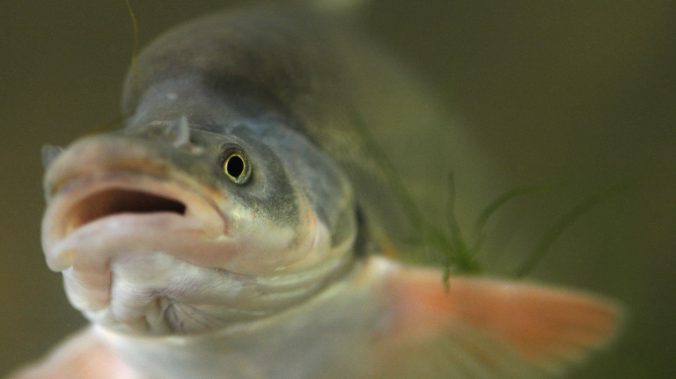
Humpback chub. Photo © George Andrejko, Arizona Game and Fish Department

We appreciate the perspective Mr. Williams brings to the story:

Recovery: Humpback Chubs, New Values and New Hope for Endangered Native Fish

BY TED WILLIAMS

There are “undesirable fish,” “rough fish,” and “trash fish.” Humpback chubs, native to the turbulent, turbid water of the Colorado River system, are all three. They compete with nonnative gamefish like brown trout from Europe and rainbow trout for the Pacific Northwest. If you catch a humpback chub, you should squeeze it and toss it into the bushesSuch was the counsel I and my fellow anglers received from our elders and the fisheries management establishment until the 1970s. Continue reading

National Park of the Week: Isalo National Park, Madagascar

banner20

Photo via jenmansafaris.com

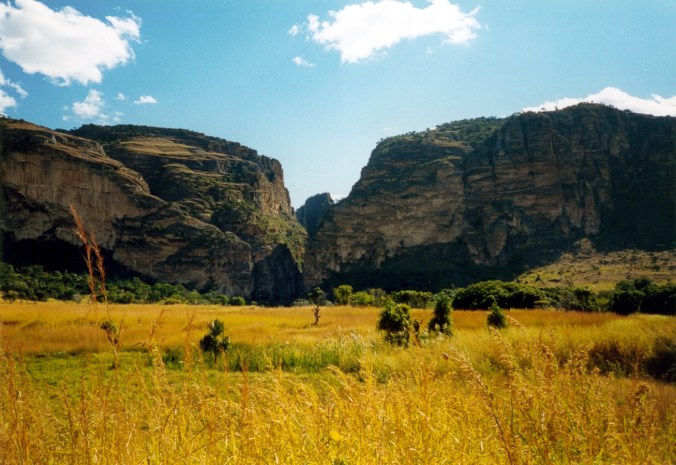
With its multitude of intersecting rivers within deep canyons, yellow savannah grasses carpeting the bottoms of vertical gorges, and domineering sculpted buttes, Isalo National Park is an artist’s canvas of a desert canyon. Jocularly called “Madagascar’s Colorado,” Isalo was founded in 1962 and is located in the southern highlands of the island. The park covers an area of 800 sq km and offers prime hiking opportunities among natural pools and uniquely carved landscapes. Continue reading

Tree Elders & Drought

sequoias-1_custom-9d831bf09949d38d3d16746b895b30fc2bfa786a-s1100-c85.jpg

Giant sequoias in the Sierra Nevada range can grow to be 250 feet tall — or more. John Buie/Flickr

Thanks to National Public Radio (USA):

How Is A 1,600-Year-Old Tree Weathering California’s Drought?

It’s been a brutal forest fire season in California. But there’s actually a greater threat to California’s trees — the state’s record-setting drought. The lack of water has killed at least 60 million trees in the past four years.

Scientists are struggling to understand which trees are most vulnerable to drought and how to keep the survivors alive. To that end, they’re sending human climbers and flying drones into the treetops, in a novel biological experiment. Continue reading

Rewilding, North America Edition

636129948116675648-elk-in-pickens-county-by-caleb-cassell

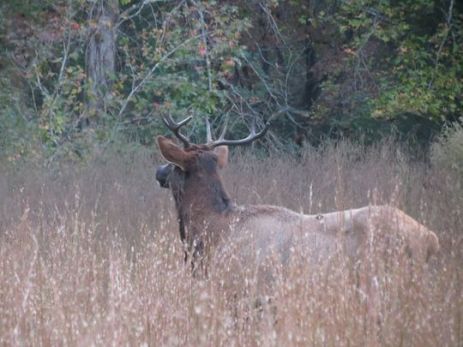
An elk, the first seen in South Carolina in centuries, gazes across a field in northern Pickens County. (Photo: provided/Caleb Cassell)

We would much rather that original nature was protected in its original state, but that does not keep us from celebrating the various efforts we see to reintroduce species, especially when they show signs of success as in this case from South Carolina, USA:

In Pickens County, first elk sighting in state for centuries

Ron Barnett

For the first time since the Upstate was Cherokee territory, a wild elk has been seen roaming the woodlands of South Carolina. Continue reading

Centennial Portraiture

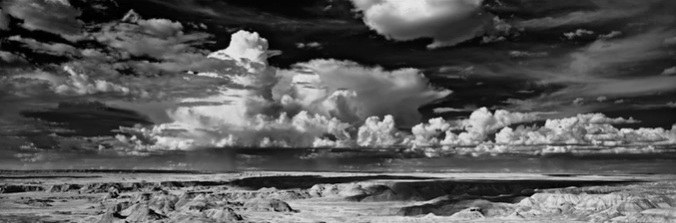
Painted Desert by Cody Brothers

Since August this year a multitude of events have occurred to honor the 100th birthday of the U.S. National Park Service. Aside from the obviously wonderful wilderness experiences available in the country’s 58 parks, as well as our own National Park of the Week series on this site, there are cultural events that highlight the beauty and history of the amazing achievement that is the preservation of our national patrimony for future generations.

Photographers have documented the landscapes of our national parks from the moment the technology made it possible, and the haunting beauty of the panoramas draw artists, explorers and dreamers still.

National Endowment for the Arts grant recipient Cody Brothers is all three. Continue reading

National Park of the Week: Ras Mohammad National Park, Egypt

6e8b00541d43a27ec2ef395accfbe3e6

Pinterest.com

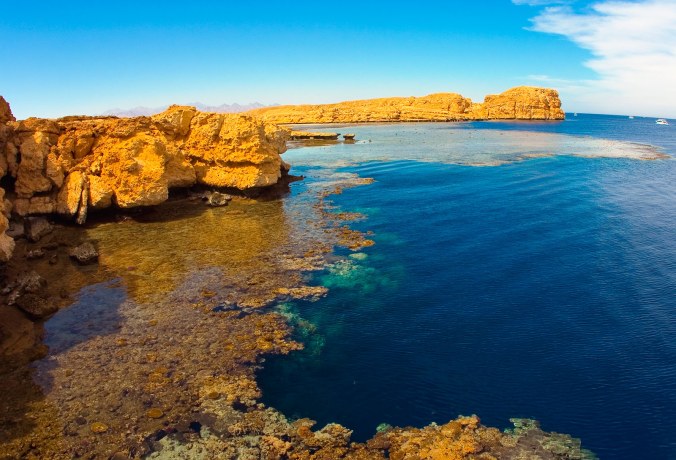
Overlooking the Gulf of Suez on the west and the Gulf of Aqaba to the east, Ras Mohammad National Park  in Egypt lies at the southern extreme of the Sinai Peninsula and offers waters that are considered to be the jewel in the crown of the Red Sea. The coastline, characterized by vertical overhangs at least 100m deep,  is surrounded by fringing coral reefs that emerged after a change in the coastline 70,000 years ago. Due to its location at the juncture of the two gulfs, the combining waters of varying salinity has lead to a magnificent array of reef and pelagic fish, diverse coral reef and luxuriant sea walls.

Continue reading

National Park of the Week: Tongariro National Park, New Zealand

tongariro-nationalpark

Source: nz-autraliatours.com

New Zealand’s oldest national park and the fourth national park to be created in the world, Tongariro National Park is internationally recognized for its outstanding volcanic features and is historically venerated by the Maori people. The park encircles three volcanoes, Tongariro, Ngauruhoe, and Raupahu and covers almost 80,000 hectares of contrasting terrain. The three volcanoes are active, Raupehu being one of the most active volcanoes in the world, but that does not deter visitors from hiking up to the top and gazing out into the exotic conic formations.

Continue reading

National Park of the Week: Banff National Park, Canada

5-peyto-lake-parc-de-banff

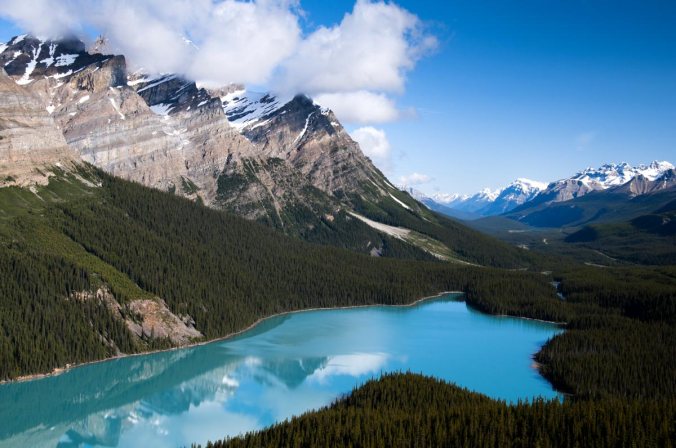
Peyto Lake, one of the many lakes in Banff. Image via authentikcanada.com

Established in 1883 by three railway workers who discovered a natural hot spring on the slopes of the Canadian Rockies, Banff National Park is Canada’s first national park and the birthplace of the world’s first national park service. Located in the heart of the Canadian Rockies, the park boasts more than a thousand picture-perfect glaciers and glacier-fed lakes, Castleground Caves (the country’s largest cave system), and several national historic sites. It also encompasses Banff, the highest town in Canada at an elevation of 4,540 ft, which makes it feasible and convenient to enjoy the sights over a period of days (which you will surely want to do).

Continue reading