Thekkady Nature in Focus

Adult nilgiri langur holding young leaping between trees

I’m a pediatrician by profession but a wildlife photographer by passion. They might not appear connected at first glance but the joy of being with children and the ability to be patient and understand their world has assisted me behind the camera in the field. Photographing animals has allowed me to use my expertise to get closer insights into their behavior.
The idea of having a photographic workshop in the lap of nature, in the Western Ghats with renowned wildlife photography guru Sudhir Shivaram was very exciting. I felt like a child waiting to get a new toy.


Thekkady-Kumily and the Periyar Tiger Reserve lie near the border between Kerala and Tamil Nadu. Periyar lake is an important watershed and a lifeline for wildlife in the region. The lake was created by the building of the Mullaperiyar Dam in 1895. What was started as a private game reserve became a wildlife sanctuary, and later the Periyar Tiger Reserve. While the area where the reserve is located is well-known as Thekkady, the town is named Kumily. It was a 5 minutes drive from our hotel to the PRT (Periyar Tiger Reserve) and from the entrance it’s a 500 meter walk to reach the boating jetty. From the jetty point, many visitors to the reserve take an hour-long boating safari where, with luck, the action along the bank can be viewed. For birders, most of the aquatic species can be expected, so luck is far less of an issue.

The evening of our arrival we had a workshop session during which our mentor gave us a good grip on exposure, metering, ISO and lots of inputs about the technical aspects of photography in general and wildlife photography in particular.

White-cheeked Barbet by Dr. Eash Hoskote - La Paz Group

White-cheeked Barbet

Early morning on the first day after a quick tea and snacks we headed out to PRT with all our gear. We were met by forest naturalists who were very well versed with the local conditions and the birding scene at that particular time of the year. We were given thick canvas knee-length “leech” socks which are dusted with tobacco powder, making them 100% leech resistant. We boarded a small raft driven by rope pulley to cross one of the many “fingers” of the many branched reservoir. After a brief time following the banks of the water we turned into the dense forest, where the penetration of morning sunlight was minimal. With such heavy equipment we really had to dodge the trees and hanging vines and made our way through the forest. The bird species sighted that first day were Malabar Trogon, White-bellied flycatcher, small blue kingfisher, spot-billed ducks, grey heron, Indian pond heron, little cormorant, white-cheeked barbet and a Malabar frog as an added bonus. It was a good 3 hr forest walk with birds chirping, frogs croaking and crickets making their presence felt. While just walking out of the PRT, we had a good sighting of a pair of grey Malabar hornbill with good photographic opportunity for all of us at close range. Our mammalian captures included a Malabar giant squirrel munching a nut and a group of Nilgiri langurs with young ones jumping around trees providing fantastic opportunities for dynamic shots. Continue reading
“I Hope You Can Swim”

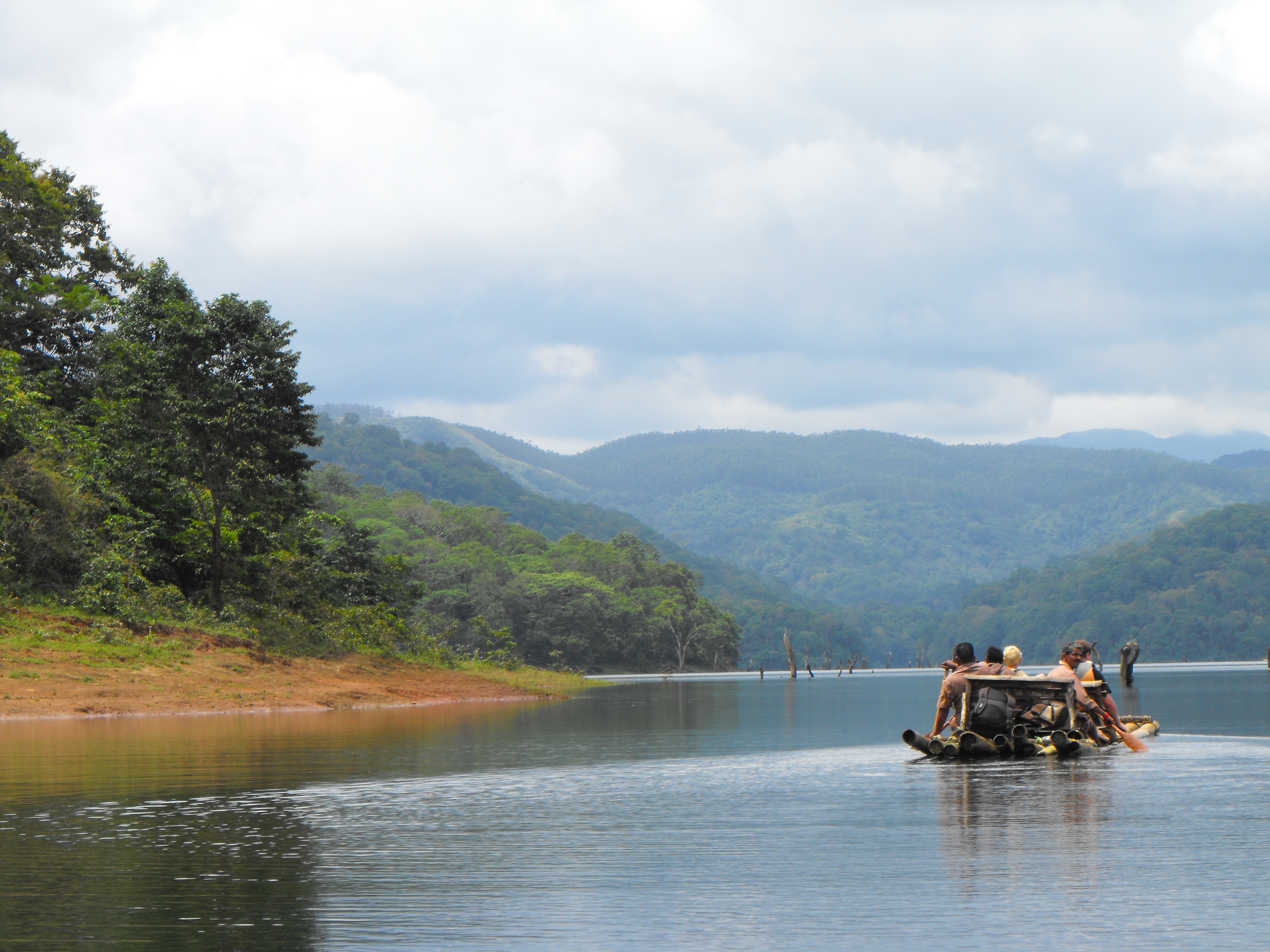
This past weekend, I had the opportunity to go Bamboo Rafting, one of the unique experiences that the Periyar Tiger Reserve has to offer. From my knowledge about bamboo, I understood that it was naturally hollow so it made sense to use it to make a floating raft. Being naïve I expected the raft to be like any water worthy vessel and stay completely above water; that’s where I was wrong. My initial experience with bamboo rafts was at the beginning of the trek where all participates had to cross a narrow section of the Periyar Reservoir. When the raft was just sitting on the water it looked perfectly dry, but when people began to step aboard the middle slowly became covered with water, which happened to be exactly where I was standing. It really freaked me out when we started moving from the shore and my water-proof boots were being put to the test. I remember saying to the person next to me “I hope you can swim” because at the time I was feeling a bit of panic that I might have to. Continue reading

Sharing My Summer Travels

“The world is a book and those who do not travel read only one page.” -St. Augustine.

Over this past summer, I’ve had the extraordinary opportunity of traveling around the United States and abroad to see some various national parks. Traveling abroad–and especially, traveling to areas of natural beauty carved out by Earth–always serve as a humble reminder of how little we’ve seen and how important global conservation efforts are. I’d like to think that my summer’s travels to China and Hawaii have opened a little bit more of that book, and it’s with great pleasure that I share some of the pictures from the trip.

Continue reading

Collaborative Poaching-Patrol

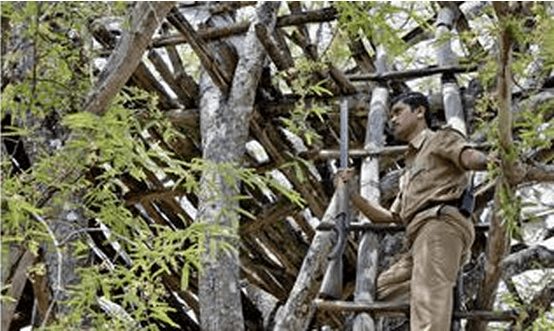
The Hindu— File Photo

We’ve written about the importance of forest stewards before, primarily because in many cases they straddle the roles of guard and guide within the territories they protect. But many of those protected areas in India are suffering from severe shortages of qualified field staff, putting enormous areas of land, not to mention the wildlife that call it home, at risk.

But the Karnataka Eco-Tourism Development Board is initiating an innovative plan to train volunteers to be forest naturalists who will assist the forestry department a minimum of two weeks per year in their anti-poaching activities.

In order to create this pool of trained volunteers, the Karnataka Eco-Tourism Development Board is offering, for the first time in the country, three- and four-day Naturalist and Volunteer Training. The board is offering the training programme in association with Jungle Lodges and Resorts Ltd. Continue reading

PhotoSingularities: Wild Boar

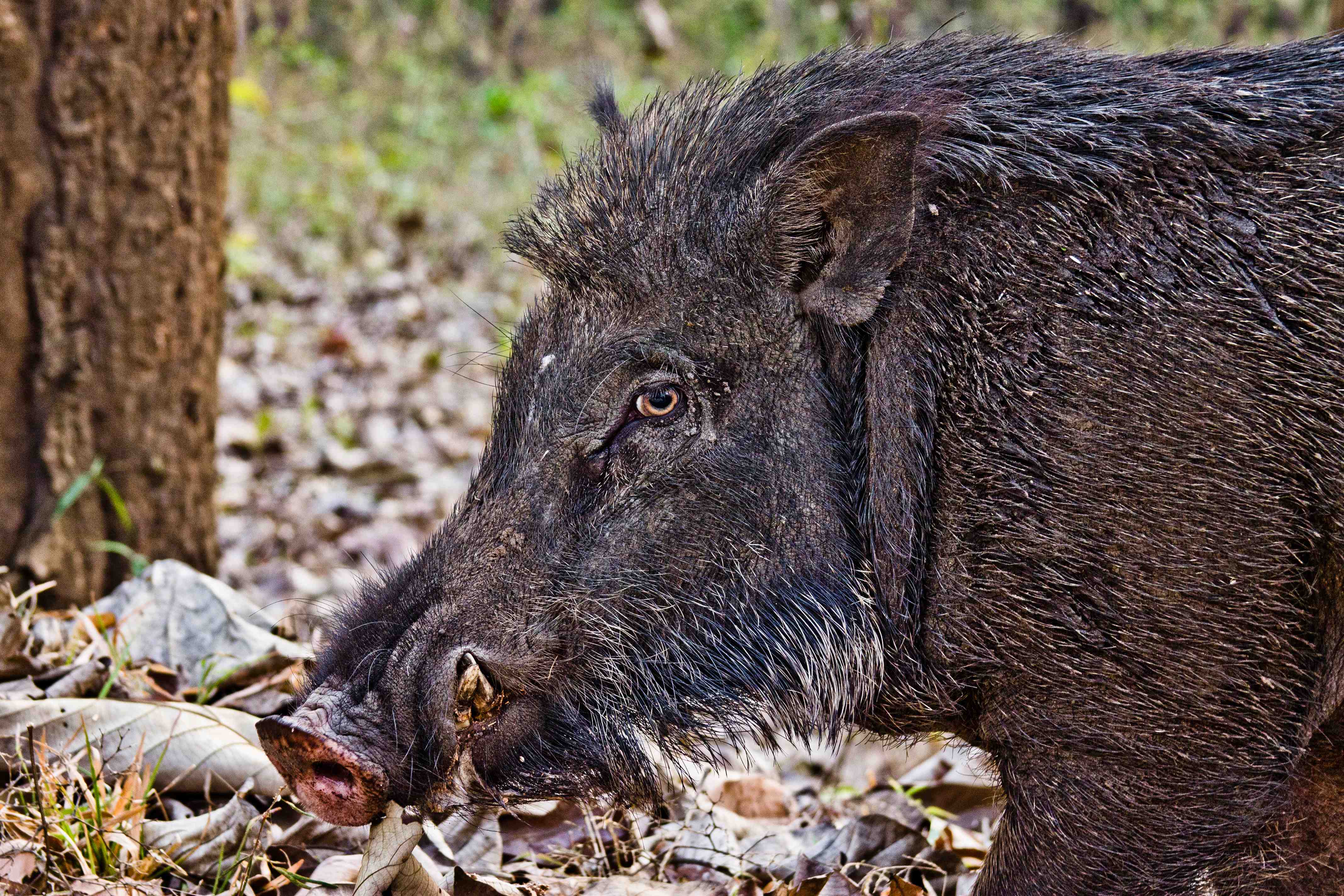
This photograph was taken in Parambikulam Wildlife Sanctuary, Kerala. This male boar was one of several dozen in a sounder (wild boar’s collective noun) seen from our vehicle at close proximity – we shared the road with them for some time and I was able to capture it from eye level before he wandered back into the forest.

How about traditional boats in the Periyar Tiger Reserve ?

The most popular activity in the Periyar Tiger reserve is boating on the  Periyar river. It’s a lazy, indulgent, moment of enjoyment of sightseeing. The ancient sunken tree trunks, the depth of the woods, the indigenous population fishing along the river…it also offers good chances to sight animals drinking, hunting by the river and excellent opportunities for birdwatching.

During the cruise I kept thinking it could all be quieter though, the engines of the motor boats seemed to break with the pristine tranquillity of this place… Continue reading

Siberian Tigers Return, Humans Shrug In Ambivalence

Decades of poaching and logging in China and elsewhere have ravaged the Siberian tiger population, with only about 500 left in the wild worldwide. Photograph: Tim Davis/Corbis

Decades of poaching and logging in China and elsewhere have ravaged the Siberian tiger population, with only about 500 left in the wild worldwide. Photograph: Tim Davis/Corbis

In our day to day work, how humans and wild animals interact is often a matter of personal fulfillment, though at times we tend to the challenging aspects as well.  The Guardian‘s coverage of the fate of charismatic mega-felines falls into this latter category with a mixed message of one wild animal’s population rebound and what can only be described as practical human reaction:

…Decades of poaching and logging have ravaged the population of the big cat, also known as Amur tigers– only about 500 still live in the wild worldwide. In 2010, Chinese authorities launched an initiative to boost numbers in the Hunchun National Siberian Tiger Nature Reserve near the country’s border with Russia and North Korea. Continue reading

Solitary togetherness : a walk into Periyar Tiger Reserve

Traveling in a pack, or you might say a group, is not something I do on holidays. I’m a lone wolf kind of traveler. See what I mean? Then I took the opportunity to escort a group coming to Cardamom County for a bird photography workshop into Periyar Tiger Reserve, and all my preconceptions disappeared. Although my companions came from all parts of India to take wildlife pictures and I arrived on day 1 with just an iphone, I quickly felt like I belonged. Continue reading

My First Periyar Tiger Reserve Experience

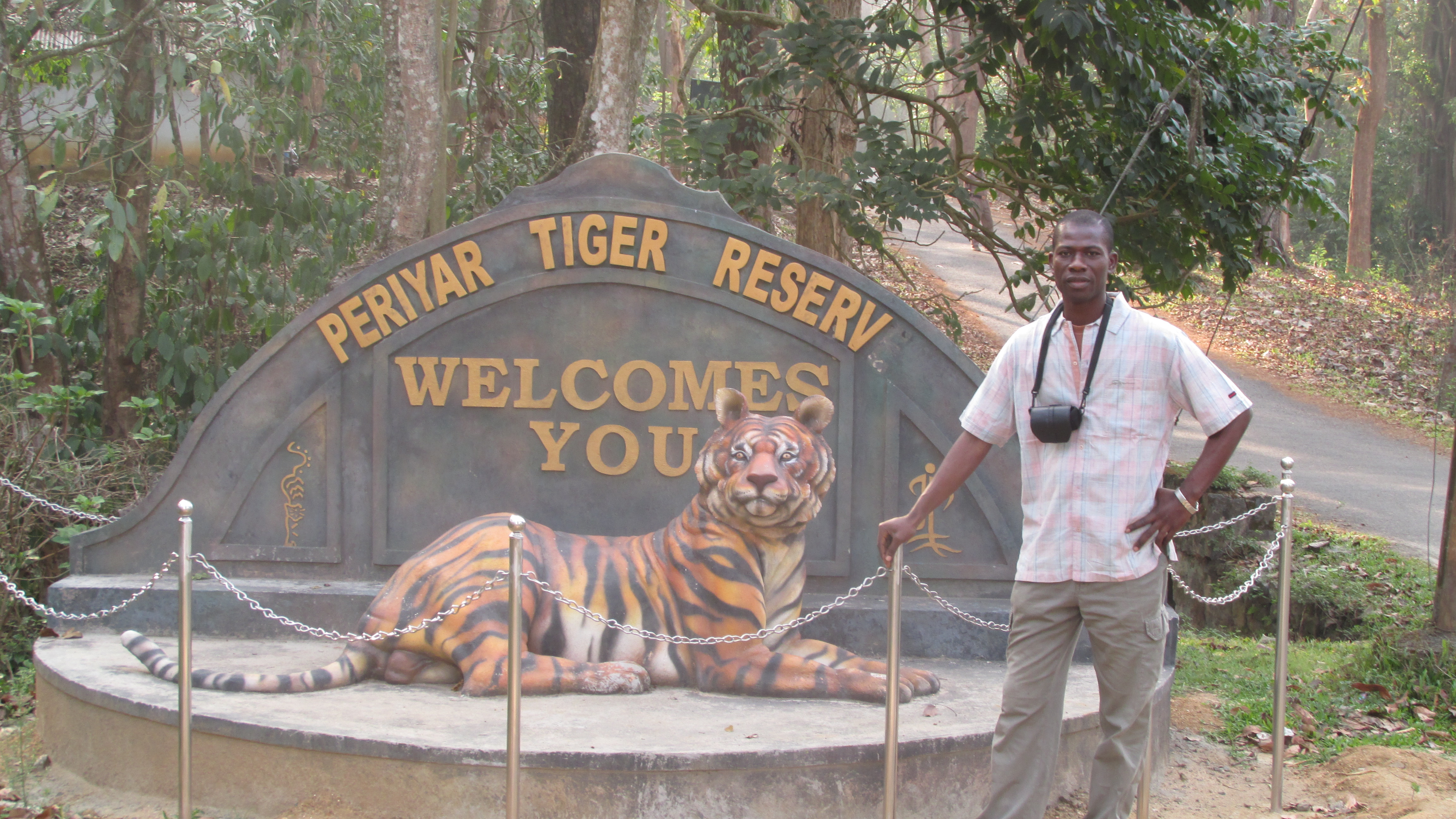
At the Periyar Tiger Reserve

I’ve been in Kerala 10 days now and in Thekkady about a week of that time. After all the orientation, yesterday was my first opportunity to explore the Periyar Tiger Reserve, the Kerala national park located right across the street from Cardamom County where I’m spending the next 2 months. As a management  trainee with Raxa Collective my responsibilities are to develop the tools that I’ll implement in what will be the best lodging within Ghana’s Mole National Park. (In fact, my day off actually began the evening before by experiencing Earth Hour at the hotel as well as with a candlelight procession with other hoteliers and townspeople.)

Earth Hour at Cardamom County

Earth Hour at Cardamom County

Continue reading

Hello From Ghana

Mole, Ghana

I have been in Ghana for five days, and this image above tells most of the story of the week that I have time to share in this post.  Since 1980 when I first met someone from this country, I have been looking forward to this visit.  A young man named Kwaku, his first time traveling outside Ghana, had just arrived in a southern Illinois August heatwave and was in the same 10-day soccer training camp as me.  During the previous two years I had captained an undefeated high school soccer team, had sat in a stadium watching Pele play his last professional game, and respectfully thought I knew something about the sport. Continue reading

Periyar Sightings: March 22, 2013

Mr. Senthil, a cardamom planter in Kerala, went for a forest trek yesterday and experienced one of his best trips in the Periyar so far. He was happy to share some of his photos. Continue reading

Precipicial Parks

Associated Press. Services will be reduced at places like the South Rim of Grand Canyon National Park if automatic cuts in the federal budget take effect next Friday.

Associated Press. Services will be reduced at places like the South Rim of Grand Canyon National Park if automatic cuts in the federal budget take effect next Friday.

Wilderness areas are among the innocent victims of dreary political gamesmanship in a country with some of the most spectacular, and vulnerable, protected areas in the world:

Unless Congress can reach a budget agreement by March 1, the country’s national parks will be hit by a $110 million budget cut, resulting in shuttered campgrounds, shorter seasons, road closings and reduced emergency services, a parks advocacy group reports. Continue reading
Happy Birthday Ansel!

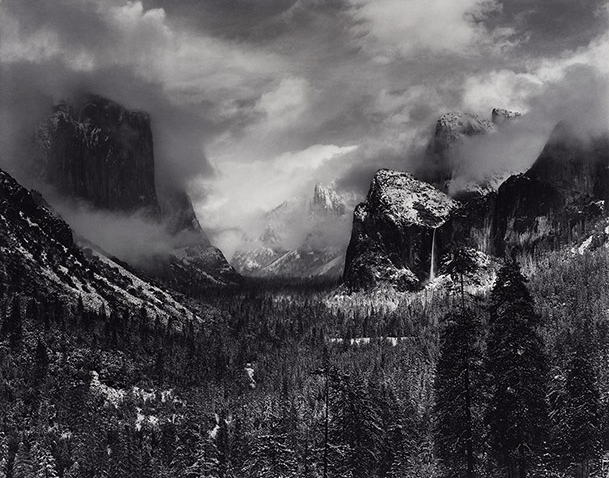
Clearing Winter Storm, Yosemite national park, California, about 1937

Clearing Winter Storm, Yosemite national park, California, about 1937

Ansel Adams has become almost synonymous with the environmental movement in general and Yosemite National Park in particular. He first visited the park when he was 14 and the impression he had at that age would last a lifetime. His photographs played a seminal role in convincing Congress to place that amazing landscape under federal protection.

Yosemite Valley, to me, is always a sunrise, a glitter of green and golden wonder in a vast edifice of stone and space. I know of no sculpture, painting or music that exceeds the compelling spiritual command of the soaring shape of granite cliff and dome, of patina of light on rock and forest, and of the thunder and whispering of the falling, flowing waters…

— Ansel Adams, The Portfolios Of Ansel Adams Continue reading

Gorillas In His Midst

This slideshow requires JavaScript.

Yale Environment 360 has an excellent story on the various animals in this protected area, including the warden and those he is committed to protecting, but also the beasts who prey on those wards. Supporting national parks, wherever they may be and at whatever risk, has never been more critical:

The Perils and Rewards of Protecting Congo’s Gorillas

Virunga National Park, home to one of the last remaining populations of mountain gorillas, has witnessed years of war and civil strife. In an interview with Yale Environment 360, the park’s warden describes the lethal threats faced by his rangers and the remarkable survival of the park’s gorillas. Continue reading

Mayan-Like Patterns

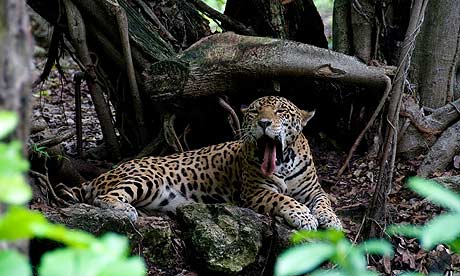
A jaguar – a symbol of Mayan royalty – is endangered but roams free in the Maya Biosphere Reserve, Guatemala. Photograph: Larry Larsen/Alamy

A jaguar – a symbol of Mayan royalty – is endangered but roams free in the Maya Biosphere Reserve, Guatemala. Photograph: Larry Larsen/Alamy

We make frequent links and comment on topics meant to raise awareness about innovative, fun and sometimes loony efforts—from the humble to the grand– to avert environmental collapse.  The dangers are real enough that we assume readers get enough of the doom and gloom elsewhere, so that we can focus our efforts on evidence of potential solutions, and encourage collective action.

The photo above accompanies a story in the Guardian worth a read, to put in perspective why it is that the Mayan calendar doomsdate hoopla, or at least some of the accompanying history, was worth a bit of attention:

…Today, much of the Mayans’ ancient homeland is a 7,700-square mile protected area in Guatemala called the Maya Biosphere Reserve. With an area greater than the states of Connecticut and Rhode Island combined, the reserve protects the largest remaining forest in Central America. Beneath the canopy, monumental vestiges of temples and palaces attest to past splendour. Similar magnificence is found in the reserve’s wildlife. The jaguar, once a symbol of Mayan royalty, still roams free in one of Central America’s last wild places. Continue reading
Wild Periyar: December 20, 2012

Mr. Shaji, a local photographer, joined one of the morning treks and shared his photos. According to him these are the common sightings he experiences early in the day, which is always the best time for wildlife viewing. Continue reading

Final Thoughts On Oysters, Dunes And Conservation

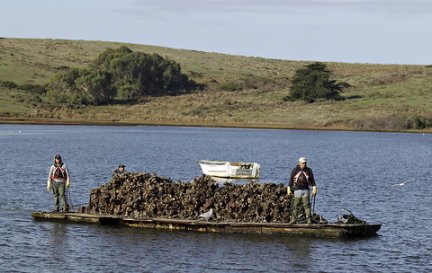
Photo: Associated Press. Workers from Drakes Bay Oyster Company bring in a load of freshly harvested oysters at Point Reyes National Seashore. Interior Secretary Ken Salazar announced last week that the operation would have to shut down.

Thanks to our oft-linked to favorite writer on such topics — Felicity Barringer — for the follow up on this story from a few days ago:

In the end, after all the money spent on the science — on cameras whose images were not carefully examined, on reports that misrepresented scientific studies, and on repeated investigations of flawed scientific work — the Interior Department’s decision not to renew an oyster company’s lease to operate within Point Reyes National Seashore largely sidestepped any scientific issues. Continue reading
If You Happen To Be In Greenwich, England…

We have a photographer friend to thank for bringing this exhibit to our attention. We have the BBC to thank for offering museum exhibitions manager Phillipa Simpson’s fresh and inspiring introduction to some of the world’s most iconic nature photography.  (click on the header for the BBC link with video of a narrated slideshow)

If you happen, like many of us on this site, to be a devoted fan of Mr. Adams, you will particularly appreciate the final element of the slideshow.

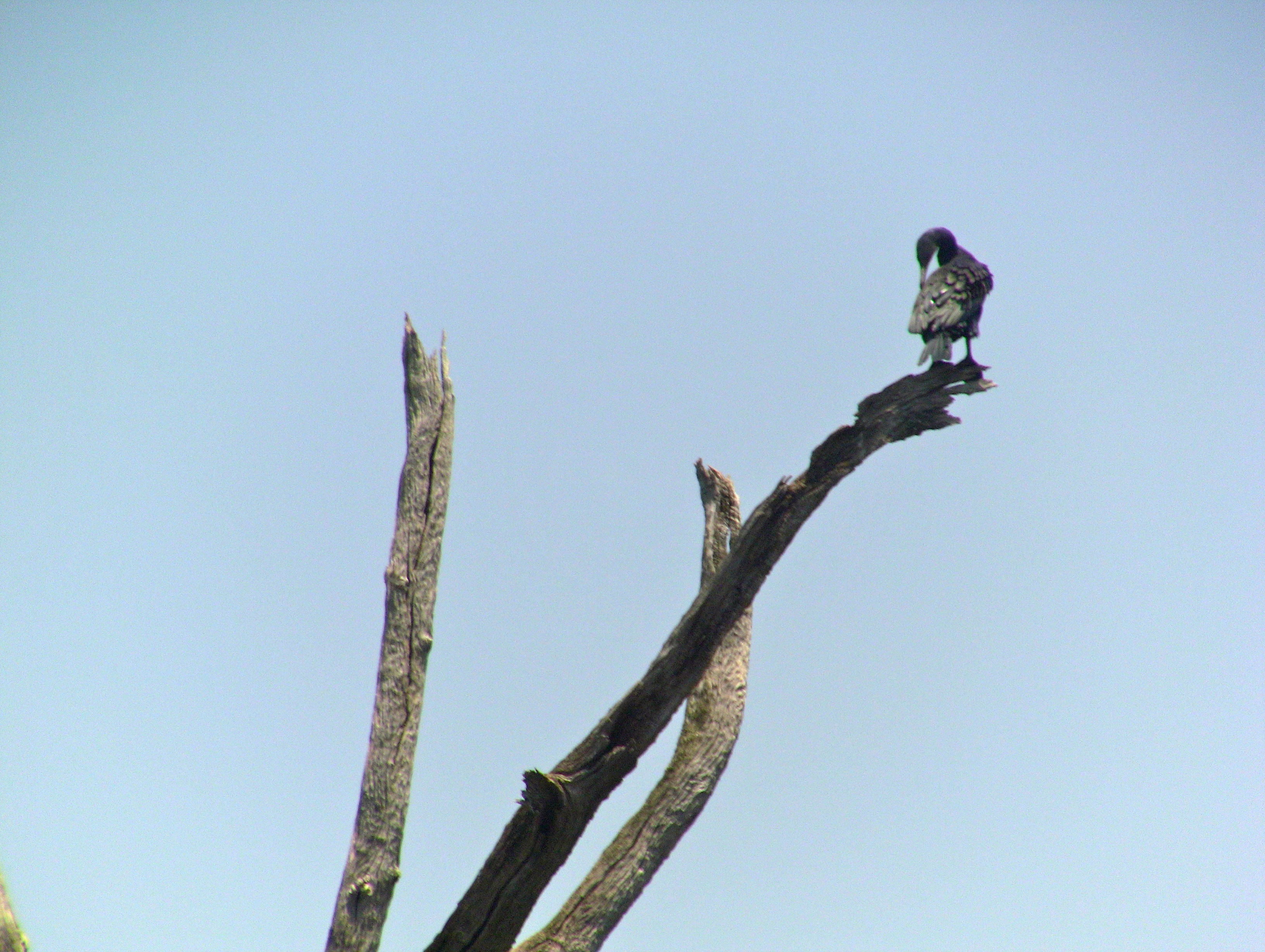
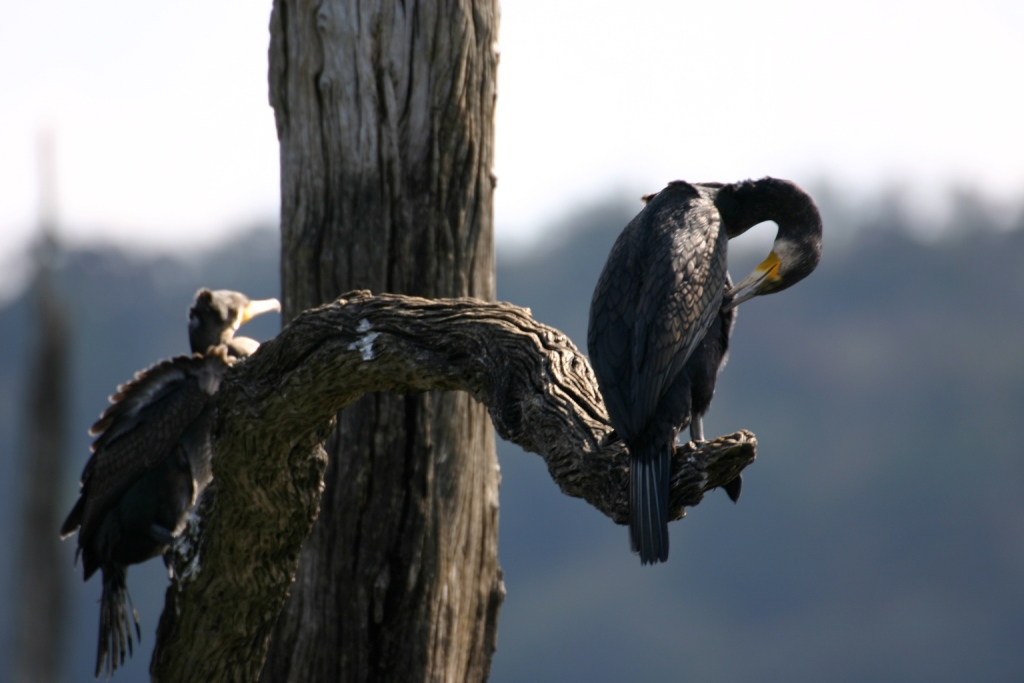
Large Cormorant (Phalacrocorax carbo)

The submerged tree trunks in the 26sq km Periyar Lake nestled inside the forest create a favorite habitat for a number of aquatic birds, especially Large cormorants.

Continue reading