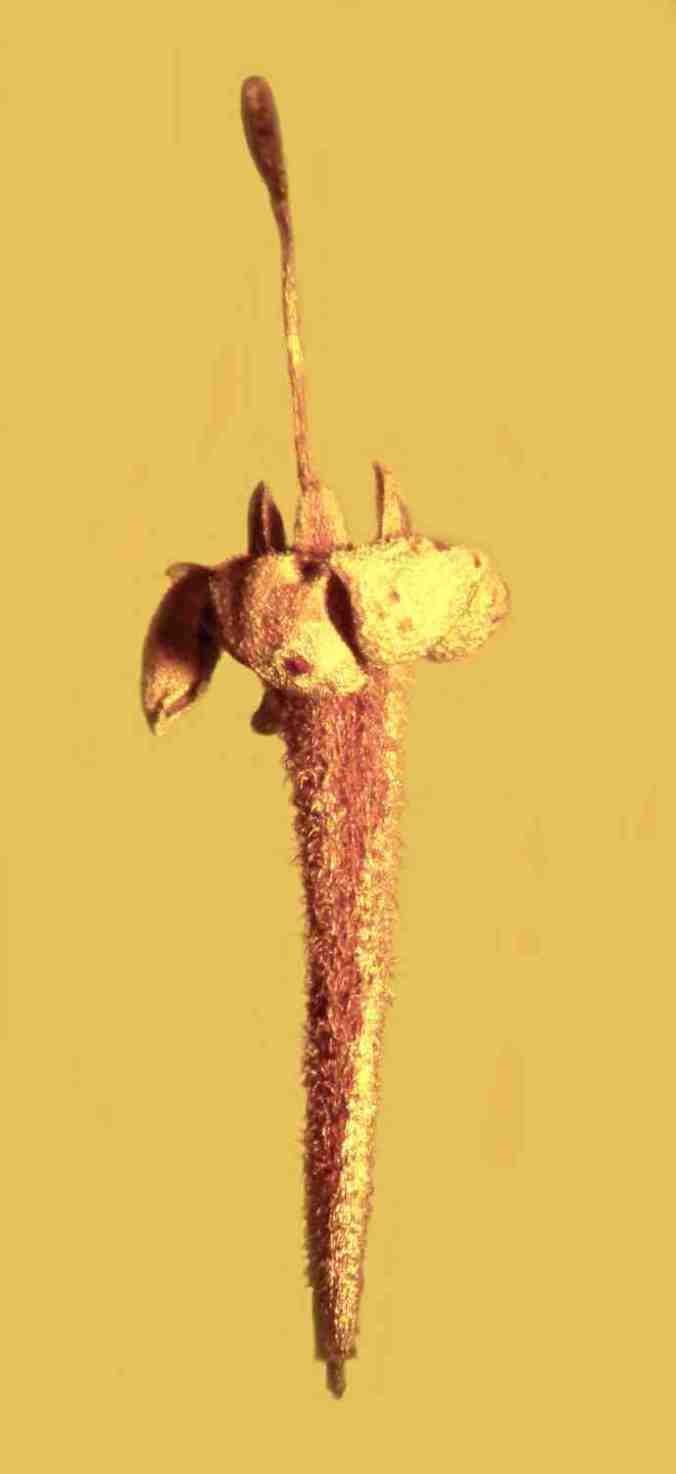
S. electri. COURTESY GEORGE POINAR / OREGON STATE UNIVERSITY
Amber is awesome. In so many ways, it is the definition of a natural wonder. One of those definitions might be its role as unintentional conservator of ancient natural history. This collection of images, from an amber-trapped flower to an prehistoric stingless bee, make the case for this definition:
The flowers of Strychnos electri are slim and small and trumpet-shaped. Their petals flare out at the tip to form a star, out of which a single spindly pollen tube protrudes. They look as if they might have fallen from the stalk yesterday, but they are ancient. At least fifteen million years ago, and possibly as many as forty-five million, they landed in the sticky sap of a tree that is now extinct, in a kind of forest that no longer exists on Earth. The sap hardened into amber, the tree died, and eventually geology took over. The fossilized flowers were submerged in water, buried under layers of gravel and limestone, and finally thrust upward into the foggy hills of the modern-day Dominican Republic. There, in 1986, an American entomologist named George Poinar, Jr., unearthed them. Continue reading →





 Organikos