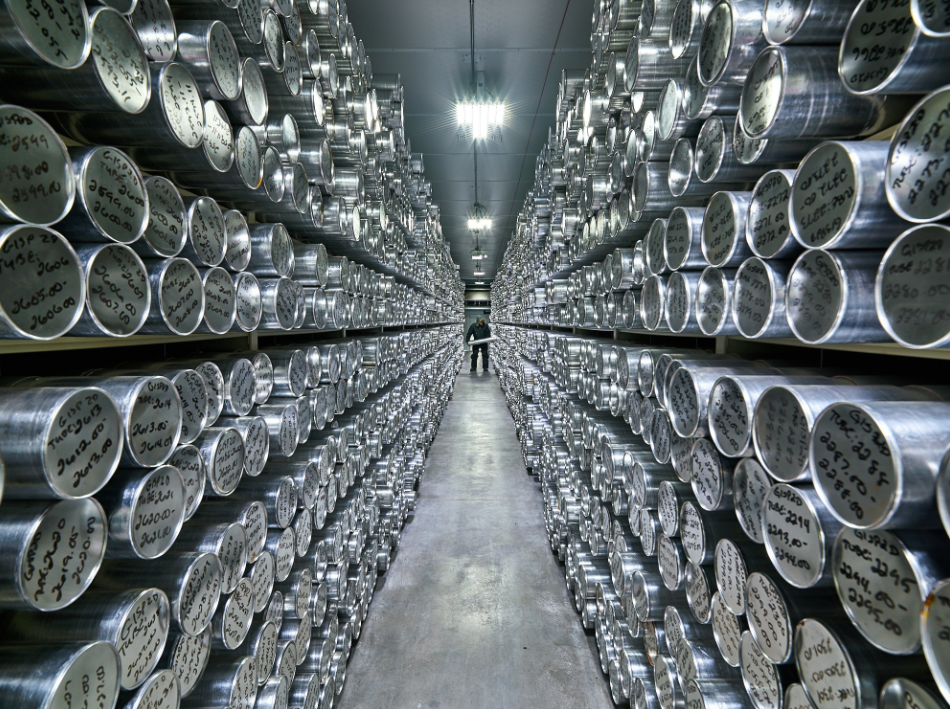
U.S. National Ice Core Laboratory, Lakewood, Colo. photo credit: Spencer Lowell for The New York Times
Thanks again to the New York Times for highlighting the global nature of this scientific “call to arms” to save not only data, but genetic and organic material as a back-up plan for future generations. From the Svalbard Global Seed bank in Norway, to sperm banks for coral, endangered wildlife, and even glacial ice – these archives are meant to provide both a life line to the future and answers about the past.
The fragility of each project is evident as Science itself has come under attack from current public policy, which doesn’t appear to see the irony of their denial in the face of facts about climate change.
It was a freakishly warm evening last October when a maintenance worker first discovered the water — torrents of it, rushing into the entrance tunnel of the Svalbard Global Seed Vault, a storage facility dug some 400 feet into the side of a mountain on a Norwegian island near the North Pole. A storm was dumping rain at a time of year when the temperature was usually well below freezing; because the water had short-circuited the electrical system, the electric pumps on site were useless. This subterranean safe house holds more than 5,000 species of essential food crops, including hundreds of thousands of varieties of wheat and rice. It was supposed to be an impenetrable, modern-day Noah’s ark for plants, a life raft against climate change and catastrophe.
A few Norwegian radio stations and newspapers reported the incident at the time, but it received little international attention until May, when it was becoming clear that President Trump was likely to pull the United States out of the Paris climate agreement. Suddenly the tidings from Svalbard were everywhere, in multiple languages, with headlines like “World’s ‘Doomsday’ Seed Vault Has Been Breached by Climate Change.” It didn’t matter that the flood happened seven months earlier, or that the seeds remained safe and dry. We had just lived through the third consecutive year of the highest global temperatures on record and the lowest levels of Arctic ice; vast swaths of permafrost were melting; scientists had recently announced that some 60 percent of primate species were threatened with extinction. All these facts felt like signposts to an increasingly hopeless future for the planet. And now, here was a minifable suggesting that our attempts to preserve even mere traces of the bounty around us might fall apart, too.







 Organikos