Dirty Rio

wireap_206705173401436b8c64a3b0e628ca89_16x9_1600

Source: ABC News

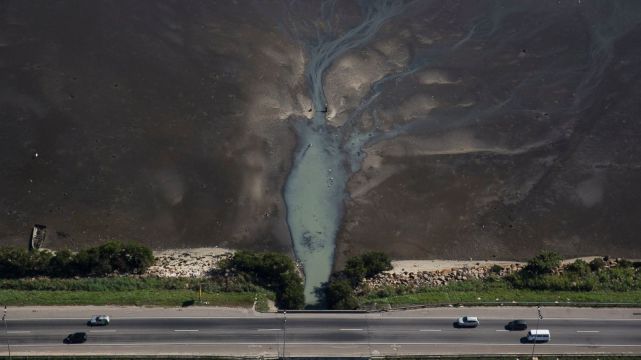
The 2016 Rio Olympics start in two days and in three days athletes will have to face the uncontrolled pollution debris and hazardous water contamination levels. The 1,400 athletes participating in water competitions and 300,000 to 500,000 foreigners expected to visit Rio de Janeiro and the beaches at Copacabana and Ipanema are at risk of becoming ill. This unfortunate predicament comes even after the city’s 2009 Olympic bid when authorities pledged that they would invest in a billion-dollar cleanup program to “regenerate Rio’s magnificent waterways.” Continue reading

USA National Park, Feisty Leadership Outlier

Lake Superior Presque Isle Royale National Park Michigan in USA Great Lakes no not people nobody isolated low angle horizon

Lake Superior Presque Isle Royale National Park Michigan, USA, Great Lakes

We like the idea of a leader of a national park with a “feisty nature,” since sometimes that is exactly what it takes for conservation to succeed, either in the public or the private sector; so this profile from the BBC, in its ongoing appreciation of the National Parks Service’s 100th anniversary, is the kind of story we are especially happy to share:

…Isolated and iconoclastic, Isle Royale National Park is something of an anomaly among US National Parks, with its territory spread over 200 islands and outcroppings emerging from the frigid waters of Lake Superior, part-way between the US state of Michigan and Canada.

Isle Royale’s former Superintendent, Bill Fink (no relation to me), is an iconoclast himself, almost as if the qualities of the archipelago rubbed off on him during his four years running operations there from 1990 to 1993. Continue reading

Putting A Value On National Parks

Academic research publications tend to appear dry and out of reach to most non-academics. As someone who prepared for an academic research career, but who subsequently left that career, I am conflicted in what to say about that.

So I will say nothing about that. Instead, I say, read this (we rarely post without images, but the point of this post is purely a thought exercise, so I am keeping it strictly limited to words):

1. Summary This paper presents the first-ever comprehensive estimate of the total economic value of the National Parks Service. The estimate covers administered lands, waters, and historic sites as well as NPS programs, which include protection of natural landmarks and historic sites, partnerships with local communities, recreational activities and educational programs.

Our estimate of the total economic value to the American public is $92 billion. Continue reading

The Downside Of Roads

EuropeRoadMap_Crop-680x450

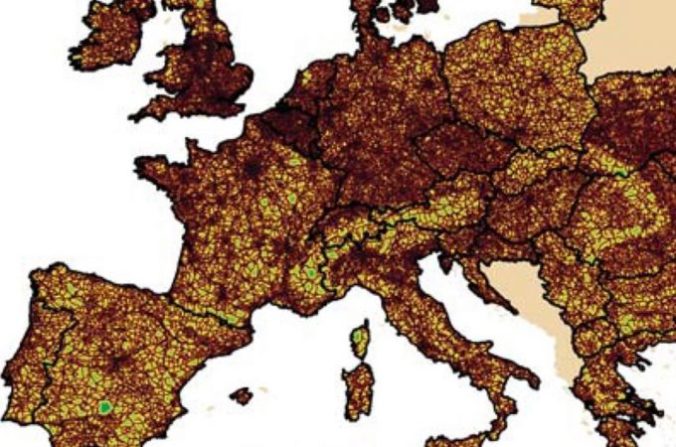
The density of transportation infrastructure in Europe. Credit: Marina Pinilla.

We enjoy a good drive as much as anyone, but we also have seen the impact they have over time in wilderness areas, and here is some unsurprising science from already developed regions to back up the concern:

IN EUROPE YOU CAN’T GET VERY FAR FROM ROADS—AND NEITHER CAN WILDLIFE

Roads and railway lines are so ubiquitous across the European continent that it is becoming impossible to measure their ecological effects, according to a study published yesterday in the Proceedings of the National Academy of Sciences.

In the study, researchers calculated the distances to the nearest paved road or railway line throughout 36 European countries, the first time that such calculations have been made comprehensively across the entire continent.

Nearly one-quarter of the land in Europe is within 500 meters of transportation infrastructure, half is within 1.5 kilometers, and virtually all is within 10 kilometers, they found. Continue reading

Paris Bans Pre-1997 Cars from Roads

Good news comes from the French capital in an effort to reduce smog and carbon emissions on the streets in the city of light, but the United States is stuck trying to discourage driving in much weaker fashion, Camille von Kaenel reports for Scientific American:

Cities around the world are driving vehicles off the streets by imposing strict anti-pollution measures, but the car still rules in the United States.

This week, the city of Paris launched a ban on vehicles built before 1997 during weekday daylight hours. Mayor Anne Hidalgo has been candid about her desire to expand the ban to cut back on smog from diesel cars and to “reclaim” the city for pedestrians and bikers.

Continue reading

Risky Business, Catchy Name For Catchy Idea

RiskyB

Catchy name means, perhaps, we first think of teenaged Tom Cruise playing the air guitar, until we realize it (the organization whose name is Risky Business) is about something serious. Catchy idea means serious (respected) businessmen funding research on a serious (not respected enough, if you consider the volume of deniers out there) looming crisis:

The U.S. economy faces significant risks from unabated climate change. Every year of inaction serves to broaden and deepen those risks. Founded by co-chairs Michael R. Bloomberg, Henry Paulson, and Tom Steyer, the Risky Business Project examines the economic risks presented by climate change and opportunities to reduce them.

Continue reading

Continue Protecting The Boundary Waters Canoe Area Wilderness

02MONDALE-web-master768

Canoeing in the Boundary Waters Canoe Area Wilderness near Ely, Minn.CreditBre McGee/The St. Cloud Times, via Associated Press

None in our immediate circle has been there, but it looks like our kind of place. We hope to see it, to canoe it, to breathe in that clean air. This editorial makes it clear what’s at stake, and what needs to be done. It’s not the messengers, it’s the message (but wow on the messenger front too):

Protect Minnesota’s Boundary Water

MINNESOTA’S Boundary Waters Canoe Area Wilderness is one of America’s most popular wild destinations. Water is its lifeblood. Over 1,200 miles of streams wend their way through 1.1 million acres thick with fir, pine and spruce and stippled by lakes left behind by glaciers. Moose, bears, wolves, loons, ospreys, eagles and northern pike make their home there and in the surrounding Superior National Forest. Continue reading

North American Stretch Goals On Clean Energy

ap_536579746853_wide-2c65268ff1e240e81358570076bd3f5f5ad33056-s1400-c85

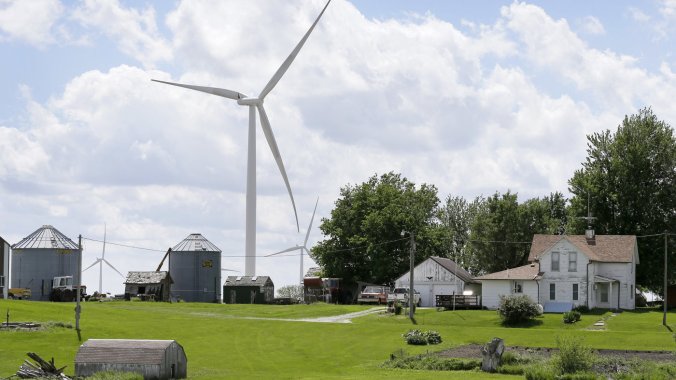
A wind turbine stands over a farmhouse in Adair, Iowa. Charlie Neibergall/AP

Thanks to National Public Radio (USA):

Obama’s New Clean Energy Goal For North America: 50 Percent By 2025

The three leaders are expected to set a target for North America to get 50 percent of its electricity from nonpolluting sources by 2025. That’s up from about 37 percent last year.

Aides acknowledge that’s a “stretch goal,” requiring commitments over and above what the three countries agreed to as part of the Paris climate agreement. Continue reading

Watch Your Wood, Know Its Origin

2000 (1)

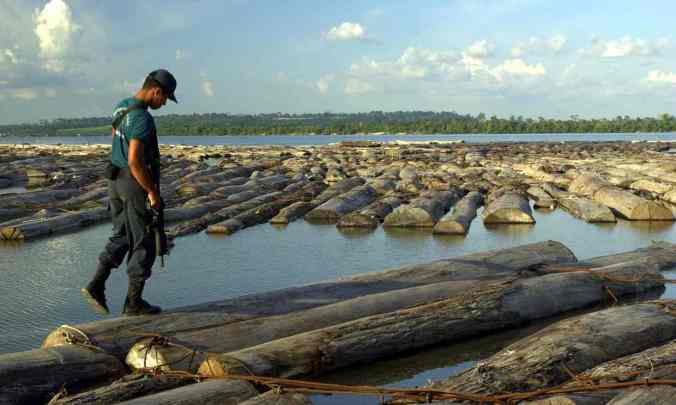
An armed officer inspects a seizure of thousands of illegal mahogany logs in Brazil. Photograph: Dado Galdieri/AP

Thanks to the Guardian for this reminder that we consumers need to do our caveat emptor duties when buying wood products:

Deforestation is rife in the Amazon, Colombia and the Philippines, say environmental groups

British shoppers could be unknowingly buying wooden furniture, flooring and even food items that are byproducts of destructive illegal logging in the Amazon, environmental campaigners are warning.

Friends of the Earth is calling on ministers to make companies reveal the source of their products in order to stop the black market trade. Last week human rights watchdog Global Witness revealed that 185 environmental activists were killed in 2015, many of whom had been trying to stop illegal logging in the Amazon. An estimated 80% of Brazilian hardwood is illegally logged.

Continue reading

Op-ed: Can Brexit Work for the Environment?

Magazine cover by Barry Blitt

We’ve been reading for several weeks now in The Guardian that leaving the European Union would not be good for the United Kingdom’s air pollution problems, their landfill waste management, their wildlife conservation, and so on. Now that the vote has been made and the break will happen, Craig Bennet, CEO of the environmental justice and advocacy group Friends of the Earth, has written a piece for the British news source pleading with readers to not let a departure from the E.U. start a downward spiral on environmental issues for the U.K:

Friends of the Earth campaigned vigorously to remain in the EU. Membership of Europe has been good for our ‘green and pleasant land’, and the plain truth is that pollution doesn’t recognise national boundaries. It seems obvious to me that the best way of solving anything other than very local environmental problems is for countries to cooperate and develop solutions under a common framework.

Continue reading

John Muir’s Writings About Yosemite

lead_large (3).jpg

Library of Congress

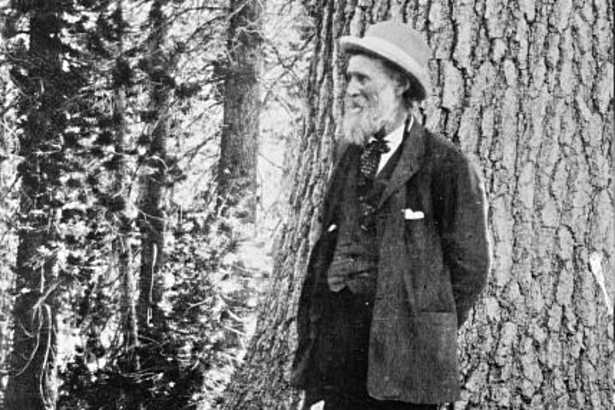
We posted about John Muir’s writings in the Atlantic four years ago, once we realized they were so accessible in that magazine’s archives. In that post, two years into our foray in India, we simply wanted to share our amazement that Muir had written about India as an example relevant to the case for protecting the forests of North America. We have also posted about Muir indirectly, including a lovely photo-documented post about his visit with Teddy Roosevelt to several wilderness areas that would become iconic national parks.

As we prepare for the expansion of our activities in India, and in advance of our announcement of two exciting new conservation initiatives in Mesoamerica that we will embark upon next month, I have been going back through our archives, enjoying some examples of the historical perspective this platform has allowed us to share.

Today, in the spirit of the centenary of the National Parks Service, and considering this past weekend’s visit to Yosemite by the President of the USA, it makes sense to share another of Muir’s several contributions to The Atlantic, this one specifically about the first national park (which predates the creation of the NPS):

The Yosemite National Park

“All the world lies warm in one heart, yet the Sierra seems to get more light than other mountains.”

JOHN MUIR   AUGUST 1899 ISSUE

Of all the mountain ranges I have climbed, I like the Sierra Nevada the best. Though extremely rugged, with its main features on the grandest scale in height and depth, it is nevertheless easy of access and hospitable; and its marvelous beauty, displayed in striking and alluring forms, wooes the admiring wanderer on and on, higher and higher, charmed and enchanted. Benevolent, solemn, fateful, pervaded with divine light, every landscape glows  Continue reading

New York Times Editorial On USA National Parks

18sat1-master768

If you have been reading our posts for the last five years, you will find we have much in common with the editorial board at one of our favored news sources:

Monuments for Future Generations

President Obama’s visits this weekend to Carlsbad Caverns and Yosemite national parks give him a timely opportunity to think about how, in the twilight of his presidency, he can add to what has already been an admirable record of protecting America’s public lands and marine reserves. The parks themselves are in a celebratory moment, the 100th anniversary of the founding of the National Park Service. But given Congress’s preference for partisan infighting over environmental stewardship, it is unlikely to approve any additions to the park system. Still, there is much that Mr. Obama can do on his own using the 1906 Antiquities Act, which allows a president to unilaterally protect areas of great natural or historical value as monuments when Congress is unlikely to act. Continue reading

Coral Reef Bright Spots

lead_960 (3).jpg

Tane Sinclair-Taylor

Thanks, as always, to Mr. Yong and his team at Atlantic Monthly:

Why Some Coral Reefs Are Thriving

Not all of the world’s reefs are in bad shape—and a few of the healthiest are managed by humans.

by Ed Yong

In 1990, Jerry Sternin from the global charity Save the Children traveled to Vietnam to fight malnutrition. His strategy was simple. He looked for ‘bright spots’—mothers whose children were bigger and healthier than average, even though they were just as poor and disadvantaged as their neighbors. And he asked: what were they doing differently? Continue reading

An Important Question From E.O. Wilson

4202

A bald uakari monkey (Cacajao calvus) in the flooded forest of the Amazon in Brazil. The IUCN Red List categorizes this species as vulnerable. Photograph: Alamy

Thanks to the Guardian for continuing to give a platform where it is most needed with respect to the natural environment:

Could we set aside half the Earth for nature?

Renowned biologist E.O. Wilson wants to set aside half of the planet as protected areas for nature. But is this possible? And, if so, how would it work?

by Jeremy Hance

As of today, the only place in the universe where we are certain life exists is on our little home, the third planet from the sun. But also as of today, species on Earth are winking out at rates likely not seen since the demise of the dinosaurs. If we don’t change our ways, we will witness a mass extinction event that will not only leave our world a far more boring and lonely place, but will undercut the very survival of our species.

So, what do we do?

E.O. Wilson, one of the world’s most respected biologists, has proposed a radical, wild and challenging idea to our species: set aside half of the planet as nature preserves.

Continue reading

Palm Oil Problems

By now not many people who are literate and connected to global news can say they did not know that palm oil is problematic; they can only say either that they care, or do not. Knowing where your biodiesel comes from may influence what you can do about this problem:

Leaked figures show spike in palm oil use for biodiesel in Europe

Steep rise between 2010 and 2014 shows link between EU’s renewable energy mandate and deforestation in south-east Asia, say campaigners

3000 (2)

A forest activist inspects land clearing and drainage of peat natural forest Sumatra, Indonesia. Photograph: Ulet Ifansasti/Getty Images

Leaked trade industry figures show a five-fold increase in the use of palm oil for biodiesel in Europe between 2010 and 2014, providing new evidence of links between deforestation in southeast Asia and the EU’s renewable energy mandate. Continue reading

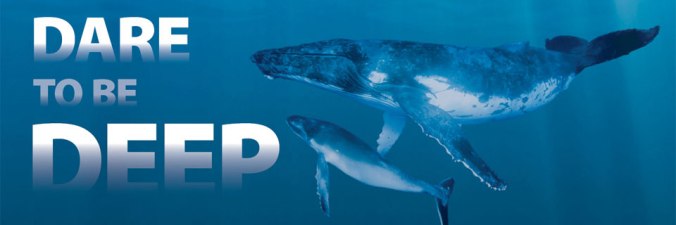
Dare To Be Deep

feature_daretobedeep.jpg

CPAWS has been around for decades, but we seem to have missed it in these pages in the five years we have been linking out to notable conservation initiatives:

The Canadian Parks and Wilderness Society (CPAWS) is Canada’s only nationwide charity dedicated solely to the protection of our public land and water, and ensuring our parks are managed to protect the nature within them. In the past 50+ years, we’ve played a lead role in protecting over half a million square kilometres – an area bigger than the entire Yukon Territory! Our vision is to protect at least half of our public land and water so that future generations can experience Canada’s irreplaceable wilderness.

The Dare to be Deep initiative just came to our attention:

Every second breath we take comes from the ocean that covers 70% of our planet. The ocean also regulates the temperature of our planet, and provides us with an important source of protein and food. Continue reading

New Marine Park in Malaysia

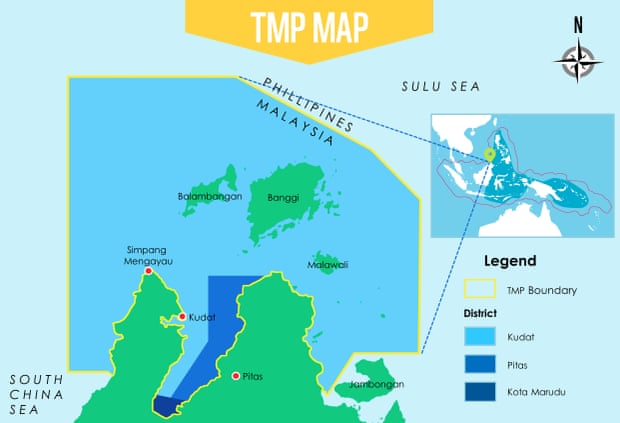
A map of the new Tun Mustapha marine protected area, which occupies just under one million hectares of seascape, including more than 50 islands. Illustration: WWF Malaysia

The more protected areas for wildlife in the world the better, in our book. So we’re happy to hear that Malaysia has created a new marine park, the largest of its kind in the country, that covers a million hectares, or around two million football fields. With so many coral and fish species in the region, it’s a great step forward for conservation in an area at risk for over-fishing or poor practices like blast or cyanide fishing. Johnny Langenheim reports:

Malaysia has just established the biggest marine protected area (MPA) in the country. The Tun Mustapha park (TMP) occupies 1m hectares (2.47m acres) of seascape off the northern tip of Sabah province in Borneo, a region containing the second largest concentration of coral reefs in Malaysia as well as other important habitats like mangroves, sea grass beds and productive fishing grounds.

It is also home to scores of thousands of people who depend on its resources – from artisanal fishing communities to the commercial fisheries sector – making it in many ways a microcosm of the entire Coral Triangle bioregion, where environmental protection must be balanced with the needs of growing coastal populations.

Continue reading

Fighting Flouting Fishing Fleets

3888

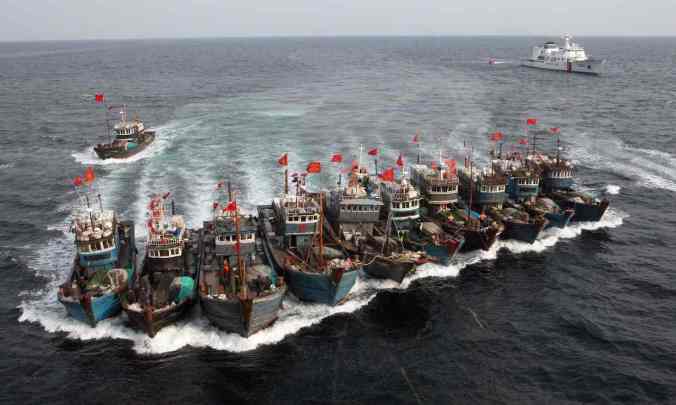
Chinese boats banded together with ropes, after alleged illegal fishing in South Korean waters in the Yellow Sea off the southwestern coast county of Buan. Photograph: Dong-A Ilbo/AFP/Getty Images

Tragedy of the commons on the high seas, fought by those who perceive their interests in common enough to do something about it (a tricky thing, as we note frequently), once again in the news.  Thanks to the Guardian, and environmental reporter Emma Bryce, for this reportage:

Tens of countries sign up to shut pirate fishers out of their ports

The first of its kind, a new international treaty obliges signatories to intercept pirate fishers before they can sell their catch

In March, the Argentinian coast guard shot at and sank a Chinese vessel that was alleged to be fishing illegally in Argentinian waters (the crew were all rescued). While it’s unclear whether the boat was committing crime, the incident showed that the tension surrounding pirate fishing is reaching a peak, marked elsewhere by increasing conflict, and the detainment and scuttling of illegal fishing fleets. But for pirate fishers, the financial gains appear to be worth these risks. Continue reading

Balancing Conservation With Use

Bill-Clark_605

Photo courtesy of William Clark. William Clark, Harvey Brooks Professor of International Science, Public Policy, and Human Development at Harvard Kennedy School, has co-authored a new book on sustainability. “Achieving more equitable and sustainable use of the Earth requires a great deal of working together,” he said.

Thanks to the Harvard Gazette for this interview with William Clark:

Pursuing sustainability

A Q&A on connecting science and practice, balancing conservation with use

By Amanda Pearson, Weatherhead Center Communications

United Nations Secretary-General Ban Ki-moon on Friday will welcome 130 heads of state who have pledged to sign the Paris Agreement, the global agreement on managing climate change. For William Clark, Harvey Brooks Professor of International Science, Public Policy, and Human Development at Harvard Kennedy School (HKS), sustainability is a global imperative and a scientific challenge like no other.

Clark sees the Paris Agreement as just one step, though an important one, in this urgent pursuit, as officials wrestle with how to meet the needs of a growing human population without jeopardizing the planet for future generations. He and co-authors Pam Matson of Stanford University and Krister Andersson of the University of Colorado at Boulder tackle that issue in a new book, “Pursuing Sustainability: A Guide to the Science and Practice.” By looking at sustainability as a means of alleviating poverty and enhancing well-being, the book highlights the complex dynamics of social-environmental systems, and suggests how successful strategies can be shaped through collaborations among researchers and practitioners.

Clark, who trained as an ecologist, said that while exhausting Earth’s natural resources would jeopardize future generations, sustainability could counter that. The goal is to find a healthy equilibrium between human adaptation and natural evolution. Clark, the co-director of the Sustainability Science Program at HKS, spoke with the Weatherhead Center for International Affairs about building a more sustainable future. Continue reading

Diesel’s Downsides

4096

Exhaust from a diesel engine is tested for nitrogen oxides. Photograph: Patrick Pleul/EPA

Thanks to the Guardian’s Environment section:

Europe’s problem with diesel cars

By 

New UK government tests confirm that diesel cars produce a lot more air pollution in real-world driving when compared with the legal tests. Those sold since 2009 emitted six times more nitrogen oxides, on average.

Compared with the stricter standards applied to petrol cars, the average diesel sold between 2009 and 2015 emitted 19 times more nitrogen oxides.

In 2014, more than half of new cars in Europe were diesel, so solving our air pollution problems will not be easy. The Airuse project highlighted the role of taxation in car buying choice. All European countries, except the UK, have lower tax on diesel fuel compared with petrol. Continue reading