Scientists Speak On Behalf Of Yellowstone Grizzly Bears

Thank you, EcoWatch, for keeping us posted on Jane Goodall’s never-ending advocacy on behalf of various members of the animal kingdom we co-inhabit the earth with:

Dr. Jane Goodall is one of 58 prominent scientists and experts who have signed a letter asking the U.S. Fish and Wildlife Service (USFWS) to retain Endangered Species Act protections for Yellowstone-area grizzly bears. Continue reading

McKibben In The Guardian

3840

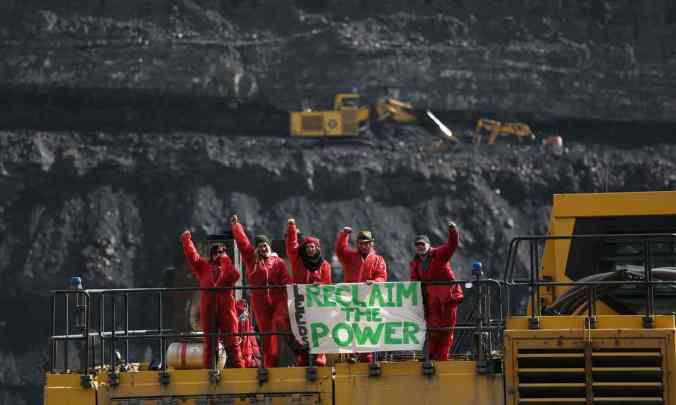
Global direct action began with hundreds of environmental activists invading the UK’s largest opencast coal mine in south Wales on Tuesday. Photograph: Kristian Buus for the Guardian

More McKibben, who we believe we will never tire of sharing here:

The time has come to turn up the heat on those who are wrecking planet Earth

An interesting question is, what are you waiting for?

Global warming is the biggest problem we’ve ever faced as a civilisation — certainly you want to act to slow it down, but perhaps you’ve been waiting for just the right moment. Continue reading

Go, Phil, Go

Sohn-TheEcologistWhoRanAway-290x149-1462229623

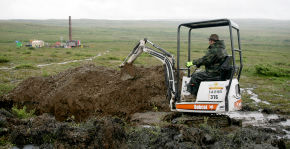
A worker near the Pebble Mine, in Alaska ’s Bristol Bay region, which is at the center of a long-running legal battle between a Canadian developer, native tribes, commercial fishermen, and environmentalists. PHOTOGRAPH BY AL GRILLO / AP

Thanks to Tim Sohn for bringing Phil North to our attention:

The E.P.A. Ecologist Who Became a Wanted Man

BY

When Phil North retired from the Environmental Protection Agency, after a mostly quiet twenty-three-year career in Alaska, his plan was to embark on an around-the-world sailing trip with his wife and two young children. But when it came time to weigh anchor, there was a problem: the aging boat that North had docked in South Carolina proved unsalvageable. A hunt for another suitable vessel in his price range yielded nothing. After a series of discussions and a vote, the family decided, in early 2014, to fly to New Zealand. “We were only going to go for three months, but we loved it and ended up buying a camper van and driving around for ten months,” North, who is fifty-nine, told me recently. “And then our visa ran out, and we thought, We’re so close to Australia, we can’t not go.” So they went, and toured the country for another year. Continue reading

Climate Handshake

obamaxi_750

Chinese President Xi Jinping shakes hands with U.S. President Barack Obama at a press conference following their talks at the Great Hall of the People in Beijing, capital of China, Nov. 12, 2014. Photo credit: Xinhua / Liu Weibing

Thanks to EcoWatch, as usual, for keeping us up to date on all things climate change-related:

The two nations will also “take their respective domestic steps in order to join the agreement as early as possible this year” and urge other countries to do the same, “with a view to bringing the Paris agreement into force as early as possible.”

The presidents also indicated that they are planning agreements to limit aviation emissions and the powerful greenhouses gases known as HFCs. Experts and environmental groups are heralding the announcement as a “significant” step, saying that the U.S.-China commitment sends a “strong signal” to other countries. 

Here’s the U.S.-China joint presidential statement on climate change:

1. Over the past three years, climate change has become a pillar of the U.S.-China bilateral relationship. Both countries have taken strong measures at home to build green, low-carbon and climate-resilient economies, helping galvanize global action to combat climate change and culminating in the Paris Agreement reached last December. Continue reading

From A Friend In San Francisco

The magazine Bay Nature is new to us, brought to our attention thanks to a friend from that part of the world. It comes via this particular article, which touches on several topics–fungi, birds, conservation and Bay Area awesomeness–commonly seen in our own pages in the last five years. Have a read below and if you like it go read the remainder on their website:

Identifying With Lichen

How the surprising union between a fungus and an alga raises questions about the nature of identity

by Elizabeth Lopatto

In July, Governor Jerry Brown signed into law a bill declaring the lace lichen—found along the Pacific coast and throughout the coast ranges—the state lichen. As of January 1, 2016, California will be the first state ever to designate a lichen as a state symbol.

Lace lichen, Ramalina menziesii, is easily recognized. It is pale green and dangles in strips from trees. It’s sometimes confused with Old Man’s Beard (Usnea sp.), which is also pale green and dangly. Lace lichen’s range stretches from Alaska to Baja California. It’s an important food for deer; it also serves as material for birds’ nests. I see it once, in researching this story, when naturalist Morgan Evans, a former student naturalist aide at Tilden Nature Area in the East Bay hills, removes it from her backpack and spreads it out. Evans is a pleasant and patient woman, whose true love is fungi. Her interest in lichens is an extension of that, she says. Anyway, she found some lace lichen growing in Morgan Territory Regional Park. She figured I’d want to see it and there isn’t much growing in Tilden that she knows of. She hands me the lichen, which feels strangely plasticine. It’s pale green—she wetted it so it wouldn’t crumble when she transported it—and dangles impressively, at least six inches long. Lace lichen can grow as long as a meter, and it has a netted structure that looks, to me at least, more like fishnet stockings than lace. Perhaps fishnet-stocking lichen would be a little too racy a nickname. Continue reading

News We Can Cheer

windwins750.jpg

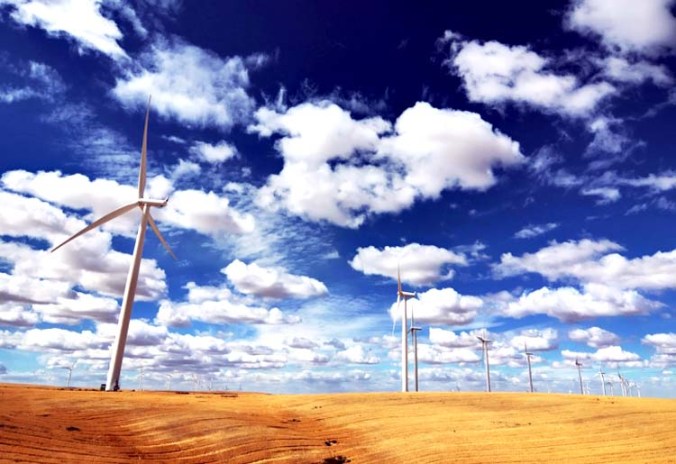
A wind farm in Washington state. Photo credit: Daniel Parks / flickr

Thanks to EcoWatch for this unexpected news:

Renewable Energy Investments Set New Record, Twice That of Coal and Gas

Renewable energy investment totaled a record $286 billion, with China, India, Brazil and other developing countries accounting for $156 billion in 2015. China’s investment alone rose 17 percent from the year prior, representing 36 percent of the global total. Experts expect this surge to continue, while coal remains in decline; China also announced this week that they will be suspending construction of new coal mines in 15 provinces. Continue reading

Urban Heroic Recycling

29RECYCLE1-master675

Workers inspecting a bale of refuse at the Recology recycling plant in San Francisco. Foreign officials and others often visit the facility for ideas on how to handle their own mushrooming piles of garbage. Josh Haner/The New York Times

From the New York Times:

San Francisco, ‘the Silicon Valley of Recycling’

By

Robert Reed, who is enjoying a surprising career turn as a busy tour guide at the latest hot spot here, stood smiling one recent sunny morning before 10 foreign dignitaries and journalists. They included the mayor of Genoa, Italy, and the general consuls from Italy, Canada and Switzerland.

Each visitor wore a sport coat and tie, and a yellow safety vest to ensure they wouldn’t be run down by garbage trucks. Continue reading

Methane Is Madness, Central New York

25559408356_2c9efc84c5_b

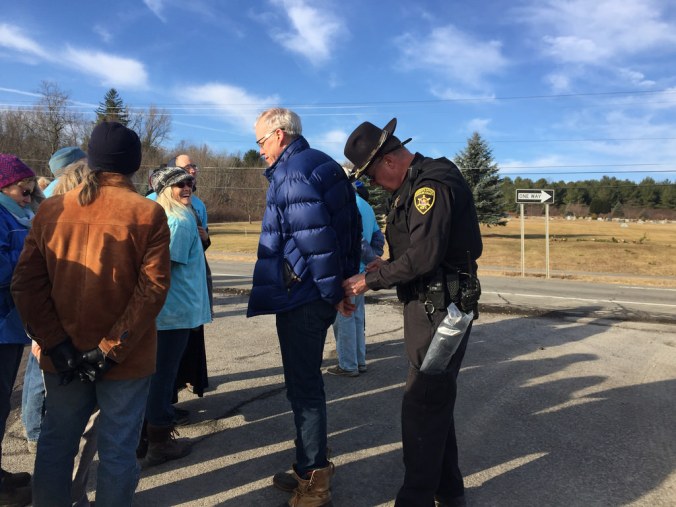
No one contributing to these pages has (yet) taken protest quite this far. We are not surprised to see the man in the blue jacket getting arrested, on principle, but the others listed below–none with as famous a name but all living in a famously protest-inclined part of New York State–make us wonder whether we have what it takes:

Bill McKibben Arrested at Civil Disobedience Action Against Gas Storage at Seneca Lake

Famed author and climate activist joins 56 people from 20 NYS counties to form human blockade at the gates of Crestwood Midstream, demands halt to climate-damaging fracked gas infrastructure, as total number of arrests in sustained campaign hits 537

Watkins Glen, NY – The fight over the fate of the Finger Lakes became national today when best-selling author, environmentalist, and founder of the international climate campaign, 350.org, Bill McKibben joined the opposition. McKibben, 55, was arrested this morning with 56 area residents as part of an ongoing civil disobedience campaign against proposed gas storage in Seneca Lake’s abandoned salt caverns. Continue reading

My Big Fat Floating Solar Panel

QE-press-release

This recent Thames Water press release has just come to our attention and it sounds like progress, or what we count as good news:

Europe’s biggest ever floating solar panel array is being installed on London’s Queen Elizabeth II reservoir as part of Thames Water’s ambitious bid to self-generate a third of its own energy by 2020.

Continue reading

Climate Denier Roundup

leospeech_750.jpg


You will never have seen Leo’s name in these pages before; our reason for linking to this story is just because the subtitle/byline is so delicious (thanks to EcoWatch):

What Climate Deniers Had to Say About Leo’s Oscars Speech

Climate Denier Roundup | March 1

Millions heard the call for climate action on Sunday night, when Leonardo DiCaprio (finally) accepted the Academy Award for Best Actor for his role in The Revenant.

Continue reading

Yay, Iceland

CcE7MA8WoAE1RFC

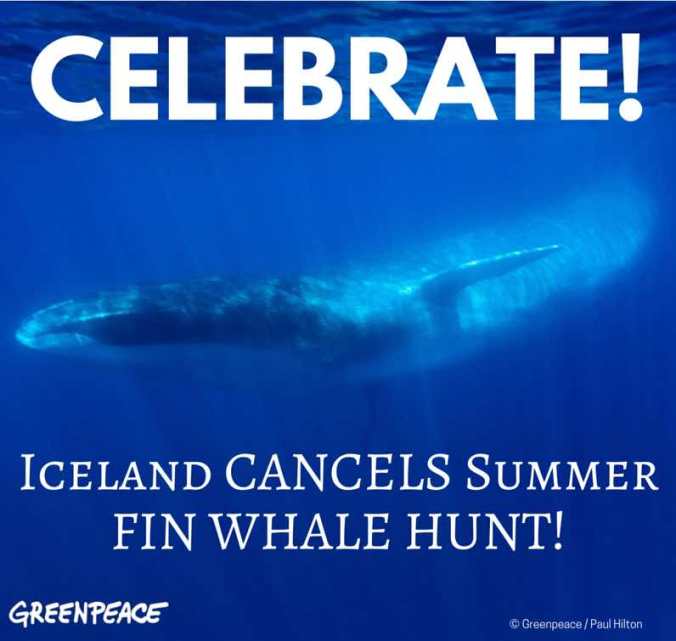
Thanks to Ecowatch for sharing this news, and megathanks to Iceland for making the news:

…Word today from colleagues in Iceland and now reports in both Icelandic and English-language media confirm that the planned hunt for fin whales will not happen this summer. The man behind that whaling is claiming that he’s stopping because of “hindrances” in exporting the meat. That’s great news for whales and everyone who has been opposing this needless, senseless hunt. Continue reading

India’s First Organic State

sikkim

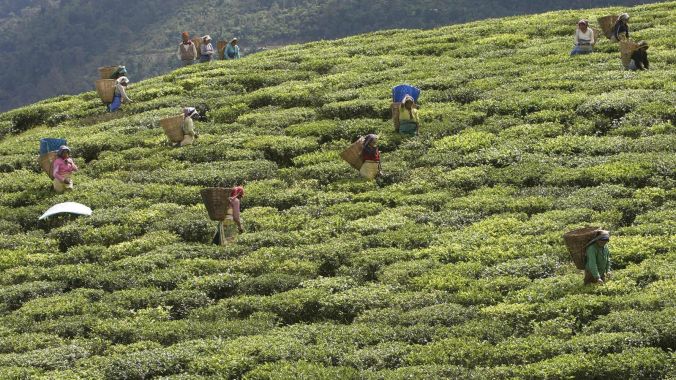
Tea plantations on the hillside. PHOTO: Reuters/ Rupak De Chowdhuri

The buzzword is organic. From grocery store shelves to textile designers to travel. At the center of this phenomenon is respect to the land, cognizance of the immense potential of living organisms, acknowledgement of a way of life that has restorative powers. Today, India hears that message loud and clear in the North-eastern hill state of Sikkim.

Continue reading

A Tiny Land and Its Large Ocean Reserve

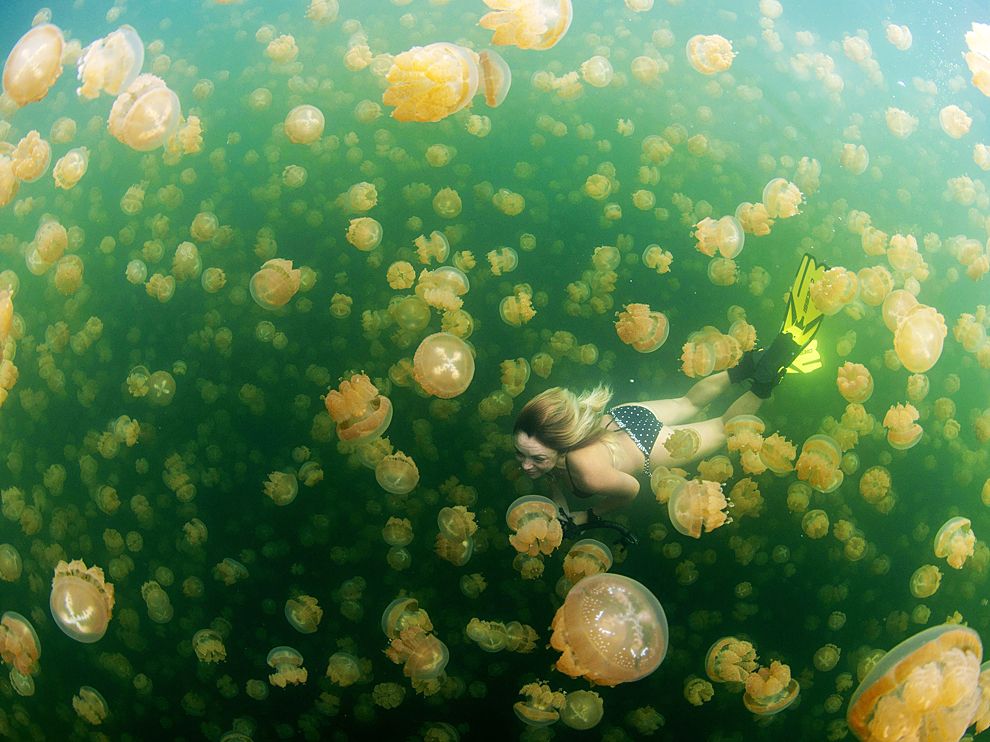
The president of Palau signed legislation Wednesday designating a reserve that's about 193,000 square miles (500,000 square kilometers) in size. This makes it one of the five largest fully protected marine areas in the world. PHOTO: National Geographic

The president of Palau signed legislation Wednesday designating a reserve that’s about 193,000 square miles (500,000 square kilometers) in size. This makes it one of the five largest fully protected marine areas in the world. PHOTO: National Geographic

The Chilean government recently announced that it has created the largest marine reserve in the Americas by protecting an area hundreds of miles off its coast roughly the size of Italy. The new area, called the Nazca-Desventuradas Marine Park, constitutes about eight percent of the ocean areas worldwide that have been declared off-limits to fishing and governed by no-take protections. Now, the Pacific island nation of Palau has resolved to protect nearly 80% of its oceans.

Continue reading

When Development Usurps Lakes

Half of the water bodies in and around Srinagar have disappeared over the last century under the pressure of rapid and badly managed urbanisation. PHOTO:

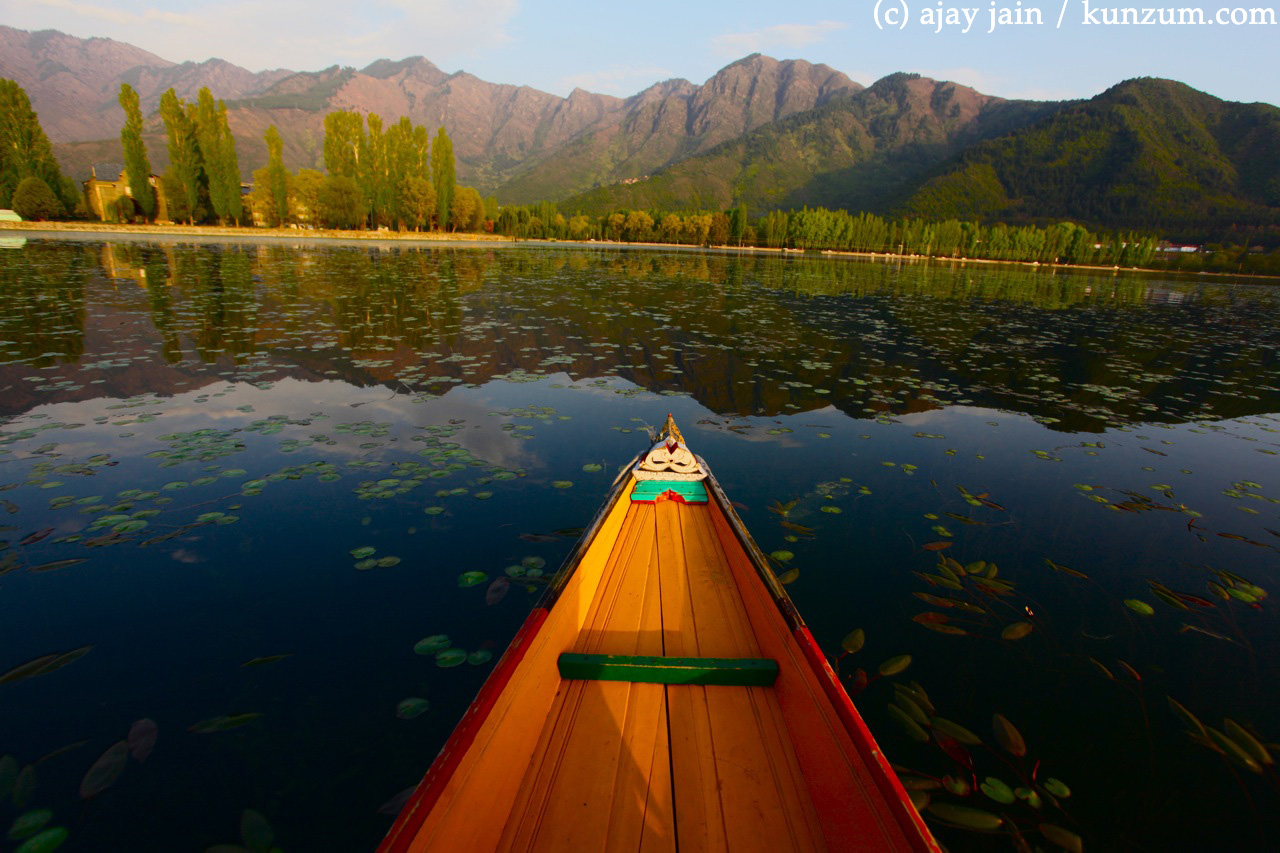
Half of the water bodies in and around Srinagar have disappeared over the last century under the pressure of rapid and badly managed urbanisation. PHOTO: Kunzum

Urban India is witnessing a rapid growth with more than 300 million Indians already living in cities and towns. In the coming 20-25 years, another 300 million people will be added to the urban population. If not managed properly, Indian cities will turn into ecological disaster zones. In a hurry to expand, cities have already eaten into their local water bodies. Kashmir, the land of snow\clad mountains and unrivaled natural beauty, is feeling the heat already.

The beautiful Kashmir Valley has over a thousand small and large water bodies, which are the bedrock of both its ecology and its economy. Unfortunately over the last century, massive urbanisation around these water bodies has led to pollution, siltation due to deforestation and overexploitation of the many streams and lakes. Many have shrunk to a fraction of their original size while some have all but disappeared.

Continue reading

As Wild As It Gets

Greg Carr says Gorongosa is a “human development and conservation project". PHOTO: BBC

Greg Carr says Gorongosa is a “human development and conservation project”. PHOTO: BBC

What does it take to restore a wildlife hotspot? To put some animals back in, develop and sustain the environment so more animals return, and hold up the model as a means to uplift communities, and thereby the nation? The answer is Gorongosa National Park – a Mozambican safari paradise.

In 1962, six-year-old Vasco Galante was treated to his first cinema trip – to see Charlton Heston in the Hollywood epic, The Ten Commandments. But despite the blockbuster’s eye-popping sequences, the images that most impressed young Vasco came from a short advert shown before the film, which showcased the elephants, lions and buffalo in the verdant floodplains of Gorongosa National Park – a Mozambican safari paradise once marketed as “the place where Noah left his Ark”.

As he left the Lisbon picture house, young Vasco vowed to visit the park one day, and more than 40 years later, he finally got the chance. But the park he encountered was a far cry from the Gorongosa of ’60s showreels that once attracted the likes of John Wayne, Joan Crawford and Gregory Peck. A brutal 15-year civil war in the aftermath of Mozambique’s independence from Portugal in 1975 had devastated much of the province, and Gorongosa, one of its key battle grounds, was almost destroyed.

Continue reading

365 Days in the Wilderness

Amy and Dave Freeman paddle into the Boundary Waters, starting their 365 days in the wilderness to raise awareness of mining plans in the region.PHOTO: Alex Chocholousek

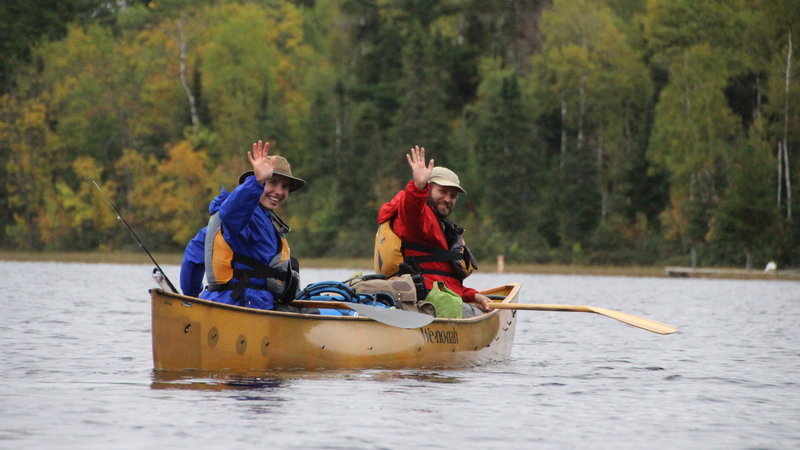
Amy and Dave Freeman paddle into the Boundary Waters, starting their 365 days in the wilderness to raise awareness of mining plans in the region.PHOTO: Alex Chocholousek

The Boundary Waters Canoe Area Wilderness is located in the northern third of the Superior National Forest in northeastern Minnesota. Over 1 million acres in size, it extends nearly 150 miles along the International Boundary adjacent to Canada’s Quetico Provincial Park and is bordered on the west by Voyageurs National Park. The BWCAW contains over 1200 miles of canoe routes, 12 hiking trails and over 2000 designated campsites. Wilderness offers freedom to those who wish to pursue an experience of expansive solitude, challenge and personal integration with nature.

And now some, or all of it, may be lost to sulphide mining.

Continue reading

Redefining Disabilities Through Organic Farming

39-year-old Mahadev Charokar is vision impaired but has got amazing hearing, olfactory and tactical senses. He can differentiate between various denominations of currency notes, can walk up to his farms 1.5 km away and even lead a bullock-driven plough on fields. PHOTO: The Alternative

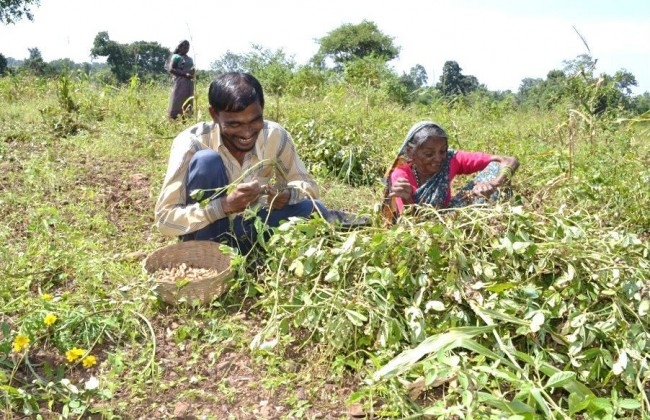
39-year-old Mahadev Charokar is vision impaired but has got amazing hearing, olfactory and tactical senses. He can differentiate between various denominations of currency notes, can walk up to his farms 1.5 km away and even lead a bullock-driven plough on fields. PHOTO: The Alternative

The adoption of the World Programme for Action concerning Disabled Persons in 1982 laid the foundation for a new approach to disability, with the goals of full participation and equalization of opportunities for persons with disabilities. The World Programme of Action has time and again reinforced the role of persons with disabilities as both agents and beneficiaries of development. The onus is on taking action so that persons with disability do not end up being referred to as a “vulnerable group” but rather, that disability itself will be considered as a cross-cutting theme in any emerging goals on sustainable development. In Madhya Pradesh, India, a unique experiment with organic farming is mainstreaming people with disabilities.

Continue reading

Costa Rica, Punching Above Its Weight, Competitively

“I’m very comfortable with the word ‘revolution,’ ” Figueres said.

“I’m very comfortable with the word ‘revolution,’ ” Figueres said.

Usually “punching above your weight” is a reference to a competition you are not prepared to win. But based on our experience in and observation of Costa Rica it means something entirely different to us. It means something more like: go for it! Give it your best even if the odds are not with you. If not you, then who?

We all have a debt, of one sort or another, to Costa Rica from my perspective if only for this reason. In so many ways it has been inspirational in an against-the-odds sort of way. And who can resist a bit of inspiration?

I shared this article with the La Paz Group teams in India and Costa Rica yesterday, with a note about how it helps understand the challenges related to climate change and what can be done about those challenges—all relevant to the 3 C’s of La Paz Group. Complicated stuff, but clearly important.

I also shared the article for another reason. The woman who features in this article is from Costa Rica, and reading it you can understand a bit better why Costa Rica is so frequently mentioned as an environmentally responsible country. This is important for all of us in La Paz Group because our journey began in Costa Rica, which started our path to Kerala, India and many other places beyond.

To give one small but important example of the long range impact of Costa Rica on La Paz Group, consider the Certification for Sustainable Tourism program developed two decades ago under the visionary leadership of the president of Costa Rica (brother of the subject of the linked article here). Jocelyn is at Xandari Costa Rica specifically to work on getting Xandari to rise up to the highest level from its current status at the second highest level of CST ranking. She has made this the foundation of her career development just after graduating from one of the world’s most prestigious academic institutions. It is impressive that she chose to do so, but equally telling about the lasting impact of Costa Rica’s commitment to sustainable development. Continue reading

Conservation, Scotland Style

Monitors and a fisherman check lobster traps. Credit Andrew Testa for The New York Times

Monitors and a fisherman check lobster traps. Credit Andrew Testa for The New York Times

We like his simplicity, his tenacity, his practicality; most of all we appreciate the outcome:

Scotsman’s Mission Ends in a Fishing Bay Restored

HOWARD WOOD, round-faced and jolly, was happily counting the lobsters being pulled, measured and tagged out of the coastal waters he has worked for years to protect. One weighed close to four pounds, its huge right claw dwarfing its left, which was growing back after what must have been quite a battle. Continue reading

On the Tail of the Tiger

A captive tiger at Bannerghatta National Park, Bengaluru, India. PHOTO: Rosanna Abrachan

A captive tiger at Bannerghatta National Park, Bengaluru, India. PHOTO: Rosanna Abrachan

The world has seen the population of individual wild tigers dwindle from 100,000 in 1913 to just about 3,200 now. Classified into six species, a majority of these surviving cats belong to the specie panthera tigris tigris, more popularly known as the Bengal tiger, that are found in India. Here too, their population, estimated to be between 20,000-40,000 at the turn of the 20th century, reduced to fewer than 2,000 by the 1970s, mostly due to hunting and poaching. It has now inched to 2,226, making India home to 70% of the world’s total tiger population.

Continue reading