Turtles & Tortoises & Negative Senescence

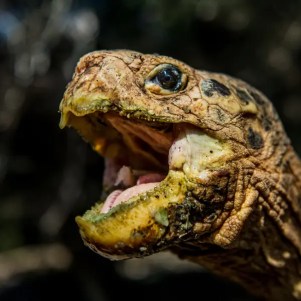
A giant Galápagos tortoise, only as old as it feels. Meridith Kohut for The New York Times

When I learn a new word–even if it is a word I cannot picture using in conversation but it represents a concept that is interesting and surprising, I consider that a good day. Jack Tamisiea, thanks for the science reporting here, and especially for the word senescence:

Tortoises and turtles don’t just live for a long time — they barely age while they live.

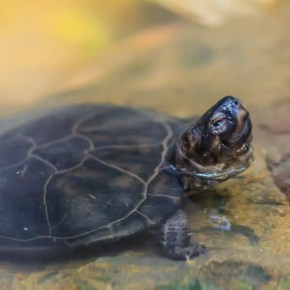
The black marsh turtles displayed negative rates of senescence, meaning their mortality risk decreased as they aged. iStock/Getty Images

For mammals like humans, aging is inevitable. No matter how many vitamins we take, skin sags, bones soften and joints stiffen over time. However, turtles and tortoises age more gracefully. Despite their wrinkled skin and toothless gums, species like Galápagos giant tortoises seem unscathed by the ravages of aging. Some show few signs of slowing down as they plod into their 100s.

To determine what drives these ageless wonders, two groups of researchers examined turtles, tortoises and their ectothermic, or coldblooded, brethren in a pair of studies published Thursday in the journal Science. Continue reading
South-South Cooperation In The Fight Against Invasive Species

2759.jpeg

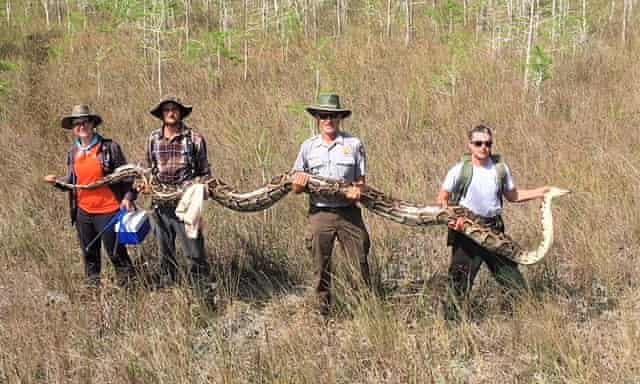
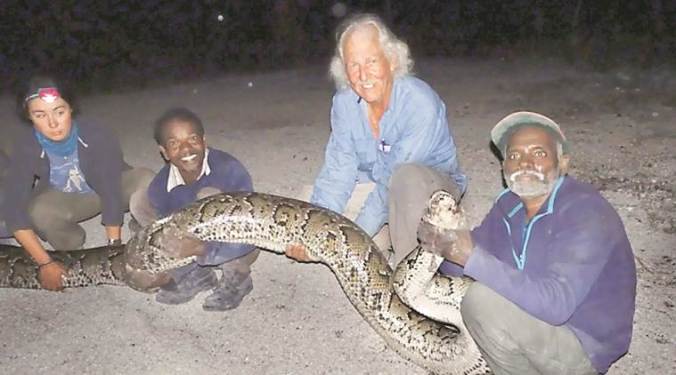
We missed the story last year about two men in the photo above, from southern India, who were brought to the Florida habitat where invasive pythons are doing enough damage that we started paying attention eight years ago. We are thinking about it again, thanks to the Guardian:

Snake hunters have captured what they say is the largest python ever found in the swamps of the Florida Everglades: a pregnant female more than 17ft (5.2 metres) long and weighing 140lb, or 63.5kg.

The team from the Big Cypress National Preserve posted news of their record-setting catch in a Facebook post that also noted the giant reptile was carrying 73 eggs.

640 (1).jpg

Big Cypress National Preserve group captures 17ft female python on 4 April. Photograph: Big Cypress National Preserve/Facebook

Environmentalists have been struggling to find ways to eradicate Burmese pythons, a non-native species, from the 1.5m-acre wilderness since the 1980s, when some were released into the wild as overgrown pets. Others escaped from a breeding facility wrecked by Hurricane Andrew in 1992. Continue reading

Mary River Turtle, Hang On!


Thanks to the Guardian for bringing this to our attention:

Green-haired turtle that breathes through its genitals added to endangered list

With its punky green mohican the striking Mary river turtle joins a new ZSL list of the world’s most vulnerable reptiles

3500 (3)

The Mary River turtle, found in Queensland, Australia, features on a new list of the most vulnerable reptile species on the planet. Photograph: Chris Van Wyk/ZSL/PA

It sports a green mohican, fleshy finger-like growths under its chin and can breathe through its genitals.

The Mary river turtle is one of the most striking creatures on the planet, and it is also one of the most endangered.

The 40cm long turtle, which is only found on the Mary river in Queensland, features in a new list of the most vulnerable reptile species compiled by the Zoological Society of London (ZSL). Continue reading

Lost & Found, Lizard Edition

Holloway-Lizard-1200

For nearly two centuries, Varanus douarrha was an enigma. Now it has been resurrected. PHOTOGRAPH COURTESY VALTER WEIJOLA

In our book, lost and found is normally half glass full (versus half empty) new that we enjoy sharing, and this one counts as more than half full due to the intrigue of the history and the odd charisma of the creature:

A LIZARD LOST AT SEA MAKES ITS RETURN

By Marguerite Holloway

On June 27, 1824, a trading vessel en route from Mauritius to England was caught in a powerful gale. For ten days, winds pounded the King George IV until it could no longer hold together. In three perilous traverses, a small rescue boat shuttled those aboard to a beach near the Cape of Good Hope. “Neither myself nor the passengers have saved a single article,” the captain later wrote. “Probably they may cast up in time.” Amid the lost cargo—mostly sugar, cotton, and cloves—were three cases of scientific specimens. Continue reading

Ghost Snake Discovered in Madagascar

Iconic limestone Tsingy rocks in Ankarana National Park in northern Madagascar where the ghost snake was discovered. Photo by Sarah Ruane, LSU

Last month it was Mexico, and this time it’s Madagascar – once again, a new snake species with a presumably localized distribution has been discovered in a little-explored area. The elusive and pale gray snake has likely evolved to camouflage against the rocks of the region, and was named Madagascarophis lolo (lolo meaning ghost in Malagasy) by researchers from the LSU Museum of Natural Science, the American Museum of Natural History and the Université de Mahajunga in Madagascar.

The ghost snake is part of a common group of snakes called Madagascarophis, or cat-eyed snakes, named for their vertical pupils, which is often found among snakes that are active in the evening or night. Many of the cat-eyed snakes are found in developed areas or degraded forests. However, the researchers found the ghost snake on the national park’s iconic pale grey limestone Tsingy rocks.

Continue reading

Some Sea Snakes Lead Dehydrated Lives

Photo © NatGeo

Sea snakes are interesting creatures, and we’ve written about them before, both as heat-stealers in an article on kleptothermy and as victims of uncontrolled fishing for “medicinal” purposes in the Gulf of Thailand. Science writer Ed Yong discusses one particular species of sea snake that lives so permanently in the Pacific ocean that it barely gets to drink fresh water, apart from what it skims off the ocean surface during rains:

If someone asked you to think about a global animal that has spread over much of the earth, you’ll probably think of something like the brown rat, the rock pigeon, or us humans. You probably won’t think about the yellow-bellied sea snake.

It’s a striking animal—two to three feet in length, with a black back and yellow belly. And it is extraordinarily far-ranging for a snake. It lives throughout the Pacific Ocean, which is already more area than all the continents combined, and the Indian Ocean too. Of all the tetrapods—the animal group that includes mammals, birds, reptiles, and amphibians—this little-known snake is one of the most abundant and widespread.

Continue reading

Pinocchio in the Forest

pinocchio20lizard_zpsnwefj0ks

Source: BBC.com

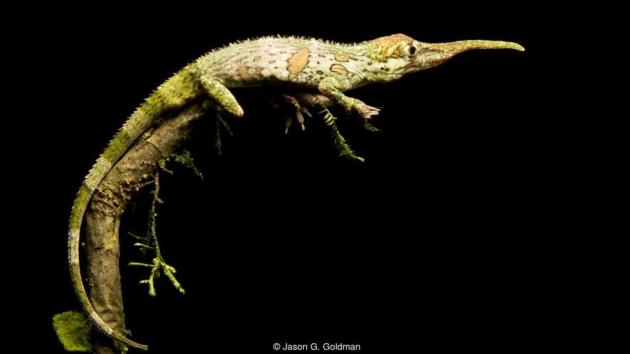
Eccentric and alien-like creatures abound on Earth, but often times these species are found in very remote and small areas. The Ecuadorian horned anole, also known as the “Pinocchio lizard,” is a species that would likely appear in Discovery Channel’s TV series Life (if it has not done so already).  This curious lizard with a long, malleable nose was found in the Mindo cloud forests of Ecuador’s Pichincha Province in the 50’s. Aside from its peculiar nose, what makes the story more intriguing is that it ‘disappeared’ from human research world for almost 40 years until it was rediscovered by a group of birders (hurray birders!) in 2005. The purpose of the horn and how it moves are still a mystery, but Jason Goldman has written an article for the BBC Earth website that elucidates some of the rare reptile’s habits:

Lucas Bustamante carefully aims his laser pointer at a small branch some 50ft (15m) above the ground. The green spot of light is clearly visible, but I just cannot see the lizard he has spotted: just branches, leaves and moss.

Continue reading

Map the Herps You Spot

Spotted Salamander by Brian Magnier

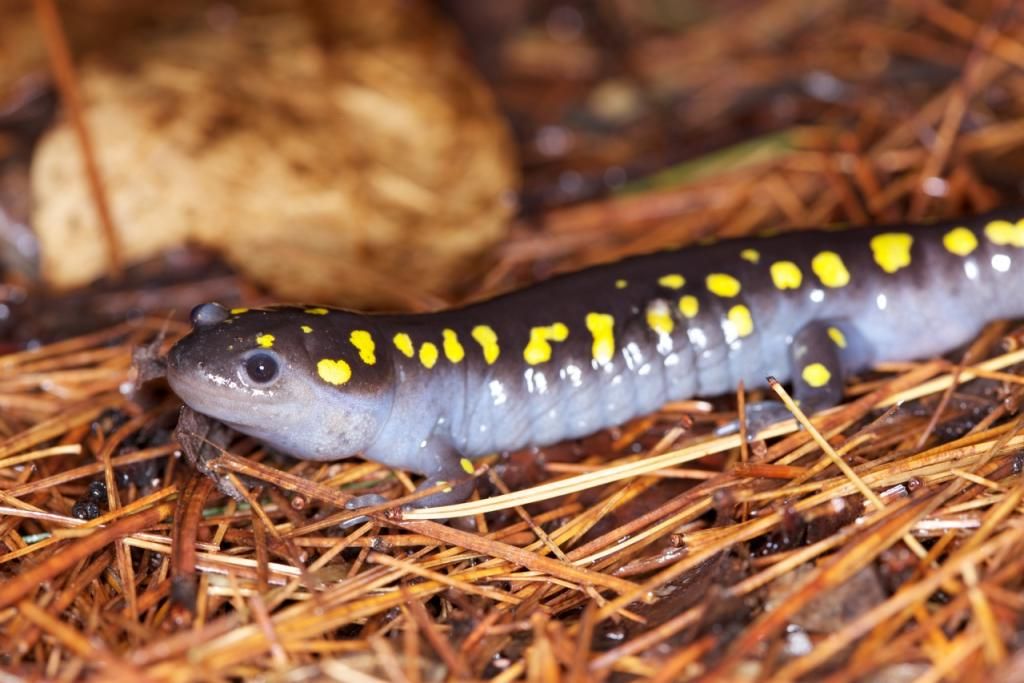
In the spring of my penultimate year at Cornell, I took a Herpetology class that introduced me to the world of reptiles and amphibians, or “herps,” as they’re affectionately known. Thanks to that exposure, I was able to enjoy the spring migration of certain salamander species and learn the basics of the main families of frogs, lizards, snakes, and other herps like alligators, crocodiles, and all the other slimy or scaly animals in the classes Amphibia and Reptilia. If I had known of the existence of the citizen science project HerpMapper at the time (it wasn’t released until September of the same year as that salamander migration) I’d have certainly submitted some observations and photos to the organization! From their About page:

HerpMapper is a cooperative project, designed to gather and share information about reptile and amphibian observations across the planet. Using HerpMapper, you can create records of your herp observations and keep them all in one place. In turn, your data is made available to HerpMapper Partners – groups who use your recorded observations for research, conservation, and preservation purposes. Your observations can make valuable contributions on the behalf of amphibians and reptiles.

Continue reading

Flipping Tortoises

Credit: RubberBall / Alamy. Via BBC

A couple of our contributors have connections to tortoises through the Galápagos Islands, or at least from reading about them in the news. We’d always been aware of the danger for tortoises if they were flipped on their backs, but had never given the issue much evolutionary thought to consider the variations in the animals’ shells. Now, scientists at the University of Belgrade have published a paper on the self-righting ability of Hermann’s tortoises, which live in the Mediterranean. Matt Walker writes for the BBC:

Depending on your point of view, it is one of life’s great questions.

How does a tortoise that has flipped onto its back, get up again?

It’s not a rhetorical question, and it goes beyond being a metaphorical or metaphysical query, or a subject for drunken debate.

For a tortoise it is a deadly serious matter; being able to right itself counts as one of life’s epic struggles, a potential matter of life and death.

Continue reading

Kleptothermy

Photo of Blue-lipped sea krait (Laticauda laticaudata), Anemone Reef, Thailand. Credit: Jon Hanson.

We’ve featured a post on biological theft before, under the name of mycocleptism. In that case the thief was a species of beetle that lived off the fungal tunnels of another beetle species, and now we are learning of a different type of behavior: stealing heat. Apparently certain reptiles, which are unable to bask in the sun at night, have found an effective method of transferring warmth that does not involve time travel. Instead, they snuggle up in the nests of birds. Brian Switek reports on the phenomenon for Nat Geo below, but one question that seems to remain unanswered is whether the feathered members of the deal are getting anything out of their reptilian visitors. For example, sea snakes like the ones mentioned in the referenced article are venomous — could it be that their presence in a shearwater nest would protect the birds from potential predators?

You could bask in the sun to remedy the cold. That’s a classic reptile way of working some warmth back beneath those scales. But there’s another option. You could steal your warmth. All you’d have to do is find some seabirds.

Continue reading

Geckos, A 10th Latitude Lovely

science-take-gecko-sfSpan-v3

Geckos are in most of our favorite places–Kerala, Costa Rica, Ghana–which share some 10th Latitude commonalities in different continents.  They are one tiny example of the commonalities, but one that most of us love, for reasons we cannot begin to explain. So for us this story is a welcome puzzle solver for mysteries we did not know needed explaining, yet enjoy the answers:

SCIENCETAKE

Climbing a Glass Building? Try a Gecko’s Sticky Pads

By JAMES GORMAN

The lizard and, well, Spider-Man, have ideal tools for scaling slippery surfaces. Engineers have copied the gecko’s clingy foot pads.

Snake Charmer

Photo  credit : Jithin

Photo credit: Jithin

Snake charmers can manipulate trained snakes by playing the instrument called pungi from Indian folk music. This practice originated in India and lives on today in street performances. The snake charmers lure the snakes from bamboo baskets with their pungi while tourists and residents alike pass by.


Monitoring Monitors

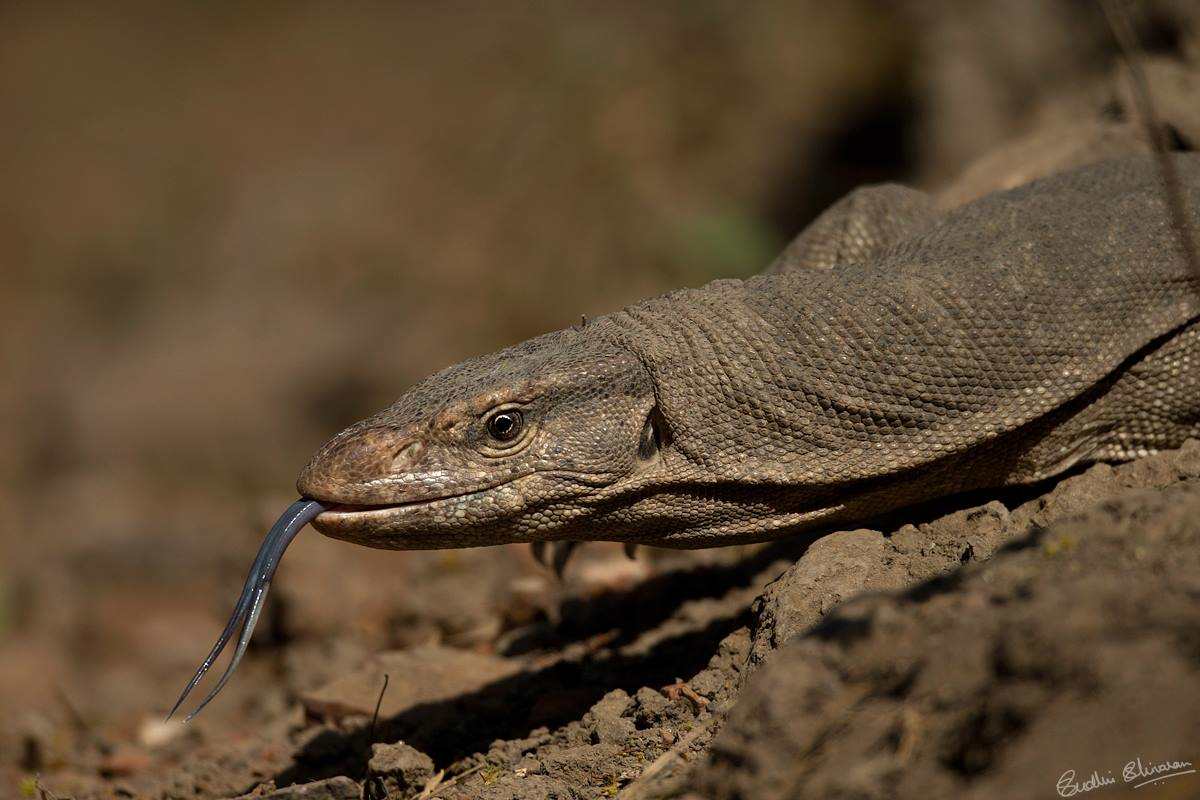
The Keoladeo Ghana National Park (also known as Bharatpur Bird Sanctuary) is home to numerous species including the Indian Monitor Lizard. They are quiet easy to photograph as they come out in the sun to bask. Continue reading

Best of Salim E.I.: Indian Cobra (Spectacled cobra)

India Cobras are common in both forests and cultivated areas in holes near streams and watersheds. They are strong swimmers and juveniles are more dangerous than adults.

Continue reading

Sea Turtles, A Worthy Effort

Photo by Karl Phillips, University of East Anglia. Because sea turtles live far out to sea, little has been understood about their breeding habits until now.

Thanks to our friends in East Anglia, for the extra effort:

Studying any animal in the wild is hard enough, let alone one that spends 30 years at a time out at sea. Because of its ocean-faring lifestyle, scientists know next to nothing about the life style of the critically endangered hawksbill sea turtle, save for the fleeting observations they make when female turtles come to beaches to lay their eggs. Continue reading

Wild Periyar – Peninsular Rock Agama

Periyar is a reptile haven. One of its residents is the Peninsular Rock Agama, a medium-sized, predominantly rock dwelling lizard commonly seen at low elevations. Its colouration is cryptic, matching that of the rocks among which they live. In the breeding season the males turn black with brilliant crimson head and foreparts.

Wild Periyar – Indian Python (Python molurus)

The tropical climate with evergreen, semi-evergreen and moist deciduous forest in Periyar creates a perfect environment for snakes. The Indian Python is seen in dense as well as in open forest. Pythons are slow moving snakes, appearing timid and rarely rousing seriously to escape even when attacked. Pythons also have a peculiar method of movement, the body moving in a straight line like a millipede.

Continue reading