Jane Goodall, Journey On

Michael Christopher Brown/Magnum, for The New York Times. Jane Goodall on Lake Tanganyika, offshore from Gombe Stream National Park in Tanzania.

Michael Christopher Brown/Magnum, for The New York Times. Jane Goodall on Lake Tanganyika, offshore from Gombe Stream National Park in Tanzania.

A journey to Greece in 1969 planted a seed in me that grew into my life’s ambition. Another in 1983 led to meeting Amie, and fusing our life’s ambitions together. Together we went to Costa Rica in 1995, which led to continuing our joint life’s journey abroad.

Jane Goodall Is Still Wild at Heart

Half a century ago, she journeyed into the Tanzanian jungle to change how the world saw chimpanzees. Today the world’s most famous conservationist is on a mission to save their lives.

I believe in the power of a journey to change one’s life path. In the story that follows, this woman’s singular life’s journey is just one more example, albeit an extreme and heroic one, of why we believe in the power of a journey. She visited Cornell while I was a graduate student, and Amie and I were deeply moved by what she came to say. Seth was a one year old and Milo was not yet a “twinkle in the eye.”

The child-sized t-shirt we bought to support the Jane Goodall Institute with our limited graduate student funds was passed from older brother to younger until neither of them could fit into it any more, by which time we were well into our new lives in the emerging field of entrepreneurial conservation in Costa Rica.  In no small part, our family’s dedication to conservation is an unexpected outcome of a short journey across campus that Amie and I made to listen to Jane Goodall talk about her long life’s journey. Continue reading
Pi Day of the Century 3-14-15

It’s been a few years since we wrote about Pi, but we wouldn’t possibly skip the once in a century shout out to the famous irrational number when the numbers line up for a full 10 digits: 3/14/15 at 9:26:53 (AM or PM!) Add that it’s Albert Einstein’s birthday and we have a mathematical wow factor that can’t be missed.

Scientific American offers some great suggestions on how to celebrate, and where.

If there was ever a year to commemorate Pi Day in a big way, this is it. The date of this Saturday—3/14/15—gives us not just the first three digits (as in most years) but the first five digits of pi, the famous irrational number 3.14159265359… that expresses the ratio of a circle’s circumference to its diameter… Continue reading

Anthropocene Perspective

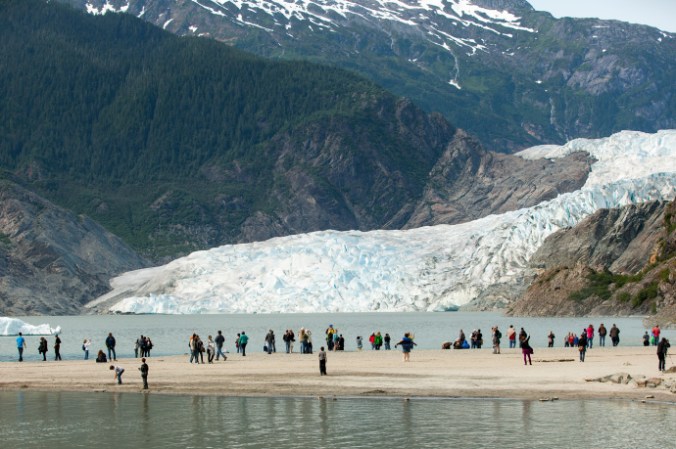
Tourists visit the the Mendenhall Glacier, in Alaska. Geologists are considering whether humans’ impact on the planet has been significant enough to merit the naming of a new epoch. CREDIT PHOTOGRAPH BY MATTHEW RYAN WILLIAMS/THE NEW YORK TIMES/REDUX

Tourists visit the the Mendenhall Glacier, in Alaska. Geologists are considering whether humans’ impact on the planet has been significant enough to merit the naming of a new epoch. CREDIT PHOTOGRAPH BY MATTHEW RYAN WILLIAMS/THE NEW YORK TIMES/REDUX

Thanks to, Michelle Nijhuis in general, for her science writing and environmental journalism–making these topics simultaneously fun and fascinating, if also sometimes depressing; and to the New Yorker for making space for this note in which she briefly explains the naming of the epoch we live in:

The duties of the Anthropocene Working Group—a thirty-nine-member branch of a subcommission of a commission of the International Union of Geological Sciences—are both tedious and heady. As the group’s chairman, Jan Zalasiewicz, whom Elizabeth Kolbert wrote about, in 2013, says wryly, “People do not understand the very slow geological time scale on which we work.” Yet the A.W.G.’s forthcoming recommendations may bring an end to the only epoch that any of us have ever known—the Holocene, which began after the last ice age, about twelve thousand years ago, and lasts to this day. The group’s members are pondering whether the human imprint on this planet is large and clear enough to warrant the christening of a new epoch, one named for us: the Anthropocene. If it is, they and their fellow-geologists must decide when the old epoch ends and the new begins.

In a paper published today in the journal Nature, Continue reading

No-till Farming On The Rise

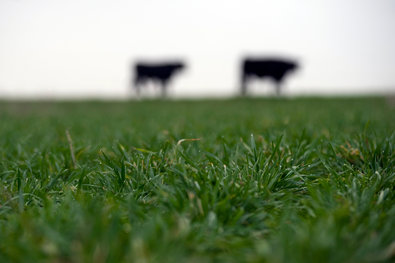
Brandon Thibodeaux for The New York Times. Cattle graze on farmland owned by Terry McAlister, near Electra, Tex. Mr. McAlister converted to no-till farming for its apparent economic benefits.

Brandon Thibodeaux for The New York Times. Cattle graze on farmland owned by Terry McAlister, near Electra, Tex. Mr. McAlister converted to no-till farming for its apparent economic benefits.

Thanks to the Science section of Tuesday’s New York Times for pieces regularly covering alternative approaches to agriculture, such as this one today:

Farmers Put Down the Plow for More Productive Soil

Soil-conservation farming, a movement that promotes not tilling fields and using “green” manures, is gaining converts in tough environments and markets.

Florida, Marbles Lost

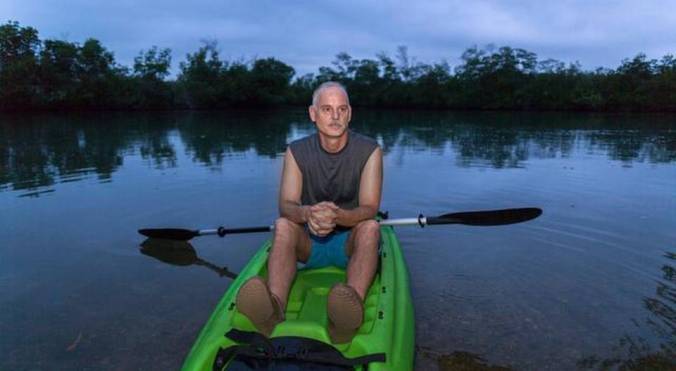
In 2013, Jim Harper, a nature writer in Miami, had a contract to write a series of educational fact sheets about how to protect the coral reefs north of Miami. ‘We were told not to use the term climate change,’ he said. ‘The employees were so skittish they wouldn’t even talk about it.’ JOHN VAN BEEKUM FOR THE MIAMI HERALD

In 2013, Jim Harper, a nature writer in Miami, had a contract to write a series of educational fact sheets about how to protect the coral reefs north of Miami. ‘We were told not to use the term climate change,’ he said. ‘The employees were so skittish they wouldn’t even talk about it.’ JOHN VAN BEEKUM FOR THE MIAMI HERALD

Knowing the Miami Herald has been recognized as a newspaper of reasonably high standards, we cannot chalk this up to careless reporting. We wish there was something intelligent to say about the news they report on this article, but are left without words, so we can only say read it for yourself:

The state of Florida is the region most susceptible to the effects of global warming in this country, according to scientists. Sea-level rise alone threatens 30 percent of the state’s beaches over the next 85 years.

But you would not know that by talking to officials at the Florida Department of Environmental Protection, the state agency on the front lines of studying and planning for these changes.

DEP officials have been ordered not to use the term “climate change” or “global warming” in any official communications, emails, or reports, according to former DEP employees, consultants, volunteers and records obtained by the Florida Center for Investigative Reporting. Continue reading

Ornithology + Engineering = Bird Geek Bliss

Screen Shot 2015-03-03 at 8.09.05 AMThere are natural wonders that help answer important questions, such as those about what climate change has wrought in the distant past; and there are wonders of man’s creation that raise important questions, such as whether man can do anything to reduce his impact on climate change if he, collectively, puts his mind and energy into it.

And then there are those who study natural wonders for reasons that appear more prosaic than climate change and yet punch above their weight class in terms of getting the rest of us motivated to participate in solutions; ornithology and its amateur cousin bird watching are two of Raxa Collective’s favorite choices of what to pay attention to, just because:

ScienceTake | Hawk Cam Captures the Hunt

BY Poh Si Teng and James Gorman

Thanks to a helmet camera, researchers discovered that a goshawk mixes its methods of chasing its prey.

Understanding Climate Change Through Craters

The jury is no longer out on how climate change has been influenced by man, since the dawn of the Industrial Revolution and especially in the last 70 years. But the jury has not even convened yet on many phenomena in the natural world, including some geological oddities. Thanks to National Geographic‘s news service for this story from the far reaches of Siberia:

New Theory Behind Dozens of Craters Found in Siberia

Scientists narrow down the cause and think it is related to warming.

When a massive and mysterious hole was discovered in Siberia last July (see pictures), social media users pointed to everything from a meteorite to a stray missile to aliens to the Bermuda Triangle as possible causes. But the most plausible explanation seemed to be the explosive release of melting methane hydrate—an ice-like material frozen in the Arctic ground—thanks to global warming.

yamal-craters-siberia-new-explanation_89023_990x742

A Russian scientist prepares to descend into a mystery crater in Siberia in November. More holes have since been found. PHOTOGRAPH BY VLADIMIR PUSHKAREV, THE SIBERIAN TIMES

Continue reading

5 things you might not know about the science of coffee

wake-up-and-smell-the-coffeeIf you are like me, you are obsessed with your coffee. I love the taste, the smell, the sound the grinder makes, and of course, how it makes me feel. But have you ever heard of a “coffee nap”?

Scientists work tirelessly to uncover the mysteries of the natural world, from the reasons people binge to the best way to wash hands. Recently it was revealed that they’ve figured out why coffee served in white mugs tastes so bitter. (The contrast between the color of coffee and a white mug makes the joe look and taste bolder.) Coffee served in clear glass mugs tastes sweeter. Continue reading

Dismal Dominance

Screen Shot 2015-02-11 at 5.45.41 AM

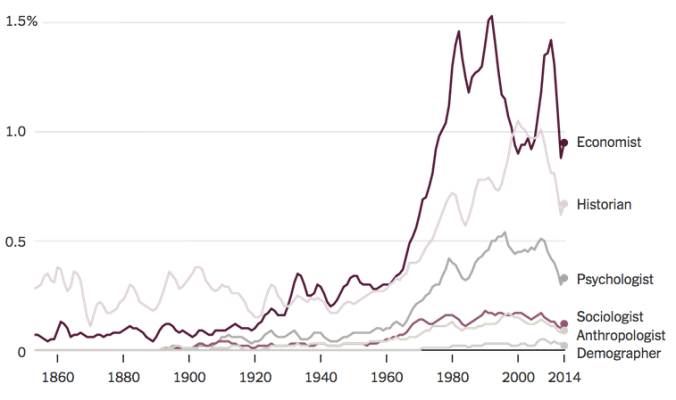
The Rise of the Economists: Interest in what economists have to say rises and falls with the economy. Measured by mentions in The New York Times, other professions aren’t as notable.

As a blog that features lots of history and literature, but little from the dismal science, this catches our attention.  Why so little economic reference at Raxa Collective? Wrong question. The economics of sustainable development are the foundation for all that we do, day in and day out, and those economics are embedded in many, if not most, of the stories we share on this blog. For that reason and more, this essay is worth a read and a ponder:

THE DISMAL SCIENCE

How Economists Came to Dominate the Conversation

Have we reached peak economist?

Two hundred years ago, the field of economics barely existed. Today, it is arguably the queen of the social sciences.

These are the conclusions I draw from a deep dive into The New York Times archives first suggested to me by a Twitter follower. While the idea of measuring influence through newspaper mentions will elicit howls of protest from tweed-clad boffins sprawled across faculty lounges around the country, the results are fascinating. And not only because they fit my preconceived biases. Continue reading

Heroic Termites

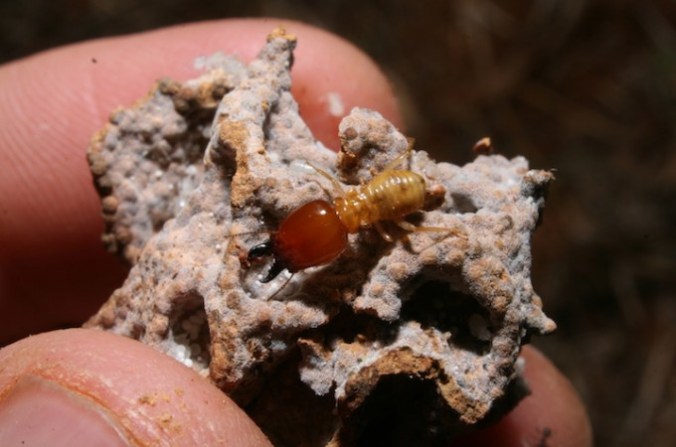
Termite on a fragment of its nest. Credit: Photo by Robert Pringle, Princeton University Department of Ecology and Evolutionary Biology.

Termite on a fragment of its nest. Credit: Photo by Robert Pringle, Princeton University Department of Ecology and Evolutionary Biology.

Conservation, on hiatus while they rethink their approach to a constantly rapid-fire changing media landscape, still provides the daily summaries of important environmental news to which we have become accustomed:

TERMITES EMERGE AS UNLIKELY CLIMATE HEROES

In the past several years, designers have looked to termite nests, earthen mounds that dot grasslands throughout the tropics, as a model for energy-efficient dwellings. Now, a study suggests that these mounds may also make their own landscapes more resilient to climate change, preventing savannas from turning into deserts during periods of drought. Continue reading

Rain, Scent Explained

Screen Shot 2015-01-28 at 3.32.39 AM

We are always happy to understand more of nature’s small pleasantries:

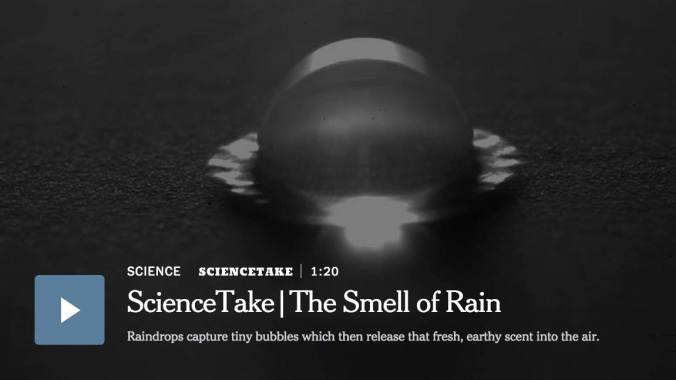
How the Smell of Rain Bubbles From the Ground

Two M.I.T. scientists found that the right velocity of a raindrop on the right kind of soil can create the smell, known as petrichor.

More Less Than Good News Related To The Effects Of Climate Change

Sea level correction. Increase has been more intense than previously understood, study says

Photo by Robert Kopp. “What this paper shows is that sea-level acceleration over the past century has been greater than had been estimated by others,” said Eric Morrow, a recent Ph.D. graduate. “It’s a larger problem than we initially thought.”

We were not looking for more bad news today, really; but science has that unrelenting need to march forward, and this news from the latest finding is not so good (thanks to Harvard Gazette):

Sea level correction

Increase has been more intense than previously understood, study says

By Peter Reuell, Harvard Staff Writer

The acceleration of global sea level change from the end of the 20th century through the last two decades has been significantly swifter than scientists thought, according to a new Harvard study. Continue reading

Sometimes The Truth Is Hard To Believe

Photo by Christopher Halloran/Shutterstock.com, modified by Phil Plait

Photo by Christopher Halloran/Shutterstock.com, modified by Phil Plait

We try to minimize the doom and gloom and accentuate the solutions; but sometimes our eyebrows rise to new heights and we must share:

Yup, a Climate Change Denier Will Oversee NASA. What Could Possibly Go Wrong?

By Phil Plait

So, Sen. Ted Cruz (R-Texas) was just named to be the chairman of the Subcommittee on Space, Science, and Competitiveness as Republicans take over the Senate. This subcommittee (which used to be just Space and Science but was recently renamed) is in charge of oversight of, among other things, NASA.

This is not a good thing. Just how bad it is will be determined. Continue reading

Avian Odyssey

As Seth and his team are in flight for their odyssey in search of the golden swallow, it seems fitting that we come across the stories of epic avian journeys. Just about a year ago we posted about the bar-tailed godwit, and it seems the species has some stiff competition in the semipalmated sandpiper.

Scientists from the Manomet Center for Conservation Sciences recovered data from a geolocator tagged sandpiper from sub-Arctic Coats Island revealing that the bird flew over 10,000 miles in the past year, including a remarkable six day, 3,300-mile nonstop flight across the Atlantic Ocean. Continue reading

The Golden Swallow Expedition

From left: Justin Proctor, Seth Inman, and John Zeiger.

It’s now been several months since we last shared any news on the Smithsonian Institution’s expedition to search for the Golden Swallow (Tachycineta euchrysea) in Jamaica, where no sightings have been reported since 1989 — and even that report is a little questionable. While the Hispaniolan subspecies of the Golden Swallow is labeled as vulnerable, the Jamaican subspecies is labeled as critically endangered and possibly extinct, so this research trip is designed to lend some more finality to the issue. If our team of three positively identifies a Golden Swallow in Cockpit Country or the Blue Mountains between mid-January and late March, it will be the first confirmed sighting of the species in Jamaica in several decades, and new conservation efforts might be kick-started into action. If during our pair of one month trips to these two isolated areas of Jamaica we don’t see any signs of the Golden Swallow, the ornithological community can move a little closer to declaring the Jamaican subspecies of Tachycineta euchrysea extinct.

Continue reading

On the Art of Snowflakes

Snowflake, by Steve Begin/flickr/CC BY-NC-SA 2.0

For those of our readers in the appropriate climates to be receiving snow this time of year, we have some information on snowflake collection/observation that might be of interest; for those in milder or more tropical climes, we have a science experiment to create your own crystal formation in the shape of a snowflake! Let’s start with finding snowflakes in the wild. You can start by watching this Snowflake Safari video from Science Friday, or if you prefer reading, we have excerpts below (also via SciFri) from the book Mama Gone Geek by science writer Lynn Brunelle:

When the snow starts falling, grab your kids, coats and boots, a couple of pieces of black construction paper, and a magnifying glass or two if you have them. As the snow is falling around you, catch a couple of snowflakes on your black construction paper and observe them with your magnifying glass, comparing how the snowflakes are similar and different. Count how many sides or points the snowflakes have and if any snowflakes appear to match.

Continue reading

Bees May Sleep to Maintain Learning Brains

Bee in mid air flight carrying pollen in pollen basket. Credit: Muhammad Mahdi Karim

Bees are incredibly important to much of the world’s flora, and we are always happy to see when research on them is continuing. After all, the better we understand them, the better we can protect them. Elizabeth Preston reports for Discover Magazine’s blog that when young honeybees spend time in the hive, they spend more time sleeping afterwards, probably to absorb whatever they’re learning among all the other bees:

Facing a whole hive of bees at once can be overwhelming—even for a bee. Young honeybees sleep more after spending time in the hive than after being by themselves. They need the extra nap time, it seems, to build and maintain their learning brains.

The first surprising thing about this might be that insects sleep at all. “Since around the 1980s there is good evidence that insects show…characteristics of sleep,” says Guy Bloch, who studies bee behavior at the Hebrew University of Jerusalem. Yes, their brains are tiny and organized differently from ours. But they rest in a similar way. And just as sleeping helps us sort through the new things we’ve learned each day, there’s evidence that sleep in bees and fruit flies is also tied up with memory and learning, Bloch says.

Continue reading

Counting Monarchs

Creating Breeding Habitat for Monarchs: To reverse the breeding habitat loss in the U.S., the Monarch Joint Venture promotes the inclusion of native milkweed and nectar plants in restoration efforts across the country ranging from small gardens to natural areas and corporate landscapes. (Photo by Giuseppina Croce)

We’ve seen some information on how much people value monarch butterflies. Now we’re learning that the beautiful orange lepidopterans have their own citizen science Thanksgiving count and might soon be labeled as a threatened species under the Endangered Species Act if a petition has any effect.

Beloved by tattoo parlors and fantasy princess landscapes, the king of butterflies is in decline. During their annual migration, monarch butterflies are famous for gathering in innumerable flutters as they fly from summer breeding grounds in the U.S. and Canada to warmer sites in Mexico and California. At one time, there were over a billion monarchs making this journey. Now, less than 4% are left.

Over the years, human behaviors, particularly agricultural practices have contributed to the monarch’s decline. In a petition to protect monarchs scientists point to habitat loss as grassland is converted to farmland and overwintering sites are deforested as a major factor. On top of that, the cultivation of certain genetically engineered crops enable farmers to apply broad-spectrum herbicides killing weeds such as milkweed, the monarch caterpillar’s sole food source.

Continue reading

Kleptothermy

Photo of Blue-lipped sea krait (Laticauda laticaudata), Anemone Reef, Thailand. Credit: Jon Hanson.

We’ve featured a post on biological theft before, under the name of mycocleptism. In that case the thief was a species of beetle that lived off the fungal tunnels of another beetle species, and now we are learning of a different type of behavior: stealing heat. Apparently certain reptiles, which are unable to bask in the sun at night, have found an effective method of transferring warmth that does not involve time travel. Instead, they snuggle up in the nests of birds. Brian Switek reports on the phenomenon for Nat Geo below, but one question that seems to remain unanswered is whether the feathered members of the deal are getting anything out of their reptilian visitors. For example, sea snakes like the ones mentioned in the referenced article are venomous — could it be that their presence in a shearwater nest would protect the birds from potential predators?

You could bask in the sun to remedy the cold. That’s a classic reptile way of working some warmth back beneath those scales. But there’s another option. You could steal your warmth. All you’d have to do is find some seabirds.

Continue reading