Biomechanics Exhibit at the Field

Animals that move through air and water have evolved a variety of wing and fin forms, as well as sleek, streamlined shapes that harness the power of fluid dynamics for propulsion. © Ernie Cooper 2012, macrocritters.wordpress.com

Every day, just using any part of our bodies to move, see, talk, or eat — among countless other activities, we are enjoying the biomechanics that have evolved to perform the functions necessary to survive. An exhibit at the Field Museum in Chicago called, “The Machine Inside: Biomechanics” will be closing on January 4th, so this post is more of a celebration of the exhibit than an invitation to check it out. If you won’t be in Chicago before the 4th, they have a great website with photos and a good video.

Imagine if your jaws could crush over 8,000 pounds in one bite, your ears could act as air conditioners, and your legs could leap the length of a football field in a single bound. From the inside out, every living thing—including humans—is a machine built to survive, move, and discover.  Beginning March 12, 2014, investigate the marvels of natural engineering in The Machine Inside: Biomechanics. Explore how plants and animals stay in one piece despite the crushing forces of gravity, the pressure of water and wind, and the attacks of predators. Using surprising tactics, creatures endure the planet’s extreme temperatures, find food against fierce competition, and – without metal, motors or electricity – circulate their own life-sustaining fluids.

Continue reading

Humans Have DNA For Making Feathers

Siberian Turkamanian Eagle Owl by Chris Paul. Via NatGeo.

We’ve always found feathers fascinating, both from an aesthetic and a biological perspective. Recently, the Cornell Lab of Ornithology’s bird guide website AllAboutBirds uploaded an interactive page solely focused on feathers, which is quite a wonderful mine of interesting information, cool animation, and amazing videography. But now, about a month late, we’ve learned that DNA researchers working on the genetic recipe for feathers have found that the sequences responsible for most of the steps involved in creating feathers are actually much, much older than feathers themselves. This indicates that we humans should have a sizable chunk of the feather-making genetic recipe as well! Carl Zimmer reports for the Phenomena section at National Geographic’s website:

Feathers are like eyes or or hands. They’re so complex, so impressive in their adaptations, so good at getting a job done, that it can be hard at first to believe they evolved. Feathers today are only found on birds, which use them to do things like fly, control their body temperature, and show off for potential mates. The closest living relatives of birds–alligators and crocodiles–are not exactly known for their plumage. At least among living things, the glory of feathers is an all-or-nothing affair.

Continue reading

Cornell’s Nanoscale Carbon-scrubbing Sponges

© Provided/Genggeng Qi – A scanning electron microscopy image of a pristine silica support, before the amine is added.

We’ve had posts on this blog about carbon output by consumer technology, motor vehicles, and food. We’ve also posted, including quite recently, on carbon storage, often in forests. Less numerous are our posts on carbon output by power plants, probably because good news on technological advances in the field is infrequent (at least relative to the bad news). But scientists at Cornell have recently developed a nanoscale scaffold of silica that comes in the form of powder and could replace the current method of carbon capture called amine scrubbing. Anne Ju reports for the Cornell Chronicle below:

In the fight against global warming, carbon capture – chemically trapping carbon dioxide before it releases into the atmosphere – is gaining momentum, but standard methods are plagued by toxicity, corrosiveness and inefficiency. Using a bag of chemistry tricks, Cornell materials scientists have invented low-toxicity, highly effective carbon-trapping “sponges” that could lead to increased use of the technology.

Continue reading

For Peat’s Sake, Conserve Amazonia

BBC: In Amazonia’s most carbon-dense ecosystems, an estimate 90% is stored underground as peat

A couple of weeks ago, we featured a story from another British news source about the peat success story in Indonesia, where the new president has pledged to tackle his country’s deforestation rate, the highest in the world. President Joko Widodo announced that both rainforest and peatland would be protected under his governance, even if that meant cracking down on the powerful plantation companies.

This week, scientists at institutions in the UK, Finland, and Peru published a paper in Environmental Research Letters calculating that peatlands, rather than rainforest, are the most dense store of carbon in Amazonia. Mark Kinver reports for BBC News:

Writing in the paper, the scientists observed: “This investigation provides the most accurate estimates to date of the carbon stock of an area that is the largest peatland complex in the Neotropics.”

They said it also confirmed “the status of the [Pastaza-Marañón foreland basin in north-west Peru] as the most carbon-dense landscape in Amanozia”.

“We expected to find these peatlands but what was more of surprise was how extensive they were, and how much this relatively small area contributed to Peru’s carbon stock,” explained co-author Freddie Draper from the University of Leeds.

The 120,000 sq km basin accounts for just about 3% of the Peruvian Amazon, yet it stores almost 50% of its carbon stock, which equates to about three billion tonnes.

Continue reading

Tricking Taste Buds: Easy as Miracle Fruit Pie?

© Getty Images / BBC

p02f6t3k.jpg

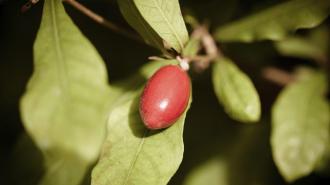
Synsepalum dulcificum, also known as miracle fruit (Thinkstock)

The miracle fruit is one of the many trees that we have incorporated into the edible landscape at Marari Pearl. So we thank Veronique for writing about it in her BBC feature article How to Hack Your Tastebuds. In Kerala we have an abundance of the Indian gooseberry, or amla, which is described as sour, astringent, pungent, and bitter, but also sweet. A weird combination, to say the least. After reading Veronique’s explanation, it is easier to understand that the transition from sour to sweet in one or two bites can be explained through some chemistry that takes place on the tongue:

p02f6t2z.jpg

Tasting orange juice after brushing your teeth can be unpleasant, but why? (Thinkstock)

Your tongue is not a blank slate. What you’ve just eaten can change the flavour of what you eat next – for better or for worse. It’s all because your taste buds respond differently when the environment around them shifts – an effect you can use to go on a little mouth-hacking tour.

Let’s start with an artichoke. Eat one and then drink a glass of water and you might notice that the liquid tastes strangely sweet. Then there’s orange juice. Drink a glass after brushing your teeth with toothpaste, and the normally sweet drink tastes foul instead. And for mind-bending parlour tricks, nothing beats miracle fruit. These little red West African berries make anything sour taste sweet – and it’s a remarkably clean, pure sweetness. Continue reading

Crowd-sourcing Hacker Help On Behalf Of Natural History

American Museum of Natural History

American Museum of Natural History

Thanks to the Atlantic‘s coverage of the topics we care about, as always:

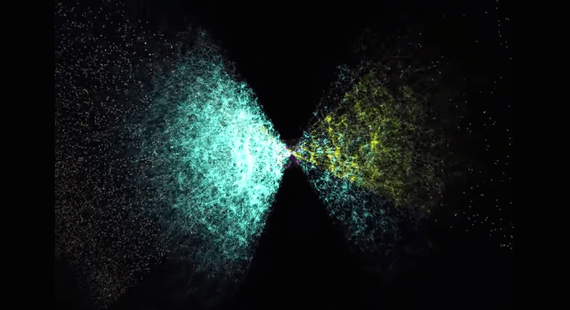
On a Friday night in New York City you can find just about anything. And this past Friday about 130 hackers gathered in the Hayden Planetarium to participate in the American Museum of Natural History’s very first hackathon.

The premise was simple: The museum handed the huge dataset they call The Digital Universe to the hackers and gave them 24 hours to make something. (Part of what made this hackathon different was the literal universe of data hackers were given. More on that in a minute.) There were some specific challenges and categories (Education, Visualization, Tool Kit, and Wildcard) but the hackers were otherwise free to explore the data and run with it. Continue reading

Chocolate, New Sense

Le Laboratoire Cambridge features a restaurant, the Cafe ArtScience. The restaurant's bar features a glass-globed drink vaporizer called Le Whaf. Andrea Shea/WBUR

Le Laboratoire Cambridge features a restaurant, the Cafe ArtScience. The restaurant’s bar features a glass-globed drink vaporizer called Le Whaf. Andrea Shea/WBUR

Thanks to National Public Radio’s program, the salt, for this idea on how we can expect to enjoy chocolate in new ways in the future:

David Edwards has been called a real-life Willy Wonka. The biomedical engineer has developed, among other things, inhalable chocolate, ice cream spheres in edible wrappers, and a device called the “oPhone,” which can transmit and receive odors.

Edwards is based at Harvard, but much of his work has been done in Paris, at a facility he calls Le Laboratoire. Now he’s opened a similar “culture lab” closer to home: Le Laboratoire Cambridge in Cambridge, Mass. Continue reading

The Worst News Of The Week

Republican Senator Jim Inhofe is expected to get the Senate top environmental job. Photograph: Tom Williams/Getty Images

Republican Senator Jim Inhofe is expected to get the Senate top environmental job. Photograph: Tom Williams/Getty Images

Read it and weep (thanks to the Guardian):

Climate change denier Jim Inhofe in line for Senate’s top environmental job

Obama faces a fight to protect his climate change agenda after midterm results suggest Senate’s top environmental post will fall to Republican stalwart of climate denial

The Senate’s top environmental job is set to fall to Jim Inhofe, one of the biggest names in US climate denial, but campaigners say Barack Obama will fight to protect his global warming agenda.

Continue reading

Strength in Diversity

Birds


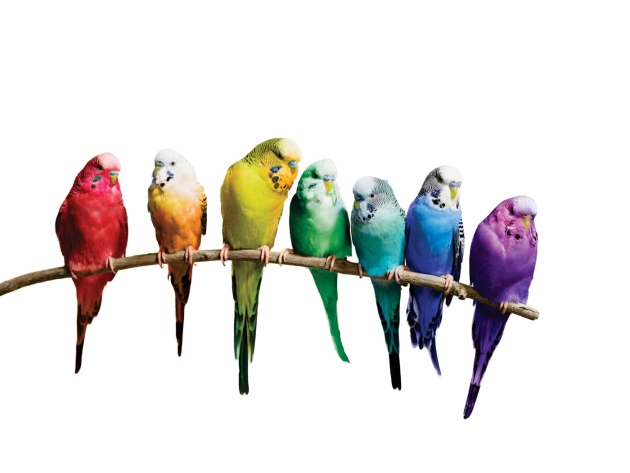
Strength in diversity, as illustrated in this scientific study described in Nature:

Sticking with co-authors with similar surnames to yours might dent the impact of your work. The reason is unclear, but bibliometrics suggest that teams with greater ethnic diversity generate papers that make more of a splash in the scientific literature.

Continue reading

Mind Over Matter, Consumption, And Findings From Behavioral Economics

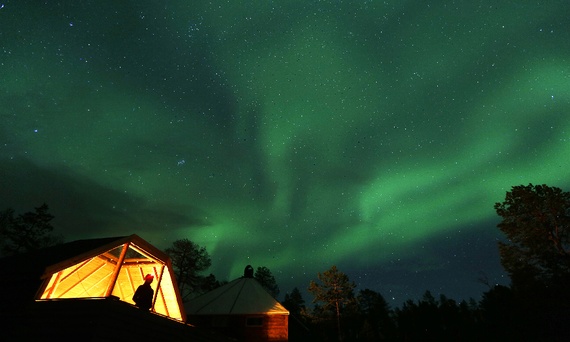
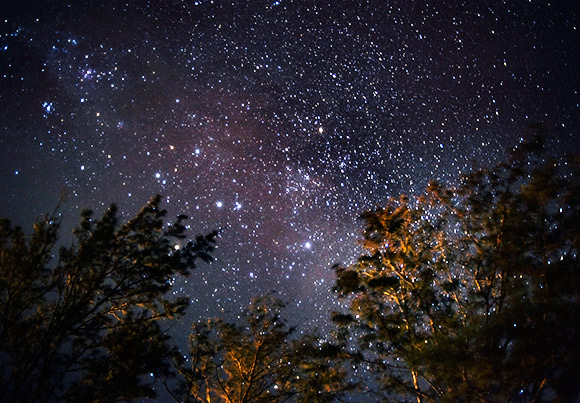
Northern lights over a camp north of the Arctic Circle, October 2014 (Yannis Behrakis/Reuters)

Northern lights over a camp north of the Arctic Circle, October 2014 (Yannis Behrakis/Reuters)

We may be a bit self-interested in declaring so, but this research matches what we believe from daily experience–not to say it is obvious–and so it is good to know science is helping us understand why:

Buy Experiences, Not Things

Live in anticipation, gathering stories and memories. New research builds on the vogue mantra of behavioral economics.

Forty-seven percent of the time, the average mind is wandering. It wanders about a third of the time while a person is reading, talking with other people, or taking care of children. It wanders 10 percent of the time, even, during sex. And that wandering, according to psychologist Matthew Killingsworth, is not good for well-being. A mind belongs in one place. During his training at Harvard, Killingsworth compiled those numbers and built a scientific case for every cliché about living in the moment. In a 2010 Science paper co-authored with psychology professor Daniel Gilbert, the two wrote that “a wandering mind is an unhappy mind.”

Continue reading

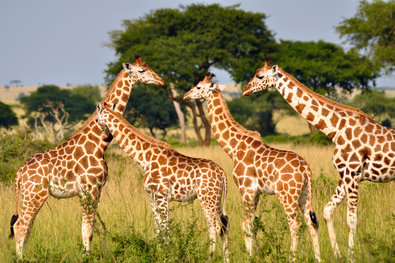
Giraffes Deserve Science As Much We Need Good Science Writers

Julian Fennessy. Giraffes are the “forgotten megafauna,” said the  executive director of the Giraffe Conservation Foundation.

Julian Fennessy. Giraffes are the “forgotten megafauna,” said the executive director of the Giraffe Conservation Foundation.

We have been highlighting science writers since our outset as a blog, following a longstanding respect from our contributors for their particular talent, which has made us richer by reaching fruit that is sometimes too high on a tree to reach and bringing it where we can reach it.

From the current New York Times weekly section highlighting and explaining scientific matters of interest to us with one of the greatest writers in the genre, we now turn our attention to giraffes for the first time in our several years sharing (and as pointed out in the article we can only wonder why we have not paid more attention to such a creature prior to now):

SCIENCE TIMES: OCT. 7, 2014

Our Understanding of Giraffes Does Not Measure Up

By NATALIE ANGIER

Giraffes may be popular — a staple of zoos, corporate logos and the plush toy industry — but until recently almost nobody studied giraffes in the field so there is much we don’t know about them.

Reversing Extinction Risk

extinctiontimes

Thanks to Conservation for this note on the relationship between the proper identification of a species’ extinction risk and the amount of time practically required to do something about it:

Congratulations, you’ve made the IUCN Red List of Threatened Species! Now what? Is that enough to promise your salvation? Or will the increasing press of climate change on your vulnerable/endangered/critically endangered back spell your doom anyway?

A new study aimed to answer this question, of just how long placement on the Red List gives conservationists to try and save a species on its way to oblivion thanks to climate change. Continue reading

Monkeys Learning, Improving Coexistence Probabilities

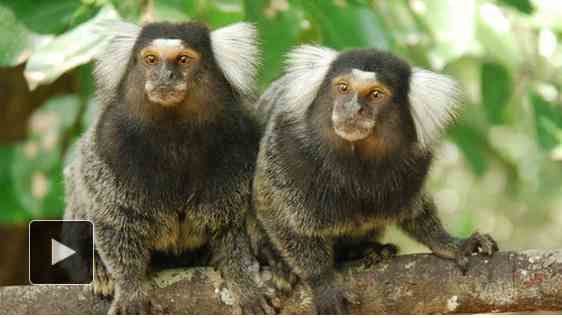
From the New York Times, a short video on something we might take into account at Cardamom County, where the monkeys do their monkey business without any concern for who’s who or what’s what:

ScienceTake | Marmoset See, Marmoset Do

Wild monkeys can learn from a demonstration video set up in the forest.

Bioluminescent Wonders

Stefan Siebert

Stefan Siebert. A young colony of Pyrosoma atlanticum.

Sure, science can explain alot of things. And yes, we definitely want to understand. But the wonder can remain a wonder even after we read about the technical details. Bioluminescence is one of those wonders. Better in person, of course, to see and experience the wonder. But for now, written explanation of this photographed wonder will have to do. We will likely never tire of the sightings, in the Times Science section or wherever, no matter how many times, of these creatures:

Continue reading

Listen, Learn, Elephants

Thermal imaging on an elephant in the Dzanga clearing. Photo by Peter Wrege

Thermal imaging on an elephant in the Dzanga clearing. Photo by Peter Wrege

Way back when, we first shared what we had read and visually devoured about this project, and the last line of our post at that time asked if “one of our Lab-based contributors will help us with an introduction to their office mates in the Elephant Listening Project?”. Not until now were we nudged to think again and do something about it. Stay tuned…

Meanwhile, thanks to the folks at Science Friday and the donor-listeners and producers of the amazingly diverse public radio networks in the USA, tune in to learn more:

Elephants have different rumbles and roars for how they greet each other, warn about danger, and even to show that they’re annoyed. Peter Wrege, director of The Elephant Listening Project, recorded an event called “mating pandemonium,” where a group of elephants roar after a pair of elephants mate. Wrege discusses the possible reasons for this pachyderm party.

Continue reading

Notes from the Garden: Tropical Composting

10366090_10152547906815712_3231564213131287158_n

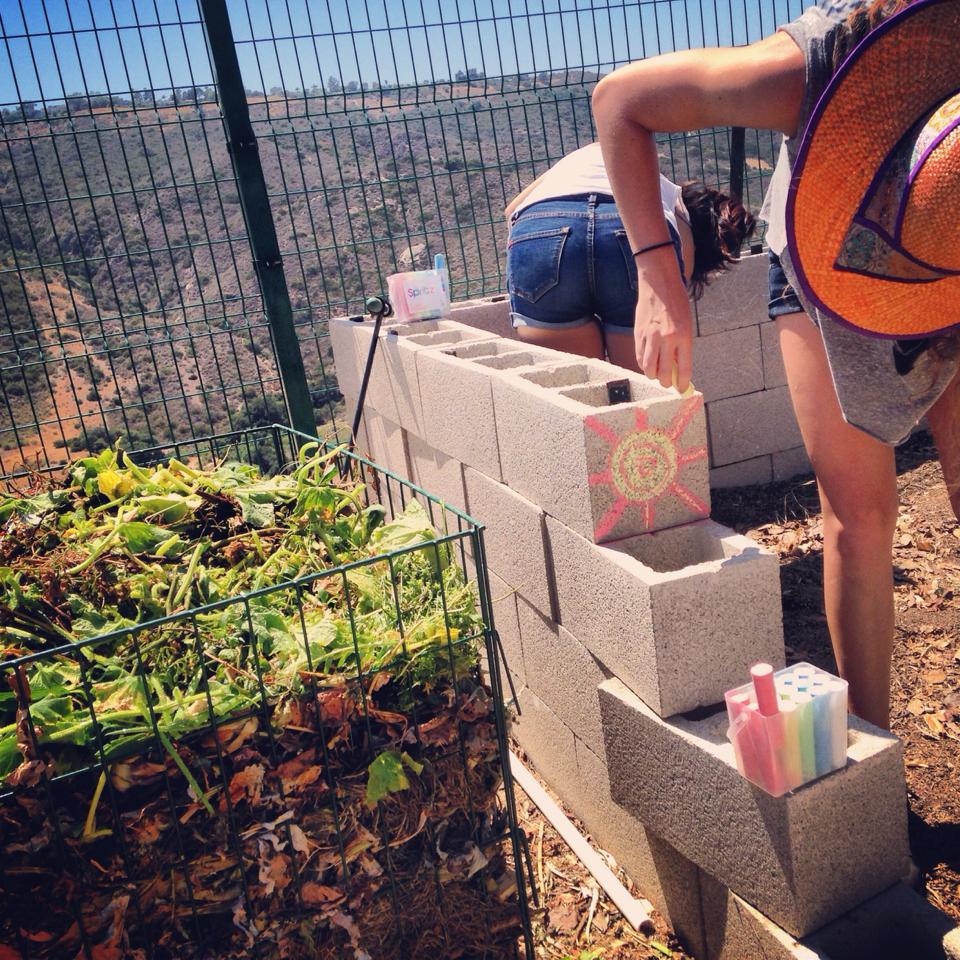
Soka Instructional Garden, Soka University of America. Photo credit: Leia Marasovich

Composting where I live in a sunny Southern California desert climate is very different than the composting we have done since I have been here in tropical Thekkady, India. Here are some pictures of our composting at my university garden I work at. We do ‘hot composting’ above ground. At Cardamom County they’ve been doing a type of vermicomposting, or worm composting. As a gardener, I have always considered earthworms to be a little magical. When there are worms in our garden beds, we always take it as a good omen that our soil is healthy, and healthy soil is the only path to healthy plants. They speed up the decomposition process and essentially create compost gold. They add really beneficial microorganisms to the soil and their castings, or poop, is extremely nutrient rich with the essential ingredients of good soil: nitrogen, phosphorous, and potassium! Where I work in the Soka Instructional Garden (SIG), we make compost tea from the worm castings, and any time a crop is struggling, we can usually nurse it back to life within weeks of adding worm compost tea.

So here, I was happy to see, not only are the worms already dancing happily in the soil, but they have a thriving worm composting bed.There is a hole dug in the ground, maybe 6 feet deep and a good 10 feet across. They fill the hole with any garden waste, add several wheelbarrows of dirt dug up from the poultry area, which is already rich in nitrogen from their poop (therefore speeding up the decomposition process and helping the pile heat up) and then just let the worms feast. Continue reading

The Value Of A Manta

manta-shutterstock_148271486-680x450

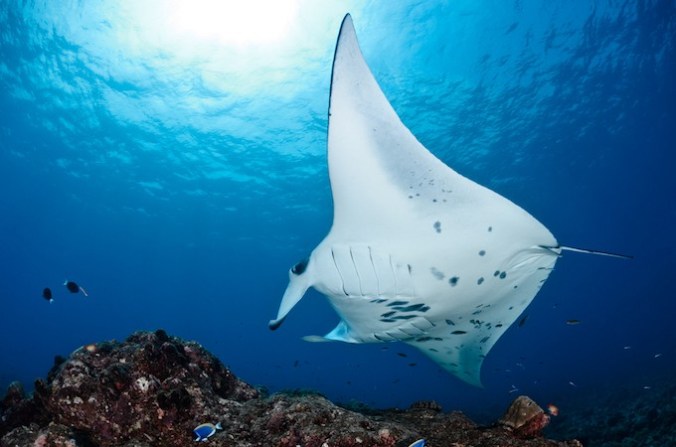
MANTA RAYS ARE WORTH MORE ALIVE THAN DEAD

The title may sound a bit obvious, but this article is anything but (thanks to Jason G. Goldman and  Conservation magazine):

Manta and mobula rays, together the “mobulids” are among the most recognizable, charismatic fish in the world. They’re also particularly vulnerable, thanks primarily to the use of their gill plates in Traditional Chinese Medicine. That’s despite the fact that mobulid gill plates are not officially recognized by most practitioners of Traditional Chinese Medicine. There are so many nonsensical aspects to this story that it’s hard to know where to start. Continue reading

In The Rough, Big As Can Be

Photograph by Antonio Zambardino/Contrasto/Redux.

Photograph by Antonio Zambardino/Contrasto/Redux.

Who knew? Diamonds, forever and ever the best friend of half of us, can be otherworldly:

The biggest diamond ever found on Earth, known as the Cullinan diamond, weighed three thousand one hundred and six carats before it was cut, or about one and three-tenths pounds. The biggest diamond ever found in the universe, whose discovery was announced this week, has no name, will never be cut, and weighs approximately a million trillion trillion pounds. This makes it as massive as the sun, and no wonder: it’s the corpse of a star that once looked very much like the sun, lying nine hundred or so light-years from Earth. Continue reading

What Happens When You Write

Screen Shot 2014-06-22 at 1.03.57 PM

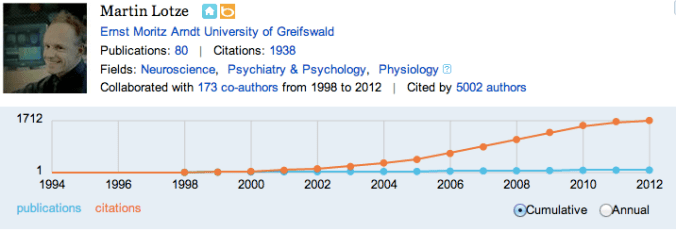
The graph above tells a story about what happens when an author-researcher writes compellingly about scientifically rigorous findings. Citations build. In this particular case, some of those citations are of research about the brain’s inner workings during the process of writing. Carl Zimmer’s attention to the work of Martin Lotze, in the Science section of the New York Times, is as scintillating as Zimmer gets:

…A novelist scrawling away in a notebook in seclusion may not seem to have much in common with an NBA player doing a reverse layup on a basketball court before a screaming crowd. But if you could peer inside their heads, you might see some striking similarities in how their brains were churning. Continue reading

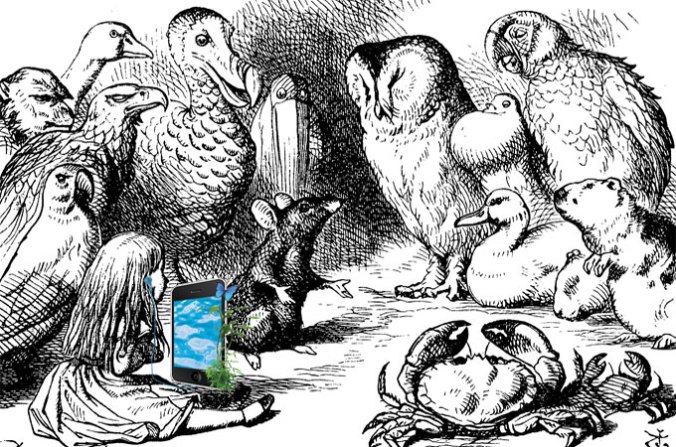
Nature’s Apps

It’s not all fun and games when it comes to games featuring the environment. With some green game apps, not only can you live in your world and play in it, you can learn stuff too.

It’s not all fun and games when it comes to games featuring the environment. With some green game apps, not only can you live in your world and play in it, you can learn stuff too.

Thanks to Conservation magazine for this article, published coincidentally exactly at the time when several Raxa Collective contributors were visiting the Cornell Lab of Ornithology, which itself is participating in the App business (more on which, by Seth soon) in a manner resonant with the focus of this article:

DIALING INTO THE OUTDOORS THROUGH PHONE APPS

The Nature Deficit

Judging from the amount of time my grandkids hunch over their iPhones and iPads for game time, I’d have to say games have garnered a major portion of the younger set’s mindshare. And in my book that’s a shame. While more and more studies find that children’s outdoor time contributes to their well-being — by mitigating obesity, promoting cardiovascular, musculoskeletal, and mental health, as well as boosting academic achievement — the number of hours children spend outdoors is on the decline. (See also here.) Continue reading