Wondrous Sound, Studied And Explained

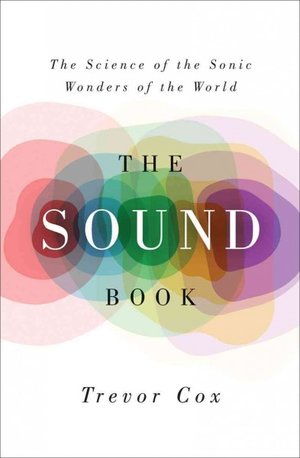
We have posted many occasions on the topic of reducing noise pollution.  We care about sound, and promote the reduction of man-made versions of it when it is not needed. The author of the book (click the image to the left) is interviewed on Fresh Air and in the podcast of that conversation he explains many sound phenomena in a manner understandable to a lay person.

One of the most interesting findings of his scientific work will delight our many bird-oriented readers: collecting data from thousands of subjects on their sonic preferences (as well as sounds they can least tolerate) the sound of bird calls, natural or recorded, rate among the most loved by humans:

Ever wonder why your voice sounds so much better when you sing in the shower? It has to do with an acoustic “blur” called reverberation. From classical to pop music, reverberation “makes music sound nicer,” acoustic engineer Trevor Cox tells Fresh Air‘s Terry Gross. It helps blend the sound, “but you don’t want too much,” he warns.

Cox is the author of The Sound Book: The Science of the Sonic Wonders of the World. He has developed new ways of improving the sound in theaters and recording studios. He’s also studied what he describes as the sonic wonders of the world — like whispering arches and singing sand dunes. His sonic travels have taken him many places, including the North Sea, where he recorded the sound of bottlenose dolphins underwater, and down into a revolting Victorian era sewer, where he discovered a curving sound effect he’d not heard before. Continue reading
What Do Mammoths And Passenger Pigeons Have In Common?

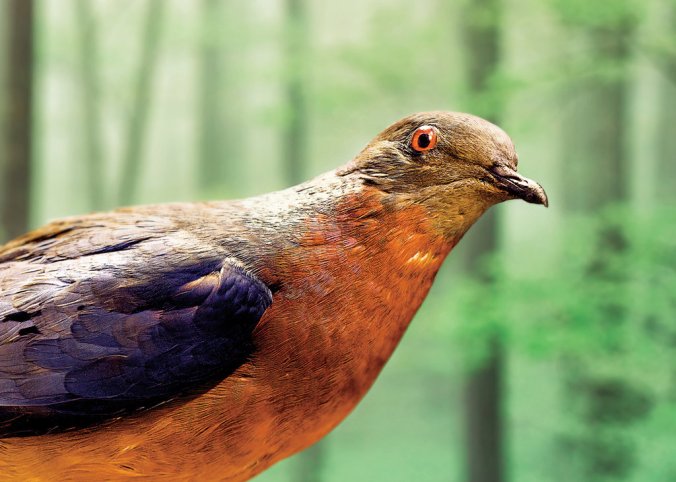
Passenger Pigeon Extinct 1914. Billions of the pigeons were alive just a few decades earlier. Like the other animals shown here, it has been proposed for de-extinction projects. Credit Stephen Wilkes for The New York Times. Passenger pigeon, Museum of Comparative Zoology, Harvard University.

Passenger Pigeon Extinct 1914. Billions of the pigeons were alive just a few decades earlier. Like the other animals shown here, it has been proposed for de-extinction projects. Credit Stephen Wilkes for The New York Times. Passenger pigeon, Museum of Comparative Zoology, Harvard University.

He had me at mammoth. When he added passenger pigeon, I demonstrated the definition of click bait. I had to learn more. I will reserve judgement for now, but can recommend your reading what I have just read. Both species may be back in business soon, with the assistance of de-extinction science according to this story in the current New York Times Magazine.  Not far from the beginning of the story, this fascinating letter is excerpted:

…Brand became obsessed with the idea. Reviving an extinct species was exactly the kind of ambitious, interdisciplinary and slightly loopy project that appealed to him. Three weeks after his conversation with Flannery, Brand sent an email to Church and the biologist Edward O. Wilson:

Dear Ed and George . . .

The death of the last passenger pigeon in 1914 was an event that broke the public’s heart and persuaded everyone that extinction is the core of humanity’s relation with nature. Continue reading

Leap Seconds Become Leap Years

One of our contributors is a leap year baby, so we take note at the passing of each February into March, without always remembering why on certain years there is an extra day. Today our office team celebrated that birthday, rather than doing so tomorrow, thinking it is better to be early than late.  Here is a secondary explanation from the Atlantic‘s Alexis Madrigal:

The mechanics of the leap year are well known: We add a day to February every four years to maintain the synchronization of our earthly calendar with the celestial reality of the Earth’s orbit.

Weeelllll, it turns out that a similar phenomenon plays out on a much smaller time scale. Along with the leap year, there is the leap second. Continue reading

Calling On Solomon In A Birds-Versus-Science Conundrum

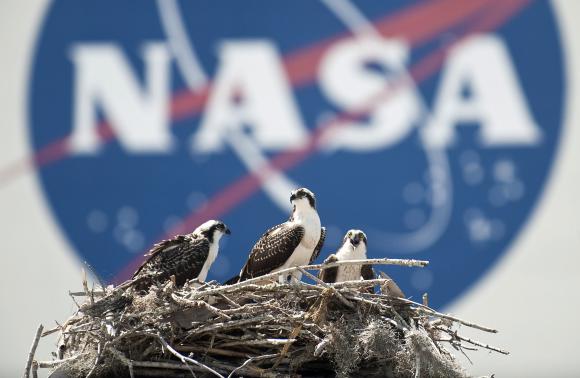
A family of Osprey are seen outside the NASA Kennedy Space Center Vehicle Assembly Building in Cape Canaveral, Florida in this file photo taken May 13, 2010. CREDIT: REUTERS, BILL INGALLS, NASA/HANDOUT/FILES

A family of Osprey are seen outside the NASA Kennedy Space Center Vehicle Assembly Building in Cape Canaveral, Florida in this file photo taken May 13, 2010. CREDIT: REUTERS, BILL INGALLS, NASA

Anyone who has been following Raxa Collective’s blog for more than a day is probably aware that we pay close attention to birds.  We do this because many of the places where we operate conservation-focused lodging are also exceptionally biodiverse bird habitats. Most of the travelers who visit our properties are at least interested in birds, and many are serious bird-watchers. But we also pay attention to birds for the same reason we pay attention to science in general: they are an indicator of the health of our planet and we want to both pay attention to the indicators and understand them better. Science matters. So, in general, we are NASA fans.  But the story here makes us wonder what Solomon’s wisdom might advise:

Florida’s plan to build a commercial space launch complex in a federal wildlife refuge surrounding the Kennedy Space Center drew sharp words from environmentalists and strong support from business boosters during the project’s first public hearing on Tuesday.

Advocates say the proposed spaceport is needed to retain and expand Florida’s aerospace industry, which lost about 8,000 NASA and civilian jobs after the shutdown of the space shuttle program in 2011.

Opponents of the plan to carve out about 200 acres from the 140,000-acre (57,000-hectare) Merritt Island National Wildlife Refuge cite concerns over protecting the refuge’s water, seashore, plants and wildlife, which include 18 federally listed endangered species. Continue reading

Black Box Exploration

It has been a while since we linked over to a Radio Lab podcast, but this one is a good comeback story (click the black box to go to the podcast):

This hour, we examine three very different kinds of black boxes—those peculiar spaces where it’s clear what’s going in, we know what’s coming out, but what happens in-between is a mystery. From the darkest parts of metamorphosis, to a sixty year-old secret among magicians, to the nature of consciousness itself, we confront the stubborn gaps in our understanding.

A Scientist, On Play

Another keeper on the topic of play, from another of the Baffler’s notable contributors:

Rationalists tend to frown upon group activities that seem to serve no evident biological or political purpose, like the drumming and masking so often indulged in by protest movements like Occupy Wall Street. Or, for a more historically venerable example, consider the reaction of European conquerors and missionaries to the shocking spectacles they encountered during the “age of exploration.” Almost everywhere they went—from Africa to the Western plains of America, from Polynesia to the Indian subcontinent—Europeans came across native peoples engaged in ecstatic rituals involving dancing, drumming, body-painting, masks, costumes, and feasting. Failing to notice the parallels between these exuberant native rituals and the traditional carnivals of Europe, missionaries tended to explain them as outbreaks of demonic possession, or as proof that the natives were not human at all, only “savages.” Continue reading

205 Years Ago On This Date

The London Review: Volume 14. John Telford Benjamin Aquila Barber. January 1, 1860. J.A. Sharp – Publisher

He has plenty of detractors, and while those detractors are less likely to read anything on these pages we still reach out with a thought: Charles Darwin’s birthday is an important one, to the degree any birthday is important after someone is no longer among us.  A day to remember someone who lived what can only be called a good, important life.  Below we link to a quotation that Seth found, as archival researchers and modern folk are likely to do, in a journal reviewing On the Origin of Species early in 1860:

Hitherto we have said nothing of the aim of this book. It is an attempt to prove that all existing plants and animals have not been created in their present sharply-defined specific forms, but have been gradually changed in the course of millions of millions of generations, under the operation of a law of unlimited variation. ‘Probably all the organic beings that have ever lived on this earth have  Continue reading

Get To Know The Baffler

This post is simply a link to a resource that we think furthers the case for the liberal arts tradition. In case you do not yet know it, get to know it here:

The epigraph stamped on The Baffler no. 1, from Arthur Rimbaud’s “Morning of Drunkenness,” introduced it as a punk literary magazine. It was the summer of 1988. The founders, Thomas Frank and Keith White, were recent graduates of the University of Virginia. They named their magazine as a joke on academic fads like undecidability, then in fashion. The Baffler was born to laugh at the baffling jargon of the academics and the commercial avant-garde, to explode their paralyzing agonies of abstraction and interpretation. Continue reading

Really, Syngenta?

Hayes has devoted the past fifteen years to studying atrazine, a widely used herbicide made by Syngenta. The company’s notes reveal that it struggled to make sense of him, and plotted ways to discredit him. Photograph by Dan Winters.

It has been many months since we last read something that a company did that made us think–Really?–in this manner that we have on several earlier occasions. We are sparing in these kinds of posts because we still believe most companies, most of the time, want to do the right thing.  But when they clearly do not, they must be called out.

This post is a reminder to all of us to support public funding of science and private funding of journalism–subscribe to the New Yorker! Thanks to Rachel Aviv’s reporting, we see the fire behind the smoke, and it is not good fire. Two paragraphs of her story are shared here, but spend the 30-60 minutes digesting the whole story on the New Yorker‘s website, where thankfully it is not behind the subscription wall, and be sure to share it widely:

…Three years earlier, Syngenta, one of the largest agribusinesses in the world, had asked Hayes to conduct experiments on the herbicide atrazine, which is applied to more than half the corn in the United States. Hayes was thirty-one, and he had already published twenty papers on the endocrinology of amphibians. Continue reading

Science Writers’ Craft

At the aggregating blog Medium, a few tips from a great science writer, with a reiteration of what some non-science writers say about effective writing, where they do it, their routines, etc.:

If you want to get a handle on what’s happening at the frontier of biology, Carl Zimmer is your man. He’s the author of numerous books, including Evolution: The Triumph of an Idea, writes a regular column on science for the New York Times, and his award-winning blog, The Loom, is part of National Geographic’s Phenomena collective.

We asked him how he writes.

What’s the one thing you’ve learned over time that you wish you knew when you started out?

I wish someone told me I shouldn’t be making ships in a bottle. To write about anything well, you have to do a lot of research. Even just trying to work out the chronology of a few years of one person’s life can take hours of interviews. If you’re writing about a scientific debate, you may have to trace it back 100 years through papers and books. To understand how someone sequenced 400,000 year old DNA, you may need to become excruciatingly well acquainted with the latest DNA sequencing technology. Continue reading

Mindfulness, Effectiveness And Health Benefits

Layout 1

Take a brilliant, creative social scientist, without any respect for conventional wisdom and you get Ellen Langer. She is a fantastic storyteller, and Counterclockwise is a fascinating story about the unexpected ways in which our minds and bodies are connected. – Dan Ariely, Ph.D., author of Predictably Irrational

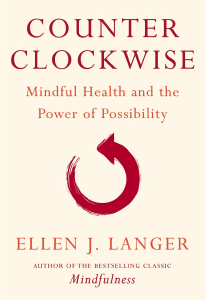
We are in constant search of better ways to focus our efforts and achieve more effective results. The work of Ellen Langer, whose new book (click the image above to go to her website) continues her “mindfulness” theme on into the realm of health, brought to our attention in a post on the New Yorker’s website today:

In the mid-nineteen-seventies, the cognitive psychologist Ellen Langer noticed that elderly people who envisioned themselves as younger versions of themselves often began to feel, and even think, like they had actually become younger. Men with trouble walking quickly were playing touch football. Memories were improving and blood pressure was dropping. The mind, Langer realized, could have a strong effect on the body. That realization led her to study the Buddhist principle of mindfulness, or awareness, which she characterizes as “a heightened state of involvement and wakefulness.”

But mindfulness is different from the hyperalert way you might feel after a great night’s sleep or a strong cup of coffee. Continue reading

A Science Writer’s Public Service

41EWvquSk3L_SL500_AA300_.5095659_std

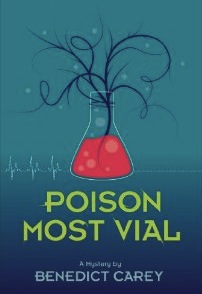
The famous forensic scientist Dr. Rama is dead – murdered – and suspicion has fallen on Ruby Rose’s father, the only family she has. Ruby is new to her school and is having enough trouble just making a friend; now she has far bigger problems. To save her father, she will have to solve the murder herself, relying for help on an elderly neighbor who used to be a toxicologist. But is this woman reliable? And is there enough time?

Benedict Carey is better known as a science reporter for the New York Times, but that is just his day job.  It certainly qualifies as public service, but in addition he moonlights on further public service. He explains his purpose:

Both books are adventures in which kids use science to save themselves and solve a mystery. It’s real science, accessible but not obvious, and builds understanding of some fairly advanced principles – transcendental numbers (among other things) in “Island of the Unknowns,” and mass chromatography in “Poison Most Vial.”

In a trailer park called Adjacent, next to the Folsom Energy Plant, people have started to vanish, and no one seems to care. At first Lady Di and her best friend, Tom Jones, barely notice the disappearances—until their beloved math tutor, Mrs. Clarke, is abducted, too. Mrs. Clarke has left them clues in the form of math equations that lead them and other kids all over the trailer park, through hidden tunnels under “Mount Trashmore,” and into the Folsom Energy Plant itself, where Lady Di and Tom Jones and a gang of other misfits uncover the sordid truth about what’s really happening there. That's Di on the left and Tom on the right.

In a trailer park called Adjacent, next to the Folsom Energy Plant, people have started to vanish, and no one seems to care. At first Lady Di and her best friend, Tom Jones, barely notice the disappearances—until their beloved math tutor, Mrs. Clarke, is abducted, too. Mrs. Clarke has left them clues in the form of math equations that lead them and other kids all over the trailer park, through hidden tunnels under “Mount Trashmore,” and into the Folsom Energy Plant itself, where Lady Di and Tom Jones and a gang of other misfits uncover the sordid truth about what’s really happening there. That’s Di on the left and Tom on the right.

Perfectly principled reality: if you had been restricted to Benedict Carey’s better known science reporting for the New York Times, that would be not such a bad thing. He also serves on the board of Edge, a non-profit which seeks to “arrive at the edge of the world’s knowledge, seek out the most complex and sophisticated minds, put them in a room together, and have them ask each other the questions they are asking themselves.” Again, not bad.

But we like in particular the effort to branch out further, reaching the next generation and aiding the mathematical and scientific efforts of educators who otherwise compete with entertainment of all sorts for the hearts and minds of youth.

That said, do not miss his reporting. He is a master at this trade, and improves the quality of conversation we are determined to engage in more often. His most recent article for the Times reviews the research into cognitive performance and aging and with humor and gravitas all at once he acknowledges why as we get older we tend not to be too interested in these findings: Continue reading

Sustainable Forestry And Eco-efficient Wood Heating

This slideshow requires JavaScript.

Thanks to Harvard Gazette for this follow up story shedding more light on the role of forests of Massachusetts in better understanding the planet’s ecological needs:

In heavily wooded New England, forests are dynamic ecosystems that support a range of plants and animals, and their ability to soak up carbon also makes them an important piece of the climate-change puzzle. How changes to forests over time affect the flow of carbon through the atmosphere has long been a focus of researchers at the 3,700-acre Harvard Forest. Now, three wood-fired boilers are providing those scientists with a new tool to expand their understanding. Continue reading

Science Writers Contribute To The Conversation

As we have more conversation in 2014 and beyond, it will definitely be improved with the science writers we have been following the last few years, and their successors who follow in their footsteps.

For example, we appreciate Virginia Hughes and the kind of writing that she publishes all over the place, and which National Geographic‘s Phenomena website collects, with this most recent example of hers:

An Old and Optimistic Take On Old Age

I’ve been reading and thinking a lot lately about the process of aging. Many scientists who study it argue — quite convincingly — that it’s the most important scientific topic of our time. In his 1997 bestseller Time of Our Lives, biological gerontologist Tom Kirkwood writes that the science of human aging is “one of the last great mysteries of the living world.” Continue reading

Bridging Art & Science

Detail of the cover of the October 2013 issue of SciArt in America, showing the “Observe” exhibition at Williamson Gallery in Pasadena (photograph by Steven A. Heller/Art Center College of Design)

Detail of the cover of the October 2013 issue of SciArt in America, showing the “Observe” exhibition at Williamson Gallery in Pasadena (photograph by Steven A. Heller/Art Center College of Design)

This is an appropriate follow up, of sorts, to the plea in favor of liberal arts, humanities and the like:

It’s no revelation that science and art have long been linked, the curiosity about the workings of the world aligned with artistic creativity. Recently, however, there seems to be more of a movement towards connecting the two worlds into a tighter community. Continue reading

The Cornell Lab Of Ornithology’s Student Innovators, Dreamers, and Leaders

After you watch the video above you might recognize some faces from the Cornell expedition to Borneo that we featured about a month ago, and be introduced to the faces of other friends that I made in ornithology class several years ago and have kept up with through soccer, squash, and biology classes we’ve taken together.  Continue reading

Good Fences Make Good Neighbors, It Has Been Said

mystery-picket-fence-1-600x399

The odd web-like structure that has captivated scientists. Photograph by Jeff Cremer, Solent News/Rex Features via AP

One of the myriad arguments in favor of wilderness conservation is that we do not know what we are losing when wild places are lost to development. Case in point with this story and image via National Geographic newswatch service:

Six months ago, visitors to the Peruvian Amazon discovered a mysterious picket fence structure nicknamed Silkhenge. Despite watching the structure for several days, naturalists at the Tambopata Research Center couldn’t figure out what type of animal (or fungus) was building it.

When scientist Troy Alexander first announced his find, all he had to show for his discovery was a series of intriguing photographs. He had no idea what Amazonian critter could have created the circular hideaway with a spoke-like outer wall. Continue reading

Mastering Environmental Science

Freshman Adarsh Jayakumar, ranked No. 2 among 18-year-old U.S. chess players, talks about his love of chess and his life at Cornell. Jayakumar is an environmental science major in the College of Arts and Sciences.

Freshman Adarsh Jayakumar, ranked No. 2 among 18-year-old U.S. chess players, talks about his love of chess and his life at Cornell. Jayakumar is an environmental science major in the College of Arts and Sciences.

In this 2.5 minute video (click the image above) a young man explains a remarkable decision: to forgo the professional opportunity he seems clearly well suited for in favor of another path which, as yet, he knows little about. As much as we appreciate chess, which he has mastered better than most players his own age, we appreciate his sense of adventure, and his decision to pursue mastery of environmental science instead of pursuing the more obvious path.

Glowing, Growing And Going

From sea horses that glow red to bright green eels, researchers have discovered 180 species of fish that fluoresce under blue light.

Green and bright. We get it. The future favors those who broadcast well, and these green eels qualify. As do the great science writers we tend to follow. From the excellent home for such writers, the Science section of the New York Times:

Fluorescence Is Widespread in Fish, Study Finds

By JAMES GORMAN

The findings, that at least 180 species and 16 orders of fish are biofluorescent, have implications for their evolution and behavior. (See the related  video, Fluorescing Fish) Continue reading