Congratulations Eesha Khare!

batteries

Another science fair-winner, again a young woman, has caught our attention (click the image to the left to go to the source):

Interest in nanochemistry research and energy storage led 18-year-old Eesha Khare, a senior at Lynbrook High School in San Jose, to develop a supercapacitor that could potentially be used in flexible displays and fabrics.

Her effort won her first prize at the Intel Science Fair and the Project of the Year award in the California State Science Fair’s senior division for 2013. Continue reading

Science Writer’s Advice

As fans of Mr. Zimmer‘s craft as a science writer, we recommend a recent advice column of his:
From time to time, I get letters from people thinking seriously about becoming science writers. Some have no idea how to start; some have started but want to know how to get better. I usually respond with a hasty email, so that I can get back to figuring out for myself how to be a science writer. I thought it would be better for everyone—the people contacting me and myself—to sit down and write out a thorough response. (I’m also going to publish a final version of this on my web site, here.) Continue reading

Plants & Math

NIGEL CATTLIN/GETTY

NIGEL CATTLIN/GETTY

Heidi Ledford introduces the following scientific finding on Nature‘s website:

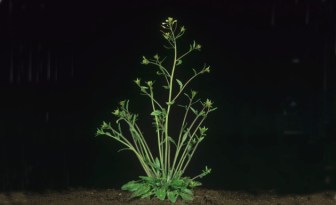
As if making food from light were not impressive enough, it may be time to add another advanced skill to the botanical repertoire: the ability to perform — at least at the molecular level — arithmetic division. Continue reading

Congratulations Elif Bilgin!

We have a particular interest in students on their way to university, in the middle of their university experience, or just on their way out.  Today we celebrate the accomplishment of a young woman in Turkey with a science project that has been recognized as brilliant, as noted in this press release:

On Thursday, June 27, Elif Bilgin, 16, from Turkey, was declared the winner of the second annual Scientific American Science in Action Award, powered by the Google Science Fair. Continue reading

Veg Beat

New research shows that cabbage, carrots and blueberries are metabolically active and depend on circadian rhythms even after they’re picked, with potential consequences for nutrition. Photo by Flickr user clayirving

New research shows that cabbage, carrots and blueberries are metabolically active and depend on circadian rhythms even after they’re picked, with potential consequences for nutrition. Photo by Flickr user clayirving

Smithsonian has an article about a surprising natural phenomenon, which may not impact your feelings but should get your thoughts stirred up a bit:

You probably don’t feel much remorse when you bite into a raw carrot.

You might feel differently if you considered the fact that it’s still living the moment you put it into your mouth.

Of course, carrots—like all fruits and vegetables—don’t have consciousness or a central nervous system, so they can’t feel pain when we harvest, cook or eat them. But many species survive and continue metabolic activity even after they’re picked, and contrary to what you may believe, they’re often still alive when you take them home from the grocery store and stick them in the fridge. Continue reading

Creativity And Coffee’s Catch

For all you coffee-fueled creatives out there, take note of recent scientific findings about Balzac’s blessed bean:

Honoré de Balzac is said to have consumed the equivalent of fifty cups of coffee a day at his peak. He did not drink coffee, though—he pulverized coffee beans into a fine dust and ingested the dry powder on an empty stomach. He described the approach as “horrible, rather brutal,” to be tried only by men of “excessive vigor.” He documented the effects of the process in his 1839 essay “Traité des Excitants Modernes” (“Treatise on Modern Stimulants”): “Sparks shoot all the way up to the brain” while “ideas quick-march into motion like battalions of a grand army to its legendary fighting ground, and the battle rages.” Continue reading

Exploring Iceland

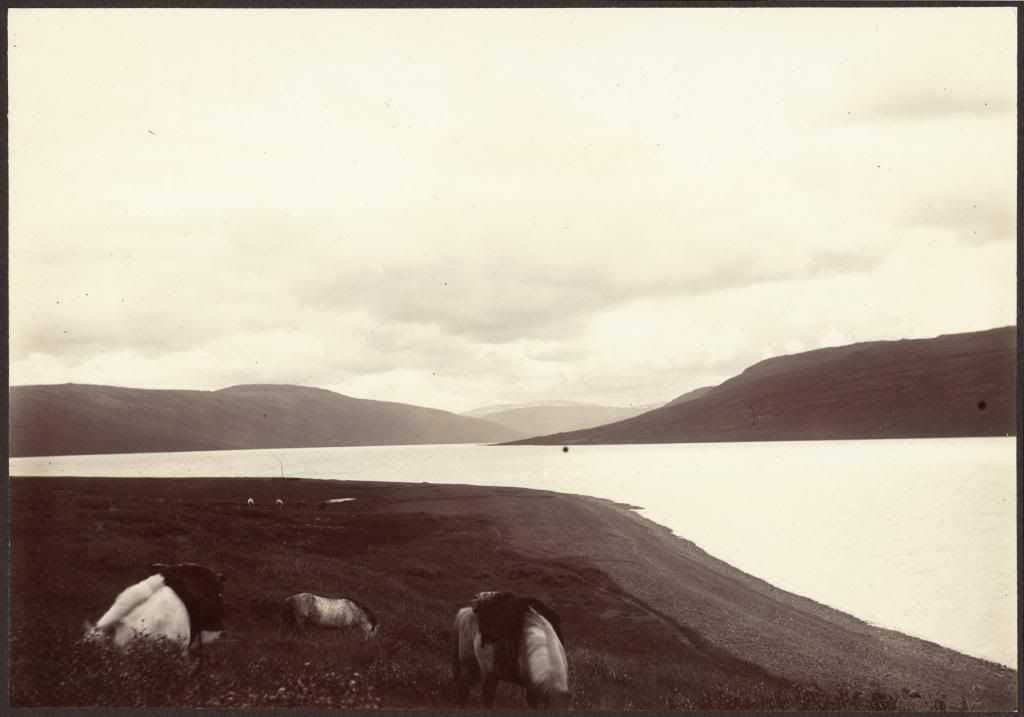
The head of Skorradalsvatn. Collodion print ca. 1900 by Frederick W. Howell. Bequest of Daniel Willard Fiske; compilation by Halldór Hermannsson at the Fiske Icelandic Collection of Cornell University.

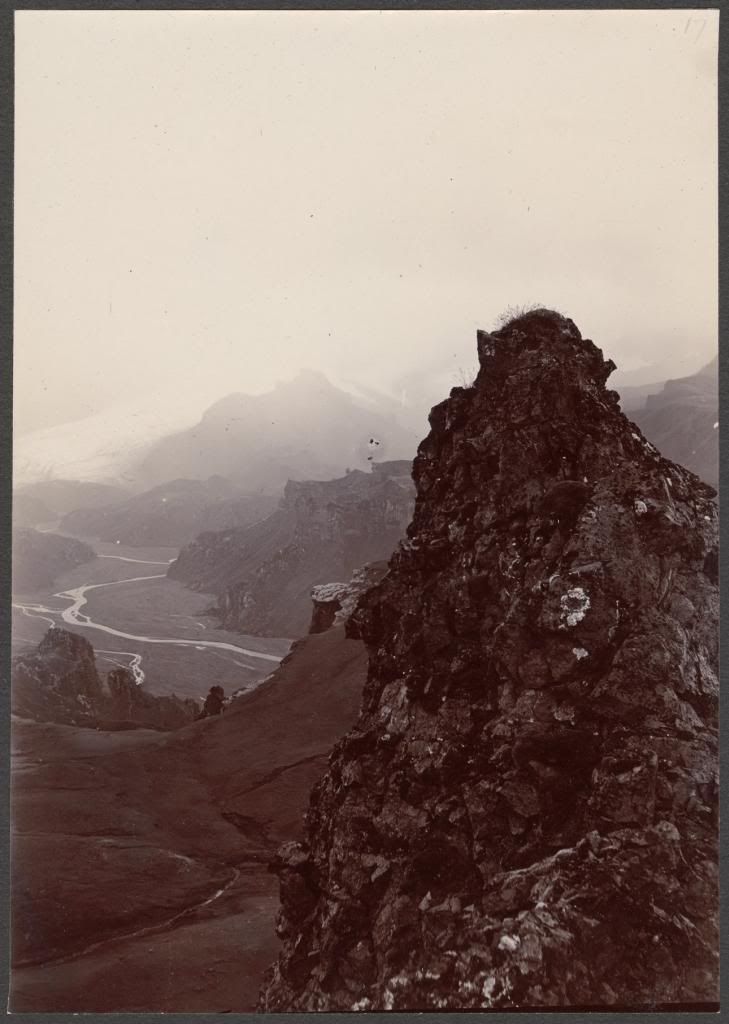
Þórsmörk. Head of Krossárdalur. Collodion print ca. 1900 by Frederick W. Howell. Bequest of Daniel Willard Fiske; compilation by Halldór Hermannsson at the Fiske Icelandic Collection of Cornell University.

It was mentioned a week or two ago that Iceland is in the air. For me, Iceland is on my mind, in my laptop, hidden throughout the Cornell libraries, and scattered about my room. After a couple essays for an environmental history course last year and some preliminary research for finding an honors thesis topic in the history major, I discovered that, thanks primarily to Cornell University’s first librarian, we have one of the largest collections of Icelandic material in the world. Since one of my projects for the environmental history class had shown me that Iceland was an interesting place to examine more closely, I did some more research and found the topic of European travel there during the eighteenth and nineteenth centuries engaging enough to choose as an honors thesis subject.

One of the places in Europe with the most spaces left blank by cartographers through the eighteenth and nineteenth centuries, Iceland’s inner regions were not fully mapped until 1901. Continue reading

Doolittle App

There's so much these guys want to tell you. (Shutterstock/Jaren Jai Wicklund)

There’s so much these guys want to tell you. (Shutterstock/Jaren Jai Wicklund)

When we can talk to the animals, what will we say? How will we say it? We picture an app for it:

We all try to talk with animals, but very few of us do so professionally.

And even fewer are trying to build devices that could allow us to communicate with our pets and farm animals.  Continue reading

Krulwich On Insect Communities Understood Through Mathematics

Another of those wonders, this time about bees, brought to you by the godfather of fun science reporters:

Solved! A bee-buzzing, honey-licking 2,000-year-old mystery that begins here, with this beehive. Look at the honeycomb in the photo and ask yourself: (I know you’ve been wondering this all your life, but have been too shy to ask out loud … ) Why is every cell in this honeycomb a hexagon? Continue reading

Smithsonian In Deep Water

This slideshow requires JavaScript.

New (to us) thanks to the Smithsonian and its supporters:

The Ocean Portal is part of the Smithsonian Institution’s Ocean Initiative. Together with the National Museum of Natural History’s Sant Ocean Hall and the Sant Marine Science Chair, the Ocean Portal supports the Smithsonian’s mission to increase the public’s understanding and stewardship of the Ocean. Continue reading

7 Ways To Understand Man’s Impact On The Earth In Recent Decades

The news headlines started carrying this story more than a week ago, but it was not until now that we had the chance to understand it.  Thanks to the Atlantic‘s coverage:

The project was built in conjunction with the U.S. Geological Survey, NASA, and TIME. The images come from the USGS-NASA’s satellite program LANDSAT, which were often stored on tapes like those in the thumbnail to the right. Google started sorting through a collection of 2,068,467 images back in 2009 — 909 terabytes of data, according to Google — finding the highest quality pixels (which is to say, shots not obscured by clouds), “for every years since 1984 and for every spot on Earth.” Continue reading

Out On A Limb

Dr. “Canopy Meg” Lowman, uses the canopy walkway to study leaf growth and defoliation in the forest canopy

Dr. “Canopy Meg” Lowman, uses the canopy walkway to study leaf growth and defoliation in the forest canopy

Nicknamed the “Real-Life Lorax” by National Geographic and “Einstein of the Treetops” by the Wall Street Journal, Meg Lowman pioneered the science of canopy ecology. She is currently the Director of the Nature Research Center at the North Carolina Museum of Natural Science, and research professor at NCSU. For over 30 years, “Canopymeg” has solved mysteries of insect pests and ecosystem health in the highest layer of the world’s forests, designing the tools of the trade- hot-air balloons and walkways for treetop exploration- as she went. Her personal mantra is “no child left indoors.” Continue reading

Sticky Science Reporting

Thanks to Mr. Krulwich for pointing this out:

In a cluttered, noisy world with so many distractions, it’s yet another way to stop people in the middle of their day and make them say, “Really?” Science intimidates people. Yet we’re all curious. The sly goal here is to poke folks with a good question, and then say, “You want to know the answer?”…

Continue reading

Take A Walk In The Park!

Brain fatigue is reduced by strolling through a park, The New York Times reports:

Researchers have long theorized that green spaces are calming, requiring less of our so-called directed mental attention than busy, urban streets do, but it had not been possible to study the brains of people while they were actually outside, moving through the city and the parks. Continue reading

Natalie Angier Strikes Again

This slideshow requires JavaScript.

We used the terminology natural born killers too soon. Apparently these unassuming creatures are the real efficient ones. And, like cats, disguised as gracefully admirable, and often unnoticed. In today’s New York Times Science section there is a story by one of our favorite science writers:

Science Times: April 2, 2013

New research suggests that dragonflies may well be the most brutally effective hunters in the animal kingdom. Continue reading

Eyes Of Other Animals (#2 Of 2)

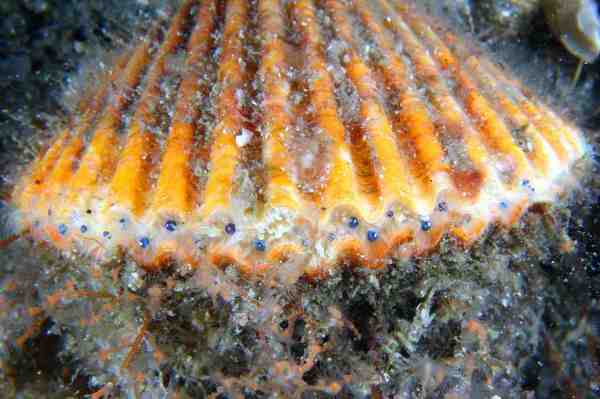
Thanks to The Atlantic‘s Alexis Madrigal, we have some coverage of this topic that we had honestly never thought about, but which makes total sense now that we have some information about it.  Eyes matter in ways more than just the obvious practical:
Unless you are an avid scuba diver, when you think of scallops, you probably think of linguine and garlic more than oceans and shells. That’s because we only eat the muscle of the scallop: You never see them in context.

Eyes Of Other Animals (#1 of 2)

This slideshow requires JavaScript.

The charisma of whales is normally associated with their size, their ancient history, their apparently gentle approach to life. But it is not only those; the eyes have a role to play in why we love these creatures, among others (more on which in a subsequent post). Thanks to Alex Madrigal and The Atlantic for their attention to this topic:

Both humans and whales are mammals, so our eyes are derived from a common ancestor. Not only can we look at whales and they can look back at us, but we know enough about optics to infer their eyes’ capabilities from their anatomy. Animal eyes can be imagined as technological systems evolved with biological materials.

“We will make the fairly bold claim that it is sensible to approach eyes in essentially the same way that an optical engineer might evaluate a new video camera,” write Michael Land and Dan-Eric Nilsson, the authors of the Oxford University Press treatment of our topic, Animal Eyes.

Their eyes capture light in ways we can understand. Their eyes have a focal length. Their eyes have a maximum resolution.

So, what does the world look like to a whale? Continue reading

Frankenspecies

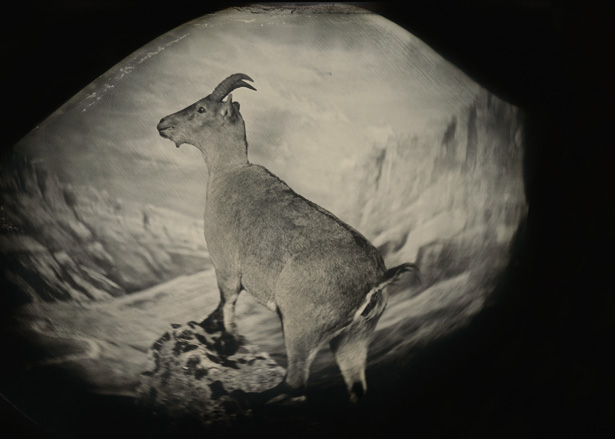
Bringing Them Back to Life.The revival of an extinct species is no longer a fantasy. But is it a good idea?

Bringing Them Back to Life.
The revival of an extinct species is no longer a fantasy. But is it a good idea?

One of our favorite science writers brings interesting ideas to life, weirdly but masterfully. And fun.  But this one tilts heavily to weird, except for the fact that this is real:

On July 30, 2003, a team of Spanish and French scientists reversed time. They brought an animal back from extinction, if only to watch it become extinct again. The animal they revived was a kind of wild goat known as abucardo, or Pyrenean ibex. Continue reading

Communities of Learning, Science, And The Role Of Culture

A meeting of doctors at the university of Paris. From a medieval manuscript of “Chants Royaux”, Bibliothèque Nationale, Paris.

A meeting of doctors at the university of Paris. From a medieval manuscript of “Chants Royaux”, Bibliothèque Nationale, Paris.

Click on the image to the right to go to the source, an online publication we have consistently enjoyed so far:

The lone survivor of traditional Western European ‘scientific’ culture is science.

It has survived because it is now the handmaid of technology, without which contemporary civilization would collapse utterly. Anyone who doubts this should try to get a research grant for genuinely “pure” research.Today, in European cultures, and in other cultures that have borrowed it, science per se is strictly peripheral at best. It is not only inseparable from technology; it is all but completely divorced from philosophy. This is a far cry from the Middle Ages.

The centrality of science in all spheres of Western European culture was ensured when the crucial elements — all of them — were borrowed during the Crusades, more or less simultaneously, from Classical Arabic civilization. Continue reading