Search Well, Do Good, Avoid Not Being Evil

The big guns of the tech world have the financial weight to reinvest in new services, but can startups give them a run for their soul?

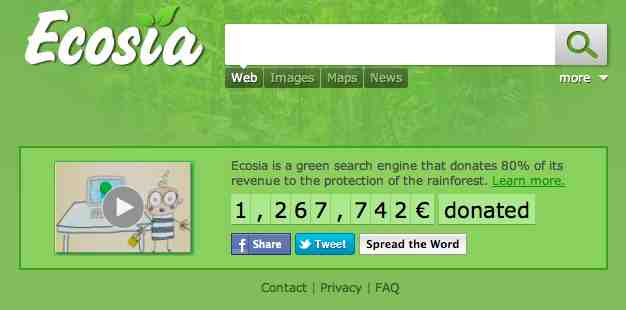
I have not tested it yet, but there is a new, alternative search engine worthy of checking out. Click the image above to go to the Guardian story about would-be giant-killing do-gooders (or is it giant-killing would-be do-gooders?):

A new breed of internet startup is taking on the big guns of the tech world. Seeking to capitalise on consumer disillusionment with the established order in the wake of headlines about tax-dodging, personal data profiteering and poor factory conditions, these startups represent the radical face of the internet.

Unusually for a tech company, however, it is not technological innovation that gives them their unique selling point. Rather it is the promise to do social and environmental good.

“They started with decent values – Google and Apple,” says Christian Kroll, founder of Ecosia, an eco-conscious search engine based in Berlin. “They wanted to build something that improves the world. But as soon as you become a public company, shareholders exert influence.” Continue reading

Everything is good in a banana

My colleague Vinod is an expert on sustainable tourism in India, he has studied the alternatives to plastics. He explained to me that after Brazil, India is the largest producer of bananas in the world… Continue reading

Vote now for the contest Sarifixation: a redesign challenge !

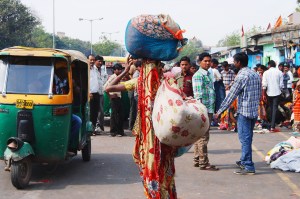
 sari collector on her way to work Ahmedabad, India (January, 2013) via sarifixation.comA sari: five yards of unstitched fabric ingeniously wrapped and draped. Nowadays, with the exhausting rhythm of fashion, tons of unwanted secondhand saris are discarded every day and collected by India’s informal rag-picker community who resell these fabrics. This task has gotten harder and harder to do as India’s GDP per capita rises along with a distaste for secondhand.

Back in 2010, Bijal Shah was working on slum development issues as a fellow of the AIF-Clinton Foundation for the NGO SAATH in Gujarat, India. In a sea of beautiful second hand sari fabric, she had the idea to turn secondhand Indian saris into one of a kind, exciting products. Continue reading

A Fresh Social Enterprise Story

This slideshow requires JavaScript.

We are happy to spread the news about social enterprises we encounter, even if we have not yet tested their products.  In this case, it is the Origins story that catches our attention:

FreshPaper was created by a young inventor who happened upon the active ingredients after accidentally drinking some tap water while visiting her grandmother in India. Her grandma gave her a home remedy – a mixture of spices, which kept her from getting sick. (Click here to hear the story in her own words.) Continue reading

Venturing For Impact

HBR Blog

A strong statement on Harvard Business Review’s blog site about the role of finance, specifically the venture capital model, in the future of social enterprise, which is in very close proximity to entrepreneurial conservation both conceptually and in practice.  Substitute ecosystem degradation for poverty or educational shortcomings and the framework with which Raxa Collective approaches its various initiatives:

During the past century, governments and charitable organizations have mounted massive efforts to address social problems such as poverty, lack of education, and disease. Governments around the world are straining to fund their commitments to solve these problems and are limited by old ways of doing things. Social entrepreneurs are stultified by traditional forms of financing. Donations and grants don’t allow them to innovate and grow. They have virtually no access to capital markets and little flexibility to experiment at various stages of growth. The biggest obstacle to scale for the social sector is this lack of effective funding models. Continue reading