Stories
The Green of Baja
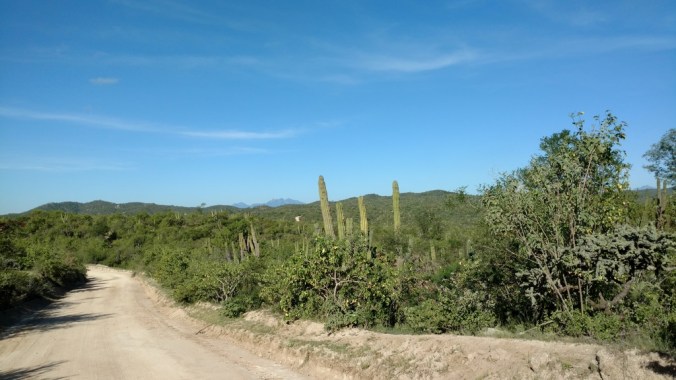
Green is not the first color I associate with Baja California Sur and as the coastal outline slowly became clearer through my plane window I was stunned by the vibrancy of color I was witnessing. The “rainy” season of Baja, which only means a few inches of rain in a span of three months, had transformed the dry, craggy landscape into a verdant, blossoming oasis. In my previous trip to Baja, I had been informed of this phenomenon but I was unprepared, nonetheless, for the volume of greenery and pop of pink and blue flowers.
Smart Reading, 20 Years On
 There is a 5-10 minute read in the upcoming issue of the New Yorker that helps put two decades into a narrow but interesting perspective. 20 years ago I was in the process of moving my family to Costa Rica for a job I had accepted one year earlier. I remember the period described below, which could be considered the transition to life online, as we now know it. Odd to think it was happening just as we moved to a kind of Garden of Eden. Slate has been a part of “life online” ever since. I was mainly drawn to Kinsley, one of the sharpest of thinkers and communicators. He is long, long gone from Slate. But the experiment was fruitful; Slate is alive and well even as the media landscape is oversaturated with copies of copies of copies:
TWENTY YEARS OF SLATE
The digital magazine’s founding editor-in-chief and his successors got together to survey its history and its contributions to online journalism.
It’s been twenty years since Michael Kinsley, the former editor of The New Republic, undertook a novel adventure: the creation of a magazine, underwritten by Microsoft, that was to exist primarily in what was then known as “cyberspace.” “There will be efforts to update it, perhaps on a daily basis,” the Times noted, in a report that appeared below the fold on page D1 of its issue of Monday, April 29, 1996, two months before the launch of Slate.
Recently, Kinsley, who was the editor-in-chief of Slate from 1996 until 2002, and his three successors—Jacob Weisberg, David Plotz, and Julia Turner—gathered in Washington, D.C., to record a podcast: a five-way conversation with Josh Levin, the magazine’s executive editor. It was a nostalgic and forgivably self-regarding celebration of what Turner characterized as Slate’s “smarty-pants, curious journalism, opinion, and analysis.” The editors posed, grinning, for a group photo. Continue reading
Being Human, Sharing Relevant Information, Building Community
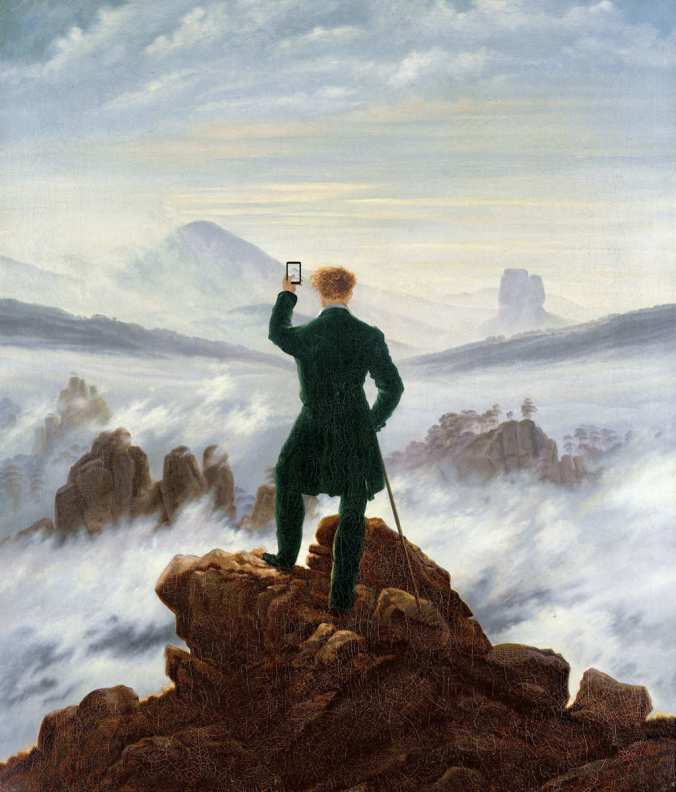
In the first few years of our building this wordpress platform to communicate about things that concern us and especially about things that inspire us, we occasionally found something that Andrew Sullivan had posted that was relevant here (only rarely since his site was mainly dedicated to politics and other topics that do not belong on our platform).
So we know a bit about him and always admired his relentless pursuit of what he believed in. We also know he is an excellent writer, so almost always worth a read. The same relentlessness we admire is also one we vigilantly guard against in these pages, where we have tried to limit our daily contribution to just a few essentials. We want only to have some shared space with a community of readers who care about some of the issues that interest us the most. This article Mr. Sullivan just published is definitely worth a read:
Of Salt and Stories
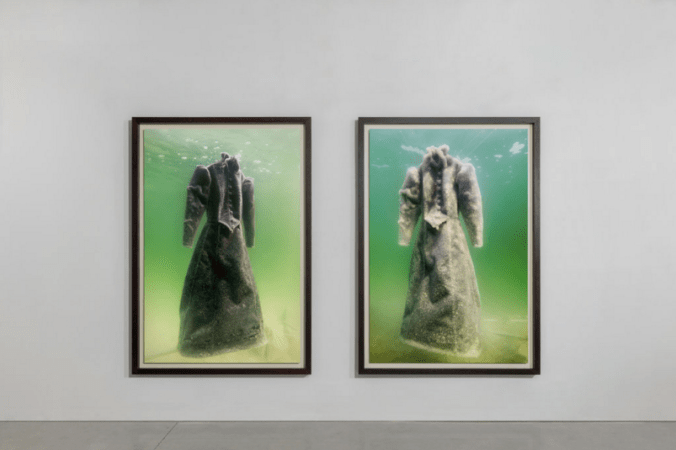
“Salt Crystal Bridal Gown III” (left) and “Salt Crystal Bridal Gown VI,” both 2014.
Courtesy of the artist and Marlborough Contemporary
It starts with a story. Written by Russian playwright S. Ansky in the early 20th century, The Dybbuk is an expressionistic drama about a young bride possessed by the malicious spirit of a dead suitor, and subsequently exorcised.
Jerusalem-born artist Sigalit Landau took inspiration from the story and her powerful connection to the Dead Sea, an otherworldly place she grew up visiting frequently with her family, and that she has incorporated into her art for years. Her “Salt Bride” installation at London’s Malborough Contemporary, enlists the work of the sea itself, in which a traditional black Hasidic gown (a replica of the costume worn by the bride in The Dybbuk, as portrayed by legendary actress Hanna Rovina) is submerged into the sea’s hypersaline waters. The salt crystals accumulated naturally over the net-like weave of the dress, left submerged over a period of 3 months, during which the process was photographed as an organic time-lapse. “Over time, the sea’s alchemy transforms the plain garment from a symbol associated with death and madness into the wedding dress it was always intended to be.” Continue reading
Cycling through the Belize Forest
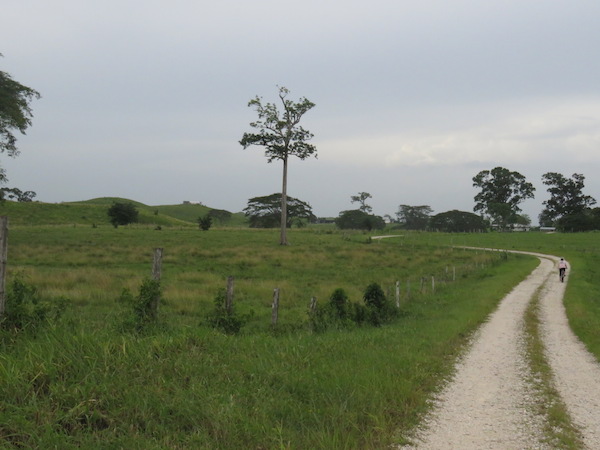
There are plenty of activities at Chan Chich Lodge that will expose you to a variety of forest wildlife and immerse you in the nature of Belize, such as the walking tours, horseback riding, canoeing, or the driving tours. But one of the lesser known activities that can also provide the same thrill as the other ones is bicycling.
I went on my first bike ride along the main road a week ago. For the first mile starting from the compound area, the paved road offered a smooth ride past the suspension bridge and up until the “Y” intersection. I turned the handlebar to the left and my bike dropped a half-inch to the lower, limestone gravel road. The gravel pebbles started out small, boosting my confidence that I would make it to edge of cattle pastures of Gallon Jug estate, about five miles out. Continue reading
Slacklining in Rio

Image of Giovanna Petrucci via youtube.com
I wrote about slacklining last year, as James did the year before that, but we were nowhere near the class of skill practiced by professional slackers like those in Rio de Janeiro, where lots of young people go to the beaches and enjoy the relatively new sport in a much more acrobatic fashion than the simple balancing I’ve been doing in back yards and college campuses. Anna Jean Kaiser reports on the world champion of slacklining, an eighteen-year-old girl who practices in her hometown at Ipanema Beach:
RIO DE JANEIRO — Bouncing in the air above the sand of Ipanema Beach, not an Olympic venue in sight, is one of the most remarkable athletes in the world who has nothing to do with the Rio Games. Her name is Giovanna Petrucci, and her acrobatics rival those of the gymnasts and divers competing across this city.
Chan Chich Field Notes: Black Howler Monkey
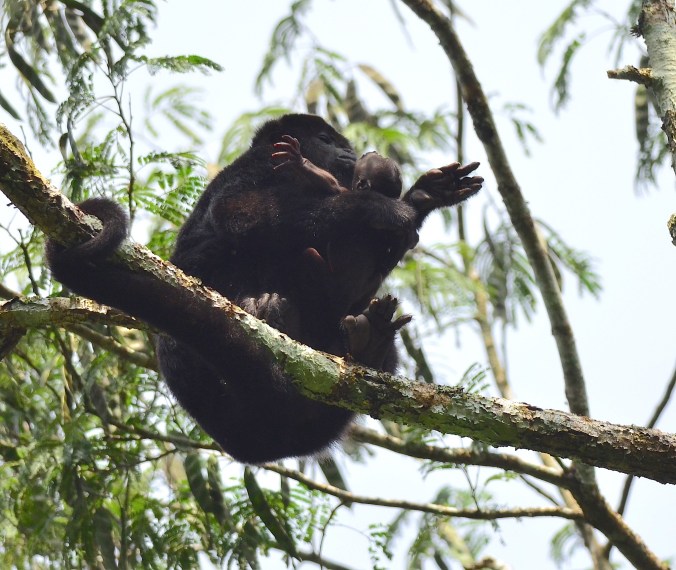
After my morning shift I went for my usual walk with my camera on Sylvester Village Road, looking at the beautiful surroundings and listening to the sounds of the forest. I heard something very unusual, which was a little frightening when I realized the sound was coming from above me. I looked up just in time to see a howler monkey giving birth. It was a very emotional moment, and when I finally felt calm enough to lift my camera I caught the mother bringing the baby up to her face on film. Continue reading
Museums, Things, Epiphanies
Reading the review, and the museum’s description of this show, I immediately thought of a museum that Amie and I had the chance to visit in Istanbul, which had been on our to-do list for some time; and the next click through the museum’s website led me to this:
THURSDAY 09/29 /16 7PM
Orhan Pamuk in Conversation with Massimiliano Gioni
Which just seemed right because the museum in Istanbul was create by Orhan Pamuk. I will do my best to find a recording of this conversation, if they make a recording or transcript available and but for now the best I can do is direct you to the website of the museum in Istanbul which, hopefully, will lead you to the actual museum, easily the most moving museum experience of my life:
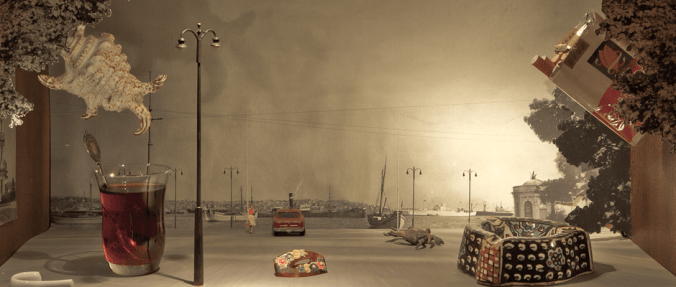
The Museum of Innocence is both a novel by Orhan Pamuk and a museum he has set up. From the very beginnings of the project, since the 1990s, Pamuk has conceived of novel and museum together. The novel, which is about love, is set between 1974 and the early ’00s, and describes life in Istanbul between 1950 and 2000 through memories and flashbacks centred around two families – one wealthy, the other lower middle class. The museum presents what the novel’s characters used, wore, heard, saw, collected and dreamed of, all meticulously arranged in boxes and display cabinets. It is not essential to have read the book in order to enjoy the museum, just as it is not necessary to have visited the museum in order to fully enjoy the book. But those who have read the novel will better grasp the many connotations of the museum, and those who have visited the museum will discover many nuances they had missed when reading the book. The novel was published in 2008, the museum opened in Spring 2012.
Be sure that you read the explanation for this floor motif.
The Sense Of A Place
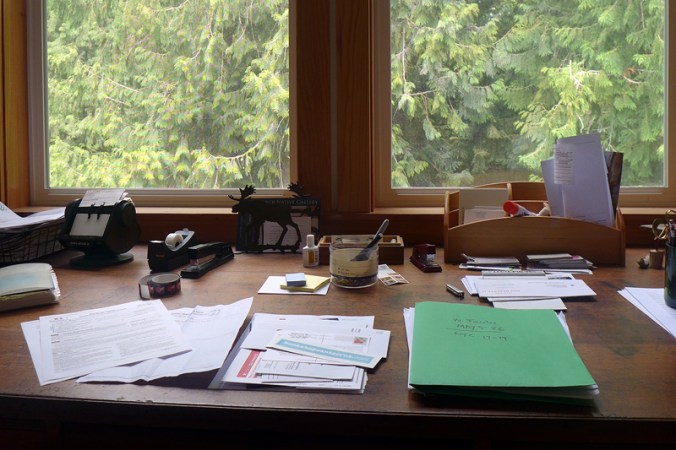
What Annie Proulx says about places she has lived–through her fiction especially but also in this interview below–rings a bell for us, considering the number of places we have chosen to live to do what we do. What the interview echoes specifically for me is the inherent improbability of accomplishing one of our key objectives: we want travelers to become as attached to places as we are, so that they will care about the conservation mission of our initiatives in each location as much as we do. It occurs to me that our guests spend about as much time with us in any given location as a reader spends on any given book by Proulx; also, books and our locations share in common the fact that they can be revisited an indefinite number of times.
That said, we want our guests to care more about these locations than even the most devoted reader cares about a Proulx character; not because we think less of her characters but because our conservation mission is about places in need of constant support. Improbability in this context refers to the question: how can our guests become intensely attached–as happens when a reader is gripped by a compelling character in a deeply human situation in an exquisitely described location–in a limited amount of time and continue to care intensely after they depart? That is our challenge, and we are constantly finding new ways of answering that question.
Another echo from reading what Annie Proulx says about the places she has lived, about belonging, feels strongly relevant. If we are a fraction as good at what we do as she is at what she does, belonging becomes irrelevant. What matters is how much sense we make of the place, and how much sensibility we harness in showcasing it to our guests. If you have read any of her books, you know how evocative place can be–like an additional character–and if that captures your attention you should read the interview that follows the introductory section excerpted below.
HOW THE WRITER RESEARCHES:
ANNIE PROULXJOHN FREEMAN INTERVIEWS THE PULITZER PRIZE WINNER IN HER SNOQUALMIE VALLEY HOME
Annie Proulx is 80 years old and still not sure where she belongs. Standing in the atrium of her home in the Snoqualmie Valley, the Pulitzer Prize-winning novelist eyes a photograph of the cottage she once occupied in Newfoundland, the setting of her 1993 novel, The Shipping News. “I fell in love with that landscape,” Proulx says, speaking in the tone of a woman describing an ex-lover. Continue reading
What Would I Read At Villa del Faro?
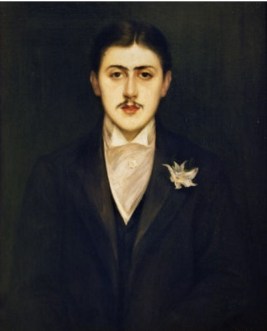
As a teen-ager, Marcel Proust filled out a questionnaire as part of a parlor game. His responses have experienced a startling afterlife. PHOTOGRAPH BY IMAGNO / GETTY
Seth’s post, followed by Jocelyn’s post, both reach me just after reading this fascinating short history on the so-called Proust questionnaire, which I first encountered in the back pages of Vanity Fair magazine when I had nothing better to do. I am reminded of two things: guilty pleasure reading, and actual reading of something other than news, news analysis, or long-form non-fiction–which are a mainstay of my contributions on this site.
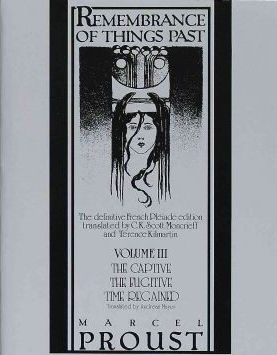
I am reminded of a third thing: Amie’s marathon reading of Proust, and the view of this 3-volume set around our home for a long stretch of time. Those books that she would lug around were the sign of an unreformed, unrepentant student of literature, whose career started as a book editor in New York City, when she had nothing better to do.

I say that mainly to contrast what I did with my guilty pleasure reading time back then, and what she did with hers. I say that because in more recent times, especially the past six years in India, she has had something much better to do, and plenty of it to do, and I think we are all better for that. Which has me thinking: if I had the time, what would I read if I could just leave it all behind right now and land at Villa del Faro with nothing but books (and at least a couple changes of clothes, of course)? Would I find that Proust set Amie has in storage? As an amateur nostalgist with limited writing talent, I might choose those volumes as a self-help guide.
 I write on this site partly to share about events, people and places that I believe are worthy of others’ attention; but also for the sake of further reflection and sense-making of those. Patterns repeat; some people and places important once come back to be important again. For example, nearly five years ago I was on my third of five extended periods of work in Baja California Sur. It was on an earlier visit in 2008 that I had met Andy Murphy, then with WWF, with whom I became friends and then eventually more with our project in Ghana. Continue reading
Intangible Heritage In Ireland
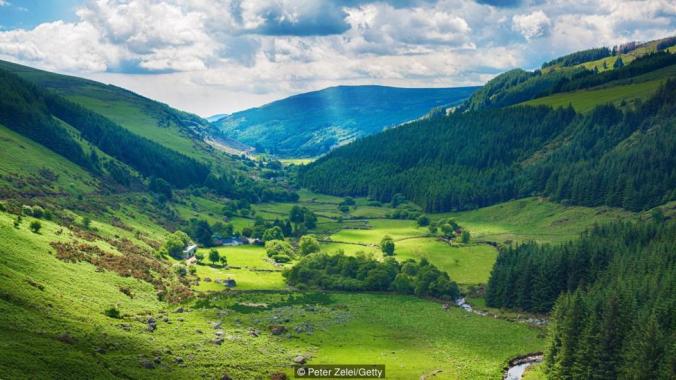
Irish landscape
Apropos of this post yesterday, and many that preceded it on the topic of intangible patrimony (thanks to the BBC):
How The Irish Lost Their Words
New storytelling groups are reintroducing the Irish to ancient myths and the art of blarney.
By Rory Boland
I always knew my Uncle Peter was setting up for a story when he’d lean back in his bar stool. Nothing dramatic, nothing too flashy, just a gentle recline – always followed by a more determined pushing away of his half-drunk pint of Harp and a wipe of the whiskers. Stage set, audience warned, he’d begin by saying “C’mere ‘till I tell you.” By the time that pint of Harp was drained, half the pub would be leaning in to listen and laugh. Continue reading
Intangible Heritage Worthy Of Conservation
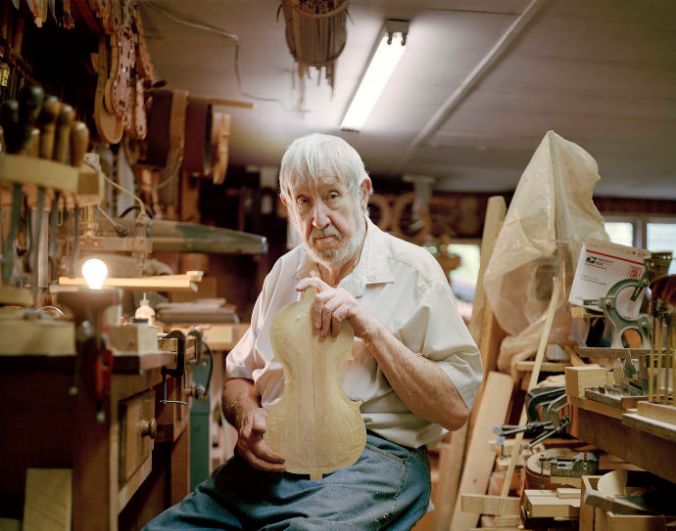
Who gets to decide what is worthy of conservation, and what is not? I am given reason to think about this on a regular basis, given the work that we have been doing for the last two decades. There is no one answer, of course, but I conclude regularly that it comes down to very deep personal experiences–those which lead individuals to alter the path of their lives and thereby have an impact on the conservation of something they have come to care deeply about. John Muir, Teddy Roosevelt and others come to mind on the larger scale of this line of thinking.
Reading one of our other blog posts today, I was taken back in time to pre-India workdays, 2008-2010. Milo, I had forgotten until just now, had a chance to wrestle firsthand with one of Patagonia’s most important conservation issues, and it is fair to say that what he is doing today is influenced by intense experiences he had in Patagonia, followed by a couple of years living with us in India. That would be an example of a smaller scale of this line of thinking. Same goes for the story I just read, and when I look at the photo above, and the one below, I am reminded that sometimes an image alone, or a series of images like these, can lead to this same path-changing epiphany.
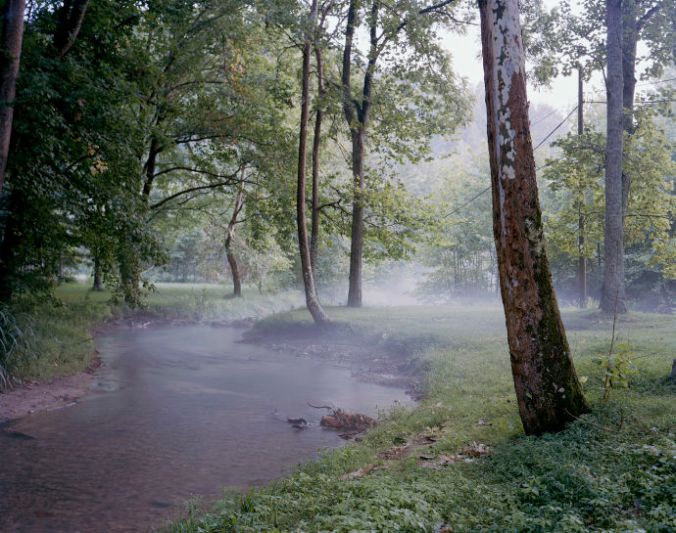
I have family in the vicinity of this story’s subjects, and am thinking just now that I have not made a visit to that family in too long; time to plan a visit? The thought is now lodged deeply in my thinking.
Continue reading
Southward, Ho!
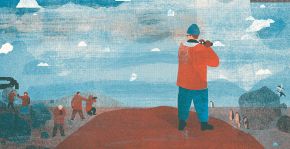
I had never before had the experience of beholding scenic beauty so dazzling that I couldn’t process it, couldn’t get it to register as something real. ILLUSTRATION BY BLEXBOLEX
We are happy any time this novelist takes time from his main craft to devote time to what seems to be his main personal passion, which might be identified as birding, or else more broadly speaking the environment in which birds thrive (or not). From this week’s New Yorker, another journey far away, southward, by Jonathan Franzen with an eye to environmentalist perspective:
The End of the End of the World
An uncle’s legacy and a journey to Antarctica.
BY JONATHAN FRANZEN
Two years ago, a lawyer in Indiana sent me a check for seventy-eight thousand dollars. The money was from my uncle Walt, who had died six months earlier. I hadn’t been expecting any money from Walt, still less counting on it. So I thought I should earmark my inheritance for something special, to honor Walt’s memory.
It happened that my longtime girlfriend, a native Californian, had promised to join me on a big vacation. She’d been feeling grateful to me for understanding why she had to return full time to Santa Cruz and look after her mother, who was ninety-four and losing her short-term memory. She’d said to me, impulsively, “I will take a trip with you anywhere in the world you’ve always wanted to go.” To this I’d replied, for reasons I’m at a loss to reconstruct, “Antarctica?” Her eyes widened in a way that I should have paid closer attention to. But a promise was a promise. Continue reading
If You Happen To Be In Helsinki
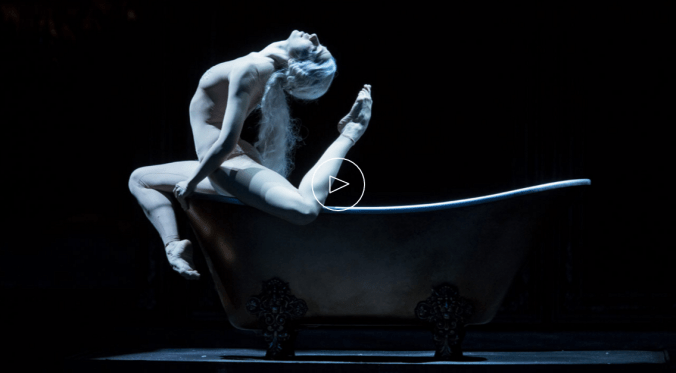
Last year while doing one of our favorite work “responsibilities”, two of our team spent some time with guests at Xandari Harbour. The family happened to be from Finland, and one member of the family happened to be a composer of film scores and ballets. We’ve kept in touch, and they recently shared this amazing production of the Little Mermaid by the Finnish National Opera Ballet.
The blend of ballet, contemporary dance, unusual costuming and staging with 3D technology all merge to create an amazing staging of a creatively interpreted classic.
Click here or the photo for the evocative trailer…
The Back Stories
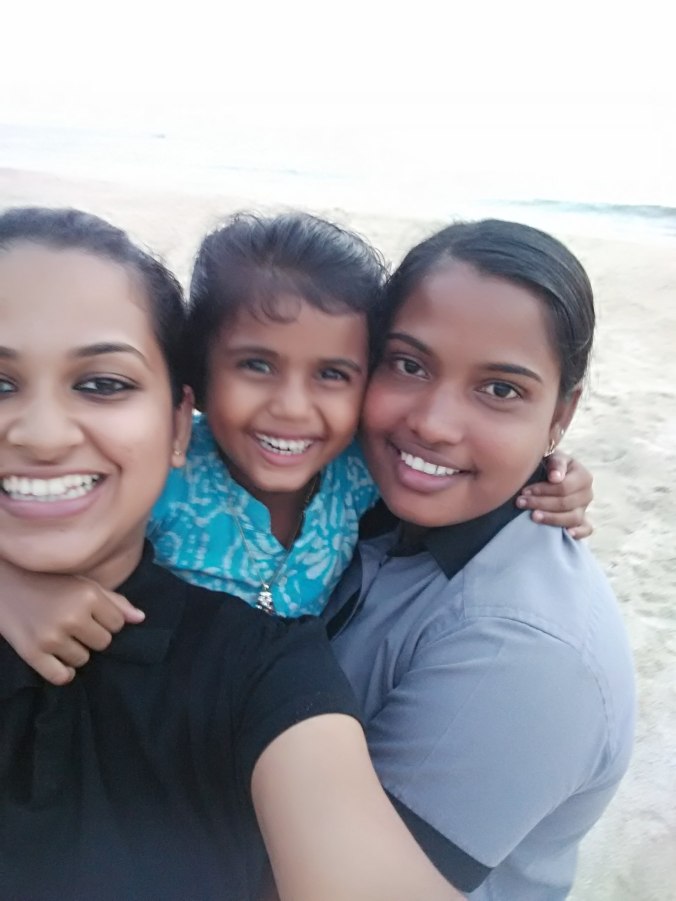
Beach time with little Adoniya and her mother Sini, member of the Xandari family.
Ask me the most meaningful part of my job around here in recent time and I’d hold up the Xandari films without a doubt. To call them films or videos is an acknowledgement of their formats and the creative process that goes into them. But to embrace all of them together with the words labour of love is simply the truth. (Watch them here).That we loved making them, loved dissecting the resorts to take a closer look at their DNA, their dreams. Above all, loved the Xandari family a little bit more. I’ll tell you why.
Roses, Places, Faces

On Feb. 1, Phanice Cherop works at the AAA Growers’ farm in Nyahururu, four hours’ drive north of the capital Nairobi, in Kenya. Last year Kenya exported more than 6.8 million cut flowers to the United States. Ilya Gridneff/AP
We have less than zero interest in Valentine’s Day, but in the stretch journalists make to find a story that we want to read, there is reason at least to review the photos in this story brought to you by National Public Radio (USA):
…Unless you made a point of finding American flowers, odds are any bouquets you bought or received today traveled far indeed. Continue reading
Walking In on the Sari

Pink silk thread on the loom

Golden thread to be woven into patterns in between the sari

Pattern in progress

The jacquard fitted to the loom.

The weaver.

Threading the gold.

The right side of the pattern.
Walk. That’s my one-word gospel for all who will listen in on the best way to discover. Meander. Be curious, the good kind. Because stories wait around corners, discoveries often plonk themselves on one-way streets. And some are found in messy backrooms of squeaky clean shops lined with mannequins and smiles. Like this woven tale of the people, history, and fabric that go into the making of the Indian drape. There’s more than just five yards to the sari, trust me.
Sifting Through Food Memories
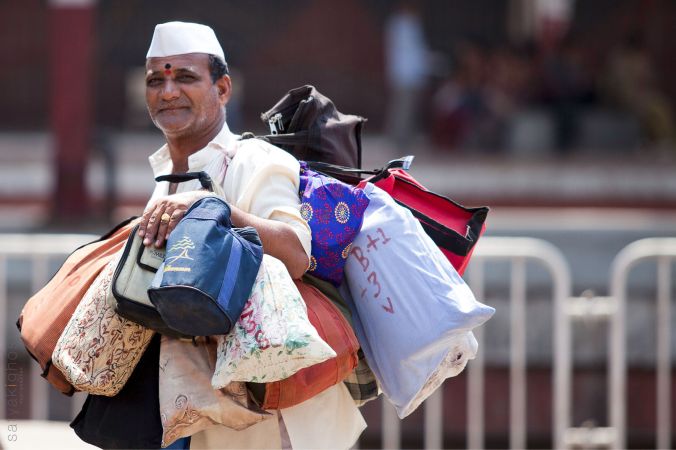
The Indian city of Mumbai is home to the ‘dabbawala’ service wherein boxes of hot lunch make their way from homes to customers’ offices. PHOTO: Satyaki Ghosh
Food memories. Absolutely universal, absolutely distinctive. Across cultures, across borders. United by the emotions they evoke – nostalgia, love, warmth, hope. While travel memories are notched up by the miles, they are bound to feature a food memory or two. Of cultures, smells, people, faces, history. Jacques Pepin, noted French chef, writes of his in The New York Times:
There is something evanescent, temporary and fragile about food. You make it, it goes, and what remains are memories. But these memories of food are very powerful. My earliest memories of food go back to the time of the Second World War. My mother took me to a farm for the summer school vacation when I was 6 years old with the knowledge that I would be lodged and fed there. I cried after she left and felt sad, but the fermière took me to the barn to milk the cow. That warm, foamy glass of milk is my first true memory of food and shaped the rest of my life.
Five Years In Kerala
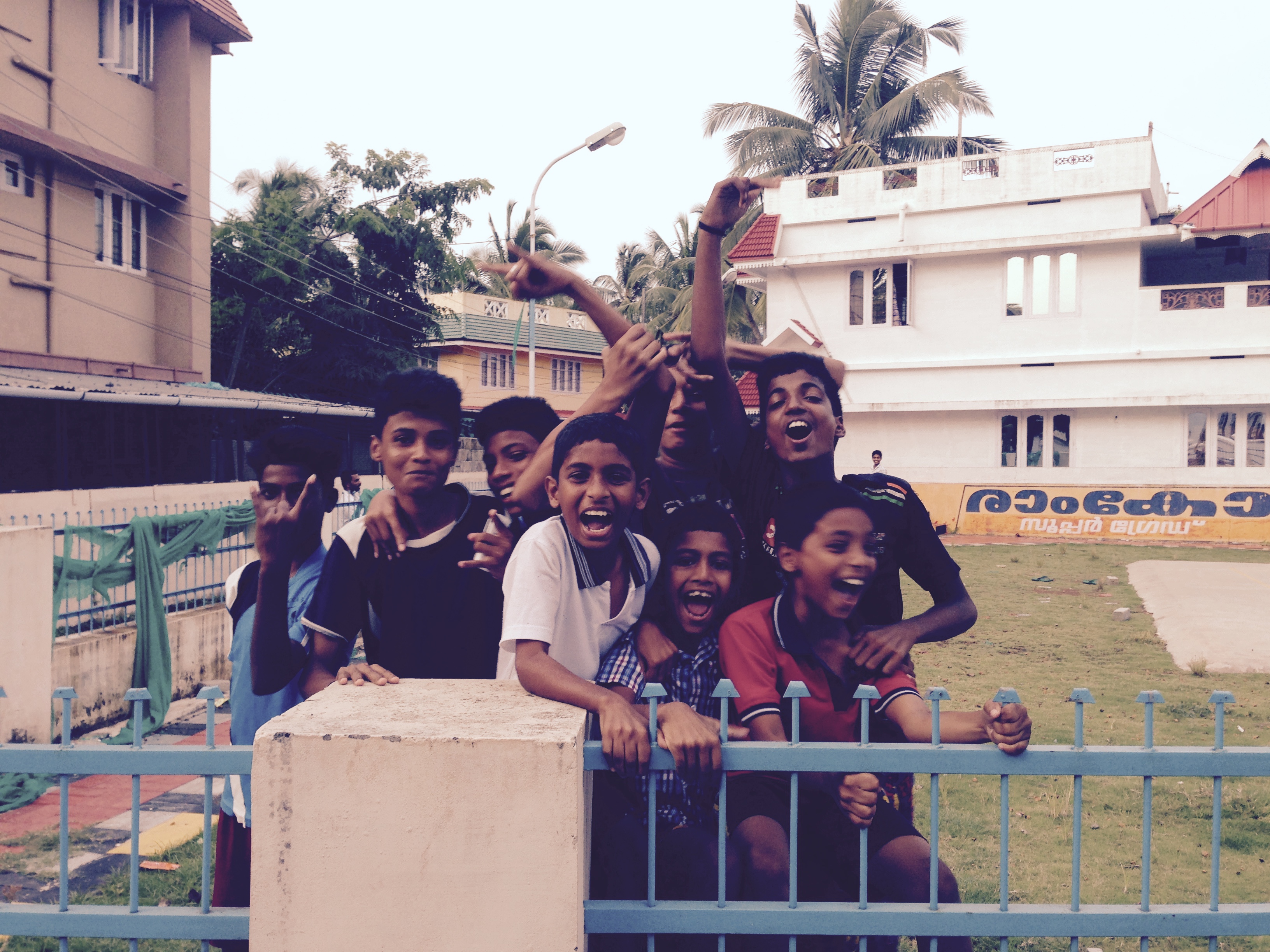
Jocelyn’s post reminds me of my favorite part of the last five years living in the wondrous, sometimes ponderous, always mysterious Kerala: these kids. Our gang, Thevara. My hoodies. They have all been growing by leaps and bounds, while leaping and bounding through the streets. This photo, taken some hours ago, could have been taken five years ago except for the heights of these fellows. And these young ladies on the right side of the photo below (also just taken) were but infants when I arrived into their world.
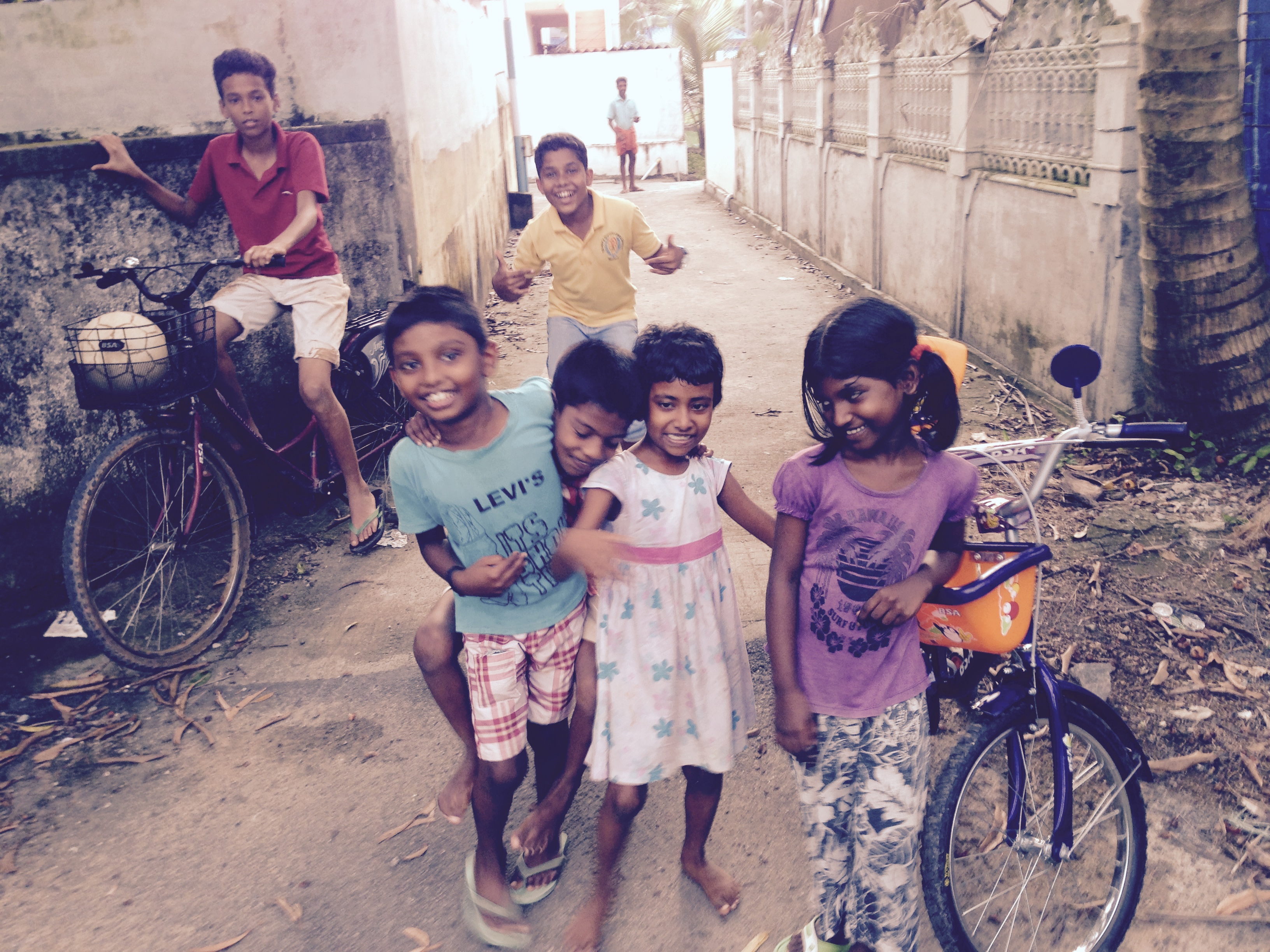
They welcomed me with cheers and high fives from day one, and continue to welcome me today with the same enthusiasm as on day one. So I have felt most at home in Kerala when I am walking through our shared neighborhood. My name, to them, is very simple: Saip. It is a term of endearment, at least it seems so to me. They all speak Malayalam, the language of Kerala, and almost zero English. But that is changing. The older sister of the young lady in the white starry dress is the most advanced in English, and now serves as the translator for the neighborhood when I walk through. I will bring her voice into the next post from Thevara. For now, my hat is off to the kids of Thevara, and those in Tacacori, Costa Rica where Jocelyn is having the same opportunity I have had, to make the children the center of our attention.
 Organikos