Community Food Systems Minor at Cornell

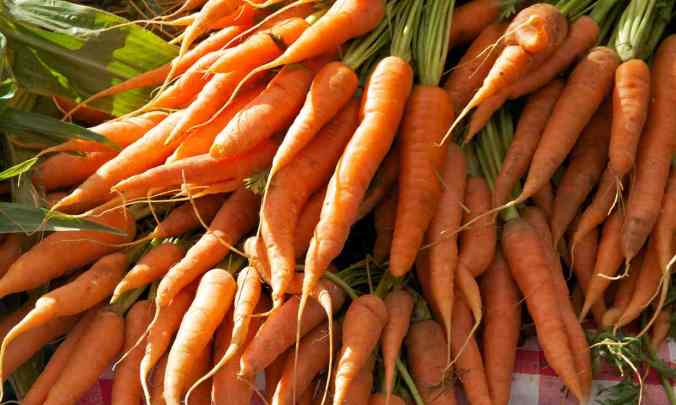
Compost demonstration in the Dedza region, Malawi. Photo by Catherine Hickey via cornell.edu

Classes are starting at Cornell University around now, and there’s a new minor in town: Community Food Systems, a multidisciplinary study housed within the College of Agriculture and Life Sciences’ Department of Developmental Sociology. With elective courses from three categories (ethical and epistemic perspectives; ecological perspectives; and agricultural perspectives) in wide-ranging departments like philosophy, natural resources, economics, and anthropology, the minor also includes a required practicum with a community-based organization that works on “just, equitable and environmentally sound” food systems. Krisy Gashler writes for the Cornell Chronicle:

Scott Peters, professor of Development Sociology, said the minor has been a years-long process of discussion among faculty, staff and community partners, and was developed through the Food Dignity project, a 5-year, $5 million grant from the Agriculture and Food Research Initiativeand support from a Cornell Engaged Curriculum development grant.

Continue reading

Getting over “Range Anxiety” and into Electric Cars

electric-car-charger

Source: Conservation Magazine

If you have ever considered buying an electric car but haven’t done so in fear of the car battery dying before getting to a charging station – which is known as “range anxiety” – fear no more. A new study shows that most American drivers do not go beyond the distance that today’s electric cars can go in a single battery charge in one day.

87 percent of the vehicles on the road could be replaced by low-cost EVs on the market today even if they were only charged overnight, say the MIT researchers who conducted the study published in Nature Energy.

If this large-scale swap were to happen, it would lead to roughly 30 percent less carbon emissions even—if the electricity were coming from carbon-emitting power plants.

Continue reading

An Alternative Sustainable Fertilizer

poopstory_hero2

Source: modernfarmer.com

There is no clean way to say this but…sewage sludge might just be the next thing to help grow the produce you consume. A recent study published in the journal Frontiers in Nutrition states that thermally conditioned sewage sludge could replace commercial chemical fertilizer as a sustainable option for improving soil properties. The greatest advantage of this alternative fertilizer is that it re-uses essential and finite phosphorus resources, which are commonly sourced from non-renewable phosphate rocks.

Sewage sludge is now a readily available substitute of commercial fertilizers in agriculture due to technological improvements that have increased the phosphorus content of it. Therefore, Andry Andriamananjara from the University of Antananarivo (Madagascar), along with his colleagues, decided to assess its effectiveness using a phosphorus radiotracer technique to measure the availability of phosphorus for plants in thermally conditioned sewage sludge.

Continue reading

The New Green Building Certification on the Block


3810_b

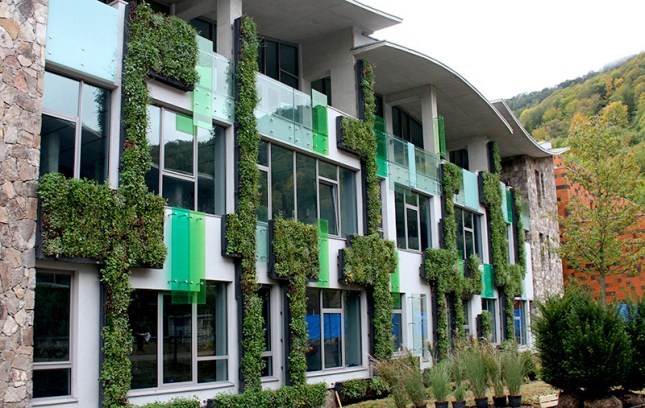
UWC Dilijan College in Armenia, the first BREEAM certified building. Source: idea.am

The two most recognized sustainable building certifications in the U.S., Energy Star and LEED, now have a new companion joining the movement within home territory. BREEAM (Building Research Establishment Environmental Assessment Methodology), a 25-year-old sustainability evaluation method officiated by the U.K consultancy BRE, offers a practical and more affordable online self-assessment tool for building owners who want to elevate their commitment to sustainability. BRE is working in collaboration with BuildingWise to focus on evaluations for existing buildings and tackle the estimated 5.6 million commercial buildings in the U.S. that are not being benchmarked using a “scientifically based” certification. Continue reading

National Parks Valorizing Flora & Fauna

5616.jpg

Glad to see chefs in South America leading this innovative form of entrepreneurial conservation, and crossing country borders to do so:

Bolivian national park serving up sustainable ingredients for fine dining

Chefs among travellers proving there is demand for produce from Madidi – and helping communities understand commercial potential of their flora and fauna

Deep in Bolivia’s Madidi national park, Kamilla Seidler – the head chef of the Gustu restaurant in La Paz – was looking at a basket of cusí, the fruit of the babassu palm. An oil processed from the seeds is already marketed as a hair and skin product, but Seidler suspected it could have culinary potential, too.

“Bring me three kilos of it and in a month I can tell you all kinds of things you can do with it,” she told Agustina Aponte, who was representing a group of women from Yaguarú, one of 31 campesino and indigenous communities living within Madidi’s 1.89m hectares.

Continue reading

Good Bag News from England

Image via Pinterest

Last year in October, a five pence charge (around seven US cents) for plastic bags at supermarkets was introduced to discourage shoppers from using the wasteful and unnecessary receptacles – and prevent pollution at the same time. With this extra cost, use of the bags dropped by over 85%, according to the Department for Environment, Food and Rural Affairs. But England hasn’t led the charge (pun intended) in this effort: Scotland, Wales and Northern Ireland all successfully employed the 5p cost prior. Rebecca Smithers reports for The Guardian:

Retailers with 250 or more full-time equivalent employees have to charge a minimum of 5p for the bags they provide for shopping in stores and for deliveries, but smaller shops and paper bags are not included. There are also exemptions for some goods, such as raw meat and fish, prescription medicines, seeds and flowers and live fish.

Continue reading

Cool Chemistry

120556_web

Source eurekalert.org

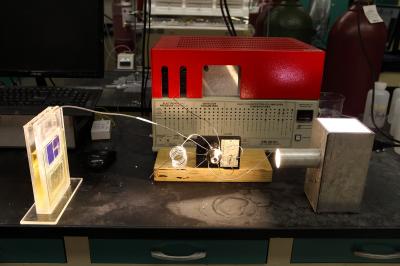
Increasing levels of CO₂ are the principle cause of the alarming climate changes that we have observed in the past several decades, so why not use the same chemical compound that is causing all our woes to generate fuel, or electricity, as we saw here a few days ago? The scientific community is well aware of the common and “conventional” renewable energies, so researchers at the University of Illinois at Chicago have engineered a solar cell that converts atmospheric carbon dioxide directly into usable hydrocarbon fuel, using only the sunlight for energy.  This new invention removes the necessity of batteries and solves two crucial problems: Continue reading

Can the Cement Industry Reduce CO2 Emissions?

Photo of Blue Circle Southern Cement factory near New Berrima, New South Wales, Australia, by WikiMedia Common contributor AYArktos

Portland cement is named for the area in England where it was first made almost three-hundred years ago, and is the standard ingredient used to create concrete around the world. Despite being a very useful building material that can be applied in a variety of ways without expensive technology, cement production is associated with carbon dioxide emissions, primarily from when the original limestone is decarbonized and from the massive amounts of fuel needed to fire up the kilns to make cement. Robert Hutchinson of the Rocky Mountain Institute writes an informative piece for GreenBiz on how the industry might change, and why:

The toughest climate challenges involve large global industries, with no good substitutes. One of these produces the material literally under our feet — concrete. Every year, each of us in the U.S. uses about one-third of a ton. Fast-growing developing countries use far more. Globally we produce over 4 billion metric tons of Portland cement per year — the key ingredient in concrete and responsible for the majority of its CO2 footprint — driving over 5 percent of total anthropomorphic CO2.

Continue reading

Green Rooftops

rooftop20hydroponic20garden_zpsaz6euobl

Source Pinterest.com

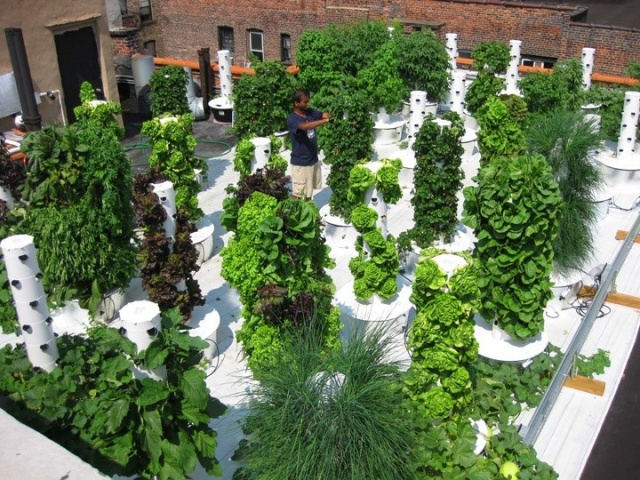
According to the Population Reference Bureau, since 2008 more than half of the total global population lives in urban areas. What does this mean for farmers and the food industry? It means that as cities expand, farmland is receding farther away from the markets that supply the city consumers. In effect, the food has to travel longer distances, which increases their cost and environmental impact. However, there is good news for those with a green thumb (or pinky!) and creative mind (here are some examples we’ve written about previously). Continue reading

Food Waste, Remarkably Grotesque

5451

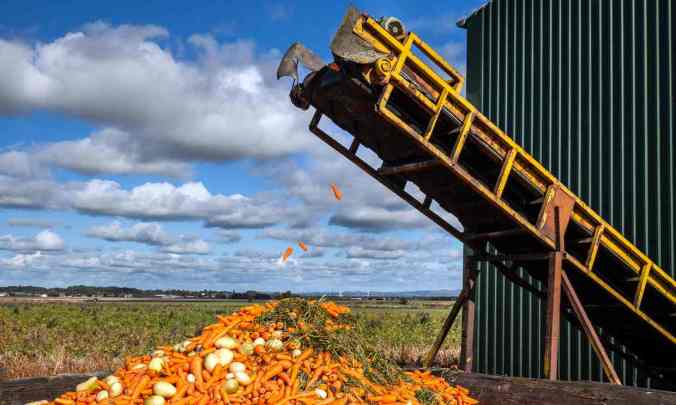
Discarded food is the biggest single component of US landfill and incinerators, according to the Environmental Protection Agency. Photograph: Alamy

We have known for some time the problem is serious, and we are always looking for counter-balancing stories that also highlight solutions. And we are constantly learning more details on just how serious the problem is getting; in short, worse rather than better. Now, new words come to mind. Grotesque is probably the most appropriate (thanks to the Guardian’s ongoing attention to this problem):

The demand for ‘perfect’ fruit and veg means much is discarded, damaging the climate and leaving people hungry

Americans throw away almost as much food as they eat because of a “cult of perfection”, deepening hunger and poverty, and inflicting a heavy toll on the environment.

Vast quantities of fresh produce grown in the US are left in the field to rot, fed to livestock or hauled directly from the field to landfill, because of unrealistic and unyielding cosmetic standards, according to official data and interviews with dozens of farmers, packers, truckers, researchers, campaigners and government officials.

Continue reading

Increasing China’s Wind Power Production

Dabancheng wind farm in China’s Xinjiang province (Source: Bob Sacha/Corbis, via Dailytech.com)

Wind power, as we’ve written before, has great potential as an alternative energy source, although there are certain issues to take into account. China is installing the most new wind turbines per year, but has yet to produce the most wind-generated electricity given barriers by the coal industry. Prachi Patel reports for Conservation Magazine:

China is the world’s top wind energy installer. The country’s wind installations have a capacity of generating 145 Gigawatts, twice that of the United States and about a third of the world’s total wind power. Yet the country produces less wind electricity than the US. Last month, researchers from Harvard University and Tsinghua University argued in the journal Nature Energy that this underperformance is due to deliberate favoring of coal over wind by grid operators, delays in connecting new wind farms to the grid, and sub-par equipment.

Continue reading

Rethinking Fish

5120

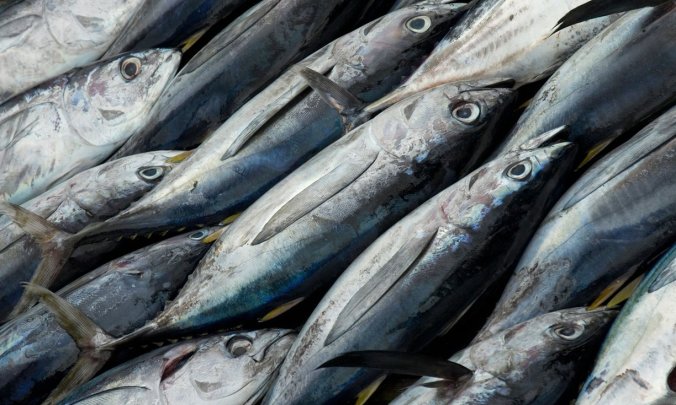
More than 40% of popular species such as tuna are being caught unsustainably, UN FAO says. Photograph: Alamy

Articles like this have me thinking about the meal I had last night, which had not one bit of animal protein in it, and wondering whether I could happily resist adding my own weight to the immensity of the food problem, especially with regard to fish:

Global fish production approaching sustainable limit, UN warns

Around 90% of the world’s stocks are now fully or overfished and production is set to increase further by 2025, according to report from UN’s food body

Continue reading

Using Soil to Capture Carbon

© NSW Gov, Australia

A few weeks ago several news outlets publicized a new carbon-capture method tested in Iceland, but there’s also a low-tech way of storing carbon in the ground that people can consider, which is restoring degraded lands that once held large amounts of carbon and could become fertile again if we follow certain practices. Stephen Wood reports for Cool Green Science:

Soils have twice as much carbon as the atmosphere. Which means there’s a lot of interest in figuring out if soil can hold even more carbon—to help fight climate change.

Sequestering carbon in soil is like saving money in your bank account—simple in theory, but challenging in practice. If you’re frugal enough you may end up fighting climate change. Spend too much and you could make the situation worse.

Continue reading

Changing Our Eating Habits

impossible-foods-6_edited_custom-7dc5fbab4da8c072dcd7f800ee14c96766bb0f58-s1400-c85

Silicon Valley-based Impossible Foods has taken a high-tech approach to creating a plant-based burger that smells and tastes like real meat. At the company’s headquarters in Redwood City, Calif., chef Traci Des Jardins served the Impossible Burger (pictured uncooked) with vegan mayo, Dijon mustard, mashed avocado, caramelized onions, chopped cornichon, tomato and lettuce on a pretzel bun. Maggie Carson Jurow

Full disclosure first: we operate restaurants that serve meat. It is always the best quality meat we can source, and best includes the most humane and most ecologically sensitive growing conditions. But still, it is meat, and meat is problematic. So, we tread lightly when we speak about our behaving responsibly, and try to minimize judgementalism.

When we get reminders of the importance of reducing meat consumption we know it is true, but we still ensure all our guests are able to get, within reason, the best of what they want food-wise.  I spent more time, and consumed more calories than I care to count, taste-testing for the new menus at three hotel restaurants in the last two years; that is my own sin to bear, and I am in penance mode now, trust me.

So, when I see a good feature story related to vegetarianism, or to vegetarian innovations, I am all in. Here is one from the Salt show on National Public Radio (USA) and I look forward to taste-testing it:

This summer, diners in New York, San Francisco and Los Angeles will get their hands on a hamburger that has been five years in the making.

The burger looks, tastes and smells like beef — except it’s made entirely from plants. It sizzles on the grill and even browns and oozes fat when it cooks. It’s the brainchild of former Stanford biochemist Patrick Brown and his research team at Northern California-based Impossible Foods. Continue reading

Potential New Food for Farmed Fish

Photo of microalgae by CSIRO ScienceImage via WikiMedia Commons

We’ve known for some time that lots of fish food used in pisciculture is actually just wild fish, whether processed or not. Conservation Magazine is reporting that microalgae may provide the solution for sustainably feeding fish in farms:

Aquaculture could play a key role in sustainably feeding our growing planet. The problem is that when it comes to feeding the fish, it seems hard to hit the mark on sustainability. Fish oil and fishmeal are draining the oceans of ecologically important forage fish. But when the aquaculture industry substitutes these marine-based foods with vegetable oils and grains, they are driving an enormous amount of additional farming, with all its attendant impacts on the environment. What’s more, this vegetarian diet produces fish that are lacking in the marine omegas that are so important for human health.

Continue reading

If You Happen To Be On Long Island (NY, USA)

WetLandforWeb.jpg

Photo © Jacques-Jean Tiziou / http://www.jjtiziou.net

From the website of Parrish Art Museum:

About WetLand

WetLand is a modified houseboat made by the ecological artist Mary Mattingly to demonstrate easy-to-do sustainability projects (solar power, rain water collection and purification, vegetable gardening, upcycling, etc.). WetLand describes the impact each individual can have on the environment. The vessel is being brought to the East End in conjunction with the exhibition, Radical Seafaring, and will be located on Long Wharf in Sag Harbor. Continue reading

Balancing Conservation With Use

Bill-Clark_605

Photo courtesy of William Clark. William Clark, Harvey Brooks Professor of International Science, Public Policy, and Human Development at Harvard Kennedy School, has co-authored a new book on sustainability. “Achieving more equitable and sustainable use of the Earth requires a great deal of working together,” he said.

Thanks to the Harvard Gazette for this interview with William Clark:

Pursuing sustainability

A Q&A on connecting science and practice, balancing conservation with use

By Amanda Pearson, Weatherhead Center Communications

United Nations Secretary-General Ban Ki-moon on Friday will welcome 130 heads of state who have pledged to sign the Paris Agreement, the global agreement on managing climate change. For William Clark, Harvey Brooks Professor of International Science, Public Policy, and Human Development at Harvard Kennedy School (HKS), sustainability is a global imperative and a scientific challenge like no other.

Clark sees the Paris Agreement as just one step, though an important one, in this urgent pursuit, as officials wrestle with how to meet the needs of a growing human population without jeopardizing the planet for future generations. He and co-authors Pam Matson of Stanford University and Krister Andersson of the University of Colorado at Boulder tackle that issue in a new book, “Pursuing Sustainability: A Guide to the Science and Practice.” By looking at sustainability as a means of alleviating poverty and enhancing well-being, the book highlights the complex dynamics of social-environmental systems, and suggests how successful strategies can be shaped through collaborations among researchers and practitioners.

Clark, who trained as an ecologist, said that while exhausting Earth’s natural resources would jeopardize future generations, sustainability could counter that. The goal is to find a healthy equilibrium between human adaptation and natural evolution. Clark, the co-director of the Sustainability Science Program at HKS, spoke with the Weatherhead Center for International Affairs about building a more sustainable future. Continue reading

Food Supply Change

5184

Accor plans to plant 1,000 vegetable gardens at its hotels by 2020. Photograph: Alamy

Only by scaling up the farm-to-table concept will we see a change to the industrial food production processes that lead to waste and related problems. We cheer our colleagues at Accor for this initiative:

Major hotel chain to grow vegetables at 1000 properties to cut food waste

Accorhotels, which includes Sofitel, Novotel, Mercure and Ibis, will reduce number of main courses on offer and record all food thrown away

One of the world’s biggest hotel chains has announced it will plant vegetable gardens at many of its hotels as part of a plan to cut food waste by a third. Continue reading

Fighting Food Fraud

foodfraud_custom-b67f54921c2a663e3c5857d50ecc0a5e732a7c5c-s1400-c85.jpg

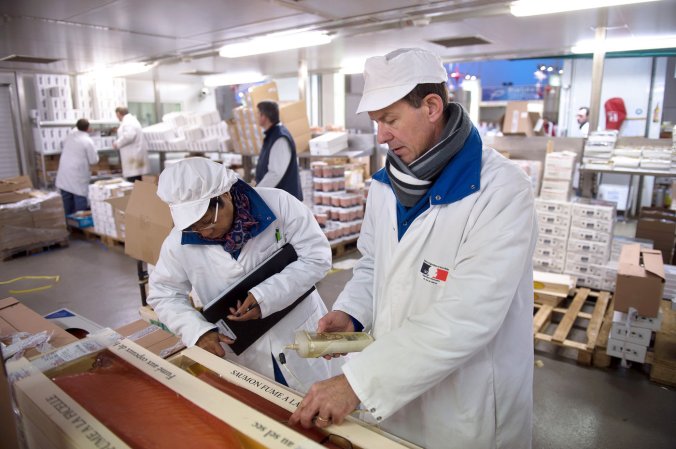
Food fraud is a common issue all over the world. Inspectors of veterinary services and fraud inspect seafood products at the Rungis international market, located near Paris. Martin Bureau/AFP/Getty Images

In just under four minutes, this story (National Public Radio, USA) gives a cogent briefing on one dimension of food transparency, a topic commonly addressed in these pages:

If you’ve been following any of the big news stories on food fraud lately — you’ll know that it’s tough to know what exactly is in our food — and where it’s been before it makes onto our dinner plates.

Earlier this year, Wal-Mart was sued for stocking tubs of Parmesan cheese that contained wood pulp filler. Olive oil is often mixed with sunflower oil and sold as “extra virgin.” And you might recall the great European horse meat scandal of 2014: Traces of horse meat were found in Ikea meatballs and Burger King beef patties, in cottage pies sold at schools in Lancashire, England, and in frozen lasagna sold all over Europe.

And that’s “just the tip of the iceberg,” says Chris Elliott, the founder of the Institute for Global Food Security, a laboratory in Northern Ireland that tests food from all over the world in order to uncover fraud. Continue reading

Sustainable Socks

20160331SOCKS-slide-HQ12-videoSixteenByNine1050-v3

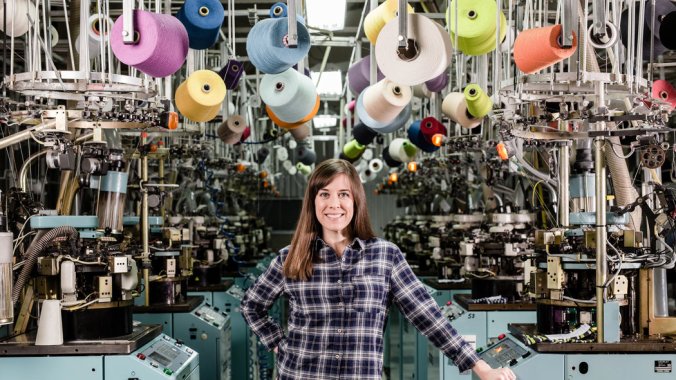
Raymond McCrea Jones for The New York Times

News about socks? News about the deep south of the USA? Both seemed unlikely to show up on these pages until just a few minutes ago. And then we read this, and it fits the news we can use test: