5 Reasons I See India’s Potential to Produce A Stararchitect

Stararchitect” conjures up a cloud of thoughts (Star architecture. Star power. Architecture as a symbol. The North Star for architectural design. Brand. Design. Fame. Architecture prowess. Household name.), but above all, I think of The Pritzker Prize. I feel like the weather channel for  announcing the next “big thing” in architecture is The Pritzker Prize. The weather channel is telling you “you better keep this in mind ’cause you’ll need that umbrella!” The Pritzker Prize is telling you “you better keep this name in mind ’cause you’ll need that knowledge to understand the state of the world you live in.”
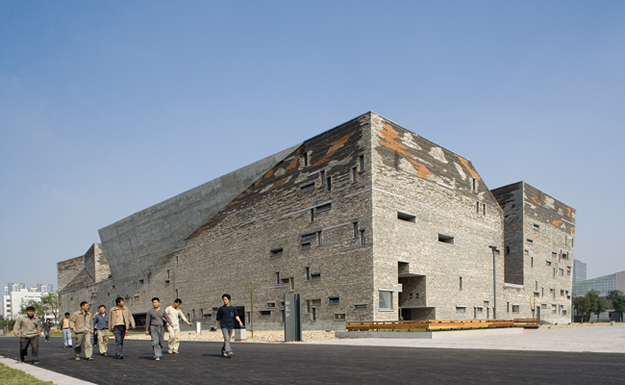
Ningbo History Museum by architect Wang Shu

Ningbo History Museum by architect Wang Shu

2012’s Pritzker Prize Laureate was Wang Shu, a Chinese architect famed for his re-use of building rubble in his designs. Expansive facades feature roof tiles and bricks from the demolished village that previously existed on that very site. The Pritzker Prize choice of Wang Shu tells us:

1.) Sustainability is important. The reappropriated construction refuse reminds us of the Three Four Rs: Refuse, Reduce, Reuse, and Recycle. It also reminds us that sustaining heritage and history is important.

2.) China is a powerful country with a powerful new identity. This is the first time a Chinese architect has been named. The closest the Pritzker has ever gone to a Chinese architect before was when I.M. Pei was recognized as a Chinese-American architect.
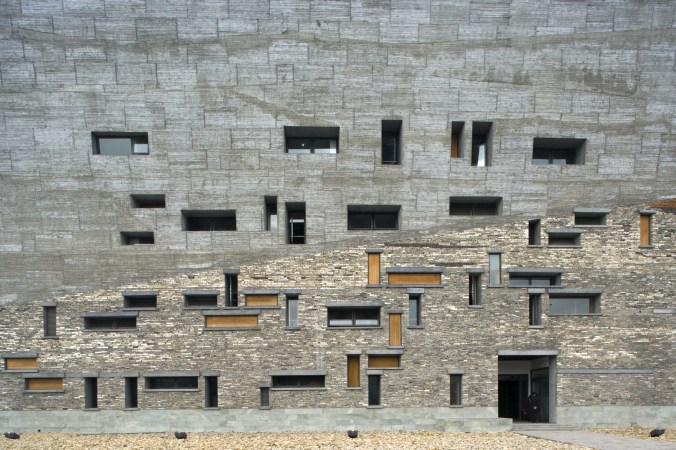
Detail of reused rubble in the facade of the Ningbo History Museum by architect Wang Shu

Detail of reused rubble in the facade of the Ningbo History Museum by architect Wang Shu

It’s rare to see a non-western architect. So I thought, has there been an Indian Pritzker Prize winner before?

The answer is no. (But I wouldn’t be surprised if Indian architecte Charles Correa is a nominee soon!)

While it may still be a long time before we see an Indian Pritzker Prize winner, I feel that India has the potential will definitely produce a stararchitect in the future. Here are 5 reasons why I see India’s potential to produce a starachitect.
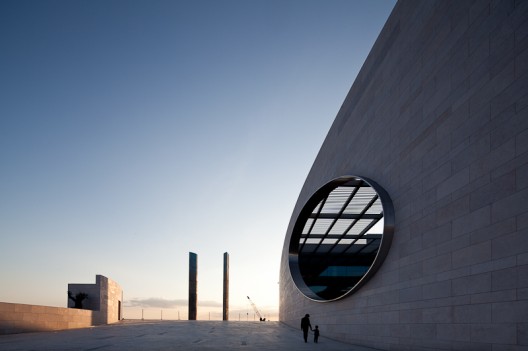
Champalimaud Centre for the Unknown in Lisbon, Portugal by Charles Correa Architects, photographed by José Campos of arqf architectural photography

Champalimaud Centre for the Unknown in Lisbon, Portugal by Charles Correa Architects, photographed by José Campos of arqf architectural photography

5 Reasons I See India’s Potential to Produce A Stararchitect
Continue reading

Yale Environment 360 On Burma’s Wilderness And Its Development Options: Beauty And The Beast

We have been watching this website for some time now, looking for the right opportunity to link to a story of relevance to the work we do.  Huge, unspoiled wilderness area?  Tigers?  Development threats? This article by science writer Charles Schmidt hit the spot, relevant portions excerpted below:

As Myanmar Opens to World, Fate of Its Forests Is on the Line

Years of sanctions against Myanmar’s military regime helped protect its extensive wild lands. But as the country’s rulers relax their grip and welcome foreign investment, can the nation protect its forests and biodiversity while embracing development?

…The country’s Northern Forest Complex, a 12,000-square-mile tract that runs along the border from India to China in Myanmar’s Kachin State, is home to tigers, bears, elephants, and hundreds of bird species. The heart of that forest, at nearly 8,500 square miles, is Myanmar’s Hukaung Valley Wildlife Sanctuary, the largest tiger preserve in the world. Continue reading

From the 2012 Net Impact Conference, Part 1

A couple weekends ago, I attended the 2012 Net Impact Conference, which was hosted by the University of Maryland in Baltimore this year. If you’re unfamiliar with Net Impact, it is a 30,000-member nonprofit focused on mobilizing students and professionals to solve the world’s most pressing environmental and social problems through the public and private sector. I would personally describe Net Impact as an organization dedicated to mobilizing young professionals to make impacts with their careers. It’s an awesome organization.

Continue reading

The “What’s Different?” Series: Mark Spencer Hotel, Portland

Meeting with the Sales Director at the Mark Spencer Hotel in Portland, Oregon was an eye opener, yet again, to Portland’s general commendability as a city. During our discussion he obliged my interest in the green aspects of the hotel, which are excellent, but he also conveyed a sense that “this is just how things are done here.” Portland’s strong culture of sustainable thinking and environmental awareness are reflected in the mores of the community and business climate. This was an interesting take-away from my visit with the Mark Spencer Hotel: since the hotel’s commitments to operating sustainably are practically the norm in such a progressive city as Portland, they didn’t seem so different. Furthermore, the city, with its wealth of expertise, familiarity and expectations with regards to ‘green living,’ lends itself to a highly integrated approach to sustainable business, proving to be quite comprehensive and genuine in the example of the Mark Spencer Hotel.

Continue reading

The “What’s Different?” Series: Delta Vancouver Suites

I was already snapping photos of the signage in the lobby when I was greeted by the Sales Manager at the Delta Vancouver Suites. She was happy to discuss the many green initiatives and practices at the property, and I was eager to learn them. As a conversation with one of the hotel’s managers, this visit was perhaps more informative than my previous night spent as a guest of the Century Plaza.

The last of the in-room plastic water bottles

We started with a tour of guest rooms, which get great natural light and where she explained that the hotel was in the process of phasing out plastic water bottles, newspapers and coffee makers in guest rooms. The water bottles are replaced with filtered tap in reusable bottles, and newspaper and coffee available on request or in the lobby.

Over a tasty lunch I gained some insight into the employee perspective. Continue reading

If You Happen To Be In Hong Kong

And if you happen to be a textile-oriented sustainabilist, click the banner above to see more about this event:

This year, Textile Exchange is partnering with EcoTextile News, Messe Frankfurt, and Planet Textiles to bring you the premier 2012 Sustainable Textiles conference in Hong Kong, October 4 and 5. This event will be hosted at the Hong Kong Convention and Exhibition Centre, running in conjunction with Interstoff Asia Essential – Autum Fair.

Waste Is Merely Misplaced Stuff

Click the  banner above to go to the source.  Read it and smile:

August 2012 We have had an extremely busy month or so on the project. For example in addition to using high tech windows and solar panels we are now going to make THTKB out of locally sourced waste material from building sites, recycling centres, Freegle etc. Continue reading

The “What’s Different?” Series: Century Plaza, Vancouver

As my first of the trip, I checked into the Century Plaza Hotel & Spa in Vancouver with ears piqued and eyes peeled, self-inducing a sensitivity to visible manifestations of the hotel’s “green” commitment. But nothing about the lobby seemed different from your average hotel: reception, elevator bank, informational television screens, a café, a spa – it all seemed quite deluxe.

Then I arrived in the room. Continue reading

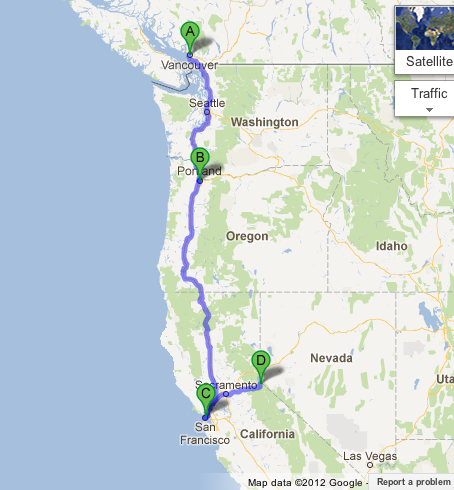
The “What’s Different?” Series: An Exploration of Green Hotels in Western North America

With links to so many globally impactful human activities, such as transportation, lodging, foodservice and agriculture, the tourism industry is uniquely positioned to effect a paradigm shift toward this thing called sustainability. Buzzword though it is, sustainability has perhaps too many potential concrete applications to be easily defined in abstract terms. With a certain root sense of lasting or enduring, and more current denotations that are important in a global way, sustainability can be manifested in many real ways through business.

Finding myself motivated by applications of this concept in hospitality businesses, I set upon a mini-quest during the summer, making a series of five visits to hotels that do it well.

In the What’s Different Series, I will recount site visits and room-nights in hotels that have incorporated a commitment to sustainability into their communications and business identities, with the goal of identifying just what’s different? In hotels where I stayed a night, I’ll evaluate what sets the guest experience apart, if anything, from the experience at an “ordinary” hotel. Are there sacrifices? Perks? For the hotels that granted me a conversation and site visit, I’ll cover more about what they actually do differently in operations. What are the policies? How are the employees involved?

With its so many facets, hospitality has the opportunity to set a wide variety of examples of sustainable business. Looking forward and working forward, the questions I’m asked (mostly by myself in rumination), boil down to: what consists of sustainability in hospitality, and how do we get more companies to do it? Continue reading

Socially Responsible Investing: An Ineffective Struggle or a Powerful Tool?

Barbara Krumsiek, President and CEO of Calvert Investments, has led the company for 15 years.

Two summers ago, I had the pleasure of working at Calvert Investments, a Bethesda-based socially responsible investing (SRI) firm. The words “socially responsible investing” would often raise eyebrows as I attempted to concisely describe to other hotelies at Cornell what exactly Calvert does. Socially responsible investing is broadly defined as a holistic approach to investing that considers both the economic and social/environmental returns of your money. Although SRI accounts for less than five percent of all general investment funds, it is a growing field with potential. Cornell’s business school has had some interesting takes on this asset class.

So what does SRI look like? There are many different approaches, so I’ll just describe what Calvert tries to do. From Calvert’s view, it is an extensive process of research, indexing, and investing. First, we perform research on firms that we potentially want to invest in or that our clients are asking us to invest in. The research is comprehensive and looks primarily at environmental, social, and governance (ESG) issues for a specific company. For example, imagine that we’re considering to invest in BP. Some of the research we might do would ask these types questions (again, these are hypothetical, and they only skim the surface):

  • Environmental factors: How many oil spills have there been in the past year? What environmental remediation plans are in place? Is in-depth environmental training provided for employees? Does the firm mine/drill in high-risk areas?
  • Social factors: Are workers paid a living wage? Does the firm employ child labor overseas? What human rights violations has the company committed?
  • Governance factors: What proportion of women make up the board of directors? Has the company been investigated for anti-competitive activities? Has the firm been investigated by the SEC for trading violations? Have there been attempted hostile takeovers?

Continue reading

Why Should Bags Have All the Fun?

For over a year now we’ve been writing about newspaper bags along with the people and organizations who work with them.  We’ve also written about how newspapers are used in other forms of recycling.   I have recently come upon an additional “closed loop” use for this ubiquitous material.

Dutch designer Mieke Meijer in collaboration with design label Vij5 has created a product called NewspaperWood.  The material has the potential to put a portion of newspaper discarded daily into an up-cycle system bringing paper closer to the wood from which it’s made.

Continue reading

Green Urbanity


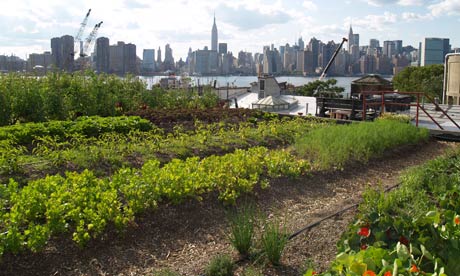
Plants grow on a rooftop farm in Greenpoint, New York. Photo: Mike Di Paola/Getty Images

Click the image above for the story in The Guardian:

Advocates say green infrastructure isn’t just about being green — it makes financial sense, as well. Its cost-effectiveness depends on how benefits are assigned and valued, and over how long a time scale, but green has been shown to be cheaper than gray.

A 2012 study by American Rivers, ECONorthwest, and other groups examined 479 projects around the country. About a quarter of the projects were more expensive, they concluded, and 31 percent cost the same; more than 44 percent brought the costs down, in some cases substantially. New York City, for example, expects to save $1.5 billion over the next 20 years by using green infrastructure.

Ocean Health Index

Click the logo to the left for the site of this useful index:

From the many millions who count on ocean fisheries for their livelihoods to the uncounted lives saved by intact coral reefs during the 2004 Asian tsunami, people all over the world depend upon healthy oceans. But how healthy are our oceans?

Continue reading

Water Recycling 101

Given these acute demands for water and constraints on current — and likely future — availability, Grant said, “the real alternative, the really only alternative, is to improve what’s called water productivity, which is essentially the amount of value services that are achieved with a given unit of water.”

Click the headline for this accessible explanation of a very complicated challenge.

This Guitar Sounds Better

Thanks to the Dot Earth story above (click the headline to go to the story) we learned not only more on the ongoing story of Gibson’s  illegal sourcing of endangered wood species from developing countries for its guitars, but learned about this other company.  Mr. Taylor talks straight, without being preachy, about the challenge of sourcing good wood for great guitars:

50 Years Onward, Progress Via Anthropology

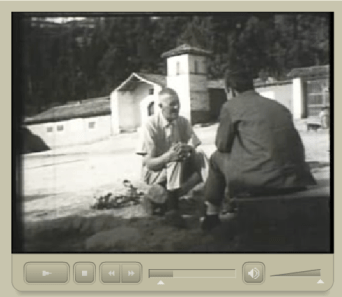
Anyone born in the USA between 1930 and 1970 would recognize the two CBS journalists in this brief documentary.  Some born elsewhere in that period might recognize them as well.  Probably few outside small towns in Central New York and Central Peru would recognize the name of the professor featured here.
So That Men Are Free
McGraw-Hill Films (1963)
Reporter: Charles Kuralt
Presenter: Walter Cronkite
 

I’m Walter Cronkite. We take you to one of the remote areas of the world to the high Andes of Peru. CBS News correspondent, Charles Kuralt reporting…The seeds came here in the head of an anthropologist, a man usually the observer, not the creator of change.  Dr. Allan Holmberg of Cornell University…

Continue reading

Wadi Feynan’s Copper Mines: Part I (History)

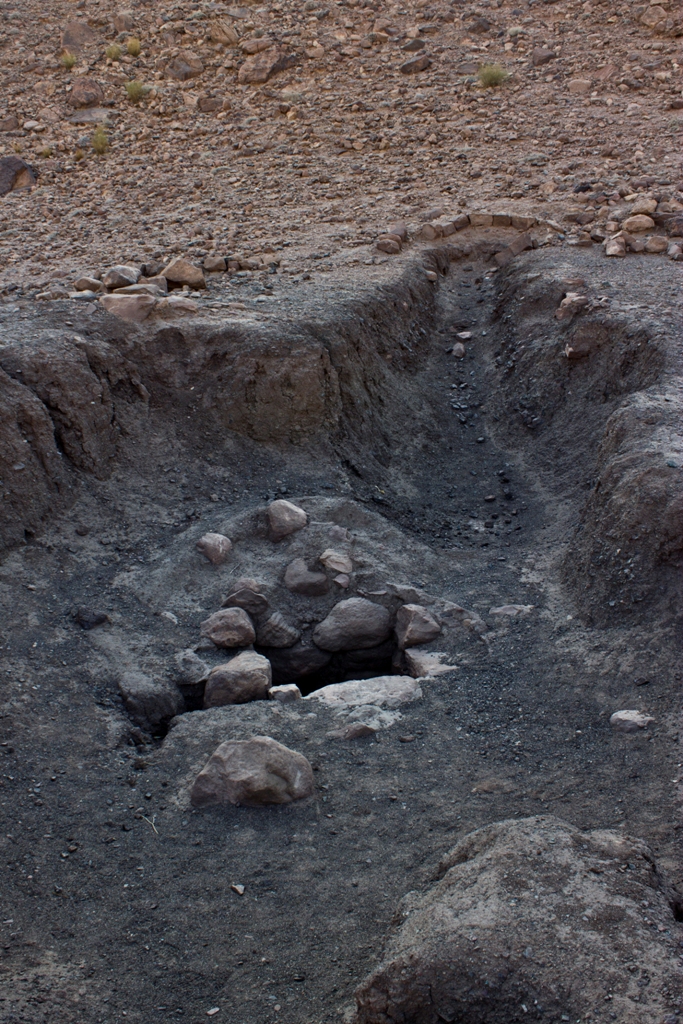
Wadi Feynan was one of the first places in the world where copper was mined and smelted by humans, which when
paired with one of the first Neolithic settlements in the world, makes Feynan an extremely important area in terms of prehistoric human development. Few places in the world can boast this sort of historical wealth – and visitors to Feynan can journey into the past with or without a guide. From the first bit of ore extracted to the collapse of the Roman Empire to the 20th century, copper mining has been a major aspect of human settlement in these valleys. Innumerable shafts have been opened, collapsed, reopened, and abandoned using a wide range of methods and technologies. Today, guests at Feynan Ecolodge have the chance to venture into the past by walking or biking to these historic sites nestled in the rocky foothills of the Dana Biosphere Reserve – and learn about their historical significance. Continue reading

“There is no better designer than nature.”

Color is quite possibly the most strategic tool a designer can use to breathe life into a concept.

And it comes as no surprise to the RCDT that used effectively and responsibly, color can transform an existing space more powerfully than any other single alteration. But it is important to realize that color does not exist as an object in itself; rather color is the relationship between light and an object, producing a condition that is unique and inherent to a specific material. As pure white light from the sun reaches a material’s surface, various light frequencies are either absorbed or reflected causing our visual perception to interpret the surface as a certain color. Thus color is actually a very scientific narrative between light, a surface, and our eyes.

This post could delve very deeply into the science of color and those factors that cause us to perceive what we do, but the scenery of India is far too inspiring to diminish it to wavelengths. Instead I dedicate this post to the basic and simple application of color, what it is, and why it is one of the things that makes India one of the most beautiful places on our earth. Continue reading

Measure For Measure

Sustainable development has been in an experimental, invent it as we go state for about two decades.  The good news is that the model has been experimented with.  The less good news is that the progress of those experiments is outpaced by less sustainable development.  Nonetheless, half glass full, it is heartening to see a bit of progress in a developed economy, especially in tough economic times.  Measurement: what a concept!

Measures of ‘capital’ will show how much natural resource – such as fish – is left, rather than just how much is being used. Photograph: Cathal Mcnaughton/PA

Click the image above to go to the story:

The state of England’s natural world and the sustainability of its society and the economy is due be published on Tuesday, tracking everything from bees, butterflies and birds to long-term unemployment, social mobility in adulthood, and knowledge and skills.