Real Vs. Fake Trees – Which is Better for the Environment?
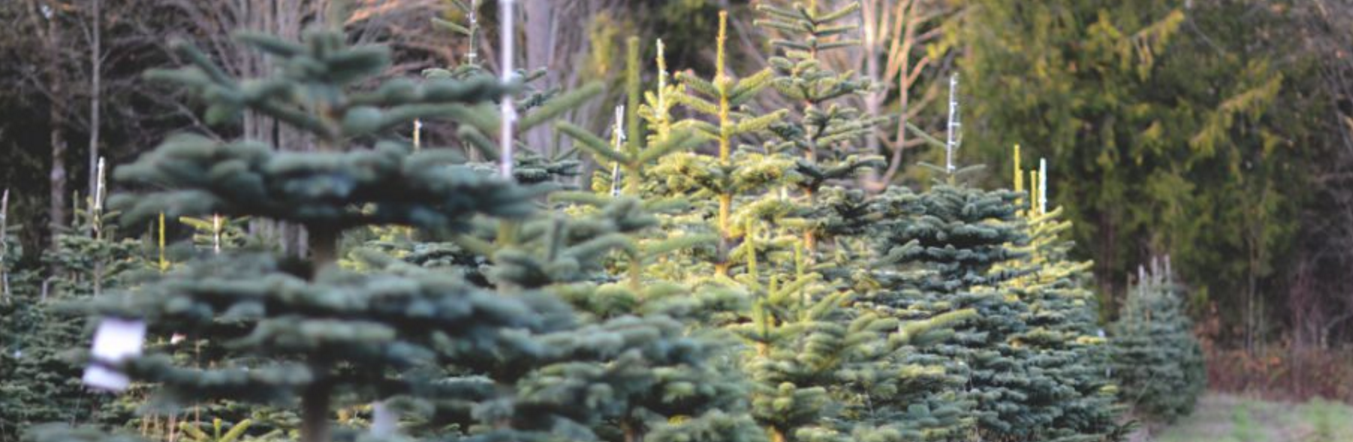
Tis the season for an age-old question: Which kind of Christmas tree – real or fake – is better for the environment?
We love this question, because it’s an example of a simple choice that anyone and everyone can make that can reduce our impacts on the environment.We also love this question because, like many environmental issues, the answer isn’t as simple as you might think. Our #1 recommendation? Buy a real tree. Read on for more details on the impacts of both real and fake Christmas trees, and then make the choice that’s right for you. And check out our 12 Tree Tips for other earth-friendly holiday decoration tips.
REAL CHRISTMAS TREES
In 2015, 26.9 million trees were purchased from live Christmas tree farms – more than twice the number of fake trees purchased (12 million). Continue reading
Sustainability
Understanding The Solar-Carbon Threshold

Image: Daniel Parks/Flickr
We are constantly playing catch up with the terminology, let alone the science, of environmental efficiency in all its forms and considerations. Anthropocene delivers the daily goods, in the form of a summary of an environmentally-oriented scientific study, that we constantly find useful:
Solar power will cross a carbon threshold by 2018
Bees In Need Get Boost

Honeybees alone are responsible for boosting the production of fruits, nuts and vegetables. But bee and other pollinator populations in the US have been in decline in recent years. Photograph: Klas Stolpe/AP
Thanks to the Guardian:
Bee’s knees: a new $4m effort aims to stop the death spiral of honeybees
General Mills is co-funding a project with the federal government to restore the habitat of pollinators such as bees and butterflies on North American farms Continue reading
App For Food Waste Reduction

‘A love for food and a distaste for waste’: Iseult Ward (left) and Aoibheann O’Brien in the FoodCloud warehouse in Dublin.
Photograph: Mark Nixon for the Observer
Thanks to the Guardian for their coverage of stories about reducing food waste:
FoodCloud: new app proves a nourishing idea for wasted food
The distribution of surplus food in Ireland is being transformed by FoodCloud. Killian Fox meets the duo behind the venture
Killian Fox
Within one community, there can be a business that’s throwing away perfectly good food and just around the corner there’s a charity that’s struggling to feed people in need,” says Iseult Ward of FoodCloud, a remarkable social enterprise which she co-founded with Aoibheann O’Brien in 2012. “We wanted to connect the two.” Continue reading
Food Waste Approaching Zero (Goals Are Powerful)

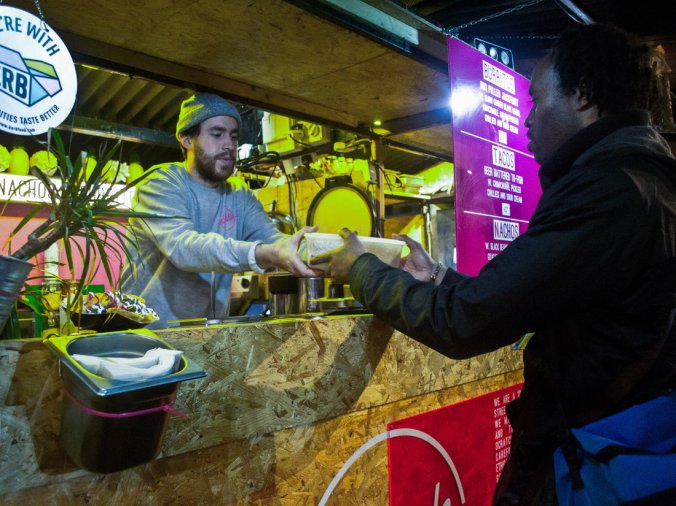
Junior Herbert, a volunteer with Olio, collects leftovers from vendors at London’s Camden Market. London has become a hub for apps and small-scale businesses that let restaurants and food vendors share leftovers with the public for free, and otherwise reduce the amount of edibles they toss. Maanvi Singh for NPR
Green entrepreneurship is alive and well in London (thanks to National Public Radio, USA, and its program the salt for this story):
Eat It, Don’t Leave It: How London Became A Leader In Anti-Food Waste
MAANVI SINGH
It’s around 6 o’clock on a Sunday evening, and Anne-Charlotte Mornington is running around the food market in London’s super-hip Camden neighborhood with a rolling suitcase and a giant tarp bag filled with empty tupperware boxes. She’s going around from stall to stall, asking for leftovers.
Mornington works for the food-sharing app Olio. “If ever you have anything that you can’t sell tomorrow but it’s still edible,” she explains to the vendors, “I’ll take it and make sure that it’s eaten.” Continue reading
Perfectly Good Imperfect Food

A customer shopped at Fruta Feia, a Portuguese cooperative created to sell imperfect food. The food industry has begun looking for ways to reduce waste. Bargain-hunting consumers seem to be going for the deals.CreditPatricia De Melo Moreira for The New York Times
Increasing attention to the inherent waste in judgements about imperfection is a welcome topic in our pages:
Food Industry Goes Beyond Looks to Fight Waste
Divest, Nobel
Thanks to 350.org for this one, via EcoWatch:
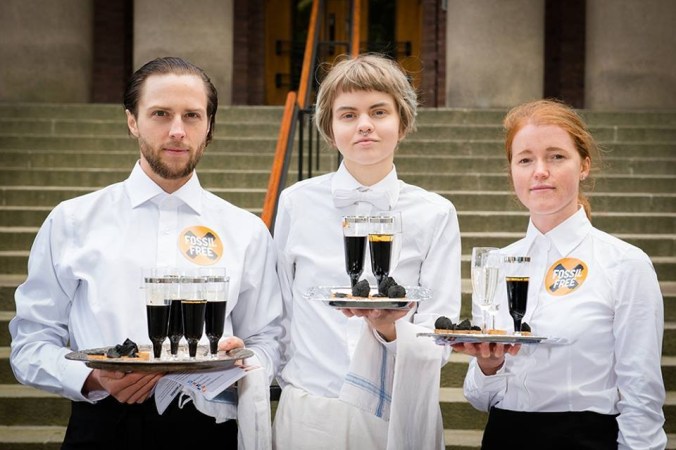
Nobel Prize, It’s Time to Divest From Fossil Fuels
350.org
Last Tuesday, Fossil Free Sweden finally received confirmation from the Nobel Foundation that it does not intend to adopt rigid sustainable investment guidelines which entirely exclude investments in the least sustainable companies on the planet—those driving climate change through the exploitation of fossil fuels.. Continue reading
Remote Living, Well Done

Edinburgh of the Seven Seas, Tristan da Cunha, South Atlantic Ocean michael clarke stuff / Wikipedia
Thanks to EcoWatch for keeping us posted on the greenish news from the bottom edge of the planet:
World’s Most Remote Village Is About to Become Self-Sufficient World’s Most Remote Village Is About to Become Self-Sufficient
The most remote village on Earth, located on Tristan da Cunha in the South Atlantic Ocean, is about to get a 21st century upgrade thanks to an international design competition aimed at creating a more sustainable future for the farming and fishing community. Continue reading
Big Data & Environmental Activism
We do not see enough of this type of story:
How Google is using big data to protect the environment
Google’s sustainability officer Kate Brandt outlines the company’s wide-range interest in sustainable fishing, green buildings and renewable energy
by Ucilia Wang
For many people, Google is simply the gateway to a vast archive of facts and memories. For those who pay closer attention to its business dealings, the company also invests billions to find new ways to use the power of computers: it’s developing robots, virtual reality gear and self-driving cars. Remember all the hubbub about Google Glass?
Google has been using the same approach in sustainability – spreading its wealth in a variety of projects to cut its waste and carbon footprint, initiatives which may one day generate profits. During the SXSW Eco conference this week, I caught up with Google’s sustainability officer, Kate Brandt, to find out more. Brandt joined the company in July last year after serving as the nation’s chief sustainability officer in the Obama administration. Continue reading
Bravo, Trip Advisor!
In a world where economics often focus on the concept that “the customer is always right” it’s heartening to see even large companies re-evaluate policy, and make make changes in the face of facts.
Our work in India has often placed us face to face with the common practices of human-animal interaction written about below, and we don’t promote the “elephant rides” that are often on travelers’ agenda. Change occurs along with a shift in understanding, and our goal has always been to craft travel experiences that are both authentic and educational.
So “Bravo!” and a hearty welcome to any company willing to join us in achieving that goal!
TripAdvisor Halts Ticket Sales to Cruel Wildlife Attractions
By
TripAdvisor, the popular travel review website, and its ticket sales company, Viator, said Tuesday they no longer will sell tickets to hundreds of tourist attractions that are widely accepted as cruel to wild animals, reversing a policy under which the companies had resisted considering the welfare of animals when promoting trips.
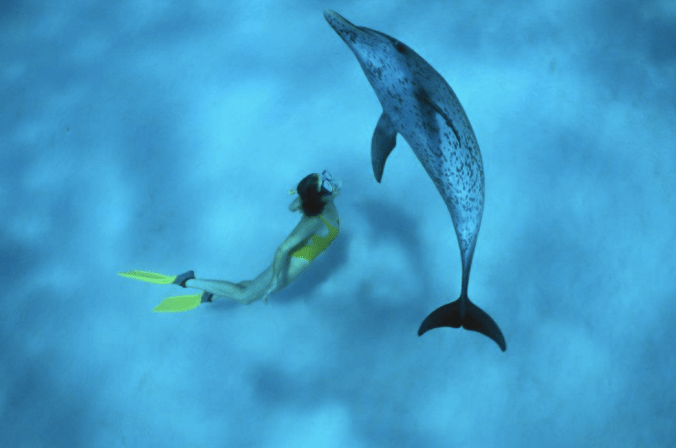
The move to stop selling tickets to elephant rides, swim-with-dolphin experiences, and attractions that allow visitors to pet tigers and other exotic animals comes after a one-and-a-half-year protest campaign by the London-based animal welfare group World Animal Protection and reporting by National Geographic’s Wildlife Watch, which drew attention to TripAdvisor’s continued promotion of such attractions at a time when dozens of other tour and travel companies were moving away from them.
Such attractions have been shown to cause animals psychological and physical trauma that can shorten their lives. They also result in more animals being taken from the wild for tourism.
Solar’s Silicon Future
Thanks to the BBC for this story:
Why Apple And Google Are Moving Into Solar Energy
Silicon Valley’s biggest companies are investing in renewable energy in a serious way – a sign, perhaps, of rapid changes in the energy market.
By Chris Baraniuk 14 October 2016
Most people think of Apple as a company that makes phones, computers and smart watches – not an energy provider. But in August all of that changed when the firm was given permission to sell energy from a Californian solar farm that it acquired last year. Continue reading
Carbon-Calculated Menu Planning

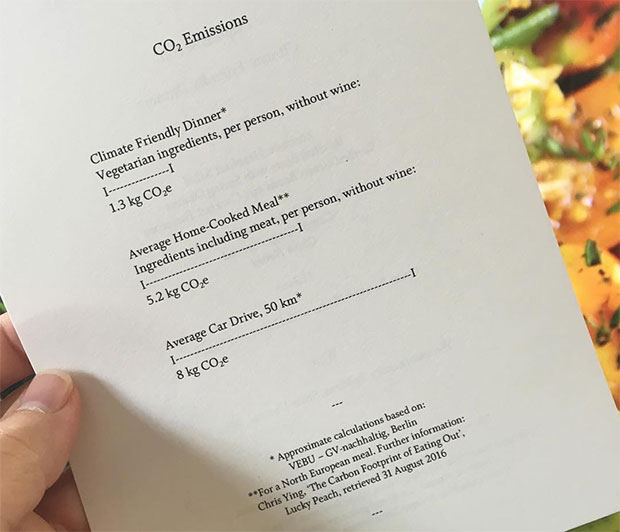
The menu from Studio Olafur Eliasson’s dinner for the Climate Museum’s Miranda Massie. Image courtesy of the artist’s Instagram
From the folks at Phaidon, news of a top artist’s contribution to the climate change conversation, in a manner we can kind of relate to:
Olafur Eliasson puts carbon on the menu
When Eliasson’s studio cooked a meal for NYC’s Climate Museum director it listed one additional ingredient.
The artist Olafur Eliasson is on the board of the Climate Museum, a US institution which endeavours to use the sciences, art, and design to inspire dialogue and innovation that address the challenges of climate change. The museum hasn’t been built, yet Eliasson has submitted a few concept sketches, picturing a globular structure that should, someday soon hopefully stand in New York City. Continue reading
The Future Of Coffee Matters To Us For More Than One Reason

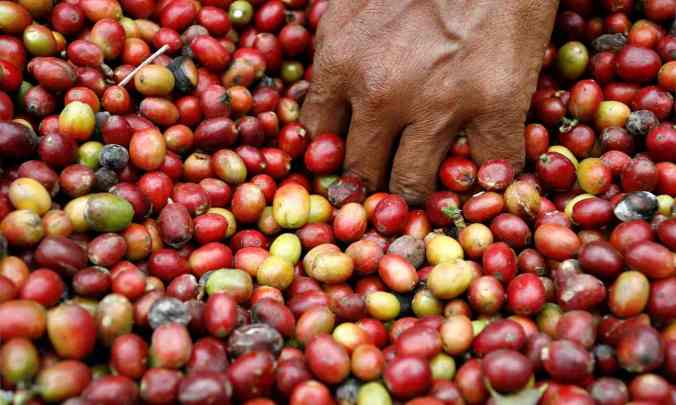
A farmer with coffee cherries from his latest crop, the seeds of which are roasted, ground and brewed to make coffee. Photograph: YT Haryono/Reuters
We work in several countries where coffee production is important to the national economy. We serve coffee in every property we have ever managed. Many of us working in La Paz Group are coffee junkies.
But more than that, as I have mentioned at least once in these pages, we care extra deeply about the future of coffee because on one of the properties we manage, some excellent arabica estate coffee is growing in the shade of a rainforest canopy. I owe you more on that topic. For now, what has my attention is ensuring the long run sustainability of this organic coffee production.
So you can be sure of where some of our team members will be next Tuesday. Join us if you can:
Climate change is threatening the world’s coffee supplies: what can we do? – live chat
Join us on this page on Tuesday 20 September, 2-3pm (BST), to debate the future of coffee, and the millions who depend on it, in the face of climate change
What we’ll be discussing Continue reading
Cost of Wind Energy to Decrease

Photo via Pinterest
With Deepwater Wind’s Block Island energy farm in Rhode Island completed – all five turbines of it – it’s not surprising to learn that the cost of wind power, just like that of solar, is going to decline in coming years, according to industry experts. Prachi Patel reports for Conservation Magazine:
Wind energy is soaring around the world thanks to technology advances and energy policies that have reduced its cost. And things are only going to get better with prices dropping substantially by mid-century, according to a survey of 163 of the world’s leading wind energy experts. The results, published in the journal Nature Energy, suggest that the cost of electricity from wind could drop by 24–30 percent by 2030 relative to 2014 prices, and by 35–41 percent by 2050.
The key driver of this price drop? Bigger, more efficient turbines, according to the experts. Taller turbines with larger rotors make it possible for turbines to better harness stronger winds, generating more power.
Cornell University Campus Pursues Geothermal Heating
In 2009, Cornell faculty, staff, and students came together to create a Climate Action Plan that made a goal of making the Ithaca campus carbon neutral by 2035. Since then, gross emissions have already been reduced by about 30% through several measures, such as installing solar farms and ceasing the use of an old coal-powered energy plant. Now, a new initiative to keep the campus warm in winter with a geothermal project called Earth Source Heat might help reduce emissions by another 38%. Syl Kacapyr reports for the Cornell Chronicle:
Cornell is pursuing a project that has the potential to eliminate an estimated 82,000 metric tons of carbon from its annual footprint and establish one of the country’s most advanced geothermal systems to heat the 745-acre Ithaca campus – an effort that could demonstrate a new scalable model for using this sustainable energy source throughout the U.S. and almost anywhere in the world.
Joining the Sustainable Fishing Soupbowl

Illegally harvested shark fins. Source: shareamerica.com
Given the critical decline of fish populations worldwide, it’s reassuring to hear that high-profile U.S. corporations, and ones in the hotel industry at that, are taking a stand against unsustainable fishing practices. Here’s the story as told on Share America:
Rogue vessels use banned equipment, damage breeding grounds and destroy tons and tons of by-catch, marine life that is caught in nets but not desirable in the markets.
Thirty percent of world fisheries are tapped beyond their limits, while another 60 percent are being fished at maximum capacity.
Major U.S. hotel chains, restaurants and supermarkets have responded by requiring that fish they serve be harvested sustainably.
Understanding Biomaterials
Bio-based materials are becoming more mainstream and according to Duke University’s Center for Sustainability & Commerce, over $400 billion worth of conventional manufacturing products are produced each year using biomass, which in many cases are more sustainable than older alternatives. Nonetheless, bio-based alternatives have yet to reach scale due to traditional industry adhering to classic chemistry.
This is beginning to change, as breakthroughs in bio-based materials engineering reach a tipping point. Collective understanding of how microbes work is, for the first time, allowing us to make chemicals in a safer and more environmentally friendly way. It is possible for us to engineer microbes to have specific functions, including a variety of sustainability applications.
High Fashion Upcycling
The concept of upcycling has become a movement thanks to innovative and sustainable companies that divert our wasteful habits and produce other goods in order to recreate the cycle in nature: nothing goes to waste. An example of one of these companies in the clothing industry is Looptworks. The company only uses excess materials that would have otherwise been incinerated or ended up in landfills to create high-quality bags, accessories and apparel.
Co-founder Scott Hamlin noticed the issue of clothing material waste in the manufacturing process during the time he worked for a large outdoor apparel company.
“Thirty percent of our materials never actually got used in manufacturing,” Hamlin said of his prior work experience with an outdoor gear company. “To me, that was a huge issue that nobody was talking about. It was dealt with as ‘business as usual.’”
Guilty As Charged

The Austrian performance artists Sonja Stummerer and Martin Hablesreiter, a.k.a. Honey and Bunny, want to make us reëxamine the culinary mores that we take for granted. PHOTOGRAPH COURTESY SONJA STUMMERER AND MARTIN HABLESREITER
I have been on the road for most of the last six weeks and have been consumer of the posts on this site, rather than contributor, for the entire stretch since we got distracted by a hurricane. That’s okay. Other contributors have carried the ball forward well, and before I forget I want to share one recent item I read elsewhere that seems a fitting counterpoint to Jocelyn’s most recent post.
That topic has a kind of ick factor I cannot articulate while at the same time is clearly a topic we are going to need to deal with more and more. I am certainly guilty of avoiding the topic, and must overcome the ick thing. Clearly linked to the lab/food topic is the issue of food waste, which we address on a regular basis here.
We need more diversity in our approach to these tough topics to avoid the feeling of being overwhelmed; antidotes to the ick/tough factor to make the topic more palatable, so to speak. We are so serious in our earnestness that we no doubt add to the weight of the topic, and I speak guilty as charged on that too. It may be that “playful” is an appropriate alternate approach from time to time, as this item suggests:
THE WASTEFULNESS OF MODERN DINING, AS PERFORMANCE ART
Many of us reflect, at least occasionally, on how our gastronomic habits affect the health of the planet. We regret that our takeout dinners come in a Styrofoam container inside a paper bag inside a plastic bag, with white plastic utensils in their very own plastic sheaths. We feel guilty when we order too much food at a restaurant and resign half an entrée to be scraped into the trash. But the pull of convention is most often stronger than these feelings. We eat in the manner we’ve grown accustomed to eating.
The sly and playful Austrian performance artists Sonja Stummerer and Martin Hablesreiter want to make us reëxamine the culinary mores that we take for granted. Continue reading
A Milky Package

Source: American Chemical Society
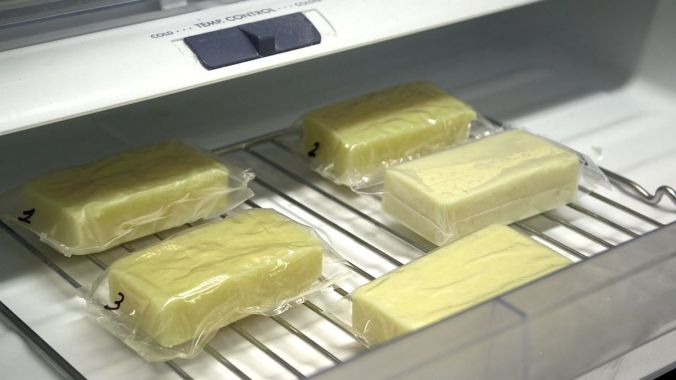
On numerous occasions we have written about the need to reduce consumption of plastics and the need for alternative, sustainable food packaging. Fortunately, researchers have developed a food packaging that is much better at keeping food fresh than regular plastics – it’s also biodegradable and edible. Yes, you read correctly, edible! This new packaging is made of casein from milk proteins, which are clear and fairly pliable, and has little flavor. This material has other unique applications in addition to being used as plastic pouches and cling-style wrap. Continue reading