When Ideas Take Flight

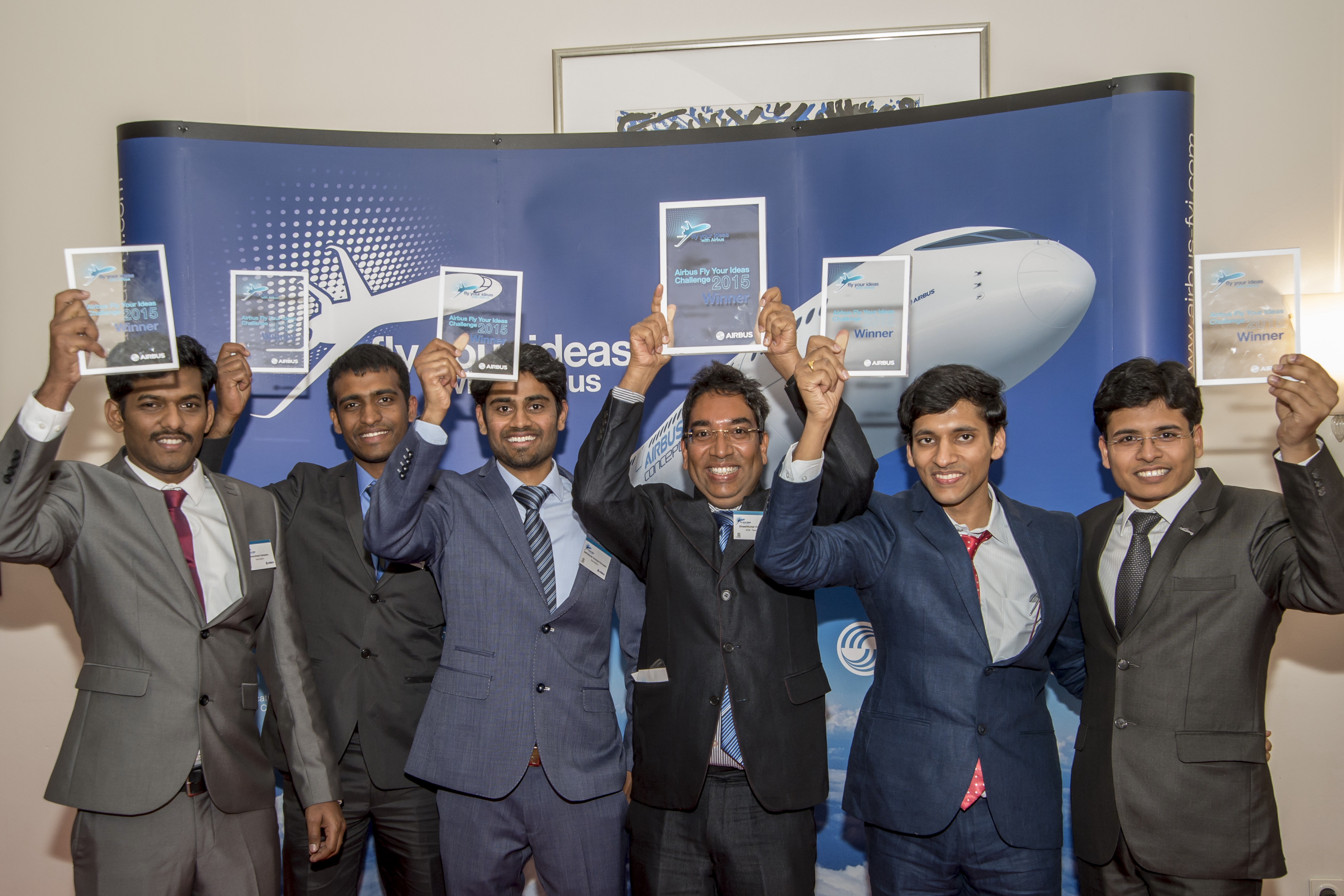
A team of Indian students won the fourth edition of the Airbus Fly Your Ideas global competition organised in partnership with UNESCO to encourage innovators . PHOTO: Airbus

A team of Indian students won the fourth edition of the Airbus Fly Your Ideas global competition organised in partnership with UNESCO to encourage innovators . PHOTO: Airbus

A few weeks ago, Hamburg hosted the fourth edition of the Airbus Fly Your Ideas competition. The city is where the most popular single isle A320 family aircraft are finalised, where A380 cabin interiors are fitted and where the revolutionary A350XWB sections are manufactured. Organised in partnership with UNESCO to encourage the next generation of innovators, the competition saw 518 multi-disciplinary ideas, representing 3,700 students from over 100 countries – all to better the future of flight. And a team of four Indian students and their “good vibes” took home the top prize money of €30,000 (£21,500). And here’s the best bit: the winners physically met only on the day of the finals.
Continue reading

More (Offshore) Power to You, Germany

Germany is set to overtake the UK as the biggest installer of offshore wind globally, Denmark comes behind the UK by capacity, followed by Belgium and China PHOTO: Reuters/Fabian Bimmer

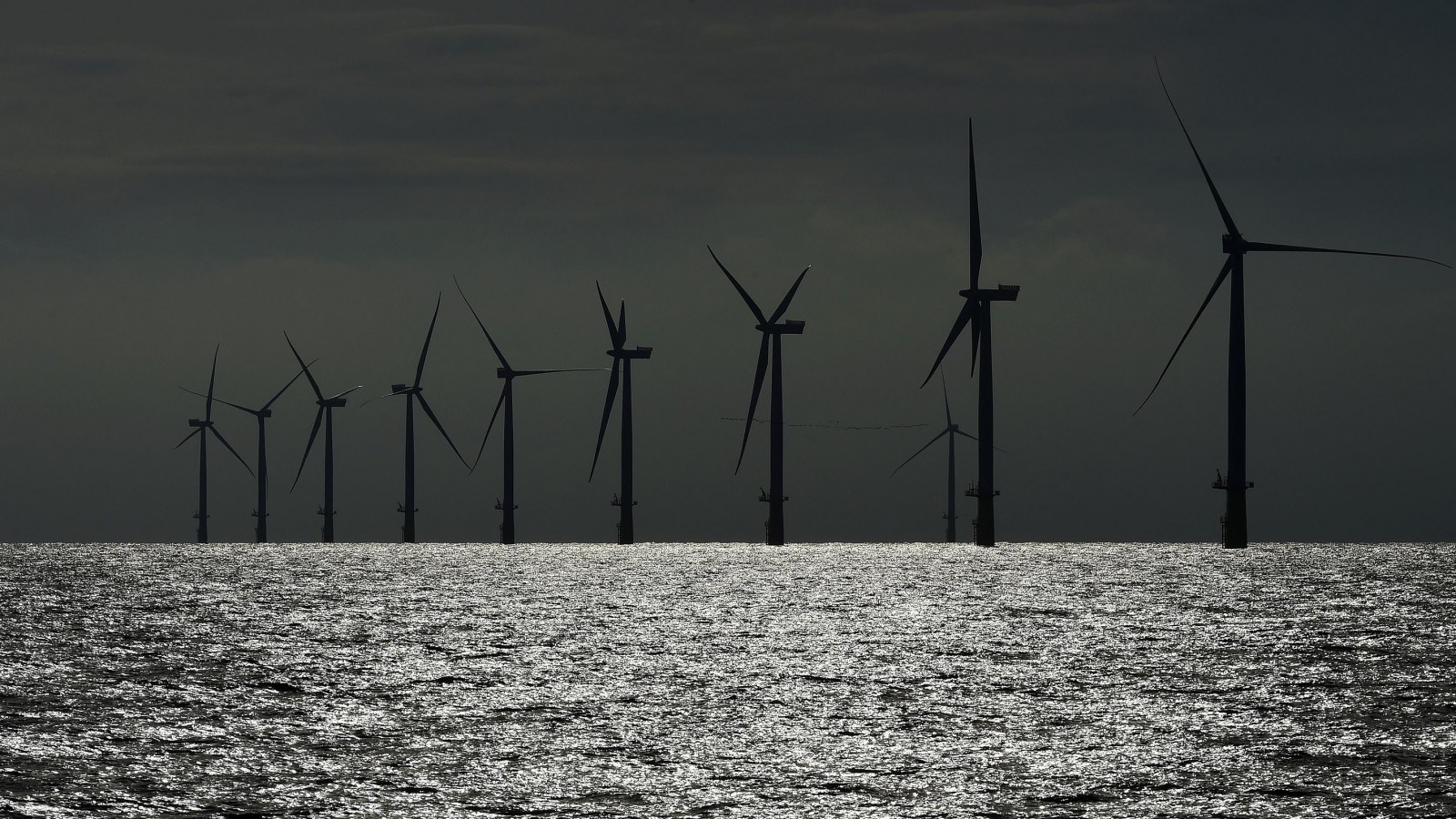
Germany is set to overtake the UK as the biggest installer of offshore wind globally. Denmark comes behind the UK by capacity, followed by Belgium and China. PHOTO: Reuters/Fabian Bimmer

We first discussed wind energy, as a viable resource to power the world’s needs, almost three years ago. Prior to that and in the time hence, Germany has done much about it. The country has chalked out a plan to replace nuclear power plants with offshore wind farms in a bid to use renewable energy round-the-clock. Importantly, the country is sticking to its plan. Above all, it is building on it.

Germany has hugely ambitious green goals. Five years ago it set a goal to produce 18% of its energy from renewables by 2020 (latest figures show it having reached 12.4%). The country also wants to reduce greenhouse gas emissions by 40% by 2020, compared with 1990 levels, and by 80% by 2050. The transformation is knows as the Energiewende—literally “energy turn.”

Continue reading

A Ticket on the Eco-friendly Supersonic, please

Supersonic flight is one of the four speeds of flight. speeds up to five times faster than the speed of sound. PHOTO: NASA

Supersonic flight is one of the four speeds of flight. It has speeds up to five times faster than the speed of sound. PHOTO: NASA

Imagine flying at more than twice the speed of sound. At that speed, a London to New York flight lasts under 3.5 hours. And the last time that happened was in 2003, just before the supersonic Concorde ceased operating. More than a decade later, there are conversations on whether the supersonic culture can be revived. There are arguments for both sides and the latest is news about the talent at NASA working on making commercial supersonic flight eco-friendly.

Unless you have access to a F-22 fighter jet, you probably haven’t been able to fly faster than the speed of sound since the last Concorde flight in 2003. NASA wants to change this. The agency said that it is spending over $6 million to fund research into cheaper and greener supersonic travel. This isn’t NASA’s first attempt to bring back supersonic travel. It has been (literally) pushing the boundaries of flight for years. NASA’s predecessor was involved in building the first supersonic plane in 1946, and the agency has been working on concepts since 2006 with companies like Lockheed-Martin and Boeing that may one day lead to a new generation of planes that get you places very quickly.

Continue reading

Fifty Shades of Black

Ivanpah, the world's largest concentrating solar power plant, located just southwest of Las Vegas,  can produce a whopping 392 megawatts of solar energy to power 140,000 California homes with clean energy

Ivanpah, the world’s largest concentrating solar power plant, located just southwest of Las Vegas, can produce a whopping 392 megawatts of solar energy to power 140,000 California homes with clean energy PHOTO: Inhabitat

So we’ve all learnt, at some time or the other, that black absorbs light the maximum. And that the sun is one of the best sources of clean and renewable energy. Now, put two and two together. Yes, we are definitely talking tapping the sun’s light and heat. And we need a black surface to do so. The catch: the color needs to be as black as black can get.

Continue reading

Another Step Forward for Merlin

© Visipedia

I don’t mean the bird species, which is found in North America and also in different varieties elsewhere in the world. I’m not talking about the wizard, either. I’m referring, rather, to the Merlin Bird ID app that I wrote about last month. It turns out that Cornell Tech and Caltech, working together as a team called Visipedia, have been developing a new tool with the Cornell Lab of Ornithology for Merlin Bird ID that involves computerized identification of bird photos. Called Merlin Photo ID, this beta-stage program can take an image of one of North America’s most common bird species (a pool of 400) and identify it after a human user has pointed out where its bill, eye, and tail are.

And after testing it out for a bit I learned that it doesn’t even need all of those Continue reading

Sweden, Take Our Trash, too?

With Swedes recycling almost half (47 percent) of their waste and using 52 percent to generate heat, less than 1 percent of garbage now ends up in the dump PHOTO: Shutterstock

With Swedes recycling almost half (47 percent) of their waste and using 52 percent to generate heat, less than 1 percent of garbage now ends up in the dump PHOTO: Shutterstock

Now, to ask someone to take your garbage will be met with censure in any part of the world, but not in Sweden. Since the country’s waste incineration program began in the 1940s, 950,000 homes are heated by trash; this lowly resource also provides electricity for 260,000 homes across the country, according to statistics. But there’s a problem: there is simply not enough trash.

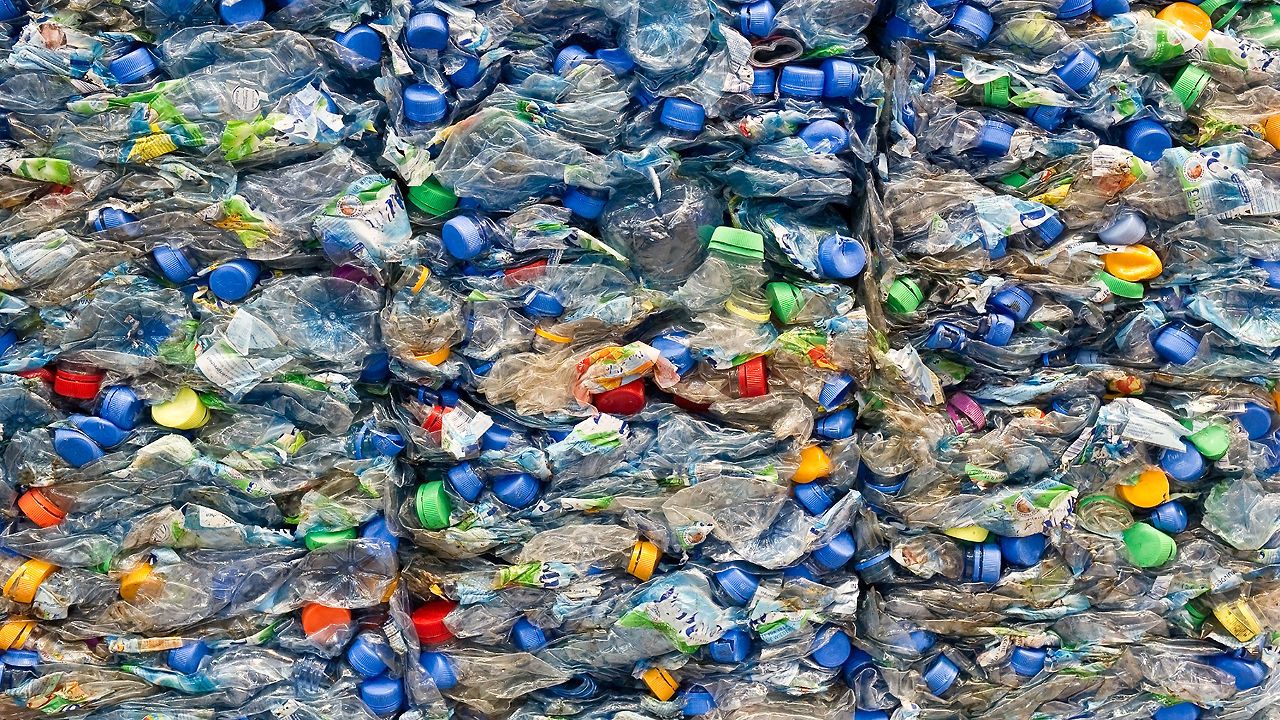
Americans, in general, are bad at recycling. In 2010, U.S. residents recycled 34% of their waste—an embarrassing amount compared to European countries like the Netherlands, Germany, and Austria, where people recycle almost all of their waste. In Sweden, people are so diligent about recycling that just 4% of all trash ends up in landfills, It’s a heartening statistic, but it has led to a problem for the country—there’s not enough garbage to power the country’s large waste-to-energy program. Sweden’s solution: import trash. More.

Continue reading

Where Does This Light Come From?

Energy from solar, biomass and hydrogen is coming together for the first time in India to light up a tribal hamlet. PHOTO: The Telegraph

Energy from solar, biomass and hydrogen is coming together for the first time in India to light up a tribal hamlet. PHOTO: The Telegraph

When India’s Rabindranath Tagore became the first non-European to win the Nobel Prize for Literature in 1913, he made headlines. He continued to be in the news when he decided to use the prize money to set up a university town in India. Today, Santiniketan and its Visva-Bharati University can stake claim to their unique set of trailblazers of alumni; Nobel winning economist Amartya Sen and ace Indian auteur Satyajit Ray are among them. While the light of education draws thousands to the gates of the university town, its hinterland remains in darkness. But in education that leads to innovation we trust and there seems to be a glimmer of a sustainable solution on the horizon.

Continue reading

A Goodbye to Utility Bills?

Life off the grid? An actuality realized by just a few and romanticized by the rest. But if things go as per plan, Bratislava-based Nice Architects and their seven-year project Ecocapsule will make this possible by the end of 2015. Imagine having to pay no utility bills, being able to set up your own egg-shaped home in any corner of the planet, and being super sustainable through a life powered by the wind and the sun! Yes, let’s go get that dream!

Continue reading

The Future of Parking is Here!

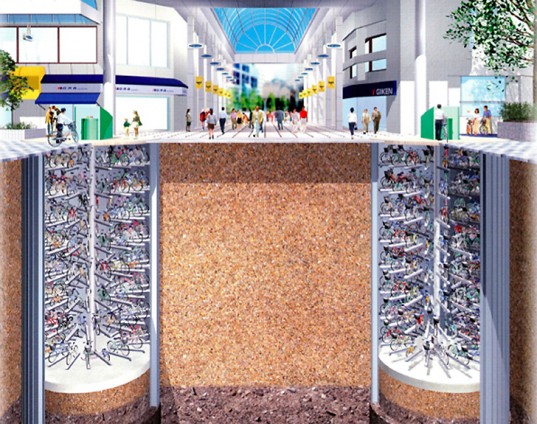
Developed by construction company Giken, the robotic system stores the cycles in a 11-meter deep well PHOTO: GIKEN LTD

Developed by construction company Giken, the robotic system stores the cycles in a 11-meter deep well PHOTO: GIKEN LTD

If there is one problem that puts developed and developing countries on the same footing, it is parking space. And Japan seems to have found a way around it. At least for bicycles. Considering that they are carbon neutral and land value is high, hindering the commissioning of exclusive bicycle roads and parking lots, this idea could be the future. Eco-cycle is an anti-seismic mechanical underground parking lot for cycles, designed along the concept of “culture above ground, function underground”. So when in Japan, particularly around Kounanhoshi Park, head to this bicycle elevator. Wait as the electronic card reader scans your membership (fee around $15 a month) code, remove pets and all valuables from the cycle, and stand back as your wheels make an eight-second journey to its slot. On your return, scan the code and your ride reaches you in a jiffy. More pedal power to that someone who really gave parking some extra thought!

Detailed photos (and some Japanese) here.

Peddle-Powered Phone Juice

bikecharger3

Thanks to EcoWatch for this article that, in a place like India where bicycles are a mode of common transport, and mobile phones are ubiquitous, is pointing us to a practical green innovation:

Charge Your Battery While You Bike to Juice Up Your Phone

Lorraine Chow

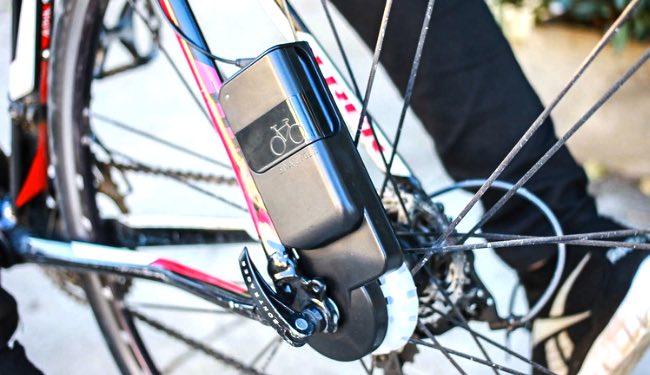
Who needs a power outlet when you have a bike? The Ride-A-Long charges your electronics as you pedal, providing a portable renewable energy source for bike-enthusiasts.

Biking is already pretty environmentally friendly, but this takes it to the next level.

Created by Siva Cycle, the product can juice up any USB-powered device such as smartphones and cameras whenever and wherever you’re biking. Simply mount the Ride-Along to any standard bicycle’s back wheel, and as you ride, the wheel delivers juice to the integrated generator and charges its 1650 mAh battery, kind of like a hand-cranked radio. Continue reading

SolaRoad’s First Seven Months

More than 150,000 bicyclists have used the road in the last six months in the Netherlands, where many people commute by bike. Photo credit: SolaRoad

More than 150,000 bicyclists have used the road in the last six months in the Netherlands, where many people commute by bike. Photo credit: SolaRoad

When we first linked out to this story some months ago, it did not get the number of clicks and reads as we expected. So now that we read a bit more about the results since November, all we can do is recommend that you pay attention:

SolaRoad, the world’s first “solar road,” has only been in operation since November, but it’s already generating more power than expected. SolaRoad is a bike path in Krommenie, a village northwest of Amsterdam in the Netherlands, that also functions as a massive solar array. The project was developed by TNO, the Province of Noord-Holland, Ooms Civiel and Imtech. Continue reading

Green Oscar For Improving Elephant-Human Relations

Elephants have to negotiate a vast expanse of tea estates to reach distant rainforest fragments in the Western Ghats of India. Photograph: Ganesh Raghunathan/Whitley award

Elephants have to negotiate a vast expanse of tea estates to reach distant rainforest fragments in the Western Ghats of India. Photograph: Ganesh Raghunathan/Whitley award

Whatever can be done, should be done, to improve the safety of humans living in the area where elephants consider home, by reducing the likelihood of encounters. This will in turn ensure the safety of elephants as well as the humans. Thanks to the Guardian for this news:

Dr Ananda Kumar wins one of seven ‘Green Oscars’ for his system of reducing human-elephant conflict by tracking and texting elephants’ locations to people

Karl Mathiesen

On the Valparai plateau in southern India people live in fear of unexpected encounters with giants in the dark.

As dusk settles, tea and coffee pickers collect rations from the townships run by the corporations that own the plantations and drift back towards their colonies. Buses drop workers on the roads and they make the precarious walk through the dark to their homes.

“They are scared. If I am there I am really scared,” said conservationist Dr Ananda Kumar, who created an SMS warning system to help workers live safely among elephants. On Wednesday at a ceremony in London, his work won a £35,000 Whitley Award, dubbed a ‘Green Oscar’. Continue reading

Disrupting The Odds

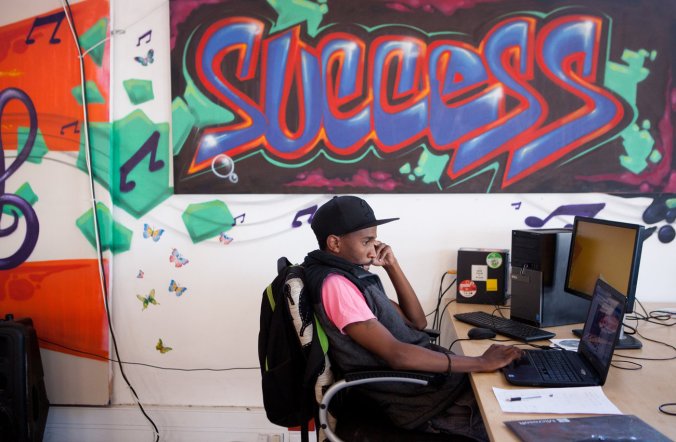
An entrepreneur uses his laptop near graffiti-decorated walls at Hubspace in the Khayelitsha township. Emily Jan/NPR

An entrepreneur uses his laptop near graffiti-decorated walls at Hubspace in the Khayelitsha township. Emily Jan/NPR

Entrepreneurship always catches our attention, especially when the odds appear long from the standard perspective:

Far From Silicon Valley, A Disruptive Startup Hub

EMILY JAN & ADAM SEGE

Starting a business is tough anywhere.

But when you live in a place where many people lack basic services, such as electricity and toilets, it’s even harder.

These are the obstacles facing new business owners in South Africa’s townships — sprawling communities designated for nonwhites during apartheid. Apartheid may be history, but two decades into democracy, townships remain overwhelmingly disadvantaged.

Internet service and office space are difficult to come by. There are few sources of investment from within the community, and if you manage to interest a potential funder who is an outsider, you have to hope you can manage to travel to a meeting.

Continue reading

Water, Blobs, And The Future Of Thirst-Quenching On The Go

Skipping Rocks Lab

Skipping Rocks Lab

Thanks to one of the many sister websites of the Atlantic, this story about the future of packaged water:

In the future, rehydrating on the go might not mean chugging from a bottle, but inhaling a gelatinous, edible blob that looks like water floating on the space station. Continue reading

Memory Restoration

Normally we avoid posting on what can be viewed as corporate advertisement, but we have to applaud the use of technology to assist in the healing process after the devasting Tōhoku earthquake and subsequent tsumani in 2011. Thousands of lives were lost, and survivers suffered the additional trauma of losing their homes, including the photographic mementoes of their loved ones.

Ricoh used their expertise in office imaging equipment to coordinate an amazing effort of 518 employee volunteers to find, clean and digitize  418,721 photos, returning 90,128 pictures to the people who lost them.

Ricoh is now offering a glimpse of how this monumental effort was conducted for future reference. The company would be delighted “if this record is useful for improving awareness towards disaster prevention or reconstruction support activities after the event of a disaster,” it says. Continue reading

Ornithology + Engineering = Bird Geek Bliss

Screen Shot 2015-03-03 at 8.09.05 AMThere are natural wonders that help answer important questions, such as those about what climate change has wrought in the distant past; and there are wonders of man’s creation that raise important questions, such as whether man can do anything to reduce his impact on climate change if he, collectively, puts his mind and energy into it.

And then there are those who study natural wonders for reasons that appear more prosaic than climate change and yet punch above their weight class in terms of getting the rest of us motivated to participate in solutions; ornithology and its amateur cousin bird watching are two of Raxa Collective’s favorite choices of what to pay attention to, just because:

ScienceTake | Hawk Cam Captures the Hunt

BY Poh Si Teng and James Gorman

Thanks to a helmet camera, researchers discovered that a goshawk mixes its methods of chasing its prey.

More Reasons To Disconnect

Illustration by John Hersey/Courtesy of WNYC

Illustration by John Hersey/Courtesy of WNYC

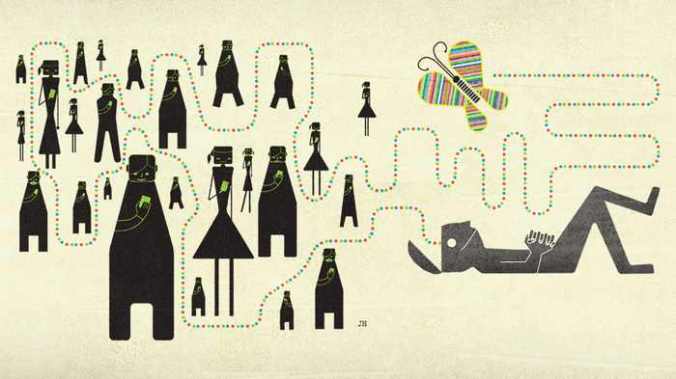
Desire to drop everything and release yourself from the constant ringing, pinging distraction? We’ve suggested disconnection before. We have suggestions on where to do it too, some offering pure relaxation and others offering immersion in culture. But why do it? Plenty of reasons, and you do not need us to explain. Nonetheless, from National Public Radio (USA) a fun, unconventional reason:

Bored … And Brilliant? A Challenge To Disconnect From Your Phone

Studies suggest we get our most original ideas when we stop the constant stimulation and let ourselves get bored. The podcast New Tech City is challenging you to disconnect — and see what happens.

Screen Shot 2015-01-13 at 3.55.58 AM

Continue reading

Teen Invents Lego Braille Printer

We’re constantly amazed at the inventiveness and creativity of people around the world. A few weeks ago, PBS aired a story about a thirteen-year-old entrepreneur who created a braille printer out of Legos that is cheap enough to provide better opportunities for literacy among the sight-impaired. Quotes from the transcript are below, or you can click on the video above to watch the feature.

JACKIE JUDD: At the age of 12, Shubham Banerjee learned how random the universe can be.  One seemingly inconsequential occurs, in this case the ring of a doorbell, and life changes in a big way.

SHUBHAM BANERJEE: I looked out.  No one was there.  But I did see a flyer over there, and which asked for donations for the visually impaired.

I asked — I didn’t know why.  I just asked a random question to my parents.  How do blind people read?  They didn’t really have time for me, so they said: “Sorry, I’m busy.  Can you go Google it?”

JACKIE JUDD: And one thing lead to another.

Continue reading

New App for Borrowing/Lending Things

You can find apps for everything nowadays, and some of them are really creatively useful or simply entertaining. We’ve seen an app for typing in various indigenous languages from North America and Australia, some environmentally-focused games, the potential for a prairie dog translator app, and an application to help monitor the plants in your garden. Now we’re learning about a new company that has an app to help coordinate loans of tools or other things among neighbors. Named Peerby, this social platform came to life in the Netherlands, and seems like a great idea to promote friendly and community-building interactions while also reducing consumption. Eleanor Beardsley reports for NPR’s All Tech Considered:

Millions of people use websites and apps like Airbnb to share their homes and Uber to transport people in their cars. A new company allows people to share things like power drills and bicycle pumps by connecting people who need them to people who have them.

It isn’t surprising that the idea for the borrowing platform Peerby originated in one of the world’s most densely populated countries — The Netherlands.

Continue reading