Odd Architects And Other Natural Wonders Brought Into Better Focus

Photograph: Arco Images GmbH / Alamy/Alamy

Photograph: Arco Images GmbH / Alamy/Alamy

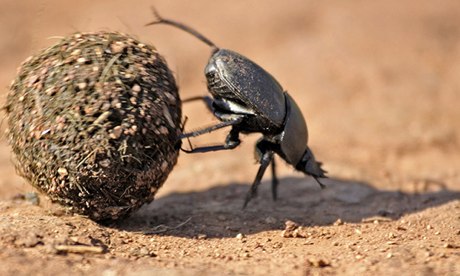
The Guardian is preparing us for 2014’s new lineup of nature shows on television by highlighting the role of technology in bringing us a closer view of all things wild, including more than one of the types of amazing creatures we like featured in the photo above:

An unusual line-up of stars will make their names on television next year. They include the gigantopithecus, a huge extinct ape – resurrected through the wonders of CGI – which will frolic in 3D with David Attenborough in Sky’s Natural History Museum Alive.

The south-east Asian tree shrew and the dung beetle will bear testimony to the hardships that the world’s tiniest animals endure, in BBC1’s Hidden Kingdoms, while Dolphins: Spy in the Pod, also on BBC1, will reveal the intimate lives of wild cetaceans through the use of cameras fitted to robot fish. Continue reading

Technology, Activism, Discontent & Keeping It Honest

Doug McLean

It was just recently when we started noticing it on the Atlantic‘s website, and needed some time to determine the fit with our blog:

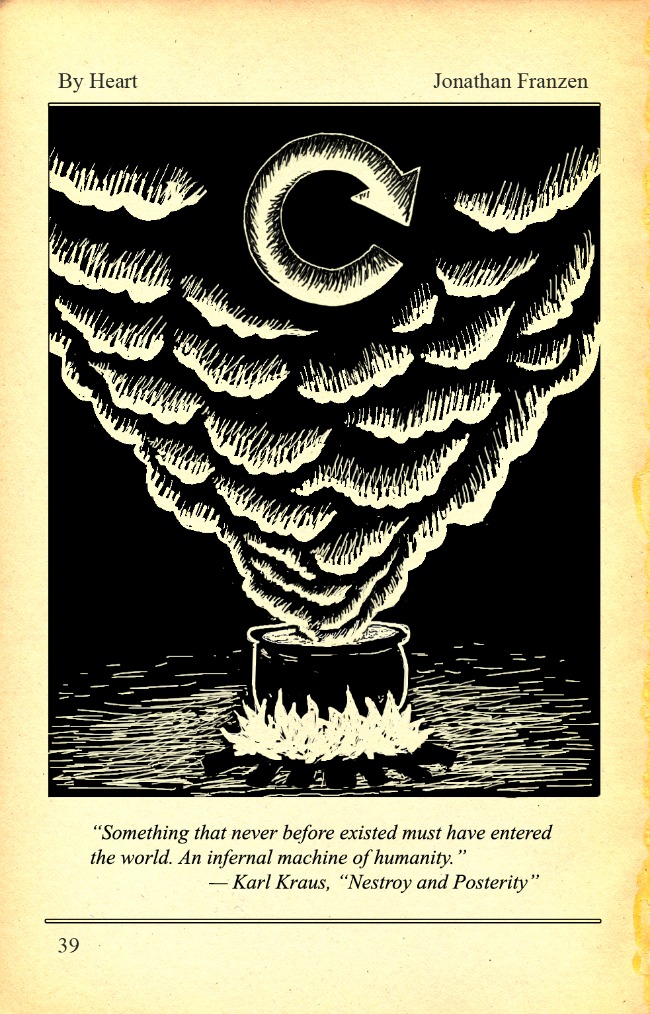
By Heart is a series in which authors share and discuss their all-time favorite passages in literature.

It took this one to make us realize the fit:

Jonathan Franzen on the 19th-Century Writer Behind His Internet Skepticism

His new book translates works by Karl Kraus, whose misgivings toward progress mirror Franzen’s belief that technology can be “very harmful” to artistic production.
 OCT 1 2013, 3:43 PM ET

We have several times linked to stories involving Franzen, and there is no question that it is in part because of his bird-loving devotions; but it is not only that.  We put ourselves in his corner a few months ago and there are plenty of paradoxes in this corner but read this to appreciate the depth of Franzen’s sense of purpose related to technology, starting with Joe Fassler’s excellent commentary:

Karl Kraus, the Austrian satirist, playwright, and critic of the mass media, was born in 1874 and ran the magazine Die Fackel (“The Torch”) from 1899 until his death. And according to novelist Jonathan Franzen, he was the first-ever iteration of what we might now call a media theorist. Continue reading

Tackling Tough Topics

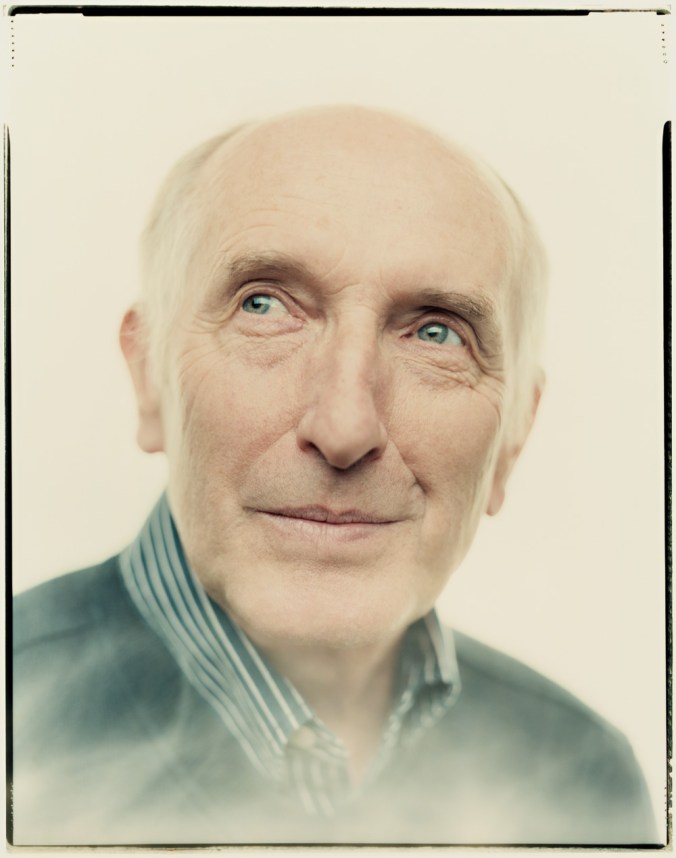
Author Vaclav Smil tackles the big problems facing America and the world.   Andreas Laszlo Konrath

Author Vaclav Smil tackles the big problems facing America and the world. Andreas Laszlo Konrath

Thanks to this interview in Wired magazine (click the image above to go to the source) we hear a bit about the craft of a thinker-writer’s approach to major economic, environmental and technological puzzles, one book at a time, but at an amazing pace:

You’ve written over 30 books and published three this year alone. How do you do it?

Hemingway knew the secret. I mean, he was a lush and a bad man in many ways, but he knew the secret. You get up and, first thing in the morning, you do your 500 words. Do it every day and you’ve got a book in eight or nine months.

What draws you to such big, all-encompassing subjects?

I saw how the university life goes, both in Europe and then in the US. I was at Penn State, and I was just aghast, because everyone was what I call drillers of deeper wells. These academics sit at the bottom of a deep well and they look up and see a sliver of the sky. They know everything about that little sliver of sky and nothing else. I scan all my horizons. Continue reading

Engineering A Safer Future On The Road

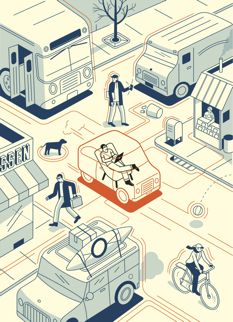
The Google car knows every turn. It never gets drowsy or distracted, or wonders who has the right-of-way. Illustration by Harry Campbell.

In most of the developing world, or at least where La Paz Group operates and where more and more European and North Americans are engaged in experiential travel, road conditions and driving habits are “different.” It is our educated guess that these travelers do not consider driving time to be their favorite part of these experiences. We do not hide from this fact. On the contrary, we take our drivers’ safety training seriously.  But we are always on the lookout for new approaches.  This week’s new New Yorker magazine, hot off the press, is the annual technology-focused issue.  An article there has got us thinking and discussing:

Human beings make terrible drivers. They talk on the phone and run red lights, signal to the left and turn to the right. They drink too much beer and plow into trees or veer into traffic as they swat at their kids. They have blind spots, leg cramps, seizures, and heart attacks. They rubberneck, hotdog, and take pity on turtles, cause fender benders, pileups, and head-on collisions. They nod off at the wheel, wrestle with maps, fiddle with knobs, have marital spats, take the curve too late, take the curve too hard, spill coffee in their laps, and flip over their cars. Of the ten million accidents that Americans are in every year, nine and a half million are their own damn fault. Continue reading

Science-Education-Technology Convergence


Museums and libraries are the stewards of culture in many ways. They both offer us a place to go for quiet contemplation as well as dynamic discovery. Kudos to the Smithsonian for accepting new technologies with open arms and sharing it with their researchers, curators, educators and conservators, and thereby with us.

Continue reading

Disconnected

A usual day in States starts out with me waking up to the ear-drillingly loud alarm on my Samsung Galaxy, checking my email and Facebook, surfing the web and reading the news. Then I soullessly get out of bed and proceed to breakfast, during which I also constantly fidget with my phone, jotting down everything I need to do for that day and texting my friends, usually to vent about how tired we are and who has gotten less sleep. Then in class, I take notes on my laptop as I constantly browse through my email and simultaneously type things I don’t understand into the Google search bar. As soon as I get out of class, I go back to staring at my phone, browsing through Instagram and Facebook, walking to my next class or lunch. (I have once literally run into a door because I had my head in my phone and didn’t see the door at all.) Bottom line, I am always connected, always online, and always ready to access everything on the Web. A ridiculous amount of my life is consumed by my phone and my laptop.

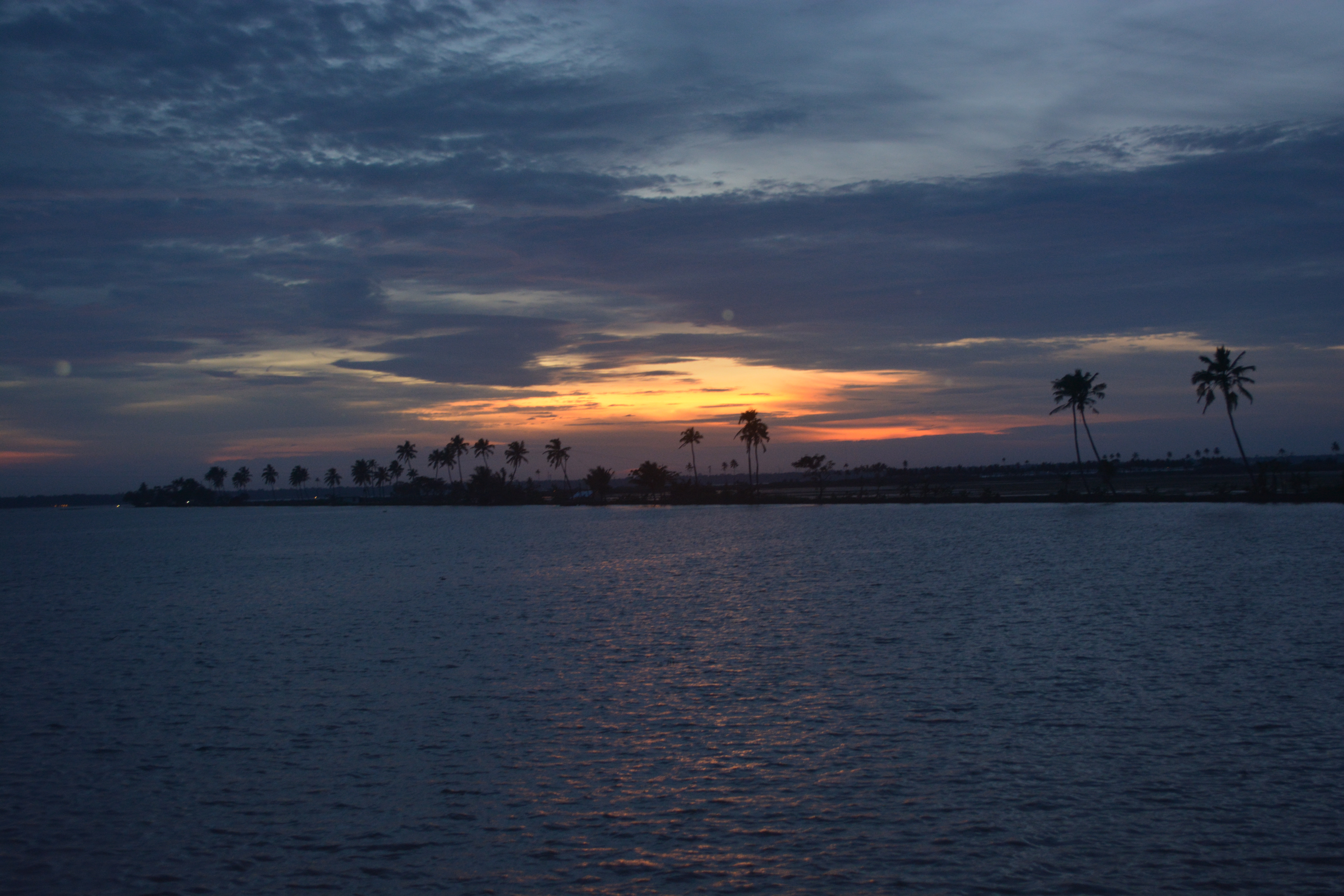
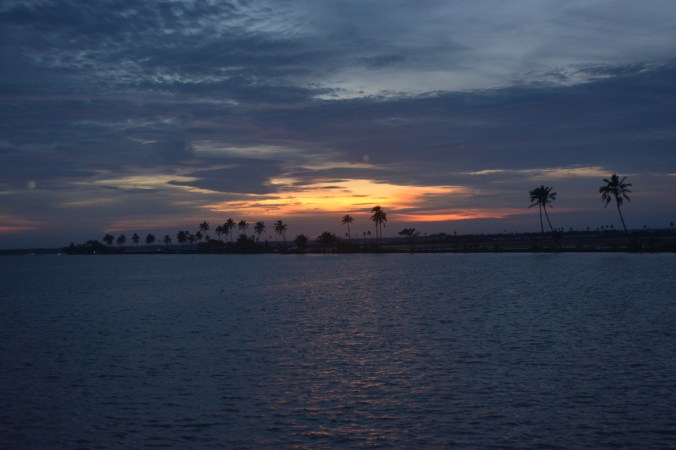
However, on my second day in India, I went on a houseboat—my fellow intern Jake has written about it a few posts back—and it did not have Wifi! I felt disconnected and nervous. I cannot even remember the last time I didn’t have access to Internet or my phone. After a couple of hours, I simply didn’t know what to do with myself. I didn’t even have music to listen to since I always stream it from Spotify or Youtube. In hopelessness, I lay down on the cushioned sun deck, hoping to take a nap, which would kill some time. So I sat there, directionlessly looking into the backwaters, the rice farms, and the tiny villages clustered up in the narrow grounds next to the river. I watched little naked boys taking a bath in the river and running away in embarrassment as they saw me staring at them on the boat. I also watched the birds hover right on top of the river surface, meticulously and gracefully snatch the fish out of the water, and fly away gobbling it down. I watched the sun slowly setting, painting the whole sky orange and pink with its radiance.

Before I knew it, it was pitch black outside and we were called down for dinner. Continue reading

Helping Kerala: Transatlantic Collaboration

Western Ghats

Western Ghats

Kerala State Biodiversity Board (KSBB) has recently joined with the University of Alabama (UA) in Huntsville to help improve Kerala’s landslide alert system and the conservation of the Western Ghats. Both projects are currently in the development phases for testing, but implementations of such projects in Kerala could have profound and lifesaving affects. According to an article in The Hindu, a landslide alert system would be able to help predict landslides and give advanced warning to the authorities in the area.

Placed one kilometer apart above ground, the sensors, which cost about $300 each, register ground movement and record rainfall and soil moisture. The data is transferred to an off-site computer hosting a software model that provides advance warning of a landslip.

If testing proceeds, KSBB would place this system first in the Idukki district, an area known for having multiple landslides during the monsoon season. Predicting landslides in this area can save hundreds of lives, but this landslide alert system is not the only project in development that involves the UA and the KSBB working together to protect this region.

Continue reading

Superlative Sharing

India Republic Day Doodle

India Republic Day Doodle

Although the “Google Doodle” above was published to commemorate the day the Indian Constitution came into force, it seems appropriate to reshare it for Indepence Day as well. That spirit of sharing is evident in the internet giant Google’s launching of the Google Impact Challenge in India. Nikesh Arora, Google’s senior vice president and chief business officer, wrote

On the eve of India’s Independence Day, we’re celebrating the spirit of creativity and entrepreneurship of the world’s largest democracy by spotlighting the best local nonprofits that are using technology to make the world better. Continue reading

Entrepreneurial Conservation Embraced By A Great Designer

TonyFadellToday’s New York Times’ regular feature called The Boss provides one man’s self-described transition from the pinnacle of consumer tech design, which he helped establish, to a greener entrepreneurial form of the same:

After years of work at Apple, designing iPods and iPhones, the founder of Nest Labs now makes a self-programming thermostat that enables homeowners to save energy. Continue reading

Search Well, Do Good, Avoid Not Being Evil

The big guns of the tech world have the financial weight to reinvest in new services, but can startups give them a run for their soul?

I have not tested it yet, but there is a new, alternative search engine worthy of checking out. Click the image above to go to the Guardian story about would-be giant-killing do-gooders (or is it giant-killing would-be do-gooders?):

A new breed of internet startup is taking on the big guns of the tech world. Seeking to capitalise on consumer disillusionment with the established order in the wake of headlines about tax-dodging, personal data profiteering and poor factory conditions, these startups represent the radical face of the internet.

Unusually for a tech company, however, it is not technological innovation that gives them their unique selling point. Rather it is the promise to do social and environmental good.

“They started with decent values – Google and Apple,” says Christian Kroll, founder of Ecosia, an eco-conscious search engine based in Berlin. “They wanted to build something that improves the world. But as soon as you become a public company, shareholders exert influence.” Continue reading

Ideas That Give ‘Far Out’ A New Meaning

Cornell Tech Redefines “Industrial Complex”

Architectural firm WEISS/MANFREDI project rendering

Architectural firm WEISS/MANFREDI project rendering

When President Eisenhower warned of the rising power of the hyphenated industrial complex his concerns were clearly well-founded. Cornell NYC Tech, the upcoming Roosevelt Island campus of graduate high-tech education, is in the process of rehabilitating the concept of collaboration with industry with the development of its first “corporate co-location” building.

“Cornell Tech is radically rethinking how industry can collaborate with faculty, students and researchers, and corporate co-location is vital to making that a success,” Continue reading

Harnessing The Sun To Study Climate Change On The High Seas

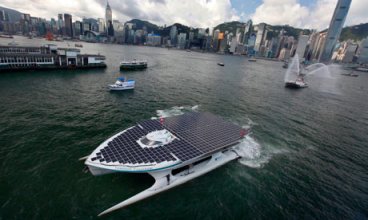
MS Türanor SolarPlanet will measure emissions in the open ocean. Photograph: Alex Hofford/EPA

MS Türanor SolarPlanet will measure emissions in the open ocean. Photograph: Alex Hofford/EPA

The Guardian is reporting on a floating phenomenon worth a look if you want to peer into the future of climate change science:

The solar-powered boat docked in Battery Park City in New York could easily have been packed off to a museum as a relic.

Continue reading

Creative Uses Of Intelligence, Intelligent Uses Of Creativity

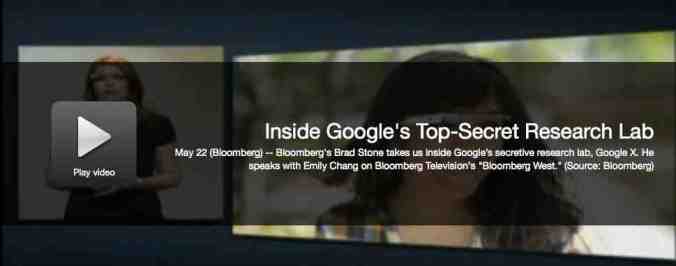
How smart are they? Do they drink alot of coffee?  Find out by clicking the image above, or reading the following from the article accompanying that video:

…Google X seeks to be an heir to the classic research labs, such as the Manhattan Project, which created the first atomic bomb, and Bletchley Park, where code breakers cracked German ciphers and gave birth to modern cryptography. After the war, the spirit of these efforts was captured in pastoral corporate settings: AT&T’s (T) Bell Labs and Xerox (XRX) PARC, for example, became synonymous with breakthroughs (the transistor and the personal computer among them) and the inability of each company to capitalize on them. Continue reading

False Starts, Heroic Conclusions

ESSAY: A Different River Every Time
What is ‘smart’ and how does it fit our consciousness? Is there just one way to it? Are smarter people happier, richer? The answers may not always be that obvious. by SANDIPAN DEB

…Which, of course, brings us to that common capitalist question: “If you’re so smart, why aren’t you rich?” There is something abhorrent about this query. Of course, Mukesh Ambani is super-smart, but so was Jagadish Chandra Bose, who invented wireless communication at least a couple of years before Guglielmo Marconi, who received the Nobel prize for the breakthrough (It is now established that Marconi met Bose in London when the Indian scientist was demonstrating his wireless devices there, and changed his research methods after that meeting). Bose also invented microwave transmission and the whole field of solid state physics, which forms the basis of micro-electronics. Bose’s contributions are all around us today, from almost every electronic device we have at home to the most powerful radio telescopes in the world. But he steadfastly refused to patent any of his inventions, or to license them to any specific company. Some 70 years after Bose’s death, the global apex body, Institute of Electrical and Electronics Engineers, officially acknowledged Bose to be the father of wireless communication.

This is an excerpt whose catchy question pervades an essay worth reading in full. Intelligence, specifically smart Indian people, is the subject of a whole special issue of Outlook magazine. We have pondered amazing people from India on occasion in the past, and if the brief tale above intrigues you then see this post about Tesla versus Edison, but for now Continue reading

Full Stop In 21st Century India

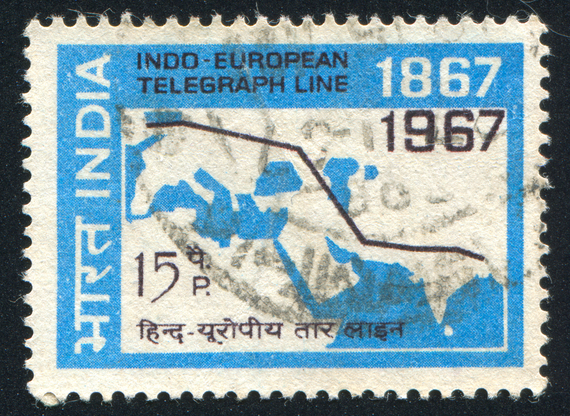
A stamp for the Indo-European Telegraph, circa 1967 (Shutterstock/rook76)

A stamp for the Indo-European Telegraph, circa 1967 (Shutterstock/rook76)

The Atlantic is reporting, and it reaches us in India, that July 14 will be a historic day.  On that day (coincidentally aka Bastille Day in France), an era will end:

In 1850, the British inventor William O’Shaughnessy — who would later become famous for his early experiments with medical cannabis — sent a coded message over a telegraph line in India. His telegram would usher in a new age of communication in and for India, connecting the country in a way that had never before been possible. Continue reading

Entrepreneurial Conservation And Language Apps

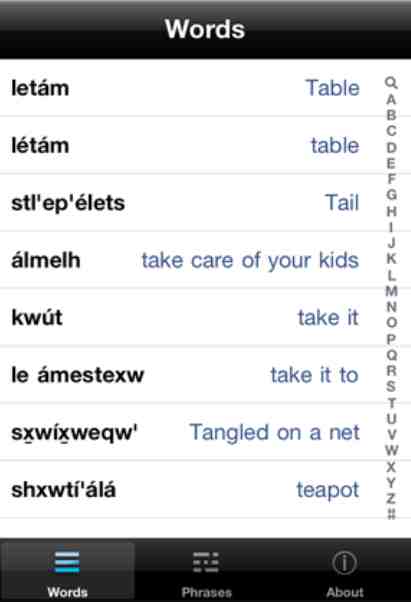
This recent post about a language app was thought to be a one off on a funny subject. Then the topic was no longer one off, and not particularly funny. Even less funny, but technologically amazing, and certainly an example of one of our favorite topics, is this one (click the image to the left to go to the source):

…Last June, FirstVoices launched an iPhone app that allows indigenous-language speakers to text, e-mail, and chat on Facebook and Google Talk in their own languages. Users can select from a hundred and forty keyboards not recognized by iOS; the app supports every indigenous language in North America and Australia. (By default, iOS supports just two: Cherokee and Hawaiian.) The app accomplishes this through mimicry. When a text box is selected, a keyboard identical in form and function to iOS’s appears. The keyboard includes the characters necessary to write in, say, Cree, and follows a layout unique to the chosen language.  Continue reading

Birders, Language Apps, And Protected Area Rules

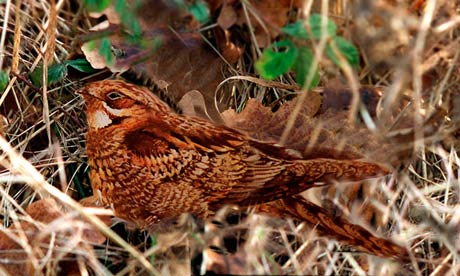
Several visitors to Brownsea Island, Poole Harbour, were found to be using apps that imitate the unusual 'churring' call of the nightjar to coax out the bird. Photograph: Don Mcphee for the Guardian

Several visitors to Brownsea Island, Poole Harbour, were found to be using apps that imitate the unusual ‘churring’ call of the nightjar to coax out the bird. Photograph: Don Mcphee for the Guardian

Where is Ben, apart from being on the road to 2,000 birds, when you need him? We are curious how widespread the use of such apps might be among serious birders. Read this Guardian story to the end and you may agree with us that this language app is more likely to do harm than good:

To the long list of nature reserve do’s and dont’s can be added a thoroughly 21st-century injunction: don’t use your apps to pap the feathered denizens. Continue reading

Worlds And Distant Times Apart, Bridged By Ideas (Or Ideology)

Future Shlock

The New Republic is not a magazine we scan often, because its focus rarely intersects with our focus; even its Must Reads are to us, not-often-must; but occasionally we stumble on something of interest.  Perhaps because the first link of today had a technology component, we got on a roll thinking about the relationship between technology, ideas, culture. This particular article is worth reading simply for the quality of both content and style:

The sewing machine was the smartphone of the nineteenth century. Just skim through the promotional materials of the leading sewing-machine manufacturers of that distant era and you will notice the many similarities with our own lofty, dizzy discourse. The catalog from Willcox & Gibbs, the Apple of its day, in 1864, includes glowing testimonials from a number of reverends thrilled by the civilizing powers of the new machine. Continue reading

Technology, Globalization And Over The Top To Do’s

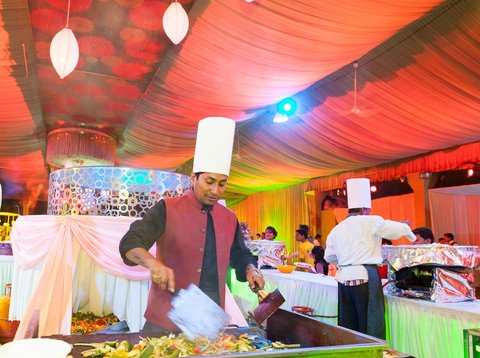
Courtesy of Ravi Sinha/Lucky Malhotra Photography.  Ravi Sinha preparing grilled vegetables to be served with saffron rice and romesco sauce, at a wedding banquet in Bangalore, Karnataka.

Courtesy of Ravi Sinha/Lucky Malhotra Photography. Ravi Sinha preparing grilled vegetables to be served with saffron rice and romesco sauce, at a wedding banquet in Bangalore, Karnataka.

Saritha Rai provides important insight into technology’s impact on the cultural practices of one community in India, and in particular with regard to their most sacred affairs:

Ravi Sinha, an entrepreneur in Bangalore, innovates constantly, tracking all the latest trends and occasionally outsourcing to outside specialists. Research and development are critical to his profits, and globalization has helped shape his business. Continue reading