Footprint Improvements

Footprint

Believe it or not, there is some good news out there on the carbon footprint trail. Thanks to Mathis Wackernagel, whose work I have appreciated even without posting more since 2011, and to his whole team for sharing this:

Ecological Footprint Explorer Open Data Platform Launches April 5, 2017

The US per capita Ecological Footprint dropped nearly 20% during the last eight years of available data (2005 and 2013), a total reduction that matches the entire Footprint of Germany. Continue reading

Merlin Flying Further Afield

We’ve written about this amazing APP on our pages before, and it’s exciting to watch it’s evolution and expansion of both technology and territory.

Our work has yet to expand to Mexico, but birds don’t acknowledge national borders, so the majority of the species in the Yucatan  can be found in all 3 countries that make up the peninsula – Belize, Guatemala and of course, Mexico.

We look forward to having our marvelous guides try it out just for fun!

 Merlin Expands to Mexico

We’ve spent the last few months working to expand coverage of Merlin, and we’ve just released a new bird pack for the Yucatan Peninsula. Research at the Cornell Lab of Ornithology repeatedly points to the Yucatan Peninsula as a vital wintering ground for many of our favorite breeding birds in the United States. It’s also home to many dazzling birds unique to the Neotropics. Continue reading

You Had Us At Non-Toxic

flow-battery2

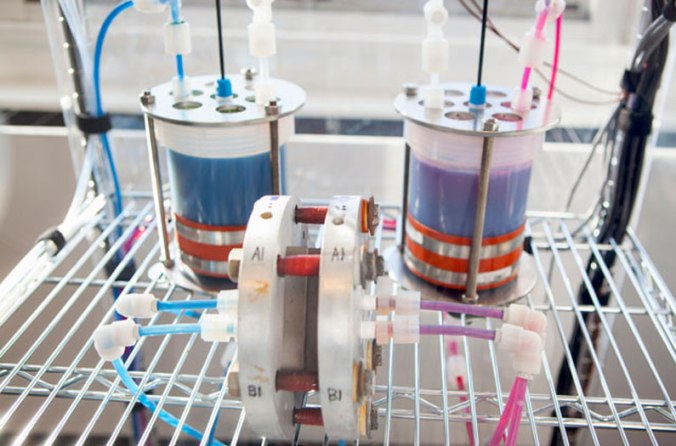
Photo: Organic mega-flow battery in the Harvard SEAS lab. (Photo by Eliza Grinnell, Harvard School of Engineering and Applied Sciences)

Thanks to Anthropocene:

This non-toxic battery lasts a decade, could be renewable energy’s missing piece

by Prachi Patel

As more and more people install solar panels, the need to store solar power is growing. Batteries that store sun-generated electricity are key for houses to have power at night or when it’s cloudy. But today’s battery technologies are riddled with issues such as high cost, toxicity, and short life. Continue reading

Baltimore Water Wheel & A Vision Of Recovery

baltwheel

If Mr. Trashy has a silly ring to it, so be it. The medium is the message:

USING THE POWER OF NATURE TO KEEP OUR HARBOR CLEAN

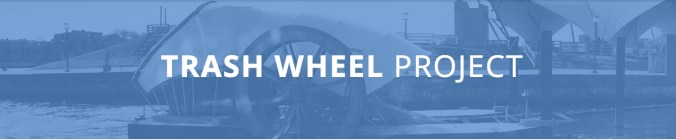
The Inner Harbor Water Wheel, or “Mr. Trash Wheel” to locals, combines old and new technology to harness the power of water and sunlight to collect litter and debris flowing down the Jones Falls River.

The river’s current provides power to turn the water wheel, which lifts trash and debris from the water and deposits it into a dumpster barge. When there isn’t enough water current, a solar panel array provides additional power to keep the machine running. When the dumpster is full, it’s towed away by boat, and a new dumpster is put in place. Voilà!

Thank you, Mr. Trash Wheel.

BaltWaterWheel1.jpg

Looking Forward To The Debate On Nature As Climate Technology

Nature_Poster.jpg

We cannot help wondering, with the political upheavals in the USA and Europe, what will become of our commitments to take care of serious environmental issues, and specifically climate change; we are looking forward to this debate on the Intelligence Squared podcast, and will post a reminder when the podcast drops:

NATURE: OUR BEST CLIMATE TECHNOLOGY?

It was historic. The 2015 Paris climate agreement saw every member country of the UN pledge to cut its carbon emissions to zero by the second half of this century and keep global warming at well below 2°C above pre-industrial levels.

There’s just one problem. To reach this goal the world would need to shut down all of its coal-fired power stations by 2025 and ditch the combustion engine entirely by 2030. To reach its own targets, the UK will need to decarbonise the vast majority of its electricity supply within a mere 15 years. Eliminating fossil fuels this way is going to be extremely challenging. An extra lever is needed to reach the Paris climate targets. But from where? Continue reading

Design Worth Reading About

Gita1.jpg

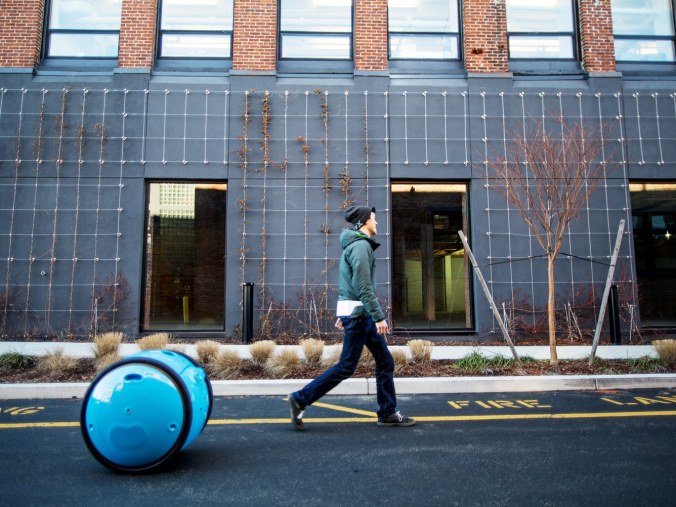
INGO MECKMANN/PIAGGIO FAST FORWARD

Sometimes it makes more sense to look at a design rather than read about it. This story is in itself interesting (thanks to Wired) and that is because of the combination of the history of Piaggio and the character at the center of the design story:

IN THE SUMMER months of 2015, Jeffrey Schnapp and a few of his colleagues started collecting rideables. The hoverboard craze was in full swing, and OneWheels and Boosteds were showing up on roads and sidewalks. Schnapp and his co-founders rode, drove, and crashed everything they could find. For Schnapp, a Harvard professor and longtime technologist with a shaved head, pointy goatee, and a distinct Ben Kingsley vibe, this was market research. Continue reading

Offshore Windfarm Primetime

00offshorewind1-superJumbo.jpg

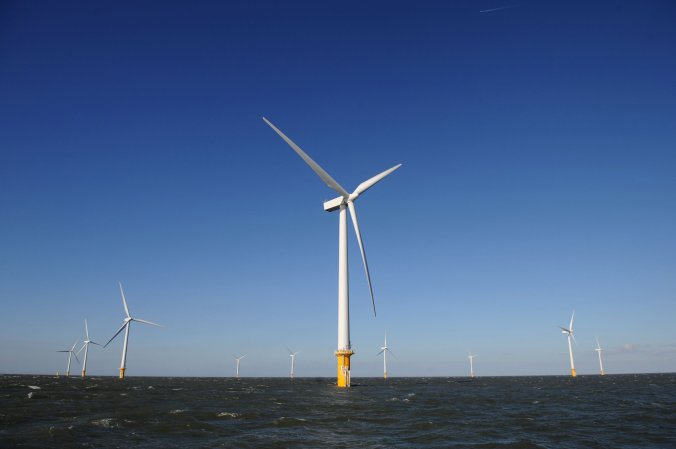
Dong Energy, a Danish company, is installing 32 turbines that stretch 600 feet high off the coast of Britain. Credit Andy Teebay

Thanks to the New York Times for this news from the world of alternative energy:

Offshore Wind Moves Into Energy’s Mainstream

By

LIVERPOOL, England — When engineers faced resistance from residents in Denmark over plans to build wind turbines on the Nordic country’s flat farmland, they found a better locale: the sea. The offshore wind farm, the world’s first, had just 11 turbines and could power about 3,000 homes. Continue reading

Nanowire & Swamp Surprises

Nanowire-illustration.jpg

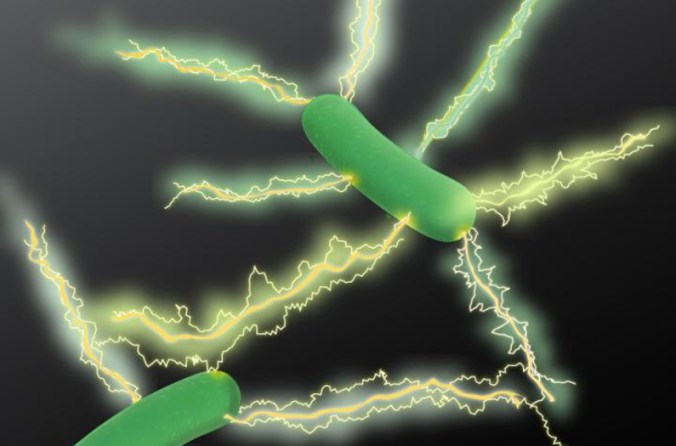
An artist’s rendition of Geobacter expressing electrically conductive nanowires. Credit: UMass Amherst

Thanks to Anthropocene for a great title to this summary of important recent research finding:

From the swamps of the Potomac, new hope for green electronics

Protein filaments just 3 nanometers wide that are produced by certain species of bacteria could be a key to environmentally friendly electronics manufacturing, according to microbiologists at the University of Massachusetts at Amherst.

Scientists discovered the filaments, dubbed “nanowires,” about 5 years ago. Bacteria use them to make electrical connections with other bacterial cells or to generate reactions with metals in the environment. Continue reading

Rapid Radical Progress

gettyimages-627186506

GETTY IMAGES

In our seventh year based in Kerala, India we have experienced progress each year in the quality of connectivity, but another state to the north may become India’s superstar of connectivity, faster than we can imagine:

One Indian State’s Grand Plan to Get 23 Million People Online

By Hui Wu

THE TRENCH RUNNING along the road linking Kodicherla and Penjarla in southern India is just 5 feet deep and about half as wide. Yet it carries the promise of a better life for the people of those villages, and all of Telangana.

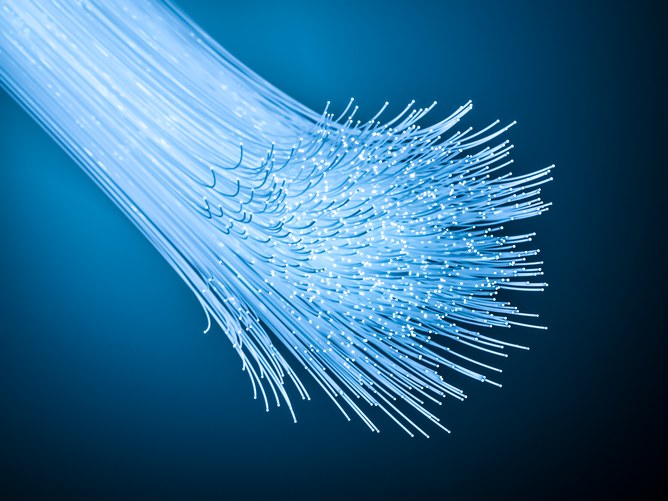
Within the ditch lie two pipes, a large black one carrying fresh water and smaller blue one containing a fiber optic broadband cable. The government of Telangana, a state born of the 2014 secession from Andhra Pradesh after its residents accused the government of systematic neglect, is doing something unprecedented in India: bringing broadband internet to every rural home in the region, some 23 million people in all.

Of the 4 billion people around the globe without access to the internet, one-quarter of them live in India. Continue reading

Boosting Crop Yields Without GMO

27294597002_ae07a7229e_k

Yann Coeuru/Flickr.com

Thanks to Anthropocene for this summary on agricultural technology possibly breaking through the GMO debate in the near future:

A non-GMO approach to producing bigger, better wheat

by Catherine Elton

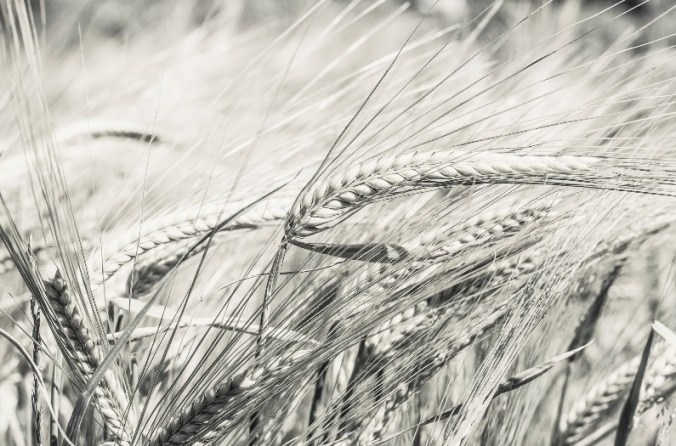
Researchers have developed a new technology that not only increases the yield of wheat plants, but also makes them more resilient to drought. What makes this technology so interesting is that—if  successful in field trials—it might provide an alternative to genetic modification approaches to boosting wheat yields. Continue reading

Carbon Capturing Crystals

crystals.jpg

Thanks to Anthropocene for this summary of a scientific news item worthy of our attention:

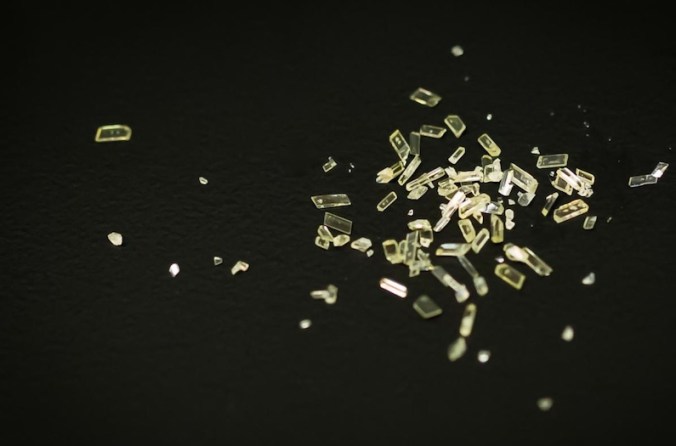
A cheaper way to pull carbon dioxide from the air, turn it into crystals

We Will Be For It

rideshare

We have not seen one yet, apart from Uber and Lyft (which we have been grateful for as users already), but when we do see any pure form(s) of this mythical app our support will be early and often:

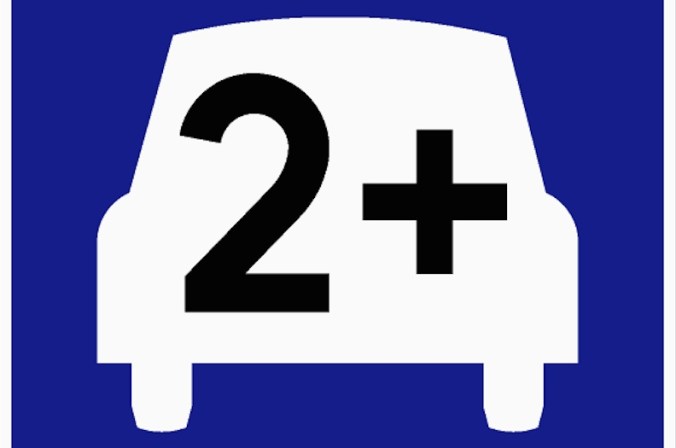
Carpooling apps could slash congestion, fuel use, and emissions

Droning Over Wetlands

Thanks to The Nature Conservancy’s Cool Green Science team for helping us realize we almost missed this story:

Flight Over the Bas-Ogooué: Using Drones to Map Gabon’s Wetlands

BY JUSTINE E. HAUSHEER

How do you map a nearly inaccessible 9,000-square-kilometer African wetland that is home to hippos, forest elephants, crocodiles, and the notorious Gaboon viper?

Enter the drones.

Nature Conservancy scientists are using unmanned aerial vehicles to create the first-ever detailed wetlands habitat map of coastal Gabon, in collaboration with scientists from NASA, and other conservation groups working in Gabon. Continue reading

Top Shelf Infographics For 128 Years

phpthumb_generated_thumbnailjpg

Thanks to the fancy-fine publisher, Taschen, for collecting this particularly powerful informative art form into one book:

A History of Knowledge

The best infographics from the National Geographic archives

Back in the days when the information age was a distant dream and the world a more mysterious place, National Geographic began its mission to reveal the wonders of history, popular science, and culture to eager audiences around the globe. Since that 1888 launch, the world has changed; empires have risen and crumbled and a galaxy of information is today only a click away. But National Geographic endures; its calm, authoritative voice is as respected as ever amid the surfeit of data in our daily lives. Continue reading

Better Nets, Better Fishing

ulotrawlproject_2016_069-55_wide-588bf1471991f6a62169e87318536f0a627efb4f-s1100-c85

Portland’s Gulf of Maine Research Institute has designed a trawl net that aims to target species that can still be profitable while avoiding cod. Courtesy of Gulf of Maine Research Institute

Thanks to the salt folks at National Public Radio (USA):

Fishermen Team Up With Scientists To Make A More Selective Net

FRED BEVER

Some New England fishermen are pinning their hopes on a new kind of trawl net being used in the Gulf of Maine, one that scoops up abundant flatfish such as flounder and sole while avoiding species such as cod, which are in severe decline.

For centuries, cod were plentiful and a prime target for the Gulf of Maine fleet. But in recent years, catch quotas have been drastically reduced as the number of cod of reproductive age have dropped perilously low. Continue reading

Keeping A Family Business Busy, Moving Into The Future While Preserving The Past

09calabria3-master675

Camillo Sirianni, a third-generation family business that began as a mechanized carpentry company in 1909, has overcome the isolation of its hometown to become a leading manufacturer of school furniture. Credit Gianni Cipriano for The New York Times

The EU, like all governance systems and especially relatively young ones, had its shortcomings; but it also had plenty of visionary good that we continue to admire:

Internet Throws Lifeline to Family Businesses in Small Town in Italy’s South

By

SOVERIA MANNELLI, Italy — Mario Caligiuri can still recall the night that may be credited with changing the fortunes of Soveria Mannelli.

It was New Year’s Eve at the turn of the millennium, and as mayor he dashed off an email to the authorities in Rome seeking an audience to explain his initiative to connect his struggling mountaintop town of about 3,000 inhabitants to the internet. Continue reading

Flow Chart

water

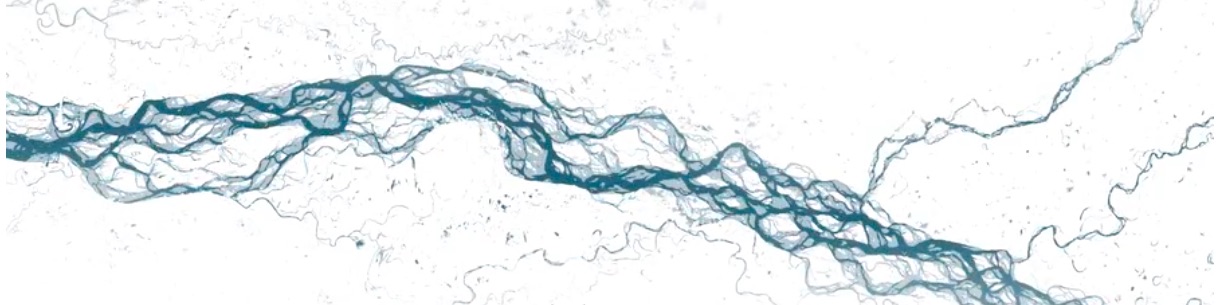
This excellent interactive story, Mapping Three Decades of Global Water Change, b

How Much Energy Does A Bicycle Produce?

We had been wondering this too, we admit:

An NPR listener (with what may be the best Twitter handle ever — Booky McReaderpants) inquired whether a home can be powered by bicycle-powered generator.

It’s an interesting issue about energy and the modern world. And the short answer comes from just running the numbers.

A typical house in the U.S. uses about 1,000 kilowatt-hours of energy in a month. So — to Booky McReaderpants’ question — could you generate that much power all by yourself on stationary bike?

No.

Nope.

Not even close. Continue reading

Sound-Recognition Software Advances

MIT-SoundRec-1_0.jpg

The researchers’ neural network was fed video from 26 terabytes of video data downloaded from the photo-sharing site Flickr. Researchers found the network can interpret natural sounds in terms of image categories. For instance, the network might determine that the sound of birdsong tends to be associated with forest scenes and pictures of trees, birds, birdhouses, and bird feeders. Image: Jose-Luis Olivares/MIT

From Larry Hardesty at the news office of the Massachusetts Institute of Technology an interesting article on machine-learning, which we thought was going to be about a new app for birders but it is a much broader finding:

Computer learns to recognize sounds by watching video

Machine-learning system doesn’t require costly hand-annotated data.

Watch Video

In recent years, computers have gotten remarkably good at recognizing speech and images: Think of the dictation software on most cellphones, or the algorithms that automatically identify people in photos posted to Facebook. Continue reading

Be The Bee

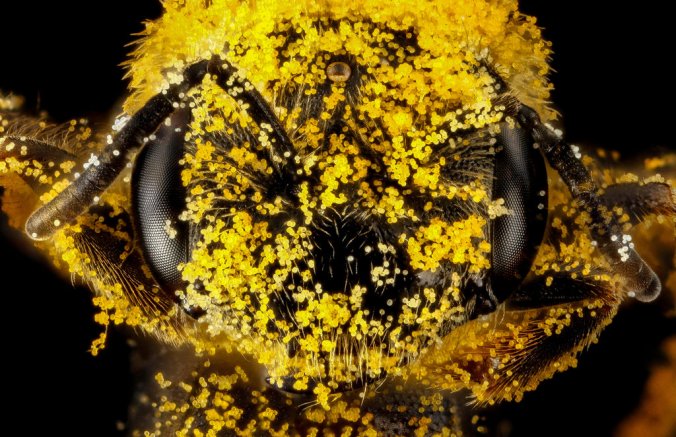
02beesproject-pollen-jumbo.jpg

SAM DROEGE/UNITED STATES GEOLOGICAL SURVEY

Science, as a section of the daily newspaper of old, was geek-out territory. In the modernizing news organization, it has every bit of that old intensity, magnified by the wonders of technology. This little item demonstrates the point:

You’re a Bee. This Is What It Feels Like.

We’re taking you on a journey to help you understand how bees, while hunting for pollen, use all of their senses — taste, touch, smell and more — to decide what to pick up and bring home.

By JOANNA KLEIN

Set your meetings, phone calls and emails aside, at least for the next several minutes. That’s because today you’re a bee.