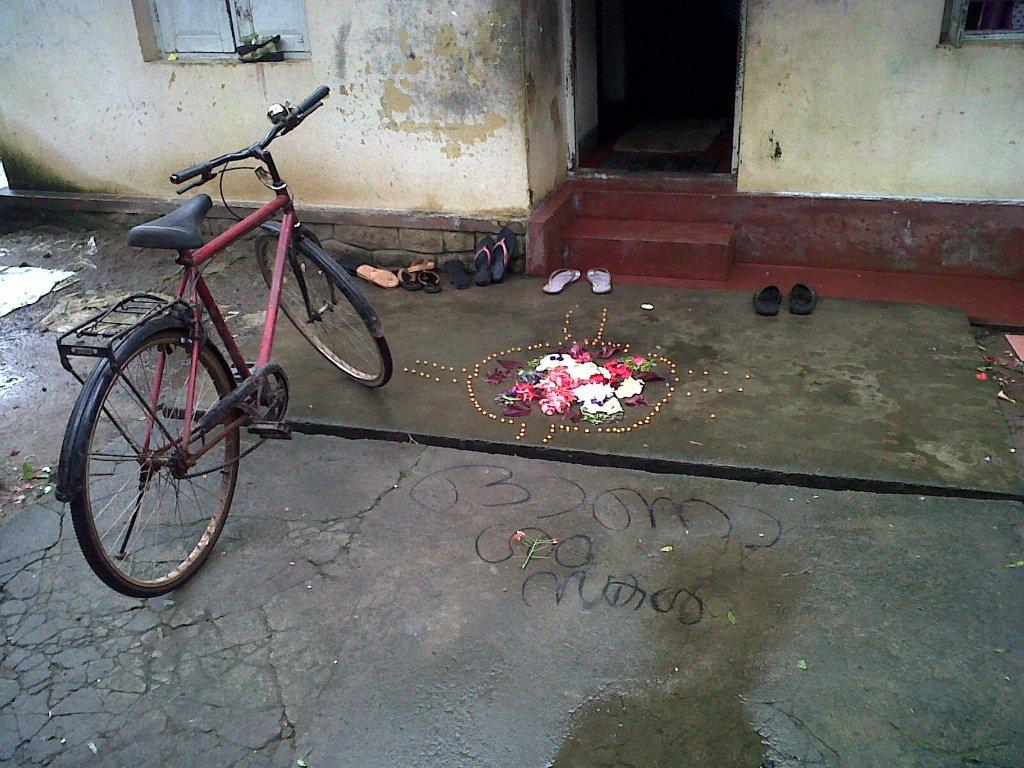
Continuing from the last post, here is a photo slide show of Onasadya in the All Spice Restaurant.
Thanksgiving
Onam Festival at Cardamom County
As Amie and other contributors mentioned in their posts, the Harvest Festival and the time of giving thanks has come to Kerala and to Cardamom County. I had the great opportunity to be on property and experience the colorful festival of Onam. Being part of both guest and staff, I could see all aspects of the event: from preparation to the final event. Onam is a ten day festival as Amie’s post explains, but the most important day of Onam is the 9th day, which is oddly called “First Onam” because that is the day that King Mahabali actually descends to Kerala. But any day of Onam seems like the Keralites’ spirits were soaring. All the staff at Cardamom County have great warm and happy smiles but during this festival season it felt like their warmth was doubled.
Thevara, So Five Minutes Ago
Thevara, Thanksgiving
Let Us Give Thanks
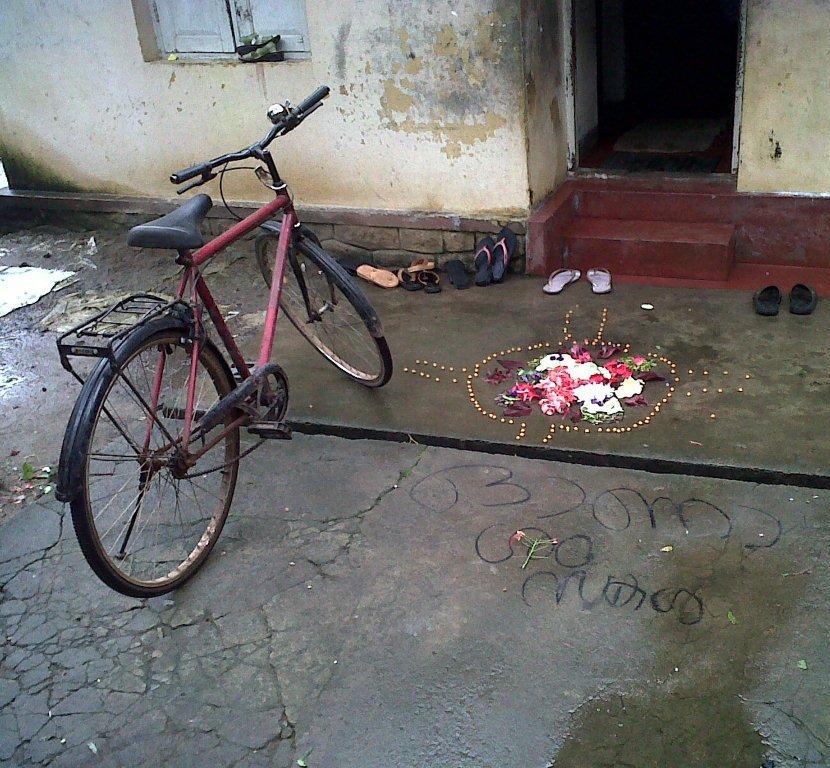
The Kerala Harvest Festival Onam transcends religion and region, making it one of the most important festivals of the state. All signs of abundance and prosperity are incorporated into the celebrations: Elaborate pookalams (mandalas made of flowers and leaves, shown below) adorn the courtyards of homes and business; and elaborate multicourse meals called Onamsadya are served on banana leaves.
The festival celebrates a story, not unlike the Greek myth of Persephone when she was kidnapped to the underworld but allowed to return once a year for the spirit of rebirth in spring. The Kerala story is about a beloved king during a time of great prosperity who sacrificed himself, saving the earth from an avatar of Vishnu. For his devotion he is granted the boon of being able to return to his country once a year to visit his people, who prepare for his coming with an abundant harvest to assure their King that the land still flows with milk and honey. Continue reading
The Gadus Commons
William Bradford, governor of Plymouth Colony in Massachusetts for much of the first half of the 1600s, from whom North Americans have inherited the notion of communal Thanksgiving (and incidentally my grandfather 26 generations removed) noted:
The major part [of the Pilgrims] inclined to go to Plymouth chiefly for the hope of present profit to be made by the fish that was found in that country (Cod; 67).
Fast forward a few centuries. Bottom trawling, longlining, and gillnetting during the 19th and 20th Centuries were probably the most responsible for cod’s population decline in North America. Faced with the same great abundance that had helped bring settlers to Cape Cod, huge fishing companies acted rationally to maximize their own gain, taking advantage of the bountiful commons, and this led to ruin. With the near disappearance of cod came the absence of herring, capelin, humpback whales, and squid. Continue reading
Going Social
Notice the new tab to the right inviting you to engage with our Facebook page. In the spirit of community, collaboration & conservation, we are asking you to get social and share ideas there. As an informal platform, we are connecting people from around the globe who are interested or invested in “getting in touch with the luxury that nature offers,” using any interpretation of the phrase that fits the circumstance.
Have something to say about conservation, social enterprise, sustainable tourism? Have an interesting travel story in a destination where these things may be relevant, or a first-hand experience with RAXA Collective? Photos you’d like to share? Why not share them with us and others by posting on our wall?
This is helping our momentum in making a difference… with your stories and consideration for the people and places who make travel worthwhile. Join in!
Ezra, Zephaniah, Amos, Edward & James
The discussion about whether or not to work under the Raxa Collective name had already been a couple hundred hours long as of early March, 2011. Emotions were at full tilt on this and that consideration when a team showed up and got us to the tipping point. Lindsay and Nicole were perfectly balanced, for these purposes, between interested and disinterested. Not to mention interesting. And sometimes very interesting.
Credit where credit is due. The fellow who founded Cornell University, from which (by some measure) we have had the most inputs for this venture, and the fellow who is credited with the decision by which Amherst College came to exist, can take a momentary bow to the fellows who represent the namesake of the business school at Dartmouth College, the funding of that business school, and (for our purposes here) most importantly the fellow who funded the initiative that brought Lindsay and Nicole to work with us and convince us of our convictions.
An Expedition Worth Tracking
Take a look at Paola Pedraza’s post today titled Discovery and Conservation of Plants. The photos are beautiful but the concept is even better. It makes the New York Times worth subscribing to. Thank you Bill Keller!
 Organikos