The Incas and their Hand-built Roads

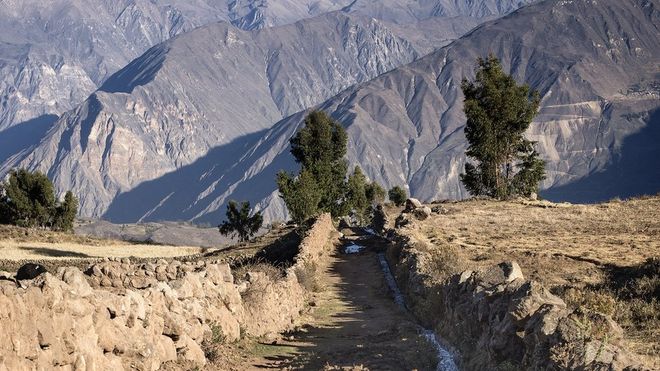
An exhibition at the National Museum of the American Indian concludes that the ancient Incas were great environmentalists. PHOTO: BBC

An exhibition at the National Museum of the American Indian concludes that the ancient Incas were great environmentalists. PHOTO: BBC

The Inca Road is one of the most extraordinary feats of engineering in the world. By the 16th Century it had helped transform a tiny kingdom into the largest empire in the Western hemisphere. And to the envy of modern engineers, substantial parts of the 24,000-mile (39,000-km) network survive today, linking hundreds of communities throughout Argentina, Bolivia, Chile, Colombia, Ecuador and Peru. Incredibly, it was constructed entirely by hand, without iron or wheeled transportation. A new exhibit at the Smithsonian Institution in Washington DC shows why the Incan kingdom built a lasting infrastructure.

Continue reading

China, What Will it Be?

China recently announced plans to build a 5,300 km railway linking the Atlantic with the Pacific, cutting through the heart of the Amazon jungle in Brazil and Peru. PHOTO: Andrew Snyder

Rail or road – what is the best mode of transport for free flow of goods from Brazil to China? PHOTO: Andrew Snyder

China recently announced plans to build a 5,300 km railway linking the Atlantic with the Pacific, cutting through the heart of the Amazon jungle in Brazil and Peru. Environmental groups are concerned that the railway will threaten sensitive ecosystems, wildlife and indigenous peoples. Indeed on the face of it, this would be a disaster for conservation in the most biologically rich place on Earth. But is a train line in fact the lesser of two evils?

Roads bring access to previously remote areas – and consequently bring down a cascade of problems on tropical forests. Logging, mining, and hunting result in the destruction of forests, all paving the way for their complete conversion to agriculture. Indeed, in the Amazon 95% of deforestation occurs within 5km of a road. Train lines on the other hand are usually state-controlled and more easily regulated. The proposed line will cost an estimated US$10 billion to build and will reduce the cost of shipping oil, iron ore, soya, beef and other commodities from Brazil and Peru to Asian markets.

Continue reading

Putting the Horse Before the Cart

For better or worse – the Indian city of Mumbai is preparing to bid goodbye to one of its icons. The city’s ornate horse-drawn carriages are nearing the end of the road after a court in the Indian city ruled them illegal. The silver-colored Victorias – styled on open carriages used during Queen Victoria’s reign – have been plying Mumbai’s streets since British colonial times, and for years have been a tourist attraction. But recently, the Bombay High Court agreed with animal welfare groups, who had petitioned for a ban citing poor treatment of the horses, that the practice was cruel.

Continue reading

Wind Powered Race Goes To Team Elsie Piddock

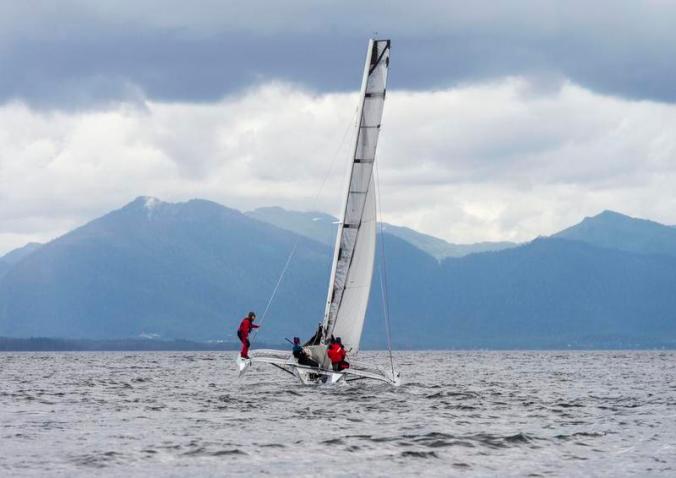
Team Elsie Piddock sails up Nichols Passage south of Ketchikan on the way to winning the Race to Alaska. TAYLOR BALKOM / KETCHIKAN DAILY NEWS

Team Elsie Piddock sails up Nichols Passage south of Ketchikan on the way to winning the Race to Alaska. TAYLOR BALKOM / KETCHIKAN DAILY NEWS

Fishermen gonna fish, sometimes pushed to do remarkable things under extreme challenge. Sailors gonna sail, sometimes pushed to do remarkable things under extreme challenge. We thank Seattle radio station KUOW for sharing the news of the conclusion of this race that has had our attention for the last week:

Screen Shot 2015-06-15 at 4.36.40 AM

Ross Reynolds talks to Jake Beattie the director of the Northwest Maritime Center in Port Townsend and the organizer of the first ever Race to Alaska contest about how Team Elsie Piddock managed to defy expectations and win the race in one week and a day.

See more at the Ketchikan Daily News.

When Ideas Take Flight

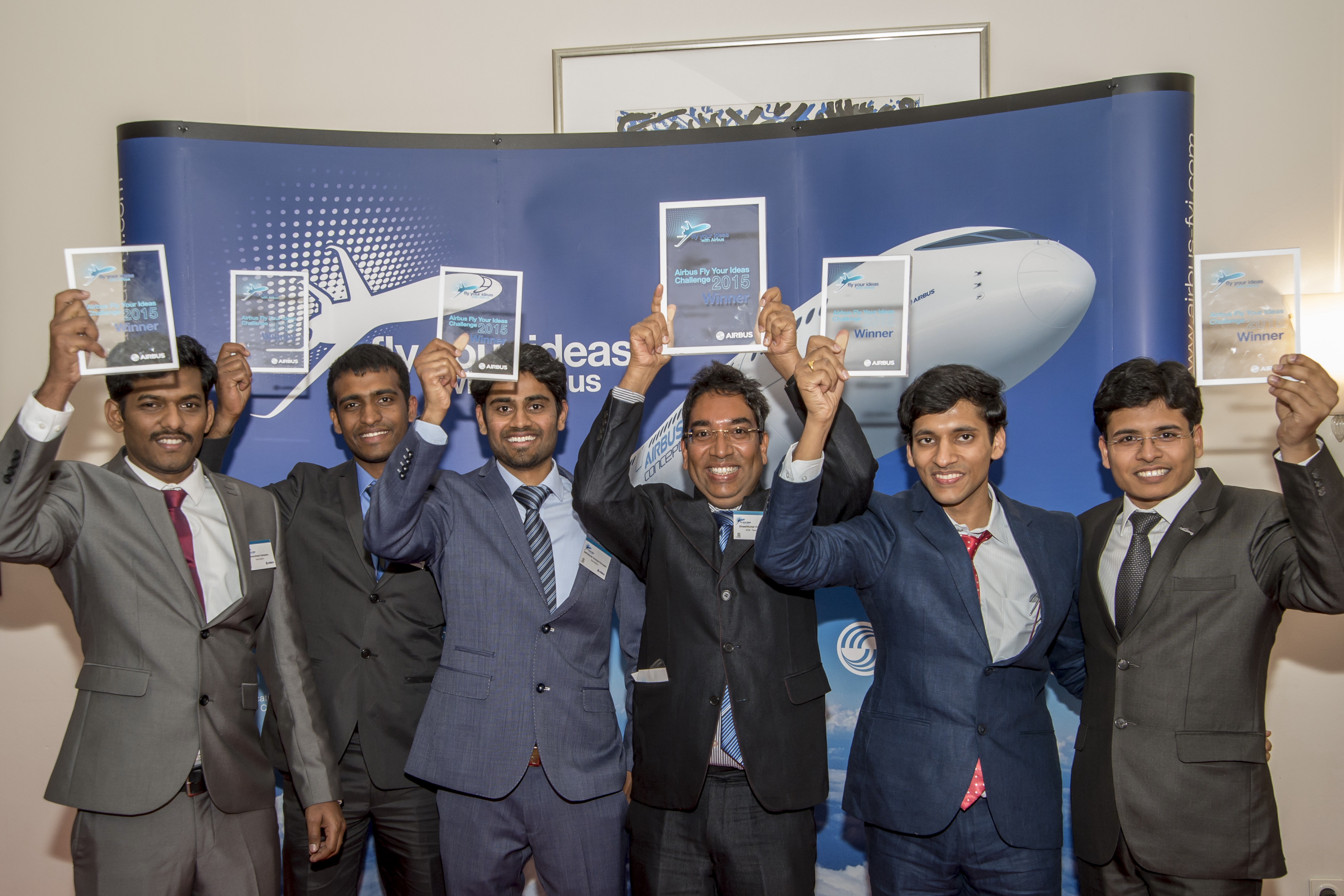
A team of Indian students won the fourth edition of the Airbus Fly Your Ideas global competition organised in partnership with UNESCO to encourage innovators . PHOTO: Airbus

A team of Indian students won the fourth edition of the Airbus Fly Your Ideas global competition organised in partnership with UNESCO to encourage innovators . PHOTO: Airbus

A few weeks ago, Hamburg hosted the fourth edition of the Airbus Fly Your Ideas competition. The city is where the most popular single isle A320 family aircraft are finalised, where A380 cabin interiors are fitted and where the revolutionary A350XWB sections are manufactured. Organised in partnership with UNESCO to encourage the next generation of innovators, the competition saw 518 multi-disciplinary ideas, representing 3,700 students from over 100 countries – all to better the future of flight. And a team of four Indian students and their “good vibes” took home the top prize money of €30,000 (£21,500). And here’s the best bit: the winners physically met only on the day of the finals.

Continue reading

A Ticket on the Eco-friendly Supersonic, please

Supersonic flight is one of the four speeds of flight. speeds up to five times faster than the speed of sound. PHOTO: NASA

Supersonic flight is one of the four speeds of flight. It has speeds up to five times faster than the speed of sound. PHOTO: NASA

Imagine flying at more than twice the speed of sound. At that speed, a London to New York flight lasts under 3.5 hours. And the last time that happened was in 2003, just before the supersonic Concorde ceased operating. More than a decade later, there are conversations on whether the supersonic culture can be revived. There are arguments for both sides and the latest is news about the talent at NASA working on making commercial supersonic flight eco-friendly.

Unless you have access to a F-22 fighter jet, you probably haven’t been able to fly faster than the speed of sound since the last Concorde flight in 2003. NASA wants to change this. The agency said that it is spending over $6 million to fund research into cheaper and greener supersonic travel. This isn’t NASA’s first attempt to bring back supersonic travel. It has been (literally) pushing the boundaries of flight for years. NASA’s predecessor was involved in building the first supersonic plane in 1946, and the agency has been working on concepts since 2006 with companies like Lockheed-Martin and Boeing that may one day lead to a new generation of planes that get you places very quickly.

Continue reading

Humans At Their Best, In The Water, In The Extreme

Team Blackfish set sail Thursday morning in what organizers called the first human-powered boat race to Alaska. Credit Evan McGlinn for The New York Times

Team Blackfish set sail Thursday morning in what organizers called the first human-powered boat race to Alaska. Credit Evan McGlinn for The New York Times

Too much dullness and dimwittedness recently. We need a break from that. We like the optimism of Team Blackfish and their fellow sailors:

A Race to Alaska: No Motors, but No Limits on Imagination

PORT TOWNSEND, Wash. — Scott Veirs and Thomas Nielsen have a little wooden plank mounted on their boat, just in front of the seat where they plan to take turns, for days on end, pedaling a bike-chain-driven propeller shaft all the way to Alaska.

“If in doubt,” the sign reads, “try some optimism.”

That could be the motto for the entire field of competitors in what is billed as the first race of its kind — human powered to Alaska — which set off Thursday morning from this city on the shores of Puget Sound, heading north across open water. The 54 entrants in the Race to Alaska— solo efforts and teams, novices and old-salt veterans — were fueled by a mix of determination, ingenuity and upward of 6,000 calories a day, but no motors. Continue reading

The Future of Parking is Here!

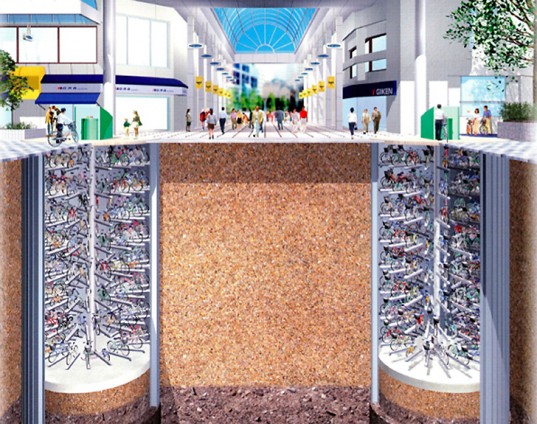
Developed by construction company Giken, the robotic system stores the cycles in a 11-meter deep well PHOTO: GIKEN LTD

Developed by construction company Giken, the robotic system stores the cycles in a 11-meter deep well PHOTO: GIKEN LTD

If there is one problem that puts developed and developing countries on the same footing, it is parking space. And Japan seems to have found a way around it. At least for bicycles. Considering that they are carbon neutral and land value is high, hindering the commissioning of exclusive bicycle roads and parking lots, this idea could be the future. Eco-cycle is an anti-seismic mechanical underground parking lot for cycles, designed along the concept of “culture above ground, function underground”. So when in Japan, particularly around Kounanhoshi Park, head to this bicycle elevator. Wait as the electronic card reader scans your membership (fee around $15 a month) code, remove pets and all valuables from the cycle, and stand back as your wheels make an eight-second journey to its slot. On your return, scan the code and your ride reaches you in a jiffy. More pedal power to that someone who really gave parking some extra thought!

Detailed photos (and some Japanese) here.

Taxi! (Green) Taxi!

Taxis have grabbed headlines in recent times, globally. The world is yet to recover from the news of losing Nobel laureate and Princeton University mathematician John F Nash Jr. and wife Alicia  – inspiration behind the film A Beautiful Mind – in a New Jersey car crash on Saturday. Soaring summer temperatures in the Indian subcontinent and resultant heat strokes are forcing cabbies to stay off roads in the afternoons. Then, there’s the heartwarming story of Dhananjay Chakraborty from Kolkata, whose taxi is green in every sense. Continue reading

The Whole Truth

The last time potholes really had our attention was almost three years ago, when Russian ad agency Voskhod painted local politicians’ faces around garish potholes in the town of Yekaterinburg. Over the years and particularly during our stay in India, bumpy rides have come to be a way of life. There’s the initial irritation over a wheel jumping into a hole, some amount of cursing the government for not getting around to fixing them, and then resignation – this has almost come to be a ritual. But when we happened to chance upon Chicago-based Jim Bachor’s ‘art-titude’ towards potholes, it was pleasant to see how the issue had become apolitical in that it did not scream for attention from the government. Instead, the passive activism appears more of a manifestation of citizen ownership. And, a good sense of art and humor.

Continue reading

Ferry Around

DSC_2039

The Cochin harbor lights caught on the move from the ferry

“Airrrrr, waterrrrrr and laaaaaand” – my first grade Geography teacher chanted the three main modes of transport until we pony-tailed girls were sure to never forget them. While travel by land was a plain daily affair, air transport completed family vacations. It was the much-awaited – but timed – visits to the grandparents, their home on an island in the backwaters, that sparked my love for the ferry.

As with love of all kinds and sizes, it began with the unknown. “How much water is there in the river,” “Will we die if the boat breaks”, “How works the ferry” – curiosity trumped grammar in my little world. There were some answers but the fascination stayed because how could wooden planks and boards placed across two large canoes carry people and vehicles! So every time the car reached the water’s edge, out jumped a little girl with 5 rs ($0.08), stood on tiptoes to reach the greasy ticket counter and waited until the father maneuvered the car to climb onto a ladder placed between the ferry platform and the edge of the boat (craving to do justice to this bit but Physics is not my cup of my tea). If I promised to not go close to the railings, I was allowed to stand out in the open, letting the river breeze ruffle my curls and rouse up conversations I’d drown my grandparents in.

Yesterday, the ferry was about a little girl reaching her elders on an island where once there was no bridge. Today, two decades on, the ferry is the bridge that connects the old and the new, brings together kindred and the wayfarers, and tells her stories of the land and its people. Continue reading

Munnar in 24 hours

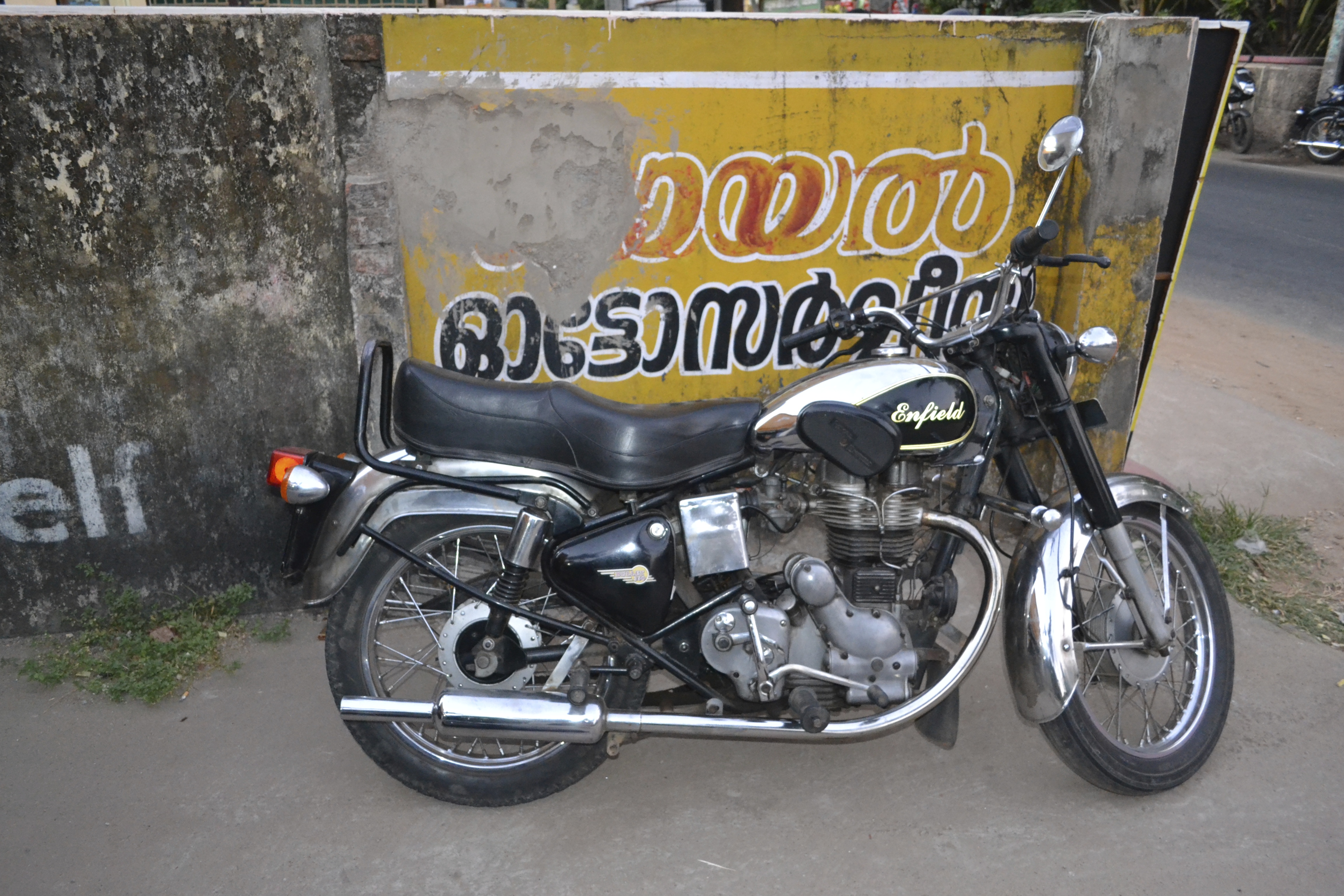
The classic 350cc Royal Enfield or “Bullet”

When I arrived in Kerala around 6 weeks ago it would never have occurred to me to drive here in India. Based on my first impression of driving I was overwhelmed just sitting in the passenger seat. But between making new friends and my thirst for experiencing more of this beautiful state, it’s amazing what a mere 45 days can do. But a journey is multi-faceted; it’s not only about where one is going, but how one gets there, and everything in between.

I arrived to Fort Kochi in the late afternoon in search of a Royal Enfield, a classic Indian-made motorcycle that I’ve had a crush on for a while now. The older models are “backwards” to the typical bike, with the gear foot-lever on the right side and the break lever on the left. I was determined to find the newer model where the arrangement is “normal”. After scouring the city and asking every bike rental and all the contacts available to me, it was apparent that there was no chance of finding what I was looking for. With that news I made the decision to go with what was available rather than what I wanted, (a perfect example of the flexibility that India demands) and I paid the Rs. 800, roughly $13 for the rental. I couldn’t believe what I’d just done: My first time driving in India and I’d rented a totally unfamiliar bike from an unfamiliar source with a 6 hour drive ahead of me, at night. My nerves were tingling at the realization!

Luckily, Dilshad, a friend from Marari Pearl who’d been planning everything for us, was with me. We started the drive through Cochin rush hour traffic. Slowly, I began to stretch my motorcycle-memory-muscles, and gradually the drive became more pleasurable. Soon enough, I was flirting with my 350cc beauty and she was smiling back.

Continue reading

The Backwaters of Kerala, India

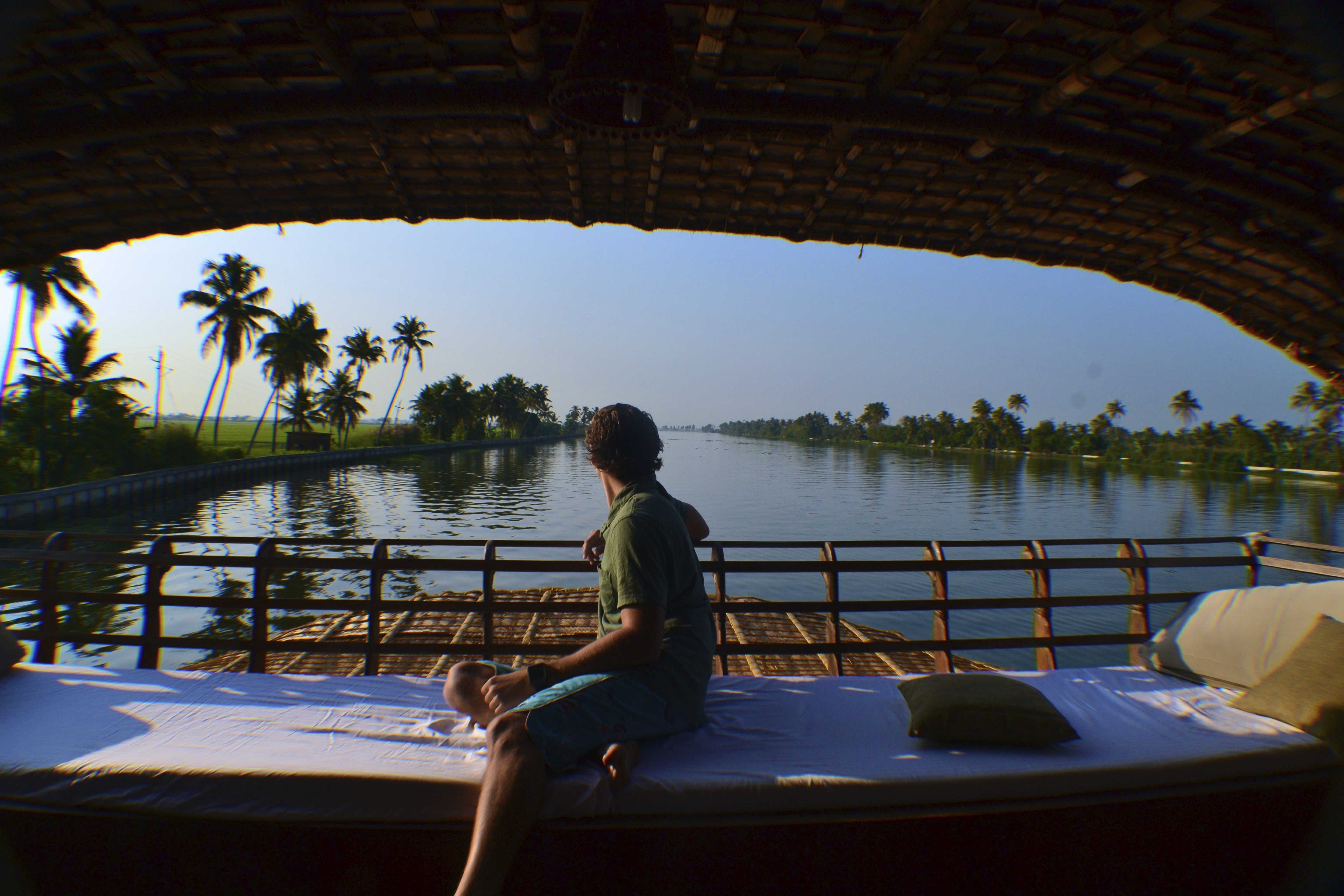
Upstairs deck/lounge

Upstairs deck/lounge

Our group of four was greeted with “tender coconuts” to drink while we got settled into the boat and into our bedrooms. Our houseboat was over 100ft long with three bedrooms, a dining room, an upstairs lounge deck and all the amenities of a hotel (including AC), I was in awe. The outside was covered in a coconut palm woven shell tied together by coconut husk rope. Truly a product of “Kerala”, meaning “Land of Coconuts”. Continue reading

Neighborhood Electric Vehicles

Ecocruise Cruser Sport (Ecocruise Vehicles)

Ecocruise Cruser Sport (Ecocruise Vehicles)

Thanks to the BBC for this new entrant into our vocabulary:

Ecocruise Cruser Sport is the golf cart, accelerated

…Depending on the region in which they are registered, NEVs are limited by law (and usually, by engine output) to speeds below 25mph or 35mph. The best resemble earnest attempts at space capsules, the worst evoke street-legal golf carts (and often because they are, quite simply, street-legal golf carts).
Continue reading

Advances In Solar-Based Flight

We do not expect this to mean we will board such a plane anytime soon, but anyway thanks to the New York Times for this news about advances in in our ability to harness the sun in ever-better ways:

SOLAR-01-thumbStandardSwiss Pilots to Fly Solar Plane Around World

The trip, which will begin and end in Abu Dhabi, will involve about 25 days of flying over four to five months, with stops in Asia, the United States and Southern Europe or North Africa.