Library Law’s Legacy

wit-czech-master768

The National Library of the Czech Republic in Prague. Credit Pavel Horejsi for The New York Times

If you search this site for topics written about frequently, library might be among the top 10 topics, for reasons that many of those earlier posts would make clear. Today, a lovely short item from Eastern Europe, that makes us wonder:

Why Libraries Are Everywhere in the Czech Republic

By

PRAGUE — In the age of Amazon and the internet, the idea of going to a public library to borrow a book may seem ever more quaint and old-fashioned in many parts of the world, but one country, at least, is clinging to it tenaciously: the Czech Republic. Continue reading

A Leap into the Sun


20160717_085340_zpsehmrqyi6

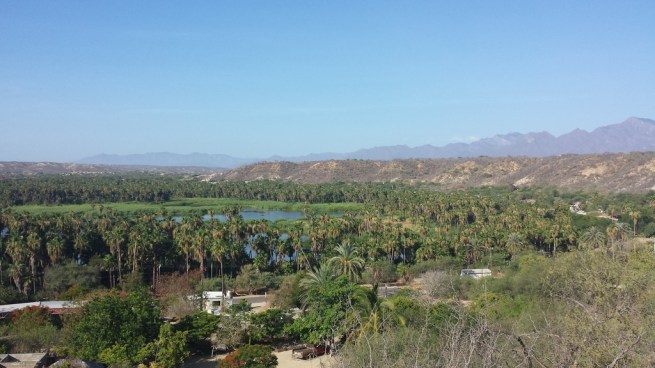
Among the foothills of the Sierra de la Laguna mountain range in Baja California Sur lies a geological marvel of isolated natural hot springs, fresh lakes, and rocky canyons, so we dedicated a whole day to discover a few of these natural wonders, protected within the Biosphere Reserve of Sierra de la Laguna. After almost two weeks of gazing upon a landscape of brown shrubs and dusty arroyos (not counting the great gardens here at Villa del Faro), the sight of a freshwater pond surrounded by palm trees and green undergrowth near the town of Santiago at the base of the sierra was like seeing a dear friend from childhood once again. I could not stop smiling and felt revitalized at the sight. Continue reading

The Sense Of A Place

proulx-desk

What Annie Proulx says about places she has lived–through her fiction especially but also in this interview below–rings a bell for us, considering the number of places we have chosen to live to do what we do. What the interview echoes specifically for me is the inherent improbability of accomplishing one of our key objectives: we want travelers to become as attached to places as we are, so that they will care about the conservation mission of our initiatives in each location as much as we do. It occurs to me that our guests spend about as much time with us in any given location as a reader spends on any given book by Proulx; also, books and our locations share in common the fact that they can be revisited an indefinite number of times.

That said, we want our guests to care more about these locations than even the most devoted reader cares about a Proulx character; not because we think less of her characters but because our conservation mission is about places in need of constant support. Improbability in this context refers to the question: how can our guests become intensely attached–as happens when a reader is gripped by a compelling character in a deeply human situation in an exquisitely described location–in a limited amount of time and continue to care intensely after they depart? That is our challenge, and we are constantly finding new ways of answering that question.

Another echo from reading what Annie Proulx says about the places she has lived, about belonging, feels strongly relevant. If we are a fraction as good at what we do as she is at what she does, belonging becomes irrelevant. What matters is how much sense we make of the place, and how much sensibility we harness in showcasing it to our guests. If you have read any of her books, you know how evocative place can be–like an additional character–and if that captures your attention you should read the interview that follows the introductory section excerpted below.

HOW THE WRITER RESEARCHES:
ANNIE PROULX

JOHN FREEMAN INTERVIEWS THE PULITZER PRIZE WINNER IN HER SNOQUALMIE VALLEY HOME

Annie Proulx is 80 years old and still not sure where she belongs. Standing in the atrium of her home in the Snoqualmie Valley, the Pulitzer Prize-winning novelist eyes a photograph of the cottage she once occupied in Newfoundland, the setting of her 1993 novel, The Shipping News. “I fell in love with that landscape,” Proulx says, speaking in the tone of a woman describing an ex-lover. Continue reading

What Would I Read At Villa del Faro?

Proust

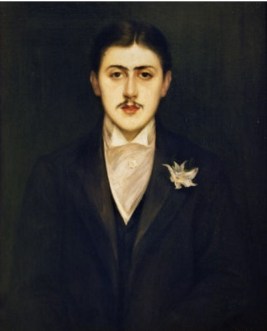
As a teen-ager, Marcel Proust filled out a questionnaire as part of a parlor game. His responses have experienced a startling afterlife. PHOTOGRAPH BY IMAGNO / GETTY

Seth’s post, followed by Jocelyn’s post, both reach me just after reading this fascinating short history on the so-called Proust questionnaire, which I first encountered in the back pages of Vanity Fair magazine when I had nothing better to do. I am reminded of two things: guilty pleasure reading, and actual reading of something other than news, news analysis, or long-form non-fiction–which are a mainstay of my contributions on this site.

I am reminded of a third thing: Amie’s marathon reading of Proust, and the view of this 3-volume set around our home for a long stretch of time. Those books that she would lug around were the sign of an unreformed, unrepentant student of literature, whose career started as a book editor in New York City, when she had nothing better to do.

41vfEDKvg7L._SY344_BO1,204,203,200_

I say that mainly to contrast what I did with my guilty pleasure reading time back then, and what she did with hers. I say that because in more recent times, especially the past six years in India, she has had something much better to do, and plenty of it to do, and I think we are all better for that. Which has me thinking: if I had the time, what would I read if I could just leave it all behind right now and land at Villa del Faro with nothing but books (and at least a couple changes of clothes, of course)? Would I find that Proust set Amie has in storage? As an amateur nostalgist with limited writing talent, I might choose those volumes as a self-help guide.

9780394711843I write on this site partly to share about events, people and places that I believe are worthy of others’ attention; but also for the sake of further reflection and sense-making of those. Patterns repeat; some people and places important once come back to be important again.  For example, nearly five years ago I was on my third of five extended periods of work in Baja California Sur.  It was on an earlier visit in 2008 that I had met Andy Murphy, then with WWF, with whom I became friends and then eventually more with our project in Ghana. Continue reading

The Melody of Villa del Faro

20160707_160842_zpsqsalmexsMy first sightings of southern Baja California from the finger-smudged airplane window surprised me. I expected to gaze upon a flat peninsula with dirt roads connecting a sprinkling of homes; my expectation turned out to be half correct (and I dare readers to guess which part before peeking to the next line). Continue reading

Villa del Faro’s Layout

The hotel entrance

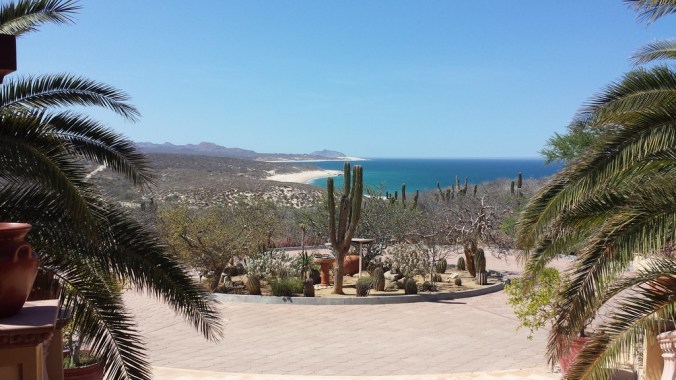
There are just over a dozen buildings on property, and most of them are for rent by guests wanting to get away from bustling cities or hectic work environments and come down to Baja for some relaxation and the sound of wind and waves.

Villa del Faro’s website references the architecture and interior design as a blend of Mexican hacienda and Italianate villa, which I think perfectly reflects the feel of the structures and decorations experienced as one wanders through the gardens and arches.

Continue reading

National Geographic Travel Photography

4010

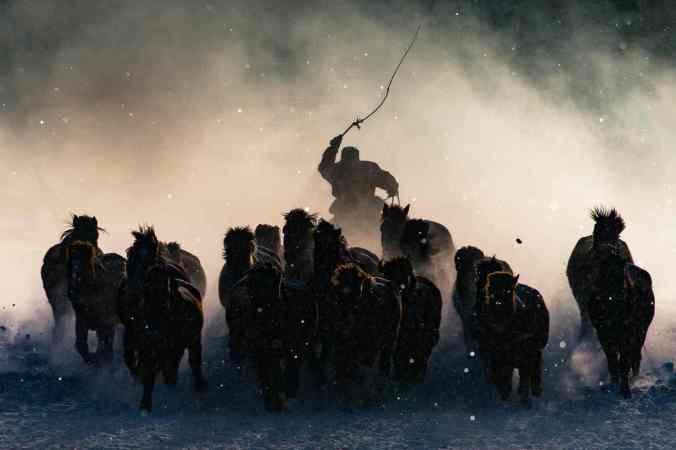
Grand prize winner: Winter Horseman. The Winter in Inner Mongolia is very unforgiving. At a freezing temperature of -20F and lower with constant breeze of snow from all directions, it was pretty hard to convince myself to get out of the car and take photos – not until I saw horsemen showing off their skills in commanding the steed from a distance, I quickly grabbed my telephoto lens and captured the moment when one of the horseman charged out from morning mist. Photograph: Anthony Lau/National Geographic Travel Photographer of the Year Contest

Have a look over at the source:

Winners Announced

The National Geographic Travel Photographer of the Year has been named!

Explore the prize-winning photos and download stunning wallpapers. Share your favorite pictures with your friends and see the judges top picks. Continue reading

If You Happen To Be In ’s-Hertogenbosch, the Netherlands


Literally, “The Duke’s Forest”, ‘s-Hertogenbosch is a fortified historic city in the North Brabant Province of the Netherlands. Aside from being a lovely area with a beautiful church, the city is best known for it’s most famous Medieval citizen, the religious artist Hieronymus Bosch, known for his bizarre paintings of demons and human-animal-machine hybrids meant to invoke the “evil of mankind”.

While his apocalyptic,  fantastical work may have rather dour origins, it’s gone on to inspire the amazing exuberance of the the Bosch Parade since 2010.

A wondrous armada of vessels and objects inspired by the work and ideas of Medieval painter Jheronimus Bosch. Artists from all disciplines (art, theatre, dance, music, architecture) collaborate with groups of enthusiastic amateurs and volunteers to create this artistic, water-borne parade. This spawns not only a creative floating parade by and for the city, but also an extensive creativity network throughout the city. Continue reading

If You Happen To Be In London

p03xgwg5

Behind closed doors The 2016 Open Gardens Weekend marks the first time the Master’s Garden is accessible to the public. For gardeners, one of the interesting aspects of the space is the difficulty of the soil – which, being situated on a raised plateau, is so free-draining that it is very dry. But, said gardener Bob McMeekin, the garden also comes with plus points: “Central London has its own micro-climate, and the garden is protected from pollution by the surrounding buildings.” (Credit: Olivia Howitt)

Please Do Not Close The Door, Iceland

lead_large (2)

The Northern Lights above the ash plume of Iceland’s Eyjafjallajokull volcano Lucas Jackson / Reuters

We have had a thing for Iceland for a few years now, mainly due to Seth’s honors thesis. But none of us currently contributing to this blog have actually been there, yet. There is a plan in the air, very vaguely, for several of us to meet up there one day soon. Thanks to writers such as the Atlantic‘s Feargus O’Sullivan, and our own ongoing discussion on travel conundrums, we are not rushing into the plan, but contemplating it in back burner mode. We know we cannot wait forever:

Iceland vs. Tourists

It’s not easy fitting 1.2 million annual visitors onto an island of 330,000 residents.

Southward, Ho!

160523_r28182-290x149-1462985555 (1)

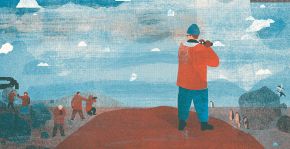
I had never before had the experience of beholding scenic beauty so dazzling that I couldn’t process it, couldn’t get it to register as something real. ILLUSTRATION BY BLEXBOLEX

We are happy any time this novelist takes time from his main craft to devote time to what seems to be his main personal passion, which might be identified as birding, or else more broadly speaking the environment in which birds thrive (or not). From this week’s New Yorker, another journey far away, southward, by Jonathan Franzen with an eye to environmentalist perspective:

The End of the End of the World

An uncle’s legacy and a journey to Antarctica.

BY

Two years ago, a lawyer in Indiana sent me a check for seventy-eight thousand dollars. The money was from my uncle Walt, who had died six months earlier. I hadn’t been expecting any money from Walt, still less counting on it. So I thought I should earmark my inheritance for something special, to honor Walt’s memory.

It happened that my longtime girlfriend, a native Californian, had promised to join me on a big vacation. She’d been feeling grateful to me for understanding why she had to return full time to Santa Cruz and look after her mother, who was ninety-four and losing her short-term memory. She’d said to me, impulsively, “I will take a trip with you anywhere in the world you’ve always wanted to go.” To this I’d replied, for reasons I’m at a loss to reconstruct, “Antarctica?” Her eyes widened in a way that I should have paid closer attention to. But a promise was a promise. Continue reading

If You Happen To Be In Japan

27tb-fireflysquid1-superJumbo

A firefly squid in Japan. The best time to see them is between March and June. Credit Michael Ready/Visuals Unlimited, Inc., via Getty Images

It is Science section day in the New York Times, and this story doubles as a travel recommendation:

Hop on a fishing boat in Toyama Bay, Japan, in the wee hours of the morning and you may feel as if you’re in a spaceship, navigating through the stars. That’s because each year, between March and June, millions of firefly squid transform the water into a galactic landscape. Lucky for you, all you need is a reservation to come aboard, your eyes and perhaps a really good camera.

The firefly squid may bring to mind a lightning bug. But the cephalopod is three inches long and flies through the sea, not the sky. And instead of a single light on its belly, it has five around each eye, three each on the tips of two of its arms and even more covering its body. Continue reading

Respecting, And Loving, Wild Places

Screen Shot 2016-04-16 at 6.26.00 AM

Click above to watch the video an click here for the written story:

The wild, romantic side of Britain

The Lake District is now considered a beautiful part of the country – but it was once an unloved wilderness. Alastair Sooke describes the moment this changed. Continue reading

Traveling by Water

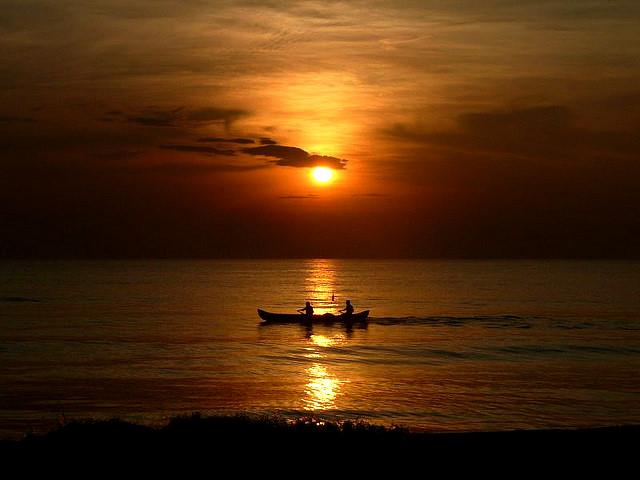
Many are the memories created on the banks of rivers, in the middle of the sea, and along ocean tides. PHOTO: Abrachan Pudussery

Many are the memories created on the banks of rivers, in the middle of the sea, and along ocean tides. PHOTO: Abrachan Pudussery

At Xandari Riverscapes, water is everything. Sharing the Kerala backwaters with all those who choose to travel with us has always been about sharing stories of the waters. Of the paddy fields that hug the river banks, canoes that transport groceries and construction material to the hinterlands, women and children fishing and splashing around near their waterfront homes, fishing boats, and more. And so this soulful piece on water’s incredible power to flow by memories resonates with us all through:

Water is great. We tune ourselves to it, to its murmured song of ebb and flow, of wave and ripple, in seas, rivers, streams, lakes, wetlands, ponds, snows. We drink it, we bathe in it, we stare at dark clouds praying for their sudden moment of release of it. “Take me somewhere magical,” my favorite cousin once said. So I did, to sail the sea. By the third day our ship was completely out of sight of land, nothing but water curving with the horizon.

“Oh,” she said. “Oh. That’s exactly what I needed.”

Below us, the swells rolled, allowing us to dance with them until our very steps were full of the lift of waves. In our own small way, our steps lifting with the waves, we were tuning the ocean as we sailed—and it, in turn, was tuning us.

Continue reading

You Are Here

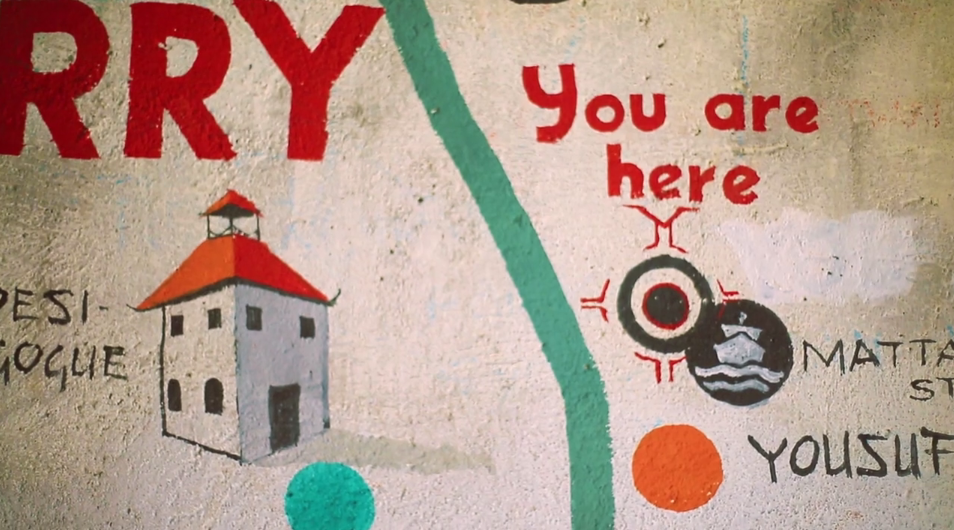
You Are Here.

Three small words found on map boards from metros to malls around the world, usually accompanied by a red dot. Existential words to be sure. Words whose underlying message begs us to live with intention.

The RAXA Collective team crafted the Xandari Harbour walking map with the same deliberateness.

Come explore with us!

Step out from Xandari Harbour’s red door. Go right. Go left. You can’t go wrong!


click below to view the map!

Continue reading

The Master of Filipino Tattoo Art


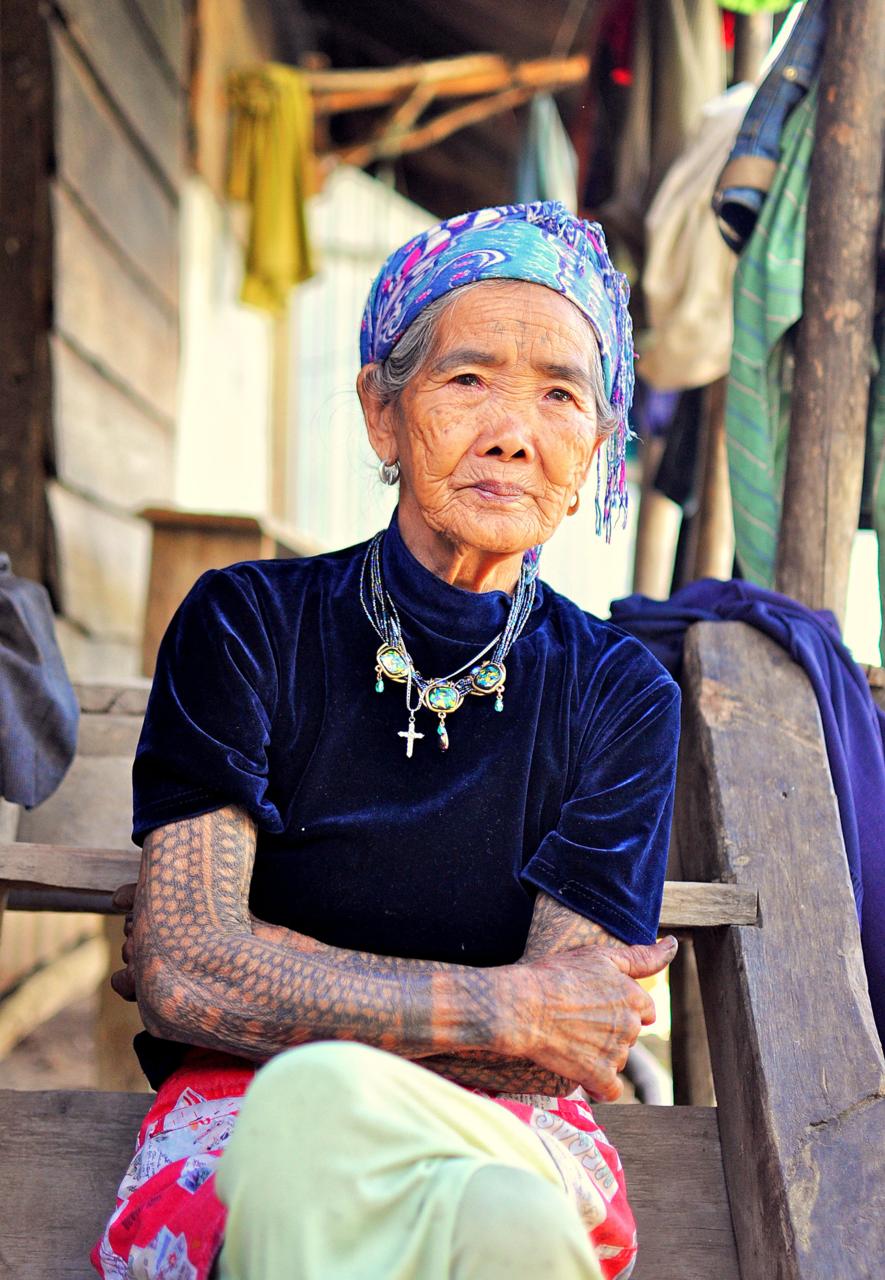
A dying Filipino tattoo tradition is being revived – and forever changed – by the international travellers seeking to get inked by its last tribal artist, 97-year old Apo Whang-Od. (Credit: Travel Trilogy)

A dying Filipino tattoo tradition is being revived – and forever changed – by the international travellers seeking to get inked by its last tribal artist, 97-year old Apo Whang-Od. (Credit: Travel Trilogy)

Winging it on a cliche, we’ll say tattoos are forever. And in the far flung, rustic town of Kalinga,  Apo Whang-Od prays it continues to be so. As the last tattoo artist in the Kalinga region, she carries forth the 1,000-year tradition of batok. And the pressure to see to it that she bequeaths the legacy to a worthy successor.

Every Kalinga village used to have a mambabatok (a master tattooist) to honour and usher in life’s milestones. When women would become eligible for marriage, they would adorn their bodies with tattoos to attract suitors. When headhunters prepared for battle, an inked centipede would be their talisman, or when they returned with a kill, an eagle would commemorate their victory. “Tattoos are one of our greatest treasures,” Whang-Od said. “Unlike material things, no one can take them away from us when we die.”

Continue reading

Walking In on the Sari

Walk. That’s my one-word gospel for all who will listen in on the best way to discover. Meander. Be curious, the good kind. Because stories wait around corners, discoveries often plonk themselves on one-way streets. And some are found in messy backrooms of squeaky clean shops lined with mannequins and smiles. Like this woven tale of the people, history, and fabric that go into the making of the Indian drape. There’s more than just five yards to the sari, trust me.

Continue reading

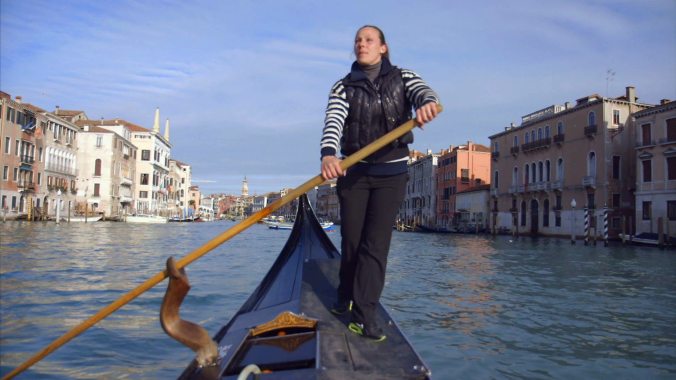
Venice’s First and Only Gondoliera

Venice

In 2009, 23-year-old Giorgia Boscolo overcame one of Italy’s last all-male bastions (for 900 years) to become a certified gondolier. PHOTO: BBC

Travel empowers. Not just the map-toting, lens-faced tourists but also the people who make travel possible. Often, mere faces. Rarely remembered by their names for their service. Giorgia Boscolo is an exception. She’s a rare breed, in a league of her own on Venice’s canals. Should your travel plans point towards this city, do catch a glimpse of this spirit who sails right through 900 years of taboo.

As a little girl in Venice, Giorgia Boscolo was forever bugging her father to let her ride with him in his gondola. While her three sisters played with their dolls, she would beg him for a turn with the remo, or oar. Dante Boscolo, an indulgent Italian father, humored his pint-sized shadow — to a point.

“My father only let me row when it was bad weather,” Giorgia recalled with a laugh.

His retort was swift: “That’s how you learn.”

Continue reading

The Mountain Spirit

ladakh

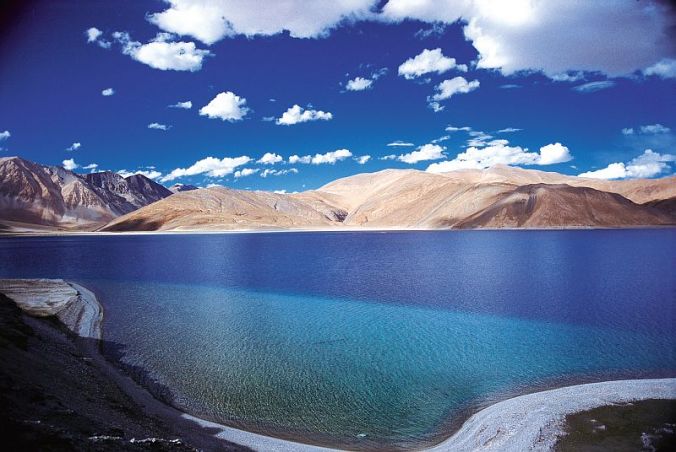
The Ladakhi Women’s Travel Company, the first to be completely owned and operated by women in the area, is all about empowering women and promotes ecotourism. PHOTO: Thrillophilia 

A trip to India is incomplete without visiting the hallowed Taj Mahal and the many palaces up north. And the world-famous backwaters of Kerala and the hill stations across Southern India. What should figure on travel itineraries without a doubt: Leh-Ladakh. A  favorite getaway among domestic travelers, this mountainous region – with its bounty of snow-kissed peaks and crystal blue waters – is every color dream come true. Here’s visual proof. And if you do make it there, look up the Ladakhi Women’s Travel Company.

How many women does it take to start an all-women travel company, set up a women’s welfare network for women in distress, write tirelessly on social and environmental issues, win a bronze at the National Ice Hockey Championship, and keep training an ever-growing number of women to be professional trekking guides in the harsh terrain of Ladakh? Just one, if that woman happens to be Thinlas Chorol. 

Continue reading