Giving A Bread Its Due Honor

President Emmanuel Macron of France described the baguette as “250 grams of magic and perfection in our daily lives.” Eric Gaillard/Reuters

When the baguette was a daily part of our family’s life, we were fortunate to have a personal connection to the best guide, whose photo in the story below is as fitting as the photo above:

Steven Kaplan, perhaps the baguette’s most dedicated historian, says the bread has “little sites of memories” that “testify to a sensuality.” Daniel Janin/Agence France-Presse — Getty Images

A Slice of France, the Baguette Is Granted World Heritage Status

More than six billion baguettes are sold every year in France. But the bread is under threat, with bakeries vanishing in rural areas.

PARIS— It is more French than, perhaps, the Eiffel Tower or the Seine. It is carried home by millions each day under arms or strapped to the back of bicycles. It is the baguette, the bread that has set the pace for life in France for decades and has become an essential part of French identity.

On Wednesday, UNESCO, the United Nations heritage agency, named the baguette something worthy of humanity’s preservation, adding it to its exalted “intangible cultural heritage” list. Continue reading

Really, Australia?

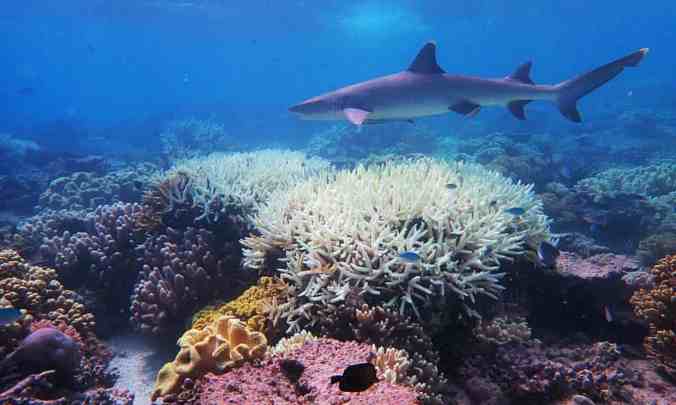
The Unesco world heritage committee’s decision on the Great Barrier Reef’s ‘in danger’ status is currently scheduled for 23 July. Photograph: James Cook University/AFP via Getty Images

It’s been a couple months since we asked anyone the fundamental question. Ok, we acknowledge our not being qualified to make the scientific judgement on whether the Great Barrier Reef is in sufficient danger to be listed as such, officially. But UNESCO has the qualified scientists, so let them do their job without undue influence. It sure seems likely to help the entire world to see how fossil-fueled climate change is impacting such natural wonders. It would raise consciousness in a way that might even be good for Australia–whose government obviously thinks otherwise. Hopefully UNESCO will stick to its principles and resist this lobbying. When oil-based economies come to lend a hand, watch out for conflict of interest:

‘Fossil fuel friends’: Saudi Arabia and Bahrain back Australia’s lobbying on Great Barrier Reef

Exclusive: oil rich nations back push against Unesco recommendation to have reef placed on world heritage ‘in danger’ list Continue reading

Greening Indian Cities

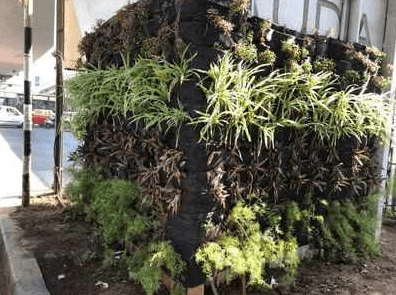
Another creative commitment to Green Innovation. Thanks to the Times of India for this story about how Ahmedabad embraces green walls, goes vertical:

Aapnu Amdavad has a lot to boast about. From being the first city to have been declared India’s first Unesco World Heritage City to being home to some prime educational institutes, this city has gained prominence on the global map. Having said that, the city has its share of dark spots too. The fast diminishing green cover in the city is one of them. India’s fifth largest city has a tree cover of approximately 35 crores (as per a 2017 census), which although is 13% more than the number of trees in 2013, is still not enough. The ongoing metro project has also led to a lot of felling of trees. Taking into consideration all this, Ahmedabad Municipal Corporation (AMC) has decided to build vertical gardens in the city. It recently set up a small vertical garden along one of the pillars at the flyover at Helmet crossroads.

What are vertical gardens? Essentially vertical gardens are the kind of gardens that grow vertically, along walls or pillars, with the help of trellis (which are wooden frames) or similar support systems. Continue reading

A Culture in Need of Safeguards

Each year since 2009, UNESCO puts out two lists that closely look at indigenous practices across the world. The List of Intangible Cultural Heritage in Need of Urgent Safeguarding is composed of heritage elements that require urgent measures to keep them alive. During the period from 2009 to 2014, 38 elements have been included on this List. These include Mongolian calligraphy, the Paach (corn-veneration ritual) of Guatemala, the male child cleansing ceremony of northern Uganda, practices of the Kayas of the sacred forests of Mijikenda in Kenya and more. The second list –  Representative List of the Intangible Cultural Heritage of Humanity – comprises practices that help demonstrate the diversity of heritage and raise awareness about their importance.

Continue reading