
Thanks to Mr. Krulwich for the investigative wonderland his sciencey (and artsy) blog is. Click the banner for a great series of photos and explanation for the wonders.
Thanks to Mr. Krulwich for the investigative wonderland his sciencey (and artsy) blog is. Click the banner for a great series of photos and explanation for the wonders.
Hey guys,
All of us photobugs and travel-junkies have struggled with the age-old question: which lens should I bring on my River Escapes backwaters adventure or my Roman holiday or my trip to the moon?
As a casual photographer, I’m not crazy about specs. I don’t get the numbers and technical terms! JUST TELL IT TO ME STRAIGHT! I know there are people out there who are like me, so Ben, Milo, and I will make it as easy as possible to understand which lens YOU need to bring on your next vacation! We’d also love to know what YOU brought on your last vacation!
See which of description fits you best:
ALRIGHT, I’M READY!! NOW SHOW ME THE 5 LENSES I SHOULD BRING ON MY NEXT VACATION!!!
It has been a week since I arrived in Kerala, India. Not surprisingly, my first cultural shock was the ear-piercing, honking sound of rickshaws (small Indian taxis) that welcomed me when I stepped out of the Cochin airport. In the beginning, I thought the drivers here were just a little more aggressive or would get frustrated easily: the reason why they honked so much. But, as we drove away from the airport, our driver explained to us that these drivers honked to show their existence and alert others. In addition, drivers in India tend to not keep to their lanes. They use the entire road sometimes driving on the left side, right side, and in the middle…so ALL sides! These days, many young Indians are actively protesting to eliminate this unnecessary honking and to reduce noise pollution. So, increasingly you can see many signs like “Yi Horn Not OK Please.”

Rickshaws in India
Guest Author: Denzel Johnson
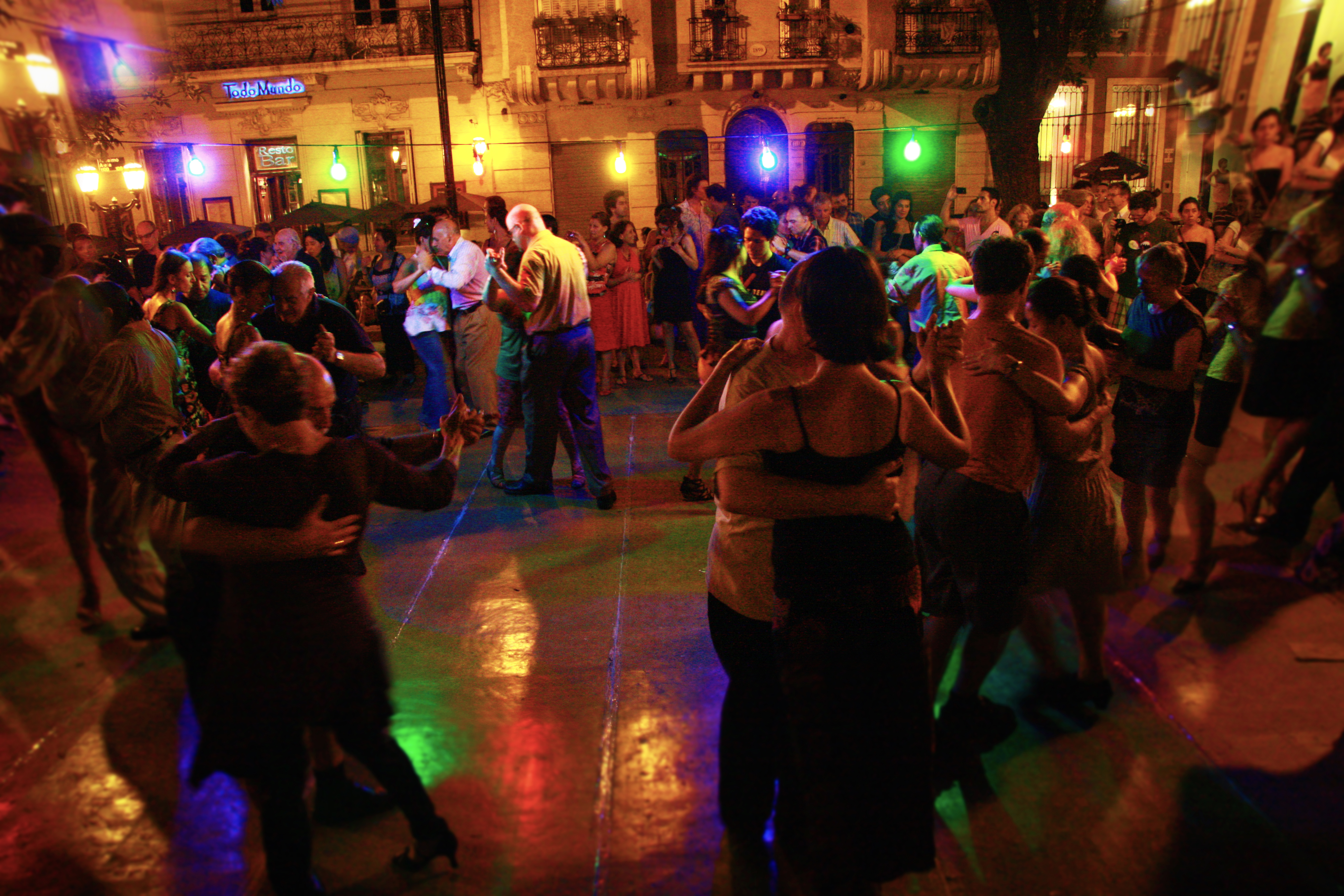
During the 1800’s Buenos Aires hosted a wealthy group of people in what is today’s most popular district- San Telmo. The district today is as popular as it could be and hosts a series of events that accommodate locals as well as tourists as they flock between the clubs and cafes. Continue reading
This will be my first post that I’m writing for Raxa Collective. To be honest, I was waiting for a great idea to jump out at me that will brilliantly catch everyone’s attention. But, now that I think about it, blogs are more about sharing a stream of mind in our daily life, so here I am.
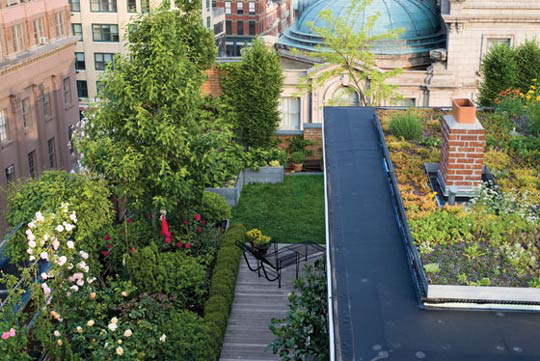
As I’m spending my spring break in NYC, I’ve been observing a range of eco-lifestyles all around me, even in this urban area. You may think that New Yorkers care less about the environment because they live in a “concrete jungle”, but it’s proved to be wrong. In NYC, there are so many organic stores, restaurants that serve organically and locally grown vegetables and fruits, farmers markets, etc. – the list goes on and on. Seriously, there are even farming and gardening classes and programs for both children and adults! Continue reading

In India, the migration from rural to urban areas is one of the most dynamic changes to the economy, the environment, the landscapes, the urbanscapes (just as in China and other rapidly developing agrarian economies) so it is refreshing to see and hear the stories that writer and photographer Lisa Hamilton shares on this site (click the image to go to one of those stories):
In February/March 2012, an ad-art campaign on trains throughout the Bay Area Rapid Transit (BART) system will feature select portraits of people and places from rural California. In fall 2012, photographs from Real Rural will comprise a show at the California Historical Society Museum, and there will be a concurrent ad-art campaign on billboards in Los Angeles and Sacramento. Continue reading

Click the image above to go to the article in which Alex Steffens, of Worldchanging (and TED, and plenty of other deserved) fame gives a synopsis on how to ramp up urban greening most efficiently:
If we’re talking about transportation, the best thing a city can do is densify as quickly as it can. That needs to be said every time this issue comes up, because it’s the only universal strategy that works. That’s the best-documented finding in urban planning—that as density goes up, trip length goes down and transportation energy use goes down.
My past posts reveal my desire to be directly involved with sustainable farming. I plan and hope to achieve this, but as both the global population and the demand for land, space, and food rise, I recognize that being flexible with this dream may minimize any potential disappointment. Comparatively, as much as I seem to “fly by the seat of my pants,” I like to plan. I come close to peace when I at least have some general structure to my life. So with this in mind, I began to brainstorm back-up plans to having my own farm.
In this search and planning excursion, I read an article and learned of vertical farming. Dickson Despommier of Columbia University and his students researched this urban farming phenomenon and hypothesized that such projects could solve our global food insecurity problems.
I am unsure of its feasibility, but in my characteristic optimism, I believe it has potential. Continue reading
What do you do with a 5 hour layover in Dubai? Whenever I fly with Emirates, I somehow find myself with a lengthy layover at the Dubai airport. The last time this happened I was lucky enough to have a friend in town to show me the infamous skyline by night. This time, however, my flight arrived in Dubai at about 6am. So after an hour or so nap on the fairly comfortable waiting lounge seat, I headed off to check out old town Dubai by Dubai Creek. The pink women and children-only taxi dropped me off in the Shindagha area, right beside the docking area for the abras, the commuter boats. I walked along the quiet and pristine port towards a cluster of traditional-looking buildings.
Low and behold, I stumbled upon a sign reading “Traditional Dubai House”. Continue reading
So I’ve left behind the wild, lush landscape of the Costa Rican rainforest and arrived in Strasbourg, France, to find a completely different kind of green.
Costa Rica is one of those countries the climate change debate focuses on – it’s the epitome of natural diversity and everywhere you turn there is some species or habitat that could be gone in 20 years’ time. Or 10 years’ time. From the rainforests I hiked through to the sloth sanctuary my mum and I visited, everything there seems at once so wild and so fragile. The conservation efforts we see there are direct, tackling the specific problems the land faces: protected areas are being designated, turtle-watching programmes are being set up to monitor and protect the species, and the people at Aviarios sloth sanctuary provide education for locals as well as caring for the animals.

Places like the Manuel Antonio National Park have to concentrate on the effects of climate change.
A post from early November saved a similar video of starlings for the end. Twitchers (a nickname for seriously devoted birdwatchers) were expected to read to the end and see that video as a crescendo of beauty. Continue reading

In case you are on your way to India, and can divert to Delhi for a day or two, here is a diversion to justify it (click the image above to go to the website):
The 4th edition of India Art Fair, formerly India Art Summit, will once again bring focus to the rapidly growing Indian art market. The 3rd edition in 2011 drew 128000 visitors over 4 days. While 80% of the galleries reported buoyant sales, the fair also attracted a record number of new collectors (30-40%). In only three years, India Art Fair has consolidated its position as the region’s leading platform for modern & contemporary art. Continue reading
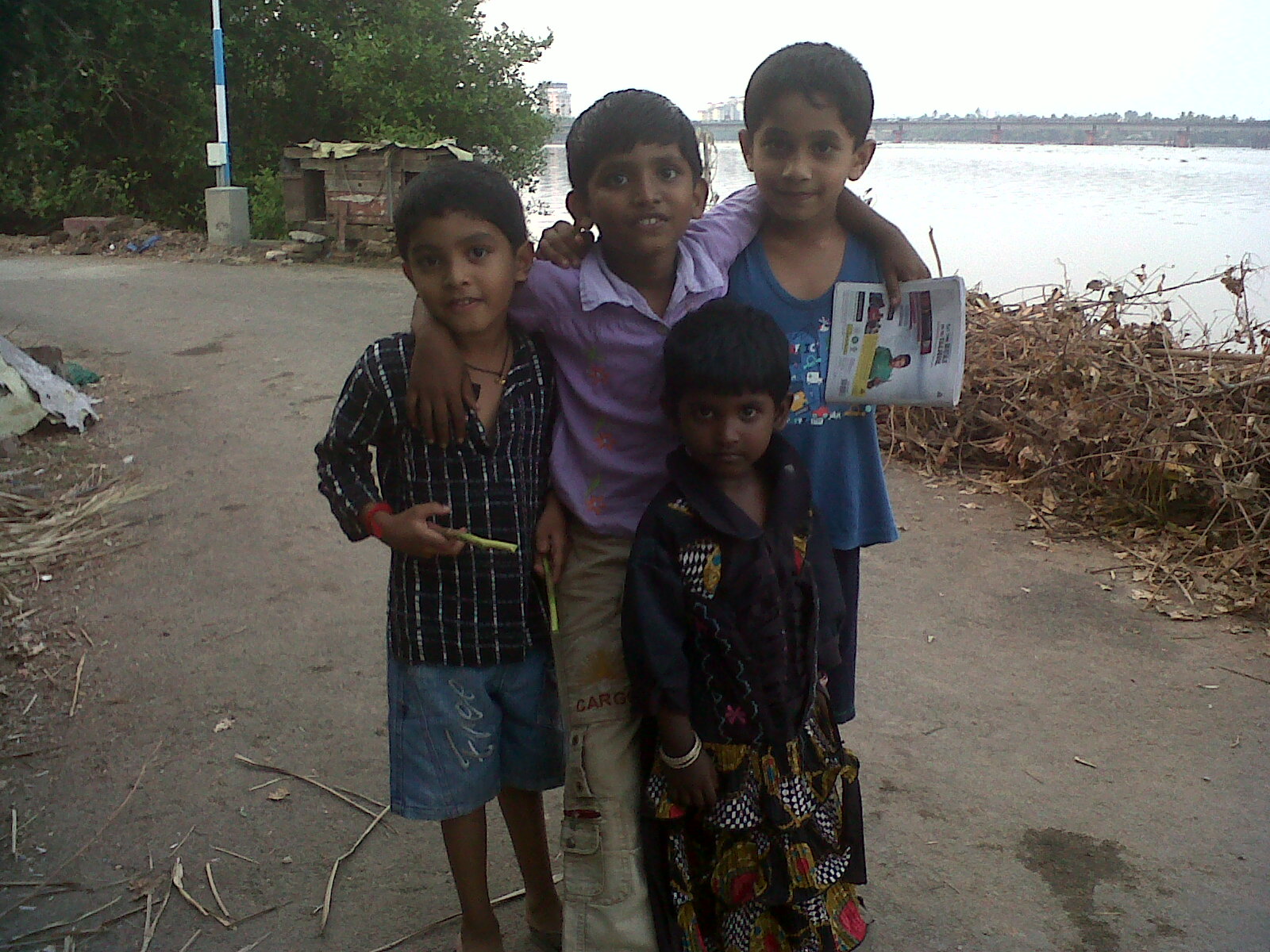
This young lady in the foreground of the photo above is special. She has already broken an unspoken, unwritten, and increasingly irrelevant gender barrier in which girls play with girls and boys with boys: her brother has welcomed her into the fellowship that used to be strictly a fraternity. It helps that she is clever.
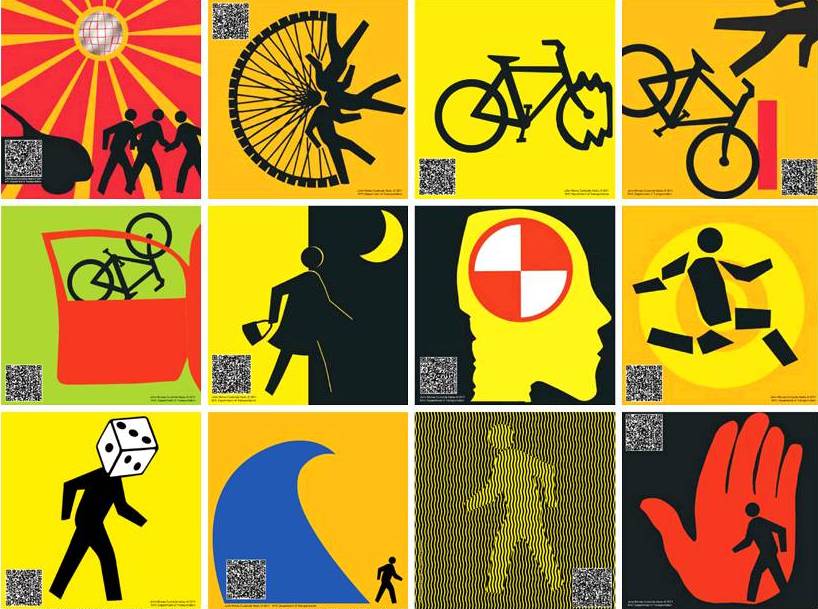
From New York to Paris to Bombay, navigating city streets can be a challenging choreography between bipeds, bicycles and motorized vehicles. In places like India that dance expands to include the more than occasional quadruped as well.
We’ve written about driving in India on several other occasions, and to mitigate the apparent chaos the Indian Government has a program of sometimes rhyming, often droll, road signs that include little “ditties” such as:
Speed Thrills But Kills
Impatient on the Road, Patient in the Hospital
Safety On Road; Safe Tea At Home!
Reach Home In Peace, Not In Pieces!
With the close of the semester, I’ve had some time to reflect on the classes I took—and which ones provided the most value. One of best courses I took this semester at Cornell was called Green Real Estate, and it was taught by Mark Vorreuter, a passionate LEED AP who was eager to see students of all majors interested in green buildings. The course covered many aspects of LEED (Leadership in Energy and Environmental Design), a certification offered by the Green Building Council for buildings, homes, and neighborhoods that meet a set of criteria. I remembered spending several nights cramming for a practice LEED exam in which I had to acquaint myself with many of its specific criteria, but not until recently was I able to see the real effects of green building and neighborhood design.

Suburbs in Pearland offer large houses, wide roads, and generous land spacing.
Cornell University and the City of Ithaca began fencing the bridges that run over several of Ithaca’s famous gorges some time in 2010, for safety purposes. Many have opposed these barriers, partly because the fences inhibit a full view of the famous natural beauty of Ithaca’s gorges, a huge part of Ithaca’s identity and college appeal. In fact, “Ithaca is GORGES” t-shirts or bumper stickers are a very common sight on campus, and parodies (Ithaca is SQUIRRELS) are becoming popular.

A common sight that is not quite a parody, however, is “Ithaca is FENCES” stickers. They can be seen on every bridge on campus, and on t-shirts. You can read about the messy details of the fence controversy here; the main reason I give this example of protest is its unconventional form: stickers placed on telephone poles or fence posts that play off a famous (at least locally) play on words. Continue reading

Everywhere you go in India, even cities considered ‘modern’ by today’s standards, there are relics of the past. Architecture, attire, animals walking through the street. In Cochin, one of Kerala’s biggest cities, locals don’t even look twice if an elephant walks down the street – the same street with IT parks and shopping malls on it. Continue reading
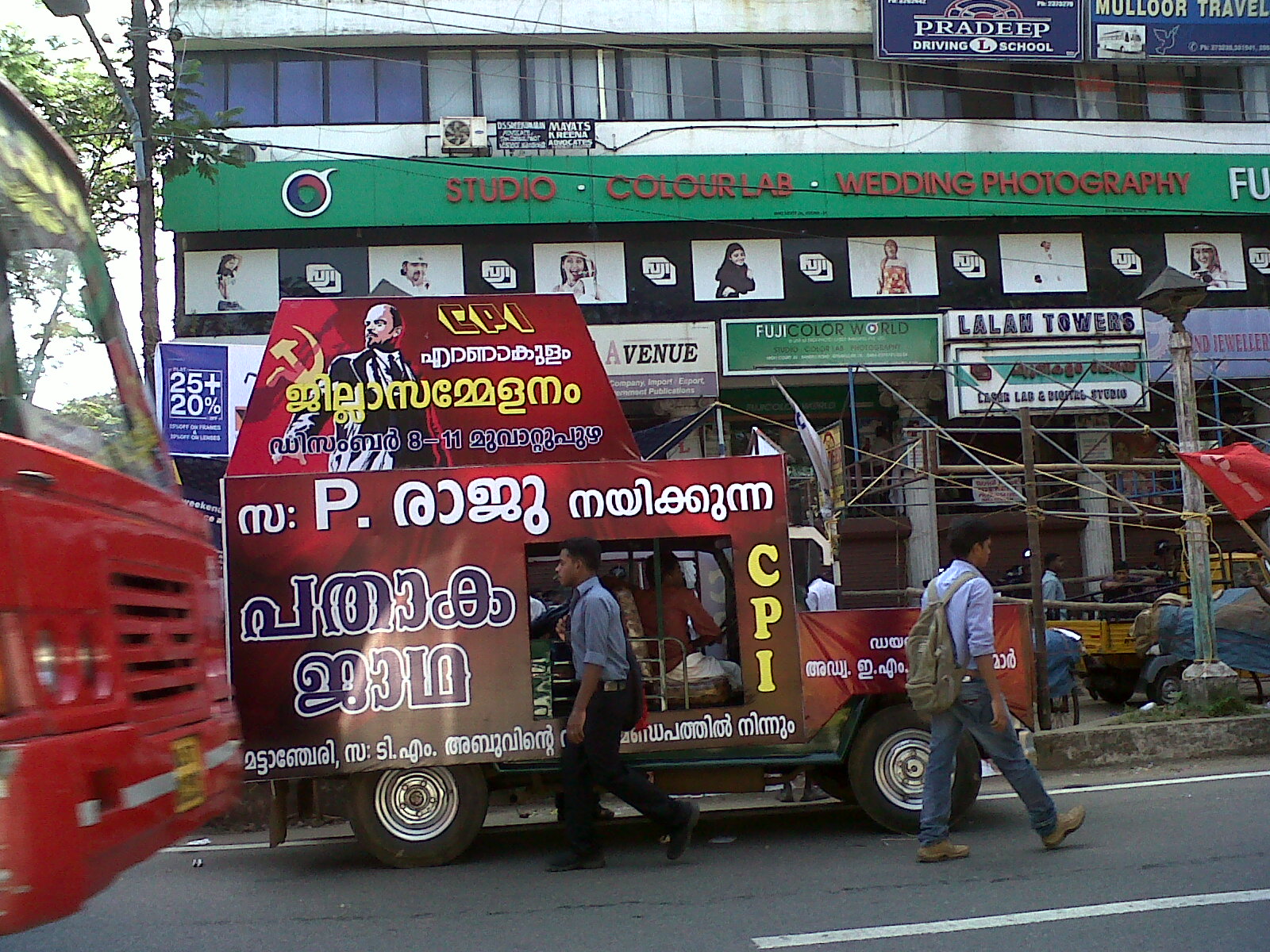
In the world’s largest democracy, there are a diversity of ideologies that would make any other democracy blush in modesty. Today, on the streets of Cochin, you could have had a very small sense of that. Continue reading
You see them everywhere you go in India: buildings crumbling, their bricks and mortar moldering and turning to dust over the decades. Paint peels, debris accumulates, industrious plants creep surreptitiously along the gritty terrain until before you know it, a small forest occupies the ruins where Uncle Kumar’s tea shop once stood. But that’s urban decay. I like to call the process itself urban deterioration – the point at which the elements’ progress is visible, and still reversible, but steadily inching towards, for all intents and purposes, the end of a small bit of civilization.
It is easy to be skeptical about the relationship between buzz and art, where buzz is meant to be a synonym for meaningful discussion. At 2:23 in this clip one person eloquently suggests that this is art because it has generated discussion. But has it?

 Organikos