National Park of the Week: Manú National Park and Biosphere Reserve, Peru

46

Source: andeanamazonexpeditions.com

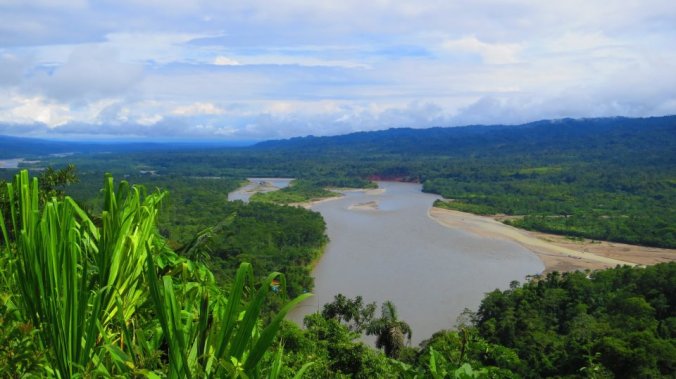
Containing much of the Peruvian Amazon’s  greatest flora and fauna, Manú National Park is one of the largest protected areas in the world and allows for once-in-a-lifetime sightings of rare and exotic animals.  The park is Peru’s biggest and consists of three parts: the “Cultural or Buffer zone,” where native communities live and tourists can enter unaccompanied, the “Reserved zone,” an area set aside for controlled scientific research and ecotourism, and the “Intangible zone,” the largest section that is strictly for flora and fauna preservation. Declared a UNESCO World Heritage Site and UNESCO Biosphere Reserve, Manú offers adventurous travelers lush, untouched Amazon to explore and discover the unmatched beauty of virgin environments and unrestricted wildlife.
Continue reading

Beware & Resist The Frack

4896

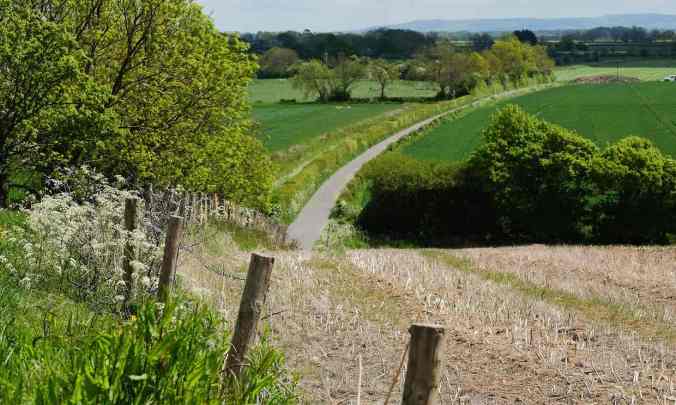
Countryside near the village of Kirby Misperton in North Yorkshire where a planning application by Third Energy to frack was recently approved. Photograph: Ian Forsyth/Getty Images

Many claim to tire of hearing about climate change, species extinction, threats from fracking and other environmental issues of great importance. Thanks to the Guardian for continuing to pay attention:

Majority of potential UK fracking sites are rich in important wildlife

Almost two-thirds of proposed areas have higher biodiversity, valuable for functions such as pollination and pest control, analysis shows

Many of the areas that have been recently marked as potential sites for fracking are rich in wildlife that perform crucial functions from pollination to decomposition, researchers have found.

Scientists say that almost two-thirds of the areas that have been labelled as suitable for shale gas extraction have levels of biodiversity equal to or above the national average, according to a new analysis of records collected from across the country. Continue reading

Bravo, Trip Advisor!

PHOTOGRAPH BY NORBERT WU, MINDEN PICTURES

In a world where economics often focus on the concept that “the customer is always right” it’s heartening to see even large companies re-evaluate policy, and make make changes in the face of facts.

Our work in India has often placed us face to face with the common practices of human-animal interaction written about below, and we don’t promote the  “elephant rides” that are often on travelers’ agenda. Change occurs along  with a shift in understanding, and our goal has always been to craft travel experiences that are both authentic and educational.

So “Bravo!” and a hearty welcome to any company willing to join us in achieving that goal!

TripAdvisor Halts Ticket Sales to Cruel Wildlife Attractions

By

TripAdvisor, the popular travel review website, and its ticket sales company, Viator, said Tuesday they no longer will sell tickets to hundreds of tourist attractions that are widely accepted as cruel to wild animals, reversing a policy under which the companies had resisted considering the welfare of animals when promoting trips.

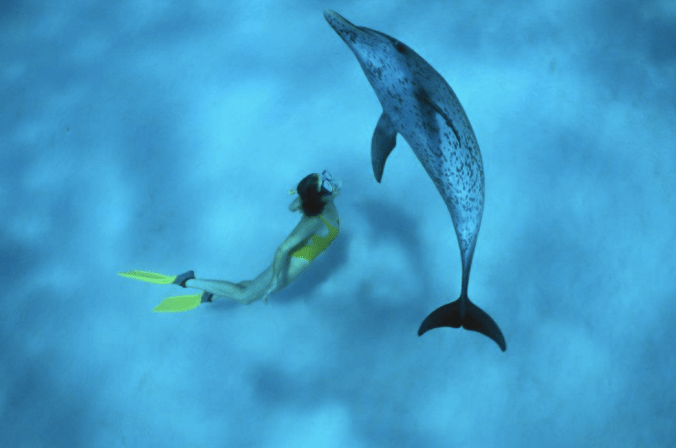
The move to stop selling tickets to elephant rides, swim-with-dolphin experiences, and attractions that allow visitors to pet tigers and other exotic animals comes after a one-and-a-half-year protest campaign by the London-based animal welfare group World Animal Protection and reporting by National Geographic’s Wildlife Watch, which drew attention to TripAdvisor’s continued promotion of such attractions at a time when dozens of other tour and travel companies were moving away from them.

Such attractions have been shown to cause animals psychological and physical trauma that can shorten their lives. They also result in more animals being taken from the wild for tourism.

Continue reading

Bravo, Romania

980xz

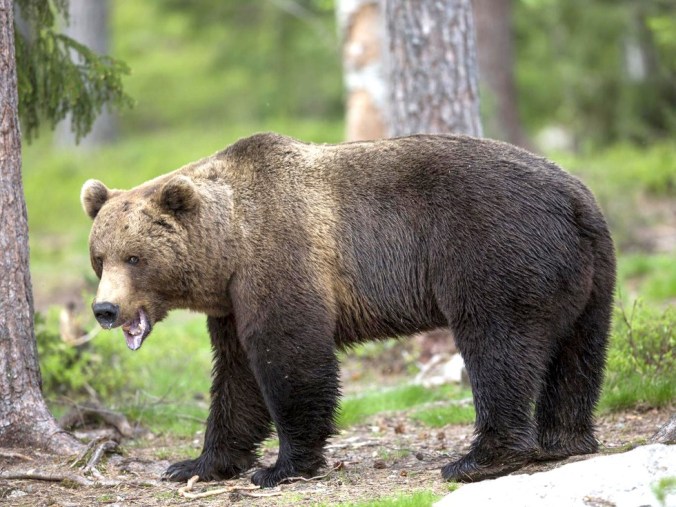
Romania’s government has taken action to protect its large carnivores from trophy hunters.iStock

There was a time when we found portions of the hunting-to-support-conservation argument compelling. Our view is getting more and more firm against it. We applaud a small country teeming with wildlife for taking a firm stand:

Wildlife Advocates Celebrate: Romania Bans Trophy Hunting

By Alicia Graef

In a surprise move that has wildlife advocates cheering, Romania’s government has taken action to protect its large carnivores from trophy hunters.

Last week, the Environment Ministry announced a total ban on trophy hunting of brown bears, wolves, lynx and and other wild cats, which is expected to save thousands of animals from being killed. Continue reading

Pangolins, Remarkable In More Ways Than One

1187

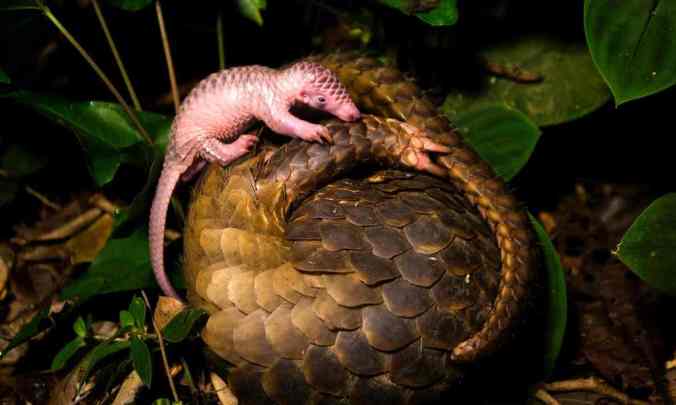
More than 1 million wild pangolins have been killed in the last decade. Photograph: Paul Hilton/WCS

We honestly knew little, perhaps nothing, about these creatures until very recently when they were in the news; and they were almost gone before we learned about them. Suddenly, thankfully, pangolins have been given the attention they deserve from the folks (including all of us) who may be able to help them survive as a species:

Pangolins thrown a lifeline at global wildlife summit with total trade ban

World’s most illegally trafficked mammal wins total ban on international trade in all species under the strictest Cites protection possible

Pangolins, the world’s most illegally trafficked mammal, were thrown a lifeline at a global wildlife summit on Wednesday with a total trade ban in all species. Continue reading

Beauty Is A Beast

3029

Culling could undermine the viability of the entire Norwegian wolf population, say conservationists. Photograph: Roger Strandli Berghagen

We love sheep, and sheep farmers, and shepherds, and wool, and so on. But we cannot read this without feeling more sympathy for the wolves, at this moment:

Norway’s wolf cull pits sheep farmers against conservationists

Norway’s recent decision to destroy 70% of its tiny endangered population of wolves shocked conservationists worldwide and saw 35,000 sign a local petition. But in a region dominated by sheep farming support for the cull runs deep

Elisabeth Ulven and Tone Sutterud in Oslo

Conservation groups worldwide were astonished to hear of the recent, unprecedented decision to destroy 70% of the Norway’s tiny and endangered population of 68 wolves, the biggest cull for almost a century. Continue reading

Thoughts on Bison Farming

1200px-american_bison_k5680-1

Source: Modern Farmer

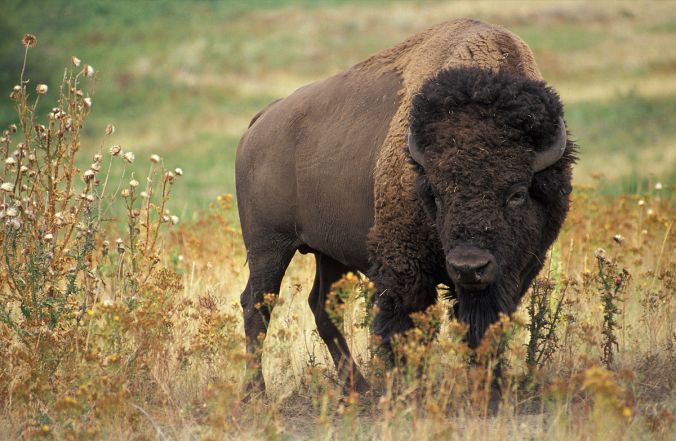
Bison meat is not the typical protein one finds on the dinner plate every night (especially not in my vegetarian household), but it is a meat product that is known for being healthier than beef and – possibly – more environmentally friendly. “How so?” you might wonder. According to Modern Farmer there are several components to bison farming that give it a “greener edge.”

It’s believed that bison cause less trampling and erosion damage to the plains than cattle, that their diet is higher in grasses and thus less damaging to the long-term chances of the plains environment, and that bison poop functions as a natural fertilizer to their habitats.

This all mostly stems from a general idea that bison, being not domesticated and technically, even when ranched, a wild animal, are more in tune with nature, more balanced in their impact than cattle. They are also native to North America, unlike cattle, which were domesticated from Old World animals. “Because bison are a natural part of the North American ecosystem, bison ranching can be a beneficial to the natural environment,” writes the National Bison Association, a promotional group, on its site.

Continue reading

Monkeying Around

Photo by Seth Inman

Photo by Seth Inman

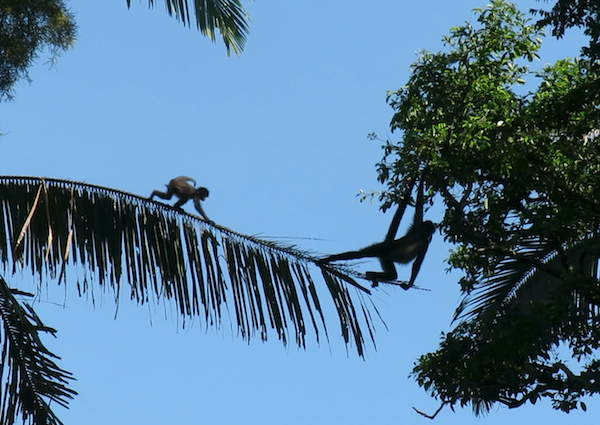
Spider monkey encounters are commonplace at Chan Chich Lodge. Whether it be during an early morning bird walk or a late afternoon read on the porch futon, spider monkeys will likely make their swinging appearance from the tree top branches at some point during the day. They are curious, but daring creatures that will have no shame in shaking up a couple of branches above your head and letting fruits fall on you if they feel threatened (an inexplicable reaction in my mind when I humbly walk through the trails hoping to catch sight of a Tody Motmot).

Having been in Belize for over a month, I have several memorable anecdotes to share about spider monkeys, but I will share two that I believe encapsulate the magnificence of these intelligent creatures.

Continue reading

Spotting and Tracking Mammals at Chan Chich

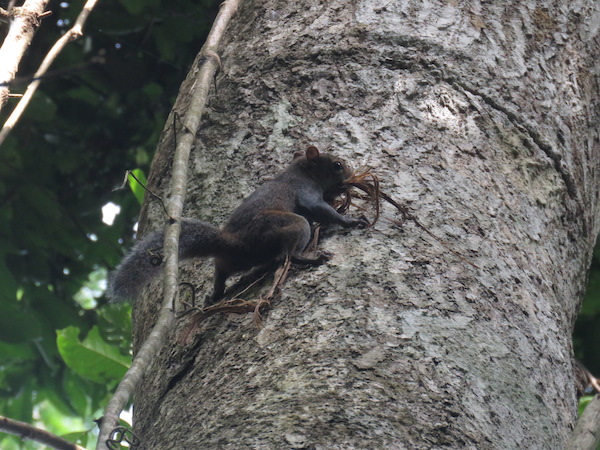
Unfortunately, we haven’t seen anything as exciting as a jaguar recently, but morning walks at the Lodge have been fruitful nonetheless. Mostly I look for birds, but any mammal spotted is one worth seeing – even a squirrel, given that the most common species here is one only found in Central America. I’m most used to the Eastern Gray Squirrel of the United States, as well as the smaller Variegated Squirrel of Costa Rica’s Central Valley and the cute Red-tailed Squirrel in the volcano regions. Here at Chan Chich, the Deppe’s Squirrel is a dark brown with frosted gray on the tail, and it is much more timid than the acclimatized suburban rodents of the East Coast in the US.

Continue reading

British Wildlife Photography Awards

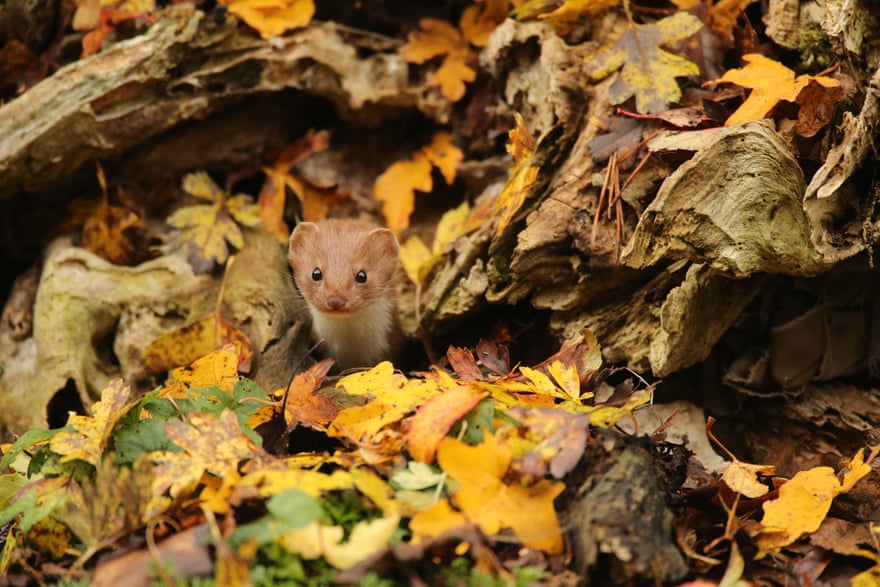
British autumn season winner: Robert E Fuller, ‘Common weasel’, North Yorkshire, England. Photograph: Robert E Fuller/British Wildlife Photography Awards 2016

British autumn season winner: Robert E Fuller, ‘Common weasel’, North Yorkshire, England. Photograph: Robert E Fuller/British Wildlife Photography Awards 2016

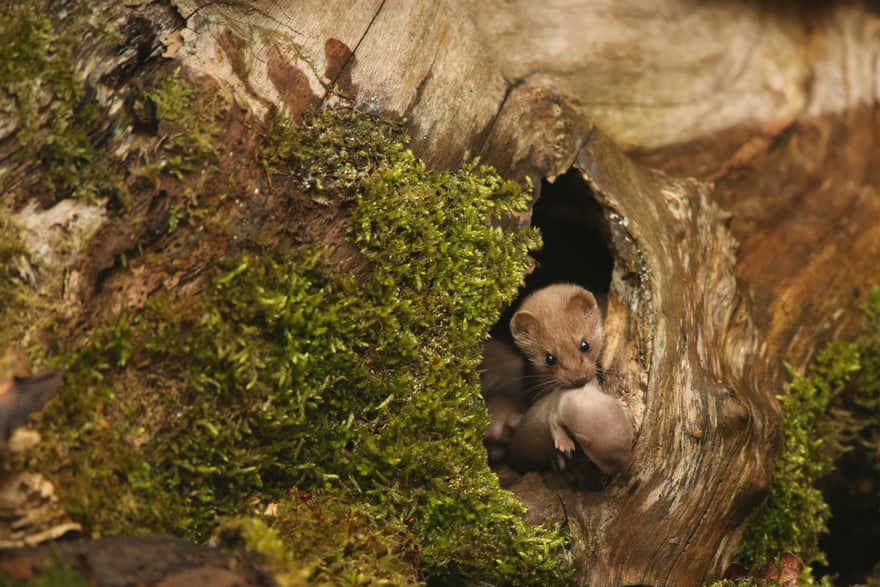
We like to feature different nature photography competition winners here, because the audience always wins, as we put it two years ago. This week, The Guardian is featuring a competition that we hadn’t heard of yet: the British Wildlife Photography Awards. This contest has interesting categories, including photos of Britain in its four seasons of spring, summer, autumn, and winter – all of which were won by a photograph of a family of common weasels:

British summer season winner: Robert E Fuller, ‘Common weasel’, North Yorkshire, England. Photograph: Robert E Fuller/British Wildlife Photography Awards 2016

British summer season winner: Robert E Fuller, ‘Common weasel’, North Yorkshire, England. Photograph: Robert E Fuller/British Wildlife Photography Awards 2016

Continue reading

Doing More for Protected Lands and Oceans

3500

Photograph: Owen Humphrey’s/PA

Almost fifteen percent of the Earth’s land is enclosed in national parks or other protected areas, which accounts for approximately 20 million sq km. This figure is close to an internationally agreed goal to protect 17 percent of the land surface by 2020. Comparatively, ocean conservation only accounts for 4 percent of total surface of the ocean, covering 15 million sq km. In spite of these statistics – which reflect a positive outcome of the increased attention and importance given to land and ocean conservation – there are concerns over how well these areas are managed and whether they effectively protect endangered species, as Seth wrote a few days ago.

progress report by the UN Environment and the International Union for Conservation of Nature (IUCN) warns that some of the most biodiverse ecosystems are not being protected and that the management of many protected areas is deficient.

Less than 20% of areas considered crucial hubs for species are fully protected, the report states, with countries routinely failing to assess the effectiveness of their national parks nor provide wildlife corridors that allow animals to roam between protected areas.

Continue reading

Wildlife Crime Challenge Winners Announced

From wildlifecrimetech.org

From wildlifecrimetech.org

Back in July we shared a story on turtle egg poaching that was part of the Wildlife Crime Tech Challenge, created by USAID with the support of the Smithsonian Institution, the National Geographic Society, and TRAFFIC. The company with the fake turtle egg idea from that article was one of the sixteen winners of the competition, but a grand prize was announced for the four “most creative and impactful” ideas offered out of those winners. The four grand prize winners were announced this weekend at the  World Conservation Congress of the International Union for Conservation of Nature in Honolulu, Hawaii. Christine Dell’Amore reports:

Every year about 10 million aquarium fish pass through United States ports, many on their way to new homes as family pets. But first, federal inspectors must leaf through mountains of paperwork on the animals, which are shipped from more than 40 countries around the world. “Until recently, the [inspectors] didn’t even have wireless access in the warehouses,” says Michael Tlusty, director of ocean sustainability and science at the New England Aquarium. Continue reading

The Debate over Wildlife Farming

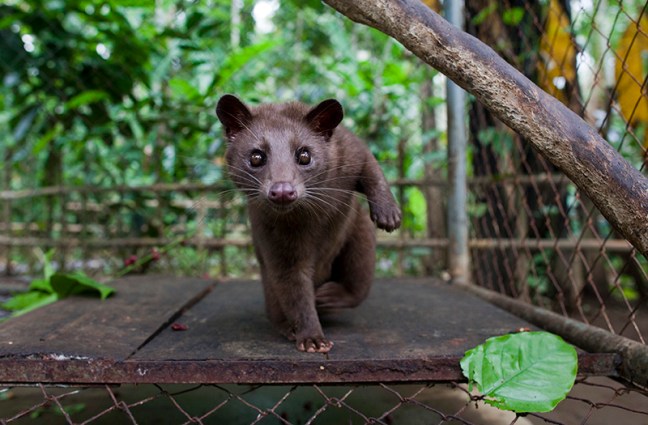
Indonesians Farm Civet Cats To Produce World's Most Valuable Coffee

An Asian pal civet at a wildlife farm in Bali, Indonesia. Source: Yale

Whether wildlife farming helps or hurts threatened species is a highly contested question among conservationists and food security consultants. An article written by Richard Conniff in Yale News helps us understand both sides of this controversial and lesser-known practice:

Wildlife farming is … a tantalizing idea that is always fraught with challenges and often seriously flawed. And yet it is also growing both as a marketplace reality and in its appeal to a broad array of legitimate stakeholders as a potentially sustainable alternative to the helter-skelter exploitation of wild resources everywhere.

Food security consultants are promoting wildlife farming as a way to boost rural incomes and supply protein to a hungry world. So are public health experts who view properly managed captive breeding as a way to prevent emerging diseases in wildlife from spilling over into the human population.

Continue reading

Polled Brits Support EU’s Strong Wildlife Protection

We featured an opinion editorial from Friends of the Earth CEO Craig Bennett in The Guardian about Brexit’s effect on the environment exactly two months ago, and now the same publication is sharing pretty good news from a YouGov opinion poll in the UK whose results were released today. Apparently, a significant majority of Brits who were polled are in favor of laws protecting wildlife and their habitat that are at least as strong as the EU regulations already in place, but which wouldn’t apply post-Brexit. Some even support stronger environmental protection in the farming industry than current EU Common Agricultural Policy, especially wanting a ban in neonicotinoid pesticides. Damian Carrington reports:

Much of the protection of British wildlife and the environment stems from EU’s birds and habitat directives, but these will have to be replaced when the UK leaves the bloc. Farming minister George Eustice campaigned for the UK to leave the EU and told the Guardian in May that these directives were “spirit crushing” and “would go”.

Continue reading

Another Night Excursion at Chan Chich

1

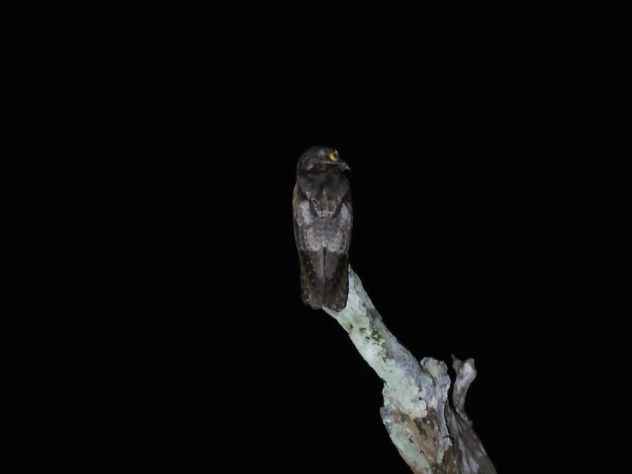
A Northern Potoo on a tall exposed limb seen during the outing

A few nights ago we went out on another night drive, to look for nocturnal animals. Seeing wildlife in the dark is always a challenge, and one has to be prepared to come back relatively empty-handed, especially in comparison to a lengthy jaguar sighting. This second time around, we saw fewer birds and just one mammal apart from deer: a young gray fox, but it was still a very pleasant ride through the forest at night, feeling the cool breeze and looking up to see the stars.

Continue reading

The Recovery of the Island Fox

3000

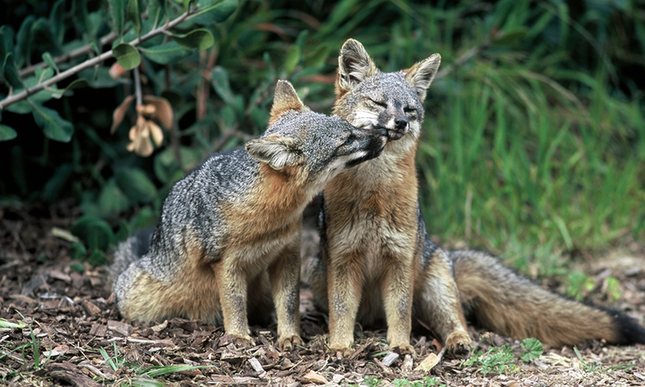
Island Foxes. Source: The Guardian

We are happy to share another win for wildlife conservation. One of America’s rarest mammals, the island fox, has experienced a record-breaking recovery twelve years after the species was declared endangered. Here’s the story from The Guardian:

The US Fish and Wildlife Service (FWS) has delisted three subspecies of island fox – endemic to the San Miguel, Santa Rosa and Santa Cruz islands – just 12 years after they were granted endangered species protections due to a catastrophic 90% population loss.

The island fox is one of the smallest canids in the world, around the size of a domesticated cat. They are thought to have evolved on the channel islands, located off southern California, over the past 6,000 years and initially thrived due to a lack of predators, feasting on mice, crickets and the occasional crab.

However, the island fox suffered badly during the late 1990s after use of the pesticide DDT wiped out bald eagles on the islands. Golden eagles, which prey on the foxes, quickly replaced the fish-loving bald eagles, leading to numerous fox deaths.

Continue reading

Horseshoe Crabs in the Delaware Bay

Horseshoe crabs coming ashore in Delaware Bay © Gregory Breese/USFWS

We’ve posted about them before, but did you know that horseshoe crab blood is not only a powder blue color, but also is used in the medical industry to detect any trace of bacterial contamination in humans, even if that infection is only one part per trillion?  And that they are more closely related to scorpions than true crabs? Or that they’ve been having the longest-running mass-breeding efforts on the planet, given that they haven’t changed much in hundreds of millions of years? Marah Hardt writes for The Nature Conservancy on the importance of these crawling Chelicerates to their ecosystem:

The lapping waves and silent dunes of the Delaware Bay shoreline create a perfect backdrop for a moonlit summer stroll. But a few weeks ago, this beach was not nearly so quiet. Instead, the silver light of the full moon shone upon jostling crowds of horseshoe crabs.

“If the crabs were rocks,” says Moses Katkowski, marine conservation coordinator with The Nature Conservancy, “you could walk on their backs the entire stretch of beach and never touch the sand.”

Continue reading

The Chan Chich Lodge Night Sky

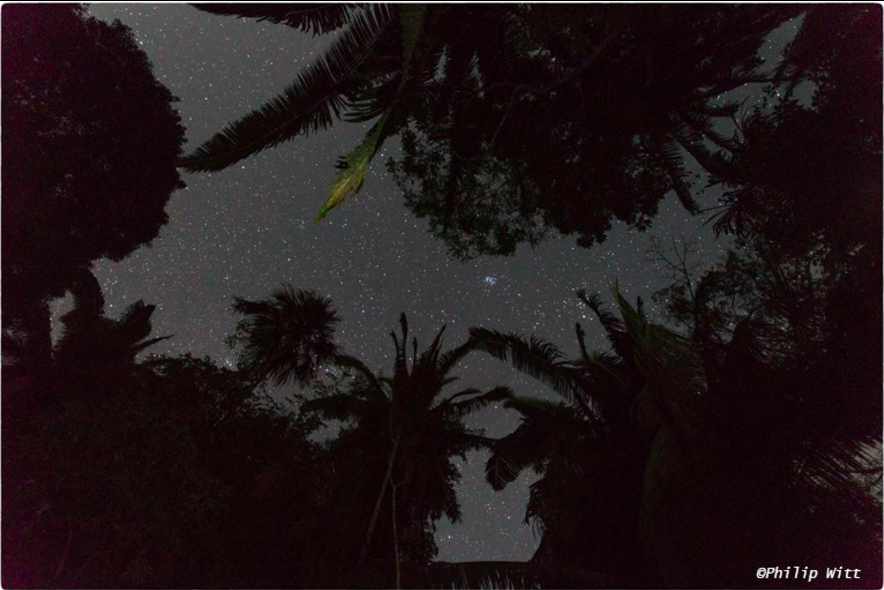
Night Sky by Chan Chich Lodge guest Phillip Witt

Night Sky by Chan Chich Lodge guest Philip Witt

A ping from my electronic calendar recently reminded me of the upcoming appex of the Perseid Meteor Shower between August 11th and 12th. I’d specifically marked it because this will be one of the first times I’ll be in a location so beautifully free of light pollution.

Although we do much of our work in remote locations, it’s surely a matter of luck to be in one of them at just this moment and this year,  when scientists say the meteor fall will be of the greatest density in 20 years. Chan Chich Lodge is located in the midst of 33,000 acres of private land, with the only infrastructure other than the lodge itself being a small village and the farming operations of Gallon Jug. 9-plus miles of trails branch off from the lodge, as well as simple gravel access roads. Continue reading

Chan Chich Field Notes: Black Howler Monkey

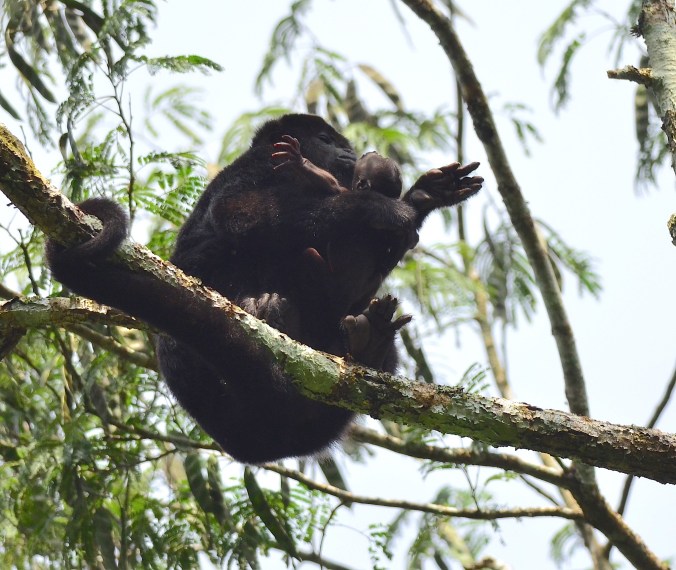
Female howler monkey with newborn by Emil Flota - La Paz Group

After my morning shift I went for my usual walk with my camera on Sylvester Village Road, looking at the beautiful surroundings and listening to the sounds of the forest. I heard something very unusual, which was a little frightening when I realized the sound was coming from above me. I looked up just in time to see a howler monkey giving birth. It was a very emotional moment, and when I finally felt calm enough to lift my camera I caught the mother bringing the baby up to her face on film.  Continue reading

Panthera onca

video taken by author on August 5th

Chan Chich is known for being pretty much the best place in Belize to spot a jaguar (scientific name, Panthera onca) in the wild, given the Lodge’s huge amount of protected land (30,000 acres) adjacent to hundreds of thousands of acres similarly preserved, or under government conservation that together form the international Jaguar Corridor Initiative.

The word Panthera comes from the ancient Greek pánthēr (πάνθηρ), which essentially means “predator of everything,” and is a scientific genus comprised of the five big cat species in the world: snow leopards, tigers, lions, jaguars, and leopards. The latter four of these are the only cats that can roar, given morphological differences in their bones and throat.

Continue reading