Velankanni Matha Church, Pattumala

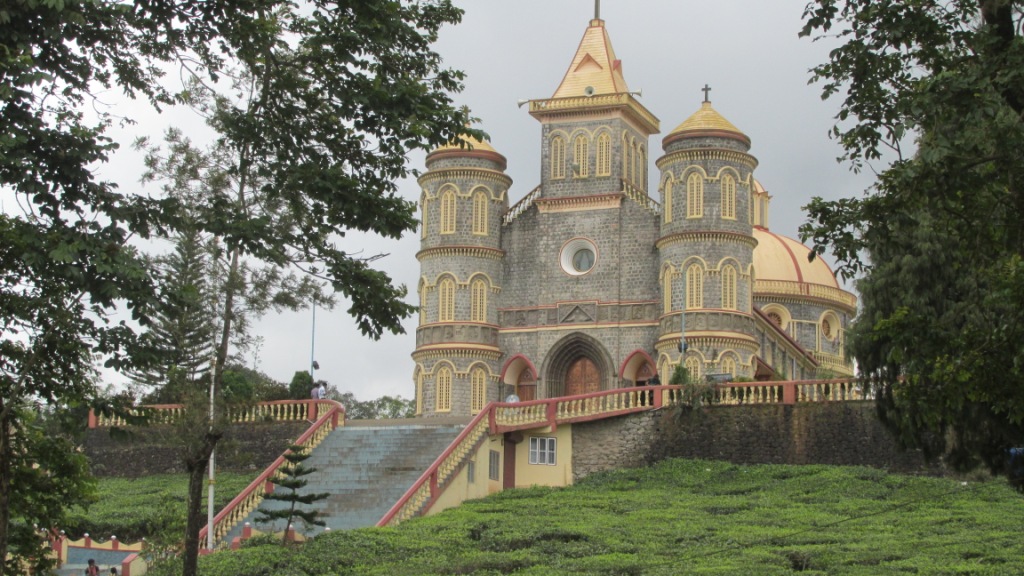
Pattumala is a picturesque place with an unending expanse of lush green tea plantations along the Thekkady-Kottayam Route near to Vandi Periyar. The main attraction of the area is the Velankanni Matha Church, a structure built in granite that has become a famous pilgrimage spot. Continue reading

Monsoon Theyyam

Karkataka theyyam

Monsoon theyyam

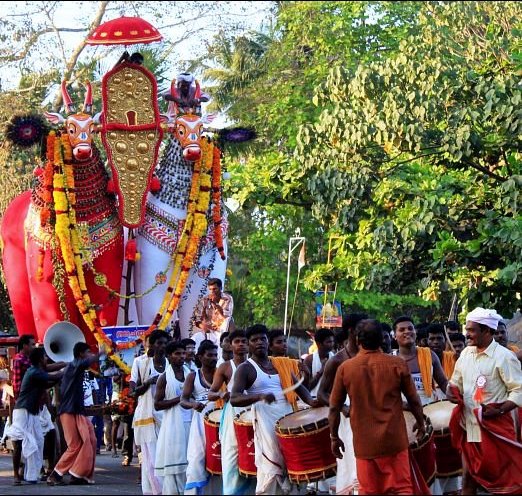
The last month of the Malayalam calendar, Karkatakam (July 17 to August 16) falls towards the end of southwest monsoon and signals the arrival of the Monsoon Theyyam. Karkataka Theyyams are performed by boys under the age of 13. They visit houses and Temples to ward off diseases, hardships and evil spirits that may come during the rainy season. Continue reading

Eid ul-Fitr – Muslim Festival

Eid ul-Fitr is celebrated after the conclusion of Ramadan, the Muslim month of fasting. Ramadan is always in the ninth month of the lunar year, so the date it falls in the calendar year varies. During this time Muslims abstain from eating and drinking throughout the day, and spend time in prayer to purify the body and soul. The onset of the festival is indicated by the sighting of the crescent Moon on the Western horizon. Ramadan is celebrated by Muslims all over the world. Continue reading

Theyyam

Photo credits: Anuraj

Photo credits: Anuraj

Theyyam is based on a traditional belief system, and is a self-contained world without obligations to caste, community, society and religious faith. Fire has a major presence in many Theyyam myths. Continue reading

Ochirakkali – Temple Festival

Photo credits : Renjith

Photo credits: Renjith

Ochira, located in the Kollam district of Kerala, is famous for the Parabrahma Temple, dedicated to Lord Shiva. The Ochirakkali is a mock fight enacted between groups of men dressed as warriors on the battlefield, commemorating the historic battle fought between the Kayamkulam and Chempakasseri soldiers. Continue reading

Karkidakam – Ramayana Masam

Reciting Holy Book Ramayana

Reciting the Holy Book of Ramayana

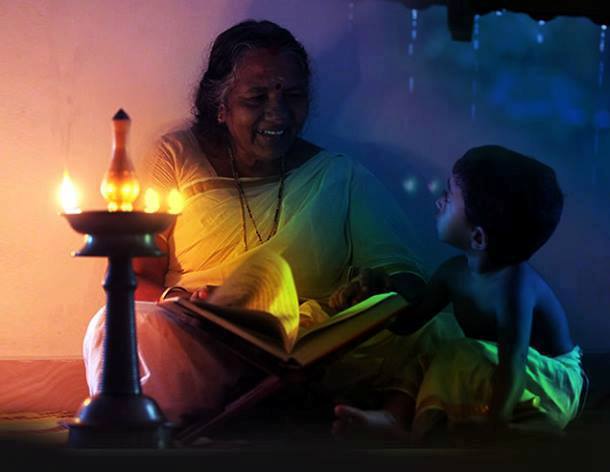
Karkidakam is the last month in the Malayalam calendar, which this year falls between 17th July and 16th August on the Western calendar. Historically the southwest monsoon is bringing chilling torrential rain during this period. In Kerala every observant Hindu family recites the Holy Book of Ramayana in homes and temples during this time, making Karkidakam popularly known as Ramayana Masam. Continue reading

Mahabalipuram Shore Temple – Tamil Nadu

Photo credits: Ramesh Kidangoor

Photo credits: Ramesh Kidangoor

Completed in the latter half of the 8th century A.D, Mahabalipuram Shore Temple is one of the finest examples of structural temple architecture, meaning that it was built from granite block as opposed to being carved from solid stone. It belongs to a period when this temple construction style was at its peek. Continue reading

Bharani Festival, Chettikulangra Temple – Alappuzha

Photo credits: Ramesh Kidangoor

Photo credits: Ramesh Kidangoor

Chettikulangra Temple is dedicated to the Goddess Bhadrakali. The temple is famous for the Bharani festival, with special rituals and Kettukazhcha processions attract numerous devotees. Continue reading

Tiger Cave – Mamallapuram, Tamil Nadu

Tiger Cave

Tiger Cave

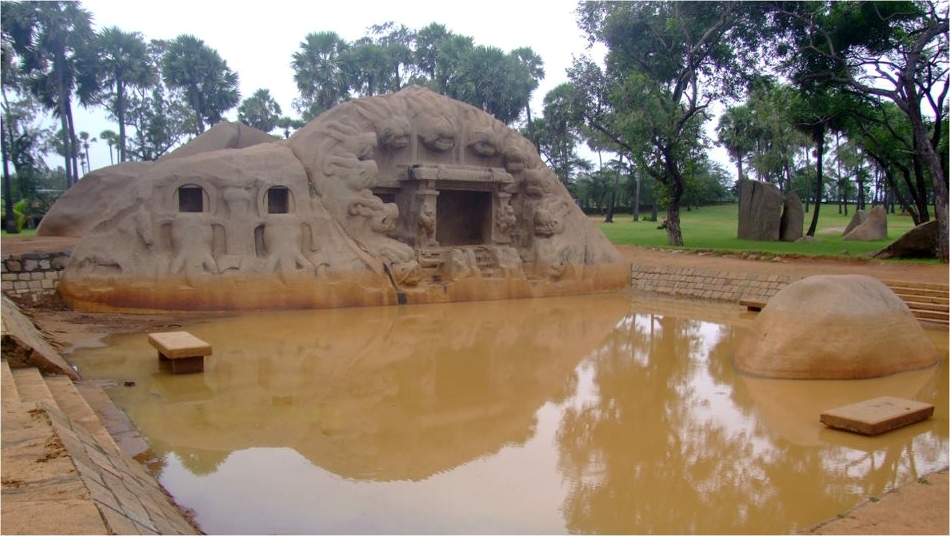
Monuments in Mamallapuram are comprised of three kinds of rock-cutting techniques: excavated cave temples, monolithic temple models, and structural erections. The Tiger Cave, a rock-cut Hindu temple, is located 4 km north of the main Shore temple in Mamallapuram. Continue reading

Tulsi Thara

Tulsi Thara in frond of the house

Tulsi Thara in frond of the house

Tulsi Thara is a sacred stone platform in front of traditional Kerala houses on which the Holy Basil (tulsi) plant is grown. Tulsi is a sacred herb known as the Queen of the herbs. Tulsi Thara is made to welcome the Goddess Lakshmi. In mornings and evenings a burning lamp is placed on the platform. Continue reading

Shayanapradikshanam

Photo credits: Ramesh Kidangoor

Photo credits: Ramesh Kidangoor

The shyanapradikshanam is ritual worship by devotes (usually male) of circling the temple sanctum sanctorum by rolling on the ground. The ritual is performed as atonement, pledge fulfillment or a gesture of thanks giving. It’s a common sight in many Kerala temples. Continue reading

Mamallapuram – Pancha Pandava Rathas (Five Rathas)

Photo credits: Ramesh Kidangoor

Photo credits: Ramesh Kidangoor

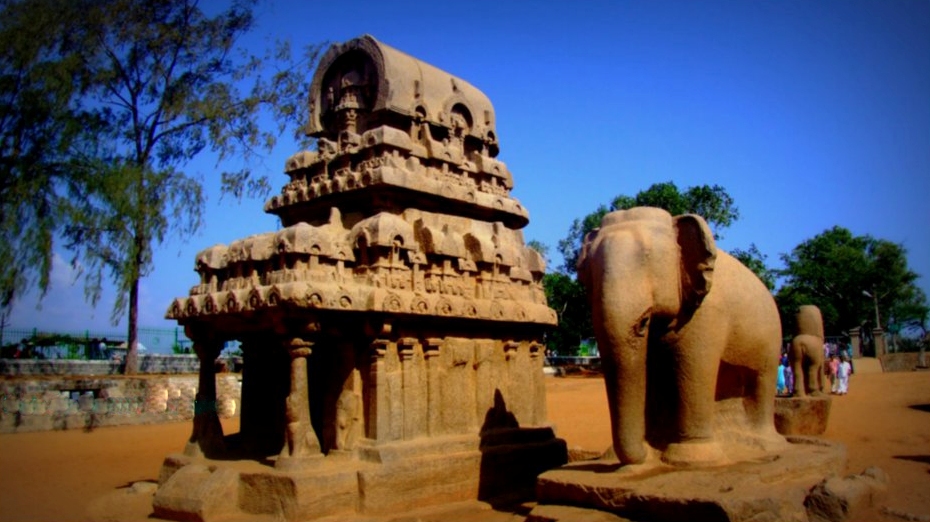
These Rathas (chariots) are the most extraordinary of all the monuments in Mamallapuram. These monolithic shrines near the beach are carved out of granite boulders. There has been much fanciful speculation about them, mostly by people uninformed that similar such monuments exist elsewhere in India. These particular rathas are among the oldest and well-preserved vimana models in Tamil Nadu. Continue reading

Tholpavakoothu – Traditional Shadow Play

Tholpavakoothu

Tholpavakoothu

Tholpavakoothu is a traditional form of shadow art using leather puppets. It is an important part of the temple festivals in Kerala, especially in Palakkad. The performance spans seven to 21 days; the belief being that the Devi witnesses the performance. Continue reading

Thirvunamalai, Arunacaleshwara Temple – Tamil Nadu

Photo credits : Ramesh Kidangoor

Photo credits : Ramesh Kidangoor

Thirvunamalai Arunacaleshwara Temple is dedicated to Jyothi Lingam, the fire incarnation of Lord Shiva. Situated amidst picturesque surroundings at the base of the 2600-ft Annamalai hills, it is one of the largest and most revered shrines in South India.  The nine imposing gopurams of the temple constructed in the Vijayanagar style are a magnificent sight. There is a “thousand pillared hall” with intricate carving of minor deities  and demi-Gods. Continue reading

Sadhus – Mendicants

Photo credits :Manoj Vasudevan

Photo credits :Manoj Vasudevan

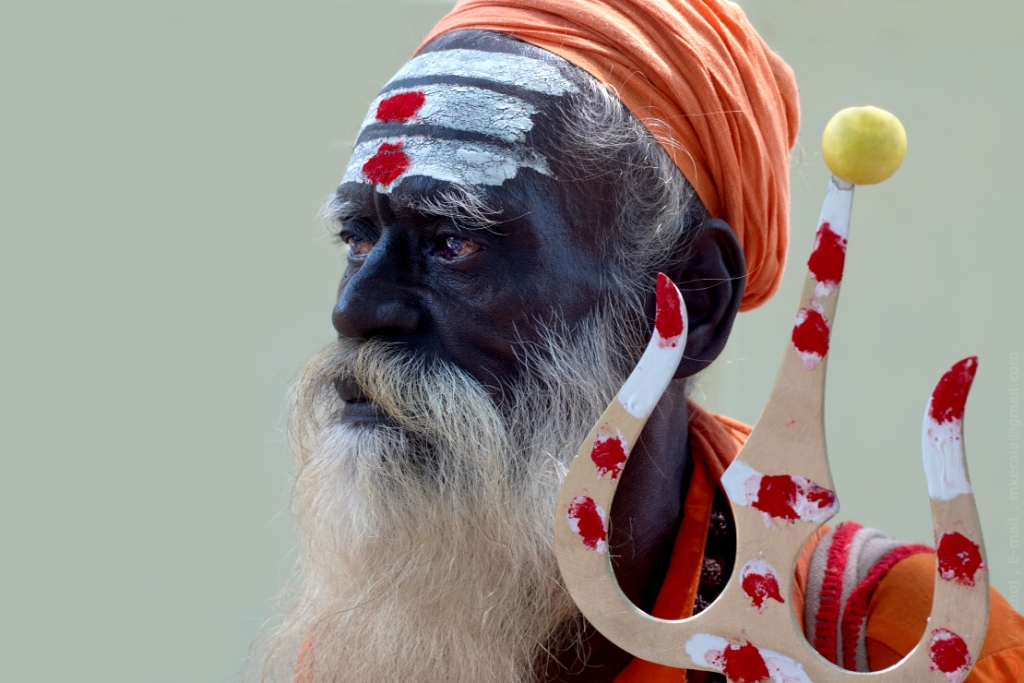
Sadhus are commonly found outside famous temples in India. They live an ascetic life on the fringes of society, free from all family ties with neither possessions or permanent house and eat little. They live off alms given by pilgrims and devotees and often wear saffron coloured  clothing. Continue reading

Thrikkakara Vamana Moorthy Temple – Cochin

Photo credits : Ramesh Kidangoor

Photo credits : Ramesh Kidangoor

Located near Cochin, Thrikkakara Temple is one of the few temples dedicated to Lord Vamana, the 5th incarnation of Lord Vishnu. The name Thrikkakara means “the Holy place where Lord placed His Foot”. Thrikkakara is famous for the 10-day Onam festival celebrations. Continue reading

Theemidi Fire Walk – Hindu Festival

Photo Credits: Ramesh Kidangoor

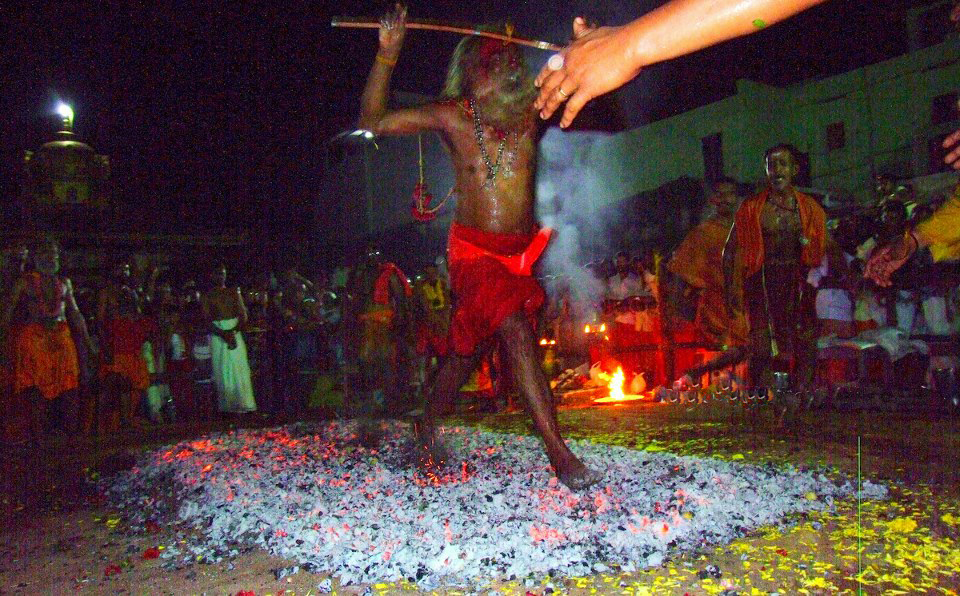
Kerala is rich in beliefs and the Fire Walk is one of the most difficult example. The person doing the fire walk must follow specific religious practices. The devotee walks through a pit of burning coals and the surrounding devotees sing hymns praising the lord. The sound of the drums and the burning of the incense make the entire atmosphere inspiring. The devotee gets in to a state ecstasy and easily walks over the fire. Continue reading

Kottiyoor Mahadeva Temple – Kannur

Photo Credits: Ranjith

Photo Credits: Ranjith

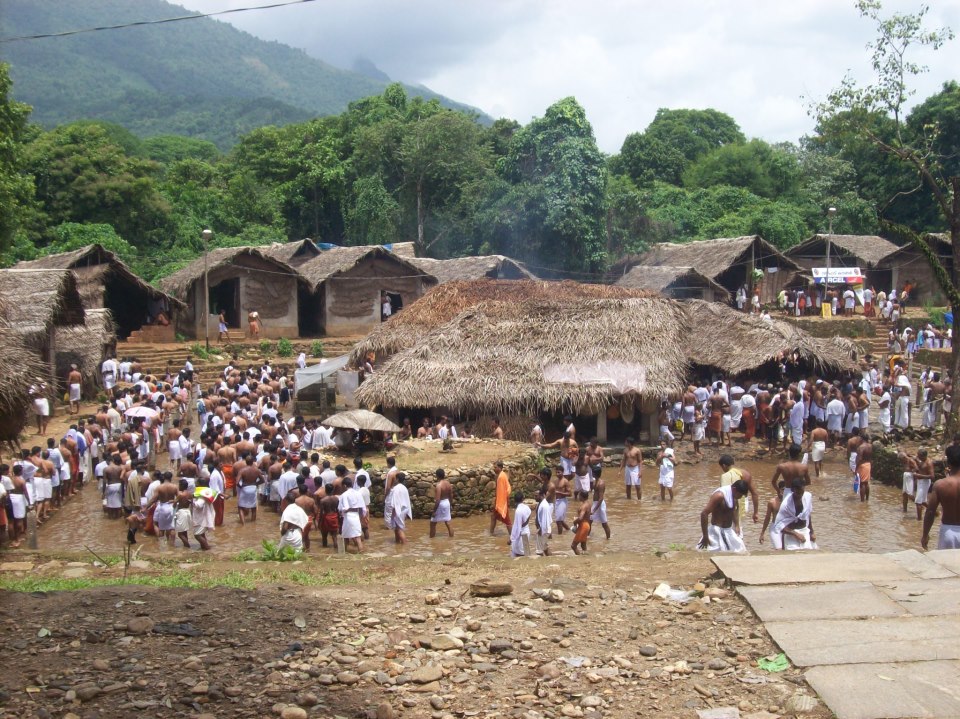
Kottiyoor Mahadeva Temple is located near Kelakam in the Kannur district. Described as the ” Varanasi of the South”, the shrine is dedicated to Lord Shiva and is an important pilgrim centre of north Kerala. Located in the deep forest, it is interesting to notice that there are no physical temple structures except for a Shiva linga. The annual festival attracts lakhs of devotees every year during the ” Vaisakha Maholsavam”. Continue reading

Prayer

Photo Credits: Ramesh Kidangoor

Photo Credits: Ramesh Kidangoor

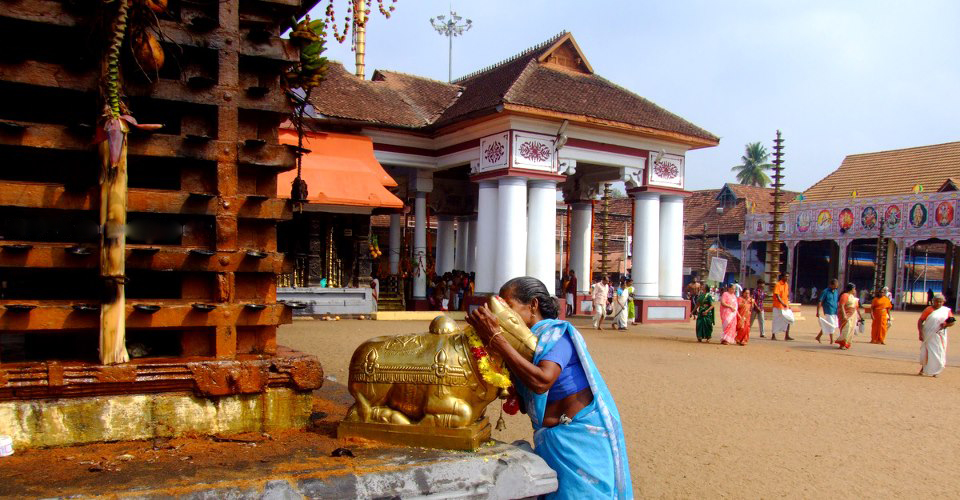
Temple worship has had a glorious tradition in India and over the years there have been many temples built for different Gods and Goddesses. In the Hindu religion, people believe the only way of establishing a relationship with God is through an animal mediator, such as the bull, snake and elephant. Continue reading

Snake Worship

Photo Credits: Ramesh Kidngoor

Photo Credits: Ramesh Kidngoor

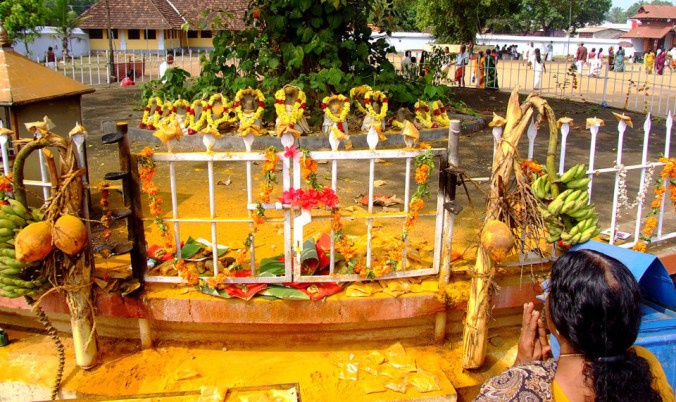
The origin of snake worship goes way back in history in many parts of India, but only in Kerala is it such a living tradition. In earlier times, in almost every Hindu household the southwest corner of the compound was set apart for a shrine called sarpakavu as the propitiation of the serpent god was considered essential to the wellbeing of the family. There are several legends associated with snake worship; it is believed that soon after Parasurama created Kerala the land with thick forests was inhabited by poisonous snakes. It is believed that people believed they could appease them through worship. Continue reading