Curiouser Than Fiction

Children examine the Automaton during a visit to The Franklin Institute.

About 5 years ago I brought home a curious book called The Invention of Hugo Cabret by Brian Selznick.  Both of my sons had been avid readers and lovers of detailed illustrations since childhood and books like The Eleventh Hour by Graeme Base had been favorites for as long as I could remember, so the elaborate charcoal drawings and almost graphic novel design in this new book were intriguing.

The most fascinating moment came with poking around the history behind the story itself.  Although placed within a work of fiction, both Georges Méliès and automatons are quite real. The Franklin Institute of Science and Technology has one in their collection with a history similar to the one in Selznick’s book:

In November of 1928, a truck pulled up to The Franklin Institute science museum in Philadelphia and unloaded the pieces of an interesting, complex, but totally ruined brass machine. Donated by the estate of John Penn Brock, a wealthy Philadelphian, the machine was studied and the museum began to realize the treasure it had been given. Continue reading
Humongous, Malodorous and Rare


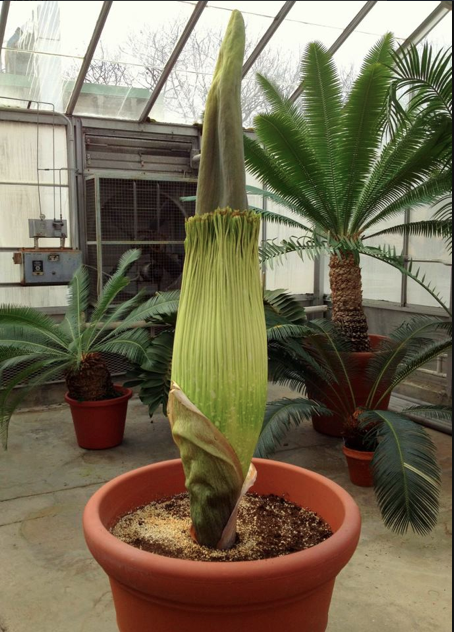
It’s big. It’s green. Its growth is rapid. And even before it actually blooms it easily brings “Audrey”, the plant from The Little Shop of Horrors to mind. An extremely rare titan arum, also called the corpse plant, is expected to bloom at the Kenneth Post Lab Greenhouses at Cornell University this week.

Titan arum, also known as Amorphophallus titanum, is a plant that grows in the wild only in the rainforests of Sumatra and rarely blooms in cultivation. Many universities and botanical gardens have specimens, but there have been approximately only 140 such cultivated blooms in recorded history.   Continue reading

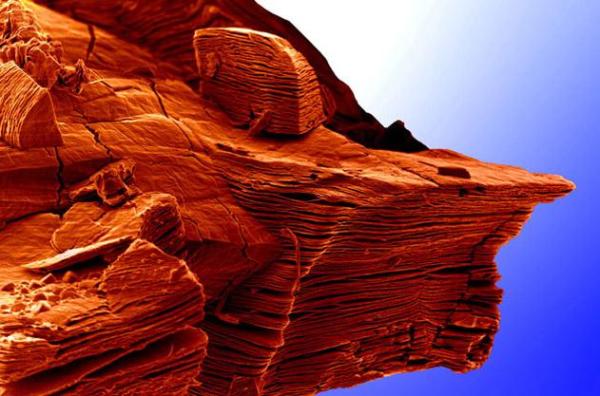
Photographing New Frontiers

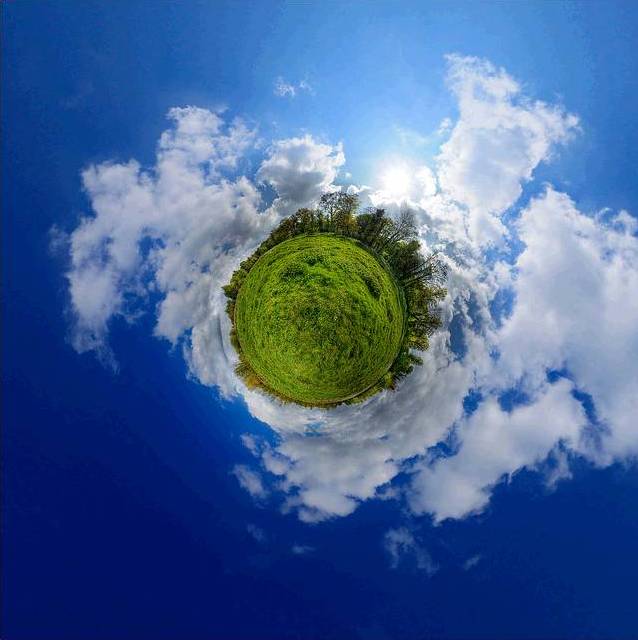
At first glance, we want to go there.  Is it somewhere in the southwest of the United States, or maybe those amazing mountains in Jordan where the dwellings of Petra might be just around the corner? Continue reading

It’s A Bird’s Life


A post from early November saved a similar video of starlings for the end.  Twitchers (a nickname for seriously devoted birdwatchers) were expected to read to the end and see that video as a crescendo of beauty. Continue reading

Perspective’s The Thing

The first day of the Chinese new year offered the opportunity to reflect on commitment and the second offers something randomly different from the same source.  Click the image to the left for the bio of Douglas Coupland, an artist whose work seems worth seeking out:

What’s both eerie and interesting to me about déja vus is that they occur almost like metronomes throughout our lives, about one every six months, a poetic timekeeping device that, at the very least, reminds us we are alive. I can safely assume that my thirteen year old niece, Stephen Hawking and someone working in a Beijing luggage-making factory each experience two déja vus a year. Not one. Not three. Two. Continue reading

USA Refresher

Before there was social media as we know it today, there was social media.  Social reformers and thinkers of all varieties have centuries of experience not just using the tools of social media, but utilizing them.  Leveraging them.  August 28, 1963 in Washington, D.C. was one of the days when the USA experienced a moment of truth, and when social media included word of mouth, television/radio simulcast and later replay.

This is the day when the man who spoke longest on that day is remembered officially.  One minute into the above video he begins speaking, but the memory is affected, no matter how many times one has seen, heard or read these words, most when that man talks about his hopes for the future of a country that had a history of injustice, but also a history of reform, change, improvement. Continue reading

Pachyderm Surprises

Click the image above to go to the source.  As one of our favored magazines writes about one of our favorite topics (but the species from another continent), we share some surprises:

1) African and Asian elephants are sometimes thought to differ only by the location of the animals, but, evolutionarily speaking, they are species as separate as Asian elephants and woolly mammoths.

2) The elephant’s closest living relative is the rock hyrax, a small furry mammal that lives in rocky landscapes across sub-Saharan Africa and along the coast of the Arabian peninsula.

Continue reading

Thank You, Wisconsin

When times are tough economically, all state-funded institutions have a tougher time convincing politicians and tax-payers of the value they deliver.  Educational institutions seem to bear the first brunt of many legislative and executive chopping block reflexes.  This graph (click the image above to go to the source.)  demonstrates the short time horizons they are seeing the world through. Continue reading

As Seen From Space

In retrospect, it seems that everyone I’ve met wanted to be an astronaut at some point in their life. And then we found out about the mind-blowing mental requirements, and hastily adjusted our horizons to firemen or veterinarians, or for the ambitious, treasure hunter. But today’s astronauts aren’t the chiseled-from-fossilized-textbook astronauts of the past (at least, that’s how I’ve imagined them) – besides academic brilliance, creative thunderstorms seem to be commonplace in those launched into space.  Continue reading

Last Chance To See

Thanks to Scientific American and its excellent blog posts, this video above is set up with some context.  The video shows what will likely be the one chance most of us get to see of this animal. Continue reading

We Are Not The Only Ones


Normally we are watching for them in Thekkady or at the orphanage.  But they are elsewhere also.  In Munnar, where there are both tea estates and plenty of forest, elephants are always lingering.

Continue reading

Peter Donnelly, Come To India!

New Brighton Pier, in Christchurch New Zealand, is fortunate in many ways.  Beautiful beach, wind for kites, friendly people.  But most of all, that fellow with the rake and the spring in his step.

And, as far as one can tell from the 10 minutes below (after the jump), that fellow has something to say.  As we did with another artist, we extend an invitation.  Could someone let Peter know?

Continue reading

Bumbling Back From The Brink

Cockerell's Bumblebee. (Credit: G. Ballmer, UC Riverside)

While news related to species loss seems almost always seem to be coming in at us like floodlights, occasionally there is a glimmer of hope shining outward in the headlines:

ScienceDaily (Dec. 5, 2011) — A team of scientists from the University of California, Riverside recently rediscovered the rarest species of bumblebee in the United States, last seen in 1956, living in the White Mountains of south-central New Mexico. Continue reading

Arctic Circle, Stop Motion

Imagine being talented enough to make that short, brilliant piece.  Now imagine being that talented and having the opportunity to share the stage with the master:

I recently took part in a presentation at Toronto’s TIFF Bell Lightbox and had the opportunity to screen The Arctic Circle for Tim Burton. After the screening, I had a few minutes on stage to get his reaction and ask a few questions.

The art is the thing, but watching the young artist on stage with the master is fun too…

Continue reading