Note To A Classicist, For The Day When He May Seek Employment

Library of Congress

Library of Congress

We are midway or more through the summer, when interns are most commonly in our midst. Normally, but not always, they are enrolled for the other nine months of the year either in undergraduate or graduate programs of just about every conceivable variety. And within a year or two of their internship they will seek employment. So we encourage them to contribute to this blog in part to practice their communication skills for when that day comes; this post in the Atlantic caught our attention for that reason, so we pass it on especially to our interns.

And to one more than the others, which seems fair in this case. As noted earlier, one of our adventurers in Costa Rica is headed soon to Cambridge, MA (USA) to enter a doctoral program in Classics. He will not likely seek employment, gainful or otherwise, for some years to come.  But when that day does come, this reference may come in handy, from one of the class classic acts of all time:

Selling yourself often feels like a grotesque act. So job applicants’ cover letters seem unlikely to contain much great prose. Instead, we tend to fill the page with false notes and empty phrases. (“I believe my skills make me the ideal candidate, and I would appreciate your consideration…”)

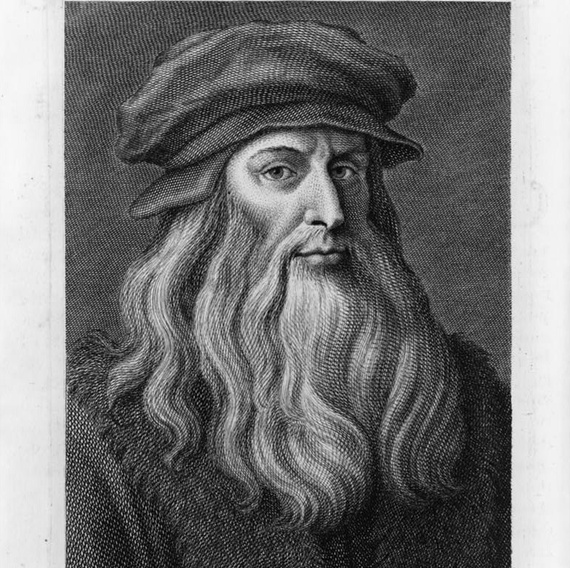
But it doesn’t have to be that way. When a 30-something Leonardo da Vinci sought work in the court of the duke of Milan in the 1480s, he wrote a short, bulleted list of ten skills that would have been sure to catch the eye of any Renaissance-era ruler: he could design portable, indestructible bridges; build unassailable vehicles; destroy most fortresses; and so on. (He also could “execute sculpture in marble, bronze and clay,” and wasn’t so bad with a paintbrush, either.) His letter was brisk, convincing, and a pleasure to read…
Continue reading

What Happens When You Write

Screen Shot 2014-06-22 at 1.03.57 PM

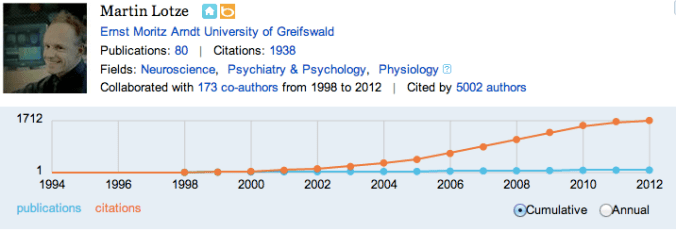
The graph above tells a story about what happens when an author-researcher writes compellingly about scientifically rigorous findings. Citations build. In this particular case, some of those citations are of research about the brain’s inner workings during the process of writing. Carl Zimmer’s attention to the work of Martin Lotze, in the Science section of the New York Times, is as scintillating as Zimmer gets:

…A novelist scrawling away in a notebook in seclusion may not seem to have much in common with an NBA player doing a reverse layup on a basketball court before a screaming crowd. But if you could peer inside their heads, you might see some striking similarities in how their brains were churning. Continue reading

Brown University Keeps Giving

Ackerman-290We have a tradition of honoring Brown University from time to time because of the many gifts to the world that come from that place. The letter to the Editor (the New Yorker‘s) below is one of those. Why? Mainly, just because. It is about the quality of writing, in this case. If you read it and do not feel it is worthy, no problem. Tempting to think one must have read the original piece to appreciate the letter in full, but not really. Professor Ackerman has simply written the perfect pithy paragraph:

Re “All the Letters That Are Fit to Print,” April 10th online: Of course, I am delighted with Andrew Marantz’s piece about me. But I have three small bones to pick. First, he quotes me as saying, “I then decided that I would probably live longer if I was less fat.” He also says I speak “hypergrammatically.” So I certainly hope I said, “if I were less fat.” Continue reading

Train Rider, Writer

A postwar ad for the Pennsylvania Railroad.

A postwar ad for the Pennsylvania Railroad.

We link on occasion to good travel writing. It can inspire discovery. It can bring novel forms of attention to community, collaboration and conservation. Sometimes writing while traveling is the point. It may sound like merely a romantic notion, but apparently it is also a practical consideration that trains can make for good writing conditions. We ignored this story when it first came up in several of the publications we track as the source of controversy about whether this writer had any ethical dilemmas to wrestle with (the best summary of those issues can be found here).  Now that we read her piece in the Paris Review, we take it at face value:

I am in a little sleeper cabin on a train to Chicago. Framing the window are two plush seats; between them is a small table that you can slide up and out. Its top is a chessboard. Next to one of the chairs is a seat whose top flips up to reveal a toilet, and above that is a “Folding Sink”—something like a Murphy bed with a spigot. There are little cups, little towels, a tiny bar of soap. A sliding door pulls closed and locks with a latch; you can draw the curtains, as I have done, over the two windows pointing out to the corridor. The room is 3’6” by 6’8”. It is efficient and quaint. I am ensconced.

I’m only here for the journey. Soon after I get to Chicago, I’ll board a train and come right back to New York: thirty-nine hours in transit—forty-four, with delays. And I’m here to write: I owe this trip to Alexander Chee, who said in his PEN Ten interview that his favorite place to work was on the train. “I wish Amtrak had residencies for writers,” he said. I did, too, so I tweeted as much, as did a number of other writers; Amtrak got involved and ended up offering me a writers’ residency “test run.” (Disclaimer disclaimed: the trip was free.)

So here I am. Continue reading

Science Writers’ Craft

At the aggregating blog Medium, a few tips from a great science writer, with a reiteration of what some non-science writers say about effective writing, where they do it, their routines, etc.:

If you want to get a handle on what’s happening at the frontier of biology, Carl Zimmer is your man. He’s the author of numerous books, including Evolution: The Triumph of an Idea, writes a regular column on science for the New York Times, and his award-winning blog, The Loom, is part of National Geographic’s Phenomena collective.

We asked him how he writes.

What’s the one thing you’ve learned over time that you wish you knew when you started out?

I wish someone told me I shouldn’t be making ships in a bottle. To write about anything well, you have to do a lot of research. Even just trying to work out the chronology of a few years of one person’s life can take hours of interviews. If you’re writing about a scientific debate, you may have to trace it back 100 years through papers and books. To understand how someone sequenced 400,000 year old DNA, you may need to become excruciatingly well acquainted with the latest DNA sequencing technology. Continue reading

Good Arcs Make Good Stories

Thanks to Maria Popova for sharing Kurt Vonnegut’s brief lesson on the basics of story-telling, a reminder to all of us that shaping the lines of the telling is key to the story-listener’s hearing of it.  As Seth shapes the story of Iceland’s role, and travelers’ story-telling roles, in the early precursor to modern nature tourism, the rest of us contributors to this site likewise note our own task in telling our stories effectively. In a written version on the same topic, Vonnegut put it this way:

…Now, I don’t mean to intimidate you, but after being a chemist as an undergraduate at Cornell, after the war I went to the University of Chicago and studied anthropology, and eventually I took a masters degree in that field. Saul Bellow was in that same department, and neither one of us ever made a field trip. Continue reading

Successful Women Writers, Entrepreneurial Exemplars

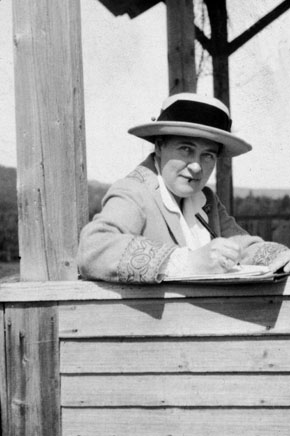
circa 1923:  American author Willa (Sibert) Cather (1873 - 1947) uses a ledge while writing outdoors during a vacation in New Hampshire.  (Photo by New York Times Co./Getty Images)

circa 1923: American author Willa (Sibert) Cather (1873 – 1947) uses a ledge while writing outdoors during a vacation in New Hampshire. (Photo by New York Times Co./Getty Images)

Writing in the New Yorker‘s website section titled Page-Turner, Joan Acocella posted recently about the tendency of women writers, historically, to begin their writing careers later than their male counterparts.  She uses Willa Cather’s case as an example and draws a conclusion that could  as easily be applied to entrepreneurship (bold added below to highlight the conclusion):

…By her thirties, she had acquired a very good job, as the managing editor of McClures, an important New York magazine. She got to go to Europe and meet famous writers. But secretly she herself wanted to be a writer. She was sure she could not be. The most honored novelist of that time, the nineteen-tens, was Henry James: refined, complicated, urban. Cather, meanwhile, was still kicking the dust of Red Cloud off her shoes. Finally, at thirty-seven, in what must have been a wrenching act Continue reading

Getting The Story

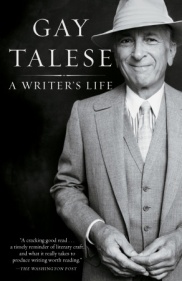
His autobiography has been in print since 2007, but Longform helped bring that book back to our attention by bringing Gay Talese on stage at New York University recently, to talk about his life writing for Esquire in the 1960s and for The New Yorker today.  He tells his story during the onstage interview as only a master story-teller can. It is about listening; crafting; working: building a community of sources and fellow-writers:

“I want to know how people did what they did. And I want to know how that compares with how I did what I did. That’s my whole life. It’s not really a life. It’s a life of inquiry. It’s a life of … knocking on a door, walking a few steps or a great distance to pursue a story. That’s all it is: a life of boundless curiosity in which you indulge yourself and never miss an opportunity to talk to someone at length.” Continue reading

The Shifting Sands Of Relevance

An essay published today in Lapham’s Quarterly reminds us of one man’s contribution to the travel writing genre in a previous century, in comic form but with clear hints at important cultural issues related to travel.  The main theme of the essay, which is that not all writing important at a given moment in time travels well over time, is a humbling one considering the writer who is the subject of the essay:

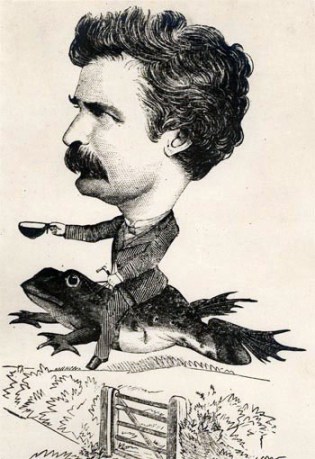
On November 18, 1865, the New York Saturday Press published a short sketch called “Jim Smiley and His Jumping Frog” about a frog-jumping contest in rural California. It “set all New York in a roar,” reported one journalist, and soon went viral, reprinted in papers from San Francisco to Memphis. The story’s author was Mark Twain, the pseudonym of a twenty-nine-year-old writer born Samuel Clemens. At the time, Twain was living in California, enjoying provincial renown as a Western humorist. The success of “Jim Smiley” made him nationally famous. “No reputation was ever more rapidly won,” observed theNew York Tribune. Continue reading

Then And There, Here And Now

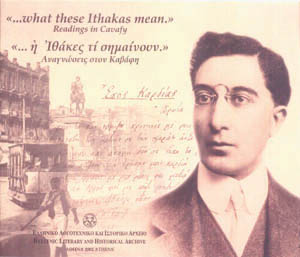
Orhan Pamuk says that “C. P. Cavafy makes no explicit reference to himself in his best and most stirring work; and yet, with every poem we read, we cannot help thinking of him.”

Does it take an Istanbulian to know one? Does it take a great writer to know one? You do not need to be a fan of poetry, nor of this particular poet, to appreciate the observations of one of the great observers of our time, with regard to living here and there but neither here nor there, and with regard to the idea of universality in art:

Cavafy was born in Alexandria, Egypt, in 1863, to a Greek family of wealthy drapers and cloth merchants. (The word kavaf, now forgotten even by Turks themselves, is Ottoman Turkish for a maker of  Continue reading

Thanks For Your Notes, Tom

Mark Seliger/Little, Brown and Company, via Associated Press

Mark Seliger/Little, Brown and Company, via Associated Press

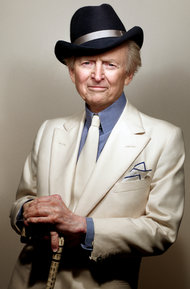
When we read a great book, we get transported into a world of the author’s creation. We are not expected, nor do we normally want, to think about what went into that creation.  Literary critics, perhaps, but not we lay readers. One exception to this general rule is when a writer comes along and changes things with his or her style of writing.  Then, we might be curious about the craft itself. We have posted on this topic from time to time for various reasons related to Raxa Collective’s commitment to written documentation of our experiences. Today, one such craftsman has decided to share his craft (at a wow price, for both him and the recipient, we note). A few excerpts about this news as reported in the New York Times:

…But now, Mr. Wolfe is about to be enshrined in one of the city’s most august institutions, thanks to the sale of his archives to the New York Public Library. Continue reading

Writer’s Routines

How Jhumpa Lahiri wrote “The Lowland.”

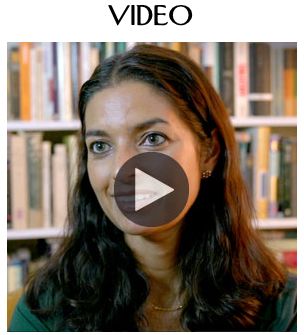
All contributors to this site can appreciate the concerns of a professional writer and her daily routines related to writing.  Our writing is always brief, and by definition for the format meant to be more casual, but it still requires discipline and effort.  Writers should write, yes, even when it is “just” a weblog like this one. But how? Routines matter.  It is worth hearing in her own words one great writer’s comments on this:

…During a visit to Lahiri’s house in Brooklyn (she currently lives full-time in Rome), we asked how she went about writing the book.  Continue reading

Writing To Clarify

The Washington Post is not one of our go-to sources for interesting stories, but we care deeply about journalism as a pillar of the communities we are involved in. What happens to this particular journalistic institution is of interest because of its perceived influence on policy in an influential community. For that reason, 12 minutes spent listening to the man who led the decision to sell the newspaper to one particular buyer may be worthwhile.  But there is a much better reason to listen to him, and it comes exactly at minute 10 in this interview, when he describes how meetings are conducted at Amazon, and the importance of writing to clear communication.

Sanskrit poetry: “If my absent bride were but a pond”

Sanskrit lyric poetry is often noted for its sexual nature and flourished in the eleventh century where it was compiled by Vidyakara under the title “The Treasury of Well-Turned Verse”. Vidyakara, was a poet and a scholar of the XIth century.  Although he is thought to have been a buddhist monk, his “Treasury” is well versed on the matters of heart . This anthology of sanskrit court poetry addresses themes such as sex, love, and heroes, peace and nature.

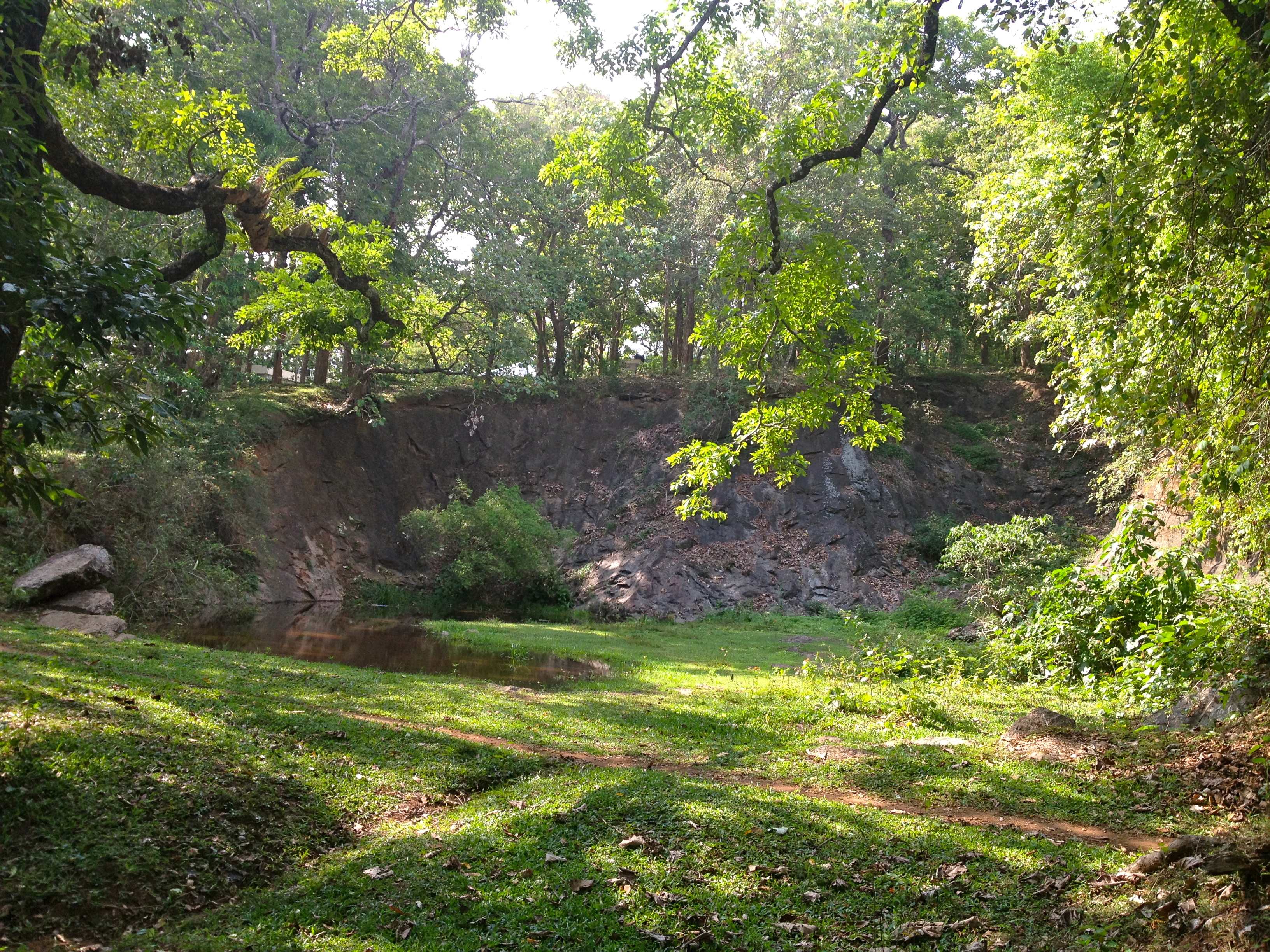
Ponds in the woods of Thekkady

If my absent bride were but a pond, Continue reading

Malayalam font: research and reinvention at Thought Factory Design

One of the things you notice first when you arrive Kerala is the beautifully curvy and mysterious script. The Malayalam alphabet consists of 56 letters. Its rounded form comes from the fact it was primarily handwritten with a sharp point on dried palm leaves. Continue reading

So I’ve arrived at Cardamom County

This week, I arrived in Thekkady, at the frontier between Kerala and Tamil Nadu. My name is Allegra I’m a french professional who decided to take a break from hectic Paris to learn about entrepreneurial conservation and eco-tourism. I’ll spend the next two months at Cardamom County with Raxa Collective. Cardamom County borders the Periyar Tiger Reserve. As it nears the center of a bustling spice-trading town, I sometimes forget we’re in a forest. Nature always finds a way to remind you though. Continue reading

Obelisks in Rome

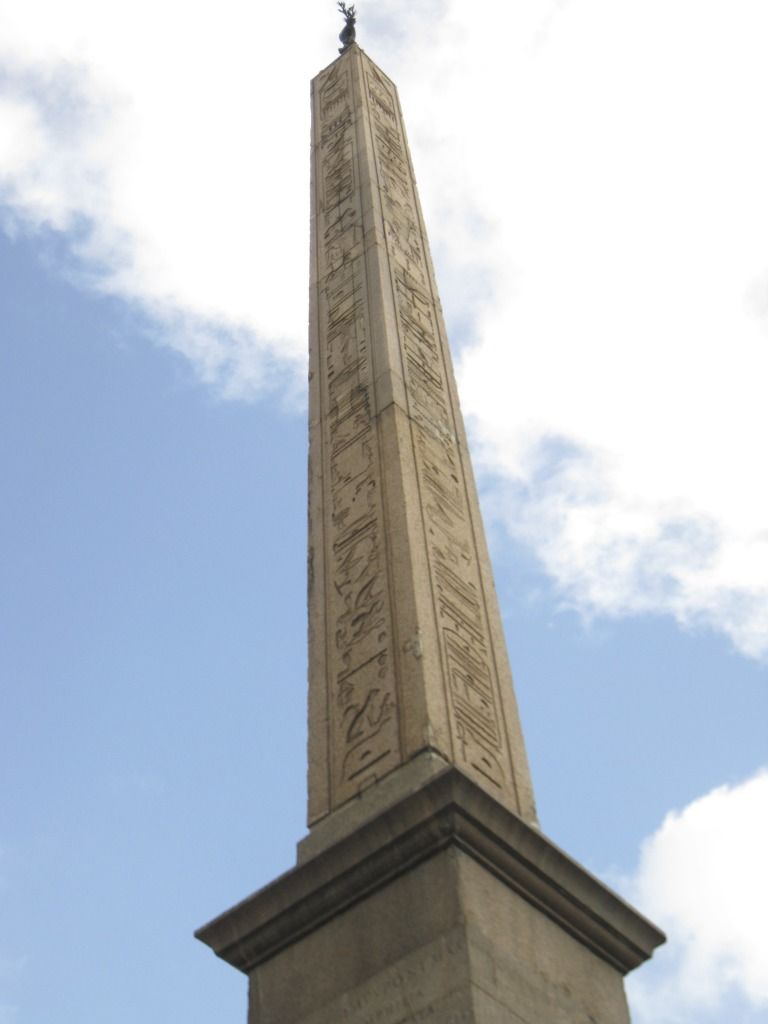
The Obelisk at Piazza Navona

Rome is renowned for (among many other, er, more important things) its vast “collection” of obelisks. These obelisks, most featuring hieroglyphics running their length, typically came to Rome through conquests in Egypt. Victorious generals and emperors Continue reading

Writer’s How

Another in our series of links meant to help each of us contributing to this site to write as well as we can:

In the morning, I don’t talk to anyone, nor do I think about certain things.

I try to stay within certain confines. I imagine this as a narrow, shadowy corridor with dim bare walls. Continue reading

What A Place, What A Pair, What A Story

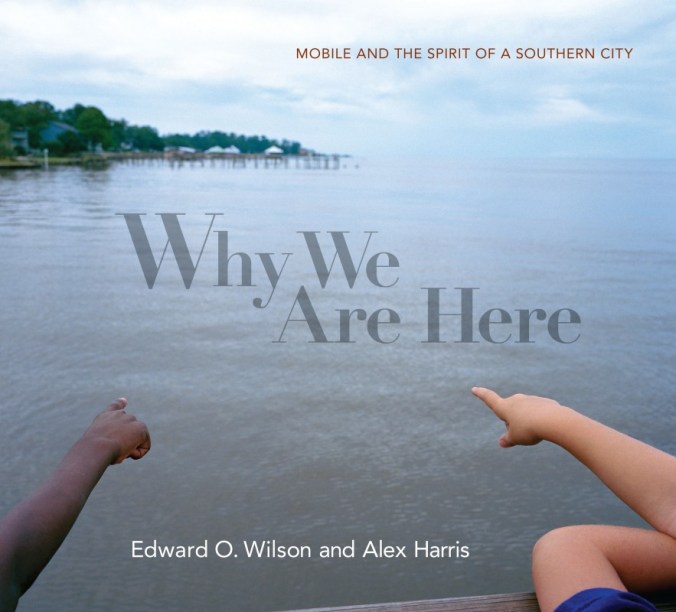
01books

Thanks to National Public Radio in the USA for this amazing sense of people, and place and meaning (click on the image of the book above to go to the story in full) involving an evolutionary biologist we have mentioned more than once and a photographer we will start paying more attention to:

In 1991, photographer Alex Harris was nominated for a Pulitzer Prize in general nonfiction for his book River of Traps, written with William deBuys. It told the story, in words and pictures, of an old-time New Mexican villager. Harris didn’t win.

Instead, the prize went to evolutionary biologist E.O. Wilson for The Ants.

“It took me 20 years to get over that defeat,” said Harris.

Then, coincidentally, Continue reading

Writing Places

Wolfe

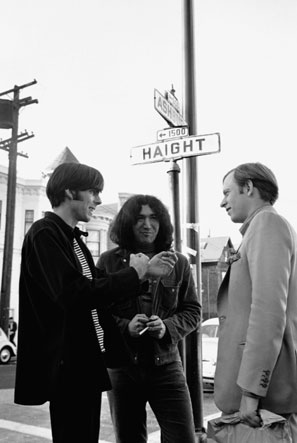
TED STRESHINSKY/CORBIS. Wolfe (right) with the Grateful Dead’s Jerry Garcia (center) and the band’s manager, Rock Scully, in 1966 San Francisco

In our quest to understand why and how great writers write greatly, we have started to pay attention to when and where they write.  This article, about one of the most influential writers of the last generation in the United States, focuses on the big picture role of place in his writing.  Click the image to go to the article:

Over the course of his career, Wolfe has devoted more pages to the Golden State than to any setting other than Gotham. In his early years, from the mid-1960s through the early 1970s, the ratio was almost one-to-one. More to the point, the core insights on which he built his career—the devolution of style to the masses, status as a replacement for social class, the “happiness explosion” in postwar America—all first came to him in California. Even books in which the  Continue reading