
Jamnagar, Gujurat
Jamnagar, Gujurat
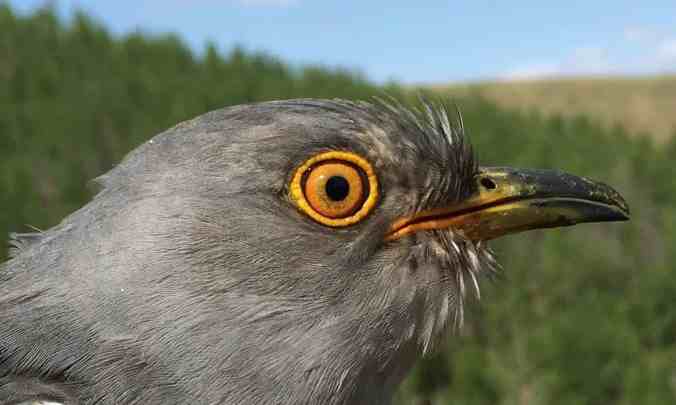
Onon returned after a 26,000km round trip that took in 27 border crossings and 16 countries. Photograph: Mongolia Cuckoo Project/Birding Beijing
Thanks to ornithologists like Dr Hewson, and to scientific instruments like the tracking device on Onon, we can see that Onon the cuckoo has made one of the longest migrations recorded by any land bird:

Guardian graphic. Source: The Mongolia Cuckoo Project
Cloud cuckoo land? How one bird’s epic migration stunned scientists
When Onon the common cuckoo took off from Mongolia last June no one expected him to make a 26,000km round trip to southern Africa
Onon moments before he was released on 8 June 2019. Photograph: Mongolia Cuckoo project/Birding Beijing
When Onon took off above the rolling hills of the Khurkh valley in Mongolia last June, researchers had no idea if they would see him alive again. Along with one oriental cuckoo and three other common cuckoos, each fitted with a tiny tracking device, he was about to embark on an epic journey to southern Africa.
Last month, he was the only bird to return safely with his tracker intact.
“It’s an amazingly long migration,” says Dr Chris Hewson, senior research ecologist at the British Trust for Ornithology, who said Onon’s 26,000km round trip was one of the longest journeys recorded by any land bird. Continue reading

San Gerarda de Dota, Costa Rica
We are happy to learn their fate, but did not even know they had a fate to consider. Bees at church? Come to think of it, churches are normally considered a safe haven. Thanks to Kim Willsher (again, at long last) and the Guardian (as always) for this coverage:
They survived fire and toxic fumes. So what happened next to Notre Dame’s bees?
Hives that survived catastrophic Paris cathedral blaze are healthier than ever, says beekeeper
Sibyle Moulin tending the hives on the roof of Notre Dame in 2018. Photograph: Dmitry Kostyukov/The New York Times/eyevine
It is a crisp winter morning and the area around Notre Dame is sealed off as it has been since the fire last April that devastated the cathedral.
Those in the know, however, especially those with the keenest of eyes, might spot some small movement high up to the south of the stricken and blackened structure.
The bees of Notre Dame, whose escape from the inferno seemed almost miraculous, are thriving and conserving their energy ready to produce honey this summer, just as they have every year since they took up residence on the sacristy roof in 2013. Continue reading

Santa Rosalía, Santa Catarina Pinula, Guatemala
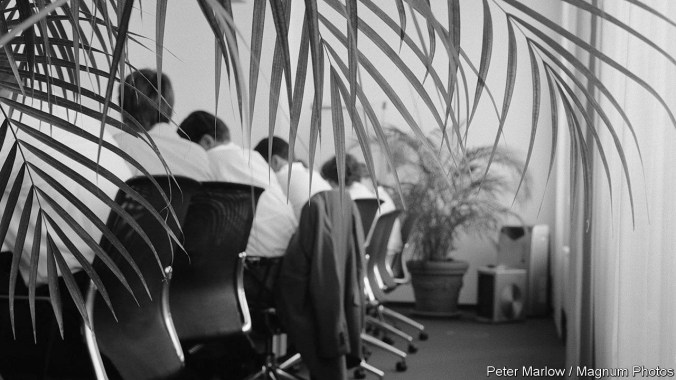
Thanks to the Economist for keeping it real:
The trouble with climate finance
Green investing has shortcomings
The financial system and climate change
The financial industry reflects society, but it can change society, too. One question is the role it might play in decarbonising the economy. Judged by today’s fundraising bonanza and the solemn pronouncements by institutional investors, bankers and regulators, you might think that the industry is about to save the planet. Some 500 environmental, social and governance (esg) funds were launched last year, and many asset managers say they will force companies to cut their emissions and finance new projects. Yet, as we report this week (see article), green finance suffers from woolly thinking, marketing guff and bad data. Finance does have a crucial role in fighting climate change but a far more rigorous approach is needed, and soon. Continue reading
Macaw Sanctuary, Costa Rica
 The image to the right is from twenty years ago, during my first foray into the world of coffee. It is not the most flattering photo, but it will do. I was eight, on location with my brother and parents at a worksite in Nicaragua. One part of the project was the development of a coffee tour, and my brother and I were tasked with testing how a young person might react to that experience. The expression on my face was, I suppose, a slightly embarrassed result of how little coffee I had managed to pick relative to the basket’s capacity. There was plenty of coffee to be picked, but these 20 years later I still remember how hard that work was.
 The second foray was in 2011, back in the same region of Nicaragua, but as an intern documenting the coffee growing and maintenance process, as well as having the pleasure of zooming over a coffee plantation on a canopy tour zip line.
Just a year later, my third foray came when I spent the summer living on an organic farm freshly planted with coffee. What made it special, even spectacular, was that the farm was one of the rare private properties in the Galapagos Islands and was situated in the vicinity of the forests where the giant tortoises roam.
The fourth foray, which I wrote about in these pages, was between 2014 and 2016. I participated in each step from germination, to planting, harvesting, processing, roasting and cupping. I created a coffee tour on property that was an echo of the work done 15 years earlier in Nicaragua.
My fifth and most recent foray, over the last few years, has been the start up of Organikos. During the months leading up to starting graduate school I developed a plan with my parents to launch the coffee business as part of their Authentica venture. That brick and mortar retail approach worked out very well, until the world changed a few months ago. So now online and onward…

Little Rann of Kutch, Gujurat
Here is some food for thought, thanks to HighCountry News:
Navajo ranchers are raising premium beef
Is their success sustainable?
The land on the Padres Mesa Demonstration Ranch, in northeastern Arizona, stretched so vast and wild that it could be perspective-skewing, easy to get lost in. But Bill Inman effortlessly navigated his truck through a sea of blue grama grass, broom weed and sage. When he spotted a herd of cows, he hit the brakes.
“She’s a box of chocolates,” Kimberly Yazzie said as she pointed at a stately heifer.
About a dozen cows with week-old calves were bedded down in late winter forage, all muted greens and gold. Continue reading

Costa Rica

Microscopic plankton: they provide a food source for fish, seabirds and other marine life, as well as absorbing CO2 emissions
Although we’ve highlighted citizen science so many times on these pages, it never occurred to me that some of these projects have spanned nearly 9 decades.This particular project’s device is called a continuous plankton recorder (CPR). An apt acronym, indeed.
Tiny plankton tell the ocean’s story – this vast marine mission has been listening
Since 1931 ‘citizen scientists’ on ships have enabled data collection on the tiny building blocks of the sea. Now this research could shape how we tackle the climate crisis
On a clear day, from their small, unassuming warehouse on the south Devon coast, Lance Gregory and Dave Wilson can see right across Plymouth Sound to the Eddystone lighthouse. Today, they’re watching a ferry from Brittany, the Armorique, pull into dock.
Behind it, the ferry is towing a one-metre-long device shaped like a torpedo. It doesn’t look like much, but it’s part of the planet’s longest-running global marine survey.
The device is called a continuous plankton recorder (CPR), and it’s one of 53 such devices that Gregory and Wilson manoeuvre using forklifts in their warehouse, surrounded by racks of distinctive yellow boxes and clipboards covered in spreadsheets.
They dispatch these CPRs in bright yellow boxes to “ships of opportunity” – ferries, cargo or container vessels that have agreed to volunteer for the mission. Once a ship leaves port, the crew attach the device to the stern using steel wire, then toss it overboard.
Trailing along behind the ship, it collects data for the CPR survey. The mission is vast but the subject is minuscule: plankton, the tiny organisms that drift in the ocean. Every marine ecosystem relies on plankton for its basic food source, and it generates half the oxygen we breathe. Perhaps more than any other organism, it is crucial to all life on our planet.
The CPR survey is the longest-running marine science project of its kind. It began in 1931 when the scientist Sir Alister Hardy investigated how herring were influenced by plankton in the North Sea. This month the distance surveyed will reach an impressive 7m nautical miles, equivalent to 320 circumnavigations of the Earth.
Since that first tow from Hull to Germany 89 years ago, the equipment has hardly changed. So far a quarter of a million samples have been analysed, representing a vast geographical spread over the course of the past century. The immense scope has allowed scientists to see dramatic patterns in ocean health, across both time and space, building a much clearer picture of how our marine environments are changing.
It is also, says Gregory, “one of the oldest citizen science projects in the world”. Continue reading

Vijayapur, Karnataka
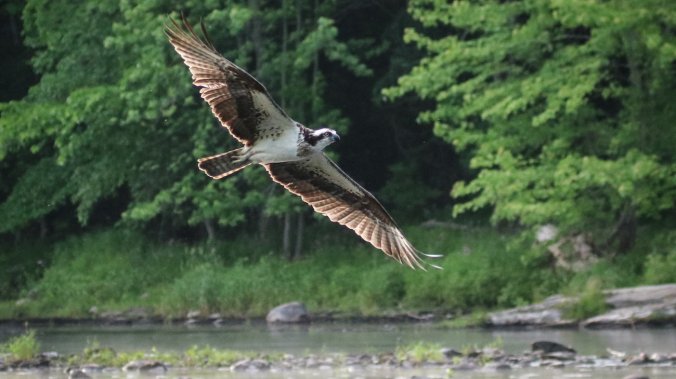
Osprey looking for alewives along the Sebasticook River in Maine. The removal of two dams has allowed migratory fish to return. Murray Carpenter
Migration, an ageless natural phenomenon, can be all the more spectacular when we remove its constraints:
‘One Of The Best Nature Shows’: A River Transformed After Dams Come Down
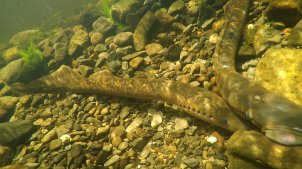
Sea lamprey making a spawning nest in the Sebasticook. Murray Carpenter
Along central Maine’s Sebasticook River, the first thing you’ll notice are the birds. Eagles are everywhere, wading on gravel bars and chattering from the trees.
“A whole bunch of birds, they’re bald eagles, those are all bald eagles!” says conservationist Steve Brooke.
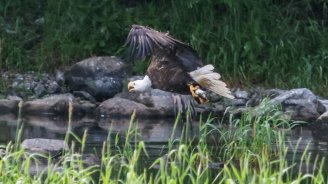
A recent count found nearly 200 bald eagles along the Sebasticook. This one has caught an alewife. Murray Carpenter
It’s a dramatic sight, as the bald eagles swoop to catch fish from the river. And it’s a sight that Brooke predicted for this region, more than 20 years ago. That’s when he began advocating for the removal of a large hydroelectric dam downstream, on the Kennebec River. The Edwards Dam came down in 1999 after the federal government ordered its removal, saying the ecological costs outweighed the benefit of the power it provided. Continue reading

Antisana Reserve, Ecuador

For some time now green has been the new thing and we live in one of its showcases, with access to all kinds of tropical nature within easy driving distance. But it has been where we live that, for the last few months, has had us greening our own living patterns. There will be a fuller post on that soon, but for now I just smile at my friends across the Atlantic, on a day when our rooster woke me as usual well before the sunrise. And opening the gallinero (chicken coop) on my way to the lower land we are planting, I was sensitive to the smell that I had otherwise stopped noticing until I read this short piece. I appreciate the imaginative approach, probably unique to France, to protecting heritage that some at best take for granted and others find a nuisance:
Townies v tractors
French urbanites fuss about rustic noises and smells
Some second-home owners have sued over loud livestock and church bells
France’s sense of itself has long been rooted in the land, even though three-quarters of French people live in towns. Now, however, having locked down in small airless spaces, many city-dwellers feel the call of the wild. Estate agents report an uptick in searches for homes with gardens. Diehard urbanites talk wistfully of a bucolic existence in la France profonde. In a poll, 61% of the French think confinement will encourage people to move to the country or buy a second home. But do today’s townsfolk know what rural life really entails?
The question arose late last year, when Pierre Morel-À-L’Huissier, a deputy from the Lozère, a remote rural area, introduced a bill to protect France’s “sensory heritage”. By this, he meant “the crowing of the cockerel, the noise of cicadas, the odour of manure”, and other rural sounds and smells. Continue reading
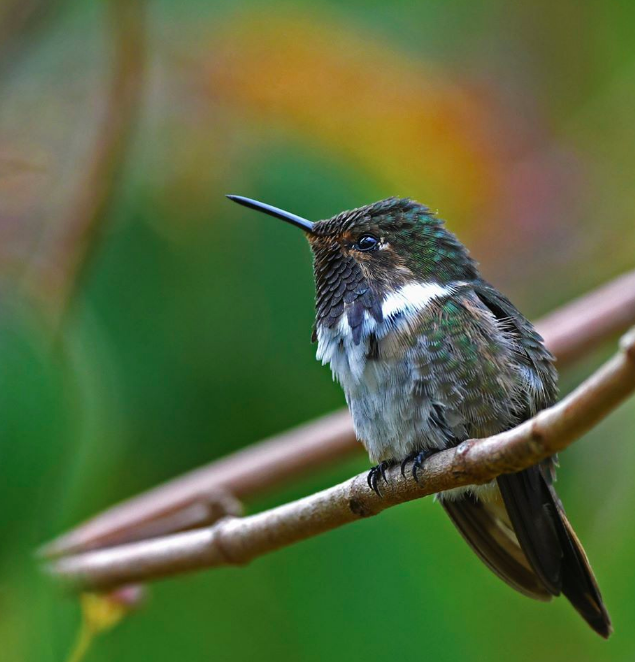
Talamanca Mountains, Costa Rica

LEFT: “War gardens over the top. The seeds of victory insure the fruits of peace,” Maginel Wright Enright, National War Garden Commission, 1919 (Library of Congress). RIGHT: “War gardens for victory—Grow vitamins at your kitchen door,” lithographed by the Stecher-Traung Lithograph Corporation, Rochester, New York, between 1939 and 1945 (Library of Congress).
In the latest Gastropod episide, Dig for Victory, we get some new background on an old topic that has been on our minds lately:
You’ve seen the news: vegetable seeds are selling out. All that quarantine ennui has combined with anxiety about the gaps on supermarket shelves to create a whole new population of city farmers in backyards and windowsills across America. And everyone from the Los Angeles Times to Forbes to CBS has dubbed these brand new beds of beets and broccoli “COVID-19 Victory Gardens.” Continue reading
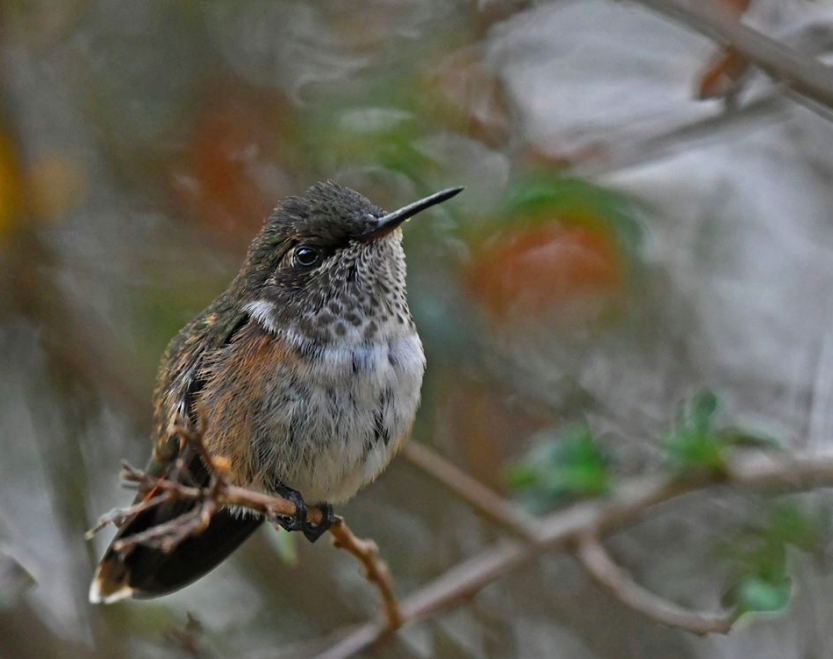
Talamanca Mountains, Costa Rica

When we started this platform, from a base in south India, we were surrounded by charismatic mega-fauna. Even the squirrels were unusually beautiful and large. The purpose of the platform being to highlight stories of creative, entrepreneurial approaches to conservation as much as to raise awareness of environmental issues more broadly, there is a new form of mega charisma worth noting today. It may make a difference to the issues we have been pointing to since the first post nine years ago:
Climate emission killer: construction begins on world’s biggest liquid air battery
Exclusive: project will store renewable energy and reduce climate-heating emissions
Construction is beginning on the world’s largest liquid air battery, which will store renewable electricity and reduce carbon emissions from fossil-fuel power plants.
The project near Manchester, UK, will use spare green energy to compress air into a liquid and store it. When demand is higher, the liquid air is released back into a gas, powering a turbine that puts the green energy back into the grid.
A big expansion of wind and solar energy is vital to tackle the climate emergency but they are not always available. Storage is therefore key and the new project will be the largest in the world outside of pumped hydro schemes, which require a mountain reservoir to store water. Continue reading
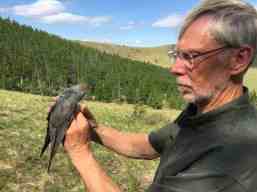
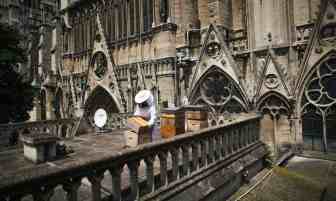

 Organikos