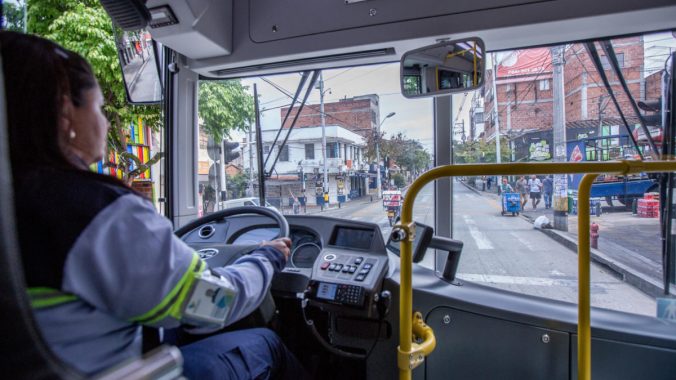
An electric bus in service on the streets of Medellín, Colombia. METRO DE MEDELLÍN
Happy to see our neighbors to the south taking the lead in greening public transportation:
An Increasingly Urbanized Latin America Turns to Electric Buses
From Colombia to Argentina, major cities in Latin America are starting to adopt electric bus fleets. In a region with the highest use of buses per person globally, officials believe the transition will help meet climate targets, cut fuel costs, and improve air quality.
Medellín will have 65 electric buses in service by the end of the year, making it the second-largest electric bus fleet in Latin America. MARIA GALLUCCI/YALE E360
In Medellín, Colombia, passengers cram aboard a battery-powered bus during the morning commute. Inside, the vehicle is a respite from the crush of cars, taxis, and motorcycles winding through traffic outside. The driver, Robinson López Rivera, steers the bus up a steep ramp, revealing views of hillsides covered with rooftops of tile and tin. The bus dashboard indicates that the batteries are mostly charged, with enough power to last through the evening rush hour.
“It’s a little smoother and more comfortable to drive. And there’s hardly any noise,” López Rivera says from behind the wheel. He gently brakes as a street vendor pushes a fruit cart across the dedicated bus lane. At night, the bus will return to a parking lot by the airport, recharging its 360-kilowatt battery pack while the city sleeps.

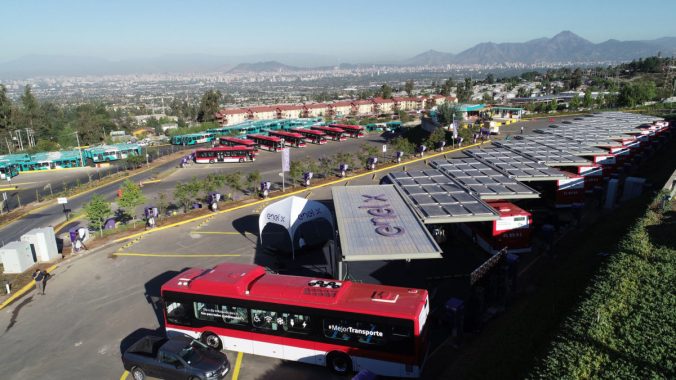
An electric bus charging terminal in Santiago, Chile, which draws power primarily from solar panels. ENEL X
The other 77 buses in the city’s bus rapid transit system, called Metroplús, run on natural gas and move about 251,000 passengers daily. Thousands more privately owned coaches and minibuses burn diesel as they traverse the sprawling metropolitan area of 3.7 million people, with older models leaving a trail of sour-smelling smoke. Faced with chronic air pollution and concerns about climate change, Medellín is now trying to move quickly to electrify its entire mass transit network. Continue reading



















 Organikos