
Cres, Croatia
Charismatic Doesn’t Always Have to Be Cute
We applaud Pennsylvania lawmakers for choosing to highlight a creature whose presence in waterways indicates healthy ecosystems. Thanks to NPR for the story.
Snot Otter Emerges Victorious In Vote For Pennsylvania’s Official Amphibian
Pennsylvania’s soon-to-be official amphibian has more than its fair share of nicknames: snot otter, mud devil, Allegheny alligator, devil dog, lasagna lizard.
In short, it’s not exactly a looker.
But the Eastern hellbender salamander was the overwhelming choice of lawmakers for amphibian representation in the state. On Tuesday, the state’s House of Representatives voted 191-6 on a bill that would name the aquatic creature its state amphibian. The Senate passed the bill in February.
The hellbender is a nocturnal salamander that can grow more than 2 feet long. The mud-colored creature, covered in a layer of mucus, breathes primarily through loose flaps of thick, wrinkled skin that look a little bit like lasagna noodles.
The hellbender is also a canary for environmental degradation. Continue reading
Bird of the Day: Crested Lark
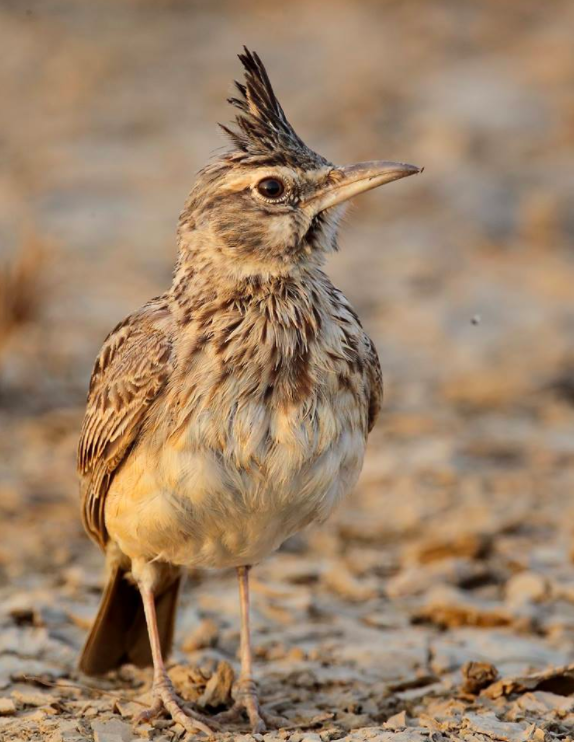
Banni Grasslands Reserve, Gujurat
Misunderstandings That Become Taken For Granted

The Atlantic’s website helps me ensure that I do not miss any intriguing episodes of Gastropod, which I listened to more frequently before we moved back to Costa Rica. Especially when we were in the process of developing 51, a restaurant in the colonial spice-trading district of Fort Cochin, in southwest India. This current headline in the Atlantic, which took me back to those years when delicious misunderstandings were the daily fare, was one I had to surrender to:
The Word Curry Came From a Colonial Misunderstanding
No Indian language uses the term, and the closest-sounding words usually just mean “sauce.”
And over at the Gastropod website, this ensured that I would listen all the way through:
…According to Lizzie Collingham, food historian and author of Curry: A Tale of Cooks and Conquerors, to trace the origins of curry, we need to go back to when the Portuguese first set up shop in Goa, in the early 1500s. “And they’d say, Oooh, what are you eating?” said Collingham, “And the Indians replied using a word like khari or caril.” At the time, Collingham explained, those words likely referred to a particular spice blend, as well as the finished dish it was used in; the same words are still in use, but they now mean sauce or gravy. Today, that’s Raghavan Iyer’s definition: he authored a doorstop of a cookbook called 660 Curries, and he uses “curry” to refer to “anything that has a sauce or gravy—it can be with or without spices.”…
Bird of the Day: Keel-billed Toucan
Bullet Tree, Belize
Summer Rayne Oakes
Summer Rayne Oakes, as a name, is likely to stick in my memory. She was a student at Cornell when I was teaching there, but until now I did not know of her. Thanks to this feature on one of the websites I scan regularly for stories relevant to this platform, I found my way to her website, so now I know a little bit about who she is. I like the causes she supports, and that is enough for today’s post. But the interior greenery throughout the 6+ minutes of video above is refreshing, and that is the real purpose for sharing it.
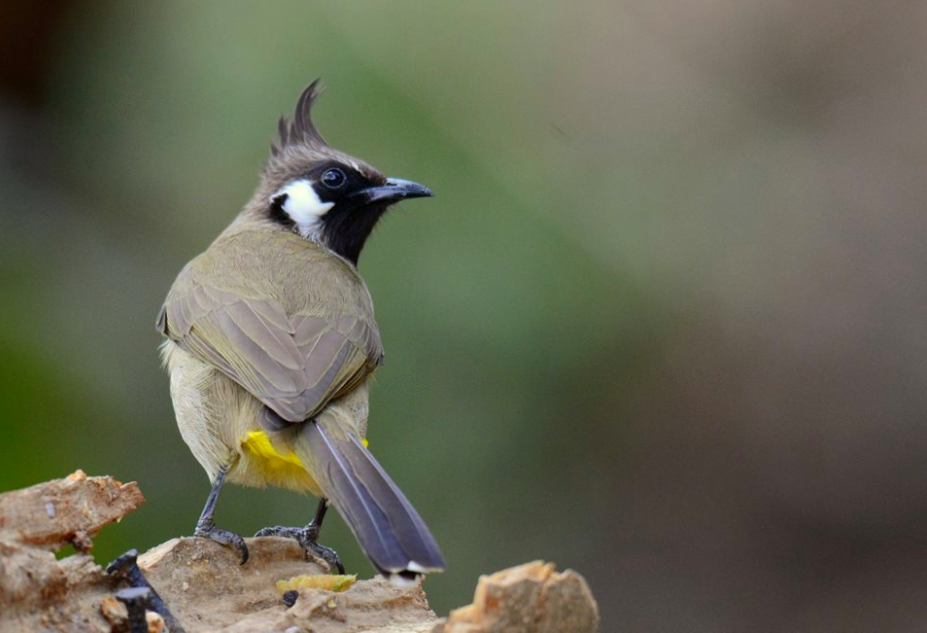
Bird of the Day: Himalayan Bulbul
Falter, Bill McKibben’s Latest Book

Mikel Jaso
My morning hike yesterday was accompanied by Bill McKibben. We have featured him so frequently in these pages that I was surprised that I had not already known he had a new book. So I found what I could read about the book, starting with Jared Diamond’s review (snippet below), and a book talk by the author himself (above).

A floating island of solar panels in Santiago, Chile.CreditEsteban Felix/Associated Press
Solar panels and nonviolent movements are the two of the causes for hope that McKibben mentions in his podcast interview, and in the book talk in Philadelphia, and according to Diamond’s review those are substantive but not sufficient. Hope and fear are both motivators and getting the balance right is the most important task in perhaps the entire history of mankind. I highlight only this part of the review because it is an echo of what Nathaniel Rich says in an interview about his own book:

…McKibben’s book is much more about grounds for fear, which take up some 18 chapters, than about grounds for hope, which take up five. Fear will motivate some people who are currently undecided, and increase the motivation of others already convinced. But in my experience most people need a strong dose of hope to be spurred to action. Why waste effort on a hopeless cause? One group that has learned this lesson is the cancer lobby, which succeeds at raising funds for research by stressing cures that may be just around the corner more than the grim statistics of the disease’s ongoing toll.
In fact, there are reasons for hope besides those McKibben discusses. One is the change in policies of some powerful multinational corporations. I can already hear the horrified screams of many of my environmentalist friends as I say this. Continue reading
Bird of the Day: Scarlet-backed Flowerpecker

Digboi, Assam
The Wind Calls For Attention

A wind farm in Pomeroy, Iowa. Credit Jim Watson/Agence France-Presse — Getty Images
In the current political climate it may sound like howling in the wind, at first, but read on:
A Case for a Market-Driven Green New Deal
Any serious energy transformation will need to harness America’s powerful and creative economic engine.
By Amory B. Lovins and Rushad R. Nanavatty
Mr. Lovins and Mr. Nanavatty work at Rocky Mountain Institute, which is focused on creating a clean, low-carbon energy future.
The best thing to come from the Senate’s floor debate on the Green New Deal late last month may have been these eminently sane remarks, calling on lawmakers of both parties to “move together” in order “to lower emissions, to address the reality of climate change, recognizing that we’ve got an economy we need to keep strong, that we have vulnerable people we need to protect, that we have an environment that we all care about — Republicans and Democrats.”
Who said it? A Republican, Senator Lisa Murkowski of Alaska, who leads the Energy and Natural Resources Committee. “My hope is we get beyond the high-fired rhetoric to practical, pragmatic, bipartisan solutions,” she said on the chamber floor.
The path is there, if our leaders will only choose to take it. In 2011, Reinventing Fire, an energy study by Rocky Mountain Institute, where we work, showed how a business-led transition could triple energy efficiency, quintuple renewables and sustain an American economy 2.6 times larger in 2050 than it was in 2010 with no oil, coal or nuclear energy, and one-third less natural gas. The net cost was $5 trillion less than business-as-usual — or even more valuable if a price was put on carbon emissions.
Bird of the Day: Hutton’s Vireo
Rancho San Antonio Open Space Preserve, California
Bird Habitat One Yard At A Time
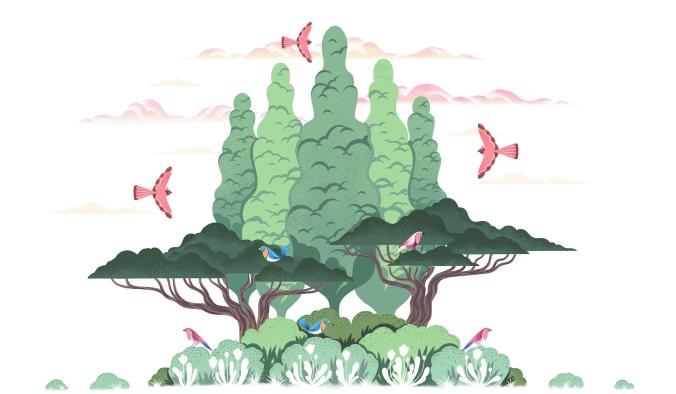
Photo: Illustration: Marina Muun
Sometimes the planning is as fulfilling as the outcome. Thanks to Janet Marinelli and Audubon Magazine:
Plant Trees that Turn Your Yard Into a Bird Oasis—and Carbon Sponge
Trees create habitat and store CO2 for decades to come. Just be sure to pick carefully.
One of the best ways to combat climate change is to fill your garden with as many trees, shrubs, and other plants as possible. Whether a tiny orchid or towering oak, all plants have the amazing ability to remove carbon dioxide from the atmosphere during photosynthesis and store it in their wood, shoots, and roots.
Because they’re the giants of the plant kingdom, trees are also powerhouses of carbon storage. In one year, a mature tree can absorb 48 pounds of CO2—about the amount emitted by driving 150 miles in a hybrid plug-in car. Collectively, according to the U.S. Forest Service, trees offset 10 to 20 percent of U.S. emissions from burning fossil fuels each year. The carbon benefits really begin to add up when you consider that trees fight global warming in other ways. For example, carefully placed trees can reduce the energy required to heat and cool a home by 25 percent (see tips here on how to place trees). Because they cool the air by casting shade and releasing water vapor when they breathe, trees also alleviate one of the most underestimated health threats of climate change—heat waves. Continue reading
Bird of the Day: Greater Yellownape Pair

Male and female – Uttarakhand
Closer To An Alternative For Plastic Packaging

Yale e360, with news like this, titles it carefully:
Scientists Say They Have Found a Viable Replacement for Petroleum-Based Plastic
Scientists at Ohio State University say they have developed a viable alternative to petroleum-based plastic food packaging by using natural tree-based rubber. According to the researchers, the new biodegradable material holds promise for fighting the world’s growing plastic pollution problem, as well as for helping curb our reliance on fossil fuels.
The original source, with slightly more flowery language, titles it as if packaging can be friendly to the environment. The way we use packaging, not so. But we will take what we can get at this point:
Study shows potential for Earth-friendly plastic replacement
New biodegradable ‘plastic’ is tough, flexible
The new bioplastic and rubber blend devised by Ohio State researchers proved much more durable than the bioplastic on its own
The quest to keep plastic out of landfills and simultaneously satisfy the needs of the food industry is filled with obstacles.
A biodegradable replacement for petroleum-based products has to meet all sorts of standards and, so far, attempts at viable replacements from renewable sources have faced limited success due to processing and economic constraints. Among the obstacles, products to date have been too brittle for food packaging. Continue reading

Bird of the Day: Baird’s Sandpiper
Refugio Pantanos de Villa, Peru
Betting On Planet Earth

Illustration by Dadu Shin
Last week we pointed to this article, and today we point to another of equal value from the same issue of the same magazine.
How Big Business Is Hedging Against the Apocalypse
Investors are finally paying attention to climate change — though not in the way you might hope.
The New York Times Magazine is on to something. More than most magazines, it is offering stark, long form accounts of the stakes being wagered against our planet.
 Nathaniel Rich has become one of the most potent writers on the fate of our planet in relation to human actions and inactions. Last year the New York Times Magazine devoted an entire issue to one article he authored. And now he has a book, which you can listen to him talk about here. The publisher’s blurb:
By 1979, we knew nearly everything we understand today about climate change—including how to stop it. Over the next decade, a handful of scientists, politicians, and strategists, led by two unlikely heroes, risked their careers in a desperate, escalating campaign to convince the world to act before it was too late. Losing Earth is their story, and ours. Continue reading
Bird of the Day: Gold-naped Finch
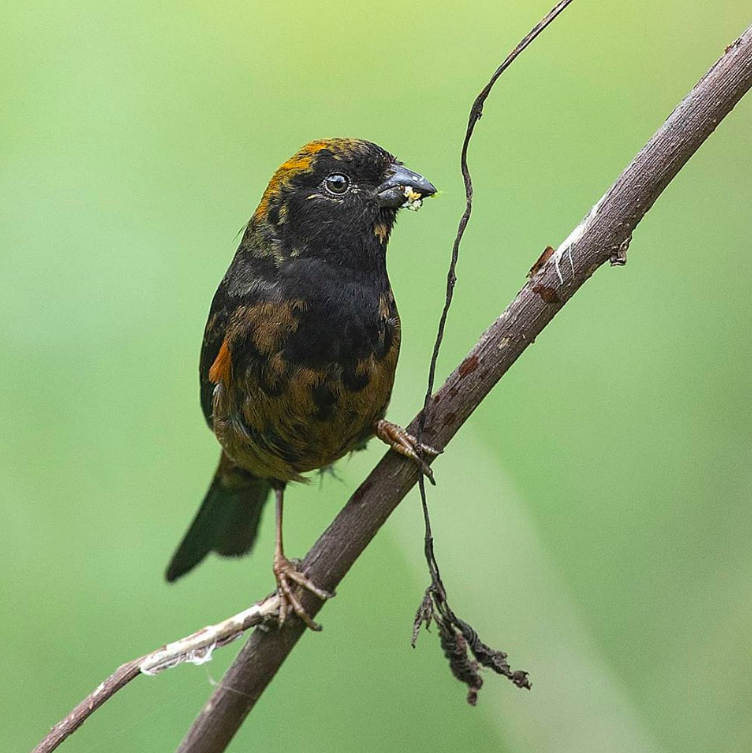
juvenile – Eaglenest Wildlife Sanctuary, Arunachal Pradesh
Organikos & Coffee Restoration

The image above shows where coffee can be planted on land that currently has grass cover. For most of the last century that land had high grade arabica coffee growing on it, but two decades ago the coffee was removed. The residential value of the land was seen to be greater than the agricultural value, and a large plantation was subdivided into parcels between 3 and 10 acres.
 That was then, this is now. Coffee is more valuable than grass. And the value of coffee that is as world class as what Seth planted at Xandari and also resistant to the challenges brought on by climate change is even greater. The trees that will be planted to shade the coffee will be of greater value–to birds as well as to the coffee–than the view of undulating hillside. The image above is a first step in the planning process of this restoration initiative. Organikos will start selling coffee in August, and the proceeds of those sales will pay for the restoration and ongoing improvements of this lot. That is an example of what we mean by 100% Forward.
Bird of the Day: Great Blue Heron

Photo credit: Stephen Crafts
Bowman Beach, Sanibel Island, Florida
Faith-Based Green Resistance

In 2015, the Adorers of the Blood of Christ, a congregation of nuns, learned that an energy company planned to build a pipeline on their land. So they started a resistance movement. Photograph by Dave Parry
Thanks to Eliza Griswold, who writes about religion (which does not feature often in our pages) and occasionally finds an overlap with environmental causes:
The Renegade Nuns Who Took On a Pipeline
On a crisp October morning in 2017, Sister Sara Dwyer, a sixty-eight-year-old nun wearing a red T-shirt that read “you will not spoil our land,” led three elderly nuns and seventy other protesters onto an industrial work site in Lancaster County, Pennsylvania. Many carried red banners stencilled with wheat sheaves. They were there to protest Williams, an Oklahoma-based pipeline company that was trying to build the Atlantic Sunrise Pipeline, a two-hundred-mile natural gas pipeline that would carry shale gas from fields in northeastern Pennsylvania to the coast, where the fuel could be shipped abroad. The company was trying to lay the line under a cornfield belonging to the nuns, and the sisters had decided to fight back, hoping that they might draw attention to the issue of climate change. “Just being in resistance is not the goal,” Dwyer told me. “The goal is spiritual conversion.” As the protesters entered the work site, Malinda Clatterbuck, who had helped plan the event with the sisters, reminded the participants, “This is a nonviolent protest in all ways. We’re not going to yell or speak to the workers.” She walked around asking each person to nod in agreement. “If you’re angry today, go home and come back to an action once you’re in a better place,” she said. Continue reading
 Organikos