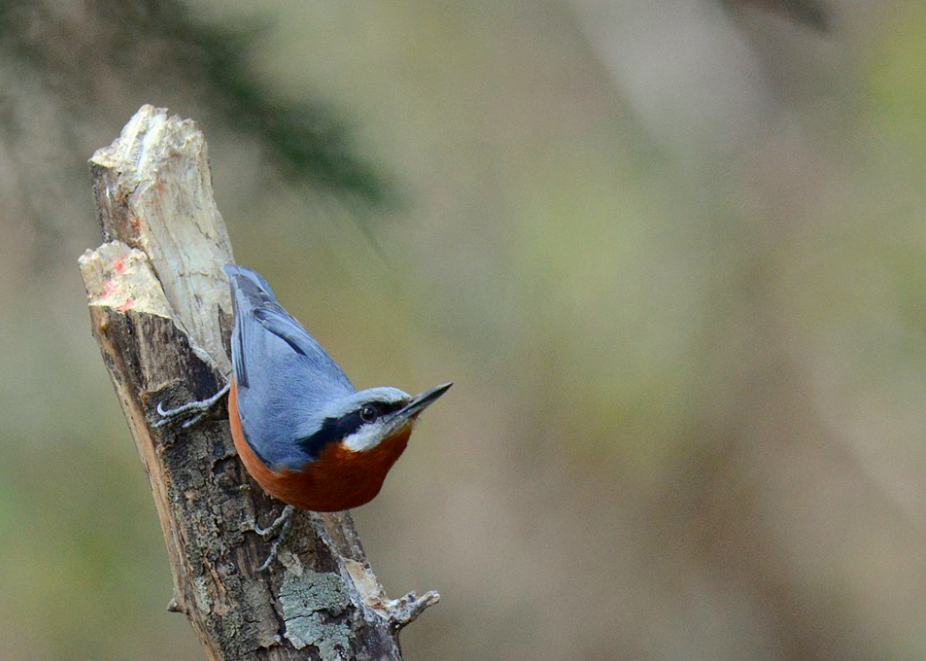
Uttarakhand
Uttarakhand
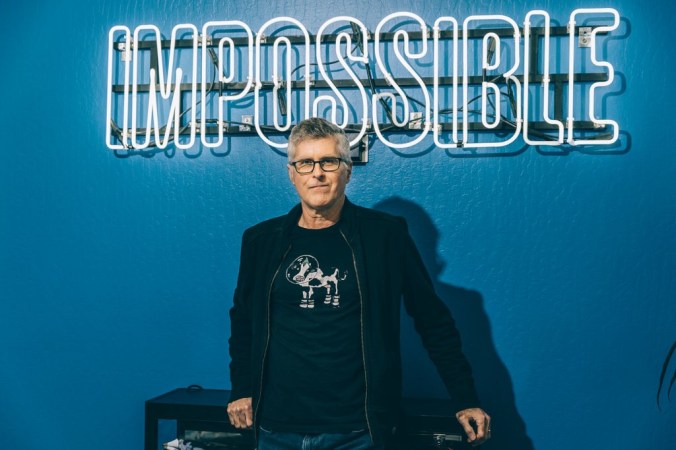
“Our whole focus is on making products that deliver everything that meat lovers care about,” said Pat Brown, the chief executive. Matt Edge for The New York Times
We were waiting patiently for this day to come. Impossible has had our attention for a couple years now, but who knew when it would go really big? The time is now:
Behold the Beefless ‘Impossible Whopper’
Burger King is introducing a Whopper made with a vegetarian patty from the start-up Impossible Foods. The deal is a big step toward the mainstream for start-ups trying to mimic and replace meat.
OAKLAND, Calif. — Would you like that Whopper with or without beef?
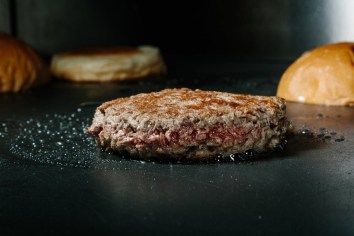
An Impossible Foods burger on the grill at the company’s headquarters in Redwood City, Calif.CreditJason Henry for The New York Times
This week, Burger King is introducing a version of its iconic Whopper sandwich filled with a vegetarian patty from the start-up Impossible Foods.
The Impossible Whopper, as it will be known, is the biggest validation — and expansion opportunity — for a young industry that is looking to mimic and replace meat with plant-based alternatives.
Impossible Foods and its competitors in Silicon Valley have already had some mainstream success. The vegetarian burger made by Beyond Meat has been available at over a thousand Carl’s Jr. restaurants since January and the company is now moving toward an initial public offering.
White Castle has sold a slider version of the Impossible burger in its 380 or so stores since late last year. Continue reading
Telegraph Hill, California
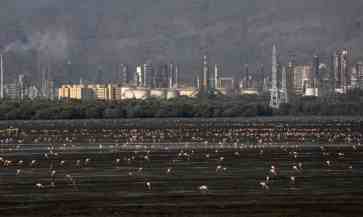
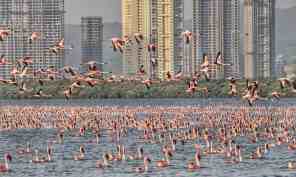
Flamingos eat plankton in front of an industrial area at Sewri mudflats, Mumbai. Photograph: Divyakant Solanki/EPA-EFE
Payal Mohta reported from Mumbai for this story in the Guardian that caught our attention with images of urban flamingos. An unusual beauty can be the result of a common problem. As it is important to understand nature in wilderness areas, which is our strong preference, it is also important to understand these man-made phenomena:
People watch flamingos from a boat during the Bombay Natural History Society’s flamingo festival. Photograph: Hindustan Times/Hindustan Times via Getty Images
There is an air of anxious excitement among the urban professionals and tourists on board our 24-seater motorboat as we enter Thane Creek.
A chorus of “oohs” and “aahs” breaks out as we spot the visions in pink we came to see – hundreds of flamingos listlessly bobbing in the murky green water – followed by the furious clicking of cameras.
Flamingos at Sewri. Photograph: Hindustan Times/Hindustan Times via Getty Images
Then, almost as one, the birds skim the water and take off in sync. “They always stay together,” says Prathamesh Desai, who has been organising birding excursions in the city for seven years. “They are an extremely gregarious species.”…
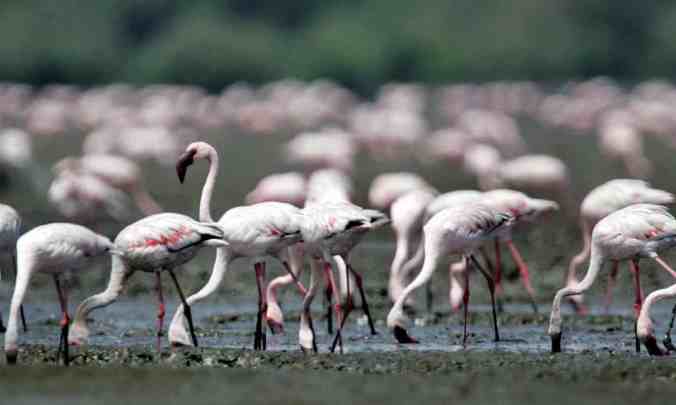
Flamingos at Sewri. Photograph: Hindustan Times/Hindustan Times via Getty Images

Flamingos flock to Mumbai between September and April, but this year there are almost three times more birds than the amount that usually flocks to the area.
Bachchan Kumar/Hindustan Times via Getty Images
That story continues after the jump below. First, thanks to National Public Radio (USA)’s Audrey Nguyen and Sarah Oliver for producing and bringing this story to our attention with this opening line (which goes on to credit the Guardian story as its source):
Around this time every year, tens of thousands of flamingos flock to Mumbai to feed. But this year, there are almost three times more than the normal amount in the city — about 120,000.
The reason for the influx is currently a mystery. But some scientists believe that pollution in the birds’ natural habitat might be one factor at play… Continue reading

Gangavthi, Karnataka
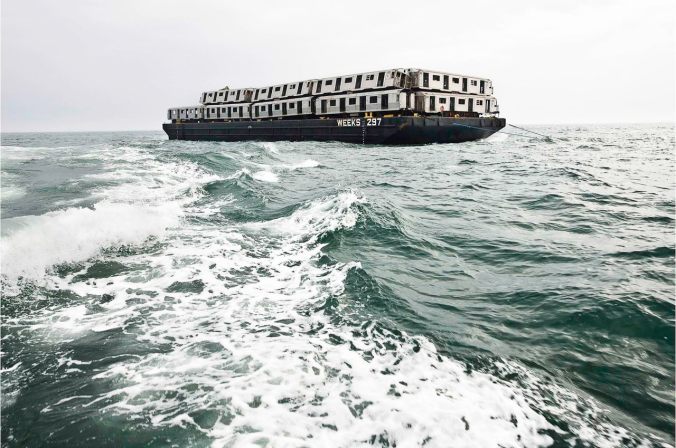
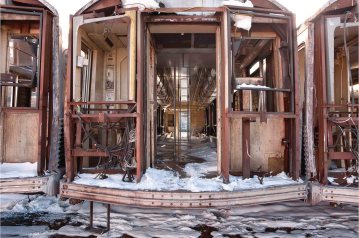
Subway cars set sail on a barge in “Weeks 297, 2008.” STEPHEN MALLON
Thanks to Winnie Lee and Atlas Obscura:
Photographing the New York City Subway Cars That Retired as Artificial Reefs
How Stephen Mallon captured this unusual voyage to the bottom of the ocean.
The rooftops of subway cars. “Abbey Road, 2008.” STEPHEN MALLON
The photographer Stephen Mallon specializes in documenting man’s industrial-scale creations. During his career, he’s focused his lens on the recycling industry, the largest floating structure ever built, and the transportation and installation of a new bridge in New York City. So it wasn’t surprising when, in 2008, he was drawn to an unusual program spearheaded by the MTA New York City Transit system: a multi-phased artificial reefing project that saw the shells of 2,580 decommissioned subway train cars repurposed and dropped into coastal waters off New Jersey, Delaware, Maryland, Virginia, South Carolina, and Georgia, between 2001 and 2010.
The abstract beauty of stripped-down vehicles in “Transfer, 2009.” STEPHEN MALLON
Mallon arranged to follow the outdated subway cars as they were prepared and cleaned, loaded onto barges, and finally plopped into the sea. As he traveled with a crew in a tugboat to get his shots, the photographer developed his sea legs.
Subway cars hoisted in the air in “Mind The Gap, 2008.” STEPHEN MALLON
“I was never underwater, so just needed to keep myself steady on the back of the boat. It’s kind of like surfing or skiing—just keep your balance, keep the horizon line straight, bend your knees, and don’t fall overboard,” Mallon says. Continue reading
Andaman Islands

Lotus flower seed heads and raw, un-puffed lotus seeds.
Lotus flower first appeared in these pages years ago, but its seeds were never mentioned. Time to correct that. We missed the opportunity to mention this book when it was first published–we missed the enthusiastic review–but better late than never. Thanks to the folks at Gastropod for the shoutout in a recent episode that gives Thor Hanson and his book their due:

When seeds first evolved, hundreds of millions of years ago, they not only revolutionized the plant world, but they also eventually sowed the path for human civilization. Today, it’s nearly impossible to eat a meal without consuming a plant embryo—or many. But how did seeds come to play such a critical role in human history? Why might one seed in particular, the lotus seed, hold the secret to immortality? And, perhaps just as importantly, how does this magical seed taste?
Iguazú, Argentina
Last week, we visited producers of various arts and crafts on the eastern side of Costa Rica. Our first stop was in the Central Valley, just before crossing over to the Caribbean slope, in a coffee shop. There, a man showed us his ceramic work, which we had seen one example of previously. All of it was beautiful, but the one below was the one we chose to purchase as a sample. And here it is, in the morning sun.

It brought to mind the old documentary above, which anyone in the USA public school system might have seen in their 7th grade art class. In less than half an hour, that film clinically explains and demonstrates visually what goes into making something the traditional way. This man, here and now in Costa Rica, is hand-crafting these coffee makers. The material is organic, as is the design, which pays tribute to Costa Rican tradition, as well as to pre-Colombian indigenous tradition. The coffee seems to taste the better for it.
male – Uttarakhand
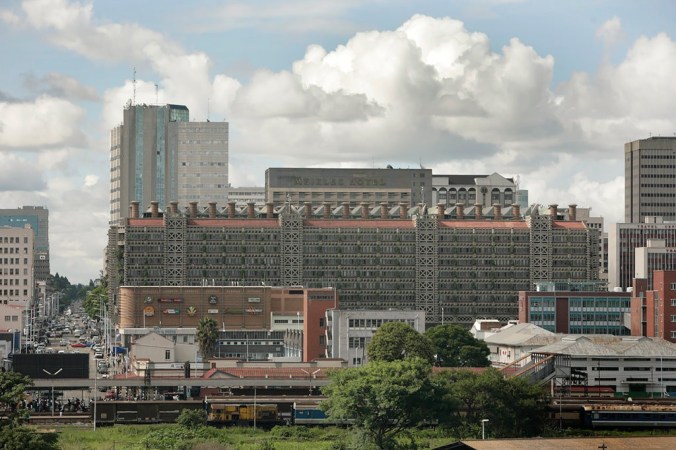
The air conditioning system of the Eastgate Centre in Harare, Zimbabwe, was inspired by termites’ nests. Credit David Brazier, via Wikimedia Commons
It’s been quite some time since we posted about biomimicry. Thanks as always to JoAnna Klein for this illuminating story:
What Termites Can Teach Us About Cooling Our Buildings
“We think humans are the best designers, but this is not really true,” a researcher said.
In the capital of Zimbabwe, a building called Eastgate Centre holds nearly 350,000 square-feet of office space and shops. It uses 90 percent less energy than a similar sized building next door.
What’s Eastgate Centre’s secret? Termites.
Three views of a termites’ nest, including from left, a photo of the nest, a tomography of the the nest’s interior and the networks of galleries and paths in it. Credit G. Theraulaz, CRCA, CBI, CNRS, Toulouse
In the 1990s, Mick Pearce, the building’s architect, took his inspiration from mounds built by fungus-farming termites he saw on a nature show. The insects created their own air conditioning systems that circulated hot and cool air between the mound and the outside.
As architects and builders seek new and improved ways to cool buildings without using more energy in a warming world, a study of another type of termite mound suggests that Mr. Pearce won’t be the last human to take design tips from these cockroach cousins. Continue reading
Ramnagar, Uttarakhand
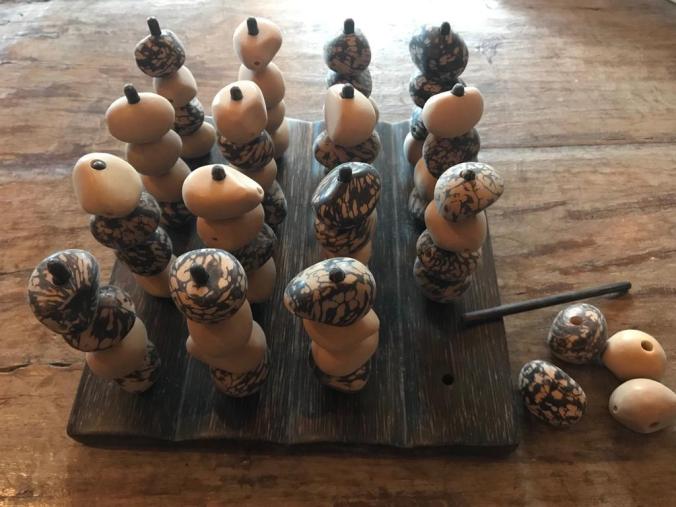
A friend in my early teens had chess skills well-matched with my own. We played constantly, the way some kids today play video games. I switched to backgammon in my late teens and played hundreds of hours over the years. I gave up backgammon when I discovered a new old game 20+ years ago in Ecuador. It is the game in the picture above, and I vaguely referenced it once here. I never stopped to think what drew me to play those games compulsively. Samanth Subramanian, who appeared in our pages once, five years ago, has made my day with this new piece. What We Learn from One of the World’s Oldest Board Games helps me put my love of old games in some kind of historical perspective:

This ivory Fifty-eight Holes board was dug up by Howard Carter, in 1910, out of a pit tomb in Thebes. “We have before us,” Carter wrote, “a simple, but exciting, game of chance.”Photograph Courtesy The Metropolitan Museum of Art
A few years ago, almost by accident, Walter Crist happened upon one of the oldest board games in the world. Crist, who was then working toward a doctorate on ancient Cypriot board games, at Arizona State University, was searching the Internet for images of a game called Fifty-eight Holes. In the second millennium B.C., Fifty-eight Holes was the most popular game of its kind across Egypt, the eastern Mediterranean, and the Middle East, and roughly eighty boards of the game, in various degrees of incompleteness, rest in museum collections around the world. Images of these boards are well known to scholars, but the photo that Crist eventually found, on the Web site of a magazine called Azerbaijan International, was unfamiliar. Taken at an archaeological site near Baku, it showed a rock carving that bore a strong resemblance to the game’s board: two parallel rows of indentations and an outer, horseshoe-shaped run of more holes. It looked like a four-year-old’s sketch of a tree.
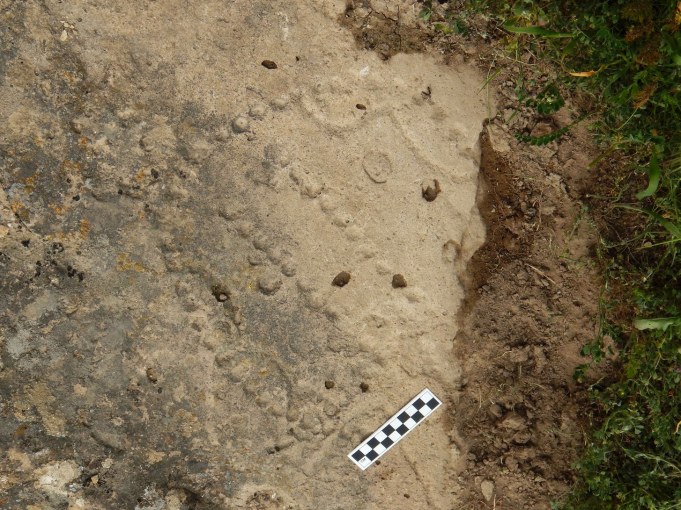
A series of depressions taking the form of the game of Fifty-eight Holes on a horizontal rock surface in Azerbaijan’s Gobustan National Park. Photograph by Walter Crist / Gobustan National Preserve
The site, Crist learned, had been destroyed to make way for a housing development, but he eventually got in touch with an archaeologist in Azerbaijan’s Gobustan National Park, who told him that the park held a similar carving. “I think he knew that it was a game, or that people thought it was,” Crist said. “There were other people arguing that it could be an astronomical chart, or a calendar—but nobody that had studied games in any kind of depth.” So Crist decided to go to Gobustan and find out for himself.
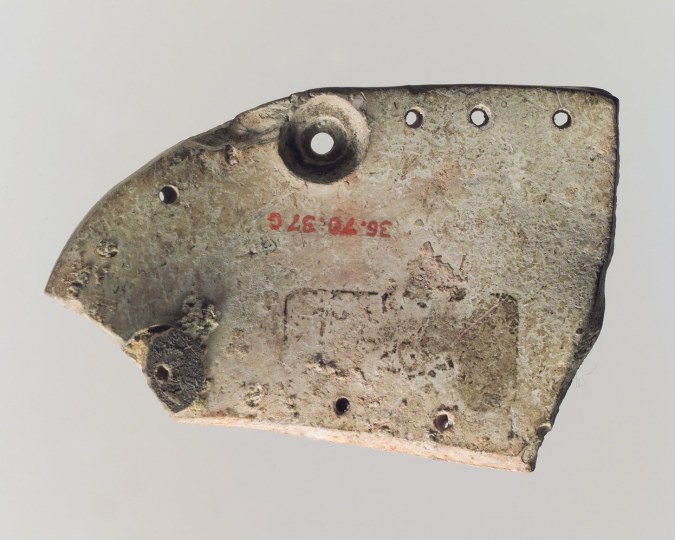
A fragment believed to be part of a Fifty-eight Holes game board, from the eighteenth century B.C. Photograph Courtesy The Metropolitan Museum of Art
Crist, who completed his Ph.D. in 2016, works at the New York Public Library, as a librarian. “I’m on the academic job market, which is terrible and difficult,” he said. When he went to Azerbaijan last spring, he paid for the trip himself, appending it to a visit to Athens to attend the Twenty-first Board Game Studies Colloquium. At Gobustan, near the Caspian coast, he found a vast moonscape of rocks, caves, and mud volcanoes. Archaeologists visit the park for its six thousand petroglyphs: carvings of hunting parties, bulls, boats, and dancing stick men. The glyphs date back at least four thousand years; some might be as old as forty thousand years, reaching back into the Upper Paleolithic age. Not much is known about the artists. Most likely, they were nomadic hunters who lived in rock shelters, charted the heavens, and buried their dead. Continue reading
Bullet Tree, Belize
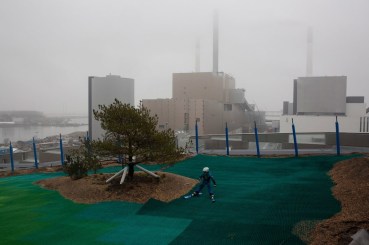
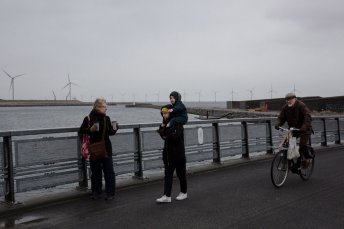
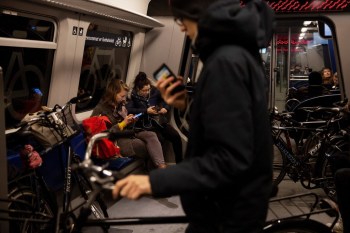
The beginning of a ski run on the roof of Copenhagen’s new trash incinerator, which will help heat buildings in the city. Photograph by Charlotte de la Fuente
South-south cooperation has been an important learning mechanism for some time and we have shared plenty of those stories in part because those places are where we work. According to Somini Sengupta Copenhagen Wants to Show How Cities Can Fight Climate Change, so we now also should be paying attention to the northern counterpart of the cooperation that has been getting all our attention:
Wind turbines along the strait that separates Denmark from Sweden, seen from the Amager Strandpark in Copenhagen. Photograph by Charlotte de la Fuente
COPENHAGEN — Can a city cancel out its greenhouse gas emissions?
Copenhagen intends to, and fast. By 2025, this once-grimy industrial city aims to be net carbon neutral, meaning it plans to generate more renewable energy than the dirty energy it consumes.
The Copenhagen Metro. A new line, scheduled to open this year, will put most residents less than half a mile from a station. Photograph by Charlotte de la Fuente
Here’s why it matters to the rest of the world: Half of humanity now lives in cities, and the vast share of planet-warming gases come from cities. The big fixes for climate change need to come from cities too. They are both a problem and a potential source of solutions.
The experience of Copenhagen, home to 624,000 people, can show what’s possible, and what’s tough, for other urban governments on a warming planet.
Recycling bins in the Christianshavn district of Copenhagen. The city requires residents to sort recycling into eight separate categories. Photograph by Charlotte de la Fuente
The mayor, Frank Jensen, said cities “can change the way we behave, the way we are living, and go more green.” His city has some advantages. It is small, it is rich and its people care a lot about climate change.
Mr. Jensen said mayors, more than national politicians, felt the pressure to take action. “We are directly responsible for our cities and our citizens, and they expect us to act,” he said. Continue reading
Uttarakhand

Jeffrey and Jason WardIllustration by João Fazenda
Thanks to Anna Russell for this short wonder:
Birding Brothers of the Bronx
A chance sighting of a hungry peregrine falcon gave a homeless teen a lifelong passion; now Jason Ward and his brother Jeffrey star in “Birds of North America,” on topic.com.
When Jason Ward was fourteen, he spotted a peregrine falcon devouring a pigeon on the windowsill of the South Bronx homeless shelter where his family was living. “I was literally witnessing a nature documentary unfold,” he recalled, adding, “That was definitely my spark bird.” Ward, now thirty-two, has five siblings, but only he and his younger brother Jeffrey are birders. (Jeffrey’s spark bird was a barn owl, which he saw in Central Park.) “These peregrines are really powerful fliers,” Jason said. “They have the ability to just change their immediate surroundings. Growing up in the Bronx, that was something that I admired, and wanted to be able to do myself.” Continue reading
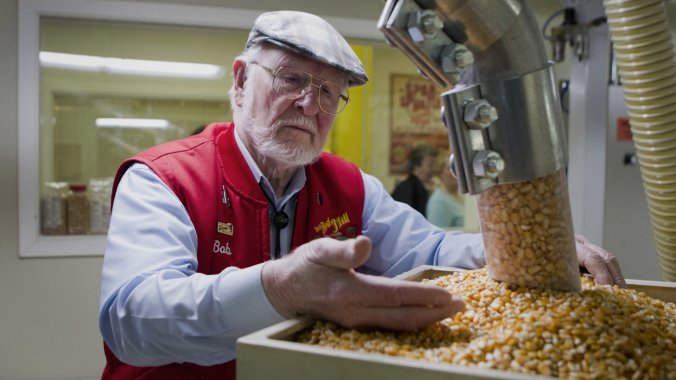
Bob Moore, founder of Bob’s Red Mill and Natural Foods, inspects grains at the company’s facility in Milwaukie, Ore. The pioneering manufacturer of gluten-free products invests in whole grains as well as beans, seeds, nuts, dried fruits, spices and herbs.
Natalie Behring/Bloomberg via Getty Images
One of our favorites, featured in a story that is important to several people we know:
How Bob’s Red Mill Company Became A Gluten-Free Giant Ahead Of Its Time
Gluten-free products are for sale at the Bob’s Red Mill and Natural Foods store in Milwaukie, Ore.
Natalie Behring/Bloomberg via Getty ImagesBob Moore, the 90-year-old founder of Bob’s Red Mill, was just a few years into the business of milling whole grains at a converted animal feed mill in a Portland, Ore., suburb when he got a visit from some gluten-free Seattlites who’d come down with a business proposition: Use his business contacts to help them buy bulk xantham gum, an ingredient used in gluten-free baking to help replicate gluten’s elasticity. Continue reading






 Organikos