Fighting Climate Change With Ecosystem Restoration

Photo by Pexels

Throughout the history of this site we’ve focussed on accentuating positive steps in conservation, while also pointing out the negative forces with the intention that knowledge is power that leads to action.

We applaud the UN Environment Assembly for pressing further into the remaining window of opportunity to restore ecosystem health.

New UN Decade on Ecosystem Restoration to inspire bold UN Environment Assembly decisions

The UN Environment Assembly in Nairobi, Kenya, is the world’s leading decision-making forum. From 11 to 15 March 2019, it will be considering how best to improve outcomes for people and planet. Ecosystems will be high up on the agenda.

The timing looks good. The UN Decade on Ecosystem Restoration 2021-2030, declared on 1 March 2019 by the UN General Assembly, aims to massively scale up the restoration of degraded and destroyed ecosystems as a proven measure to fight climate change, and enhance food security, water supply and biodiversity.

The degradation of land and marine ecosystems undermines the well-being of 3.2 billion people and costs about 10 per cent of the annual global gross domestic product in loss of species and ecosystems services. Key ecosystems that deliver numerous services essential to food and agriculture, including supply of freshwater, protection against hazards and provision of habitat for species such as fish and pollinators, are declining rapidly.

Restoration of 350 million hectares of degraded land between now and 2030 could generate US$9 trillion in ecosystem services and take an additional 13 to 26 gigatons of greenhouse gases out of the atmosphere.

UN Environment and the Food and Agriculture Organization of the United Nations will lead implementation of the UN Decade on Ecosystem Restoration. Continue reading


From Panama, Of Bushwick, Reducing The Impact Of Food Waste

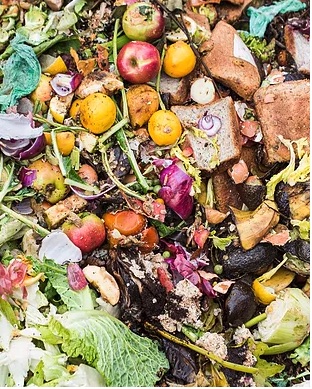
Food waste, a problem whose partial solutions are myriad, has been on my radar since Milo posted about it. Its root seems obviously related to not properly pricing the input resources, like land, water, etc., which paradoxically makes it possible to produce an abundance sufficient to waste. But dealing with the problem at the tail end of the value chain is another partial solution so the video above is worth a few minutes of your time.

BKRotIf, when you finish that, you want to learn more, click the logo to the left. And if you live in Brooklyn you might want to participate in some manner.

BKRot2.jpg

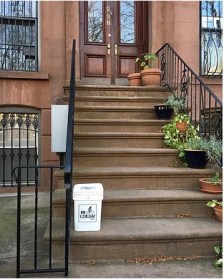
Home Composting.  Rabbit Roots is a home food scraps pick up service. For a monthly rate our bikers will collect straight from your door to our compost site.

If you live nearby, get more information about how to subscribe to their home composting program by clicking here. Sandy and her operation tell me that waiting for someone else to solve the collective action problem is wasted time. David Owen brought her and it to my attention in this short profile:

…BK ROT was founded, in 2013, by Sandy Nurse. She was born in Panama, in 1984—both her parents were in the U.S. Navy—and grew up mainly there and in South Korea and Japan. She studied international affairs at the New School and assumed that she was headed for a diplomatic career. But she changed her mind after working on food assistance in Haiti after the big earthquake there in 2010.

190311_r33860web.jpg

This article appears in the print edition of the March 11, 2019, issue, with the headline “Sacred Rot.”

“I came back to New York and got really excited about urban resiliency and food sovereignty and disaster recovery,” she said recently. BK ROT was one of the results. “We have a very specific mission of environmental and social-justice values, and grassroots accountability to the neighborhood, and transparency, and giving our output, the compost, back into food-growing and soil-building operations.” BK ROT is partly a grant-supported jobs program for young people. (Ibarra and his co-workers, most of whom live in the neighborhood, earn fifteen dollars an hour.) Nurse also teaches community activism and basic construction skills, which she studied as a trainee of the New York City District Council of Carpenters.

BKRot1.jpgAt BK ROT, food waste is mixed with wood chips and sawdust, then moved, over a period of weeks, through a succession of wooden bins the size of washing machines. By the time it reaches the final bin, it’s black and bug-covered and unrecognizable as former food. Then it’s heaped into sloping, loaflike piles, called windrows. “Convection sucks in air from the bottom and pulls it to the top,” Nurse said. “That keeps the microorganisms inside the windrows healthy.” The resulting mass is eventually shovelled into a rotating cylindrical sifter that looks like something you might pull bingo numbers out of; the original version was built by a friend of Nurse’s, who found instructions on YouTube. The compost is sold in local stores and directly to individuals—“Somebody came from Staten Island yesterday and took a bunch,” Nurse said—but most of it goes to nearby urban farms and community gardens, a few of which Nurse herself helped to start.

Nature’s Gender-bending

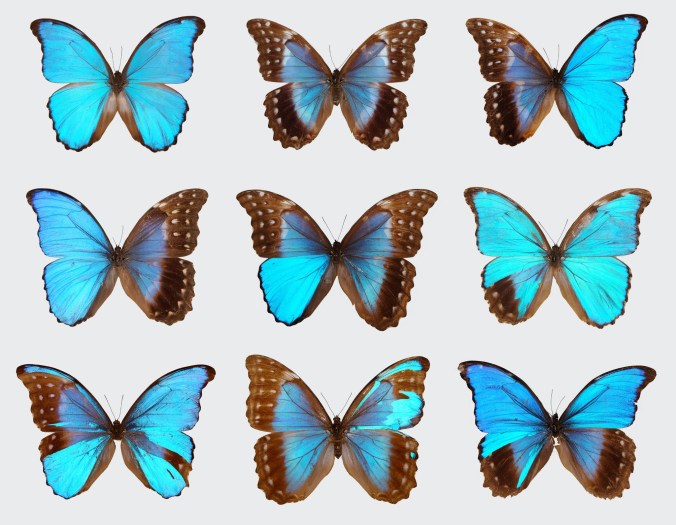
Top left, a male blue morpho butterfly; top middle, a female. The remainder are gynandromorphic, with both male and female characteristics. Credit Nipam H. Patel

With the frequency of gender fluidity in the news (often disparagingly), it’s helpful to read that it’s something that exists in many areas of the natural world.

“Nature’s dealing with conformity all the time in brutal ways and loving ways and all the rest of it,” Dr. Dreger said. “It doesn’t follow the human fantasy of everybody having to be normal. And humans don’t follow that ridiculous idea either.”

Well said.

Split-Sex Animals Are Unusual, Yes, but Not as Rare as You’d Think

All serious butterfly collectors remember their first gynandromorph: a butterfly with a color and pattern that are distinctly male on one wing and female on the other.

Seeing one sparks wonder and curiosity. For the biologist Nipam H. Patel, the sighting offered a possible answer to a question he had been pondering for years: During embryonic and larval development, how do cells know where to stop and where to go?

He was sure that the delicate black outlines between male and female regions appearing on one wing — but not the other — identified a key facet of animal development.

“It immediately struck me that this was telling me something interesting about how the wing was being made,” said Dr. Patel, a biologist who now heads the Marine Biological Laboratory, a research institute in Woods Hole, Mass., affiliated with the University of Chicago.

The patterning on the gynandromorph’s wing shows that the body uses signaling centers to control where cells go during development and what tissues they become in creatures as diverse as butterflies and people, Dr. Patel said.

Gynandromorph butterflies and other half-male, half-female creatures, particularly birds, have fascinated both scientists and amateurs for centuries. The latest sensation was a half-red, half-taupe cardinal that became a regular visitor in the backyard of Shirley and Jeffrey Caldwell in Erie, Pa. Although the bird would have to be tested to confirm that it is a gynandromorph, its color division strongly suggests that it is, scientists say.

Split-sex creatures are not as unusual as they may seem when one discovery goes viral, as the cardinal’s did. It extends beyond birds and butterflies to other insects and crustaceans, like lobsters and crabs.

Continue reading

The New It Crop

0217Mag-Tip-1-jumbo.pngThe first time I heard of hemp was in the 1970s during my teen years. I do not remember what I learned about it then, except for something like this:

…For centuries, American farmers grew hemp for fiber, oil and many other uses. George Washington cultivated it at Mount Vernon to mend fishing nets…

Thanks to Malia Wollan, in her Tip quite straightforwardly titled How to Grow Hemp, I know more today than I did then:

…Practice your explainer, which should go something like this: Marijuana and hemp are varieties of the same species of cannabis plant, but hemp contains less than 0.3 percent of the mind-altering tetrahydrocannabinols, or THC, and will not get you high…

There is more, but not a lot more. Continue reading

Marine Biologists & Earth’s Future

PlastiPod.jpg

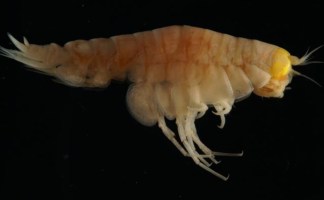
Hirondellea gigas, an amphipod collected from the Mariana Trench (ALAN JAMIESON / NEWCASTLE UNIVERSITY)

Ed Yong’s story will not make you happy. But it is a plastics must-read. Marine biologists are akin to climate scientists whose job requires sharing specific unsettling findings. To put it mildly. The scientist in this case says he does not like doing this work. But he continues in the interest of science and in the interest of the planet’s future. Thanks to him and people like him:

A Troubling Discovery in the Deepest Ocean Trenches

In the Mariana Trench, the lowest point in any ocean, every tiny animal tested had plastic pollution hiding in its gut.

Alan Jamieson remembers seeing it for the first time: a small, black fiber floating in a tube of liquid. It resembled a hair, but when Jamieson examined it under a microscope, he realized that the fiber was clearly synthetic—a piece of plastic. And worryingly, his student Lauren Brooks had pulled it from the gut of a small crustacean living in one of the deepest parts of the ocean. Continue reading

Adaptation & South-South Cooperation

Ethiopia_Wheat_23496722552_5868e72816_k_web

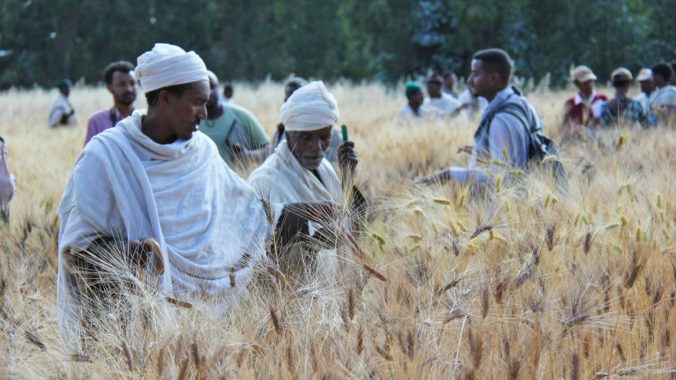
Ethiopian farmers examine the results of a trial of wheat varieties. BIOVERSITY INTERNATIONAL

The bread we eat in the not so distant future may depend on the type of cooperation described below. Thanks to Yale e360 and Virginia Gewin for this story:

How Crowdsourcing Seeds Can Help Farmers Adapt to Climate Change

In Ethiopia and other developing nations, scientists are working with small-scale farmers on trials to see which seed varieties perform best in changing conditions. These initiatives are enabling farmers to make smarter crop choices in the face of rising temperatures, drought, and more extreme weather.

Ethiopia_Wheat_23605266175_c076fa1be7_k_web.jpg

Durum wheat varieties grow in trial plots in Ethiopia’s Amhara region. Thousands of farmers participated in the project, testing how various wheat strands performed under changing climatic conditions. BIOVERSITY INTERNATIONAL

In Ethiopia’s undulating, high-elevation grasslands, farmers — most of them working parcels of only two to three acres — produce more wheat than anywhere else in sub-Saharan Africa. They accomplish this feat in the face of chronically short supplies of high-quality seed. Still, Ethiopia’s record harvest of 4.6 million metric tons in 2017 didn’t satisfy the country’s needs, forcing it to import an additional 1.5 million tons of wheat. Continue reading

Addictions Abound, Solutions Hiding In Plain Sight

3108.jpg

Orangutans rescued near a palm oil plantation in Kalimantan, Indonesia. Photograph: Vier Pfoten/Four Paws/Rex

Thanks to the Guardian for presenting this story by Paul Tullis:

How the world got hooked on palm oil

It’s the miracle ingredient in everything from biscuits to shampoo. But our dependence on palm oil has devastating environmental consequences. Is it too late to break the habit?

3980

A fire at an oil palm plantation in Pekanbaru, Sumatra, due to intensive farming methods and the dry season. Photograph: AFP/Getty

Once upon a time in a land far, far away, there grew a magical fruit. This fruit could be squeezed to produce a very special kind of oil that made cookies more healthy, soap more bubbly and crisps more crispy. The oil could even make lipstick smoother and keep ice-cream from melting. Because of these wondrous qualities, people came from around the world to buy the fruit and its oil.

In the places where the fruit came from, people burned down the forest so they could plant more trees that grew the fruit – making lots of nasty smoke and sending all of the creatures of the forest scurrying away. When the trees were burned, they emitted a gas that heated up the air. Then everybody was upset, because they loved the forest’s creatures and thought the temperature was warm enough already. A few people decided they shouldn’t use the oil any more, but mostly things went on as before, and the forest kept burning.

This is a true story. Except that it is not magic. The fruit of the oil palm tree (Elaeis guineensis), which grows in tropical climates, contains the world’s most versatile vegetable oil. It can handle frying without spoiling, and blends well with other oils. Its combination of different types of fats and its consistency after refining make it a popular ingredient in packaged baked goods. Its low production costs make it cheaper than frying oils such as cottonseed or sunflower. It provides the foaming agent in virtually every shampoo, liquid soap or detergent. Cosmetics manufacturers prefer it to animal tallow for its ease of application and low price. It is increasingly used as a cheap raw material for biofuels, especially in the European Union. It functions as a natural preservative in processed foods, and actually does raise the melting point of ice-cream. Palm oil can be used as an adhesive that binds together the particles in fibreboard. Oil palm trunks and fronds can be made into everything from plywood to the composite body of Malaysia’s national automobile.

Read the whole story here.

What’s The Delay?

Kolhatkar-PGE.jpg

In 2017, seventeen major wildfires in California were connected to P.G. & E. Photograph by George Rose / Getty

Sheelah Kolhatkar has a note, The P.G. & E. Bankruptcy and the Coming Climate-Related Business Failures, that gets me thinking. The standard thinking on why climate change is so difficult to do anything about is how it is seen as a problem we will encounter far off in the future. It obviously is not far off. It has started. Farmers have suffered. Big city folk have suffered. California dreamers have suffered. The immediacy needs to be framed accordingly:

On January 15th, the World Economic Forum issued its annual Global Risks Report, which presents the results of a survey of what policymakers and experts perceive to be the world’s greatest challenges and threats. The report categorizes concerns by color: blue for economic risks, orange for geopolitical risks, purple for technological risks, red for societal risks. This year, green, which denotes environmental hazards, was dominant: the top three risks, listed by the “likelihood” that they would occur, were extreme weather events, failure of climate-change mitigation and adaptation, and natural disasters. (Threats such as data fraud and cyber-attacks appeared lower down on the list). “Is the world sleepwalking into a crisis?” the report’s authors wrote. “Global risks are intensifying but the collective will to tackle them appears to be lacking.” Continue reading

Elephants By The Sea

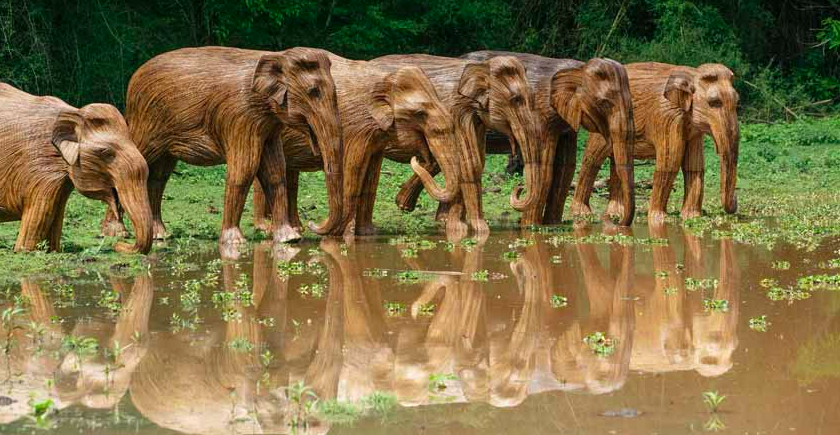
100 life-size lantana replicas of wild elephants will travel across three continents spreading the message of peaceful coexistence with nature.

The beautiful herd of Asian Elephants calmly drinking from this watering hole poses no threat to any onlooker. They’re actually sculptures made from the invasive lantana, introduced to the Indian subcontinent as an ornamental shrub by the British. The harmless looking plant is a scourge to native flora, animals and people of the regions where it’s taken over, as it literally poisons its surroundings so nothing else can survive there, destroying the natural biodiversity of the area.

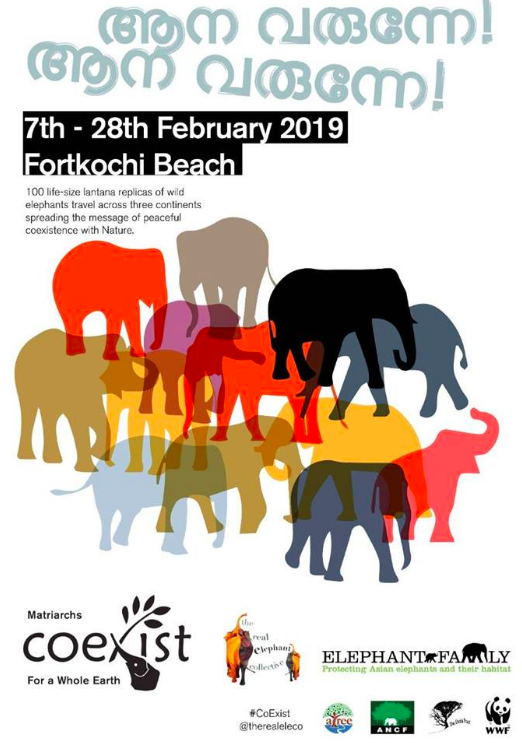
30 of these extraordinary, life-sized works of art have been on display in Kerala, at Kochi’s South Beach, coinciding with the Kochi-Muziris Biennale. The outdoor exhibit, entitled Co-Exist: Matriarchs for a Whole Earth, is on display for only until the end of February, after which it will travel to Bangalore and New Delhi. In 2020, the elephant models will be taken to England where they will be displayed at the Victoria and Albert Museum and the Royal Parks, both in London. In 2021, they will travel by truck across the USA, where they will finally be auctioned, the proceeds of which will go to preservation of wild animals.

The project is a collaboration between multiple organizations, designers and indigenous community artisans. Members of the Ashoka Trust Trust for Research in Ecology & the Environment (ATREE) devised a way to safely craft with lantana as a raw material and support for the making and display of lantana elephants is through the NGOs Elephant Family, The Real Elephant Collective (TREC), and The Shola Trust.

Fort Kochi To Have 100 ‘Lantana’ Elephants. And Here’s Why You Need To See Them

Highlighting the cause of nature and wildlife conservation at a global scale, the Lantana elephants are part of a greater initiative to raise funds for conservation and help people and elephants live together more harmoniously.

On February 7, if you are wandering around the popular South Beach in Fort Kochi, you are sure to come across a magnificent herd of 100 Asian elephants.

If you are wondering about the possibility of such a huge congregation of these beings at one place, let us break the news.

These are beautifully sculpted life-size elephants that have been made by tribal artisans from Thorapalli in Gudalur using Lantana camara or Lantana, a toxic invasive weed.

Lantana elephants are part of a greater initiative to raise funds for conservation and help people and elephants live together more harmoniously.

“Our vision is to bring Asia’s elephants and the issues they face out of India and the shadow cast by the African ivory crisis. With Asian elephants numbering only a tenth of their African counterparts, the importance of this unique migration cannot be underplayed. The survival of a species is at stake,” says Ruth Ganesh, principal trustee and the creative force of Elephant Family.

She had conceptualised the Lantana herd along with Shubhra Nayar of TREC. Modelled on real elephants from the Gudalur-Pandalur region, in its bid to raise awareness and funds for the conservation of Asian elephants, this unique project is also clearing the harmful Lantana from the Nilgiri forests while providing livelihoods to about 70 artisans from the Paniya, Bettakurumba and Soliga communities.

With their inherent knowledge of wild elephants and their exceptional crafting skills with Lantana, these artisans are bringing life to the elephant forms, while earning a dignified income. The elephants are designed by Shubhra Nayar and Tariq T of TREC, with Subhash Gautam overseeing the process. Continue reading

15 Minutes Of Fame For A Good Cause

It takes the full 15 minutes of video above to fully appreciate what happened a few days ago. The soundbite 57 second version had me convinced that the senator was haughty and deserved to be schooled by these kids. But the full picture above, as often happens, provides better perspective, an attribute of little l liberalism. She was not quite the jerk I first thought.

McKibben-Dianne-Feinstein.jpg

In an exchange that went viral, the senator from California demonstrated why climate change exemplifies an issue on which older people should listen to the young. Photograph by Mark Peterson / Redux

There was a moment in time when a political slogan about something very important became a movement with potential; and then it seemed to disappear as quickly as it had appeared. That was my first exposure to political activism, and certainly not my last. But it provided an important lesson. Use the time you have on the stage wisely. I get reminded of this constantly in the last few years. This dispatch by Bill McKibben is what I take away from the moment these kids had in the spotlight: