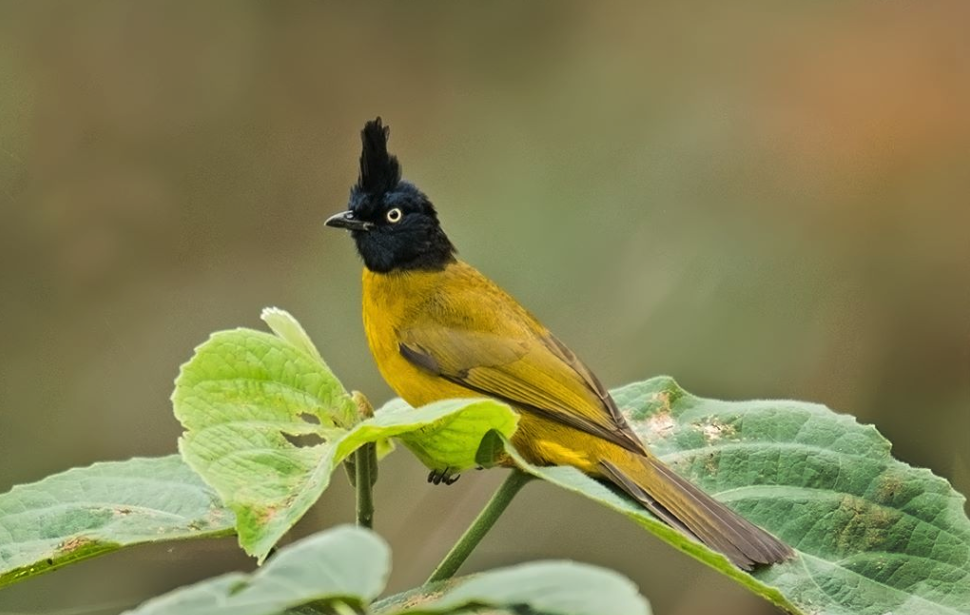
Livestreaming Conservation

1200 (4)

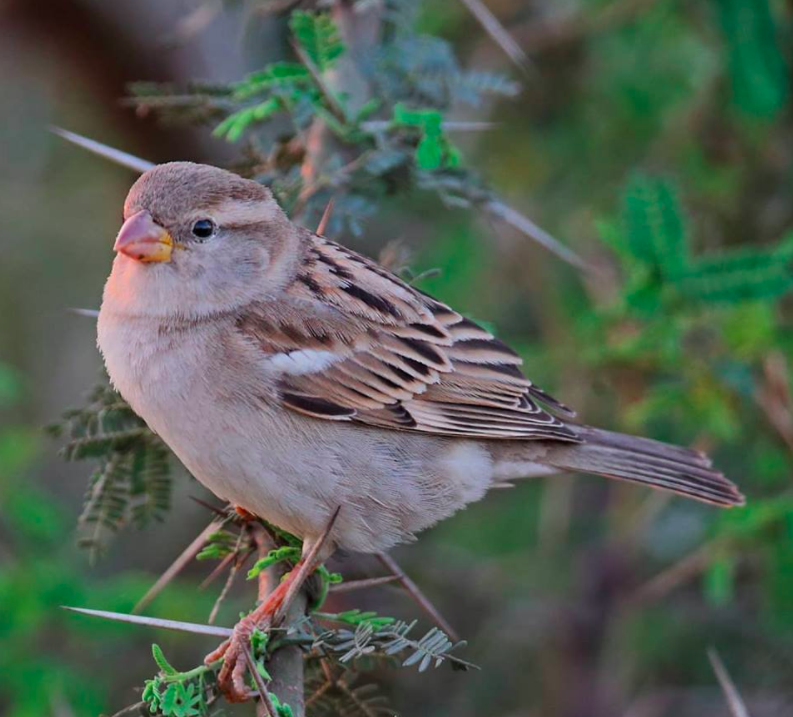
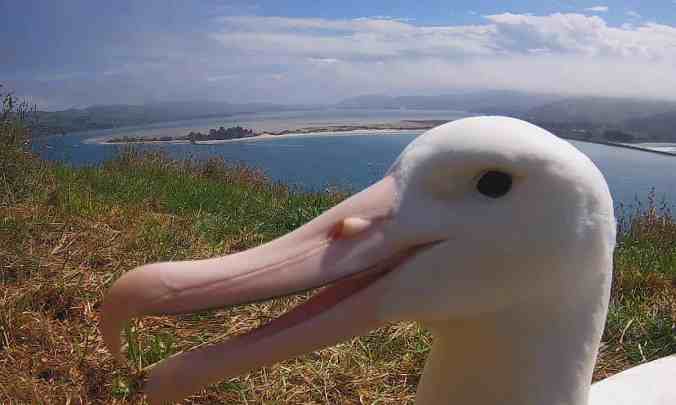
A northern royal albatross inspects the New Zealand Department of Conservation’s ‘Royal Cam’, a 24/7 livestream that documents an albatross nest in breeding season. Photograph: Department of Conservation

The revolution may not be televised but conservation may be livestreamed from time to time, conditions permitting. Thanks to the Guardian for this story from New Zealand:

On a wing and a player: hopes webcam can save endangered albatross

Footage of tiny colony of birds on the southern tip of New Zealand captivates millions around the globe

nzalbMillions of amateur naturalists around the world have been tuning in to the secret lives of albatrosses as New Zealand rangers employ YouTube in a bid to save the mysterious giant sea birds.

New Zealand conservation teams set up a 24-hour live-stream of an albatross nest at Taiaroa Head on the Otago peninsula in 2016. Three years on, the feed has become an unexpected global hit, with 2.3 million people from 190 countries tuning in to watch the endangered birds rear their chicks on a frigid peninsula at the bottom of the world. Continue reading

The Art of Inclusivity


A visitor takes a close look at “Missing Route 4,” a hand-stitched embroidery by Bapi Das.Credit Atul Loke for The New York Times

The history of our work in Kerala, and specifically in Kochi, has long been intertwined with Art, and how the surrounding community interacts with it. Biennales, by nature, often blur the line between street art and gallery space, as multi-dimensional and multi-media installations begin to appear on walls, pop-up spaces, cavernous warehouse buildings, and classic museum halls.

Now in it’s 4th edition, the Kochi-Muziris Biennale, has grown continually in both the breadth of the artists involved, and the depth of its work toward community outreach. This sense of inclusivity extends to gender equality, a longstanding issue that India as a country has battled with;  the curator and more than half of the artists are female.

As with the previous editions, the installations are thought provoking and moving, at times asking viewers to acknowledge and honor the difficult history of a colonial past.

In India, Building Bridges Between Life and Art

The Kochi-Muziris Biennale, South Asia’s biggest art show, uses interactive exhibits and live performances to help Indians connect with contemporary art.

KOCHI, India — Clad in a simple striped shirt and the white mundu of the city’s fishmongers, Bashir stood out from the well-heeled throng at the warehouse galleries and tree-filled courtyards on the first day of India’s biggest contemporary art show, the Kochi-Muziris Biennale.

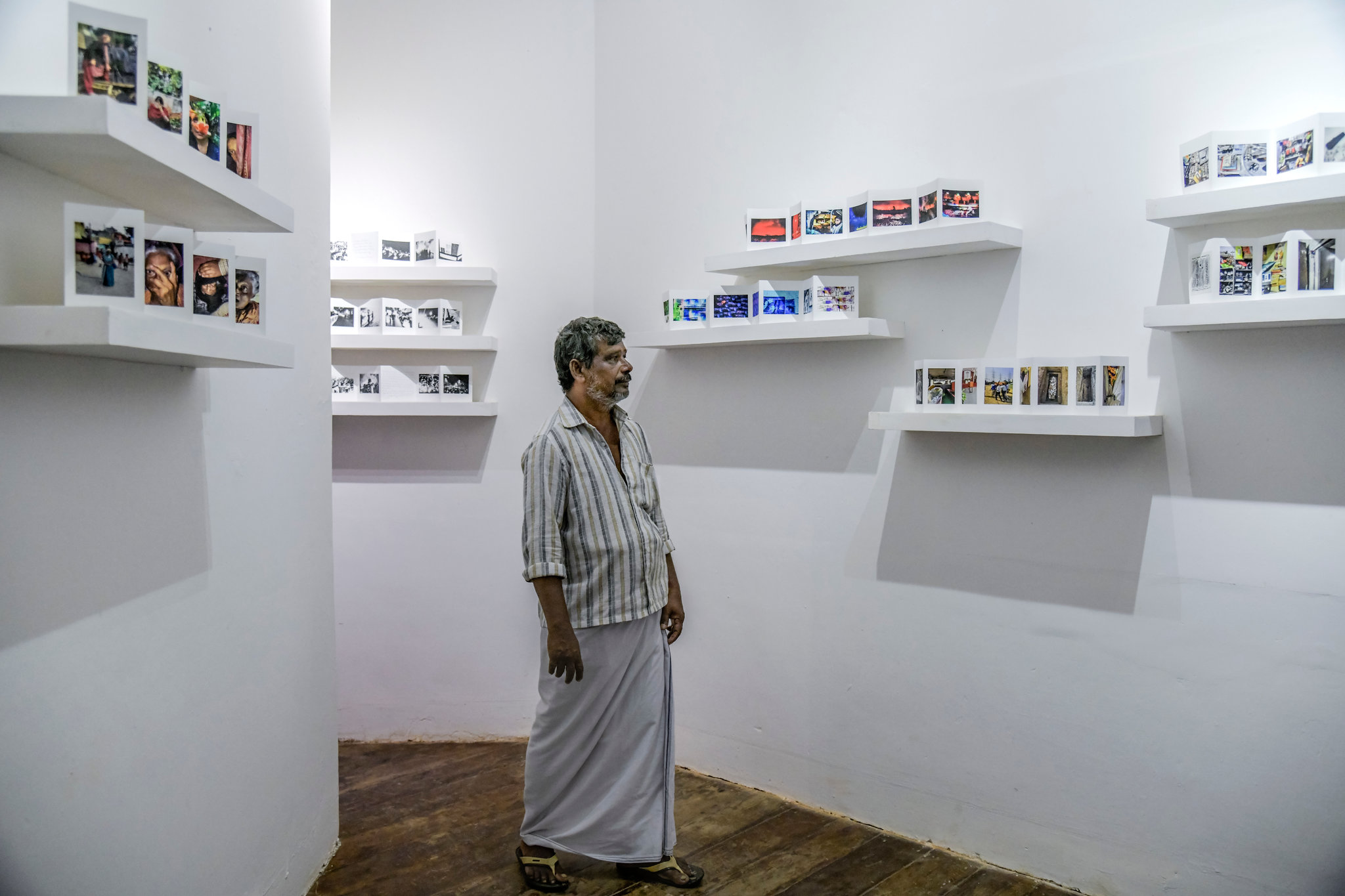
Bashir, a fishwrapper who works nearby, visited the Kochi-Muziris Biennale on opening day because entry was free. He lingered over the photographs, including these photo essays by Chandan Gomes, a Delhi photographer. Credit: Atul Loke for The New York Times

Keeping to himself, he moved from room to room, stopping to study moody landscapes by the Delhi photographer Chandan Gomes that were paired with imaginary scenes drawn by a girl who died at age 12.

“I don’t understand the inner meaning of the art,” said Bashir, who uses one name and makes a living wrapping and delivering fish. “I just like to see beautiful things.”

Bashir’s willingness to engage with the artwork, no matter how challenging, was a victory for the show’s organizers. The southern state of Kerala, and India as a whole, have very few public venues to see art. So the organizers of the biennale, which runs until March 29, strove to create an event that would appeal to everyone — from untutored day laborers to veteran museum curators.

“We are making a cultural festival,” said Bose Krishnamachari, a painter from Kerala who co-founded the show eight years ago. “We have tried to penetrate to the people’s minds so that they feel that it is their biennale.”…

Continue reading

Urban Tree-Huggers

IndiaDehli_Trees_GettyImages-984331388_web.jpg

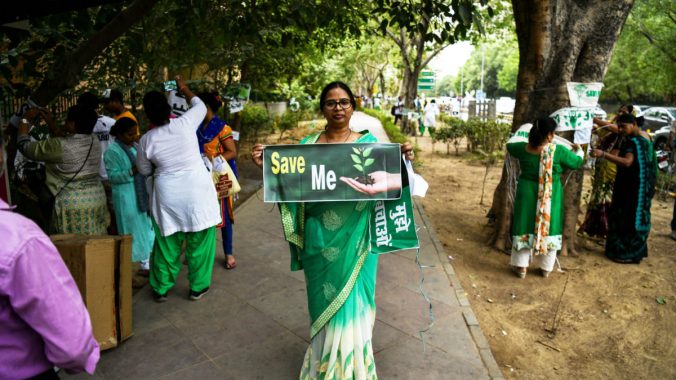
Women demonstrators protest a plan to to cut down more than 14,000 trees for a redevelopment project in New Delhi in June 2018. CHANDAN KHANNA/AFP/GETTY IMAGES

Thanks to Yale e360’s Mumbai-based Vaishnavi Chandrashekhar:

In India’s Fast-Growing Cities, a Grassroots Effort to Save the Trees

In India’s burgeoning urban areas, residents are rallying against the widespread destruction of trees to make way for development. The recent protests highlight a global issue: densely populated megacities in the developing world, which are most in need of tree cover, often have the least.

ZB_MumbaiTreesStreet_2017.jpg

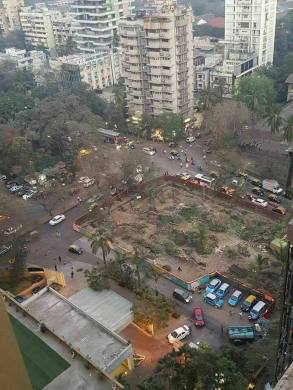
Thousands of trees have been cut down in Mumbai in recent years to make way for new housing, wider roads, and a $3.3 billion subway line. COURTESY OF ZORU BHATHENA

The funeral cortege was small. Six people shouldered the bier and others followed, clad in the traditional Indian white. As the group filed past the state assembly building, the armed guards did not give it a second glance. In a few minutes, however, the security forces caught on. The procession winding its way through Mumbai’s government district was not a real funeral: It was a protest. The shrouded body held aloft was not a human — it was the trunk of a tree, one of many, including grand old banyans, cut down for the construction of a $3.3 billion subway line.

urbantrees2.jpg

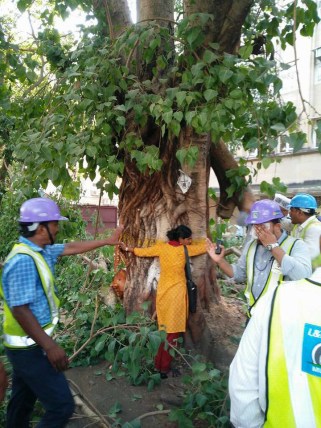
A protester hugs an old tree in Mumbai to prevent it from being cut down for a subway project. COURTESY OF ZORU BHATHENA

Mumbai’s old trees have borne the brunt of new development in the booming city, including road widening, transport projects, and housing construction. The new subway alone is destroying or damaging 5,000 trees, from hundreds of old street trees in the dense parts of the historic island city to more than 2,000 trees in a mini-forest in suburban Aarey Colony, where a rail car shed is to be built. A less visible loss lies in defunct industrial areas, where large plots with old trees and ponds are being redeveloped into residential and commercial towers. “Developers are supposed to replace the trees but no one really checks,” says Stalin D., head of local environmental group, Vanashakti. Continue reading

Organikos & Coffee Circa 2019

organikos1

Organikos2.jpgWhen we returned from India in 2017 we mentioned the word organikos in the context of coffee. Just prior to moving to India, in early 2010 we were completing our second year assisting the Patagonia Expedition Race–we not only assisted with their contracting a title sponsor, but Organikos was itself a Race sponsor. Somewhere we have photographs of our team serving coffee to racers, Race staff, and with our logo displayed at the finish line where we also served coffee (even as champagne corks were popping in the pre-dawn darkness). I will post those photos another time, but the reason those images come to mind is that we had developed a graphic statement of how we wanted Organikos to look on a coffee label, and it is very different from what we want today. 2019 is starting out with its own equivalent of corks popping, as last evening we finalized the first draft of what our first coffee shipment, from a roastery in Austin, TX USA is going to look like. You saw it here first (label feedback welcome):

Organikos3.jpg

A Photographic Big Year

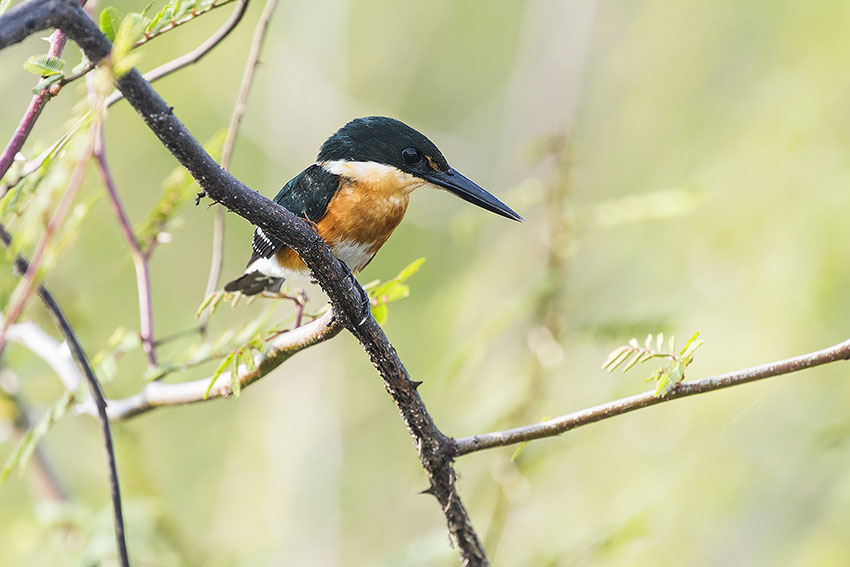
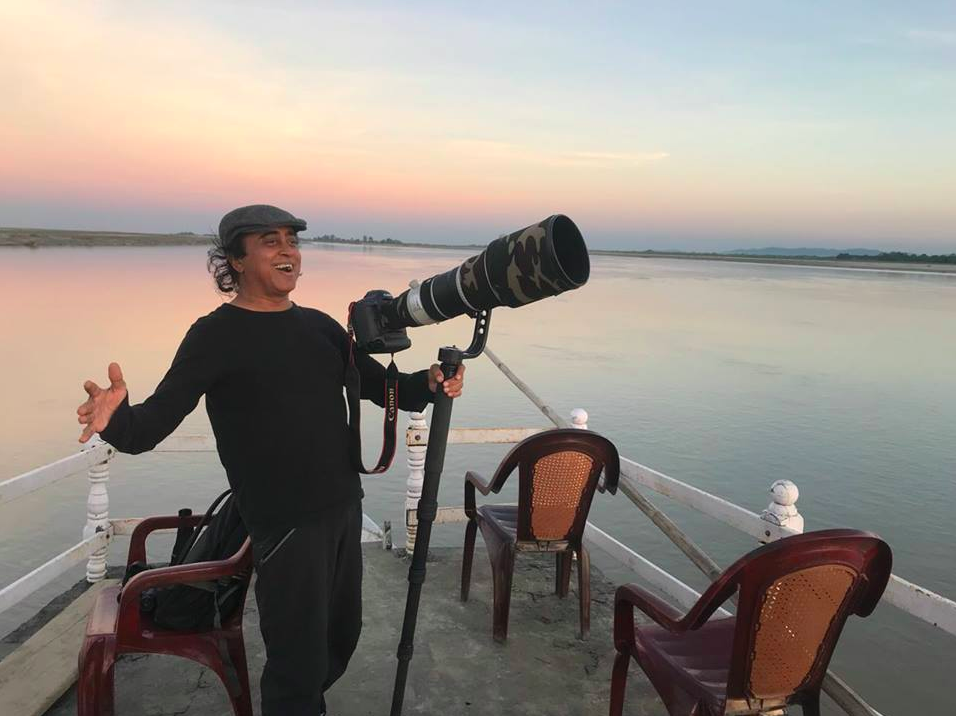
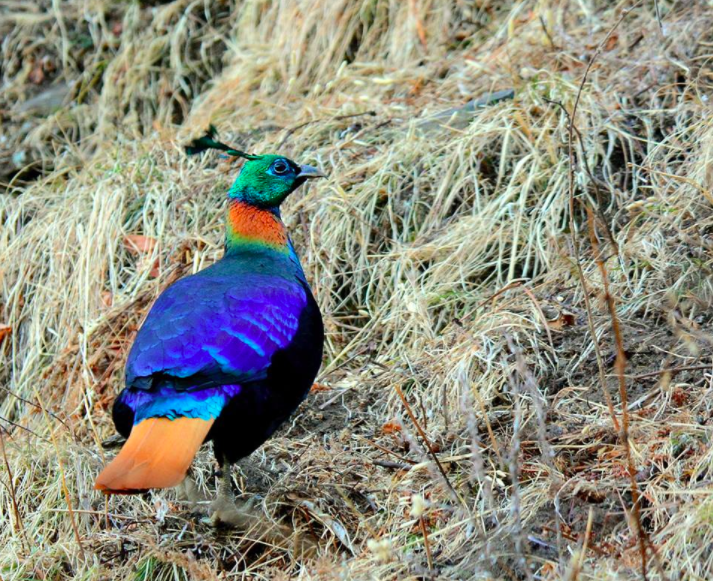
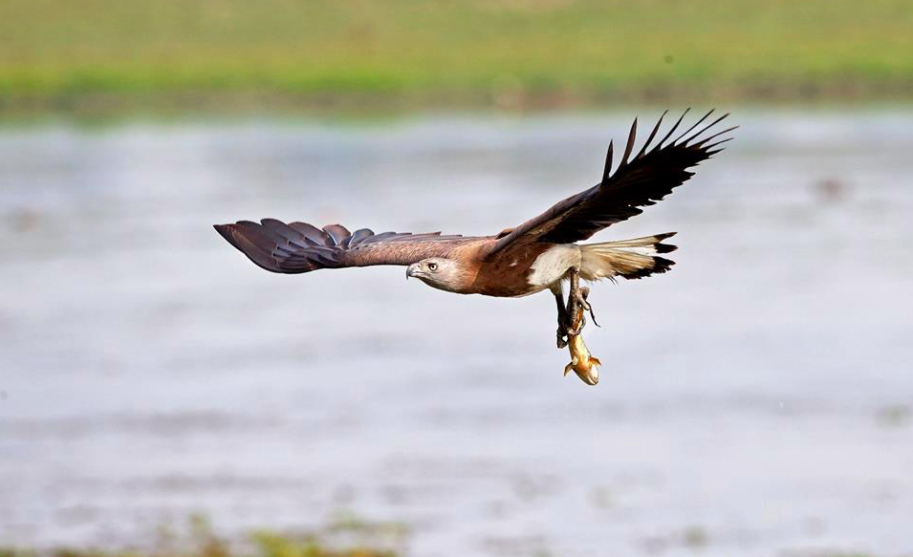
It’s a relatively small world among the birding /photography community in India, and once I saw Gururaj Moorching’s photographs I reached out for an introduction to ask him to contribute to our Bird of the Day series. He started his own birding journey in 2012 after a trip to Kaziranga and another trip to the Rann of Kutch where he came across the two books “Birding on Borrowed Time” and “Lifelist” by the late Phoebe Snetsinger. We’ve been publishing his gorgeous photos for over 3 years, and I was thrilled when he shared his plan for a Photographic Birding Big Year.
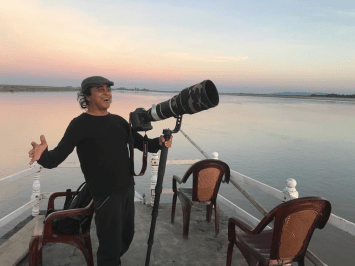
In our own way we’ve documented his birding travels within our series, and we applaud this amazing achievement of photo-documenting 951 of India’s 1,317 species of birds in just one year (2018).

Gururaj is currently working on a book expected to be published this spring, but he recently spoke with Deepthi Sanjiv from the Bangalore Mirror about his experience.

“When I had a chance meeting in April 2015 with naturalist Marmot Snetsinger in Eaglenest Wildlife Sanctuary, Arunachal Pradesh, I was elated. Her mother, the late Phoebe Snetsinger, was a legend in birdwatching circles. She was the first person to have crossed 8,000 birds on her Life List in 1995 and watched 8,398 species of birds across the world.”

When Phoebe took up bird watching, she had a rare type of melanoma and the doctors had given her a year to live. She defied death for another 17 years since her diagnosis. I was inspired and I could especially relate to her as I faced a similar health predicament. Phoebe’s book “Birding on Borrowed Time” inspired me to take up birdwatching and photographing birds with intensity and a sense of urgency…

…Ornithologist Shashank Dalvi, India’s first birder to complete one ‘Big Year’ and record 1,128 species of birds in 2015, mentored Gururaj. He helped Gururaj list out travel plans to get maximum results and devised a calendar plan, based on the seasons and locations across India.

“It is not a mean task to chase 1,317 species of bird found in India, including Adaman and Nicobar Islands. My love to travel, food and meeting new people made the journey interesting in this amazing country of huge diversity. Birding community in India is a well-knit family. I received great support from birders, guides and naturalists who were eager to share any information on bird movement and even opened their homes, kitchen and hearts to me. Rofikul Islam, a gifted naturalist from Kaziranga, stood by me throughout the year, and was the inspiration behind my decision to pursue a Photographic Big Year, which was the first of its kind,” said Gururaj.

“A deep sense of contentment comes over me at the end of this sojourn,” he said.

The entire article can be found here.
 

A Sense Of Costa Rica

SilkCoastal1Amie and I recently met with an artist who paints on silk. In a post after that we displayed a couple of her pieces that feature coffee farm themes, and here are a couple more featuring coastal themes. Our practice of entrepreneurial conservation has allowed us to post frequently on this theme over the years. Less frequently we have mentioned sense and sensibility, words we work by.
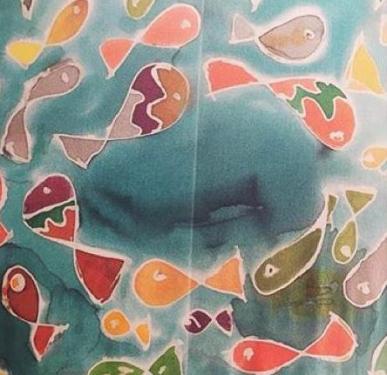
SilkCoastal2Our assumption is that most people want to sense how a place they visit is different from where they normally live. Commonalities are also helpful for the sake of comfort and the travelers we have gotten to know through our practice in the last 2+ decades are much like us: interested in the balance between things we already understand and things that make us wonder.

When we saw these silk pieces we had a sense of Costa Rica that would be difficult to find words for. The artist has an ecological and socially responsible orientation, backed with actions that represent what make this place unique. This is the aspect of Costa Rica that inspires and motivates not only those who have chosen to live there, but those who choose to visit. Visitors should have the opportunity to take home with them items like these painted silks, that somehow represent Costa Rica. Little reminders.

New Ways Of Eating Old Dishes

02mag-Eat-image1-jumbo.jpg

Johnny Miller for The New York Times. Food stylist: Maggie Ruggiero. Prop stylist: Hilary Robertson.

Tejal Rao, the California restaurant critic at The New York Times and a columnist for The New York Times Magazine, came to my attention not long ago. At that time I did not look at her background and thought perhaps she was a science writer, based on that story. We are committed as much as anything in these pages to featuring stories by people who explain science well to a lay audience. But as of this week I realize she is a food writer and if you believe in James Beard awards she must be one of the best. That makes me think we will see more of her work because that is another of our favorite things. As I went through her website to read some of her earlier work, this story immediately stood out because of the title: Not Your Dickensian Bowl of Porridge. And that has been a favorite topic of mine since introducing savory porridge on our menu in Kerala a few years back. I cannot wait to test this out, even though I favor oats for my porridge:

02mag-Eat-image2-superJumbo.jpg

Credit Johnny Miller for The New York Times. Food stylist: Maggie Ruggiero. Prop stylist: Hilary Robertson.

“How much time do you have?” Minh Phan wanted to know, when I showed up at her restaurant in Los Angeles after hours. I was hoping to learn how she cooked the delicious rice I ate there about a week before. It was covered with curls of see-through pickles and little scoops of sticky, savory jams, and many kinds of herbs. The grains of rice were whole and tender — soft but not soupy. How much time could we possibly need, I wondered, to boil some rice until it was tender?

What I learned was that a simple bowl of soft rice, in the hands of Minh Phan, was in fact extraordinary. It tasted familiar and comforting, but it was built meticulously and garnished effusively, its flavors carefully layered, its textures arranged in sequence. Continue reading

Books For Early 2019

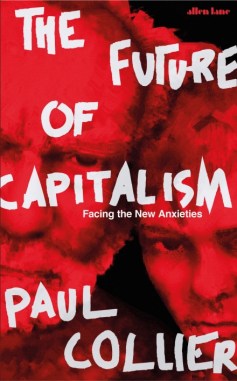
collierbookI have a few more books, in addition to this history, on my reading list. Reihan Salam, the executive editor of National Review, provides this preview of the Oxford economist Paul Collier‘s new book:

You might expect that Paul Collier, a noted development economist at Oxford who has devoted most of his professional life to the uplift of the global poor, would see himself as a “citizen of the world.” But that’s not quite right. Collier grew up in Sheffield, a once-flourishing English steel town that provided working-class families like his own with a modicum of prosperity and stability, and that has since struggled in the face of import competition and the loss of many of its most ambitious citizens to London and other dynamic cities. He attributes his prodigious accomplishments in no small part to the cooperative character of the community, and the nation, in which he was raised.

National loyalty, far from being inimical to a more just and decent world in which all, including the world’s poorest, can flourish, is seen by Collier as a firmer foundation for global cooperation than abstract cosmopolitanism, which all too often serves as a mask for unenlightened self-interest. The question animating his small but wide-ranging book “The Future of Capitalism” is whether the sense of rootedness that so defined the Britain of his youth can be restored…

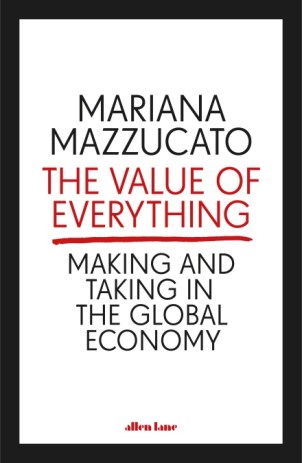
ValueBook.jpgRead the whole review here. My second encounter with Paul Collier was this panel discussion on Intelligence Squared. The way in which the world’s developing economies view capitalism is as important as the current changes in how mature developed economies view capitalism. For that reason I am also looking forward to Mariana Mazzucato’s most recent book, to the right. Surprisingly I had never heard of her before listening to her muse about various influences in her life that led to her distinct voice on how value is created by societies. Her self-introduction makes me wonder how she did not show up in our pages previously:

I’m a Professor in the Economics of Innovation and Public Value at University College London (UCL), and Director of UCL’s Institute for Innovation and Public Purpose . My work is focused on the economics of innovation; patient finance; economic growth and the role of the State in modern capitalism. I advise policy makers around the world on how to achieve economic growth that is more innovation-led, inclusive and sustainable. My 2013 book, The Entrepreneurial State: debunking public vs. private sector myths, looks at the ‘investor of first resort’ role that the State has played in the history of technological change — from the Internet, to biotech and clean-tech — and the implications for future innovation and for achieving public-private partnerships that are more symbiotic. In 2016 I co-edited a book called Rethinking Capitalism: Economics and Policy for Sustainable and Inclusive Growth focusing on the need for new economic thinking to drive more effective economic policies. My new book The Value of Everything, available in UK and US edition, looks at the need to revisit the difference between value creation and value extraction, and the problems that arise when one is confused with the other.

Buoyant Foundation’s Intriguing Architectural Innovation

This is the kind of story that displays the odd new reality of what can count for optimism–finding intriguing solutions for mankind’s self-inflicted catastrophes. From Anthropocene:

float-when-it-floods.jpg

Amphibious Architecture

Float when it floods

By Emily Anthes

amphibious-house.jpg

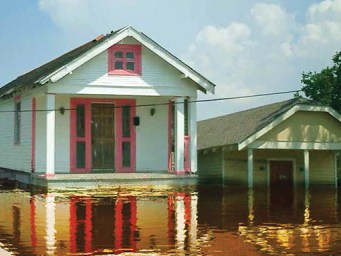
Amphibious structures are not static; they respond to floods like ships to a rising tide, floating on the water’s surface.

Last June, not long after a catastrophic thunderstorm swept through southern Ontario, bringing a month’s worth of rain in just a few hours, a group of 75 architects, engineers, and policymakers from 16 countries gathered in the city of Waterloo to discuss how humanity will cope with its waterlogged future. The timing of the conference was a fitting meteorological coincidence; in a world increasingly transformed by climate change, heavy rains and major floods are becoming more common, at least in some areas. In the summer of 2017 alone, Hurricane Harvey dumped more than 50 inches of rain over Texas; a monster monsoon season damaged more than 800,000 homes in India; and flash floods and mudslides claimed at least 500 lives in Sierra Leone. In the past two decades, the world’s ten worst floods have done more than a 165 billion dollars’ worth of damage and driven more than a billion people from their homes. Continue reading

Thinking Forward While Looking Back

American_history.jpg

Jill Lepore is a New Yorker staff writer and a historian at Harvard University. She tells David Remnick that her new book is the result of a dare: to tell—or even to understand—the story of this country, from the Age of Discovery through the present day, in one volume. In “These Truths,” Lepore surveys six-hundred-odd years of American history, paying particular attention to themes of immigration, suffrage, and how the media has shaped our democracy. Above all, Lepore grapples with whether the United States has lived up to the promises of its founding. She finds an America alternately fearful of change and fearful of stagnation, trapped between idealizing the past and hoping for a better future. The journey toward progress, Leporesays, is less a march than a stumble.

LeporeBook.jpg

I have listened to several interviews that Jill Lepore has given during her promotional tour of her new book, such as the one above (click the top image to go to the source). Today I listened to this one, and it has convinced me that this is one of the books I should take the time to read to put the country of my birth, and the country that many people regardless of birthplace are currently confused by, back in some kind of perspective.

We mostly avoid political commentary on this platform but it is impossible to pretend that the USA or Brazil, or the world as a whole are moving forward or in a good direction. My point of view on the state of governance is mainly one of surprise and confusion–how did we get so reactionary so quickly, and where will that lead us?

092418-PoliticsandMore-CP.jpg

Photograph from Universal History Archive / UIG / Getty

I had already listened to this short discussion of the ideas in this book several months ago. It was interesting but had almost zero impact. On the best of days recently I tell myself that if such a shocking mess is possible, then it should also be possible to imagine and move toward a radically superior future. And that always feels Panglossian. But with a few hundred years of history in mind, Jill Lepore gets me thinking that maybe I can see these times for what they are–not good, nor headed anywhere good–but also see that the cycles of history have had us in at least equally trying times, many times in the past. Ezra Klein has one of the best podcasts out there, and this episode proves it to me:

Jill Lepore is a Harvard historian, a New Yorker contributor, and the author of These Truths, a dazzling one-volume synthesis of American history. She’s the kind of history teacher everyone wishes they’d had, able to effortlessly connect the events and themes of American history to make sense of our past and clarify our present.

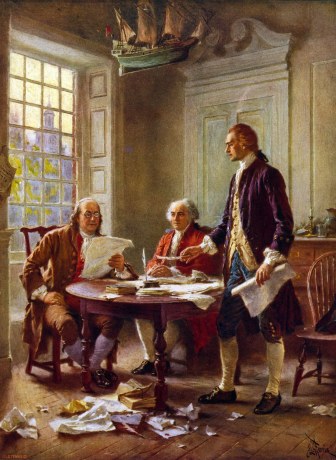
“The American Revolution did not begin in 1775 and it didn’t end when the war was over,” Lepore writes. This is a conversation about those revolutions. But more than that, it’s a conversation about who we are as a country, and how that self-definition is always contested and constantly in flux. Continue reading